
Home › Blog › Hanoi photo spots
What to Wear for Photos at Tran Quoc Pagoda: Hanoi's Most Photogenic Temple
By the Hanoi Photoshoot team · 2026-11-06
At Tran Quoc Pagoda on the Red River's east bank in central Hanoi, wear modest, loose layers that cover shoulders, knees and chest—temple rules enforce this strictly. Ao dai (traditional Vietnamese long tunic and trousers) is ideal: it's breathable, sacred-site-appropriate and photographs beautifully against gold and brick. Visit before 09:00 or after 16:00 to avoid 200+ tourists during midday. Hanoi Photoshoot by Cáo Studio coordinates ao dai rental, in-house styling and timing to catch soft morning light angling across the stupas. Avoid bright whites (they blow out) and busy patterns (they overwhelm stonework). Budget 2–3 hours for the site plus changes. The pagoda sits on a narrow causeway—cramped, slippery when wet, poor footing for heels.
Which colors and fabrics work best in Tran Quoc's light?
Soft, muted tones—blush, sage, dusty rose, cream, soft gold—reflect the temple's earthy brick and golden stupas without competing. Linen, cotton and silk blend (lightweight, breathable, drape cleanly for photos) outperform stiff synthetics that wrinkle. Avoid pure white (camera overexposes against golden stupas and bright stone), neon shades and shiny fabrics that create glare. Morning light (06:30–09:00) is cool and diffuse, so warm pastels and jewel tones read well; afternoon light (16:00–18:00) is golden, so deeper neutrals and terracottas suit it. We rent ao dai in dozens of colors and silk weights precisely matched to the site's palette and your skin tone.
Why does the time of day make such a huge difference?
Light angle, shadow depth and crowd size pivot on the hour. Before 09:00, the sun is low and soft, skimming the stupas and creating definition on the brick causeway without harsh shadows under eyes and chins. Midday (10:00–15:00) flattens features and casts hard shadows; the sun also attracts 150–300 tourists, blocking sight lines and cluttering composition. After 16:00, golden hour begins; light warms and sculpts faces beautifully, but foot traffic peaks as school groups and local families visit. By 17:30, light dims fast in winter (sun sets near 17:00 December–January). We shoot morning sessions 06:30–09:00 year-round for crisp, flattering light and near-empty temples.
How do temple etiquette rules affect outfit choice?
Tran Quoc Pagoda enforces dress codes strictly: no sleeveless tops, no shorts above knee, no transparent fabrics, no hats indoors. Violation can mean denial of entry. Long tunic-and-trousers outfits (ao dai, linen dresses with slips, wrap dresses with sleeves) satisfy the rules and photograph as intentional, respectful frames. Loose fit also suits the site's sacred atmosphere and allows prayer-pose photos without strain. Flip-flops and sneakers are permitted but casual photos muddy the temple's formality—wear clean, understated footwear or go barefoot on stone (it's wet; bring a small towel). For couple photoshoots, coordinate two outfits that harmonize tonally but differ subtly—matching ao dai sets risk looking costume-like.
What outfit mistakes ruin the most Tran Quoc shots?
Bright white clothing overexposed in morning sun against golden stupas; the camera burns detail and the subject looks washed out. Busy prints (stripes, florals, logos) fight the intricate brick patterns and sculpture details, making compositions chaotic. Heavy, stiff fabrics bunch and crease when walking the narrow causeway; flowing fabrics photograph with grace and ease of movement. Jeans are culturally inappropriate at temples and photograph as casual, not reverent. High heels and delicate sandals are a safety hazard on wet, uneven stone—we recommend flat sandals, clean sneakers or bare feet with grip socks. Oversized sunglasses and baseball caps block face detail and disrespect temple space. For solo travel portraits, invest in one versatile ao dai rental that works across Hanoi's top temple sites.
How do seasons change what you should wear?
| Season | Light angle | Midday heat | Stone grip | Crowd peak | Best outfit type |
|---|---|---|---|---|---|
| Dec–Feb | Low, warm (6°–15°C) | Mild | Dry, safe | Jan 25–Feb 10 (Tet holidays) | Layered silk, sleeves, closed shoes |
| Mar–May | High, neutral (18°–28°C) | Hot, humid | Wet in AM | Apr 18 (Buddha's Birthday) | Breathable cotton ao dai, sandals |
| Jun–Sep | Very high, harsh (26°–35°C) | Extreme, 80%+ humidity | Slippery, algae | Jul–Aug school breaks | Lightweight linen, light colors, covered arms |
| Oct–Nov | Medium, golden (15°–25°C) | Mild | Dry | Oct 1–2 (National Days) | Silk blend, warm jewel tones, any footwear |
Winter (Dec–Feb) suits photography most: low sun angle creates definition, cool air prevents sweat stains, and crowds are lighter outside Tet. Summer heat (Jun–Aug) causes rapid sweat, frizz and fatigue; humidity fogs lenses and fades colors in post. We adjust styling and timing by season; book a makeup and styling session at least two weeks ahead to match your outfit and the forecast.
Should you coordinate outfits for couple, family or solo shoots?
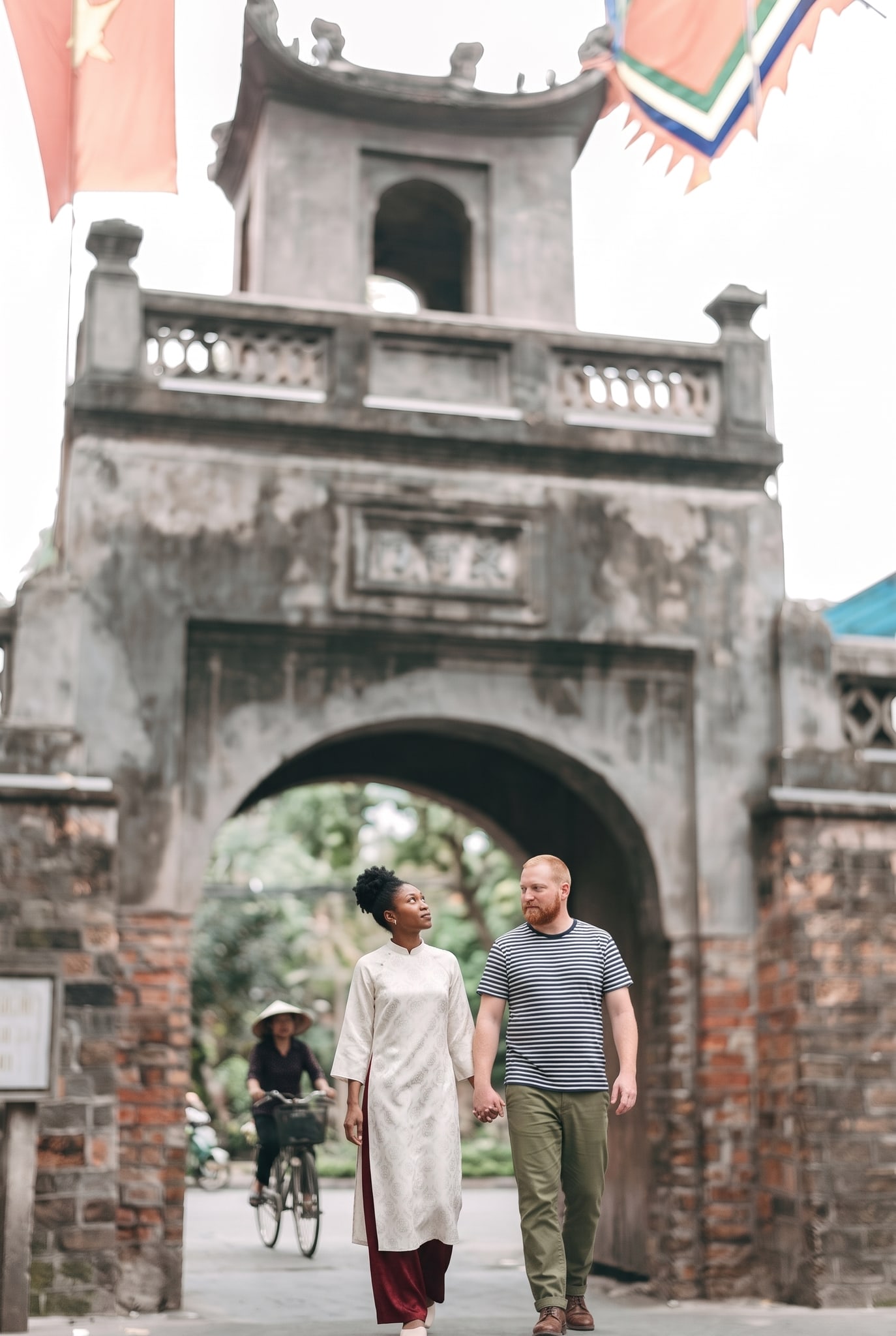
For couple photoshoots, coordinate tone and formality—one in blush ao dai, the other in pale gray or cream—without matching exactly. Tonal harmony reads as intentional without looking costume. For family photoshoots, pick one neutral base color (cream, soft green, warm gray) and let each person interpret it differently—mother in ao dai, father in linen shirt, child in modest dress. Solo shoots (engagement, graduation, travel) benefit from a single, season-appropriate outfit that feels like "you" rather than costume; our ao dai rental collection includes modern cuts that suit Western body types and travel wear. Avoid rainbow mixing, which fractures composition.
What to check before you book a Tran Quoc session
- Confirm exact date and hour with your photographer; check temple closure dates (rare but possible during maintenance) on local Hanoi tourism sites.
- Verify outfit fit and care rules if renting: ao dai hems may need minor stitching for tall travelers; confirm wash and return logistics before shoot day.
- Check weather and light forecast 3–5 days ahead; reschedule if rain threatens (causeway becomes slippery and crowds jam indoors).
- Bring grip socks or flat shoes and a small towel; the stone is wet year-round.
- Confirm makeup, hair and styling are booked in the same session; rushed styling before 09:00 start times causes delays.
- Ask your photographer for a site map showing the best light angles and least-crowded angles (they change monthly as crowds shift).
What else should you know before you shoot?
Tran Quoc Pagoda is one of Hanoi's oldest temples, built over 1,500 years ago. The site fits tight—narrow causeway, stone steps, water on three sides—so arrive early to scout angles. Photography is permitted freely but respect other visitors' meditation and prayer. The Red River reflects golden hour light beautifully (late afternoon); use it as a backdrop or reflective fill. Many visitors walk here from Hoan Kiem Lake, about 20 minutes on foot, or combine it with Old Quarter shoots the same day.
FAQ
Can I wear jeans and a t-shirt if they're clean and modest?
No. Jeans are culturally inappropriate at temples, and t-shirts expose shoulders, which violates Tran Quoc's dress code. Wear a long-sleeved tunic or ao dai instead. Temple staff enforce these rules; noncompliance means denial of entry.
Is 10:00 AM too late for good light?
Yes. By 10:00, sun angle is steep, shadows are hard, and crowds peak. We recommend arrival by 08:30. If you must shoot at 10:00+, we reposition to shaded temple interiors where light is flattering and diffuse.
What if it rains the morning of my shoot?
We reschedule to the next clear morning or afternoon. Rain makes stone slippery (injury risk), crowds jam indoors (composition fails), and humidity fogs lenses. Check the forecast 5 days ahead; we'll confirm 24 hours before.
Do I need a specific ao dai fit, or can I rent any size?
Ao dai should fit loosely through the torso and taper gently at the legs. Over-tight versions restrict movement and look costume-like. We custom-fit rentals by height, weight and arm length to ensure comfort and flattering drape on camera.
Is Tran Quoc Pagoda worth a dedicated photo session, or should I combine it with other Hanoi spots?
Both work. A 2-hour dedicated session captures the pagoda in multiple outfits and light angles. Combining it with Hoan Kiem Lake or Old Quarter in a 4-hour block spreads shots across diverse backdrops but compresses time at each site. We design itineraries by your priority—ask us on WhatsApp.
What is your cancellation policy if I book and then change dates?
We offer flexible rescheduling up to 7 days before your session. Cancellations within 7 days are non-refundable but may be credited toward a future shoot. Ask us for full terms on WhatsApp.
Check dates
Send your dates, how many people and the style you like. We reply on WhatsApp in English with spots, timing and a quote.
FAQ
Can I wear jeans and a t-shirt if they're clean and modest?
No. Jeans are culturally inappropriate at temples, and t-shirts expose shoulders, which violates Tran Quoc's dress code. Wear a long-sleeved tunic or ao dai instead. Temple staff enforce these rules; noncompliance means denial of entry.
Is 10:00 AM too late for good light?
Yes. By 10:00, sun angle is steep, shadows are hard, and crowds peak. We recommend arrival by 08:30. If you must shoot at 10:00+, we reposition to shaded temple interiors where light is flattering and diffuse.
What if it rains the morning of my shoot?
We reschedule to the next clear morning or afternoon. Rain makes stone slippery (injury risk), crowds jam indoors (composition fails), and humidity fogs lenses. Check the forecast 5 days ahead; we'll confirm 24 hours before.
Do I need a specific ao dai fit, or can I rent any size?
Ao dai should fit loosely through the torso and taper gently at the legs. Over-tight versions restrict movement and look costume-like. We custom-fit rentals by height, weight and arm length to ensure comfort and flattering drape on camera.
Is Tran Quoc Pagoda worth a dedicated photo session, or should I combine it with other Hanoi spots?
Both work. A 2-hour dedicated session captures the pagoda in multiple outfits and light angles. Combining it with [Hoan Kiem Lake](/spots/hoan-kiem-lake) or [Old Quarter](/spots/hanoi-old-quarter) in a 4-hour block spreads shots across diverse backdrops but compresses time at each site. We design itineraries by your priority—ask us on WhatsApp.
What is your cancellation policy if I book and then change dates?
We offer flexible rescheduling up to 7 days before your session. Cancellations within 7 days are non-refundable but may be credited toward a future shoot. Ask us for full terms on WhatsApp.
More like this
Hanoi photo spots
Hanoi Book Street Family Photos: Best Times, Rules & Posing Tips
Hanoi Book Street (Phố Sách) offers tree-lined, traffic-light backdrops perfect for family photos. We guide you through light timing, local rules, and kid-friendly posing to avoid crowds and capture genuine moments.
Hanoi photo spots
Duong Lam Ancient Village Photo Spots: Best Times & Light Guide
Duong Lam Ancient Village, 45 km southwest of Hanoi, holds Vietnam's oldest intact rural architecture—tile-roofed houses, brick kilns and narrow lanes where morning mist holds light for 90 minutes. We photograph here year-round for solo travelers, families and couples seeking authentic, off-beat Han
Hanoi photo spots
Duong Lam Ancient Village: Crowd-Free Times & Photo Spots
Duong Lam Ancient Village, 45 km southwest of Hanoi, draws tourists year-round—but early mornings and weekdays offer near-empty temple courtyards and village lanes. We share exact timing, seasonal light, and how to pair a visit with professional portraits.