
Home › Blog › Hanoi photo spots
Duong Lam Ancient Village: Crowd-Free Times & Photo Spots
By the Hanoi Photoshoot team · 2026-11-06
Duong Lam Ancient Village stays quietest on weekdays before 09:00 and after 16:30, especially June–August and December–January when weather limits casual visitors. The 2 km main route through stone-house clusters, communal temples and lime kilns fills with tour groups between 10:00–15:00, particularly weekends. Visit in soft, low-angle light (before 08:30 or after 17:00) to avoid harsh shadows on ochre walls. Bring water, sun protection and insect repellent; no entrance fee. Hanoi Photoshoot by Cáo Studio coordinates day-trip shoots here, combining architecture and ao dai or couple portraits in the village's diffused morning or late-afternoon glow—book ahead on WhatsApp to secure a quiet time slot with your photographer and guide. Check dates on WhatsApp
What time of day has the fewest tourists at Duong Lam?
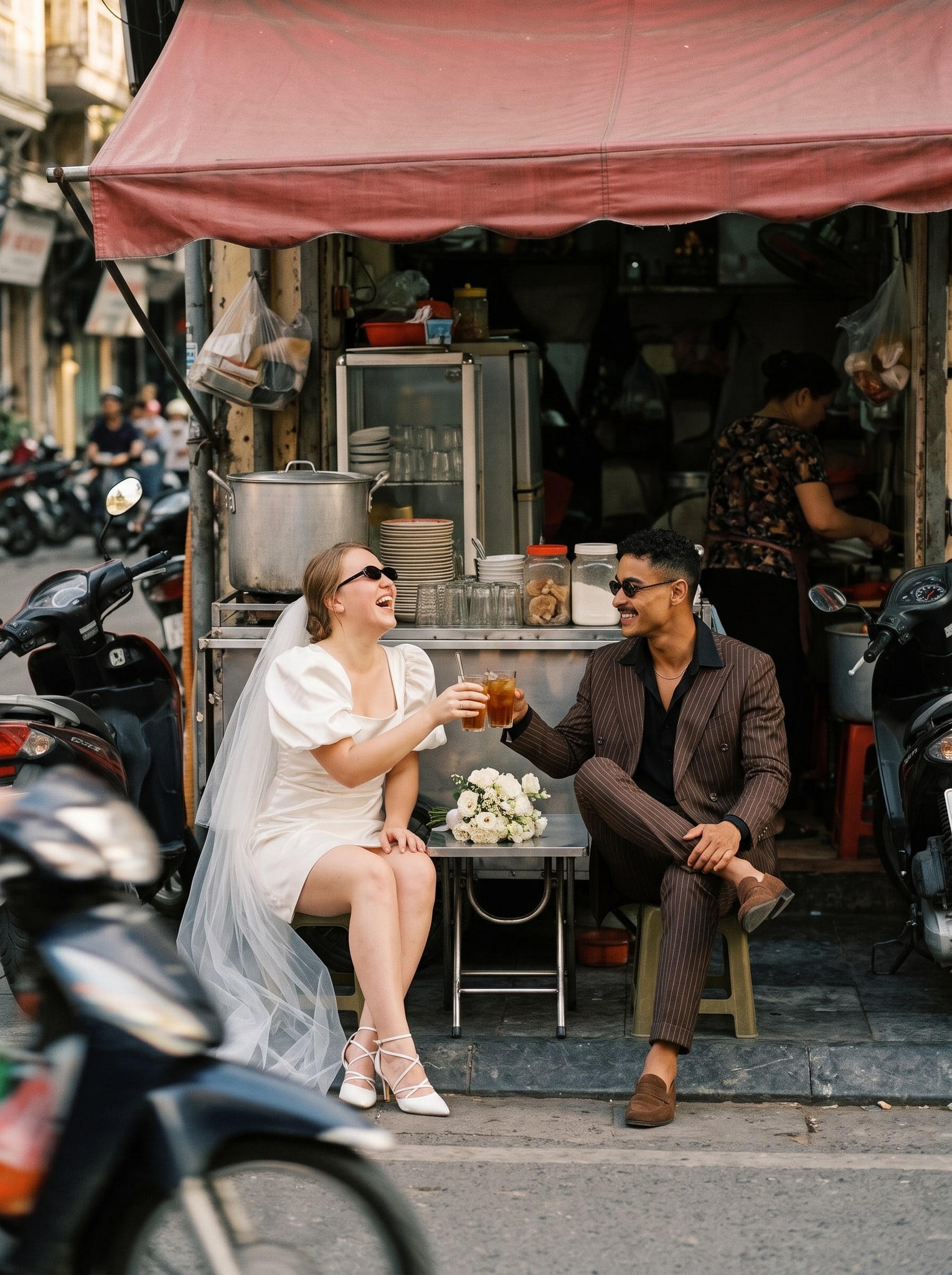
Between 07:00–09:00, before organized tours arrive, you'll encounter only locals and the occasional solo traveler. The village wakes slowly: residents sweep courtyards, vendors open small shops, and light gilts the stone walls without creating blown-out sky behind buildings. By 09:30, the first minibuses park near the entrance; crowds peak 11:00–14:00. Return after 17:00 when tour groups depart—the village quiets again, and the sunset casts warm, directional light across facades and narrow alleys. Weekday mornings (Tuesday–Thursday) are emptier than weekends; avoid Sunday and holidays. Conclusion: earliest arrival (before 08:00) guarantees solitude and the best light for detail shots.
Which season brings fewer visitors to the village?
June to August sees the fewest organized tours due to heat and humidity—casual day-trippers avoid midday heat, so morning visits are nearly empty. Winter (December–January) draws slightly more weather-conscious tourists but remains less crowded than October–November (peak domestic travel). Monsoon months (May–June) deter casual visitors but make stone work textured and moody with overcast skies. Spring (March–April) and autumn (September–November) attract the most visitors because of mild temperatures—if you want isolation, skip these months. Conclusion: visit June–August early morning for ghost-village solitude, or December–January for cool, clear light with fewer crowds.
Which temple rules and access points should you know?
Duong Lam Ancient Village centers on two communal temples (Mieu Ong Xa and Mieu Ha) and dozens of family shrines within private homes. Temples remain closed to non-worshippers during ceremonies (typically morning and full-moon days); ask locals or your guide before entering. Photography inside temples requires permission—some spaces prohibit cameras during ritual hours. The main entrance is from the south (near the parking lot); a northern exit leads to lime-kiln sites. No single ticket exists; small donations to temple keepers are customary (50,000–our current quote per group, not fixed). Wear covered shoulders and knees; remove shoes at thresholds. Conclusion: arrive after 09:30 to avoid ceremonies, hire a local guide, and clarify photo rules at each site.
How does light change through the seasons and hours here?
In summer (June–August), sunrise (05:00–05:30) creates long shadows across stone houses; by 08:00, light becomes frontal and contrasty. Midday (11:00–14:00) produces harsh, whitewashed facades—avoid this for detail work. Afternoon light (15:00–17:00) warms ochre walls and suits couple or solo portraits. Winter (December–January) offers softer, lower-angled light throughout the day; 08:00 light mirrors summer's 16:00 quality. Monsoon (May–June) brings diffused, gray light ideal for texture but mutes colors. Spring and autumn provide balanced light: clear morning skies, golden afternoon. Conclusion: shoot before 08:30 or after 15:00; choose summer for drama, winter for softness, and monsoon for muted heritage tones.
What makes Duong Lam ideal for ao dai and couple portraits?
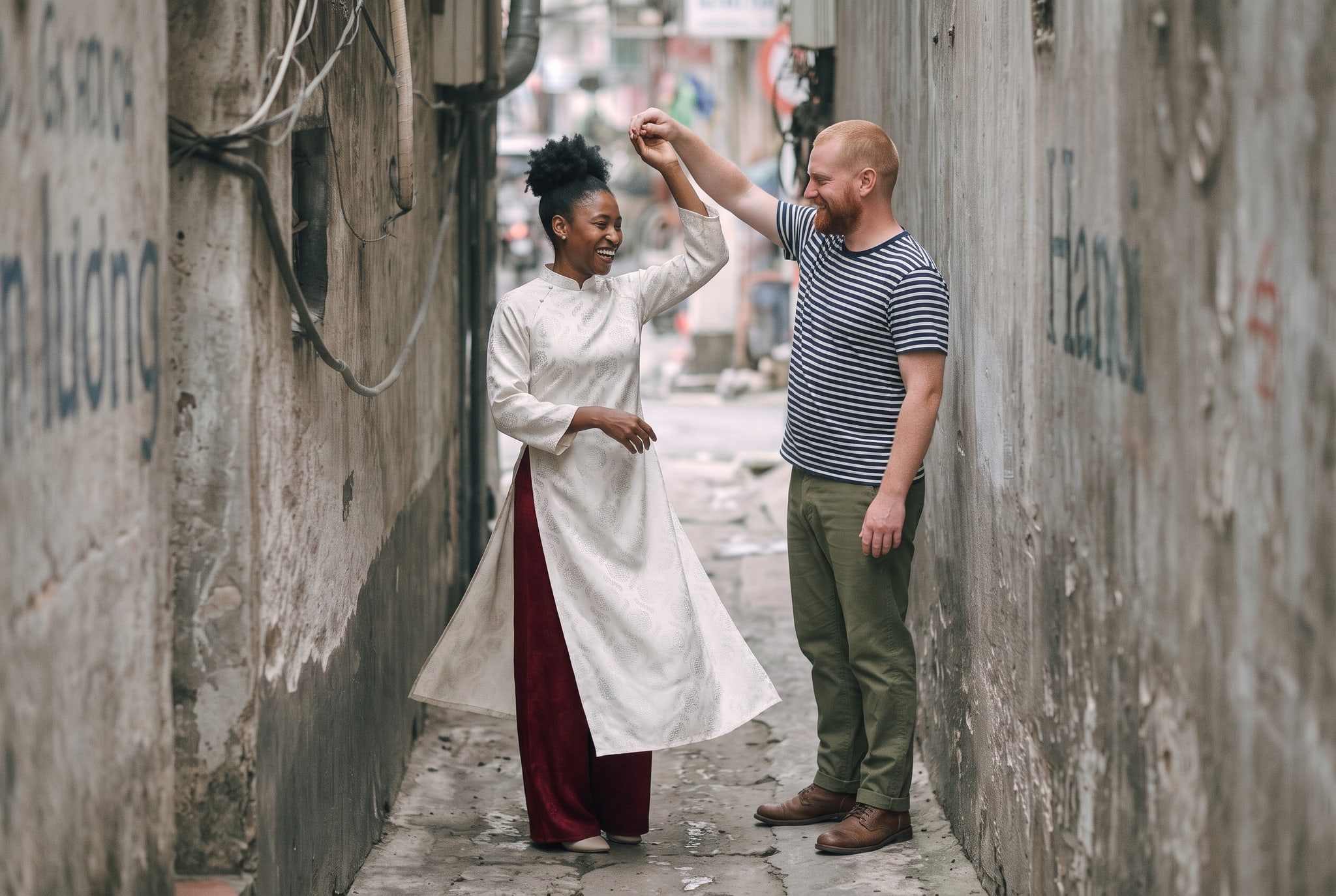
The village's stone-walled lanes, temple courts, and lichen-covered thresholds provide authentic backdrops absent from urban Hanoi. Narrow alleys frame tight two-person compositions; temple courtyards offer symmetry and depth. Early-morning light (06:30–08:00) renders ao dai fabric with fine detail and no glare. Couples gain privacy in quiet corners—couple photoshoots here avoid busy Old Quarter crowds. Ao dai portraits benefit from the village's muted palette: white and pastel fabrics pop against weathered stone. Our Hanoi team coordinates with a local guide, secures temple access at optimal light, and books you a quiet 1.5-hour window before crowds peak. Styles range from heritage-focused (formal pose, temple steps) to candid (walking narrow lanes, sitting on stone doorsteps). Conclusion: Duong Lam offers solitude and authentic heritage framing unavailable at urban landmarks.
| Session Type | Best Time | Light Quality | Crowd Level | Ideal For |
|---|---|---|---|---|
| Ao dai photoshoot | 06:30–08:30 | Soft, directional, no glare | <5 people | Heritage portraits, fabric detail |
| Couple photoshoot | 07:00–09:00 or 16:30–18:00 | Golden angle, intimate | Solo pairs | Engagement, romantic framing |
| Solo travel or family | 08:00–09:00 weekday | Frontal, clear | <10 group visitors | Candid walk-through, group poses |
| Return visit (no shoot) | 10:00–12:00 or 15:00–16:00 | Harsh or warm | 30–100 tourists | Free exploration, shopping, lunch |
How to avoid common mistakes at Duong Lam
Arriving after 10:00 on weekends. Tour minibuses cluster near temples; courtyards fill with selfie-stick crowds. Park 500 m away and walk back lanes instead of the main route.
Shooting midday without diffusion. Sunlight bleaches stone façades and creates dark eye shadows on faces. Bring a reflector or scrim; shoot under eaves or alleys where walls create shade.
Ignoring monsoon season. Heavy rain (May–June) closes some lanes and makes stone slippery—but skies turn dramatic gray. If it clears, light is soft; if you slip, local clinics are 10 km away.
Not hiring a local guide. Temple keepers speak minimal English; without introduction, some interiors are off-limits. Our coordination includes a bilingual guide who negotiates access and timing.
Overpacking or loud groups. Villagers live here year-round. Keep to 2–4 people; speak quietly; ask permission before framing homes or residents.
What to check before you visit
- Weather: Check 5-day forecast; avoid heavy rain (July–August) unless you want moody skies.
- Religious calendar: Full-moon ceremonies (often closed hours) fall on lunar dates—ask your guide.
- Transport: Hire a car with driver (5–7 hours round-trip from Hanoi) or join a group tour; no public bus serves the village directly.
- Footwear: Wear closed-toe shoes (uneven stone) and socks if you plan to enter temples.
- Cash: Small vendors accept only VND; bring our current quote for gas, guide tip, and donations.
- Permissions: If photographing villagers or private courtyards, ask permission first—smiles matter more than technical perfection.
For solo travelers or multi-day Hanoi shoots, explore solo travel portraits and family photoshoots that pair Duong Lam with Hoan Kiem Lake or Old Quarter heritage sites. See all Hanoi photo guides to plan your full itinerary.
FAQ
Do I need a permit or ticket to enter Duong Lam Ancient Village?
No entrance fee exists. Small voluntary donations to temple keepers (50,000–a quoted price per group) are customary. No formal permit needed for tourists; respect private homes and ask before photographing. Our guide handles local courtesies.
What's the nearest town for food or emergency services?
Duong Lam village has a few small eateries serving pho and com tam; most facilities are basic. Hanoian hospital and clinics are in Huong Son town, 12 km away. Stock water and snacks before visiting; bring a phone for emergencies.
Can I visit Duong Lam on the same day as other Hanoi landmarks?
Yes. A round-trip takes 5–7 hours from central Hanoi, leaving 3–4 hours at the village itself. Pair a morning shoot here with an afternoon session at Hoan Kiem Lake or Train Street—our coordinator can sequence multiple locations.
What's the best season to combine a Duong Lam shoot with other family or couple sessions?
June–August for isolation, December–January for cool light, or March–April for blooming scenery. Our family photoshoots and couple photoshoot packages include multi-location itineraries—ask for a custom day-trip quote.
If I arrive at a busy time, where can I wait or explore quietly?
North-side lime-kiln sites and smaller alleys away from the main temple square attract fewer visitors. Sit in a courtyard café or walk toward the village's eastern boundary. Your guide will steer you to empty pockets while crowds pass through the center.
Check dates
Send your dates, how many people and the style you like. We reply on WhatsApp in English with spots, timing and a quote.
FAQ
Do I need a permit or ticket to enter Duong Lam Ancient Village?
No entrance fee exists. Small voluntary donations to temple keepers (50,000–100,000 VND per group) are customary. No formal permit needed for tourists; respect private homes and ask before photographing. Our guide handles local courtesies.
What's the nearest town for food or emergency services?
Duong Lam village has a few small eateries serving pho and com tam; most facilities are basic. Hanoian hospital and clinics are in Huong Son town, 12 km away. Stock water and snacks before visiting; bring a phone for emergencies.
Can I visit Duong Lam on the same day as other Hanoi landmarks?
Yes. A round-trip takes 5–7 hours from central Hanoi, leaving 3–4 hours at the village itself. Pair a morning shoot here with an afternoon session at [Hoan Kiem Lake](/spots/hoan-kiem-lake) or [Train Street](/spots/hanoi-train-street)—our coordinator can sequence multiple locations.
What's the best season to combine a Duong Lam shoot with other family or couple sessions?
June–August for isolation, December–January for cool light, or March–April for blooming scenery. Our [family photoshoots](/family-photoshoot) and [couple photoshoot](/couple-photoshoot) packages include multi-location itineraries—ask for a custom day-trip quote.
If I arrive at a busy time, where can I wait or explore quietly?
North-side lime-kiln sites and smaller alleys away from the main temple square attract fewer visitors. Sit in a courtyard café or walk toward the village's eastern boundary. Your guide will steer you to empty pockets while crowds pass through the center.
More like this
Hanoi photo spots
Hanoi Book Street Family Photos: Best Times, Rules & Posing Tips
Hanoi Book Street (Phố Sách) offers tree-lined, traffic-light backdrops perfect for family photos. We guide you through light timing, local rules, and kid-friendly posing to avoid crowds and capture genuine moments.
Hanoi photo spots
Duong Lam Ancient Village Photo Spots: Best Times & Light Guide
Duong Lam Ancient Village, 45 km southwest of Hanoi, holds Vietnam's oldest intact rural architecture—tile-roofed houses, brick kilns and narrow lanes where morning mist holds light for 90 minutes. We photograph here year-round for solo travelers, families and couples seeking authentic, off-beat Han
Hanoi photo spots
Duong Lam Ancient Village Couple Photos: Light, Season & Posing Guide
Duong Lam is Hanoi's oldest village (13th century) with clay-brick architecture, quiet lanes and low tour traffic—ideal for unrushed couple shoots. We guide you through seasonal light, where crowds spike, what posing works for non-models and how to avoid common mistakes.