
Home › Blog › Hanoi photo spots
Duong Lam Ancient Village Couple Photos: Light, Season & Posing Guide
By the Hanoi Photoshoot team · 2026-11-06
Duong Lam Ancient Village, 45 km southwest of Hanoi city, is a living 13th-century settlement with narrow clay-brick lanes, wooden shutters and zero modern signage—perfect for intimate couple portraits. Sessions run 2–3 hours on-site; we shoot in the village itself plus nearby rice fields and wells. Best light arrives September–October and March–April when mornings stay cool and afternoon sun skews low (3–5 p.m.). Weekdays draw far fewer tour groups than weekends; a Tuesday or Wednesday morning gives you 60–90 uninterrupted minutes per lane. Most couples wear ao dai (we provide rentals), but soft neutral clothing works too. Posing non-models here is gentler than urban backdrops—walking, sitting on stoops, leaning on doorways feel natural because the setting invites stillness. Common mistakes: shooting midday (harsh shadows between houses), ignoring the village's quiet-hours rule (9 a.m.–11 a.m., 1–3 p.m. when locals rest), and arriving without a clear lane preference. Hanoi Photoshoot by Cáo Studio coordinates permits, timing and styling; we handle transport logistics on WhatsApp. Check dates on WhatsApp
Why does season matter so much for Duong Lam couple portraits?
Duong Lam sits in an open valley with minimal shade. Summer (May–August) brings humidity above 85%, afternoon glare that flattens features, and afternoon thunderstorms that can trap you for hours. Winter (November–February) is dry but sunlight drops low by 4 p.m., forcing a rushed final 45 minutes. Autumn (September–October) and spring (March–April) offer 6–7 hours of usable light without extreme heat. Light quality peaks at 9–11 a.m. (soft directional) and 3:30–5:30 p.m. (golden, angled through brick textures). Monsoon season (May–September) also brings afternoon cloudbursts; plan indoor backup shots in family shrines if rain looms. Dust in March peaks before April rains settle it, so spring light is technically superior but visibility lower. Choose autumn or spring for the clearest, coolest, most flattering conditions.
What outfits work best in the village setting?
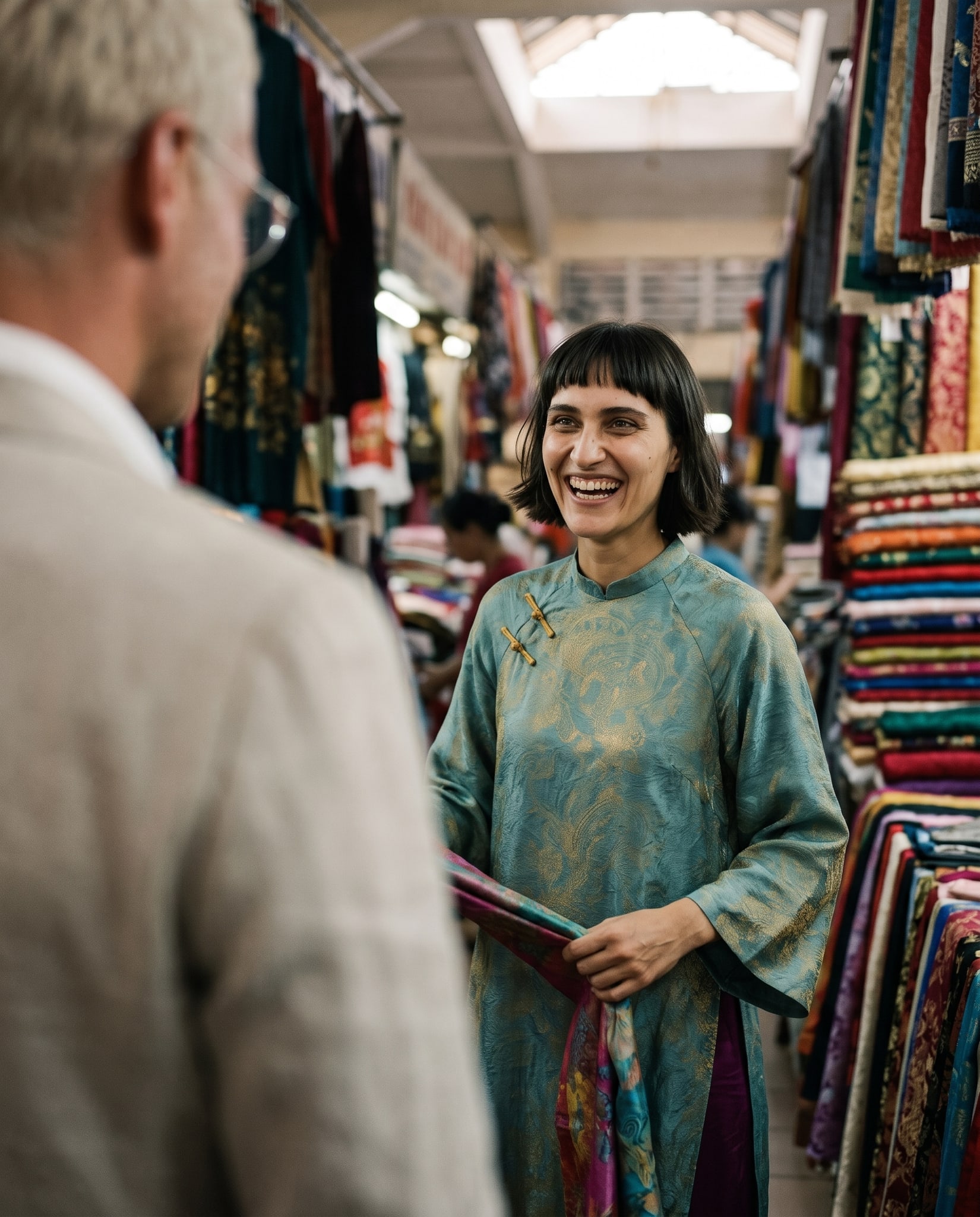
Ao dai dominates Duong Lam couple shoots—the traditional silk tunic reads photogenically against rust-brick walls and photographs with cultural authenticity. We stock ao dai in classic jewel tones (navy, emerald, burgundy) and pastels (lavender, blush, cream); coordinating colors for couples helps visual harmony. For non-traditional shoots, soft neutral fabrics (linen, cotton) in cream, sage or taupe blend with aged architecture; avoid blacks (too harsh against clay), patterns (compete with walls) and very bright colours (unbalance the frame). Footwear should be flat or minimal-heel (cobblestone lanes are uneven and loud); dark leather or soft slippers avoid injury and unwanted sound. Jewelry should be delicate—chunky pieces distract from faces and wedge between you and walls. Hair up or half-up works better in the heat; loose hair tangles against brick doorways and catches sweat. Bring a light shawl or long cardigan for midday cover if you're sensitive to sun. Ao dai + neutral layers + flat shoes = the formula for hour-long comfort and sharp images.
How do you pose couples who've never modeled before?
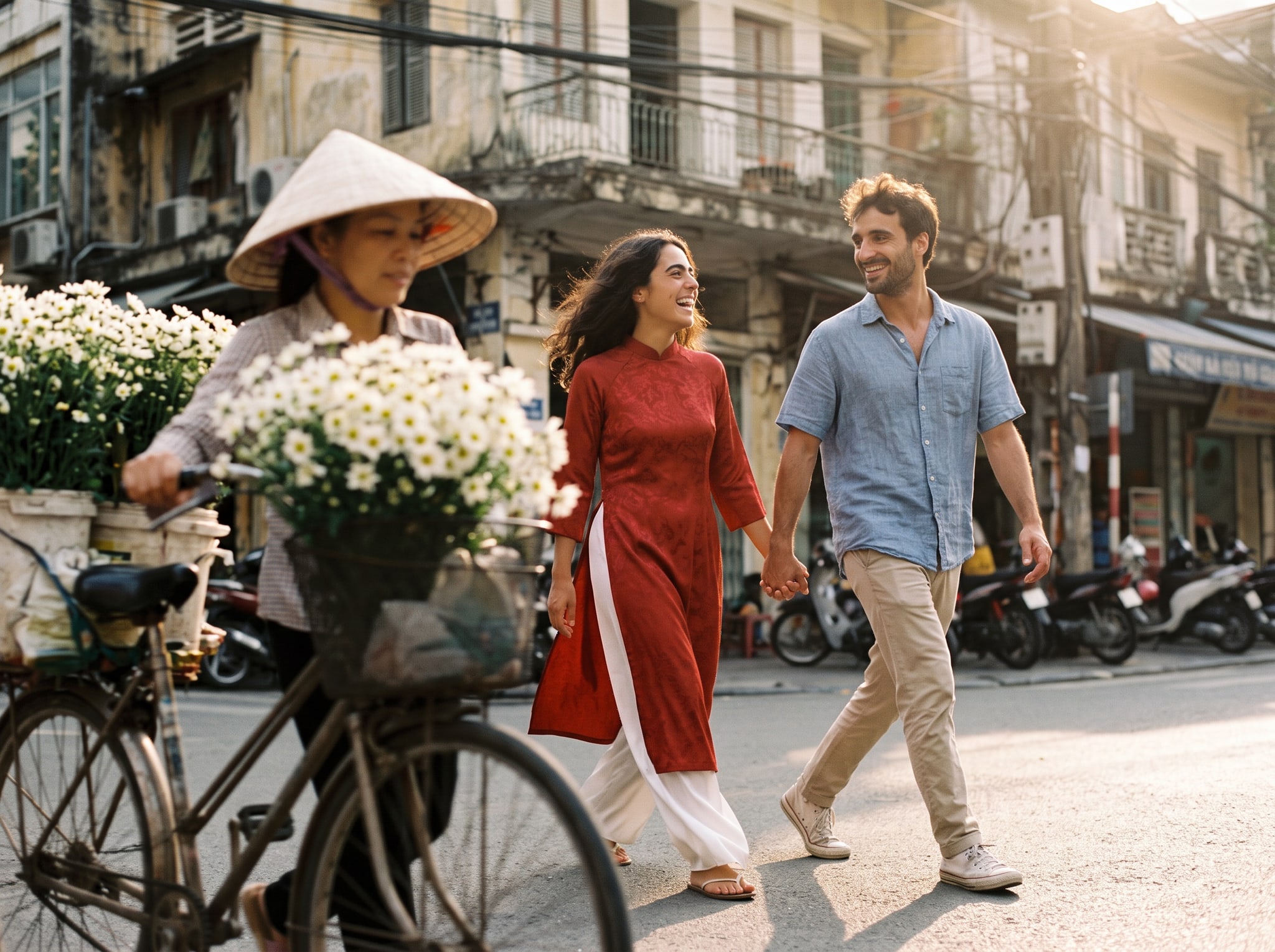
Non-models freeze when asked to "face the camera"—Duong Lam's architecture solves this. Ask partners to walk toward you slowly down a lane (their focus softens, shoulders drop), then pause and look at each other (intimacy comes naturally). Sitting on a low doorstep with one partner leaning into the other's shoulder works because the pose supports both bodies and feels supported. Foreheads touching, eyes closed, is calming and requires no "expression" coaching. Standing with both leaning against a wall, one in front, one behind (hands on waist or shoulder), feels secure and photographs as closeness without awkwardness. Avoid "stand facing each other and smile"—it's stiff. Instead, say "whisper something that makes them laugh" or "tell them one thing you love about this place right now." Movement beats stillness: walking hand-in-hand, sitting on well edges, standing in doorways framed by darkness. Hands should rest naturally—interlaced fingers, hand on back, arm across shoulders—because floating hands read as tension. Posing non-models is guiding them to do what they'd do alone, with a camera present.
When do crowds peak, and how do you avoid them?
Duong Lam draws ~1,500–2,000 visitors on weekends (Saturday–Sunday, 9 a.m.–5 p.m.), funneled into 3–4 main lanes. Weekday foot traffic drops to ~200–400 people, concentrated 11 a.m.–2 p.m. (lunch and tour-coach arrival window). Early morning (7–8 a.m.) and late afternoon (4–6 p.m.) are near-empty because most tours depart by 4 p.m. The village also observes quiet hours 9–11 a.m. and 1–3 p.m. (local rest and meal times)—crowds respect this, and your shoot is less intrusive then. Secondary lanes (east and south sides, away from the main shrine entrance) see 70% fewer foot-tourists; positioning your session there lets you shoot freely. Photography permits (issued at the entrance by the cultural office) cost a standard fee and typically clear within 10 minutes. Mentioning you're working with a local studio (us) speeds clearance. Tuesday–Thursday, 7–9 a.m. or 3:30–5:30 p.m., in secondary lanes = crowd-free couple portraits.
How do you handle light changes across a 3-hour session?
A typical 2–3 hour session in Duong Lam runs 8–11 a.m. or 3–6 p.m., spanning a 40–50° shift in the sun's angle. Early morning light starts soft and directional from the east (flattering for faces); by 10 a.m. it's overhead, reducing shadows but also reducing drama. We move between sunny lanes (bright, contrasty, best for ao dai colour pop) and shadowed lanes (soft, flattering for skin, moodier) to follow light quality. Doorway backlighting (sun directly behind you, shining into a dark entrance) creates a halo effect ideal for romantic frames—this happens best 4–5 p.m. in spring/autumn. Reflected light off white-washed shrines helps fill shadows in side-lit portraits. If clouds roll in (common March–April), diffused light is actually ideal—even skin tone, no harsh shadows, muted drama that suits ao dai jewel tones. We bring reflectors to lift shadows in doorways; you carry a white scarf that doubles as a fill-light bounce. Plan early-morning or late-afternoon sessions; we adjust poses and framing as the sun moves to maintain flattering light throughout.
| Session Time | Light Character | Best Location Type | Couple Pose Fit |
|---|---|---|---|
| 7–9 a.m. | Soft east side, directional, low contrast | East lane, backlit doorways | Walking, foreheads touching, sitting |
| 10–11 a.m. | Overhead, harsh shadows in alleys | Open well areas, sun-exposed corners | Standing, ao dai colour emphasis |
| 1–3 p.m. | Flat, bright, heat stress | Shaded shrine interiors (permits required) | Seated, intimate angles, reflection shots |
| 3:30–5:30 p.m. | Golden side-light, low angle, long shadows | West-facing walls, door recesses | Backlighting halos, silhouettes, embraces |
What permits and rules apply on the day?
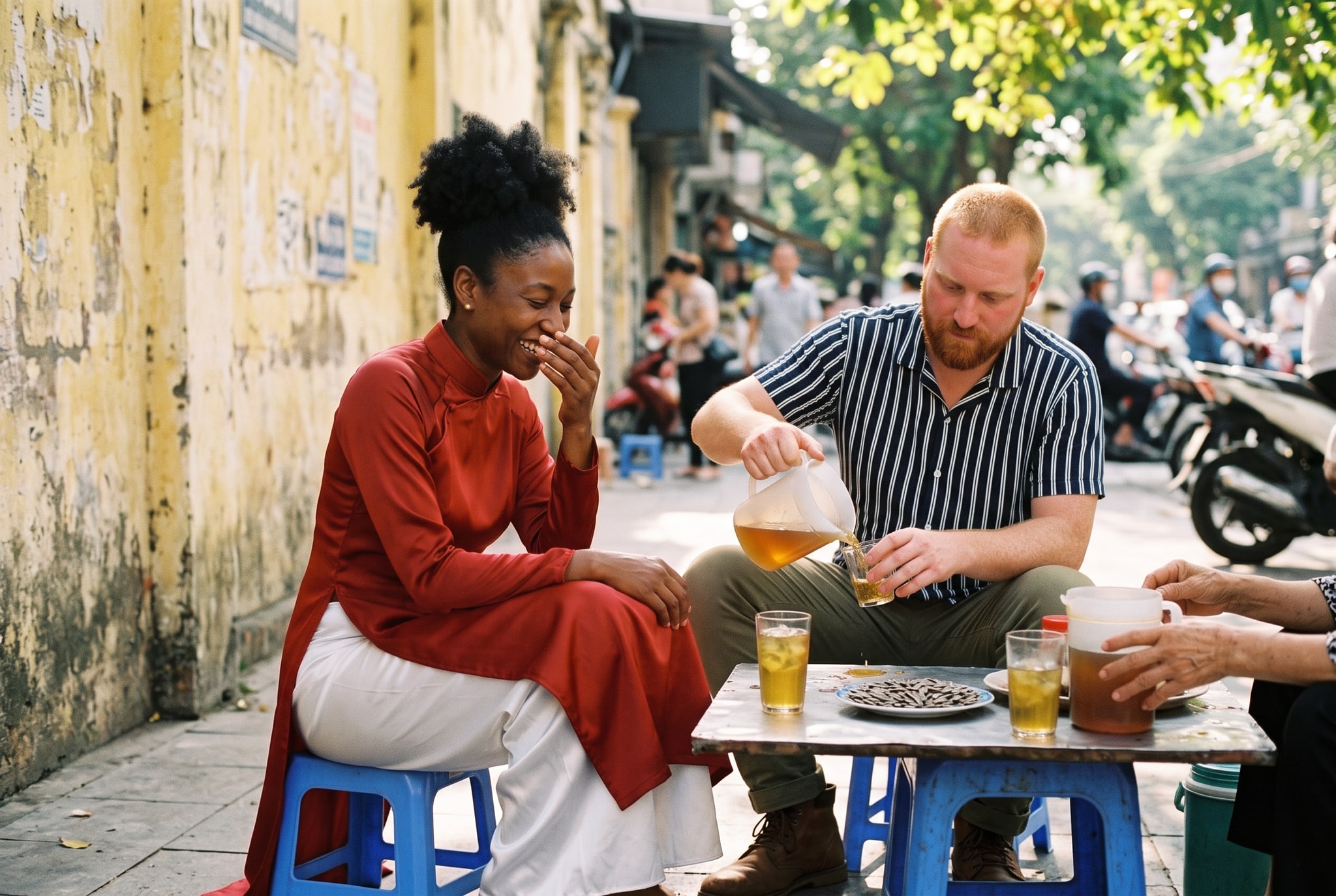
Duong Lam is a protected cultural village managed by the local cultural centre (entrance, south side). Photography permits are required for commercial/professional shoots; we obtain these in advance on your behalf. Permits are tied to your session date and typically allow 3–4 hours in designated zones. You may not photograph inside private homes, family shrines or the main communal shrine without specific family consent—we know which families are welcoming and arrange this. Drones, tripods and large reflectors require advance notice. The village observes a strict quiet-hours rule (9–11 a.m., 1–3 p.m.) when locals rest; loud talking, music and large groups are requested to move. Alcohol is not permitted in outdoor areas. The cobblestone lanes are uneven—wearing proper footwear prevents twisted ankles and loud footsteps. Respectful dress (covered shoulders and knees when inside shrines) is expected. Couples in ao dai do not need extra permits—traditional dress is celebrated. We file permits before your shoot date; you follow quiet-hours timing and respect family privacy.
What makes Duong Lam different from other Hanoi village photo spots?
Duong Lam's architecture is the oldest continuously inhabited village settlement in Hanoi (13th century clay-brick construction vs. later-built or rebuilt competitors). The houses are genuine family dwellings, not commercialized homestays—the lived-in quality and patina show authenticity that newer "heritage" villages cannot. Unlike Old Quarter photo locations, which are dense, narrow and packed with shops, Duong Lam has breathing room and silence. The village is vehicle-free (no motorbikes, no honking), so audio is clean for video and ceremonies feel unhurried. Unlike rice-field portraits in the Red River Delta, which are open and bright, Duong Lam offers intimate framing: doorways, alleyways, overhanging eaves that create natural vignettes. The cultural centre actively preserves the village and welcomes respectful photographers—this clarity of permission reduces stress on shoot days. For couple photoshoot sessions specifically, the village's quiet and architectural depth make emotional, tender images possible without competing visual noise. Duong Lam is the oldest, quietest, most architecturally unified village in Hanoi—ideal for slow, intimate couple work.
Should you combine Duong Lam with other Hanoi day-trip spots?
Yes, but carefully. Duong Lam is 45 km from central Hanoi; the drive is 1–1.5 hours each way in mid-traffic (10 a.m.–12 p.m., 4–6 p.m.). Pairing it with a second location in the same direction (e.g. a nearby silk village or rice-field lunch spot) adds 1.5–2 hours without extra travel. Driving back into Hanoi to shoot Hoan Kiem Lake or Train Street the same day stretches you thin—3 hours in Duong Lam, 90 minutes driving, 90 minutes at a second spot, rush light changes and fatigue. We often recommend a full Duong Lam session (2–3 hours, unrushed) on one day, then a separate half-day in Hanoi's inner spots if you want variety. If time is tight, focus on Duong Lam alone—the village rewards depth. Lunch at a local restaurant (we recommend types, not names) near the village is cheap and good; add 1 hour if you want a meal break. Duong Lam works best as a standalone half-day session, starting early or afternoon, with optional nearby meal.
How does Duong Lam suit different couple session types?
Duong Lam is versatile. Pre-wedding photoshoots benefit from its timeless backdrop and low pressure—couples feel they can be themselves. Proposal photographers use the village's intimacy for surprise moments (we coordinate with family shrines for private ceremonies). Anniversary couples love the serene, romantic quality. Couples seeking ao dai photoshoots specifically find Duong Lam ideal—the clay-brick walls read richly with jewel-tone silk. International couples and expats value the cultural authenticity and the absence of a tourist-photo feel. If you're new to portraits or anxious about being photographed, Duong Lam's gentle pace and natural poses help. For couple photoshoots that emphasize connection (not fashion or formal posing), this village is unbeatable. Couples with mobility concerns should note: uneven cobblestones and stairs between lanes make it challenging; we can adapt to shorter routes and more seated poses. Duong Lam suits any couple seeking quiet, depth and cultural authenticity—especially those in ao dai or new to professional portraits.
What to check before you book a Duong Lam session
- Season & light preference: Confirm autumn (Sept–Oct) or spring (March–April) aligns with your dates. Ask about light quality forecasts 2 weeks before.
- Crowd tolerance: If you dislike any background foot-traffic, specify a Tuesday–Thursday, early morning or late afternoon slot.
- Permit status: Confirm we're filing the permit 7 days in advance and it's cleared by your session date.
- Outfit & ao dai: Decide if you want traditional ao dai (we provide, fitted on-site) or neutral clothing; communicate colour preferences early.
- Accessibility: Flag any mobility concerns so we route you through easier lanes and adjust posing.
- Weather backup: Confirm what happens if rain arrives (rescheduling window, indoor shrine shoots, or postponement to the next clear day).
- Transport: Ask if we arrange pickup/drop-off from your Hanoi accommodation or if you meet us at the village entrance.
- Editing timeline: Specify when you need finals (within 2 weeks is standard; ask for a quote on WhatsApp for faster turnaround).
Plan your Hanoi shoot
FAQ
How far is Duong Lam from Hanoi city center?
About 45 km southwest; driving takes 1–1.5 hours depending on traffic. We handle transport coordination. A 2–3 hour session typically runs a full half-day commitment including drive time.
Do we need permits for couple photos in Duong Lam?
Yes, professional photography permits are required. We file them in advance with the cultural centre. Permits are tied to your session date and typically cost a standard flat fee, included in our package quote.
What's the best month for Duong Lam light?
September–October and March–April. Light is golden, cool, and flattering. May–August brings heat, humidity and afternoon storms. November–February is dry but sunlight fades by 4 p.m. Ask us for a quote on WhatsApp to confirm your preferred dates.
Can we wear Western clothing instead of ao dai?
Yes. Soft neutral fabrics (cream, sage, taupe linen/cotton) and flat shoes work well. Ao dai is more photogenic against clay-brick walls and feels authentic to the setting—we recommend it, but choice is yours.
What if it rains during our session?
We reschedule to the next clear day within 7 days at no extra charge. If indoor shrine shots are available and permitted, we sometimes pivot to those; otherwise we postpone. Confirm your flexibility on booking.
How long does a typical Duong Lam session take?
2–3 hours on-site, covering 3–4 main lanes and secondary alleys. Add 1–1.5 hours each way for driving and a 30-minute arrival/permit check.
Are there good lunch spots near Duong Lam village?
Yes, modest local restaurants near the village entrance serve excellent pho, com tam (broken-rice) and fresh spring rolls. We recommend types; you choose. Budget 1 hour if you want a break.
Do you provide ao dai rental, or should we bring our own?
We have in-house makeup, hair & ao dai rental. Fitting happens on-site morning-of. If you own ao dai you love, bring it; we'll work with that too.
Check dates
Send your dates, how many people and the style you like. We reply on WhatsApp in English with spots, timing and a quote.
FAQ
How far is Duong Lam from Hanoi city center?
About 45 km southwest; driving takes 1–1.5 hours depending on traffic. We handle transport coordination. A 2–3 hour session typically runs a full half-day commitment including drive time.
Do we need permits for couple photos in Duong Lam?
Yes, professional photography permits are required. We file them in advance with the cultural centre. Permits are tied to your session date and typically cost a standard flat fee, included in our package quote.
What's the best month for Duong Lam light?
September–October and March–April. Light is golden, cool, and flattering. May–August brings heat, humidity and afternoon storms. November–February is dry but sunlight fades by 4 p.m. Ask us for a quote on WhatsApp to confirm your preferred dates.
Can we wear Western clothing instead of ao dai?
Yes. Soft neutral fabrics (cream, sage, taupe linen/cotton) and flat shoes work well. Ao dai is more photogenic against clay-brick walls and feels authentic to the setting—we recommend it, but choice is yours.
What if it rains during our session?
We reschedule to the next clear day within 7 days at no extra charge. If indoor shrine shots are available and permitted, we sometimes pivot to those; otherwise we postpone. Confirm your flexibility on booking.
How long does a typical Duong Lam session take?
2–3 hours on-site, covering 3–4 main lanes and secondary alleys. Add 1–1.5 hours each way for driving and a 30-minute arrival/permit check.
Are there good lunch spots near Duong Lam village?
Yes, modest local restaurants near the village entrance serve excellent pho, com tam (broken-rice) and fresh spring rolls. We recommend types; you choose. Budget 1 hour if you want a break.
Do you provide ao dai rental, or should we bring our own?
We have in-house [makeup, hair & ao dai rental](/makeup-and-styling). Fitting happens on-site morning-of. If you own ao dai you love, bring it; we'll work with that too.
More like this
Hanoi photo spots
Hanoi Book Street Family Photos: Best Times, Rules & Posing Tips
Hanoi Book Street (Phố Sách) offers tree-lined, traffic-light backdrops perfect for family photos. We guide you through light timing, local rules, and kid-friendly posing to avoid crowds and capture genuine moments.
Hanoi photo spots
Duong Lam Ancient Village Photo Spots: Best Times & Light Guide
Duong Lam Ancient Village, 45 km southwest of Hanoi, holds Vietnam's oldest intact rural architecture—tile-roofed houses, brick kilns and narrow lanes where morning mist holds light for 90 minutes. We photograph here year-round for solo travelers, families and couples seeking authentic, off-beat Han
Hanoi photo spots
Duong Lam Ancient Village: Crowd-Free Times & Photo Spots
Duong Lam Ancient Village, 45 km southwest of Hanoi, draws tourists year-round—but early mornings and weekdays offer near-empty temple courtyards and village lanes. We share exact timing, seasonal light, and how to pair a visit with professional portraits.