
Home › Blog › Hanoi photo spots
What to Wear for Photos at Hoan Kiem Lake: Hanoi Season & Style Guide
By the Hanoi Photoshoot team · 2026-11-06
At Hoan Kiem Lake, wear lightweight, breathable fabrics year-round—silk, linen, cotton—because humidity and heat are constant, even in winter. Light colors (white, cream, pastels) photograph better in the lake's bright reflection; avoid neon or busy patterns that compete with water and trees. Morning light (6–8 a.m.) suits romantic, ethereal looks; afternoon (3–5 p.m.) demands darker tones to avoid blown-out skin. Loose, flowing shapes (ao dai, maxi dresses, wide trousers) move better on crowded paths and suit the lake's classical vibe. Comfortable walking shoes are non-negotiable—the lakeside loop is 1.8 km, uneven in places, and always packed. At Hanoi Photoshoot by Cáo Studio, we advise clients on outfit layering by month, shoe choice, and jewelry that won't catch light. Avoid overly formal business wear unless shooting pre-wedding; stick to natural, relaxed elegance that reads authentic in frames. Check dates on WhatsApp
What fabrics and colors work best at Hoan Kiem?
Silk and linen are your best choices—they breathe in Hanoi's 70–95% humidity and drape beautifully in photographs. Cotton works too if it's a quality weave; cheap cotton creases visibly and clings to skin by mid-morning. Avoid polyester blends, which trap sweat and look plasticky under direct light. For color, whites, creams, soft pinks, dusty blues and earth tones photograph richly against the lake's reflections; jewel tones (emerald, deep plum) also read well. Neon, hot pink, or high-contrast geometric patterns distract from your face and clash with the calm water backdrop. Pastels work year-round, but in winter (November–February), slightly deeper tones prevent you from fading into early-morning mist.
How do Hanoi's seasons change what you should wear?
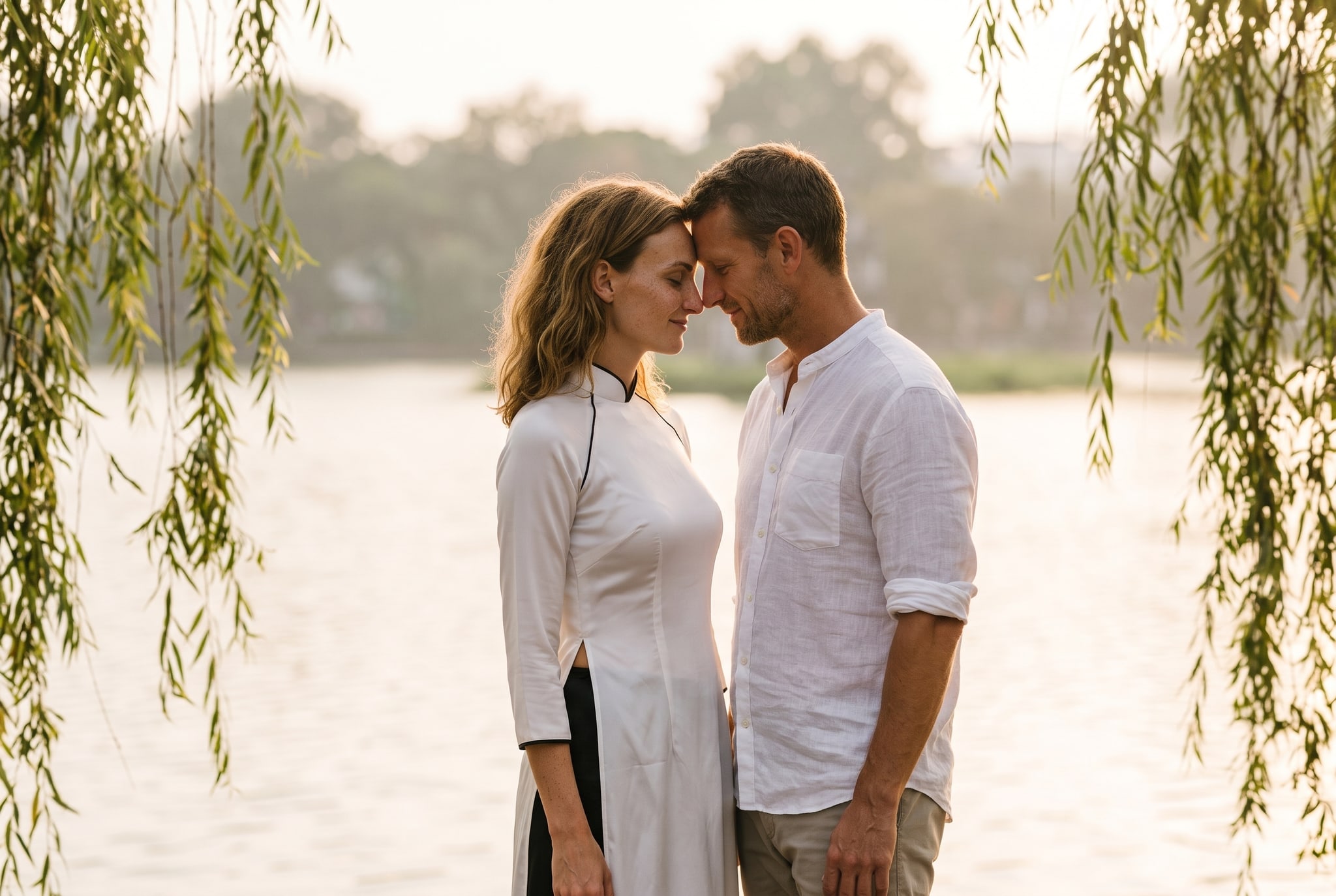
Winter (November–February): Temperatures drop to 8–15°C (46–59°F), but humidity lingers. Layer with a lightweight cardigan, linen scarf, or tailored blazer you can remove for key shots. Avoid heavy coats—they bulk up and photographs grey. Wear closed-toe flats or loafers; morning dew makes paths slippery. Light pastels still work; soft greys and navies add warmth without heaviness.
Spring (March–May): Peak season. Heat rises to 25–30°C (77–86°F) with occasional rain. Wear sleeveless or short-sleeve pieces; a gossamer kimono or shawl handles sudden showers and adds dimension. Waterproof shoes or sandals are wise. Bright, fresh colors (white, pale yellow, soft coral) suit the season's flowering trees.
Summer (June–August): Hottest and wettest. 32–38°C (90–100°F), afternoon thunderstorms common. Wear minimal layers—sleeveless maxi dresses, linen shorts with a loose top. Avoid dark colors (they absorb heat and sweat shows). Bring a compact umbrella or rain poncho. Shoot early (before 9 a.m.) to avoid midday glare and heat haze.
Autumn (September–October): Similar to spring—25–28°C, occasional rain tapering off. Layers again work best. Colors are richer; jewel tones photograph beautifully as humidity begins to drop.
Quick conclusion: Lightweight layers you can remove beat one heavy piece every season.
Does shoot type (couple, solo, family) change outfit rules?
Yes—purpose shifts both fabric weight and silhouette. Couple photoshoot partners often coordinate in complementary colors (one pastels, one earth tones) rather than match exactly; flowing fabrics photograph movement and connection better than tailored pieces. Solo travel portraits suit bold, personal style—a standout jacket, vintage scarf, or cultural element (silk scarf, heirloom jewelry) adds narrative. Family photoshoot benefits from tonal coordination (all pastels, all neutrals) rather than rigid matching; kids move better in relaxed fits, so avoid stiff collars or tight sleeves. Pre-wedding photoshoot pairs often wear formal or semi-formal (groom in shirt or light suit, bride in ao dai or elegant dress); we advise against white bride dresses at Hoan Kiem because the lake's bright reflection washes them out—champagne, ivory, or pale blush reads better. Ao dai photoshoot clients rely on our in-house rental selection; we choose colors and silks that suit your skin tone and the season's light. Each type demands a different confidence level in the outfit—couple shoots let you be playful; solo portraits require something you love wearing for hours.
Comparison table: What to wear by shoot type
| Shoot type | Fabric | Color palette | Fit | Accessory tip |
|---|---|---|---|---|
| Couple | Silk, linen | Complementary (not matched) | Flowing, relaxed | One shared element (scarf, bouquet) |
| Solo travel | Cotton-silk blend | Personal statement | Fitted or oversized, bold | Vintage watch, scarf, cultural piece |
| Family | Lightweight cotton, linen | Tonal (all warm or cool) | Loose, kid-friendly | Simple jewelry; avoid jangling pieces |
| Pre-wedding | Silk, cotton-silk (bride); linen shirt (groom) | Ivory, pale blush, champagne (bride); neutral (groom) | Tailored, romantic | Minimalist jewelry; flowers or boutonnière |
| Ao dai | Silk (our rental) | Jewel tones, pastels, classic hues | Form-fitting at bodice, flowing skirt | Gold or silver stud earrings only |
What shoes and accessories avoid disasters at Hoan Kiem?
Shoes are the largest regret we hear. The lakeside path is paved but uneven—roots lift concrete, drain grates catch heels, and wet patches hide. Flat, closed-toe walking shoes (leather loafers, canvas sneakers, ballet flats, minimalist sandals) are safest; heels sink and tire your feet within 30 minutes. If you insist on elevation, wear block heels (chunky, stable) and plan shots near the Turtle Tower or sitting areas. Waterproof or quick-dry shoes matter in summer and late spring. Avoid brand-new shoes—they blister over 1.8 km. Break them in at home first.
Accessories should be minimal and secure. Dangling earrings catch wind and distract; studs or short drops work better. Scarves and lightweight wraps add dimension and handle sudden sun changes. Avoid heavy, long necklaces (they catch light, look clunky at waist level). Rings and bracelets are fine, but metal catches harsh midday glare—suggest matte finishes. A light bag (crossbody or small backpack) keeps hands free for natural posing. Skip oversized sunglasses unless they're essential (early morning light doesn't warrant them); they hide your eyes and date the photo.
Honest note: Comfort dictates your mood. Blistered feet and a tight collar show in your face. Prioritize shoes and fit over trend.
How does timing of day change what fabric and colors to wear?
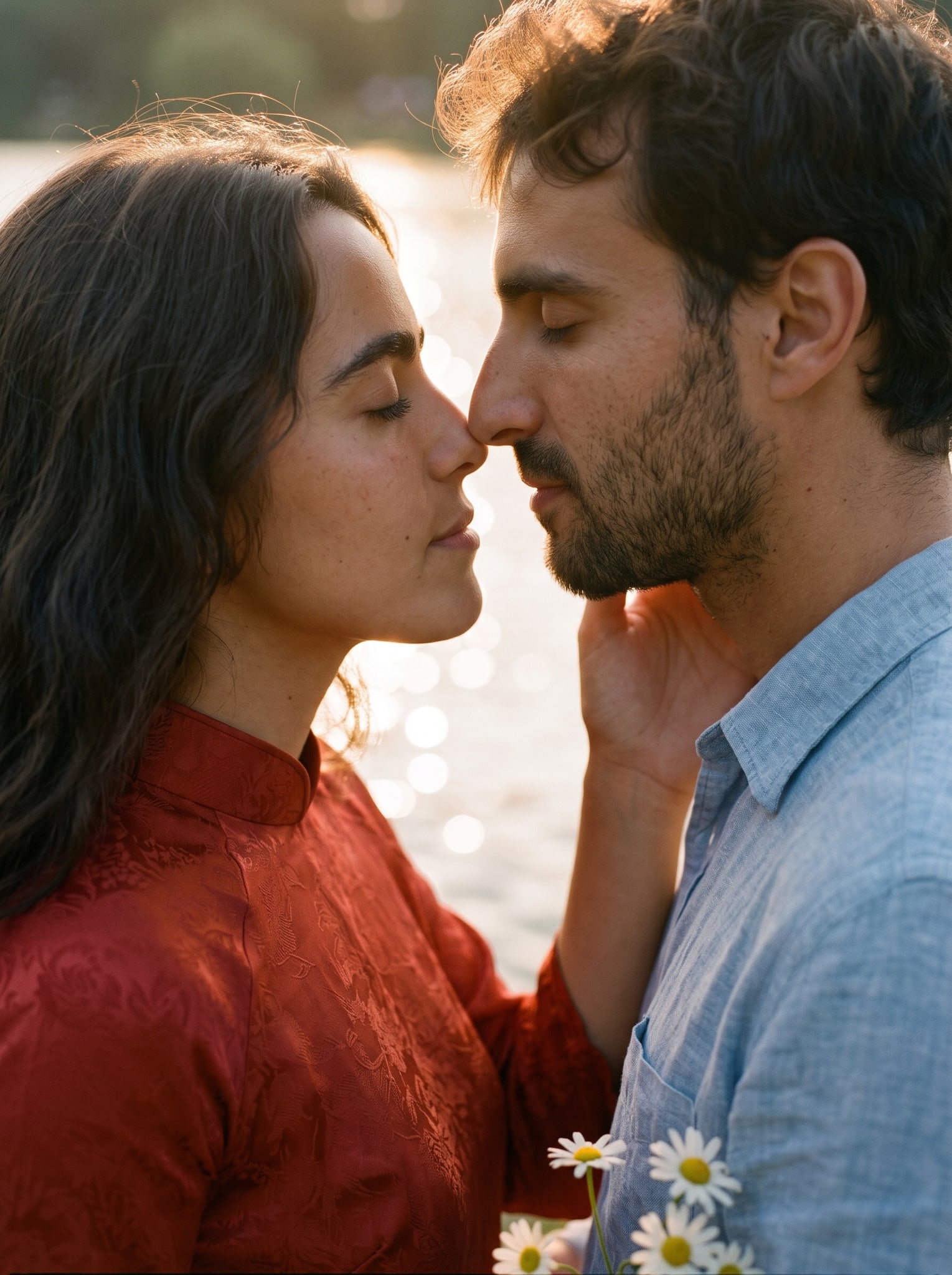
Light intensity and direction dictate color choice and fabric sheen. Early morning (6–8 a.m.): Soft, golden light favors ethereal fabrics (chiffon, silk organza) and pastels; they glow. Lightweight and flowing because you'll warm up as sun rises. Avoid dark colors—they absorb weak light and read flat. Late morning to noon (9 a.m.–12 p.m.): Harsh, overhead light requires protection; wear neutral, matte fabrics that don't reflect glare back at the camera. Avoid glossy silk unless you enjoy bright spots on clothing. Lighter colors still work, but they read cooler (less flattering). Afternoon (1–4 p.m.): The sun drops westward, warming the lake. Medium-tone and jewel-tone colors photograph richly; darker shades prevent washout. Avoid white and pale pastels—they blow out against bright water. Cotton and linen (less shiny) are safer than reflective silk. Late afternoon to dusk (4–6 p.m.): Golden-hour light is flattering to all colors; this is when nearly every outfit shines. Fabric sheen matters less because light is diffuse. Wear what you love—the hour forgives imperfect choices.
One-sentence truth: If you shoot midday, choose matte, darker fabrics; if you shoot dawn or dusk, pastels and sheen photograph best.
What to check before you book
- Confirm your shoot time with us on WhatsApp; it drives every clothing choice.
- Check the 14-day forecast for Hanoi a week before—rain shifts fabric and color strategy.
- Walk the Hoan Kiem loop in your outfit at home. If your feet hurt after 30 minutes, they'll hurt during the shoot.
- Bring a lightweight layer (cardigan, scarf) even if the forecast says no rain—lake breezes are real.
- Avoid white or pale pastels if you're shooting noon–2 p.m.—the lake's glare washes them out.
- Test your accessories indoors under bright light. Reflective pieces that look fine in shadow can blow out in frames.
- Book our makeup and styling service if you're unsure about color matching your skin tone—we know Hanoi's light and can advise live.
Why Hoan Kiem demands different rules than other Hanoi spots
The lake's bright, reflective water behaves unlike Hanoi's Old Quarter narrow alleys (which demand jewel tones and patterns to stand out against stone) or Train Street (which suits vintage, saturated color). Hoan Kiem's open water and sky create blown-out backgrounds—you need fabric and color contrast to separate from the environment. The constant crowds (500–2,000 people at any hour) mean busy backgrounds; your outfit must read clearly even at distance. This is why we steer clients toward flowing, simple, single-color pieces and away from fussy details that disappear in frames. If you're shooting multiple Hanoi locations, plan outfits that work in shade (Old Quarter pieces) and bright light (Hoan Kiem pieces)—or plan two separate sessions with our in-house makeup and styling team.
Outfit checklist: What to pack for your Hoan Kiem session
- Primary outfit: Your chosen piece (dress, ao dai, shirt-and-trousers combo), tried on and comfortable.
- Secondary piece: A cardigan, linen jacket, or scarf for backup shots or weather.
- Shoes: Broken-in, flat, closed-toe walking shoes. Bring a backup pair (soft sandals) if your primary feels tight.
- Undergarments: Seamless, skin-tone bra or shapewear if your fabric is thin (avoids visible lines).
- Jewelry: Minimal, matte finish. Leave heavy chains or dangles at home.
- Bag: Small crossbody or backpack, not a large tote (hands show in photos).
- Umbrella or poncho: Even if no rain is forecast—summer and spring surprise you.
- Touch-up kit: Blotting papers, lipstick, and a compact mirror (we have makeup on set, but you may want a refresh between outfits).
- Phone and ID: Hoan Kiem's paths attract pickpockets; keep valuables in a secure bag or with our team.
- Water and snacks: The 1.8 km loop takes 45–90 minutes depending on shot pace. Dehydration shows in your skin.
Ready to plan? We book Hoan Kiem Lake photo sessions year-round; contact us on WhatsApp with your date, preferred shoot time, and outfit ideas—we'll confirm feasibility and refine your look before you arrive.
Plan your Hanoi shoot
FAQ
Is white clothing okay at Hoan Kiem in summer?
Avoid pure white during midday (10 a.m.–3 p.m.)—the lake's glare blows it out. White works beautifully at dawn or dusk. In summer, if you love white, shoot early (6–8 a.m.) or late (4–6 p.m.) for best results.
Can I wear jeans at Hoan Kiem?
Yes, if they're well-fitted and in a lighter wash (avoid dark indigo or black in bright sun—they absorb heat and photograph stiffly). Pair with a flowing top. Dark jeans read better in morning or evening light than midday.
Do I need to coordinate outfits if I'm shooting with my partner?
No matching required—complementary colors (one warm, one cool) photograph more naturally and interesting. If you both wear soft pastels or earth tones, you'll read as a couple without looking costume-y.
What if it rains on my shoot day?
Bring a poncho or umbrella; rain at Hoan Kiem often stops within 20 minutes. Wet pavement photographs beautifully (reflections, dramatic mood). Wear dark or matte fabrics if rain is forecast—they hide water spots better than light shades.
Should I wear makeup to match my outfit?
Yes. We offer in-house makeup and styling that coordinates your face, hair, and clothes to the season and shoot time. If you prefer your own makeup, keep it matte in daylight (glossy products reflect light harshly) and slightly bolder than usual—Hanoi's bright light can wash out subtle tones.
Check dates
Send your dates, how many people and the style you like. We reply on WhatsApp in English with spots, timing and a quote.
FAQ
Is white clothing okay at Hoan Kiem in summer?
Avoid pure white during midday (10 a.m.–3 p.m.)—the lake's glare blows it out. White works beautifully at dawn or dusk. In summer, if you love white, shoot early (6–8 a.m.) or late (4–6 p.m.) for best results.
Can I wear jeans at Hoan Kiem?
Yes, if they're well-fitted and in a lighter wash (avoid dark indigo or black in bright sun—they absorb heat and photograph stiffly). Pair with a flowing top. Dark jeans read better in morning or evening light than midday.
Do I need to coordinate outfits if I'm shooting with my partner?
No matching required—complementary colors (one warm, one cool) photograph more naturally and interesting. If you both wear soft pastels or earth tones, you'll read as a couple without looking costume-y.
What if it rains on my shoot day?
Bring a poncho or umbrella; rain at Hoan Kiem often stops within 20 minutes. Wet pavement photographs beautifully (reflections, dramatic mood). Wear dark or matte fabrics if rain is forecast—they hide water spots better than light shades.
Should I wear makeup to match my outfit?
Yes. We offer [in-house makeup and styling](/makeup-and-styling) that coordinates your face, hair, and clothes to the season and shoot time. If you prefer your own makeup, keep it matte in daylight (glossy products reflect light harshly) and slightly bolder than usual—Hanoi's bright light can wash out subtle tones.
More like this
Hanoi photo spots
Hanoi Book Street Family Photos: Best Times, Rules & Posing Tips
Hanoi Book Street (Phố Sách) offers tree-lined, traffic-light backdrops perfect for family photos. We guide you through light timing, local rules, and kid-friendly posing to avoid crowds and capture genuine moments.
Hanoi photo spots
Duong Lam Ancient Village Photo Spots: Best Times & Light Guide
Duong Lam Ancient Village, 45 km southwest of Hanoi, holds Vietnam's oldest intact rural architecture—tile-roofed houses, brick kilns and narrow lanes where morning mist holds light for 90 minutes. We photograph here year-round for solo travelers, families and couples seeking authentic, off-beat Han
Hanoi photo spots
Duong Lam Ancient Village: Crowd-Free Times & Photo Spots
Duong Lam Ancient Village, 45 km southwest of Hanoi, draws tourists year-round—but early mornings and weekdays offer near-empty temple courtyards and village lanes. We share exact timing, seasonal light, and how to pair a visit with professional portraits.