
Home › Blog › Solo travel portraits
Temple of Literature Portrait Photography Tips for Hanoi
By the Hanoi Photoshoot team · 2026-11-06
The Temple of Literature (Văn Miếu) in central Hanoi is a 1,000-year-old Confucian sanctuary with red pillars, stone turtle monuments and tranquil courtyards ideal for portrait work. Best light is 6:00–8:00 AM (soft, cool) or 4:30–6:00 PM (golden, low shadows). Crowds peak 9:00 AM–3:00 PM; fewer visitors arrive before 7:00 AM or after 5:00 PM. Entry is permitted; photography for personal use is allowed, but tripods and commercial crews need advance clearance. Wear formal ao dai, minimalist everyday clothes, or smart casual—loud patterns clash with heritage architecture. Plan 90 minutes on-site: 20 for gates, 30 for courtyards, 40 for solo poses and detail shots. Sessions cost significantly less than studio work (ask us for a quote on WhatsApp). At Hanoi Photoshoot by Cáo Studio, we handle logistics, styling via our in-house team, and coordinate arrival times to dodge peak hours. Check dates on WhatsApp
What are the best hours for natural light at Temple of Literature?
Early morning (6:00–8:00 AM) delivers soft, cool light ideal for skin tones and preventing harsh shadows on stone. The red pillars glow without overexposure. By 9:00 AM, direct overhead sun flattens features and creates unflattering shadows under eyes and chins. Late afternoon (4:30–6:00 PM) brings golden-hour warmth, wrapping the main hall and courtyards in amber—excellent for moody, romantic portraits. Winter (November–February) extends this window by 30–45 minutes because the sun sits lower. Summer (May–September) hot, humid midday light is nearly unusable; plan exclusively for early or late sessions. Arrive 15 minutes early to scout positioning and let your eyes adjust to the space.
Key insight: Spring (March–April) balances soft light with blooming flowers; autumn (September–October) adds crisp air and cleaner visibility.
How do you navigate crowds and get permission?
The temple opens 8:00 AM–5:00 PM daily (closed Mondays, major holidays). Crowds swell 10:00 AM–2:00 PM, especially weekends and public holidays. Morning arrivals (before 8:30 AM) mean near-empty courtyards for 30–45 minutes. Entry staff permit hand-held cameras and smartphones; fixed tripods require advance notice via the main office. Commercial photo teams (hired studios, publications) must submit written requests 3–5 days ahead—we handle this for you. Solo visitors with one camera face no restriction. Respect rope-barriers around active prayer areas. No climbing on monuments, no posed jumping or lying down. Flash photography is discouraged indoors. Ask staff before approaching specific halls; they usually welcome respectful shooting.
Bottom line: Early, portable gear, and courtesy avoid delays and revisits.
What outfit and styling work best in heritage settings?
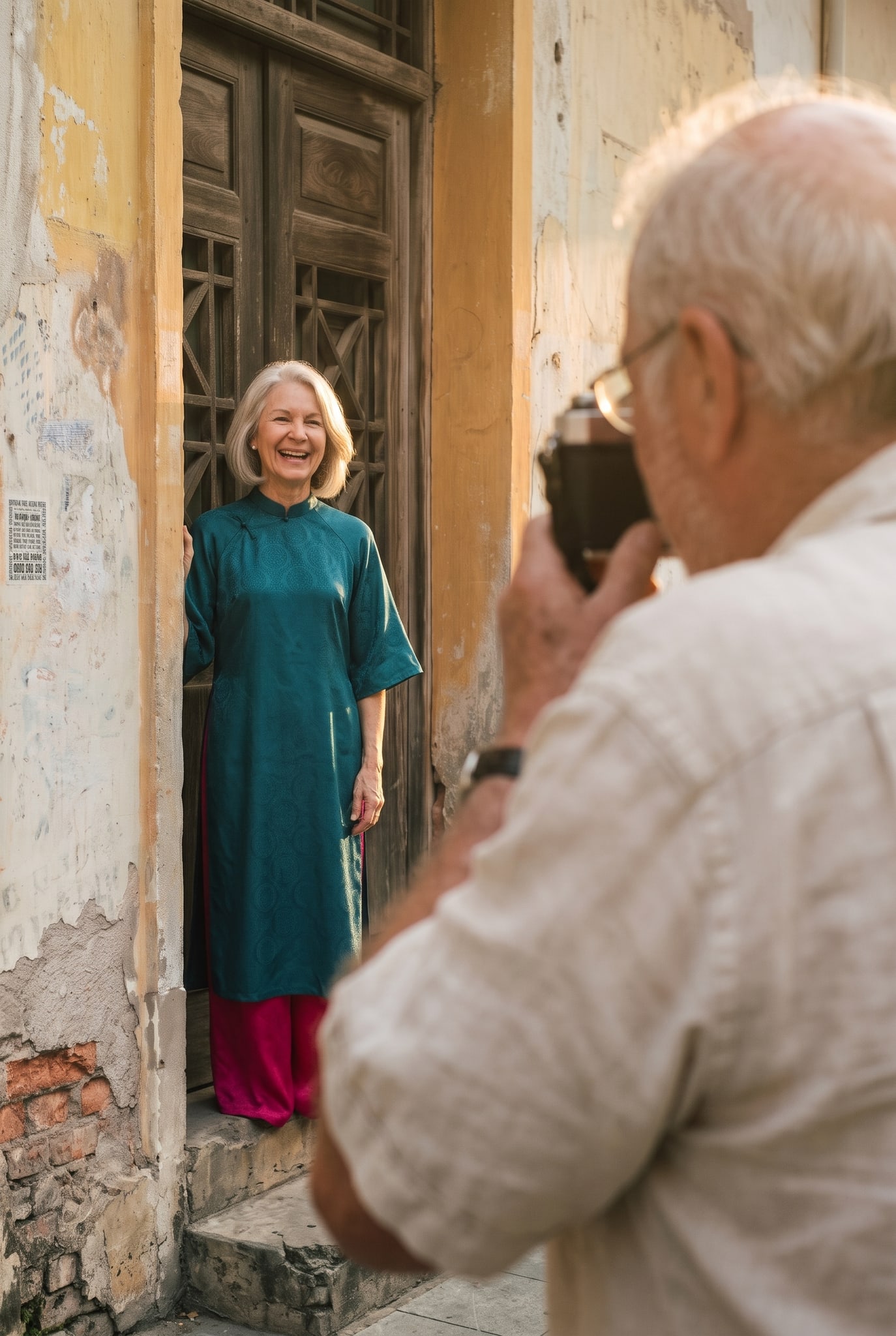
Formal Vietnamese ao dai in jewel tones (emerald, sapphire, burgundy) or white harmonize with red pillars and weathered stone. Minimal jewelry prevents distraction. For Western-dressed subjects, smart casual works: simple blouses, neutral trousers, structured jackets. Avoid neon, large logos, or busy prints that fight century-old architecture. Hair: loose waves or sleek buns frame faces against pillars; tight, heavy styles can look stiff. Makeup should be camera-ready but natural—foundation, subtle blush, defined lids—because temple interiors are dimly lit and skin needs dimension. If you're unsure, our makeup, hair & ao dai rental team prepares you on-site or beforehand; we supply ao dai in dozens of sizes and colours, styled to match the light and setting.
Styling rule: Let heritage architecture lead; your outfit should whisper, not shout.
How do you pose naturally at heritage temples?
Non-models often freeze or look unsure in formal settings. Break tension by walking between poses: stroll past pillars, pause at courtyards, glance over your shoulder. Avoid straight-on stares into the camera; instead, gaze at a pillar or the sky, then turn naturally to the lens. Lean gently against red pillars (where safe) for relaxed asymmetry. Sit on low stone steps with one leg extended, arms resting on your knees—feels candid, not staged. Use foreground blur: stand behind a pillar or archway so it softens the frame; this adds depth and heritage context. Slow, deliberate movements feel authentic; rushed posing reads tense. We coach you through these framings; you don't need modeling experience.
Posing principle: Movement and stillness alternate; the temple is a stage, you are a visitor discovering it.
When should you hire a professional photographer instead of DIY?
Self-portraits via phone or tripod miss light subtlety, lack coaching, and often look flat. The temple's complex geometry (multiple levels, deep shadows, bright gates) demands technical camera control to expose correctly. If you want prints, albums, or polished edits, professional work ensures color accuracy and retouching that reflects the site's beauty. Group family or couple shots (even two people) are hard to frame solo. Our solo portrait sessions include guidance, full-resolution files, and basic edits; for heritage settings like this, the investment yields heirloom images. Budget is lower than Western studios (ask us for a quote on WhatsApp). If you're visiting Hanoi once and want keepsakes, professional booking saves time, stress, and regret.
Comparison: DIY vs. Professional at Temple of Literature
| Approach | Effort | Output Quality | Time On-Site | Cost Basis | Best For |
|---|---|---|---|---|---|
| Phone selfie + tripod | Low | Flat, limited angles, blown-out sky | 30 min | Free | Casual snaps, social media |
| DSLR/mirrorless + self-timer | Medium | Better if skilled; risk of missed moments | 45 min | Camera + editing software | Tech-savvy solo travelers |
| Professional shoot (Cáo Studio) | None (we direct) | Studio-grade, all angles, expert edits | 90 min | Ask for quote | Keepsakes, albums, portfolio |
What lighting and background details set temple portraits apart?
The main red pillars frame tight close-ups perfectly; soft morning light wraps faces without glare. Stone turtle statues (Quy Âm relics) offer textured foreground: position yourself slightly in front so the statue softens the background. Archways between courtyards create natural vignettes; shoot through them to frame subjects with architectural depth. Avoid shooting directly into bright gates or reflective tiles; instead, move into shaded colonnades where stone and red paint define the frame. The ancient well and scholar statues add context without overwhelming a portrait. Spring blossoms (cherry, magnolia) near the rear courtyards add subtle color if in season (March–April). Winter's clear air improves sharpness; humidity in summer (July–August) can soften detail.
Sacred backdrop skill: Use architecture as a frame, not a backdrop; subjects should pop against structure, not blend into it.
What to check before you book
- Light season: Confirm month; spring/autumn ideal, summer requires early-only slots.
- Tripod policy: If you bring your own gear, notify us; we'll confirm with the temple office.
- Outfit prep: Choose ao dai or smart casual 1 week ahead; we style you if needed via our rental service.
- Mobility: Courtyards have uneven stone; wear comfortable, closed shoes.
- Weather backup: Rain closes temple indoors; we reschedule for free if conditions are unsafe.
- File format: Ask whether you want RAW, JPEG, or both; delivery is via WhatsApp or cloud link, 5–10 days post-shoot.
Pages from our team you may need
FAQ
Can we shoot inside prayer halls, or only courtyards?
Courtyards and roofed colonnades are open; interior halls are active prayer spaces and require special permission (we coordinate if you want them). Courtyards alone offer plenty of backdrops.
Is morning light really that much better than evening?
Yes, for skin tone and shadow flatness. Evening is romantic but requires higher ISO and steadier posing. Morning is forgiving and requires no tripod.
What if it rains the day of my shoot?
Covered colonnades work in light rain; heavy rain we reschedule at no extra cost. Stone is slippery when wet—safety first.
Can we bring an ao dai we own, or should we rent from you?
You can bring your own; we'll ensure fit and styling match the heritage setting. Rental via makeup, hair & ao dai rental costs less than you'd expect and includes on-site adjustments.
How many outfit changes fit in a 90-minute session?
Typically 2–3 outfits. Each change takes 5–10 minutes; moving and shooting between poses fills the rest. We don't rush—quality over quantity.
Do you offer couple or family sessions at the temple too?
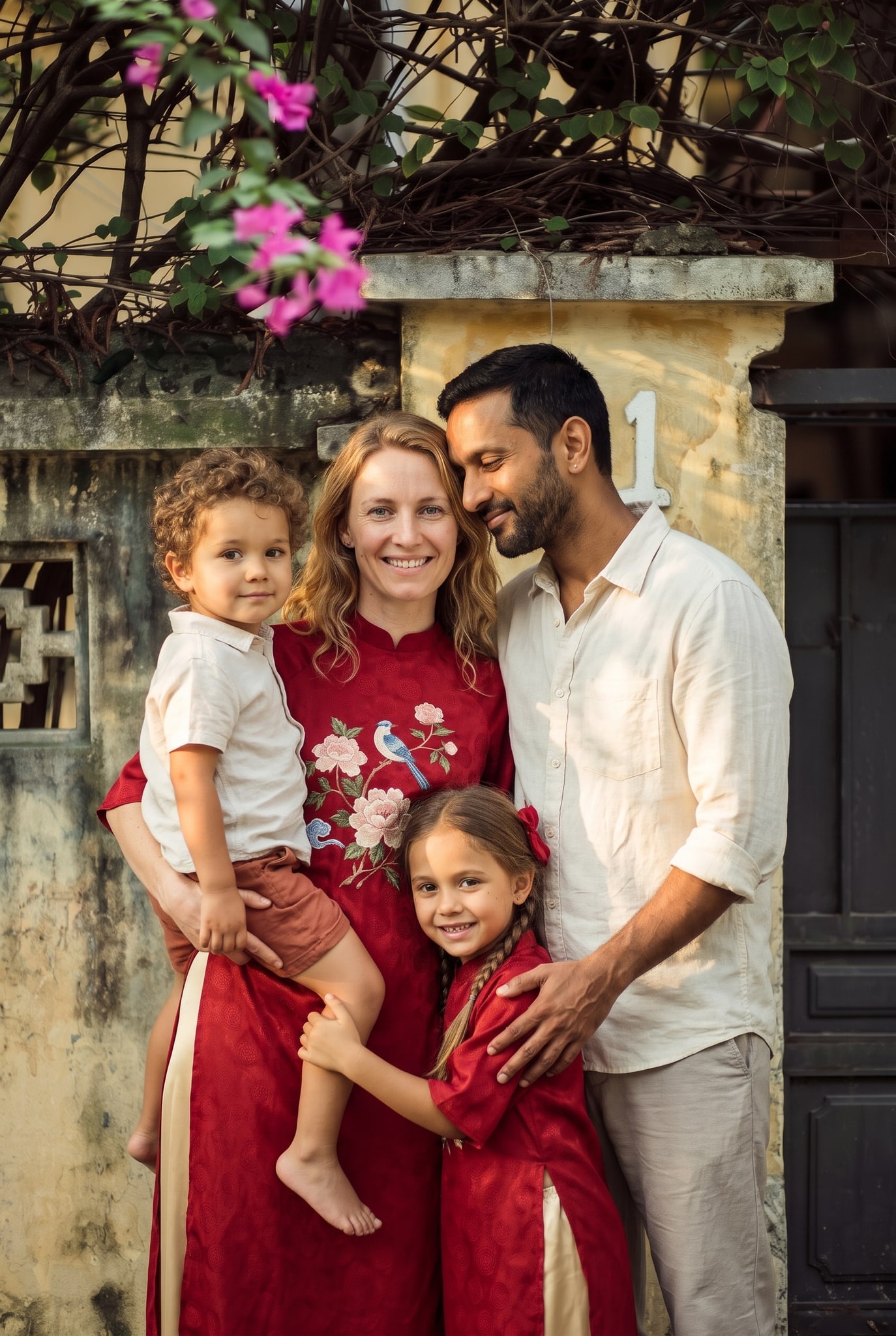
Yes. Couple shoots at the temple are popular for engagement or anniversary portraits. Family sessions work for multiple generations, though solo sessions are our specialty here.
Check dates
Send your dates, how many people and the style you like. We reply on WhatsApp in English with spots, timing and a quote.
FAQ
Can we shoot inside prayer halls, or only courtyards?
Courtyards and roofed colonnades are open; interior halls are active prayer spaces and require special permission (we coordinate if you want them). Courtyards alone offer plenty of backdrops.
Is morning light really that much better than evening?
Yes, for skin tone and shadow flatness. Evening is romantic but requires higher ISO and steadier posing. Morning is forgiving and requires no tripod.
What if it rains the day of my shoot?
Covered colonnades work in light rain; heavy rain we reschedule at no extra cost. Stone is slippery when wet—safety first.
Can we bring an ao dai we own, or should we rent from you?
You can bring your own; we'll ensure fit and styling match the heritage setting. Rental via makeup, hair & ao dai rental costs less than you'd expect and includes on-site adjustments.
How many outfit changes fit in a 90-minute session?
Typically 2–3 outfits. Each change takes 5–10 minutes; moving and shooting between poses fills the rest. We don't rush—quality over quantity.
Do you offer couple or family sessions at the temple too?
Yes. [Couple shoots](/couple-photoshoot) at the temple are popular for engagement or anniversary portraits. [Family sessions](/family-photoshoot) work for multiple generations, though solo sessions are our specialty here.
More like this
Solo travel portraits
How Many Edited Photos Do You Get from a Hanoi Vacation Shoot?
When you book a vacation portrait session in Hanoi with Cáo Studio, the number of edited images you receive depends on session length, location and your brief. We walk through the realistic count, editing timeline, and what affects the final gallery.
Solo travel portraits
Solo Travel Photoshoot Tay Ho: Best Time & Seasons
Tay Ho district offers intimate lakeside and temple backdrops for solo travelers. October–November and March–April deliver soft light, minimal rain, and manageable crowds—ideal for authentic Hanoi portraits without the summer heat or winter haze. #
Solo travel portraits
Solo Travel Photoshoot Hanoi Lotus Pond: Light, Crowds & Posing Tips
Lotus ponds demand early arrival and patience—crowds peak mid-morning. We guide you through seasonal light, posing without modeling experience, and outfit choices that work in water-adjacent settings.