
Home › Blog › Hanoi photo spots
Temple of Literature Ao Dai Photos: Timing, Crowds & Posing Tips
By the Hanoi Photoshoot team · 2026-11-06
The Temple of Literature (Văn Miếu) is Hanoi's premier ao dai photoshoot destination: a 900-year-old walled complex with three courtyards, bonsai gardens and red-gate architecture that frames ao dai in warm, soft tones. Early morning (6:30–8:00am) yields golden sideways light and crowds of <50 people; midday sun flattens texture; afternoon (3:30–5:00pm) brings harsh shadows and tour groups of 200+. A full session runs 2–3 hours. Temple entry is free but donations encouraged; photography fees apply only for commercial use. Expect 50–70 usable frames per couple. At Hanoi Photoshoot by Cáo Studio, we handle makeup, ao dai rental and site logistics in English; ask us for a quote on WhatsApp. Avoid Sundays and Tet holidays when crowds exceed 500 visitors per hour. Check dates on WhatsApp
When is light best for ao dai at the Temple?
Golden hour (6:30–8:00am) is non-negotiable for ao dai: sunlight hits the red-pillared courtyards at 15–20° angle, outlining silk pleats and embroidery with rim light. By 9:00am, the sun moves overhead and the east walls cast shadow across the main courtyard. Afternoon light (4:00–5:30pm) works only if you shoot against the western walls—otherwise south-facing areas turn overexposed within minutes. Seasonal shifts matter: December–February (cool dry season) adds 30 minutes of soft light on either end. June–August (humid southwest monsoon) brings haze that diffuses light earlier, reducing contrast by 20–30%. Plan a 4-hour session to capture pre-dawn setup, golden light, and a backup hour in softer afternoon glow. Conclusion: book 6:30am or 4:00pm, never 10:00am–3:00pm.
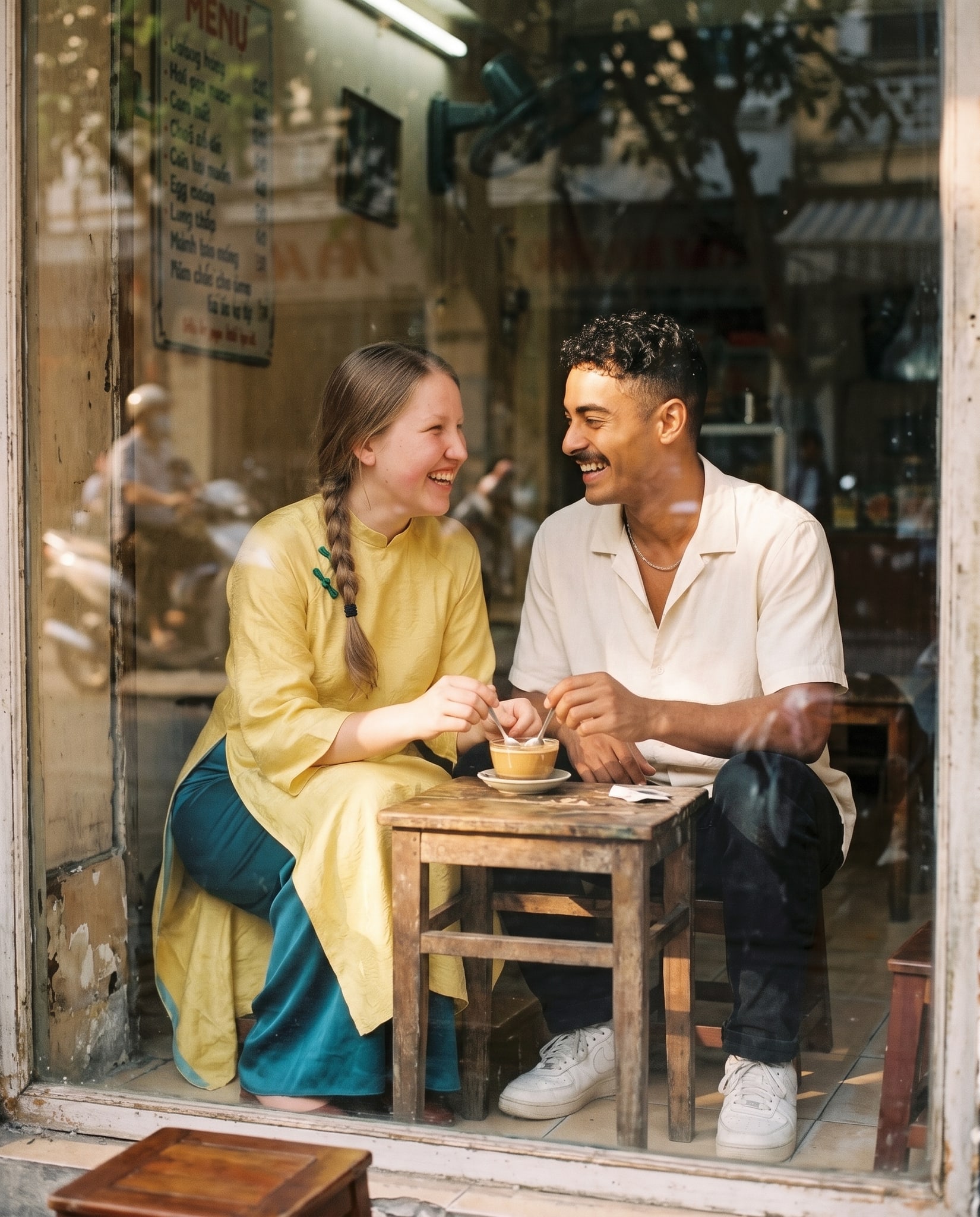
Which courtyard avoids tour groups best?
The Temple has three main courtyards: the outer gate (highest traffic: 100+ people per hour 8am–4pm); the first drum-and-bell courtyard (moderate: 40–60 people); the inner sanctuary with bonsai gardens (lowest: 10–20 people, but photography restricted). A two-person ao dai shoot works anywhere 6:30–8:00am, before most tours arrive. By 9:00am, avoid the gate and outer courtyard entirely—move to the red-pillared inner walkways or the side gardens flanking the central pond. Midweek (Tuesday–Thursday) cuts crowds by 30% versus weekends. Tet holidays, National Day (September 2–3) and school holidays (May, July–August) see 300–500 people per hour; reschedule if possible. Tip: station yourselves near the northern secondary gate (Tả Vọng Gate) at 7:30am before the main tour buses. Conclusion: early morning + weekday + inner courtyards = minimal retouching for photobombs.
How do I pose naturally in ao dai at a formal temple?
Non-models freeze around statues and incense altars—the formality triggers stiffness. Instead: walk slowly toward the camera while adjusting your áo dài sleeve with one hand; look down at the embroidery, then up at the temple roof (gives 2–3 natural expressions per step). For couples, let him walk slightly ahead, her hand on his shoulder—the asymmetry reads more intimate than side-by-side stiffness. Avoid standing directly facing the camera in open courtyards; angle 30° to the left or right, so the temple columns frame you. At the central pond, kneel on one knee as if adjusting a sandal—this lowers your center, makes the red pillars loom, and disguises unease. Hands: let them hang, touch the fabric, or rest one on the small of his back (if couple). Take 40–50 frames per pose; only 2–3 will feel genuine. Conclusion: motion and hand placement matter more than stiffness at formal sites.
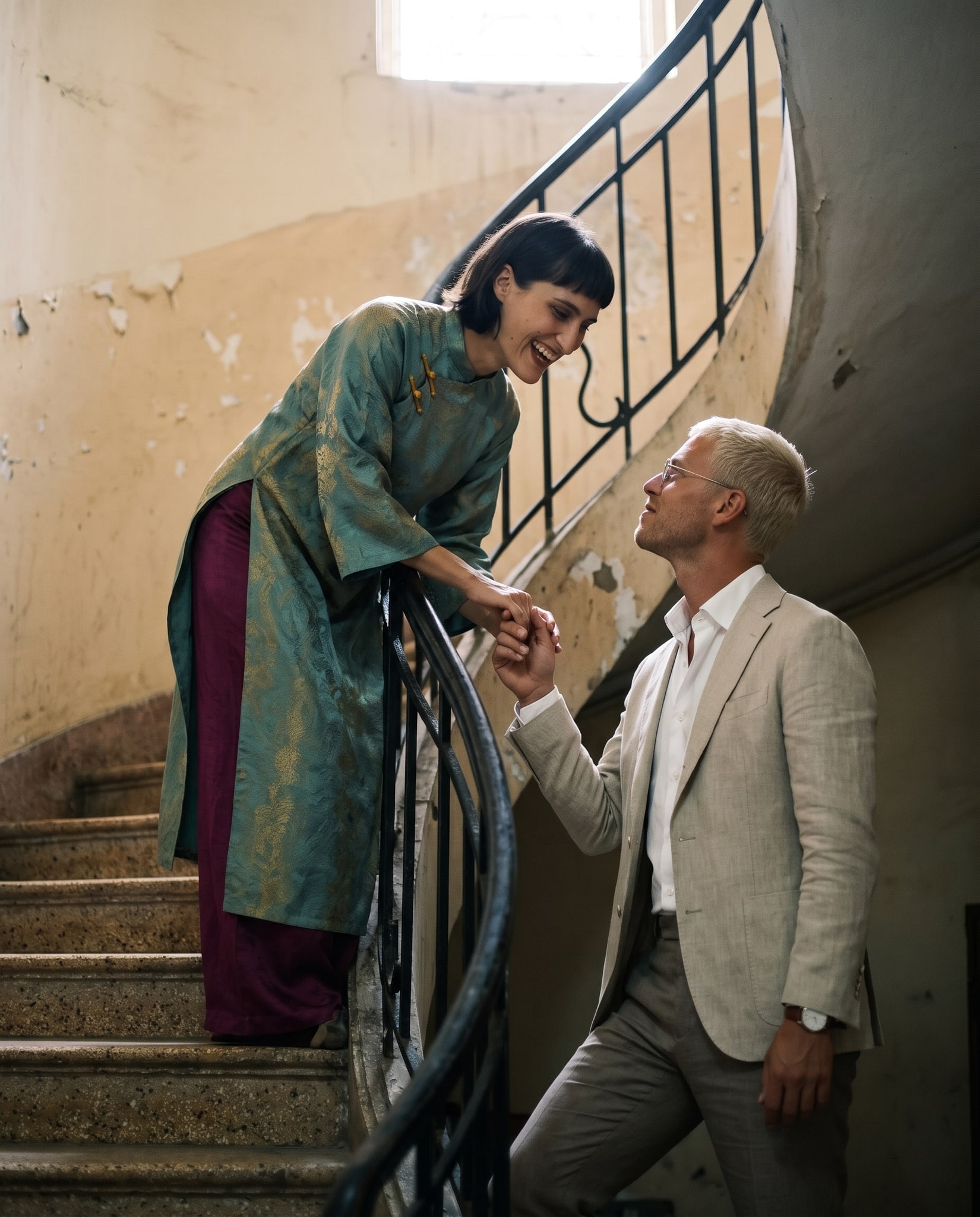
What rules and etiquette apply at the Temple of Literature?
The Temple is an active religious site and UNESCO monument—rules are enforced. Photography is permitted for personal use; commercial/paid photoshoots require advance written permission from the Hanoi Department of Culture. Dress: ao dai is welcome; avoid shorts, tank tops or hats inside the prayer areas. Do not touch incense altars, statues or educational plaques. The inner sanctuary beyond the bonsai courtyard prohibits photography entirely (marked by rope). Visitors cannot enter before 8:00am (gates open 8:15am) except for pre-arranged shoots—we handle this permit. Do not pose in front of active altars or block pathways during group tours. Smoking, eating and loud voices incur staff correction. Conclusion: book through us for permits; respect roped areas and prayer times.
What ao dai style photographs best in this architecture?
Simplified, monochrome or jewel-tone silks read better than busy patterns in stone courtyards—patterns compete with carved pillars and create visual noise. Long sleeves and full-length trousers suit the formal setting; cropped áo dài and shorts feel disrespectful. Embroidered or beaded necklines and sleeves catch golden light; plain silk at dawn reads as shadow. Older, traditional designs (1970s–1990s cuts) harmonize with the Temple's historical scale; modern mini-áo dài or fusion cuts feel anachronistic. Couples: matching or tonal áo dài (both silk, both jewel-tones) create harmony; clashing neons or casual fabrics undermine the setting. Test color swatches in 6:30am light indoors before booking—screens mislead. We offer rental áo dài in 40+ traditional and contemporary designs; ask us for styling advice on WhatsApp. Conclusion: solid jewel-tones, traditional silhouettes, and full-length cuts photograph highest-quality in formal temple light.
| Ao Dài Style | Best Lighting | Crowd Risk | Retouching Load |
|---|---|---|---|
| Monochrome silk | Golden hour (6:30–8:00am) | Low | Minimal |
| Embroidered detail | Golden hour + side light | Low | Minimal |
| Jewel-tone solid | Any morning hour | Low | Low |
| Busy pattern | Afternoon (3:30–5:30pm) | High | Moderate |
| Cropped/fusion | Noon (emergency only) | High | High |
| Beaded/sequin | Golden hour only | Low | Moderate |
What to check before you book an ao dai shoot at the Temple
- Permit status: Confirm with us whether your shoot is personal or commercial; we handle Temple permits for photoshoots—commercial users must wait 2–3 weeks for approval.
- Weather: Monsoon haze (June–August) cuts golden-hour contrast by 25–30%; winter (Dec–Feb) adds clear, long light. Check the 5-day forecast 48 hours before.
- Crowd calendar: Avoid Sundays, Tet holidays (late Jan/early Feb), National Day (Sept 2–3), school holidays. Check Temple visitor announcements.
- Ao dai condition: Loose threads, fading and odor worsen in humidity. We clean and press all rental áo dài before arrival; bring your own only if tailored within the past 6 months.
- Timing flexibility: Golden hour lasts 45 minutes; plan to arrive 30 minutes early for hair and makeup touch-ups on-site.
- Site logistics: The Temple has no parking inside; we advise taxi drop-off at the southern Tả Vọng Gate or bicycle taxi (xích lô) for authentic arrival.
Hanoi Photoshoot by Cáo Studio specializes in ao dai photoshoots at heritage sites. If you're planning a couple photoshoot or family photoshoot at the Temple, we coordinate makeup, hair and rental in one booking. First-time visitors often ask about Hoan Kiem Lake photo guide and Old Quarter photo guide as backup locations—both work well for ao dai, though the Temple's architecture is unmatched.
For solo travel portraits, pre-wedding photoshoots or proposal photography, the Temple's formal setting elevates personal moments. Expectant parents booking maternity photoshoots should note the Temple's uneven stone floors and no indoor shelter—we advise scheduling for early morning comfort.
Not sure where to start? Contact us with your dates and style preference, and we'll confirm availability and send a quote via WhatsApp.
FAQ
Can we shoot at the Temple with our own photographer, or must we book through you?
The Temple allows personal photography without a permit. For a professional photoshoot (you're paying a photographer), you need written permission from Hanoi's Department of Culture—a 2–3 week process. We handle permits and coordinate access before sunrise; self-booked photographers often arrive to locked gates. Hire us to avoid delays.
What if it rains the morning of our ao dai shoot?
Light rain (< 5mm) adds moody, soft light and keeps crowds away—we shoot. Heavy rain (monsoon, > 10mm) makes stone floors slippery and floods the outer courtyard; we reschedule within 48 hours, no fee. Check the forecast 72 hours out; we confirm the night before.
How many frames will we get from a 2-hour Temple session?
Expect 150–200 unedited frames; 50–70 are usable (sharp, lit, composed). We deliver 40–50 final, edited images per couple session. Retouching removes photobombers, adjusts color and fixes ao dai wrinkles; it takes 5–7 days after your shoot.
Is the Temple suitable for a family photoshoot with children under 5?
The Temple's uneven stone courtyard and crowded morning hours (after 9:00am) make it risky for toddlers. For family shoots with young kids, we recommend Hoan Kiem Lake photo guide or a quieter heritage site. If your heart is set on the Temple, book a 6:30am session when paths are empty and hire a helper to manage the child.
What's the difference between an ao dai shoot at the Temple versus a pre-wedding photoshoot?
The Temple works for standalone ao dai portraits, couple shots and family moments; it's formal and heritage-focused. A pre-wedding photoshoot usually spans 4–6 hours across 2–3 sites, includes engagement-story framing and more relaxed, intimate poses. If you want both formality and candid joy, book a pre-wedding package that starts at the Temple, then moves to a lake or garden.
Can we rent ao dai from you for our Temple shoot, or should we bring our own?
We offer makeup and styling with ao dai rental in 40+ traditional and contemporary designs, all pressed and prepared. Bringing your own risks odor, wrinkles and stains in humidity; rental is fresher and tailored to the light. Ask for a quote on WhatsApp if you want to bundle rental with photography.
Check dates
Send your dates, how many people and the style you like. We reply on WhatsApp in English with spots, timing and a quote.
FAQ
Can we shoot at the Temple with our own photographer, or must we book through you?
The Temple allows personal photography without a permit. For a professional photoshoot (you're paying a photographer), you need written permission from Hanoi's Department of Culture—a 2–3 week process. We handle permits and coordinate access before sunrise; self-booked photographers often arrive to locked gates. Hire us to avoid delays.
What if it rains the morning of our ao dai shoot?
Light rain (< 5mm) adds moody, soft light and keeps crowds away—we shoot. Heavy rain (monsoon, > 10mm) makes stone floors slippery and floods the outer courtyard; we reschedule within 48 hours, no fee. Check the forecast 72 hours out; we confirm the night before.
How many frames will we get from a 2-hour Temple session?
Expect 150–200 unedited frames; 50–70 are usable (sharp, lit, composed). We deliver 40–50 final, edited images per couple session. Retouching removes photobombers, adjusts color and fixes ao dai wrinkles; it takes 5–7 days after your shoot.
Is the Temple suitable for a family photoshoot with children under 5?
The Temple's uneven stone courtyard and crowded morning hours (after 9:00am) make it risky for toddlers. For family shoots with young kids, we recommend [Hoan Kiem Lake photo guide](/spots/hoan-kiem-lake) or a quieter heritage site. If your heart is set on the Temple, book a 6:30am session when paths are empty and hire a helper to manage the child.
What's the difference between an ao dai shoot at the Temple versus a pre-wedding photoshoot?
The Temple works for standalone ao dai portraits, couple shots and family moments; it's formal and heritage-focused. A [pre-wedding photoshoot](/pre-wedding) usually spans 4–6 hours across 2–3 sites, includes engagement-story framing and more relaxed, intimate poses. If you want both formality and candid joy, book a pre-wedding package that starts at the Temple, then moves to a lake or garden.
Can we rent ao dai from you for our Temple shoot, or should we bring our own?
We offer [makeup and styling](/makeup-and-styling) with ao dai rental in 40+ traditional and contemporary designs, all pressed and prepared. Bringing your own risks odor, wrinkles and stains in humidity; rental is fresher and tailored to the light. Ask for a quote on WhatsApp if you want to bundle rental with photography.
More like this
Hanoi photo spots
Hanoi Book Street Family Photos: Best Times, Rules & Posing Tips
Hanoi Book Street (Phố Sách) offers tree-lined, traffic-light backdrops perfect for family photos. We guide you through light timing, local rules, and kid-friendly posing to avoid crowds and capture genuine moments.
Hanoi photo spots
Duong Lam Ancient Village Photo Spots: Best Times & Light Guide
Duong Lam Ancient Village, 45 km southwest of Hanoi, holds Vietnam's oldest intact rural architecture—tile-roofed houses, brick kilns and narrow lanes where morning mist holds light for 90 minutes. We photograph here year-round for solo travelers, families and couples seeking authentic, off-beat Han
Hanoi photo spots
Duong Lam Ancient Village: Crowd-Free Times & Photo Spots
Duong Lam Ancient Village, 45 km southwest of Hanoi, draws tourists year-round—but early mornings and weekdays offer near-empty temple courtyards and village lanes. We share exact timing, seasonal light, and how to pair a visit with professional portraits.