
Home › Blog › Hanoi photo spots
Tay Ho photo rules and etiquette for respectful Hanoi shoots
By the Hanoi Photoshoot team · 2026-11-06
Tay Ho's photo rules centre on temple respect: remove shoes indoors, don't shoot altars or worshippers without permission, keep voices low, avoid pointing. The lakeside and village lanes offer bright mornings (6–8 a.m., October–April) and golden dusk (4–6 p.m., year-round). Crowds peak weekends and Lunar New Year; weekdays are quieter. Dress modestly (shoulders and knees covered); loose trousers or skirts work best. Most temple caretakers welcome photographers if you ask first and follow their guidance. Cáo Studio's Hanoi Photoshoot team scouts locations daily and knows which temples permit commercial shoots and the best light windows for each season. Budget 3–4 hours for a full Tay Ho session, including travel time from central Hanoi. Check dates on WhatsApp
Can you shoot inside Tay Ho temples without breaking rules?
Yes, but only with explicit permission. Most temples allow photography in outer courtyards and gardens; inner sanctums, altars and prayer halls are off-limits unless a monk or caretaker gives consent. Never photograph monks or worshippers mid-prayer. If shooting ao dai or family portraits, position subjects in courtyards away from active shrines. Light is softest at dawn; afternoon creates harsh shadows on stone. We coordinate permissions in advance for ao dai photoshoot and family photoshoot sessions—no surprises on the day.
What are the best hours and seasons for Tay Ho light?
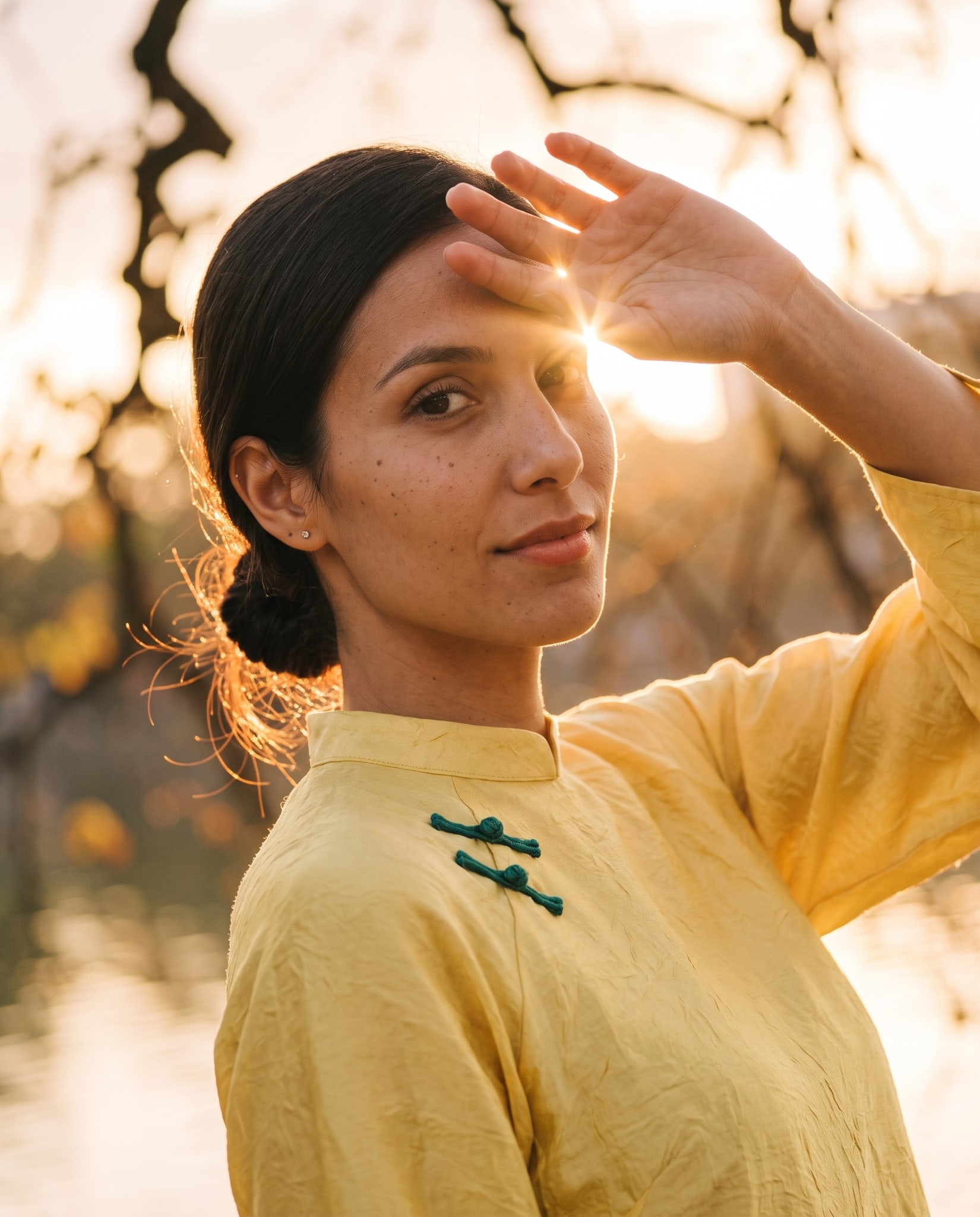
Tay Ho's west-facing temples catch golden light 4–5 p.m. October through March; winter mornings (6:30–7:30 a.m.) are crisp and clear, ideal for couple and solo portraits. Summer (May–September) brings humidity and afternoon haze; shoot early or skip the 11 a.m.–3 p.m. window. Lunar New Year weeks and weekend mornings see crowds of 50+ worshippers; book Tuesday–Thursday for solitude. Overcast days flatten the drama but eliminate glare—good for graduation photoshoot detail work.
Should you dress differently for Tay Ho shoots compared to other Hanoi spots?
Yes. Temples require covered shoulders, knees and cleavage; loose linen trousers, midi skirts and traditional áo dài are respectful. Avoid bright neon or athletic wear—it clashes with temple colours and reads as disrespectful in photos. For couple photoshoot or pre-wedding photoshoot in Tay Ho, many clients choose áo dài for temple sections and casual outfits for lakeside frames. Our makeup and styling team advises on layers and colour palettes that harmonize with stone and water. Modern streetwear (jeans, t-shirts) works fine outside temple grounds along the waterfront.
What are the crowds and accessibility like at Tay Ho's main photo spots?
| Location | Peak Times | Quiet Windows | Accessibility | Photo Merit |
|---|---|---|---|---|
| Tran Quoc Pagoda courtyard | Sat–Sun, 9–11 a.m. | Tue–Thu, 6–7 a.m. | Steps; moderate | Stone detail, water backdrop |
| Tay Ho lakeside path | Sat–Sun, 10 a.m.–5 p.m. | Weekday dawn | Flat; good | Reflections, morning mist |
| Temple gate/entrance | Weekends, lunar holidays | Mon–Fri, 3–4 p.m. | Flat entry | Symmetry, traditional arch |
| Residential lanes behind temples | Always quiet | N/A | Uneven stone | Authentic village feel |
Weekday shoots cost less in logistics (fewer permits, faster access) and yield cleaner frames. Weekend crowds can number 100+ inside temple compounds—plan 4–5 hours to avoid peak times or shoot before 7 a.m.
How do you handle requests at temple gates and with local caretakers?
Approach caretakers politely in Vietnamese or English—most speak basics. Offer a small respectful greeting; show your shot list if shooting proposal photographer or commercial work. Temples rarely charge fees but may ask you to remove shoes, avoid certain areas or return by sunset. Our team carries permits for sponsored shoots and knows which temples welcome instagram photoshoot sessions. If refused, move to lakeside paths or village alleys—equally photogenic, zero friction. Never photograph someone's shrine or family altar without consent; it's a sacred object, not a backdrop.
What poses and framing work best in Tay Ho's tight temple spaces?
Temple courtyards are narrow (4–6 metres), so wide angles distort and tight framing isolates subjects. Stand subjects against stone walls perpendicular to doors; overhead angles work well for áo dài folds and traditional details. Lakeside: use leading lines (paths, railings) to draw eyes toward water. Avoid standing in worship zones or blocking entry. For maternity photoshoot or solo portrait work, we scout framing beforehand and coach non-models on posture—chin slightly forward, shoulders relaxed, avoid stiffness. Low-angle shots against sky and stone add drama; backlighting creates rim light on hair. Symmetry reads well in courtyard geometry; asymmetry suits lakeside chaos.
What to check before you book a Tay Ho photoshoot
- Session length: confirm 3–4 hours includes temple time and travel buffer—don't book 2 hours.
- Permits: ask if we handle permissions; commercial shoots (ads, reels) need advance notice.
- Clothing: bring layers for temperature swings (Hanoi temples are cool indoors, humid outside).
- Backup location: if a temple closes unexpectedly, we pivot to Hoan Kiem Lake photo guide or Old Quarter—confirm in WhatsApp.
- Shoes: wear slip-ons for quick removal at temple entrances.
- Light timing: lock start time; golden hour waits for no one (4–6 p.m. October–March, earlier in summer).
Why Tay Ho beats other Hanoi districts for authentic temple photography
Tay Ho's temples blend working shrines with photogenic architecture—unlike restored tourist sites. The mix of worshippers, vendors and lake light creates unforced authenticity. Nearby spots/hanoi-old-quarter and spots/hanoi-train-street are noisier and more commercial. Tay Ho rewards early rising and quiet respect.
For first-time Hanoi shoots or mixed-session itineraries, check our blog for seasonal guides and temple closures. Every spots/tay-ho shoot is custom-coordinated on WhatsApp—send your dates, outfit ideas and mood board, and we'll lock locations and timing.
Ready to shoot Tay Ho respectfully and beautifully? Plan your Hanoi shoot or message us your dates and session type.
Pages from our team you may need
- ao dai photoshoot in Hanoi
- couple photoshoot
- family photoshoot
- solo travel portraits
FAQ
Do I need a guide or permit to shoot temples in Tay Ho?
No permit is required for personal use; commercial shoots (ads, reels, e-commerce) need advance notice. We handle coordination and know which temples welcome photographers. A guide (our team) speeds up access and prevents friction with caretakers.
Can I shoot my ao dai session fully inside a temple?
Partially. Outer courtyards and gate areas are ideal; inner sanctums are restricted. Most shoots mix temple exteriors (stone walls, gates, gardens) with lakeside frames. Our ao dai photoshoot sessions typically use temples for 1–2 hours, then move to water and village lanes.
What's the best time of year to shoot Tay Ho?
October–March: cool, clear mornings and golden late-afternoon light. April–September: humid, haze common, shoot early or accept diffused tone. Avoid Lunar New Year week (crowds spike 5–10x). Weekday shoots yield cleaner frames and faster permissions.
Are there fees for shooting at Tay Ho temples?
No standard fees. Some temples may accept small donations (discretionary). Commercial shoots and sponsored work are discussed case-by-case. We clarify all expectations before booking.
Can I use drone or flash photography in temples?
No. Drones are banned; flash disturbs worship and damages interiors. Available light only, which is why dawn and golden hour slots book fast. We position you for natural reflectors (water, stone) instead.
Check dates
Send your dates, how many people and the style you like. We reply on WhatsApp in English with spots, timing and a quote.
FAQ
Do I need a guide or permit to shoot temples in Tay Ho?
No permit is required for personal use; commercial shoots (ads, reels, e-commerce) need advance notice. We handle coordination and know which temples welcome photographers. A guide (our team) speeds up access and prevents friction with caretakers.
Can I shoot my ao dai session fully inside a temple?
Partially. Outer courtyards and gate areas are ideal; inner sanctums are restricted. Most shoots mix temple exteriors (stone walls, gates, gardens) with lakeside frames. Our [ao dai photoshoot](https://hanoiphotoshoot.com/ao-dai-photoshoot) sessions typically use temples for 1–2 hours, then move to water and village lanes.
What's the best time of year to shoot Tay Ho?
October–March: cool, clear mornings and golden late-afternoon light. April–September: humid, haze common, shoot early or accept diffused tone. Avoid Lunar New Year week (crowds spike 5–10x). Weekday shoots yield cleaner frames and faster permissions.
Are there fees for shooting at Tay Ho temples?
No standard fees. Some temples may accept small donations (discretionary). Commercial shoots and sponsored work are discussed case-by-case. We clarify all expectations before booking.
Can I use drone or flash photography in temples?
No. Drones are banned; flash disturbs worship and damages interiors. Available light only, which is why dawn and golden hour slots book fast. We position you for natural reflectors (water, stone) instead.
More like this
Hanoi photo spots
Hanoi Book Street Family Photos: Best Times, Rules & Posing Tips
Hanoi Book Street (Phố Sách) offers tree-lined, traffic-light backdrops perfect for family photos. We guide you through light timing, local rules, and kid-friendly posing to avoid crowds and capture genuine moments.
Hanoi photo spots
Duong Lam Ancient Village Photo Spots: Best Times & Light Guide
Duong Lam Ancient Village, 45 km southwest of Hanoi, holds Vietnam's oldest intact rural architecture—tile-roofed houses, brick kilns and narrow lanes where morning mist holds light for 90 minutes. We photograph here year-round for solo travelers, families and couples seeking authentic, off-beat Han
Hanoi photo spots
Duong Lam Ancient Village: Crowd-Free Times & Photo Spots
Duong Lam Ancient Village, 45 km southwest of Hanoi, draws tourists year-round—but early mornings and weekdays offer near-empty temple courtyards and village lanes. We share exact timing, seasonal light, and how to pair a visit with professional portraits.