
Home › Blog › Solo travel portraits
Solo Travel Photoshoot Tay Ho Tips: Light, Crowds & Outfit Ideas
By the Hanoi Photoshoot team · 2026-11-06
A solo travel photoshoot in Tay Ho works best during October–November or February–March, when morning light is soft and stable. Tay Ho offers three main zones: the lakeside (Tay Ho Lake), temple grounds (Tran Quoc and Phu Tay Ho temples) and residential lanes with yellow walls and café courtyards. A typical session lasts 2–3 hours; we coordinate outfits, makeup and hair in-house before shooting. Morning shoots (6–8 a.m.) catch gold light before crowds; afternoon sessions (3–5 p.m.) suit overcast weather. Rules matter: temples require modest dress, no shorts or sleeveless tops; Train Street nearby has strict vehicle-only access outside 10–11 a.m. and 3–5 p.m. tourist windows. Cáo Studio's Hanoi Photoshoot team handles timing, permits and non-model posing guidance to make solo travelers look natural, not stiff. Check dates on WhatsApp
Why Morning Light Beats Afternoon in Tay Ho?
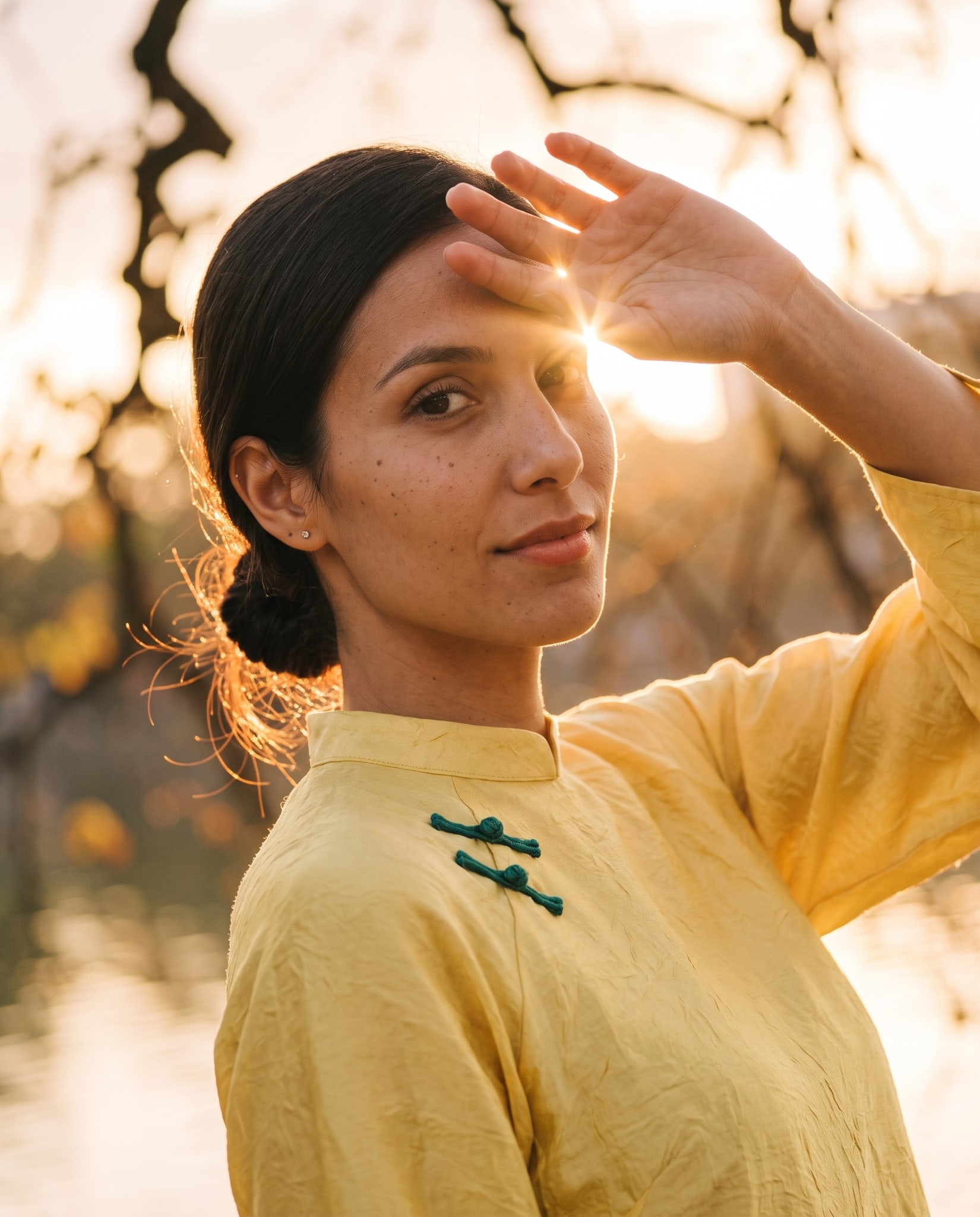
Morning light (6–8 a.m.) in Tay Ho is softer, directional and flatters skin tones without harsh shadows. By 10 a.m., sun intensity peaks and crowds increase around temples and cafés. October–November mornings are cooler; fewer people walk lake paths before 7 a.m. Afternoon (3–5 p.m.) works only if skies are fully overcast—direct sun after 2 p.m. creates squinting and unflattering contrast on faces. We always scout the specific lane or temple 24 hours ahead to confirm water levels, temple ceremonies and foot traffic. Shoot morning for consistent, magazine-quality results in Tay Ho.
Which Tay Ho Spots Suit Solo Travel Photography?
Tay Ho Lake's east side has vendor stalls and benches ideal for candid walking shots; the west side (residential lanes off Thanh Nien Road) offers yellow walls, potted gardens and café courtyards with fewer tourists. Tran Quoc Temple (oldest in Hanoi, on a small island) provides dramatic architecture but requires 2-hour visit flexibility and modest clothing; shoot early to avoid group tours. Phu Tay Ho Temple (hilltop, narrow stairs) works for silhouette and landscape shots at sunrise, though stairs can be slippery wet. Residential lanes near Tay Ho village contain authentic narrow alleys, laundry lines and local life—perfect for solo portrait work without staged feeling. We never overuse the same café courtyard twice; variety keeps your gallery looking fresh and personal.
How Do Seasons Change Your Outfit & Timing Choices?
| Season | Best Months | Light Quality | Outfit Strategy | Timing Adjustment |
|---|---|---|---|---|
| Autumn | Oct–Nov | Golden, stable, 6–8 a.m. | Light layers, linen, sandals | Early start (6 a.m.) before heat |
| Winter | Dec–Jan | Soft, blue-hour friendly | Sweater, jeans, closed shoes | 7–8 a.m. (shorter daylight) |
| Spring | Feb–Mar | Warm, balanced shadows | Cotton dress, light scarf | 6:30 a.m. (humidity rising) |
| Summer | Jun–Aug | Harsh noon, cooler dawn | Minimal, moisture-wicking | 5:30 a.m. or skip to 4 p.m. overcast |
Spring (Feb–Mar) is optimal: 22–28°C, low humidity, stable morning light and fewer tourists. Summer (Jun–Aug) requires extreme early starts (5:30 a.m.) or afternoon overcast sessions; outdoor makeup melts fast. Winter (Dec–Jan) has shorter daylight but excellent portrait light; dress warmly and plan 7–8 a.m. shoots. Autumn (Oct–Nov) balances warmth and light; most solo travelers choose these months. Humidity peaks May–June; avoid thick fabrics and plan makeup and styling touch-ups every 45 minutes.
What Outfit Mistakes Do Solo Travelers Make in Tay Ho?
New solo photographers often wear all-black or all-white, which fights Tay Ho's golden light and temple surroundings. Busy patterns (small checks, logos) distract from your face in wide-angle shots; solid or subtle prints work better. Sleeveless tops are forbidden in temples—always pack a light cover or scarf. Closed-toe shoes matter on temple stairs and cobblestone lanes; sandals slip on wet stone after 8 a.m. when maintenance crews clean. Baggy jeans photograph stiffly; fitted or cropped cuts let movement show naturally. Avoid trendy fast-fashion pieces that wrinkle in humidity; linen, cotton blends and structured fabrics hold shape. Jewelry should be minimal—large earrings distract, delicate pieces (single pendant or bracelet) add dimension. Our makeup and styling team advises on outfit layering, color harmony with temple stone and season-specific fabric choices 48 hours before your shoot. Solo travelers often underestimate how wind and walking affect clothing; we coach posture, fabric management and natural movement so you don't look posed.
How to Handle Crowds & Temple Rules During Your Session?
Temple crowds peak 8–10 a.m. weekdays and all day weekends; book Tuesday–Thursday early morning (6–7 a.m.) for near-empty grounds. Tran Quoc Temple allows photography outside prayer hours (avoid noon and 5 p.m. ceremonies); ask the caretaker on arrival. Phu Tay Ho Temple has looser rules but stairs get slippery; we time shots during dry spells and avoid rainy days. Residential lane shoots have zero official restrictions but brief locals respectfully—a simple "hello" (xin chào) and light wave work everywhere. Tourist groups cluster at café courtyards between 10–11:30 a.m. and 3–4 p.m.; we either shoot 7–9 a.m. or 5–6 p.m. to avoid crowds. Lake pathways fill with joggers 6–7 a.m. and 5–6:30 p.m.; offset your shot windows slightly (6:30–8 a.m. or 4:30–5:30 p.m.) for clean backgrounds. Never photograph locals without permission; temple signs prohibit flash photography—we use natural light only. During monsoon season (May–September), rain clears crowds fast but creates safety hazards on stairs; we reschedule rather than risk accidents. A 2-hour session typically yields 200–300 edited shots; solo travelers should plan 1–2 outfit changes and 3–4 location shifts within Tay Ho to build variety.
What to Check Before You Book Your Tay Ho Solo Session?
Weather & light forecast: Confirm clear skies 48 hours ahead; overcast days require rescheduling to avoid flat, grey skin tones.
Outfit decisions: Bring 2–3 pieces that fit well, require minimal wrinkling and respect temple dress codes; show photos to our team the day before.
Fitness level: Temple stairs (Phu Tay Ho: ~120 steps, steep angle) demand basic mobility; lake paths are flat but involve 1–2 km walking per location.
Your comfort posing: Non-models often feel stiff; watch our solo portrait gallery to see natural poses and get familiar with our style before the shoot.
Permit & guide requirements: We handle temple permissions; you provide one piece of ID for our records (standard in Hanoi).
Season & timing: Confirm you're available 6–8 a.m. (optimal light) or 4–5 p.m. (overcast backup); evening shoots after 6 p.m. lose daylight fast in winter.
Pages from our team you may need
- ao dai photoshoot in Hanoi
- couple photoshoot
- family photoshoot
- solo travel portraits
FAQ
Do I need modeling experience to do a solo shoot in Tay Ho?
No. We coach non-models on natural posing, walking angles and expression shifts specific to each location. Most solo travelers find movement (walking, adjusting fabric, gazing) easier than static poses.
Can I shoot in Tay Ho during monsoon season (May–September)?
Yes, but with caveats. Rain clears crowds and creates moody light; humidity affects makeup longevity and clothing wrinkling. We reschedule after heavy downpours to avoid slippery temple stairs. Ask us for a quote on WhatsApp.
What's the best time of day to shoot at Tran Quoc Temple without other tourists?
Tuesday–Thursday, 6–7 a.m. Weekend mornings and weekday noon attract group tours. Evening sessions (5–6 p.m.) are quieter but lose warm light. Avoid prayer hours (noon, 5 p.m.). Contact us to confirm current temple schedules.
Do I need to speak Vietnamese to get permission from locals in residential lanes?
No. A simple smile, "xin chào" (hello) and respectful distance are enough. We accompany all shoots and handle any location permissions. Photography is fine in public lanes; avoid shooting directly into homes.
How many outfit changes fit into a 2-hour Tay Ho session?
Two outfit changes (3 complete looks) work well: one at lakeside, one in temple grounds or lane, one at café area. Changing on-site is faster than returning to a hotel; we help with quick switches and makeup touch-ups.
Can I combine Tay Ho with Train Street or Hoan Kiem Lake in one day?
Yes, though timing gets tight. Hoan Kiem Lake photo guide is 15 min away (east); Train Street photo guide is 30 min (south). A 3-hour split session (Tay Ho + one other) requires 2–3 a.m. start and fast vehicle moves. Ask us for a quote on WhatsApp.
What if weather is bad the day of my booked shoot?
We scout 48 hours ahead and suggest reschedule windows by text. Light rain is shootable (moody, soft light); heavy downpour or high wind triggers a no-cost reschedule to a confirmed date within 30 days of booking.
Check dates
Send your dates, how many people and the style you like. We reply on WhatsApp in English with spots, timing and a quote.
FAQ
Do I need modeling experience to do a solo shoot in Tay Ho?
No. We coach non-models on natural posing, walking angles and expression shifts specific to each location. Most solo travelers find movement (walking, adjusting fabric, gazing) easier than static poses.
Can I shoot in Tay Ho during monsoon season (May–September)?
Yes, but with caveats. Rain clears crowds and creates moody light; humidity affects makeup longevity and clothing wrinkling. We reschedule after heavy downpours to avoid slippery temple stairs. Ask us for a quote on WhatsApp.
What's the best time of day to shoot at Tran Quoc Temple without other tourists?
Tuesday–Thursday, 6–7 a.m. Weekend mornings and weekday noon attract group tours. Evening sessions (5–6 p.m.) are quieter but lose warm light. Avoid prayer hours (noon, 5 p.m.). Contact us to confirm current temple schedules.
Do I need to speak Vietnamese to get permission from locals in residential lanes?
No. A simple smile, "xin chào" (hello) and respectful distance are enough. We accompany all shoots and handle any location permissions. Photography is fine in public lanes; avoid shooting directly into homes.
How many outfit changes fit into a 2-hour Tay Ho session?
Two outfit changes (3 complete looks) work well: one at lakeside, one in temple grounds or lane, one at café area. Changing on-site is faster than returning to a hotel; we help with quick switches and makeup touch-ups.
Can I combine Tay Ho with Train Street or Hoan Kiem Lake in one day?
Yes, though timing gets tight. [Hoan Kiem Lake photo guide](https://hanoiphotoshoot.com/spots/hoan-kiem-lake) is 15 min away (east); [Train Street photo guide](https://hanoiphotoshoot.com/spots/hanoi-train-street) is 30 min (south). A 3-hour split session (Tay Ho + one other) requires 2–3 a.m. start and fast vehicle moves. Ask us for a quote on WhatsApp.
What if weather is bad the day of my booked shoot?
We scout 48 hours ahead and suggest reschedule windows by text. Light rain is shootable (moody, soft light); heavy downpour or high wind triggers a no-cost reschedule to a confirmed date within 30 days of booking.
More like this
Solo travel portraits
How Many Edited Photos Do You Get from a Hanoi Vacation Shoot?
When you book a vacation portrait session in Hanoi with Cáo Studio, the number of edited images you receive depends on session length, location and your brief. We walk through the realistic count, editing timeline, and what affects the final gallery.
Solo travel portraits
Solo Travel Photoshoot Tay Ho: Best Time & Seasons
Tay Ho district offers intimate lakeside and temple backdrops for solo travelers. October–November and March–April deliver soft light, minimal rain, and manageable crowds—ideal for authentic Hanoi portraits without the summer heat or winter haze. #
Solo travel portraits
Solo Travel Photoshoot Hanoi Lotus Pond: Light, Crowds & Posing Tips
Lotus ponds demand early arrival and patience—crowds peak mid-morning. We guide you through seasonal light, posing without modeling experience, and outfit choices that work in water-adjacent settings.