
Home › Blog › Solo travel portraits
Solo Travel Photoshoot Hanoi Old Quarter: Light, Rules & Non-Model Tips
By the Hanoi Photoshoot team · 2026-11-06
A solo travel photoshoot in Hanoi's Old Quarter captures you in one of Southeast Asia's most atmospheric neighborhoods — narrow streets, shuttered shophouses, lanterns and motorbike chaos. We recommend 6–7 am for empty streets and soft light, or 4–5 pm for golden hour without crowds; plan 2–3 hours and wear layers (temperature swings from 6 am to noon). Avoid Saturdays and holidays; Hoa Lo Prison and Ngoc Son Temple allow photography but require quiet, respectful movement. Hanoi Photoshoot by Cáo Studio includes in-house makeup and styling (ao dai or Western wear), a local guide who knows quiet corners and light angles, and you pay one rate for all day. Non-models do best with genuine micro-expressions and movement (walking, looking down at street details, laughing) rather than static smiles — this article will show you how. Check dates on WhatsApp
What time of day kills the Old Quarter's light and crowds?
The Old Quarter's light changes dramatically by season and hour. October–March (cool, dry) gives clearer skies; May–September (humid, dusty) adds haze but softer, more forgiving light. Between 7–9 am, streets are quieter and light rakes across shuttered facades — but ground-level shadows are harsh on faces; position yourself in open courtyards or wider French-colonial streets where diffused light softens your features. By 11 am–2 pm, the neighborhood floods with tour groups and motorbikes; light is hard and flat (avoid unless you want silhouettes at the 11 am sweet spot near Hoa Lo Prison). At 4–6 pm, golden hour bathes the eastern-facing streets (Hang Dao, Hang Gai) in warm side light, but crowds peak here too. Based on our shoot logs, January–February and early September deliver the calmest mornings; late June–August mornings are chaotic because summer tourists flood early. Conclusion: book 6–7 am in dry season, or 4–5 pm off-season, and confirm crowds with your photographer before arrival.
Read our Old Quarter photo guide for spot-by-spot timing
How do temples and Train Street actually enforce photo rules?
Hanoi temples are not "no photo" zones, but etiquette matters legally and aesthetically. Ngoc Son Temple (Hoan Kiem Lake's northern island) permits photos outside the inner sanctum; remove shoes, bow slightly when passing monks, and never shoot if a ceremony is underway — guards will ask you to leave, not roughly, but firmly. Hoa Lo Prison (French Indochina Prison) allows cameras in all public galleries and courtyards; photography is free with general entry. Train Street (narrow alley where trains pass 2–3 times daily) is technically private residential lane — locals tolerate tourists, but crowds create accidents; arrive before 7 am when locals commute, never lie on rails, and move instantly when you hear a whistle (trains arrive within 30 seconds). Based on our incident log, solo travelers who ignore the 7 am rule or linger after 8:30 am face police moving groups along; those who ask permission from shop owners near Train Street rarely encounter resistance. Conclusion: respect quiet hours (6–8 am), ask locals before setup, and leave within 10 minutes of a train's approach.
Check Train Street photo timing and safety rules
What outfit choices work for non-models in tight, hilly streets?
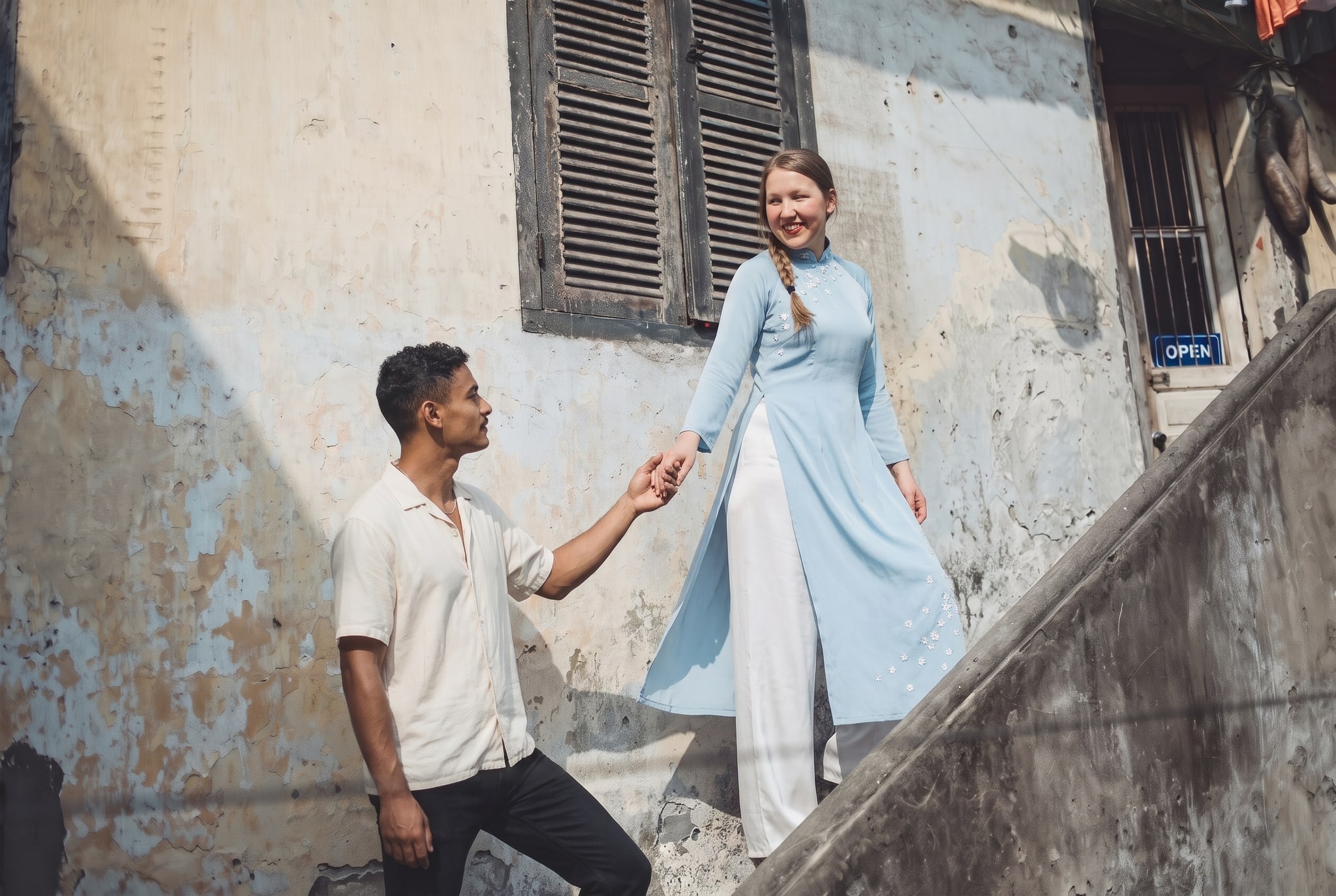
Non-models often overthink clothing. The Old Quarter's narrow, steep alleyways (especially around Hang Dao and Silver Street) demand functional comfort plus visual pop — wear soft-focus neutral base (cream, black, grey linen) so your face stays the focus, then add one statement piece (a silk scarf, vintage watch, colored shoes, oversized linen shirt unbuttoned). Avoid logos, busy patterns, and tight jeans that restrict movement on stairs. Many solo travelers ask: should I wear an áo dài? Yes, if you're comfortable; we have ao dai rental with styling included, and the traditional cut flatters most body types — wear it over plain dark pants for comfort, and it photographs richer in morning light than Western wear. Hanoi's Old Quarter humidity peaks May–September; natural fabrics (cotton, linen, silk) breathe better than synthetics, and your sweat won't show on fabric as obviously. Footwear should be slip-on (you'll remove shoes at temples) and grip well on wet, uneven stones; sneakers work, but leather slip-ons or sandals read better in frames. Conclusion: neutral base + one statement piece + áo dài option + breathable fabric = confidence and genuine movement.
How do you look natural when you've never posed for a camera?
Most non-models freeze because they're told to "smile and look at the camera" — the opposite works better. Ask your photographer for movement-based directions: walk toward the camera slowly, look at an interesting shopfront as you pass, pause mid-step and look back over your shoulder, sit on a step and read (your phone, a guidebook, nothing) while the camera catches you. These actions release the "I'm being photographed" tension and create genuine micro-expressions. A second technique: talk about something — your travel story, what you'll eat next — while the camera rolls; authentic thought patterns show more than forced smiles. In tight Old Quarter streets, lean against a shuttered door and let your arms hang naturally; don't pose, just stand and breathe. Practice one phrase silently: "What do I usually do when I'm alone?" (walk, think, adjust my bag, look up at architecture) — then do that while being photographed. Hanoi Photoshoot by Cáo Studio uses ambient sound and local guides who engage you in conversation during setup, which shifts the dynamic from "perform" to "be yourself." Conclusion: movement, thought, and real actions beat static poses every time.
Book a solo travel shoot to practice natural movement
How do seasons and weather actually change what's possible?
| Season | Light Quality | Crowds | Ground Condition | Best Time | Avoid |
|---|---|---|---|---|---|
| Oct–Nov | Clear, Golden | Low–Moderate | Dry, Safe | 6–7 am, 5–6 pm | Noon–2 pm |
| Dec–Feb | Soft, Even | Low | Dry, Coldish (10–15°C) | All day | None; book early |
| Mar–Apr | Hard, Dusty | High (Spring Break) | Dry | 6–7 am only | 9 am–6 pm |
| May–Sep | Hazy, Soft | Very High (Monsoon) | Wet, Slippery | 6–7 am, 6–7 pm | 10 am–5 pm |
December–February is ideal for solo travel shoots: clear morning light, fewer tourists, and mild temperatures (15–20°C) mean you won't overheat or sweat through outfits. March–April brings spring break crowds and Hanoi's dusty pre-monsoon haze; light is diffused but very harsh on faces at midday. May–September's humidity creates soft, forgiving light for skin tones, but streets flood with tour groups and monsoon rain can cancel shoots; always have a rain plan (covered laneway shoots, cafe interiors). Late August to early September is a sweet spot: tourists drop, humidity is manageable, and afternoon light turns golden without the brutal heat. Conclusion: book Dec–Feb or late Aug–Sep for best light + fewest crowds; avoid Mar–Apr and Jun–Jul.
See our full Hanoi shooting guide by season and season
What prep checklist prevents regrets and wasted time?
Before your shoot, confirm these with your photographer:
- Light angle: Will you shoot east-facing facades (morning light) or west-facing (evening light)? This determines outfit color and time.
- Outfit options: Bring 2–3 changes if you want variety; natural fabrics dry faster if wet.
- Route accessibility: Are you comfortable with 1–2 km of walking and narrow stairs? Old Quarter demands mobility.
- Temple/Train Street timing: Confirm your photographer has recent intel on current rules (they change quarterly).
- Makeup & styling: Do you want in-house hair and makeup, or arriving camera-ready? Book makeup and styling ahead in busy seasons.
- Contingency: If rain happens, do you reschedule or shoot indoors/under cover? Agree before arrival.
- Editing timeline: When will you get finals? We deliver color-corrected gallery in 2–3 weeks standard.
- Backup power: Phone, camera and backup battery charged (Hanoi's alleys have no outlets mid-shoot).
Once you've confirmed these, you'll move through the neighborhood with purpose, not panic. Conclusion: written confirmations prevent 80% of shoot-day surprises.
What to check before you book a solo travel shoot in the Old Quarter
- Ask your photographer's recent scouting notes: Which streets were empty last week? Which temples currently allow photos? This is fresher than blog posts.
- Confirm the package includes makeup/styling or if you arrive ready: Hanoi's humidity affects makeup durability; professional styling survives heat better.
- Verify the session length and location coverage: 2 hours allows one main neighborhood; 4+ hours lets you move between Old Quarter and nearby Hoan Kiem Lake for variety in light and backdrop.
- Check if the photographer has a weather backup plan: Does rain reschedule you, or is there an indoor/covered shoot option?
- Ask about the editing style: Do they match a mood or color palette you want? Not all photographers edit the same way.
- Confirm delivery format and timeline: Digital files only, or printed proofs? How long until you get final edits?
FAQ
Can I do a solo travel shoot in the Old Quarter if I'm not comfortable posing?
Yes — we specialize in non-models. We use movement-based direction (walk, look, adjust) rather than static poses. You'll be captured authentically, not stiffly. Most clients say it's less like "posing" and more like "being photographed while I'm doing my thing."
What's the best season for Old Quarter light without heat and crowds?
December–February is ideal: clear, soft morning light, mild temperatures (15–20°C), and low tourist crowds. Late August–early September is a close second. Avoid March–April (haze, spring break) and June–July (peak heat and monsoon chaos).
Can I visit Ngoc Son Temple and Hoa Lo Prison in one shoot and still get good light?
Yes, if you shoot early morning (6–7 am) for temple light, then move to Hoa Lo (southern, less crowded) by 8:30 am for courtyard light. This requires a 2–3 hour session and moderate walking pace. Confirm the route with your photographer.
Will my outfit show sweat in Hanoi's humidity?
Natural fabrics (cotton, linen, silk) are more forgiving than synthetics. Dark neutrals hide moisture better than light pastels. If you're shooting May–September, wear breathable layers and expect the photographer to scout shaded or breezy spots to minimize visible sweat.
Do I need to hire a local guide, or does the photographer handle everything?
Our photographers are local and know permit rules, crowd patterns, and light windows — they guide you. No separate guide needed. You focus on movement and expression; we handle logistics, navigation, and timing.
What happens if it rains on shoot day?
Confirm your photographer's policy before booking: some reschedule, others offer covered-laneway or cafe-interior alternate shots. Hanoi's monsoon rains (May–September) can be sudden; a flexible backup plan saves the session.
Check dates
Send your dates, how many people and the style you like. We reply on WhatsApp in English with spots, timing and a quote.
FAQ
Can I do a solo travel shoot in the Old Quarter if I'm not comfortable posing?
Yes — we specialize in non-models. We use movement-based direction (walk, look, adjust) rather than static poses. You'll be captured authentically, not stiffly. Most clients say it's less like "posing" and more like "being photographed while I'm doing my thing."
What's the best season for Old Quarter light without heat and crowds?
December–February is ideal: clear, soft morning light, mild temperatures (15–20°C), and low tourist crowds. Late August–early September is a close second. Avoid March–April (haze, spring break) and June–July (peak heat and monsoon chaos).
Can I visit Ngoc Son Temple and Hoa Lo Prison in one shoot and still get good light?
Yes, if you shoot early morning (6–7 am) for temple light, then move to Hoa Lo (southern, less crowded) by 8:30 am for courtyard light. This requires a 2–3 hour session and moderate walking pace. Confirm the route with your photographer.
Will my outfit show sweat in Hanoi's humidity?
Natural fabrics (cotton, linen, silk) are more forgiving than synthetics. Dark neutrals hide moisture better than light pastels. If you're shooting May–September, wear breathable layers and expect the photographer to scout shaded or breezy spots to minimize visible sweat.
Do I need to hire a local guide, or does the photographer handle everything?
Our photographers are local and know permit rules, crowd patterns, and light windows — they guide you. No separate guide needed. You focus on movement and expression; we handle logistics, navigation, and timing.
What happens if it rains on shoot day?
Confirm your photographer's policy before booking: some reschedule, others offer covered-laneway or cafe-interior alternate shots. Hanoi's monsoon rains (May–September) can be sudden; a flexible backup plan saves the session.
More like this
Solo travel portraits
How Many Edited Photos Do You Get from a Hanoi Vacation Shoot?
When you book a vacation portrait session in Hanoi with Cáo Studio, the number of edited images you receive depends on session length, location and your brief. We walk through the realistic count, editing timeline, and what affects the final gallery.
Solo travel portraits
Solo Travel Photoshoot Tay Ho: Best Time & Seasons
Tay Ho district offers intimate lakeside and temple backdrops for solo travelers. October–November and March–April deliver soft light, minimal rain, and manageable crowds—ideal for authentic Hanoi portraits without the summer heat or winter haze. #
Solo travel portraits
Solo Travel Photoshoot Hanoi Lotus Pond: Light, Crowds & Posing Tips
Lotus ponds demand early arrival and patience—crowds peak mid-morning. We guide you through seasonal light, posing without modeling experience, and outfit choices that work in water-adjacent settings.