
Home › Blog › Solo travel portraits
Solo Travel Photoshoot at Trấn Quốc Pagoda: Best Time & Light
By the Hanoi Photoshoot team · 2026-11-06
The best time to shoot solo portraits at Trấn Quốc Pagoda is sunrise (5:30–6:30 a.m., October to February) or late afternoon (4:00–5:30 p.m. year-round), when warm side-light flatters skin and reduces harsh shadows across the temple's terracotta roof and stone walls. The pagoda sits on a narrow peninsula, so morning light comes from the east over water, creating a glowing halo effect; afternoon light rakes across the main stupa from the west. Arrive 15 minutes before your target time to scout composition—crowds are lightest at 6:00 a.m. and heaviest at 10:00 a.m. and 2:00–4:00 p.m. Respect the active temple: wear covered shoulders and knees, remove shoes on the inner platform, and avoid shooting during prayer times (typically 7:00–8:00 a.m.). We coordinate timing, styling, and posing for non-models on WhatsApp, with in-house hair and makeup to complete your look. Check dates on WhatsApp
What Makes Trấn Quốc Pagoda Unique for Solo Portraits?
Trấn Quốc is Hanoi's oldest pagoda (built 545 A.D., per historical records) and sits on a small peninsula jutting into the Red River—a natural isolation that removes busy street clutter from backgrounds. The temple's architecture features a seven-tiered octagonal stupa, weathered brick walls, and low stone railings that frame close-up shots. Unlike crowded inner-city temples, you can find quiet corners for intimate portraits; the surrounding banyan trees and water reflections add depth. Most solo travelers miss the river's west bank approach, which offers completely different angles on the temple entrance. This unique geography means your shot won't look like every other Hanoi temple portrait online.
When Does Light Peak Throughout the Year?
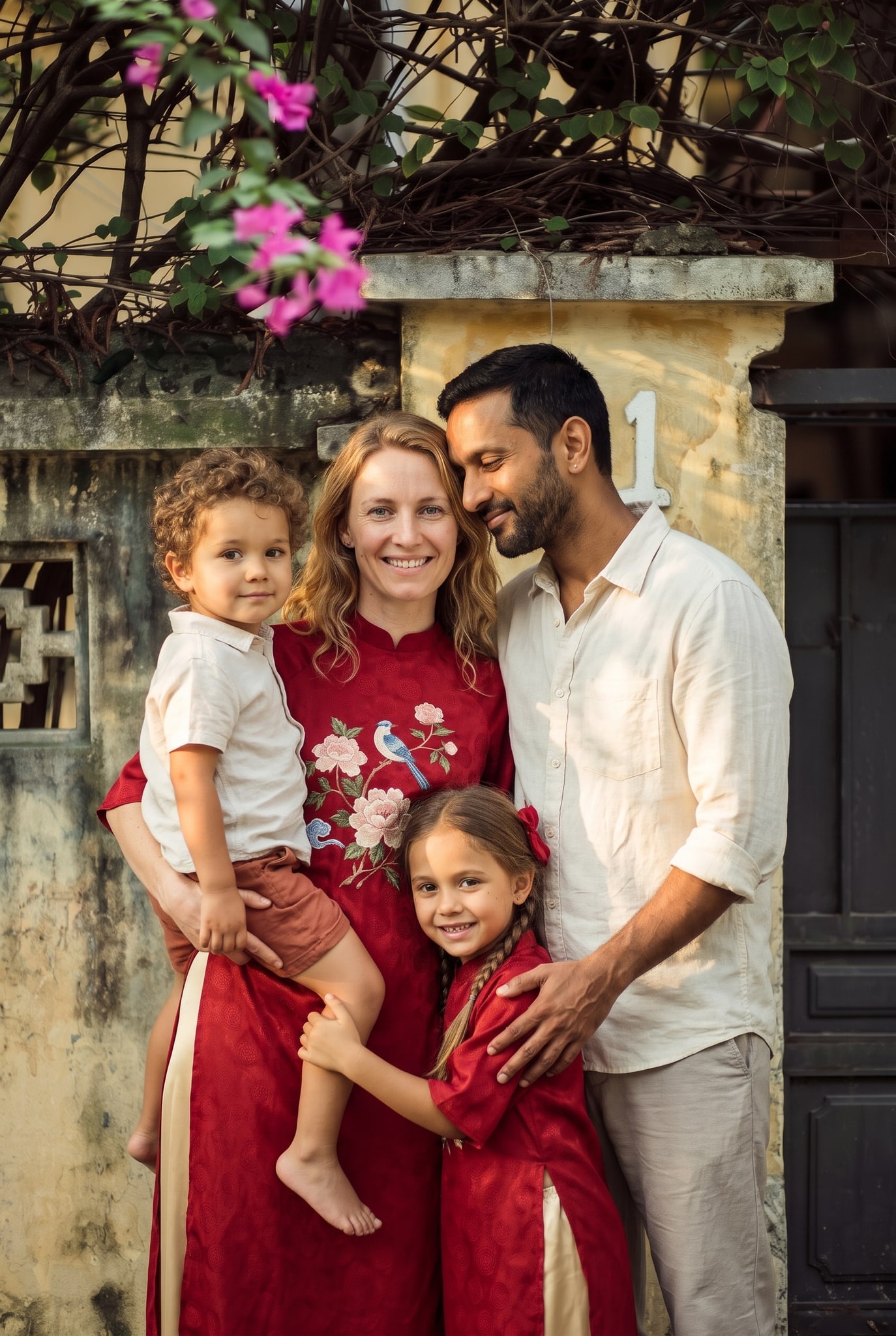
October–February (cool season): Sunrise (5:30–6:30 a.m.) delivers soft golden light, clear skies, and humidity-free skin. Direct sun appears low on the eastern water, creating backlit rim-light on hair and shoulders. Air quality is best; skin tones render warm and even. Afternoon (4:00–5:30 p.m.) is secondary but workable—sun is lower, shadows are softer, and crowds thin out.
March–September (hot season): Morning light remains valuable but humidity rises, making makeup and hair styling more challenging. By 7:00 a.m., the sun is already high and harsh; mid-tones flatten. Afternoon light improves after 4:30 p.m., when the sun dips below the pagoda roofline and casts the temple's shadow on its west side—ideal for rim-lit silhouettes. Never shoot 10:00 a.m.–3:00 p.m.; midday sun bleaches skin and creates unflattering overhead shadows. Plan hot-season shoots for sunrise or late-afternoon slots only.
What Are the Temple Rules, and How Do They Affect Your Shoot?
Trấn Quốc is an active Buddhist temple with daily worship. Covered shoulders, knees, and closed shoes are required; no exceptions. The inner platform (where the main stupa stands) is reserved for meditation—shooting there disrupts monks and worshippers, and temple staff will politely stop you. Outer courtyards and pavilions are open to tourists and photographers. Prayer times (typically 6:30–7:30 a.m. and 4:30–5:30 p.m.) see increased foot traffic; schedule shoots either before or well after these windows. Photography is permitted for personal use; commercial shoots (e.g., for magazines, brands, or paid promotion) require advance written permission from temple authorities—we handle this coordination for clients on request. Dress conservatively: long pants or maxi skirts, long sleeves or shawls, and flat shoes you can slip off quickly. We provide styling guidance and can arrange modest ao dai or tailored tunics to honor the space while looking stunning.
How Do You Pose Naturally When You're Alone and Not a Model?
Non-models often feel awkward facing a tripod or self-timer. Here's our field-tested framework: Start with anchors. Hold a lightweight prop (silk scarf, journal, or flower garland we provide) to occupy your hands and break the stiff-arm-at-side habit. Walk toward or away from the camera, pausing mid-stride—motion creates natural posture and avoids the "mugshot" freeze. Use the architecture. Lean against a pillar, sit on a stone bench, or stand in a doorway; the temple gives your body permission to relax. Engage with the space. Look at the water, trace the temple's carved details with your eyes, or adjust your ao dai fabric—these micro-movements soften your expression and make photos feel candid. Layer your angles. Shoot 5–10 frames at each pose: full body, waist-up, close-up. Three-quarter turns read better than straight-on portraits and elongate the neck. Breathe and reset between takes. A stiff smile lasts 2–3 frames, then your face reverts to its default; pause, relax your jaw, and reset your gaze. We coach you through this live via WhatsApp before the session, so you arrive confident and ready.
What Should You Wear to Look Good and Respect the Temple?
| Outfit Type | Best For | Why It Works |
|---|---|---|
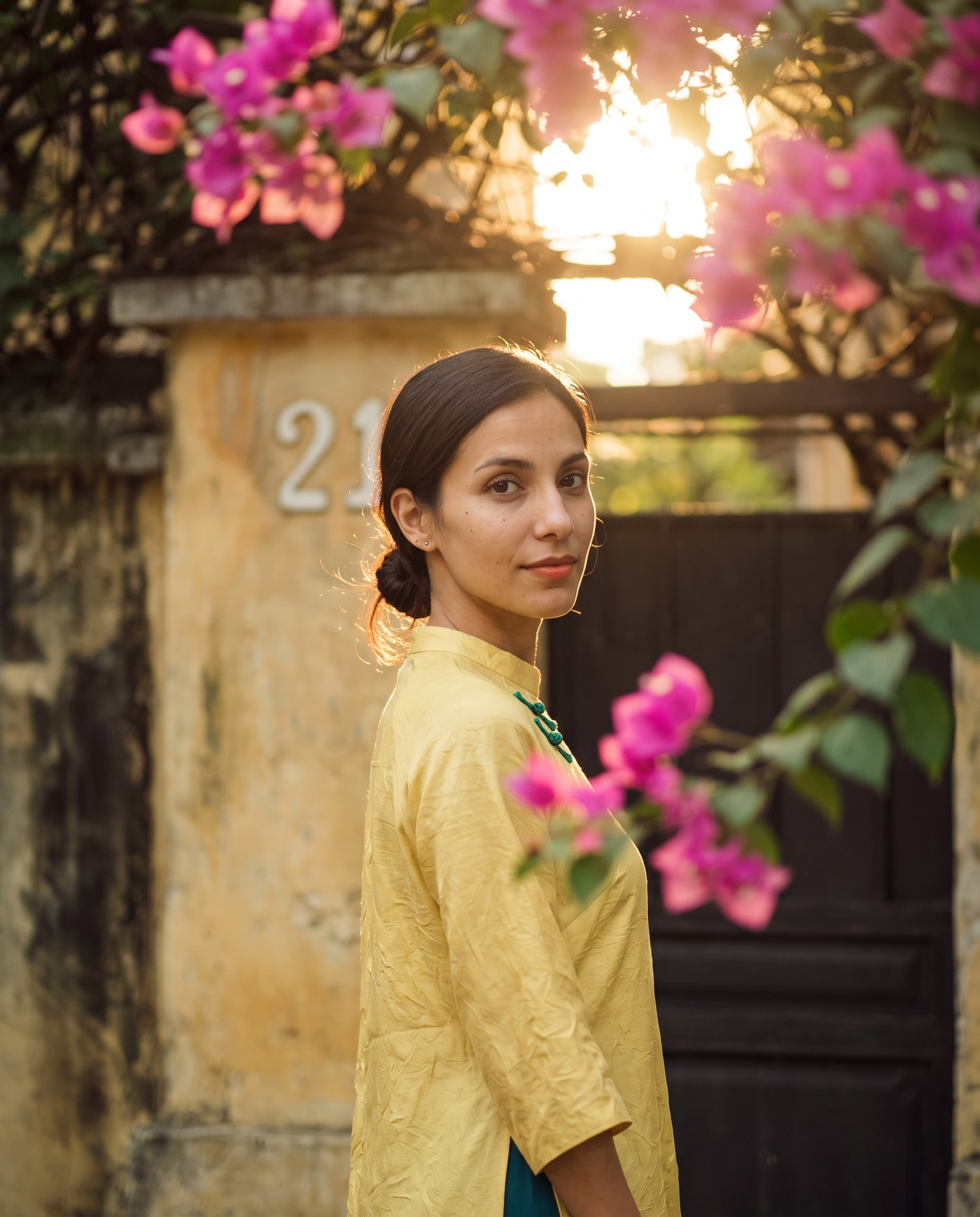
| Long ao dai (traditional or modern cut) | Formal, editorial, cultural immersion | Respects temple rules, flatters all body types, photographs dramatically; we have 20+ rental options in sizes XS–XL |
| Linen shirt + long skirt or trousers | Casual, travel-journal aesthetic | Breathable for heat, modest, neutral palette blends into architecture; easier to move in than ao dai |
| Lightweight sweater + midi dress | Cool-season shots (Oct–Feb) | Layers create visual interest; dress avoids knee-exposure rule |
| Silk scarf + solid top + long pants | Flexible all-season | Scarf adds color, texture, and hand-occupation; works as a props for re-posing |
Color & fabric: Jewel tones (emerald, sapphire, rust) and pastels (blush, cream, sage) photograph well against terracotta and stone. Avoid bright white (overexposes in backlit settings) and busy patterns (distract from your face). Linen and silk breathe; cotton risks sweat stains in heat. We offer in-house makeup and hair styling to ensure your look suits the season and light; ask us for a quote on WhatsApp.
How Do Crowds and Weather Change Your Experience?
Weekday mornings (6:00–7:00 a.m., Monday–Thursday): Fewest tourists; mostly monks and local worshippers. You'll have pavilions and stairs to yourself for 20–30 minutes. Risk: low light, cool temperatures, and limited shelter if rain occurs.
Weekend afternoons (4:00–5:00 p.m., Saturday–Sunday): Moderate crowds (30–50 people). Light is warm and predictable. Risk: family groups and tour buses may photobomb backgrounds; you'll need flexibility and patience.
Rainy season (May–August): Sudden downpours are common. Wet stone is slippery and adds hours to cleanup. Humidity frizzes hair and ruins makeup. Skip this period unless you want moody, dramatic shots with dark skies.
Monsoon edge (September, early October): Unpredictable but brief. Golden light after storms is magical. Risk: sun is still high; shoot only after 4:30 p.m.
Monitor weather the night before; we check forecasts and adjust timing via WhatsApp. Bring a lightweight umbrella and microfiber towel in any monsoon month. Ao dai fabric dries fast if dampened; regular cotton takes longer.
What to Check Before Your Shoot
- Confirm sunrise/sunset time: Verify exact times for your shoot date (varies ±10 minutes daily). We send you a WhatsApp reminder 48 hours before.
- Temple access rules: Call ahead or arrive 10 minutes early to confirm prayer times and any temporary closures (rare, but happens during festivals).
- Outfit fit and comfort: Wear your chosen outfit once at home to ensure you can sit, walk, and turn freely. Tight clothing restricts natural posture.
- Hair and makeup longevity: If shooting at sunrise in heat, request waterproof makeup. Humidity and sweat are real; plan for touch-ups mid-session.
- Phone/camera battery: Early morning = low light = slower shutter speed = longer exposure time. Ensure your device or camera has full charge.
- Accessibility: The temple has uneven stone steps and narrow passages. Wear flat, grippy shoes; heels or loose sandals risk twisted ankles.
Why Choose Hanoi Photoshoot by Cáo Studio?
We understand the Red River's seasonal light patterns, temple protocols, and non-model psychology. Our Hanoi team coordinates everything in English via WhatsApp—timing, styling, posing cues, and edits—so you show up relaxed and walk away with images that capture your Hanoi story, not a generic tourist snapshot. We also offer ao dai photoshoot in Hanoi packages, Instagram photoshoot sessions across multiple temples, and guidance on other Hanoi spots like Hoan Kiem Lake. Sister site vietnamphotoshoot.com covers other cities if you're planning a longer Vietnam trip.
FAQ
Can I shoot solo portraits at Trấn Quốc if I'm not Buddhist?
Yes. The pagoda welcomes respectful visitors of all faiths. Dress modestly (covered shoulders, knees), remove shoes on the inner platform, and avoid photography during active prayer times (6:30–7:30 a.m. and 4:30–5:30 p.m.). You're welcome in courtyards and pavilions anytime.
What if I'm traveling solo and don't know how to pose for self-timer shots?
We provide detailed posing guidance before your session: anchor points (pillars, benches), hand placement, angles, and micro-movements that feel natural. We also offer live WhatsApp coaching if you want a second opinion mid-shoot.
Is October really better than September for light and weather?
Yes. October marks the start of Hanoi's cool, dry season. Humidity drops, skies are clearer, and sunrise light is sharper and warmer. September still carries monsoon risk and lingering heat; we only recommend Sept. for adventurous travelers willing to reschedule if weather turns.
Can I wear a sleeveless dress and bring a shawl?
Yes. A lightweight silk or cotton shawl works for modesty and doubles as a visual prop. Ensure the shawl drapes naturally; a bunched or wrinkled shawl reads poorly in photos. We can suggest styling options via WhatsApp.
How long does a typical solo shoot at the pagoda take?
Plan 45–60 minutes on-site: 10 minutes for scouting and outfit adjustments, 30–40 minutes for posing and shooting multiple angles, 10 minutes for touch-ups and group-shot review. Travel time to/from the pagoda (if you're staying in the Old Quarter or central Hanoi) is 15–25 minutes by car or motorbike.
What if the temple is unexpectedly closed or crowded when I arrive?
We always have a backup plan. If access is blocked, we pivot to nearby spots around the Old Quarter or Hoan Kiem Lake, which offer similar architectural backdrops and light. We coordinate alternatives via WhatsApp in real-time.
Check dates
Send your dates, how many people and the style you like. We reply on WhatsApp in English with spots, timing and a quote.
FAQ
Can I shoot solo portraits at Trấn Quốc if I'm not Buddhist?
Yes. The pagoda welcomes respectful visitors of all faiths. Dress modestly (covered shoulders, knees), remove shoes on the inner platform, and avoid photography during active prayer times (6:30–7:30 a.m. and 4:30–5:30 p.m.). You're welcome in courtyards and pavilions anytime.
What if I'm traveling solo and don't know how to pose for self-timer shots?
We provide detailed posing guidance before your session: anchor points (pillars, benches), hand placement, angles, and micro-movements that feel natural. We also offer live WhatsApp coaching if you want a second opinion mid-shoot.
Is October really better than September for light and weather?
Yes. October marks the start of Hanoi's cool, dry season. Humidity drops, skies are clearer, and sunrise light is sharper and warmer. September still carries monsoon risk and lingering heat; we only recommend Sept. for adventurous travelers willing to reschedule if weather turns.
Can I wear a sleeveless dress and bring a shawl?
Yes. A lightweight silk or cotton shawl works for modesty and doubles as a visual prop. Ensure the shawl drapes naturally; a bunched or wrinkled shawl reads poorly in photos. We can suggest styling options via WhatsApp.
How long does a typical solo shoot at the pagoda take?
Plan 45–60 minutes on-site: 10 minutes for scouting and outfit adjustments, 30–40 minutes for posing and shooting multiple angles, 10 minutes for touch-ups and group-shot review. Travel time to/from the pagoda (if you're staying in the Old Quarter or central Hanoi) is 15–25 minutes by car or motorbike.
What if the temple is unexpectedly closed or crowded when I arrive?
We always have a backup plan. If access is blocked, we pivot to [nearby spots around the Old Quarter](/spots/hanoi-old-quarter) or [Hoan Kiem Lake](/spots/hoan-kiem-lake), which offer similar architectural backdrops and light. We coordinate alternatives via WhatsApp in real-time.
More like this
Solo travel portraits
How Many Edited Photos Do You Get from a Hanoi Vacation Shoot?
When you book a vacation portrait session in Hanoi with Cáo Studio, the number of edited images you receive depends on session length, location and your brief. We walk through the realistic count, editing timeline, and what affects the final gallery.
Solo travel portraits
Solo Travel Photoshoot Tay Ho: Best Time & Seasons
Tay Ho district offers intimate lakeside and temple backdrops for solo travelers. October–November and March–April deliver soft light, minimal rain, and manageable crowds—ideal for authentic Hanoi portraits without the summer heat or winter haze. #
Solo travel portraits
Solo Travel Photoshoot Hanoi Lotus Pond: Light, Crowds & Posing Tips
Lotus ponds demand early arrival and patience—crowds peak mid-morning. We guide you through seasonal light, posing without modeling experience, and outfit choices that work in water-adjacent settings.