
Home › Blog › Solo travel portraits
Portrait Photography at St Joseph's Cathedral Hanoi: Best Time & Tips
By the Hanoi Photoshoot team · 2026-11-06
St Joseph's Cathedral in central Hanoi's Old Quarter offers dramatic Gothic architecture for solo portraits, but success depends entirely on timing and temple protocol. Shoot between 9–11 a.m. or 1–2 p.m. during October–November or March–April for soft, directional light and fewer visitors. Avoid midday (12–1 p.m.) when crowds peak and overhead sun flattens features; skip 4 p.m. onward when light fades behind buildings. Dress modestly (shoulders and knees covered); no tripods, drones or commercial setups without written permission. Budget 2–3 hours on-site. With Hanoi Photoshoot by Cáo Studio, we handle location scouting, timing coordination and styling so you arrive camera-ready—no guesswork. Check dates on WhatsApp
What Light Does St Joseph's Cathedral Get, and When?
The cathedral's façade faces east, catching warm morning sun 8–11 a.m. that sculpts the twin spires and stone detail without harsh shadows. Afternoon light (2–3 p.m.) skims from the south, good for side profiles but weaker. After 4 p.m., the front entrance falls into shade; only backlighting works, and crowds thin sharply. Winter months (November–February) deliver lower, warmer sun angles all day; summer (May–September) sun climbs high fast, leaving only 90 minutes of flattering morning light. Based on Hanoi's latitude and seasonal angles, October–April is objectively superior for portraiture—softer contrast, longer usable windows. The cathedral's narrow side street (Nhà Thờ Street) acts as a reflector, bouncing soft fill light onto faces during morning shoots.
How Do Crowds and Foot Traffic Affect Your Session?
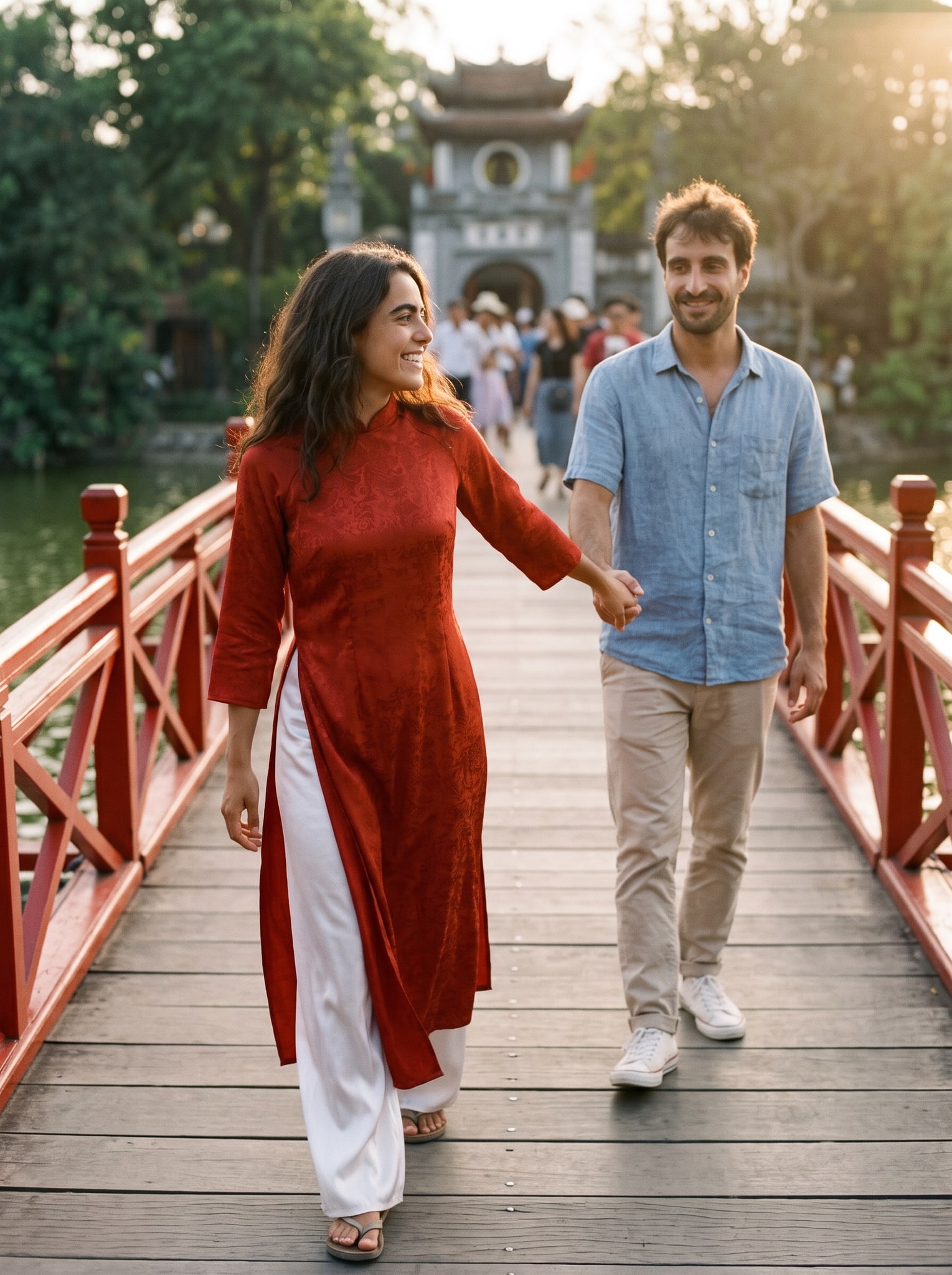
Tourist volume peaks 11 a.m.–3 p.m., especially weekends and holidays. Early morning (8–9 a.m.) and late afternoon (4–5 p.m.) are quiet, but light quality drops late. Weekdays pull 30–50% fewer visitors than Saturday–Sunday. Rainy season (May–September) deters crowds but clouds flatten light. We schedule solo portrait sessions at off-peak windows: either 9–10 a.m. on weekdays or 1:30–2:30 p.m. when lunch breaks clear the square. This trade-off—fewer people but still usable light—beats fighting tourist throngs at prime hours.
| Timing | Crowd Level | Light Quality | Best For |
|---|---|---|---|
| 8–9 a.m., weekday | Very low | Warm, angled | Quiet, intimate shots |
| 9–11 a.m., any day | Moderate | Peak soft | Standout cathedral detail |
| 12–1 p.m. | High | Harsh overhead | Avoid entirely |
| 1:30–2:30 p.m., weekday | Low | Directional side | Movement, less crowded |
| 3–4 p.m. | Moderate | Fading fast | Only backlighting works |
| 4–5 p.m. | Very low | Gone behind buildings | Silhouettes only |
What Are the Rules and Restrictions Inside and Outside?
The cathedral is a functioning Catholic church, not a museum. Respectful dress is mandatory: shoulders and knees covered, no hats indoors, no loud conversation. Active services (7–8 a.m., 10 a.m. Sundays, 5 p.m. weekdays) prohibit photography entirely. No tripods, selfie sticks or drones inside the courtyard. Commercial photo sessions (with a crew, booking for payment) require written approval from the parish office—allow 1–2 weeks lead time. The exterior façade and surrounding courtyard are public, so amateur portraits here don't need permission. We coordinate in advance, confirming no services overlap your shoot window and flagging any seasonal closures or maintenance work that might block the main entrance or side doors.
How Should You Pose and Move in Front of This Architecture?
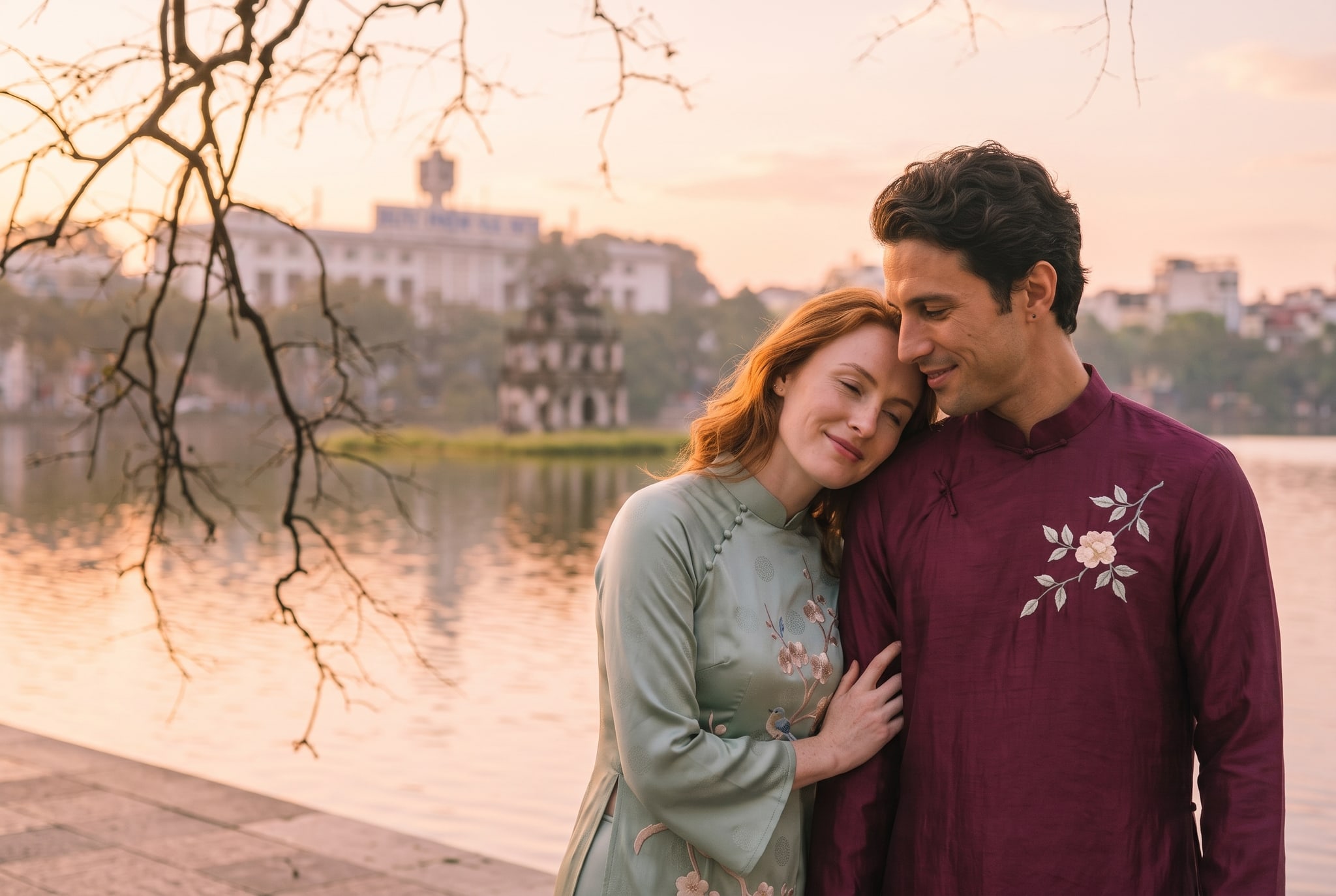
Non-models often freeze facing the cathedral dead-on; instead, angle your body 45° to the stone, shoulders soft, one foot forward. This uses the Gothic lines diagonally behind you, adding dimension. Walk slowly toward or past the entrance (avoiding direct people-traffic); this motion looks natural and frames you against vertical spires. Use the side alcoves and arched doorways as frames—stepping into shadow, looking outward—rather than standing in open square where the background reads chaotic. The twin towers compress if you stand too close; step back 15–20 meters for the full silhouette. Tight crop headshots work best with the façade as soft bokeh, achieved by standing very close and using a shallow depth-of-field lens. We provide real-time posing direction on-site—no stiff "say cheese" needed. Our makeup, hair & ao dai rental service keeps you camera-ready for the entire 2–3 hour window, even if light shifts or we need to pivot to a secondary angle mid-shoot.
Which Seasons and Weather Windows Offer the Best Results?
October–November and March–April are Hanoi's "golden" months: cool (18–25°C), low humidity, and clear skies nearly every day. December–February is colder (12–18°C) but still bright; fewer tourists linger in chilly morning air, benefiting your shoot. May–September brings monsoon rain, afternoon thunderstorms, and oppressive heat; morning light is humid-soft but shoots often abort by 1 p.m. when downpours arrive. Overcast days flatten detail on stone; full sun mid-year burns out highlights. If your travel is fixed to summer, shift your cathedral session to 6:30–7:30 a.m. before heat peaks, or choose our Old Quarter photo guide with narrower alleys that offer natural shade year-round. Humidity year-round (60–90%) can fog lenses; we carry microfiber cloths and UV filters to protect gear. Our schedule planning factors seasonal light and tourist calendars so you don't book blindly.
How Do You Combine St Joseph's Cathedral with Other Hanoi Spots in One Session?
The cathedral sits within the Old Quarter, 10–15 minutes' walk from Hoan Kiem Lake and Train Street. A combined 4-hour shoot can hit cathedral (9–11 a.m., 2 hours), a café-front sequence nearby (11 a.m.–12:30 p.m.), and Train Street at late afternoon (3–4:30 p.m.) when light is directional and crowds thin. This bundling maximizes travel efficiency and lets you change outfits or styling between locations—ideal for travel portraits or graduation shoots. Our team coordinates timing, transportation and confirms each spot's current access rules on shoot day, because Train Street has unpredictable closures and temple access can shift. Combining locations also spreads image variety across your final gallery without repeating backdrops.
What to Check Before You Book a Cathedral Session
- Service schedule: Confirm no active Mass during your booked hour (we verify this 48 hours prior).
- Weather forecast: Book on a clear day; drizzle is acceptable, but thunderstorms abort sessions (we reschedule free).
- Outfit: Test that clothes fit the dress code (no transparent sleeves, capri pants are borderline—we advise long trousers or full-length skirts).
- Mobility: The courtyard is cobbled and uneven; wear comfortable shoes for 2+ hours of movement and posing.
- Backup location: If the cathedral is unexpectedly closed, we pivot to nearby Old Quarter alternatives with similar colonial charm.
- Editing turnaround: Ask us for final gallery timeline when confirming; typical delivery is 10–14 days post-shoot.
FAQ
Can I bring a friend or family member to watch during my solo portrait shoot?
Yes. One companion is welcome; more than two can distract focus. We work faster and capture better candid moments with minimal on-set audience. Family members add to the cost if we frame them in shots; ask us for a quote on WhatsApp if you want group additions.
Is the cathedral free to visit and photograph?
Entry to the courtyard and exterior is free. Interior (nave) has no entry fee for prayer or quiet visiting, but active photography inside requires permission from the parish. Our setup focuses on façade and exterior angles, which are public and unrestricted for non-commercial use.
What if I'm traveling solo and don't know how to pose naturally?
That's our default—most clients are non-models or first-time photographers. We give real-time direction: walk here, look there, turn slightly, let your hands relax. You don't need experience. Solo portrait sessions are built on this assumption; posing guidance is included.
Does humidity in Hanoi affect the final photos?
Yes, it softens light and can create slight haze in the background. This is often flattering for portraits, but we adjust camera settings and sometimes use UV filters to cut haze. Moisture also risks lens fogging between indoor café stops and outdoor sessions; we carry lens cloths and monitor this actively.
How far ahead should I book a cathedral shoot?
Ideally 1–2 weeks to confirm timing, seasonal light windows, and any temple closures. Last-minute bookings (48 hours) are possible if your preferred time slot is free. During peak season (October–November), book 3–4 weeks ahead to avoid conflicts with other clients and tour groups.
Can I combine the cathedral with an ao dai rental and other locations?
Absolutely. Ao dai photoshoots paired with cathedral + Old Quarter is a popular 4–5 hour itinerary. We include styling, hair and ao dai rental in one booking. This works best on cooler months (October–April) since ao dai is layered; summer heat makes the silk uncomfortable after 2 hours outdoors.
Check dates
Send your dates, how many people and the style you like. We reply on WhatsApp in English with spots, timing and a quote.
FAQ
Can I bring a friend or family member to watch during my solo portrait shoot?
Yes. One companion is welcome; more than two can distract focus. We work faster and capture better candid moments with minimal on-set audience. Family members add to the cost if we frame them in shots; ask us for a quote on WhatsApp if you want group additions.
Is the cathedral free to visit and photograph?
Entry to the courtyard and exterior is free. Interior (nave) has no entry fee for prayer or quiet visiting, but active photography inside requires permission from the parish. Our setup focuses on façade and exterior angles, which are public and unrestricted for non-commercial use.
What if I'm traveling solo and don't know how to pose naturally?
That's our default—most clients are non-models or first-time photographers. We give real-time direction: walk here, look there, turn slightly, let your hands relax. You don't need experience. [Solo portrait sessions](/solo-portrait) are built on this assumption; posing guidance is included.
Does humidity in Hanoi affect the final photos?
Yes, it softens light and can create slight haze in the background. This is often flattering for portraits, but we adjust camera settings and sometimes use UV filters to cut haze. Moisture also risks lens fogging between indoor café stops and outdoor sessions; we carry lens cloths and monitor this actively.
How far ahead should I book a cathedral shoot?
Ideally 1–2 weeks to confirm timing, seasonal light windows, and any temple closures. Last-minute bookings (48 hours) are possible if your preferred time slot is free. During peak season (October–November), book 3–4 weeks ahead to avoid conflicts with other clients and tour groups.
Can I combine the cathedral with an ao dai rental and other locations?
Absolutely. [Ao dai photoshoots](/ao-dai-photoshoot) paired with cathedral + Old Quarter is a popular 4–5 hour itinerary. We include styling, hair and ao dai rental in one booking. This works best on cooler months (October–April) since ao dai is layered; summer heat makes the silk uncomfortable after 2 hours outdoors.
More like this
Solo travel portraits
How Many Edited Photos Do You Get from a Hanoi Vacation Shoot?
When you book a vacation portrait session in Hanoi with Cáo Studio, the number of edited images you receive depends on session length, location and your brief. We walk through the realistic count, editing timeline, and what affects the final gallery.
Solo travel portraits
Solo Travel Photoshoot Tay Ho: Best Time & Seasons
Tay Ho district offers intimate lakeside and temple backdrops for solo travelers. October–November and March–April deliver soft light, minimal rain, and manageable crowds—ideal for authentic Hanoi portraits without the summer heat or winter haze. #
Solo travel portraits
Solo Travel Photoshoot Hanoi Lotus Pond: Light, Crowds & Posing Tips
Lotus ponds demand early arrival and patience—crowds peak mid-morning. We guide you through seasonal light, posing without modeling experience, and outfit choices that work in water-adjacent settings.