
Home › Blog › Solo travel portraits
Portrait Photographer Hanoi Poses: 8 Real Tips Non-Models Use
By the Hanoi Photoshoot team · 2026-11-06
At Hanoi Photoshoot by Cáo Studio, we guide non-models through poses by breaking them into four anchors: shoulder angle (45° to camera, not square-on), chin tilt (slight forward, avoid upward tilt), hand placement (keep hands busy—in pockets, touching fabric, holding a prop), and weight shift (stand on back foot, relax the front). We shoot portrait sessions across Hanoi's day-trip spots; a typical session runs 2–3 hours with in-house makeup and styling included. The biggest mistake is holding tension; we coach you to breathe, walk between frames, and speak so your face relaxes. Light quality matters more than pose—morning (6–8 a.m.) and late afternoon (4–6 p.m.) give soft, directional light that flatters any body type. Cost varies by season and location; ask us for a quote on WhatsApp. Stiffness comes from overthinking—we move you gradually into natural positions using simple actions (walk toward the lens, look over your shoulder, sit and lean forward slightly) rather than instruction-heavy poses. Check dates on WhatsApp
What does "natural" posture actually mean in a portrait?
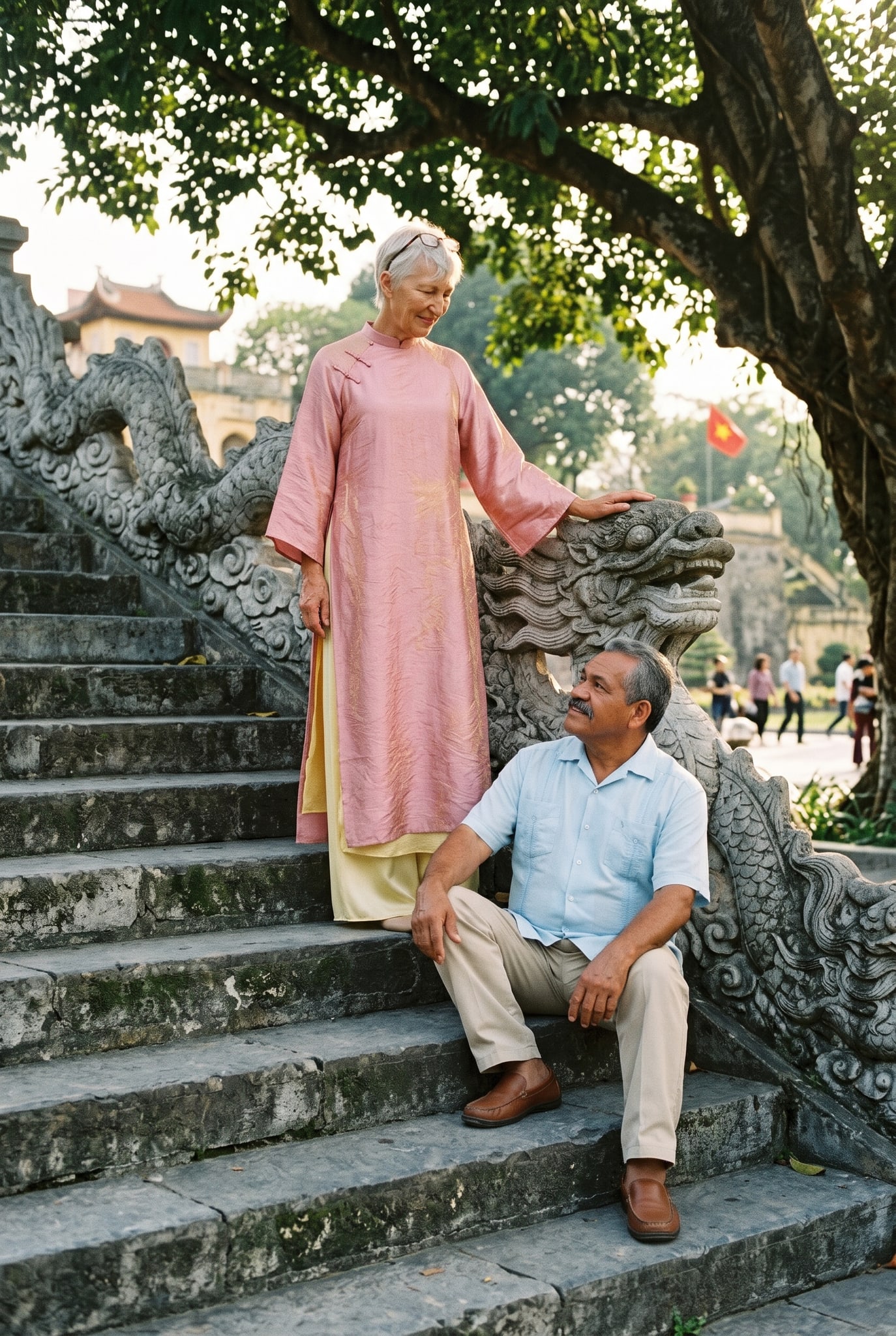
Natural posture is not standing straight; it's angled, asymmetrical, and alive. Turn your shoulders 45° away from the camera, drop one shoulder slightly lower, and shift your weight to your back foot—your front leg will straighten subtly, creating line and energy. Keep your spine long but not rigid; think "tall, not tense." In Hanoi's solo portrait sessions, we ask you to move first—walk, sit, lean—then pause mid-action. That pause captures ease because your body is already in motion, not locked in a static frame. Avoid mirroring the camera (shoulders square); asymmetry reads as confident and alive.
Where should your eyes and chin go to avoid the common "stiff" look?
Eyes should be soft-focused on a point slightly above or past the camera—not staring directly at the lens, which creates intensity and tension. Tilt your chin forward and down just 1 inch, as if nodding gently; this defines the jawline without creating a double chin. Never tilt your chin upward; it shortens the neck and hardens the face. In Hanoi's bright midday sun (11 a.m.–2 p.m.), eyes narrow and squint, so we shoot before 10 a.m. or after 4 p.m. when light is lower and softer. If you're at Hoan Kiem Lake in afternoon light, stand with your back to the sun so your face receives diffused front light and your eyes stay open and bright. Chin placement is universal; eye direction changes your mood—soften the gaze for editorial, sharpen it for confidence.
How do you pose hands so they don't look awkward or disappear?
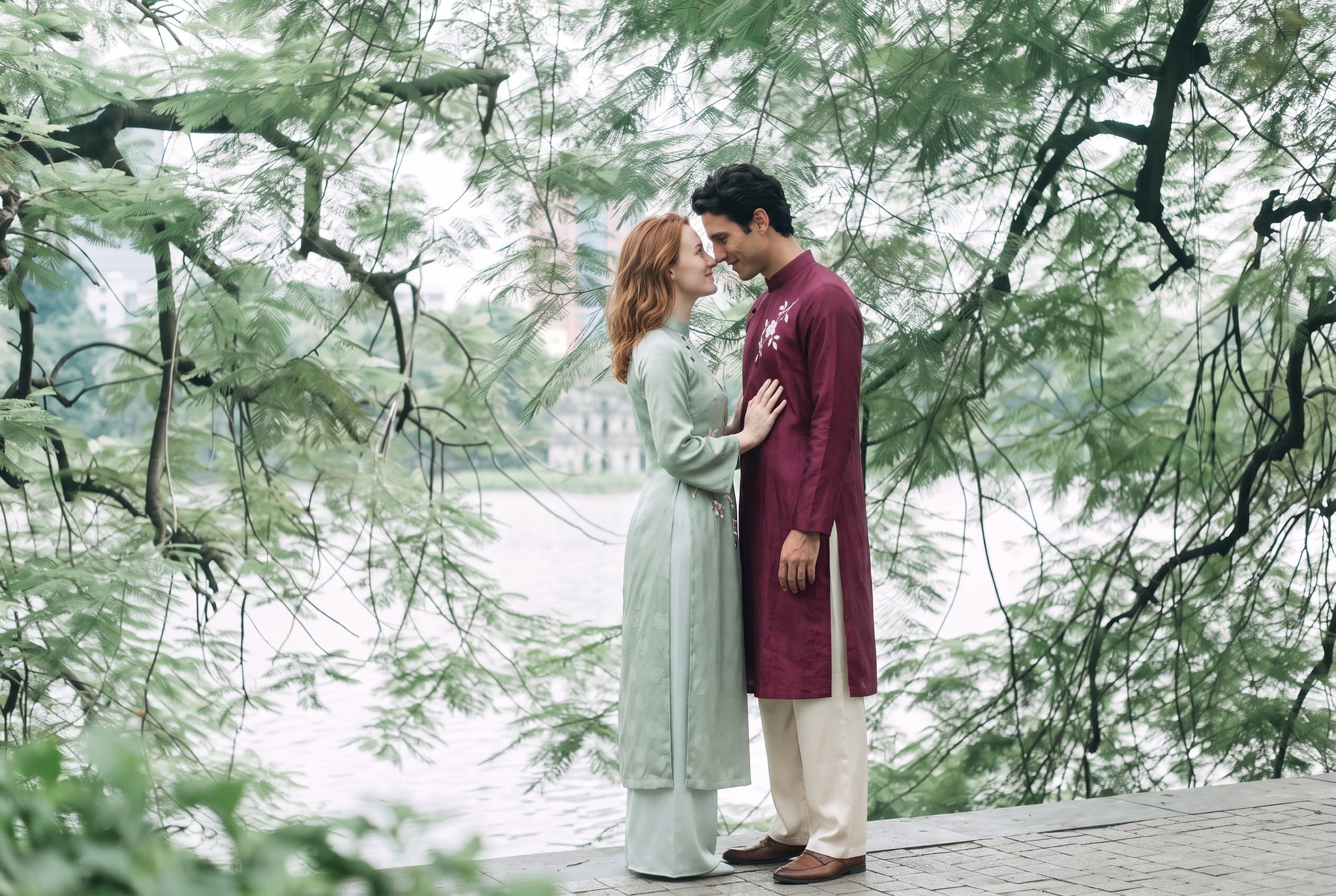
Hands are hardest because they're always visible and visible hands mean busy hands. Five options work across almost all portrait styles: (1) one hand in a front pocket, thumb hooked out; (2) both hands loose at sides with fingers slightly spread (tension reads in clenched fists); (3) one hand holding a prop—fabric, a book, or a flower; (4) arms crossed loosely, not defensively; (5) hands near your face—fingers through hair, resting on cheek. Never let hands hang flat or dangle by your thighs; they read as unfinished. In couple photoshoots, we have both partners hold the same prop or each other's fingers, which anchors nervous hands. For solo shots, ask yourself: "What would I naturally do with my hands right now?" and do that. Hanoi's humid climate means sweat on hands; we often hand you a cloth prop or position arms to keep hands near the body where they photograph smaller and feel more contained.
Which light times and Hanoi locations give you the best chance of looking relaxed?
| Light Window | Location Type | Why It Works | Season Sweet Spot |
|---|---|---|---|
| 6:00–8:00 a.m. | Old Quarter narrow streets, colonial doors | Golden side light, low shadows, cool temperature | Oct–Apr (cooler, less humidity) |
| 4:30–6:00 p.m. | Parks, water edges, tree-lined lanes | Warm, directional light, long shadows create depth | Sept–May (softer air, golden hour longer) |
| 11:00 a.m.–1:00 p.m. | Shaded courtyards, covered arcades | Diffused overhead light, no squinting | Any season (use shadow as fill) |
| Midday (avoid alone) | Indoors, studio, shade only | Too harsh; creates shadows under eyes and chin | Never shoot open sun midday |
The best pose is worthless in harsh light. Hanoi's tropical sun peaks at noon; before 9 a.m. and after 4 p.m., the sun sits lower and gives directional light that sculpts faces. Morning light is cooler (5,500K); late afternoon is warm (3,500K)—choose based on your skin tone. Cooler skin tones often glow in morning light; warmer skin tones pop in golden hour. Rain-season months (May–Sept) bring diffused, cloudy light perfect for texture and emotion; dry season (Oct–Apr) offers crisp, clear skies. We coordinate all portrait photoshoots around season and time to guarantee usable light before we book your session.
How do body position and distance from the camera change your perceived mood?
Distance creates intimacy. From 3 feet away (tight crop from waist up), you look vulnerable and direct—ideal for headshots or emotional portraits. From 8–10 feet away (full body, environmental), you look confident and situated in place—ideal for travel and lifestyle. Closer = more emotional; farther = more contextual. Body position also shifts mood: face-on (rare, use for confrontation or strength), 45° angle (most natural and forgiving), profile (contemplative, editorial), and three-quarter back (mysterious, aspirational). At Instagram photoshoot locations across Hanoi, we mix positions in one session—tight portraits for close connection, then wide shots for context, then profile or back shots for variety. The same pose in different distances reads completely differently; we coach you to repeat one posture (hand-in-pocket, shoulder-angled, chin-down) across three different distances so you see the mood shift. This teaches you which distance matches your intention. Hanoi's vertical architecture (narrow alleys, tall French colonial shutters) naturally compresses distance; we use this to force tighter, more intimate framing.
What should you do between takes so you don't look tired or frustrated?
Fatigue shows fast in the eyes and mouth. Between every 5–10 frames, we ask you to: (1) walk away and shake out your hands; (2) sip water and rest your jaw; (3) look at your phone or a landmark for 20 seconds (eyes relax, face resets); (4) smile and laugh to reset facial muscles; (5) take one deep breath. Never stand still between takes—stiffness accumulates. In long sessions (2–3 hours), we build in a 10-minute break mid-way. Hanoi's heat and humidity drain energy faster than temperate climates; we schedule shoots early morning or late afternoon to avoid peak heat. If you're shooting at Train Street or other tourist zones, crowds and noise create tension; we start with behind-the-scenes warm-up shots (not final takes) so your comfort rises before the "real" shoot starts. Genuine fatigue reads as resignation; a 20-second reset resets your entire face. We tell clients: "We're not hunting for the perfect moment; we're capturing moments where you're relaxed enough to forget we're here."
How do you adapt poses when you're self-conscious about your body, face shape, or height?
Self-consciousness is valid and common; we work around it, not against it. Posture changes perception: leaning slightly forward (toward camera) makes you look engaged and smaller; leaning back makes you look taller and more confident. Angled shoulders always read better than square shoulders—they slim the frame. If you're concerned about your profile, we favor three-quarter angles (68% of your face visible, not 100%). If you're concerned about arm size or shape, we keep hands elevated (near face or in pockets) so arms photograph shorter. If you're concerned about height, we shoot from eye level or slightly below, never from above. If you're concerned about stomach or hips, we use layers, drape fabrics, or frame from the waist up. None of this is about hiding—it's about showing your best angles. We offer makeup and styling in-house, which includes fabric choices and layering that photograph better than what feels comfortable. Many clients say, "That outfit felt baggy in the mirror," then see the portrait and say, "I look amazing." Hanoi's heat means fewer layers; we use loose linens, high necklines, and structured fabrics that photograph crisper than tight clothing. Transparency: we can't change bone structure or body type, but we can position you in light and angles that make you feel strong.
What to check before you book
- Time of year: Oct–Apr is cooler, easier to pose without heat stress. May–Sept is humid; we start earlier (5:30 a.m.) to beat heat.
- Duration: 1-hour sessions work for headshots; 2–3 hours work for variety (close, medium, wide, different poses). Shorter sessions = less reset time = more pressure.
- Location: Hanoi Old Quarter requires street permits; public parks (Hoan Kiem, Botanical) are easiest. Train Street needs timing (trains run 6–7 a.m., 2–3 p.m., 6–7 p.m.). We coordinate all logistics.
- Clothing: Bring 2–3 outfits, including one in a color and fabric you feel strong in. Avoid busy patterns; solids and textures photograph better.
- Hair and makeup: We offer in-house services; if you want professional makeup, book it when you reserve your session.
- Temperature and hydration: Hanoi can reach 35°C (95°F) in summer. Drink water constantly; we'll pause if you need to cool down.
Why pose coaching matters more than your natural instinct
Most people feel awkward posing because no one has taught them. Your instinct is often to stiffen, square your shoulders, or hold your breath. A real pose coach (like our team in Hanoi) breaks posing into teachable, repeatable moves so by frame 50, you're confident enough to relax. This is why professional portraits look effortless—the model isn't naturally relaxed; they've been guided into positions that feel relaxed on camera. We run solo portrait sessions, couple shoots, and family photoshoots, and we coach every session the same way: simple anchors (shoulder angle, chin tilt, weight shift, hand placement), light timing, and frequent resets so you stay fresh. After 2–3 sessions with us, most clients internalize the anchors and bring that ease to the next shoot.
Plan your Hanoi shoot
FAQ
I'm taller/shorter than average—does pose change?
Slightly. Taller frames need wider stances (feet shoulder-width apart) to avoid looking stretched. Shorter frames work better with closer framing or seated poses. We adjust frame distance, not core posture. The 45° shoulder angle and chin tilt work for every height.
What's the difference between "posing for Instagram" and "posing for a portrait session"?
Instagram poses are often more styled, exaggerated, and trend-aware; portrait poses are timeless and honest. We coach both—Instagram photoshoot sessions at specific Hanoi landmarks use trending angles and props; classic portrait sessions use neutral poses that won't feel dated in 5 years. Ask us which fits your need.
If I've never modeled, can I still look good?
Yes—that's exactly who we work with. Non-models often look better because they're not overthinking. We guide you into simple, natural positions (walk, sit, lean) and capture the pause. Your authenticity is your asset. Most of our clients are first-time portrait subjects.
How do we make sure my pose matches the location's vibe?
The environment sets the mood. At Old Quarter doors, we use posed, editorial angles (profile, three-quarter, direct gaze). At parks or water edges, we use looser, lifestyle angles (walking, looking off-camera, sitting). We scout locations and brief you on the mood before we shoot.
What if I hate how I look mid-shoot?
We pause, show you frames, and adjust. Most clients say, "I looked better than I felt," which is normal—camera perspective differs from mirrors. If a specific pose or angle bothers you, we stop and try another. We have a 30-day session guarantee; if you're truly unhappy, we reshoot.
Should I practice poses at home before we shoot?
Not necessary, but helpful. Film yourself from the side (45° angle)—watch where tension lives (shoulders, jaw, hands). We'll coach the same things in-person. The main practice: smile gently, relax your shoulders, breathe. That's it.
Check dates
Send your dates, how many people and the style you like. We reply on WhatsApp in English with spots, timing and a quote.
FAQ
I'm taller/shorter than average—does pose change?
Slightly. Taller frames need wider stances (feet shoulder-width apart) to avoid looking stretched. Shorter frames work better with closer framing or seated poses. We adjust frame distance, not core posture. The 45° shoulder angle and chin tilt work for every height.
What's the difference between "posing for Instagram" and "posing for a portrait session"?
Instagram poses are often more styled, exaggerated, and trend-aware; portrait poses are timeless and honest. We coach both—[Instagram photoshoot sessions](/instagram-photoshoot) at specific Hanoi landmarks use trending angles and props; classic portrait sessions use neutral poses that won't feel dated in 5 years. Ask us which fits your need.
If I've never modeled, can I still look good?
Yes—that's exactly who we work with. Non-models often look *better* because they're not overthinking. We guide you into simple, natural positions (walk, sit, lean) and capture the pause. Your authenticity is your asset. Most of our clients are first-time portrait subjects.
How do we make sure my pose matches the location's vibe?
The environment sets the mood. At [Old Quarter](/spots/hanoi-old-quarter) doors, we use posed, editorial angles (profile, three-quarter, direct gaze). At parks or water edges, we use looser, lifestyle angles (walking, looking off-camera, sitting). We scout locations and brief you on the mood *before* we shoot.
What if I hate how I look mid-shoot?
We pause, show you frames, and adjust. Most clients say, "I looked better than I felt," which is normal—camera perspective differs from mirrors. If a specific pose or angle bothers you, we stop and try another. We have a 30-day session guarantee; if you're truly unhappy, we reshoot.
Should I practice poses at home before we shoot?
Not necessary, but helpful. Film yourself from the side (45° angle)—watch where tension lives (shoulders, jaw, hands). We'll coach the same things in-person. The main practice: smile gently, relax your shoulders, breathe. That's it.
More like this
Solo travel portraits
How Many Edited Photos Do You Get from a Hanoi Vacation Shoot?
When you book a vacation portrait session in Hanoi with Cáo Studio, the number of edited images you receive depends on session length, location and your brief. We walk through the realistic count, editing timeline, and what affects the final gallery.
Solo travel portraits
Solo Travel Photoshoot Tay Ho: Best Time & Seasons
Tay Ho district offers intimate lakeside and temple backdrops for solo travelers. October–November and March–April deliver soft light, minimal rain, and manageable crowds—ideal for authentic Hanoi portraits without the summer heat or winter haze. #
Solo travel portraits
Solo Travel Photoshoot Hanoi Lotus Pond: Light, Crowds & Posing Tips
Lotus ponds demand early arrival and patience—crowds peak mid-morning. We guide you through seasonal light, posing without modeling experience, and outfit choices that work in water-adjacent settings.