
Home › Blog › Solo travel portraits
Portrait Photographer Hanoi in Winter: Light, Crowds & Booking Tips
By the Hanoi Photoshoot team · 2026-11-06
Winter portrait photography in Hanoi thrives on three factors: soft, low-angle sunlight from 4 p.m. onward; minimal rain and humidity; and half the summer crowds at temples and waterfronts. Sessions work best between November and early February, when temperatures hover around 15–20°C. Light peaks in quality from late afternoon until dusk (roughly 4:45–5:45 p.m.), turning gritty streets into warm-toned backdrops. Book with Hanoi Photoshoot by Cáo Studio for makeup, hair, and location scouting; we coordinate entirely in English on WhatsApp and know which spots stay empty at which hours. Expect 2–4 hours on-location; budget 3–5 outfit changes. Avoid midday (10 a.m.–3 p.m.) when light is harsh and overhead, and skip rainy stretches (usually brief but unpredictable). Winter suits solo travelers, expats, and anyone wanting magazine-quality natural light without studio rentals. Check dates on WhatsApp
Why does Hanoi winter offer better portrait light than other seasons?
Hanoi's low winter sun (November–February) sits at a shallower angle because of the hemisphere's tilt. Golden hour stretches from roughly 4:00 p.m. to 5:45 p.m.—nearly two hours, versus summer's 30–45 minutes. Humidity drops to 50–60%, so skin looks clearer and lenses don't fog. Seasonal haze burns off by afternoon, revealing detail in backgrounds. This long, angled light flatters faces, softens shadows under eyes and cheekbones, and turns weathered walls and water into warm, textured frames. Summer light is harsh, midday is washed-out, and monsoon (May–September) brings clouds and crowds. Winter is non-negotiable for non-models seeking effortless, flattering results.
Which Hanoi spots photograph best in winter light?
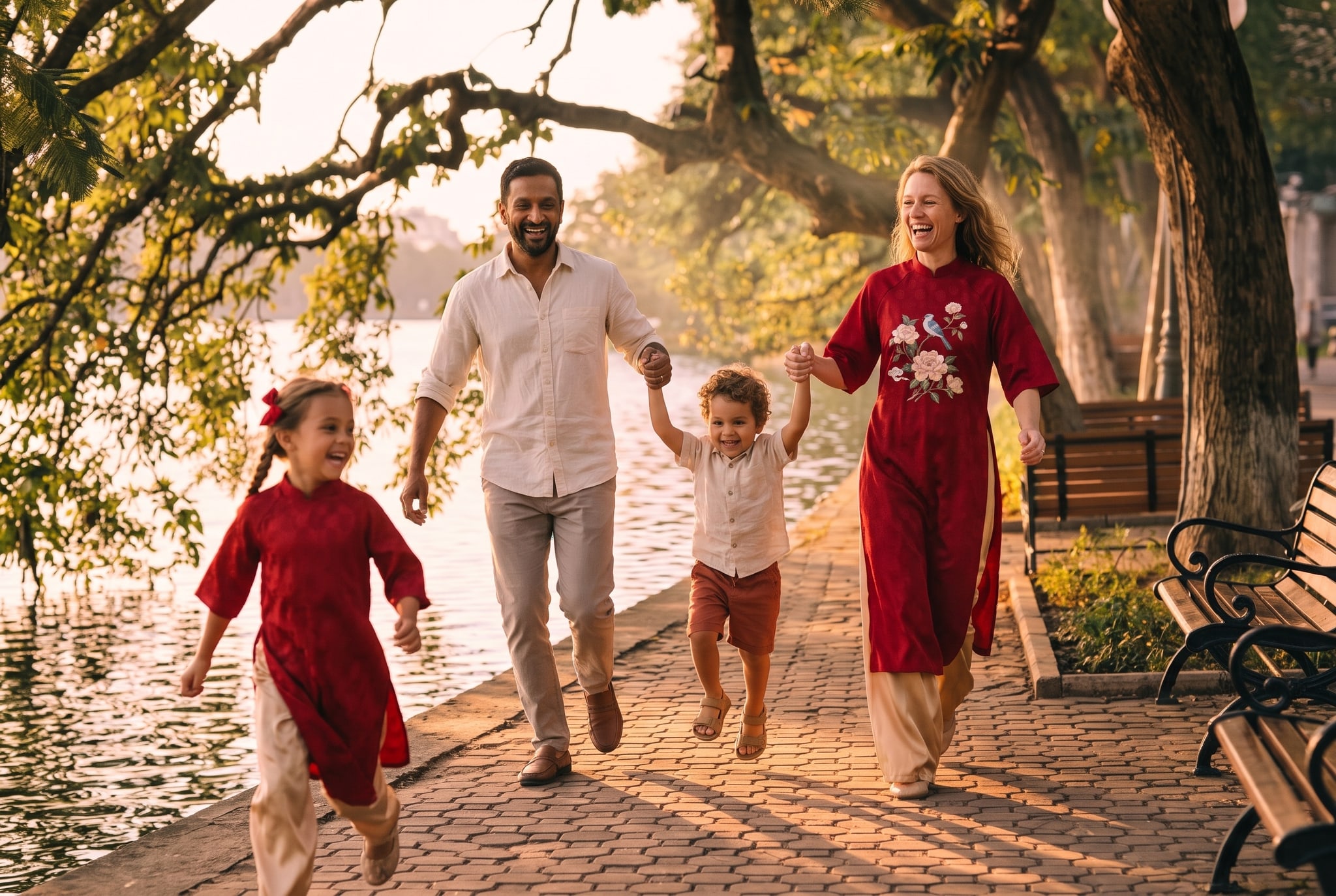
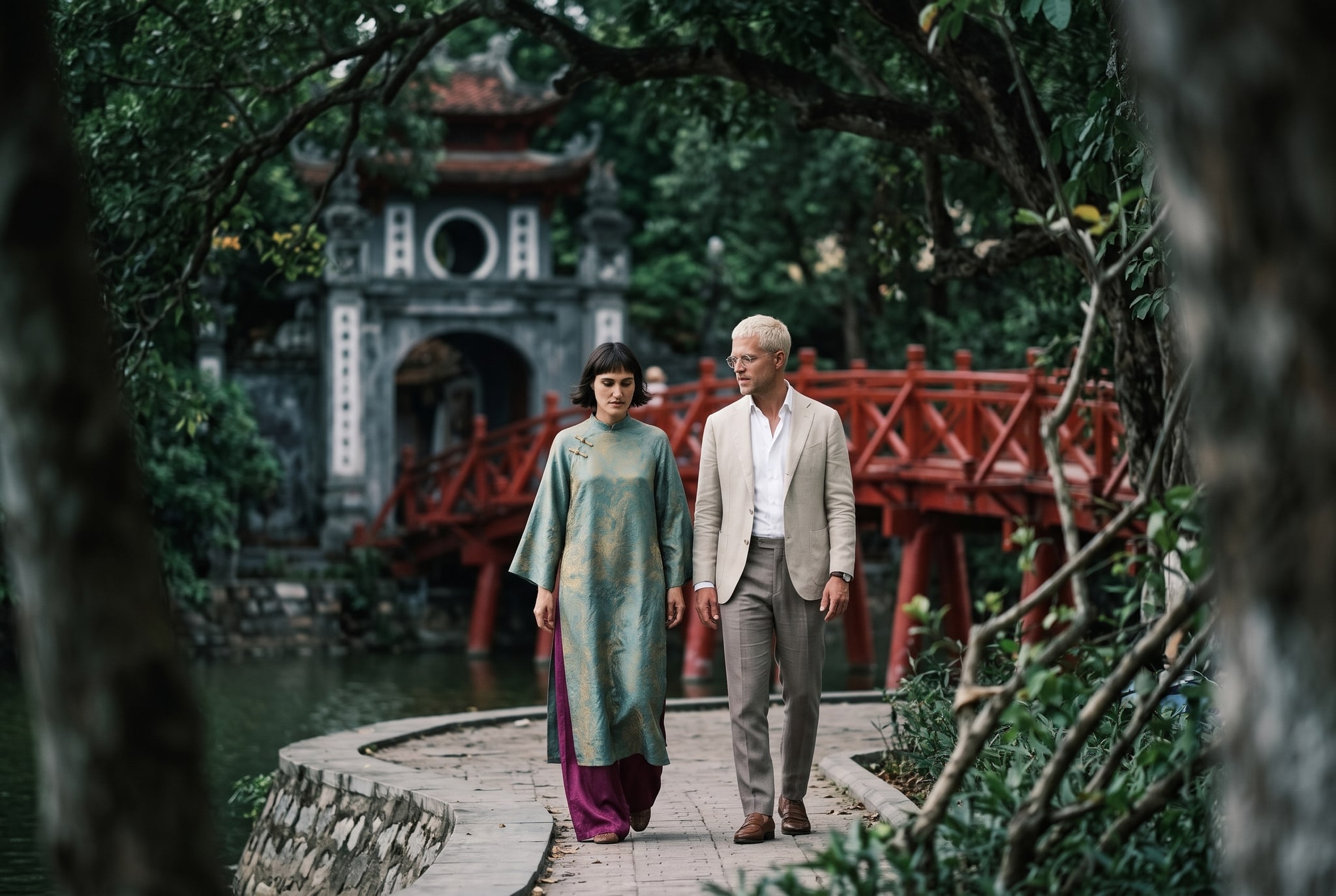
Waterfront zones—Hoan Kiem Lake photo guide, riverside promenades, and restored French villas in Ba Dinh—glow when backlit by the low afternoon sun. Narrow streets in the Old Quarter photo guide catch warm side-light bouncing off shop fronts and shutters; foot traffic is lighter in winter, allowing clean shots without constant repositioning. Temple grounds (Ngoc Son, Tran Quoc) are less crowded; golden light reflects off tile roofs and water, creating depth. Train Street's weathered architecture and colonial facades photograph like sepia prints in winter warmth. Old villas with peeling paint or shuttered windows—east or west-facing—trap light for 20–30 minutes during the golden window. We scout each location for sun angle, shadow density, and crowd flow before your arrival; no guessing.
How do outfit and makeup choices change for winter light?
Winter's warm, low light flatters jewel tones (deep reds, emerald, navy) and rich neutrals (cream, caramel, rust) more than pastels or bright white, which bleach in overexposed areas. Fabrics with texture—linen, velvet, chunky knit—catch directional light and read better in photos than flat synthetics. Ao dai in silk or cotton blend works year-round, but winter's cool air allows layering: silk scarves, cardigans, or lightweight jackets add visual interest and depth. Makeup skews warmer: bronze, terracotta, and gold eyeshadow echo the light; cooler tones can vanish into shadows. Lips in rust, mauve, or deep rose pop against cool-toned winter skin. Avoid heavy foundation; winter air is dry, so matte finishes photograph flat. We provide in-house makeup and hair styling; discuss light direction and outfit mood with our team during booking to lock in the best combinations. Clothing fit matters more than trend: wrinkles, ruffles, and asymmetry catch light and add movement.
What timing mistakes do photographers make in winter, and how do we avoid them?
| Mistake | Why It Fails | Our Approach |
|---|---|---|
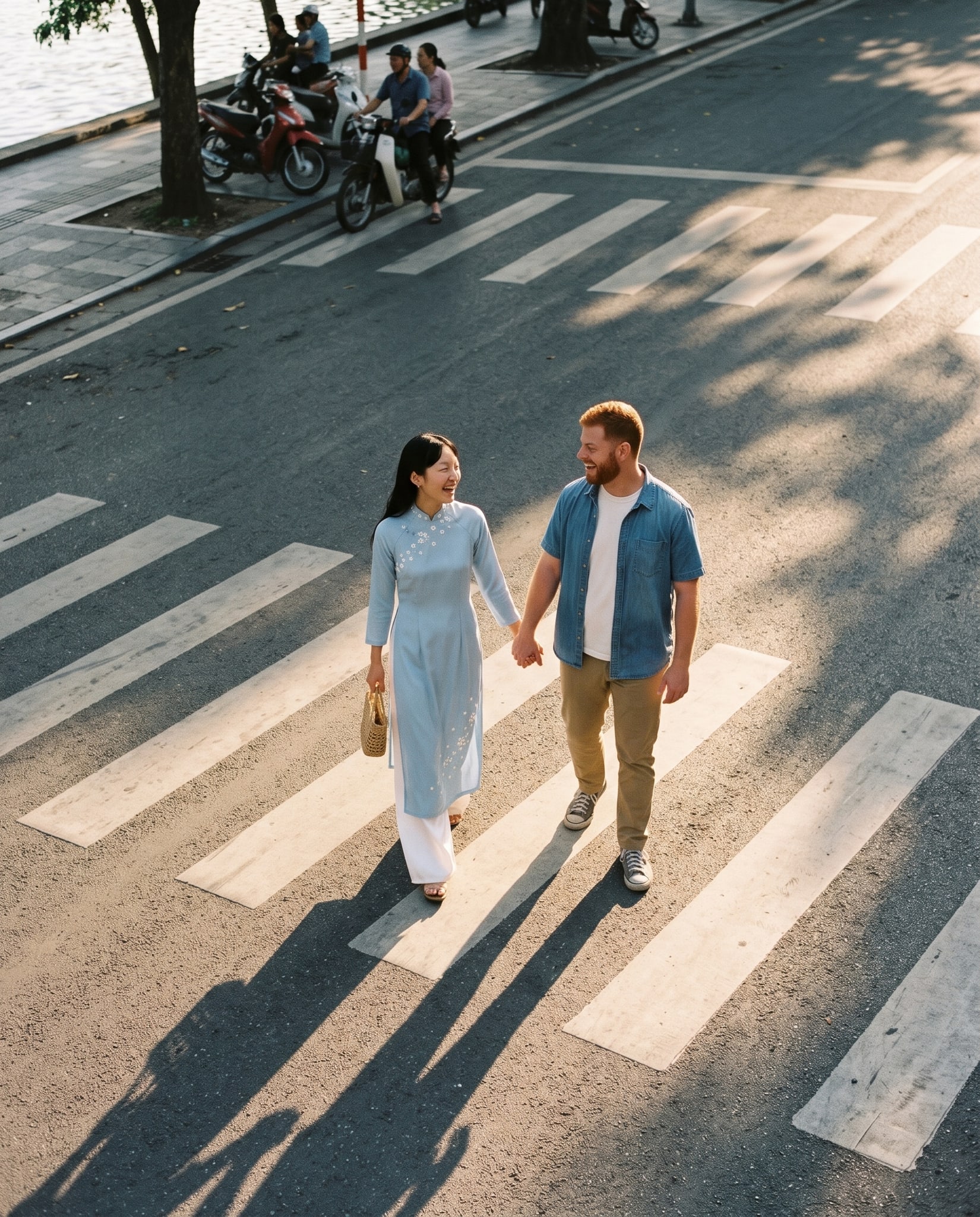
| Shooting at midday (11 a.m.–3 p.m.) | Overhead sun creates harsh shadows, blown-out sky, dark eyes | We lock 4:15–5:45 p.m. slots; overcast days shift start to 3:45 p.m. |
| Booking during Tet or holidays (late Jan.–early Feb.) | Tourist surge, temple closures, traffic chaos | We advise Nov.–mid-Jan.; check calendar 6 weeks ahead |
| Ignoring weather forecasts | Rain halts shoots; rescheduling costs time | We monitor 7-day forecast; offer indoor backup (marble stairs, shuttered storefronts) |
| Underestimating travel time between spots | Rushed poses, missed light window | We pre-scout route, allow 15 min. buffer per location shift |
| Overdressing for "winter" (15–18°C mornings) | Layers trap heat; sweat and makeup breakdown by golden hour | We advise layers you can shed; bring a light cover-up for early arrival |
Winter light waits for no one: starting too late means you chase the sun into dusk and miss the peak 10–15 minutes. We time arrivals at each spot to hit the sun's sweetest angle—no improvising on the day.
How do crowds and access change for winter shoots versus summer?
Summer (May–September) crowds pack temples and lakefront by 3 p.m.; winter (November–February) sees half that footfall. Hoan Kiem Lake's walking paths are nearly empty by 4:30 p.m. in January, versus gridlocked in June. Train Street foot traffic drops 60%; we can position you mid-street for 2–3 minutes without safety risk—impossible in peak season. Temple grounds (Ngoc Son, Tran Quoc) allow cleaner compositions; some ask for a small respectful donation (we advise visitors on etiquette beforehand). Old Quarter's narrow lanes remain busy but less chaotic; fewer motorcycles stop for photos around you. Old villas and colonial walls have fewer tourists leaning in; we sometimes access private courtyards through local connections. Winter's lower moisture also means less glare and fewer reflections in glass or water to manage. Access and timing are intrinsically linked: we build your shoot schedule around light and foot traffic, not one or the other.
What should you verify before booking a winter portrait session?
Before confirming, check:
- Light-time window: Confirm golden-hour time (changes 3–5 min. weekly in winter). We provide exact start/end times 1 week before your shoot.
- Weather backup plan: Ask how we pivot if rain falls. Honest answer: light winter rain is rare; we sometimes wait it out or shift to a covered spot with soft, diffused light.
- Outfit count & changes: Plan 2–4 looks; discuss which suit winter light and the vibe you want. Simpler is often better—one strong outfit beats rushed costume changes.
- Location access & permits: If you want Train Street photo guide, confirm we can shoot (access rules vary monthly; no commercial groups, no drones). We handle permits and know current restrictions.
- Physical stamina: Winter light means 2–4 hours on-location, some walking between spots. Wear comfortable shoes; hydration is less urgent than summer but still matters.
- Post-processing style: Ask for examples of edited winter shots. Warm, contrasty edits suit the light; over-filtered results can look artificial.
- Timeline for photos: We deliver edited files within 3–4 weeks. Confirm if you need a rush (ask on WhatsApp for availability).
Winter portrait sessions are not improvised; the light is real but fleeting. We verify these details to ensure you get the most from your time and budget.
Plan your Hanoi shoot
For solo travelers seeking authentic Hanoi atmosphere with flattering natural light, winter is your window. Our team speaks English, plans every detail on WhatsApp, and knows which streets, temples, and lakeside corners deliver the best light at the right hour. Whether you're documenting your time in Hanoi, refreshing your professional headshot, or capturing a personal milestone, winter light turns ordinary backdrops into editorial-quality frames. If you're also considering couple photoshoot or graduation photoshoot options, winter's calm and clarity work equally well—ask us about multi-session packages. For other Vietnamese cities, our sister site covers additional locations; Hanoi's winter light is hard to beat, though. Start by checking available dates on WhatsApp; we'll walk you through outfit ideas, spot options, and exact timing. The season fills fast, and the light doesn't wait.
FAQ
Does Hanoi winter rain cancel portrait shoots?
Light winter rain (November–January) is rare but unpredictable. We monitor forecasts 7 days ahead and offer indoor backups—marble stairwells, shuttered streets, or villas—with softer, diffused light. Rescheduling is free if heavy rain occurs within 2 hours of your start time.
What's the best winter month for portrait light?
December and January offer the most consistent, predictable light and lowest crowds. November still works well but carries occasional rain. February warms up; light is still good but humidity creeps back. Book 6–8 weeks ahead for peak dates.
Do I need to wear winter coats or heavy layers for portraits?
Not necessarily. Hanoi winter (15–20°C) is mild; light cardigans, scarves, or linen jackets add texture without bulk. Heavy coats photograph stiffly and hide your silhouette. We advise layering you can remove; bring a cover-up for early morning or late-evening arrivals.
Can we shoot at Hoan Kiem Lake without permits?
Yes, for personal portraits. Commercial or TikTok/vlog content may need local approval; we know current rules and advise before booking. We access quiet zones around the lake at off-peak hours for cleaner backgrounds.
How long does a winter portrait session take?
Plan 2–4 hours on-location, including travel between 2–3 spots, 3–5 outfit changes, and makeup touch-ups. We move efficiently; average walk between locations is 10–15 minutes. Edited files arrive within 3–4 weeks.
Does winter light look different in photos than in person?
Yes. Winter's warm, directional light photographs richer than it appears to the eye—colors deepen, skin tones warm, and backgrounds gain texture. Makeup and outfits read stronger; we adjust for this during styling and recommend warm tones. Edited files will reflect the light's true warmth, not oversaturated or artificially cool.
Check dates
Send your dates, how many people and the style you like. We reply on WhatsApp in English with spots, timing and a quote.
FAQ
Does Hanoi winter rain cancel portrait shoots?
Light winter rain (November–January) is rare but unpredictable. We monitor forecasts 7 days ahead and offer indoor backups—marble stairwells, shuttered streets, or villas—with softer, diffused light. Rescheduling is free if heavy rain occurs within 2 hours of your start time.
What's the best winter month for portrait light?
December and January offer the most consistent, predictable light and lowest crowds. November still works well but carries occasional rain. February warms up; light is still good but humidity creeps back. Book 6–8 weeks ahead for peak dates.
Do I need to wear winter coats or heavy layers for portraits?
Not necessarily. Hanoi winter (15–20°C) is mild; light cardigans, scarves, or linen jackets add texture without bulk. Heavy coats photograph stiffly and hide your silhouette. We advise layering you can remove; bring a cover-up for early morning or late-evening arrivals.
Can we shoot at Hoan Kiem Lake without permits?
Yes, for personal portraits. Commercial or TikTok/vlog content may need local approval; we know current rules and advise before booking. We access quiet zones around the lake at off-peak hours for cleaner backgrounds.
How long does a winter portrait session take?
Plan 2–4 hours on-location, including travel between 2–3 spots, 3–5 outfit changes, and makeup touch-ups. We move efficiently; average walk between locations is 10–15 minutes. Edited files arrive within 3–4 weeks.
Does winter light look different in photos than in person?
Yes. Winter's warm, directional light photographs richer than it appears to the eye—colors deepen, skin tones warm, and backgrounds gain texture. Makeup and outfits read stronger; we adjust for this during styling and recommend warm tones. Edited files will reflect the light's true warmth, not oversaturated or artificially cool.
More like this
Solo travel portraits
How Many Edited Photos Do You Get from a Hanoi Vacation Shoot?
When you book a vacation portrait session in Hanoi with Cáo Studio, the number of edited images you receive depends on session length, location and your brief. We walk through the realistic count, editing timeline, and what affects the final gallery.
Solo travel portraits
Solo Travel Photoshoot Tay Ho: Best Time & Seasons
Tay Ho district offers intimate lakeside and temple backdrops for solo travelers. October–November and March–April deliver soft light, minimal rain, and manageable crowds—ideal for authentic Hanoi portraits without the summer heat or winter haze. #
Solo travel portraits
Solo Travel Photoshoot Hanoi Lotus Pond: Light, Crowds & Posing Tips
Lotus ponds demand early arrival and patience—crowds peak mid-morning. We guide you through seasonal light, posing without modeling experience, and outfit choices that work in water-adjacent settings.