
Home › Blog › Hanoi photo spots
Long Biên Bridge Photo Rules & Etiquette: What Visitors Need to Know
By the Hanoi Photoshoot team · 2026-11-06
Long Biên Bridge welcomes photographers, but success means respecting locals, traffic, and unspoken etiquette. You don't need a permit for stills or videos as a tourist, but dawn (5–7 a.m.) and dusk (5–6 p.m.) are safest: fewer scooters, softer light, fewer crowds blocking sightlines. Never stand in vehicle lanes; use sidewalks only. Keep sessions under 30 minutes; move if vendors or workers signal irritation. Wear neutral or ao dai; avoid overly bright props. For a guided, coordinated shoot—ao dai photoshoot in Hanoi, couple photoshoot, or solo travel portraits—book with Hanoi Photoshoot by Cáo Studio on WhatsApp; we know the safest light windows and which sections have the best sightlines without disrupting foot traffic or commuter routes. Check dates on WhatsApp
Is a permit required to photograph Long Biên Bridge?
No permit is required for tourists to take stills or short videos for personal use. Hanoi authorities do not enforce photo licensing for standard travel or social media content. However, if you're shooting commercially (brand campaigns, paid models, drone footage, or closure of sections), contact Hanoi's Department of Culture and Information in advance. Most guided shoots operate under informal courtesy with local vendors and security, not legal permits. Always carry your passport; uniformed officers may ask why you're there, though refusal is rare.
What time of day has the best light and fewest crowds?
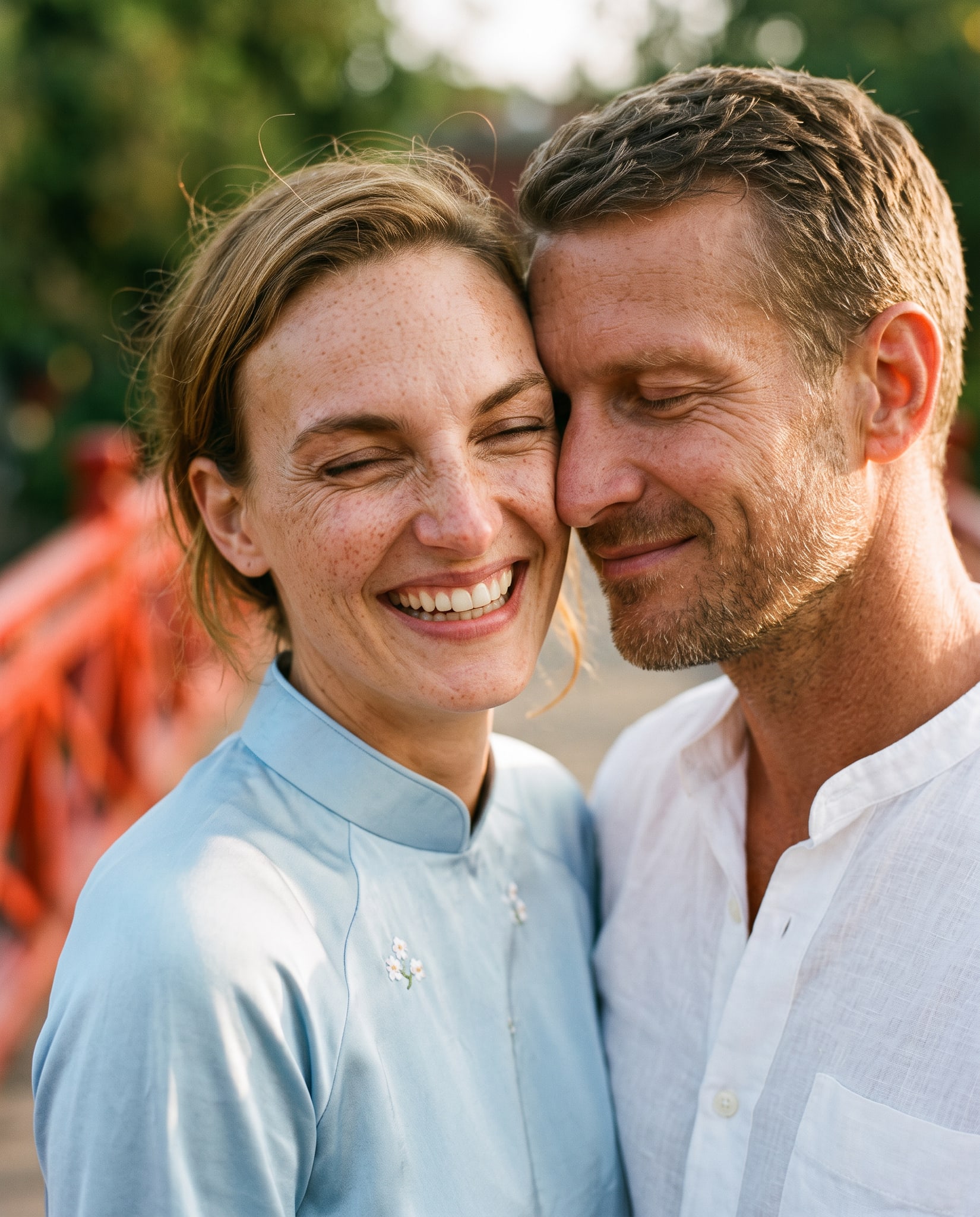
Sunrise (5:30–7 a.m.) delivers soft, golden sidelighting and minimal foot traffic; motorcycles thin out by 6:30 a.m. Late afternoon (4:30–5:30 p.m.) offers warm backlighting but sees rush-hour congestion on the bridge deck. Midday (10 a.m.–3 p.m.) creates harsh shadows and attracts tour groups; shooting then risks blown highlights and crowded frames. Avoid 7–9 a.m. and 5–7 p.m.: peak commute times make standing still on the bridge unsafe. Rainy season (May–September) adds humidity and overcast skies; dry season (October–April) provides clearer, more predictable light. For a timed, professionally lit session, book a solo travel portrait or couple session with us; we coordinate access to quieter zones and position you away from rush-hour lanes.
Where exactly can you stand without blocking traffic or breaking etiquette?
Use the pedestrian sidewalk on the east side (Red River side) as your primary zone; it's wider and has better sightlines toward the city skyline and river. Avoid the center roadbed and west-side lanes—these are for scooters and occasional vehicles. If you're on the sidewalk and a street vendor or local signals "no," step aside immediately; they have informal, generational rights to their trading spots. Never sit or lie down for a shot; never block the path for 15+ minutes. Positioning for couple photoshoot or ao dai photoshoot in Hanoi requires us to coordinate with regular vendors beforehand; we know which 20-meter stretches tolerate camera work without disruption. Do not use tripods without consulting nearby workers; some permit them, others see them as territory claims. Keep your crew to two people maximum (you and one assistant or partner).
| Vantage point | Light quality | Crowd level | Safety | Etiquette rating |
|---|---|---|---|---|
| East sidewalk, north end | Golden-hour sidelighting (6–7 a.m.) | Very low | High; away from lanes | Excellent |
| Center bridge, midday | Harsh, blown highlights | High; tour buses | Medium; mixed traffic | Poor |
| West sidewalk, sunset | Warm backlight (5–5:30 p.m.) | Medium; commuters | Lower; active lanes | Fair |
| Under bridge (water level) | Diffused, moody shadows | Low | High; water access restricted | Good if permitted |
What should you wear to respect the location and photograph well?
Long Biên Bridge is a war memorial and working commuter route, not a fashion backdrop. Wear modest, neutral outfits: solid colors, no slogans, no costumes. An ao dai is perfect—it honors Vietnamese heritage and photographs beautifully in morning light without being disrespectful. Avoid neon, loud patterns, or overly casual sportswear. Men should wear dark trousers and a collared shirt or áo sơ mi. Closed shoes are safest (traffic, uneven deck planks). Leave oversized props, confetti, or fairy lights at home; they annoy locals and obstruct commuter views. Our makeup and styling service includes ao dai rental and a styling consultation; we ensure your outfit complements the bridge's heritage while optimizing color contrast for the light at your chosen time slot. Avoid red (flag connotation) and all-white (funeral association).
What are the common mistakes photographers make, and how do you avoid them?
Standing in vehicle lanes — This blocks scooters, creates safety risk, and invites anger. Solution: confirm you're fully on the pedestrian sidewalk; have your partner spot you.
Shooting midday with bare skin tones — Harsh overhead light causes unflattering shadows and blown-out faces. Solution: shoot sunrise or sunset; check our solo travel portraits guide for season-by-season timing.
Overstaying without permission — 30 minutes is a social courtesy limit before locals feel you've claimed their space. Solution: book a guided session; we're known to vendors and work within unspoken timeframes.
Ignoring "no" signals — A vendor or resident waving you away isn't rude; they're enforcing local norms. Solution: move immediately; never argue or photograph them in response.
Forgetting the bridge's story — Treating it as a generic backdrop diminishes its 1902 French-colonial, war-memorial weight. Solution: learn its history; frame shots to honor its structure and symbolic importance, not just your aesthetic.
For a worry-free shoot, our team coordinates arrival, timing, and positioning. Book a couple or family session if you're visiting with loved ones; we handle etiquette and timing so you focus on the memory.
Can you shoot video or use a drone at Long Biên Bridge?
Short-form video (under 1 minute, no commercial audio) is acceptable under the same permit-free rules as stills. Drones are not permitted without explicit written permission from Hanoi's Department of Culture; the bridge is a sensitive historical site and active traffic zone. We do not offer drone services. Extended video (5+ minutes, narrative cuts, voiceover) may be flagged as commercial; if you're a content creator, ask locally before committing time. For proposal photographer or pre-wedding photoshoot packages, we shoot 4K video but only stills and handheld motion—no drones. Always disclose your purpose to locals; transparency builds goodwill.
What should you check before arriving for your shoot?
Weather: Rain mid-May to September is common; morning mist is normal in winter. Reschedule if lightning or flooding is forecast.
Footwear: Deck planks are worn; wear closed, gripped shoes.
Timing: Confirm sunrise/sunset times for your date using a weather app; we verify this in our WhatsApp brief.
Backup plan: If unexpected congestion or vendors signal "not today," be ready to move to Hoan Kiem Lake or Hanoi Train Street.
Documentation: Carry a photocopy of your passport; officers rarely ask, but it's safest.
Hydration & insect spray: Bring water and mosquito repellent, especially in humid months.
Our contact page has a pre-shoot checklist and weather links. WhatsApp us 48 hours before to confirm conditions and finalize timing.
FAQ
Do I need to pay locals or vendors at Long Biên Bridge to photograph?
No formal payment is required. However, if a vendor moves their cart for you or a security worker helps you position safely, a small gesture (10,000–a quoted price, informal) is courteous. We handle this during guided sessions to avoid awkward moments.
What's the best season to shoot at Long Biên Bridge?
October–November and February–March offer the clearest light, lowest humidity, and most comfortable temperatures. December–January can be misty; May–September brings rain and heat. Each season photographs differently; choose based on your mood—crisp autumn for drama, spring for softness.
Can I book a professional shoot that includes Long Biên Bridge and another Hanoi landmark in one session?
Yes. Our couple photoshoot, solo travel portraits, and family photoshoot packages can include Long Biên Bridge as one stop. We typically combine it with Hoan Kiem Lake or the Old Quarter to maximize light and variety. Ask us on WhatsApp for multi-location itineraries.
What if a local vendor or security person tells me to stop shooting?
Stop immediately and thank them in Vietnamese ("Cảm ơn," pronounced "cahm ohn"). Do not photograph them or argue. Move to a different section of the bridge or reschedule. Respect is foundational to bridge access; if you refuse, you may be asked to leave. Our guides are familiar with local customs and can mediate politely.
Is Long Biên Bridge safe at dawn or dusk for solo photographers, especially women?
Yes, it's generally safe in daylight hours. Early morning (before 6 a.m.) has fewer people but is quieter; late afternoon is busier. We recommend traveling in pairs when possible. If you book a solo shoot with us, we coordinate with a team member or vendor contact to ensure you're not isolated. Trust your instincts; if something feels off, move to another Hanoi spot from our guides or reschedule.
Check dates
Send your dates, how many people and the style you like. We reply on WhatsApp in English with spots, timing and a quote.
FAQ
Do I need to pay locals or vendors at Long Biên Bridge to photograph?
No formal payment is required. However, if a vendor moves their cart for you or a security worker helps you position safely, a small gesture (10,000–20,000 VND, informal) is courteous. We handle this during guided sessions to avoid awkward moments.
What's the best season to shoot at Long Biên Bridge?
October–November and February–March offer the clearest light, lowest humidity, and most comfortable temperatures. December–January can be misty; May–September brings rain and heat. Each season photographs differently; choose based on your mood—crisp autumn for drama, spring for softness.
Can I book a professional shoot that includes Long Biên Bridge and another Hanoi landmark in one session?
Yes. Our [couple photoshoot](/couple-photoshoot), [solo travel portraits](/solo-portrait), and [family photoshoot](/family-photoshoot) packages can include Long Biên Bridge as one stop. We typically combine it with [Hoan Kiem Lake](/spots/hoan-kiem-lake) or the [Old Quarter](/spots/hanoi-old-quarter) to maximize light and variety. Ask us on WhatsApp for multi-location itineraries.
What if a local vendor or security person tells me to stop shooting?
Stop immediately and thank them in Vietnamese ("Cảm ơn," pronounced "cahm ohn"). Do not photograph them or argue. Move to a different section of the bridge or reschedule. Respect is foundational to bridge access; if you refuse, you may be asked to leave. Our guides are familiar with local customs and can mediate politely.
Is Long Biên Bridge safe at dawn or dusk for solo photographers, especially women?
Yes, it's generally safe in daylight hours. Early morning (before 6 a.m.) has fewer people but is quieter; late afternoon is busier. We recommend traveling in pairs when possible. If you book a solo shoot with us, we coordinate with a team member or vendor contact to ensure you're not isolated. Trust your instincts; if something feels off, move to [another Hanoi spot from our guides](/blog) or reschedule.
More like this
Hanoi photo spots
Hanoi Book Street Family Photos: Best Times, Rules & Posing Tips
Hanoi Book Street (Phố Sách) offers tree-lined, traffic-light backdrops perfect for family photos. We guide you through light timing, local rules, and kid-friendly posing to avoid crowds and capture genuine moments.
Hanoi photo spots
Duong Lam Ancient Village Photo Spots: Best Times & Light Guide
Duong Lam Ancient Village, 45 km southwest of Hanoi, holds Vietnam's oldest intact rural architecture—tile-roofed houses, brick kilns and narrow lanes where morning mist holds light for 90 minutes. We photograph here year-round for solo travelers, families and couples seeking authentic, off-beat Han
Hanoi photo spots
Duong Lam Ancient Village: Crowd-Free Times & Photo Spots
Duong Lam Ancient Village, 45 km southwest of Hanoi, draws tourists year-round—but early mornings and weekdays offer near-empty temple courtyards and village lanes. We share exact timing, seasonal light, and how to pair a visit with professional portraits.