
Home › Blog › Hanoi photo spots
Hoan Kiem Lake Photoshoot Guide: Best Times, Spots & Outfits
By the Hanoi Photoshoot team · 2026-11-06
Hoan Kiem Lake photoshoots work best October to March when morning light is sharp, crowds thin by 7 a.m., and the water sits high. We recommend 90–120 minutes: 45 minutes around Turtle Tower and the eastern red bridge, then 30 minutes on the quieter western bank near Ngoc Son Temple entrance. Wear flowing ao dai for maximum impact; bring a second casual outfit for variety. Avoid midday (10 a.m.–3 p.m.) when harsh shadows flatten faces and tour groups peak. At Hanoi Photoshoot by Cáo Studio, we include hair, makeup and ao dai rental in-house, coordinating arrival with minimal crowds and golden light via WhatsApp to match your visa and hotel schedule. --- Check dates on WhatsApp
Why does timing matter more than location at Hoan Kiem?
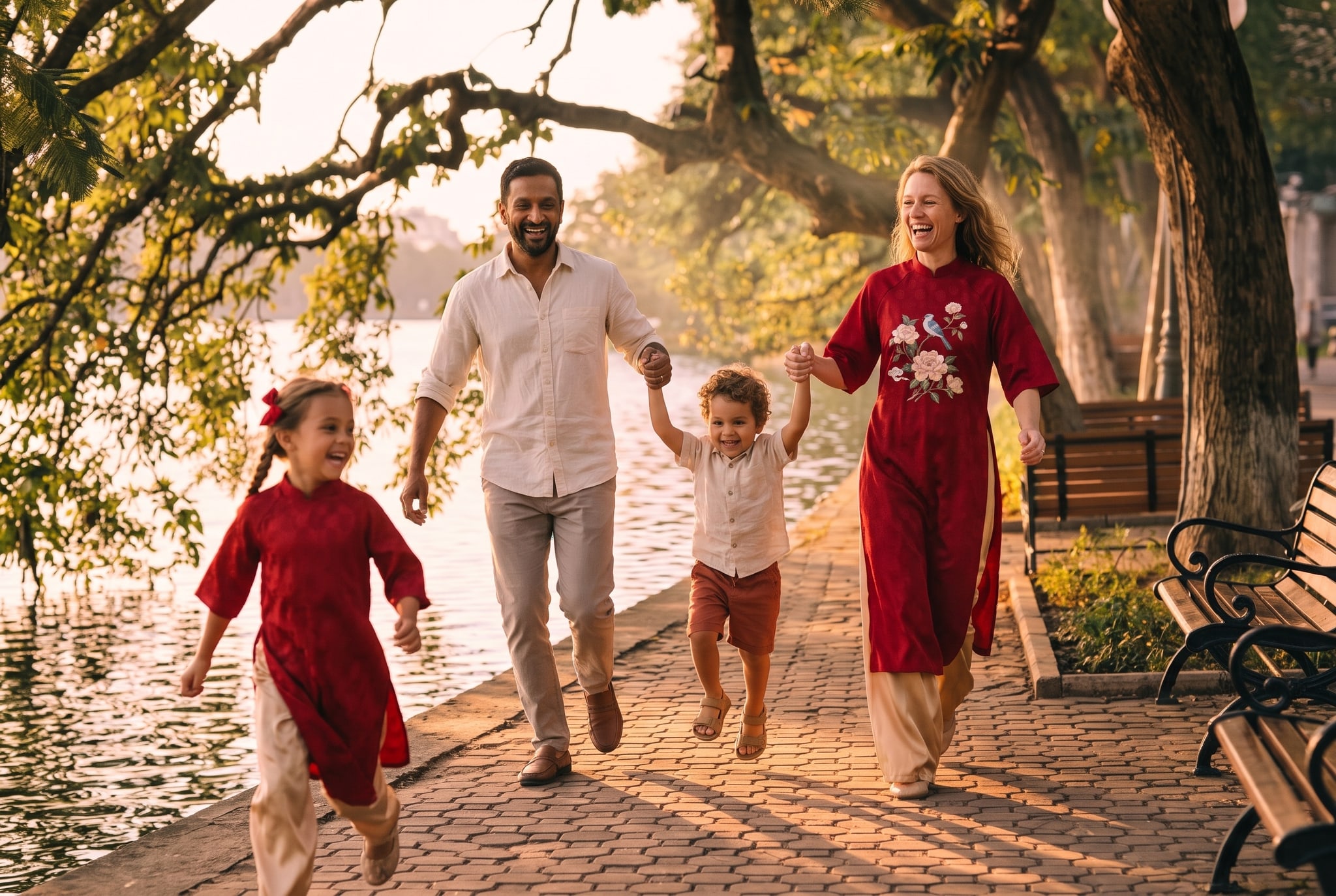
The lake's reflection reverses mood by hour. 6–7 a.m. renders soft, directional light ideal for close-ups and emotional connection; by 8 a.m., ambient light spreads evenly and crowds arrive. Midday (11 a.m.–2 p.m.) creates underexposed faces against blown-out water—salvageable only with fill flash. Late afternoon (4–5 p.m.) brings warm tones but heavy foot traffic from office workers and school groups. We shoot here year-round, but October–March offers consistent cool light; May–September humidity and glare demand technical adjustments. Choose your hour before outfit: flowing silk reads softer in diffused early light; structured fabrics shine under directional sun if you're comfortable with contrast and shadows on skin.
What's the best route around the lake for variety?
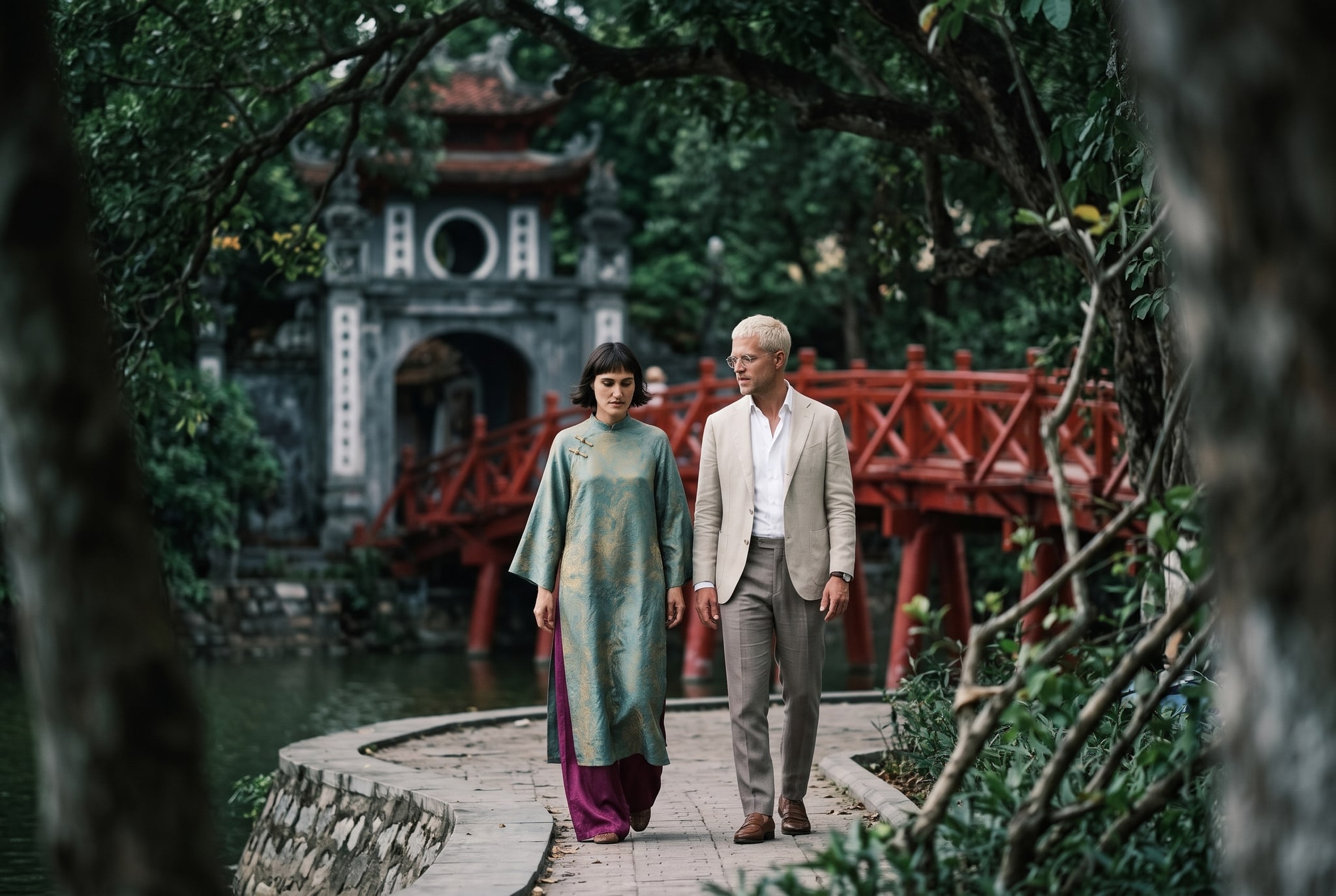
Start at the southern entrance near Ly Thai To Statue (open to tourists, no entry fee). Walk north toward Turtle Tower and the iconic red Huc Bridge—this 200-meter section compresses the lake's most recognizable framing. Stop for 3–4 poses at the bridge; light glances off the tile roof and water creates natural reflections. Move east along the paved walkway for 15 minutes to reach quieter spots past the bridge where fewer phones mean cleaner backgrounds. Circle back west via Ngoc Son Temple's outer grounds (no entry required to photograph the perimeter) to capture the temple silhouette against late-morning sky. Finish on the western bank near the water's edge for a softer, more intimate final frame. Total loop: ~1.2 km, easily covered in 90 minutes with posing. Avoid cutting through the park's interior (poor light, confusing paths) and the crowded northeast corner near the main road—exhaust and barriers spoil candid shots.
How do crowds shift across seasons?
| Season | Peak hours | Best time | Crowd level | Light quality | Why it matters |
|---|---|---|---|---|---|
| Oct–Nov | 10 a.m.–4 p.m. | 6–7 a.m., 5 p.m. | Low–moderate | Crisp, directional | Soft, no squint; fewer tourists |
| Dec–Feb | 11 a.m.–3 p.m. | 7 a.m., 4 p.m. | Low | Sharp, cool tones | Clearest water reflections; cold wind requires wardrobe planning |
| Mar–Apr | 9 a.m.–5 p.m. | 6 a.m., after 5 p.m. | Moderate–high | Hazy, humid | Heat builds fast; ao dai clings; makeup runs |
| May–Sep | 7 a.m.–6 p.m. | Pre-dawn or 6 p.m. | High (tourists + locals) | Harsh, blown-out water | Tour groups dominate; reflections wash out; skin dehydrates |
During Tet (late Jan–Feb) and holiday weeks, lake crowds triple even at dawn—book a guide who knows side angles. We coordinate timing via WhatsApp to avoid peak dates and deliver you to clear spots other studios miss.
What outfit choices work best with the lake's backdrop?
Ao dai is the obvious choice—the lake's vertical lines mirror the dress's silhouette, and red or jewel-tone silk photographs luminous against water. For ao dai photoshoot sessions, we rent in-house and style you before arrival; this saves 45 minutes and eliminates sizing guesses. Bring a casual second outfit (fitted jeans + simple blouse, or linen wrap) for contrast shots; lake light reads warmer on muted neutrals than busy prints. Avoid white (blows out in morning glare), black (merges with shadows on the red bridge), and horizontal stripes (water + stripes = visual chaos). Footwear: flat sandals or slip-ons (easier to remove for reflection shots in shallow water near the bank) or clean sneakers for walking the full loop. Accessories matter—a silk scarf, hat or minimal jewelry catch light and break up flat color fields. Hair should be pulled back or styled to move in lake breeze; loose tendrils work in calm mornings but tangle by midday wind.
How do you pose naturally without looking stiff?
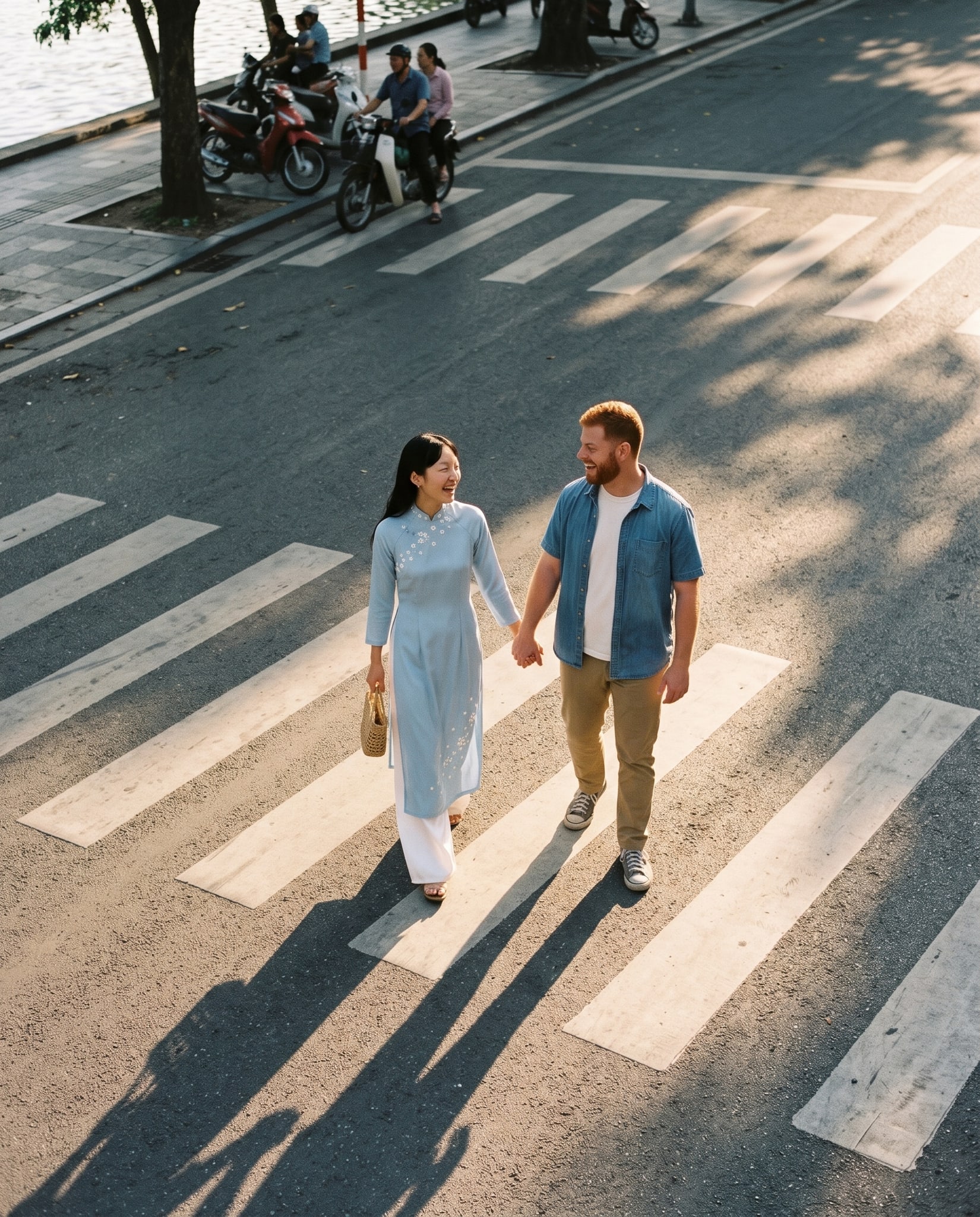
The lake invites movement: walking toward the camera, looking over your shoulder at Turtle Tower, or seated on the edge checking your reflection. Avoid rigid frontals on the bridge (tourists do this constantly; it reads as tourist, not editorial). Instead, rest one knee on the bridge's edge with the other leg extended, angling your torso 45 degrees—this lengthens the silhouette and flatters ao dai folds. For couple shots, walk parallel 2–3 meters apart, then converge near the bridge for a held moment; this flow beats staged poses. Solo travelers often worry they look alone; instead, use the lake as your scene partner—sit facing the water, let the photographer capture the back of your head and the reflection. At couple photoshoot or solo portrait sessions, we coach you through these naturals beforehand on WhatsApp so you arrive calm. The lake's human scale (only 2 km perimeter) means you'll reset between angles—use those walks to shake out tension.
What do temple grounds and restricted areas look like?
Ngoc Son Temple sits on an island accessed by a low arched bridge (the old Huc Bridge—only 5 meters, photo gold). Entry costs about our current quote (roughly our current quote) per person to walk the grounds; photography is permitted outside and on the bridge but avoid shooting directly into the main hall. The temple's entrance gate, the bridge's tile work, and the cypress trees nearby offer strong geometry for family photoshoot or intimate portrait sessions. City-owned paths around the lake allow free public photography; no permits needed for commercial work (we verify this annually with local authorities). However, the water itself—if you wade in for reflection shots—is monitored; stay in designated shallow zones near entry points. Avoid climbing onto the bridge railings or trespassing into locked temple gardens behind the main structure. We navigate these boundaries precisely and never ask clients to break rules; if a shot requires restricted access, we scout legal alternatives on the same bank instead.
Which sessions suit Hoan Kiem best, and which need backup spots?
Hoan Kiem excels for pre-wedding couples (iconic backdrop, intimate pacing), solo travelers seeking atmospheric self-portraits, and ao dai photoshoot sessions where the water amplifies the dress's color. Graduation photoshoot groups work here if booked before 7 a.m.—avoid peak hours (groups of 15+ get lost in crowds). Maternity photoshoot sessions benefit from the lake's gentle pace and benches; we plan short walks and frequent rests. Family photoshoot with young children works October–February; summer heat exhausts them fast. Proposal photographer surprise moments thrive here (intimate, iconic, photogenic). Headshots and corporate headshots do not suit Hoan Kiem—the landmark overshadows the subject's face. If your primary goal is the lake landmark, Hoan Kiem is home. If you need multiple backdrops, we combine it with Old Quarter photo guide shoots (narrow streets, lanterns, cafes) or Train Street photo guide (industrial geometry) in the same 3–4 hour session, coordinated on WhatsApp.
What weather and water conditions ruin shots, and how do we recover?
Heavy rain (May–September) turns the water murky and floods the eastern bank; we reschedule or pivot to covered Old Quarter spots. Algae blooms (rare, but in very warm April–May) dull reflections—unavoidable, but we shoot wider angles to minimize the effect. Wind roughens the water and blows out hair; early mornings are calmer. Extreme heat (35°C+, June–July) causes heat haze that softens distant details (the temple looks fuzzy); we shoot closer, tighter framing. Pollution (Hanoi's air quality fluctuates; winter is clearer than summer based on city air-quality indexes) affects sky clarity—overcast skies are actually safer for consistent color, as harsh sun creates blown-out zones. If conditions degrade mid-shoot, we have a pre-scouted backup: spots/hoan-kiem-lake and nearby Instagram photoshoot-worthy cafes and alley entrances within 10 minutes' walk. We brief you on the plan before arrival so you're never surprised by a pivot.
What to check before you book
- Visa and hotel location: Confirm your dates with us via WhatsApp so we avoid Tet and major holidays when the lake is inaccessible.
- Outfit fit: If renting ao dai through our makeup and styling service, provide chest/waist/length measurements 5 days ahead; this avoids last-minute alterations.
- Weather tolerance: Bring a light layer for early mornings (15–20°C, Oct–Feb). Sun protection (hat, sunscreen) for midday contingencies.
- Backup outfit: A second casual outfit adds 15 minutes but multiplies shot variety; worth the packing space.
- Photo style preference: Show us 3 Pinterest or Instagram references on our first WhatsApp exchange—we'll confirm if Hoan Kiem delivers that mood or if we should combine it with the Old Quarter or another spot.
Additional resources
For more guidance on Hanoi's top photo spots, visit our blog or explore our full service menu to contact us about custom itineraries.
Pages from our team you may need
FAQ
What's the best time of day to shoot at Hoan Kiem Lake?
6–7 a.m. delivers the clearest light, fewest crowds, and the calmest water reflections. Late afternoon (4–5 p.m.) offers warm tones but heavy foot traffic. Midday (10 a.m.–3 p.m.) produces harsh shadows and blown-out water—avoid it entirely.
Do I need a permit to photograph at Hoan Kiem Lake?
No permit is required for personal or commercial photography on public paths around the lake. Entry to Ngoc Son Temple costs ~a quoted price; exterior photography is free. We verify regulations annually and ensure all bookings comply.
Can I wade into the water for reflection shots?
Yes, shallow zones near designated entry points allow wading for reflections. Stay within marked areas and avoid climbing railings. We plan safe angles that don't require risky positioning.
What season has the best light and fewest crowds?
October–March (cool, dry season) offers sharp directional light, low humidity, and thin crowds before 8 a.m. May–September brings heat, haze, tour groups, and algae risk—shootable but technically harder.
How long should I book for a Hoan Kiem photoshoot?
90–120 minutes covers the full iconic loop (Turtle Tower, red bridge, western bank, temple grounds) with posing time. Shorter 60-minute sessions focus on the bridge and temple only.
What outfit works best at the lake?
Ao dai in jewel tones or red photographs luminous against water and is our most-rented style. Bring a casual second outfit (jeans + simple blouse) for variety. Avoid white (blowout), black (merges with shadows), and busy prints.
Check dates
Send your dates, how many people and the style you like. We reply on WhatsApp in English with spots, timing and a quote.
FAQ
What's the best time of day to shoot at Hoan Kiem Lake?
6–7 a.m. delivers the clearest light, fewest crowds, and the calmest water reflections. Late afternoon (4–5 p.m.) offers warm tones but heavy foot traffic. Midday (10 a.m.–3 p.m.) produces harsh shadows and blown-out water—avoid it entirely.
Do I need a permit to photograph at Hoan Kiem Lake?
No permit is required for personal or commercial photography on public paths around the lake. Entry to Ngoc Son Temple costs ~30,000 VND; exterior photography is free. We verify regulations annually and ensure all bookings comply.
Can I wade into the water for reflection shots?
Yes, shallow zones near designated entry points allow wading for reflections. Stay within marked areas and avoid climbing railings. We plan safe angles that don't require risky positioning.
What season has the best light and fewest crowds?
October–March (cool, dry season) offers sharp directional light, low humidity, and thin crowds before 8 a.m. May–September brings heat, haze, tour groups, and algae risk—shootable but technically harder.
How long should I book for a Hoan Kiem photoshoot?
90–120 minutes covers the full iconic loop (Turtle Tower, red bridge, western bank, temple grounds) with posing time. Shorter 60-minute sessions focus on the bridge and temple only.
What outfit works best at the lake?
Ao dai in jewel tones or red photographs luminous against water and is our most-rented style. Bring a casual second outfit (jeans + simple blouse) for variety. Avoid white (blowout), black (merges with shadows), and busy prints.
More like this
Hanoi photo spots
Hanoi Book Street Family Photos: Best Times, Rules & Posing Tips
Hanoi Book Street (Phố Sách) offers tree-lined, traffic-light backdrops perfect for family photos. We guide you through light timing, local rules, and kid-friendly posing to avoid crowds and capture genuine moments.
Hanoi photo spots
Duong Lam Ancient Village Photo Spots: Best Times & Light Guide
Duong Lam Ancient Village, 45 km southwest of Hanoi, holds Vietnam's oldest intact rural architecture—tile-roofed houses, brick kilns and narrow lanes where morning mist holds light for 90 minutes. We photograph here year-round for solo travelers, families and couples seeking authentic, off-beat Han
Hanoi photo spots
Duong Lam Ancient Village: Crowd-Free Times & Photo Spots
Duong Lam Ancient Village, 45 km southwest of Hanoi, draws tourists year-round—but early mornings and weekdays offer near-empty temple courtyards and village lanes. We share exact timing, seasonal light, and how to pair a visit with professional portraits.