
Home › Blog › Hanoi photo spots
Hoan Kiem Lake Ao Dai Photos: Light, Crowds & Outfit Guide
By the Hanoi Photoshoot team · 2026-11-06
Hoan Kiem Lake ao dai photos work best early morning (6–8 a.m.) or late afternoon (4–6 p.m.) when soft light hits the water and crowds are thinnest. The lake's north and south banks offer different backdrops: red-roofed Ngoc Son Temple (permit required, 20-minute interior visit), lakeside benches, tree-lined walkways and colonial-era railings. A typical shoot runs 2–3 hours. We recommend lightweight, breathable ao dai in solid colors or subtle prints to avoid visual clutter against water reflections; avoid white or pale tones in midday sun—they blow out on camera. Summer (May–August) brings heat, haze and midday humidity; October–November offers crisp air and blue skies. Expect 50–200 pedestrians depending on hour; weekday mornings are quietest. At Hanoi Photoshoot by Cáo Studio, we pre-scout permits, time arrivals for light and brief clients on Ngoc Son Temple's photography rules before arrival. Check dates on WhatsApp
What Light Hours Actually Give You at Hoan Kiem?
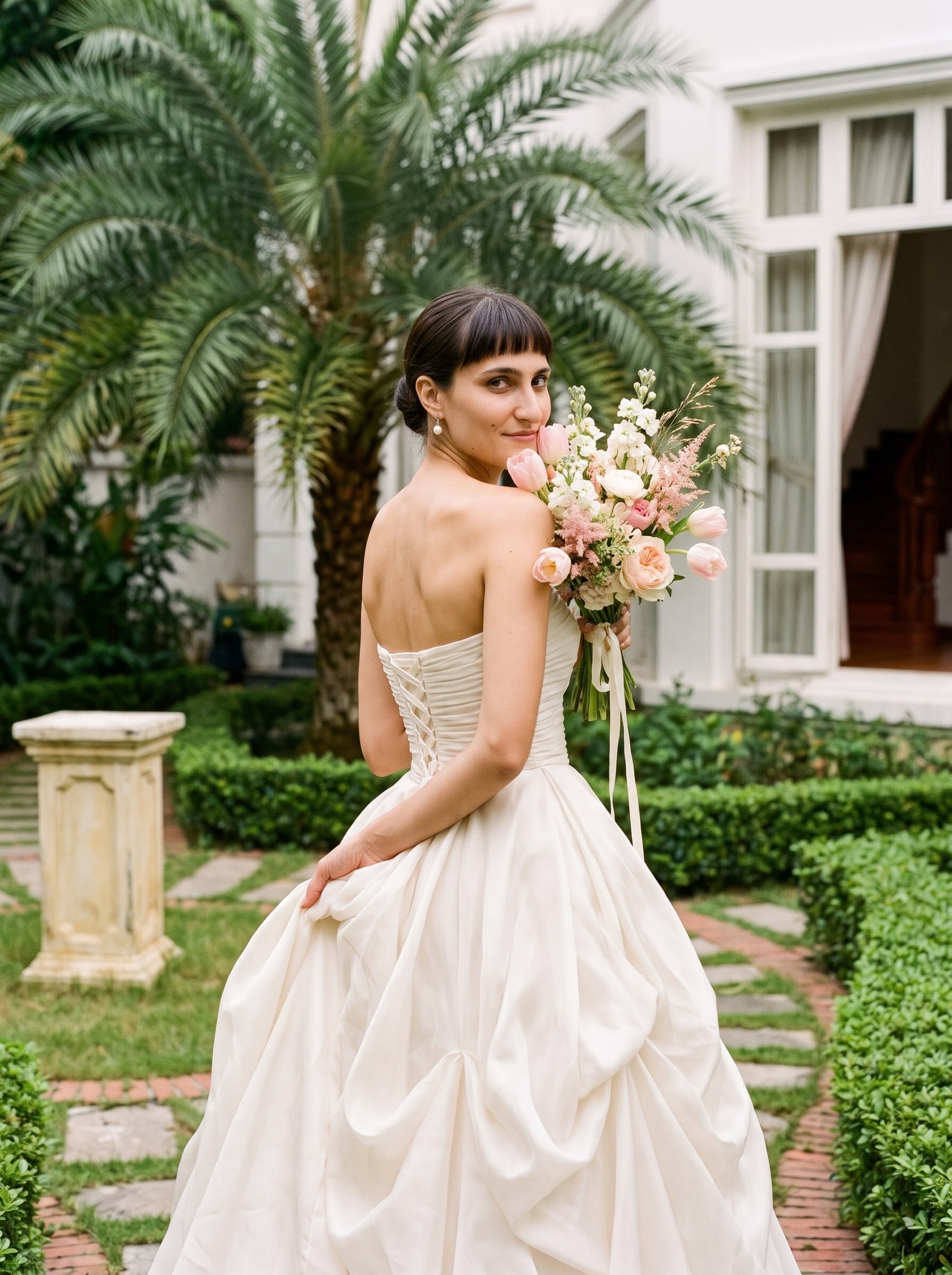
Golden hour—6 to 8 a.m. or 4:30 to 6 p.m.—softens shadows on the lake and turns water bronze or pink. At noon, direct sun creates hard shadows across the face and washes out ao dai color. Early morning light skims the water from the east, flattering the ao dai's silhouette and side profile. Late afternoon light comes from the west, ideal for lake reflections if you face the water. We've observed that 7 a.m. delivers clearest water with fewest joggers; 5 p.m. brings office workers but still holds color in the sky. Winter (November–February) sun stays low longer, extending usable light to 8 a.m. Summer sun peaks earlier, shrinking the golden window to 6:30–7:30 a.m. Plan your arrival 15 minutes before the light you want—the sun moves faster than most expect.
Which Lake Bank & Temple Spots Work Best for Ao Dai?
The north bank (where Ngoc Son Temple sits) gives temple-framed backgrounds and red lantern accents; the south bank offers open water views and fewer obstructions. Ngoc Son Temple requires a our current quote entrance fee per person and allows photography inside only on weekdays before 11 a.m.—after that, monks restrict access. The wooden bridge to the temple's inner gate is photogenic but crowded by 8:30 a.m. on weekends. West-bank pathways near the northern entrance have fewer tourists and strong reflections off still water in early morning. East bank (opposite the old town) has colonial-era railings and tree canopies ideal for dappled light. We avoid the southeast corner—it fills with vendors by 9 a.m. Lakeside benches near the south entrance are good for seated poses but catch foot traffic. Choose your bank based on whether you want architectural frames (north, Ngoc Son) or open water drama (south and west).
How Do Crowds Change Your Timing & Posing Space?
Weekday mornings (Monday–Friday, 6–8 a.m.) average 30–50 people around the lake; weekends jump to 150–300 by 7:30 a.m. Midday (11 a.m.–3 p.m.) crowds peak above 400, making natural poses impossible. Tai chi groups occupy the north bank until 7:30 a.m.; joggers and dog walkers spread out 6–9 a.m. Evening crowds (5–7 p.m.) are dense but slower-moving, allowing pauses for photos between pedestrian waves. School holidays and Tet (late January/early February) triple typical crowds. We block out 30-minute increments per location: 15 minutes shooting, 15 minutes moving or waiting for foot traffic gaps. If you need unobstructed shots, arrive by 6:15 a.m. on a Wednesday or Thursday. For a couple or family shoot including walk-around poses, Tuesday or Wednesday mornings are most forgiving.
What Ao Dai Colors & Styles Photograph Best by the Water?
| Ao Dai Type | Light Condition | Why It Works | What to Avoid |
|---|---|---|---|
| Jewel tones (emerald, sapphire, burgundy) | Early/late light | Rich color pops against water; no washout | Pale pastels in noon sun |
| Solid colors | Any | Clean lines reflect in water; no competing patterns | Horizontal stripes (mirror lake confusion) |
| Gold/silk embroidery | Golden hour only | Embroidery catches side light; glows | Shiny fabrics in direct midday sun (glare) |
| Subtle floral print | Morning light | Detail visible up-close; not chaotic from distance | Large loud prints (visual noise near water) |
| White/cream | Early morning only | Fresh, traditional; must shoot before 8 a.m. | White after 9 a.m. (overexposed, no detail) |
| Layered tunic + pants | Any | Movement and texture work in all light | Clingy fabrics (humidity cling, wrinkles show) |
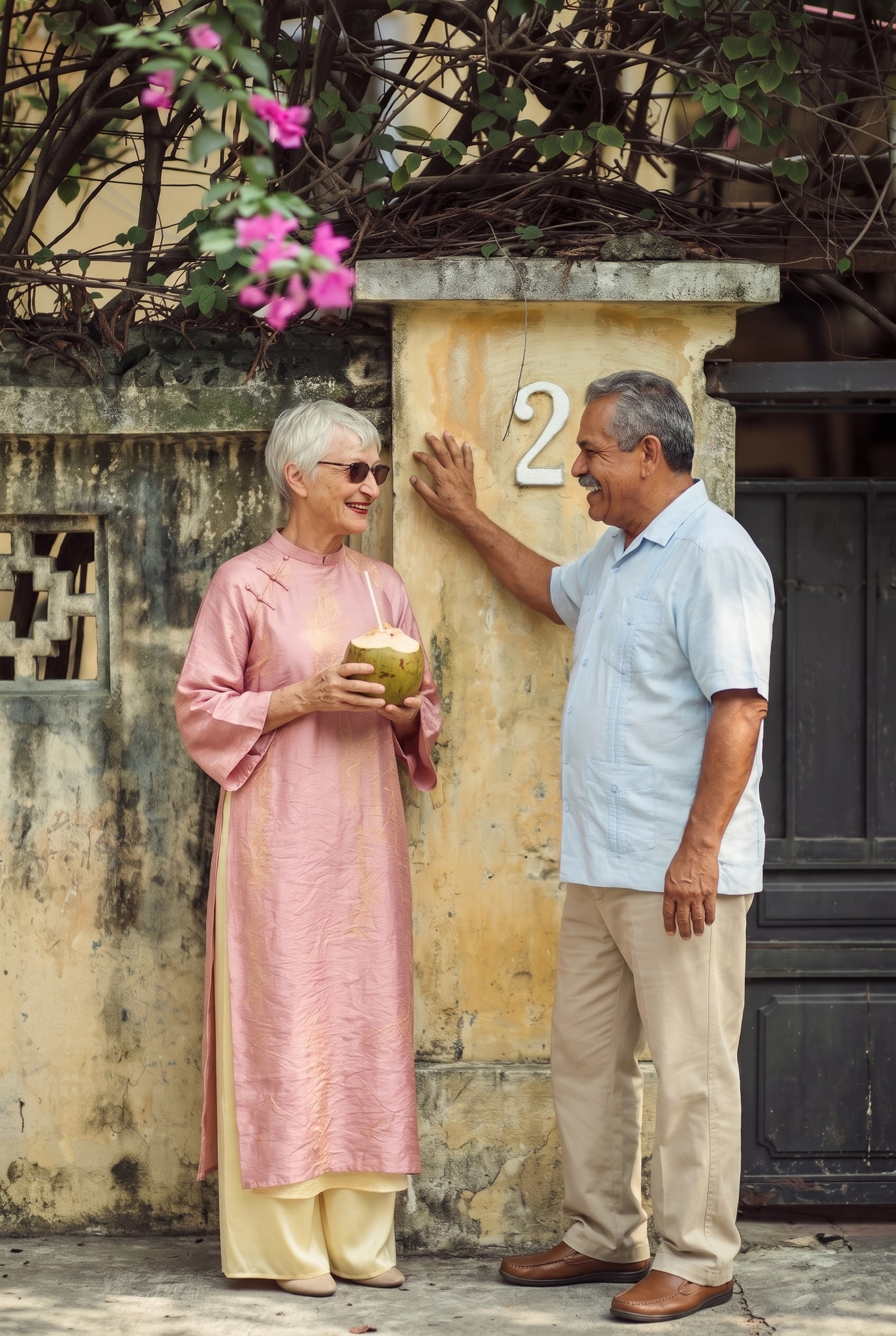
Choose jewel or deep earth tones if shooting between 10 a.m. and 4 p.m.; they hold color and won't look flat. Solid colors are safer than prints for a lake backdrop—water texture is already busy. If you love embroidery, golden hour is non-negotiable. We stock rental ao dai in all these categories at our makeup, hair & ao dai rental service; we help clients pick by their preferred light time and season.
Why Season Changes Everything: Temperature, Light & Clarity
October–November: Crisp air, blue skies, water clarity at peak. Light is sharp but not harsh 6–9 a.m. Ao dai colors sing. Humidity drops, so you stay fresh during a 2-hour shoot. This is peak season—book 3–4 weeks ahead. Best for traditional or formal ao dai.
December–February: Cool mornings (12–16°C), often overcast. Golden hour is brief but lasts longer each day. Mist on water adds mood but reduces color saturation—pair with rich jewel tones. Fewer tourists. Ideal for solo portrait or couple photoshoot if you like moody aesthetics.
March–April: Humidity rises, heat builds, water turns greenish. Sun is intense—golden hour shrinks to 6–7 a.m. Heat haze blurs distant temple details. Ao dai wrinkles faster from sweat. Manageable if you shoot early and pick lightweight fabric.
May–August: Hot, haze, high humidity. Air quality often poor; visibility drops to 1 km. Water looks gray. Golden hour compressed to 5:30–6:30 p.m., then fast darkness. Ao dai clings to skin; makeup runs. Few travelers choose this window unless unavoidable. If you must shoot here, pick very early morning or very late evening, and lightweight ao dai only.
Plan your shoot date around weather, not just your schedule. We track seasonal light patterns and brief clients on ao dai care (lightweight fabrics, humidity-proof makeup, water absorption) before arrival.
What Can Go Wrong & How We Prevent It
Temple permit delays: Ngoc Son Temple photography permits sometimes refused midweek if monks are in ceremony. We call ahead on your behalf to confirm access and time your arrival outside prayer hours.
Blown-out white ao dai: Even rich whites overexpose in direct sun after 8 a.m. We steer first-time clients toward crème or off-white if midday is unavoidable, or we reschedule to early morning.
Water glare on faces: Reflective light from the lake bounces up and creates green/blue color casts on skin, especially in late afternoon. We position you at a slight angle to the water, not directly facing it, and use fill light during golden hour to flatten the glare.
Foot traffic photobombs: Even early morning, vendors and joggers cross your frame every 2–3 minutes. We scout the exact angle before your shoot so you're positioned in the least-trafficked sightline, or we pause between waves—it's built into our timing.
Wrinkled ao dai from sweat: Humidity, especially April–September, causes fabric to cling and crease within 30 minutes. We bring a portable steamer for touch-ups and recommend lightweight silk-blend ao dai if you're shooting in warm months.
Phone/bag in frame: Lakeside benches attract walkers who rest nearby. We position you away from seating areas or we time your poses for the gaps between arrivals.
Honest truth: there is no "perfect" Hoan Kiem Lake shoot without planning. We treat it as a precision operation—exact hour, exact season, exact ao dai type, exact angle—not a walk and snap.
For a fuller Hanoi photoshoot experience, consider pairing a Hoan Kiem Lake photo guide session with our Old Quarter photo guide or Train Street photo guide on the same day. We also offer family photoshoot, graduation photoshoot, solo travel portraits, and pre-wedding photoshoot packages that leverage the same locations and light knowledge. Chat us on WhatsApp to book your date, confirm light window and get makeup, hair & ao dai rental fitted to your shape and skin tone before arrival.
FAQ
What time of year has the bluest water at Hoan Kiem Lake?
October through November when the air is dry, humidity is low, and sunlight is clear without haze. December–February is also crisp but often overcast. May–August water turns greenish-gray from humidity and algae. We recommend autumn for color-rich ao dai shots and traditional temple framing.
Can I wear a white ao dai at Hoan Kiem in the afternoon?
Not after 9 a.m. on a sunny day—white will blow out (lose all detail) in direct sun and look flat on camera. Early morning (before 8 a.m.) or heavy overcast days work. For afternoon shoots, choose crème, pale gold, or a jewel tone instead. We stock rental ao dai in all season-appropriate shades.
Do I need permission to photograph inside Ngoc Son Temple?
Yes. You need a temple entrance permit (a quoted price per person) and photography is allowed only on weekdays before 11 a.m. We call ahead to confirm access and time your interior shots around monk schedules. Weekends are often closed to visitors after 11 a.m.
How long does a typical Hoan Kiem Lake ao dai shoot take?
2–3 hours depending on your package. We include 15 minutes of scouting the light angle, 90–120 minutes shooting (10–15 poses across multiple spots), and 20 minutes for ao dai adjustments or touch-ups. We avoid midday by design and close with a calm lakeside portrait in golden hour.
What if it rains the morning of my shoot?
We reschedule at no extra charge, within reason. Light rain is manageable (adds moodiness to water shots), but heavy rain or storms mean visibility and safety suffer. We monitor the forecast 48 hours before your date and give you 24-hour confirmation. Tet and peak season reschedules may shift to later in your trip rather than same-day alternate.
Should I do my ao dai shoot before or after a couple photoshoot?
Separate shoots. Ao dai at Hoan Kiem is optimized for early morning golden hour; a couple photoshoot often benefits from late afternoon light and different locations (Old Quarter, Train Street). Pairing them the same day splits focus and light. We recommend ao dai first (early morning), then couple shoot later that week in your preferred second location.
What if I've never posed for photos before?
We handle posing. At our solo travel portraits or family photoshoot sessions, we walk you through movement, breathing and where to look before snapping. Posing is not about "modeling"—it's about natural stillness. We give exact directions (turn your shoulders left, look at the water, take three steps toward the bench) and you just follow. Most first-timers are surprised how natural they look.
Can I bring my own ao dai or must I rent?
Both. Many clients bring their own—we just remind you: avoid wrinkled ao dai (bring a steamer or hang it overnight in a humid bathroom), test the fit before the shoot day, and pick colors based on your chosen hour and season. Our makeup, hair & ao dai rental service includes professional steaming, fitting, and expert color-match to your light window and skin tone if you prefer.
Check dates
Send your dates, how many people and the style you like. We reply on WhatsApp in English with spots, timing and a quote.
FAQ
What time of year has the bluest water at Hoan Kiem Lake?
October through November when the air is dry, humidity is low, and sunlight is clear without haze. December–February is also crisp but often overcast. May–August water turns greenish-gray from humidity and algae. We recommend autumn for color-rich ao dai shots and traditional temple framing.
Can I wear a white ao dai at Hoan Kiem in the afternoon?
Not after 9 a.m. on a sunny day—white will blow out (lose all detail) in direct sun and look flat on camera. Early morning (before 8 a.m.) or heavy overcast days work. For afternoon shoots, choose crème, pale gold, or a jewel tone instead. We stock rental ao dai in all season-appropriate shades.
Do I need permission to photograph inside Ngoc Son Temple?
Yes. You need a temple entrance permit (20,000 VND per person) and photography is allowed only on weekdays before 11 a.m. We call ahead to confirm access and time your interior shots around monk schedules. Weekends are often closed to visitors after 11 a.m.
How long does a typical Hoan Kiem Lake ao dai shoot take?
2–3 hours depending on your package. We include 15 minutes of scouting the light angle, 90–120 minutes shooting (10–15 poses across multiple spots), and 20 minutes for ao dai adjustments or touch-ups. We avoid midday by design and close with a calm lakeside portrait in golden hour.
What if it rains the morning of my shoot?
We reschedule at no extra charge, within reason. Light rain is manageable (adds moodiness to water shots), but heavy rain or storms mean visibility and safety suffer. We monitor the forecast 48 hours before your date and give you 24-hour confirmation. Tet and peak season reschedules may shift to later in your trip rather than same-day alternate.
Should I do my ao dai shoot before or after a couple photoshoot?
Separate shoots. Ao dai at Hoan Kiem is optimized for early morning golden hour; a [couple photoshoot](/couple-photoshoot) often benefits from late afternoon light and different locations (Old Quarter, Train Street). Pairing them the same day splits focus and light. We recommend ao dai first (early morning), then couple shoot later that week in your preferred second location.
What if I've never posed for photos before?
We handle posing. At our [solo travel portraits](/solo-portrait) or [family photoshoot](/family-photoshoot) sessions, we walk you through movement, breathing and where to look before snapping. Posing is not about "modeling"—it's about natural stillness. We give exact directions (turn your shoulders left, look at the water, take three steps toward the bench) and you just follow. Most first-timers are surprised how natural they look.
Can I bring my own ao dai or must I rent?
Both. Many clients bring their own—we just remind you: avoid wrinkled ao dai (bring a steamer or hang it overnight in a humid bathroom), test the fit before the shoot day, and pick colors based on your chosen hour and season. Our [makeup, hair & ao dai rental](/makeup-and-styling) service includes professional steaming, fitting, and expert color-match to your light window and skin tone if you prefer.
More like this
Hanoi photo spots
Hanoi Book Street Family Photos: Best Times, Rules & Posing Tips
Hanoi Book Street (Phố Sách) offers tree-lined, traffic-light backdrops perfect for family photos. We guide you through light timing, local rules, and kid-friendly posing to avoid crowds and capture genuine moments.
Hanoi photo spots
Duong Lam Ancient Village Photo Spots: Best Times & Light Guide
Duong Lam Ancient Village, 45 km southwest of Hanoi, holds Vietnam's oldest intact rural architecture—tile-roofed houses, brick kilns and narrow lanes where morning mist holds light for 90 minutes. We photograph here year-round for solo travelers, families and couples seeking authentic, off-beat Han
Hanoi photo spots
Duong Lam Ancient Village: Crowd-Free Times & Photo Spots
Duong Lam Ancient Village, 45 km southwest of Hanoi, draws tourists year-round—but early mornings and weekdays offer near-empty temple courtyards and village lanes. We share exact timing, seasonal light, and how to pair a visit with professional portraits.