
Home › Blog › Hanoi photo spots
Hanoi Train Street photo spots: timing, rules & best light
By the Hanoi Photoshoot team · 2026-11-06
Train Street runs through central Hanoi's Old Quarter and trains pass two or three times daily (morning, midday, evening—exact times shift seasonally). The narrow gap between colonial shophouses and the tracks creates iconic framing for travel, couple and solo portraits. Light peaks 09:00–10:30 (soft morning gold) and 16:00–17:30 (warm backlighting); avoid harsh midday 11:00–15:00. Crowds peak 10:00–11:00 and 15:00–16:30; shoot early or after 18:00 for solitude. Entry is free but unspoken rules apply: stay off active tracks, never touch trains, don't block residents' doorways, and respect temple zones nearby. Hanoi Photoshoot by Cáo Studio coordinates full sessions here with makeup, styling and ao dai rental, combining Train Street with Old Quarter photo guide and nearby temples for seamless day-trip coverage.
What makes Train Street light so different at each hour?
Train Street's narrow geometry—buildings on both sides, tracks at ground level—means direct sun only hits the track bed and upper shophouse façades during specific hours. Early morning (08:30–10:00) throws long shadows across the tracks from the east, creating dramatic diagonal lines; skin tones glow warm without blown highlights. Midday (11:00–15:00) sun bounces harshly off pale walls and creates flat, unflattering shadows under eyes and cheekbones. Late afternoon (16:30–17:45) reverses the angle: buildings cast soft shade on the tracks while backlighting catches hair and clothing edges, ideal for silhouette or rim-lit portraits. Overcast days (common June–August) flatten contrasts but eliminate harsh shadows—good for even skin tones, less dramatic for architectural drama. Plan your hour based on whether you want dimensional shadow play or clean, even exposure.
Which seasons deliver the clearest air and fewest tourists?
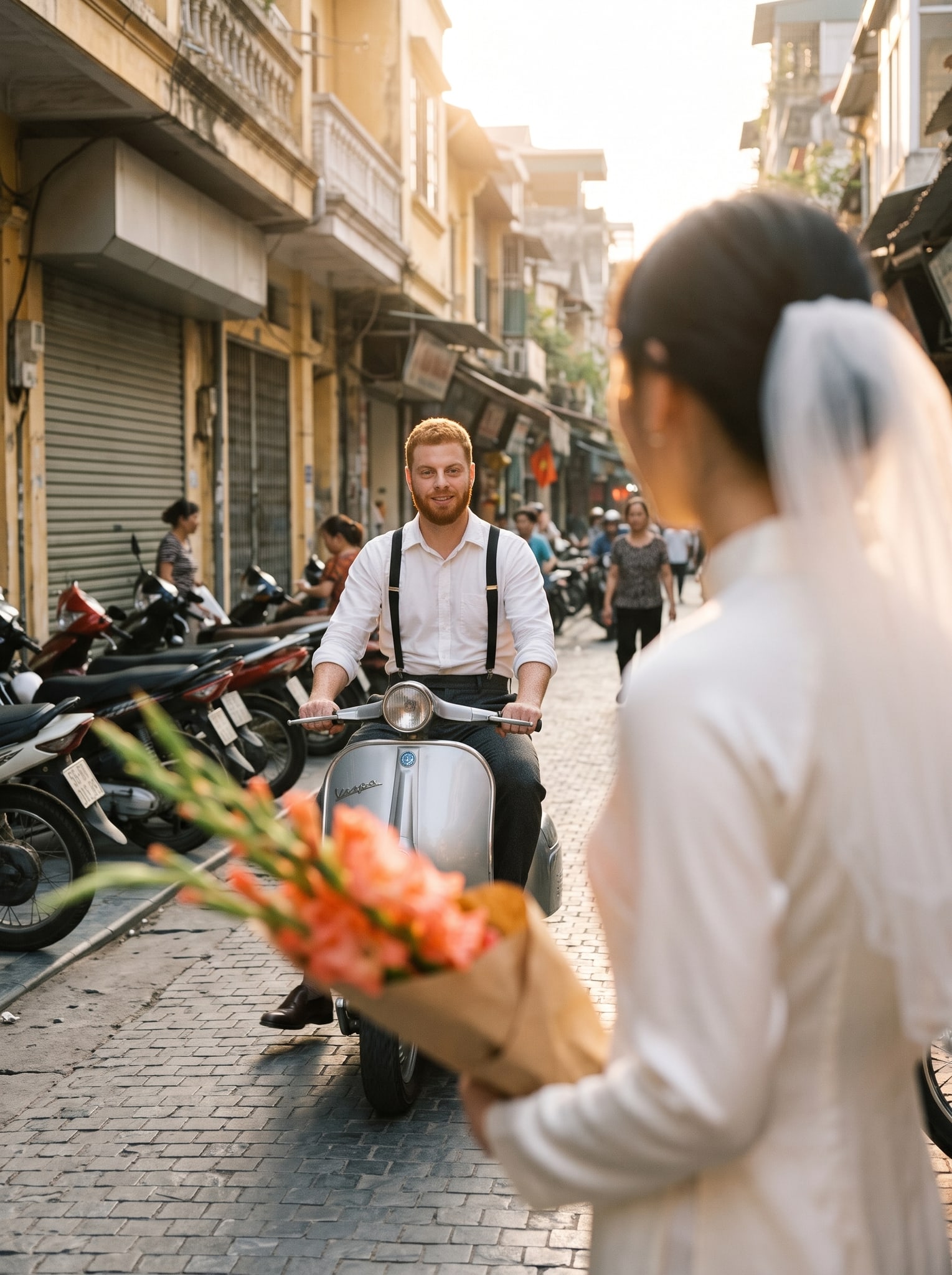
November to February brings cool, dry weather; air clarity peaks December–January when humidity drops below 60%, sharpening distant detail and reducing haze. Crowds thin mid-week but spike weekends and holiday periods (Lunar New Year mid-January to mid-February is extremely busy—expect hundreds 09:00–17:00). March–May warms gradually; April–May humidity rises and occasional haze dulls background definition. June–September is hot and humid; afternoon clouds build by 14:00, cutting direct sun but also shooting windows. October sees humidity drop again and rain becomes sporadic. Fewest tourists appear Tuesday–Thursday, early November and late March; book couple photoshoot or solo travel portraits sessions outside school holidays for calm shoots.
Where exactly do trains appear and what are the safety rules?
Trains enter from the south (Tran Phu Street direction) and exit north, moving slowly (5–10 km/h). The main shooting zone spans approximately 400 meters between Phó Tàu station (south) and the northern end near Tran Phu; widest, most photogenic section is the central 150 meters where shophouses sit tightest. Trains typically pass 06:30–07:30, 11:00–12:00, and 17:00–18:00 (check locally or with staff beforehand—times shift seasonally). Never step on tracks while a train approaches, ever. Keep bags, tripod and people off the rails; stand in shophouse doorways or side alcoves. Don't lean into residents' homes or block commerce. Photography from the tracks is technically prohibited but tolerated if you step clear immediately when a train nears—enforcement is loose but respect locals' property and safety. Guides and our studio staff know the rhythm and alert you before trains arrive.
How do poses and outfit choices adapt to narrow spaces?
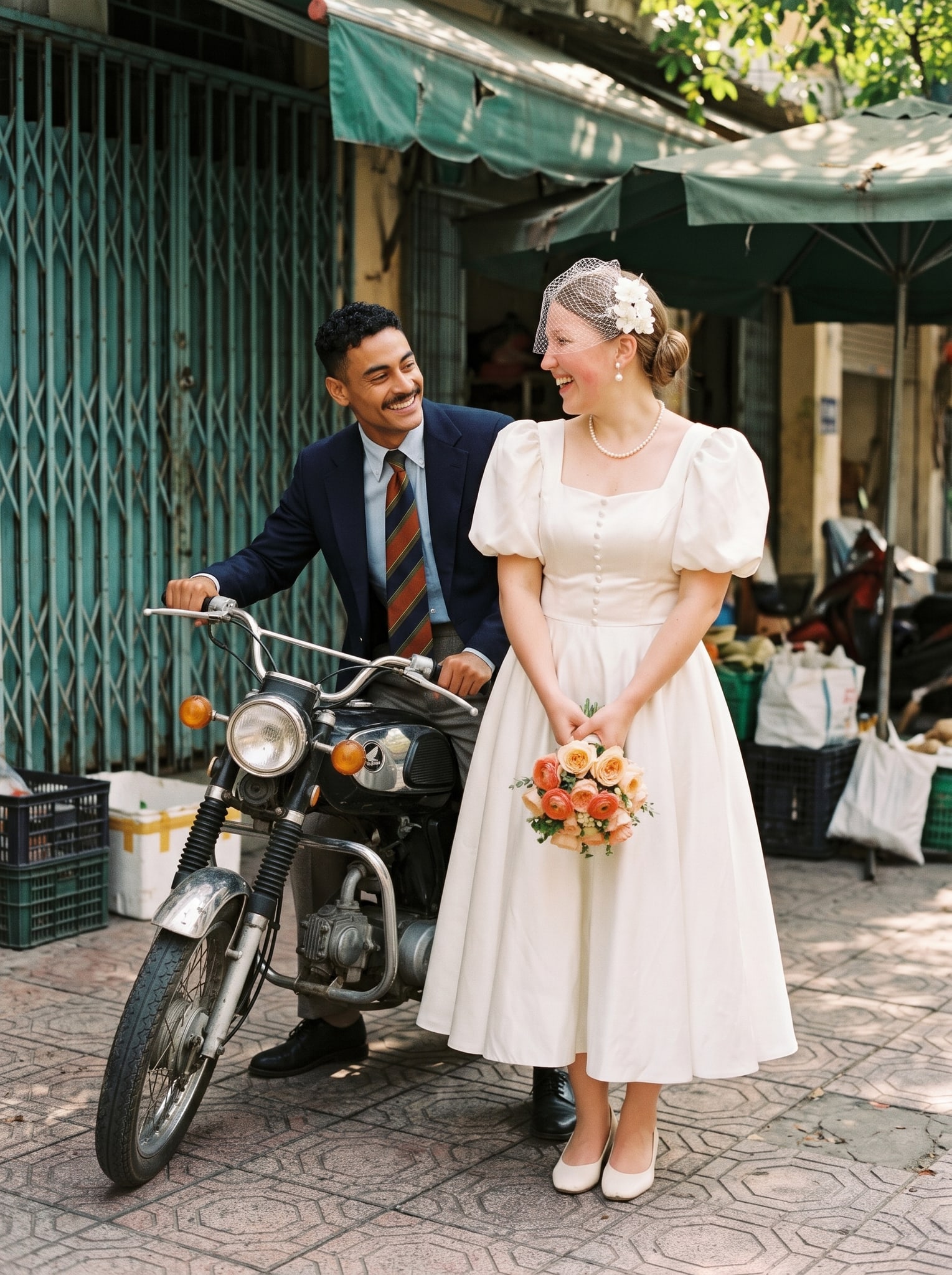
Train Street's width (2–3 meters track plus 1–1.5 meters on each side) means wide-angle group shots are nearly impossible; instead, shoot depth—subjects standing lengthwise along the tracks with the train or buildings leading into the frame. Solo and couple poses work best in 3/4 view or profile facing the tracks; full-body framing reads better than close-ups because of shadows. Loose, flowing clothing (silk scarves, linen shirts, dresses) catches wind and backlighting beautifully; dark, fitted outfits risk looking cramped. Ao dai rental works exceptionally here because the garment's width and movement complement the tight geometry—traditional fabric photographs richer than casual wear. Avoid large backpacks or rigs that obstruct residents or other photographers. Posing for non-models: lean slightly into the tracks (safely away from danger), place one foot forward, angle shoulders open to the camera. Practice your pose in a doorway first so framing feels natural when light and crowds peak.
How do you combine Train Street with nearby heritage spots for one full day?
Train Street sits 100 meters south of Hoan Kiem Lake's northeast edge and 300 meters east of Hanoi's oldest temple district. A logical sequence: shoot Train Street 08:00–09:30 (early light, thin crowds), move to Hoan Kiem Lake photo guide for 10:00–12:00 lakeside and temple framing, break for lunch mid-Old Quarter, resume at 15:00–17:00 for Old Quarter photo guide street and architectural detail, finish with late-afternoon Train Street revisit at 17:30–18:30 for backlighting. This pacing avoids peak crowds (10:00–11:00, 15:00–16:00) and uses shade strategically. Family photoshoot or pre-wedding photoshoot sessions often span 4–5 hours and fit this rhythm perfectly. Our studio provides a full itinerary, transportation coordination and makeup touch-ups between locations; ask us for a quote on WhatsApp if combining multiple heritage zones.
What common mistakes wreck Train Street shots and how do you avoid them?
| Mistake | Why it fails | How to avoid it |
|---|---|---|
| Shooting at 12:00–14:00 | Harsh overhead sun, blown skies, unflattering shadows under eyes | Shoot 08:30–10:00 or 16:30–18:00 instead |
| Standing on tracks while trains are moving | Safety hazard; photos rarely worth the risk; residents resent trespassing | Stay in doorways, watch for staff alerts |
| Wearing bright white or reflective fabrics | Creates exposure metering chaos, washes skin tones | Wear jewel tones, pastels, blacks or muted earth shades |
| Framing too wide for the alley's scale | Subjects appear lost, buildings dominate awkwardly | Use depth—align subjects along tracks, not across them |
| Ignoring local shop hours and foot traffic | Accidental photo-bombing, resident frustration | Shoot early or post-18:00; check opening hours of shophouses nearby |
| Forgetting to check train times | Miss trains entirely or waste time waiting | Confirm times with guides or local staff before you shoot |
Shooting Train Street requires respect for the space—it is a working residential and commercial zone, not a museum. Light and timing are everything; crowds and safety are non-negotiable. Plan your Hanoi shoot with our studio to lock in the best window, avoid risk and capture authentic heritage shots with professional guidance.
What to check before you book your session
- Confirm train times the day before. Schedules drift; ask locals or your guide for the exact three daily passes.
- Wear layers. Early mornings (08:00–09:00) are cooler; afternoon heat picks up fast.
- Bring water and sun protection. Shade is scarce; dehydration and sunburn ruin photos and mood.
- Plan exit shots. If a train passes during your best light, have a backup pose or location ready nearby.
- Coordinate with staff. Our team alerts you to trains and resident activity; never photograph solo here without local liaison.
Is a professional photoshoot worth it for Train Street alone, or should I combine it with other spots?
Train Street is dense but single-location shoots risk repetition and weather delays. Pairing with Hoan Kiem Lake photo guide, Old Quarter photo guide or temple zones stretches your session and captures Hanoi's full character. Couple photoshoot, pre-wedding photoshoot and solo travel portraits all benefit from multi-spot itineraries because light and energy vary. Ask us for a quote on WhatsApp to explore day-long or half-day packages.
FAQ
Can I photograph Train Street solo without a guide?
Yes, but unspoken safety and etiquette rules exist—trains move unexpectedly, residents value privacy, and timing confusion wastes light. Our studio staff alert you to trains, manage crowds and know shopkeeper preferences. Photography here unsupervised risks injury or resident friction.
Do I need a permit to shoot Train Street?
No official permit exists, but unspoken tolerance applies: stay off tracks during train passes, don't enter homes, don't block shopfront commerce. Photography is tacitly allowed if you respect boundaries. Large commercial crews sometimes liaise with local authorities beforehand.
What happens if a train passes while I'm posing?
Trains move slowly (5–10 km/h) and announce themselves with horns. Staff alert you immediately; you step into a doorway or alcove. Trains are rare interruptions—most sessions capture 3–5 clear passes in a 2-hour window, which creates dramatic framing opportunities.
Should I rent an ao dai for Train Street?
Absolutely. Traditional silk ao dai photographs exceptionally in Train Street's backlighting and narrow geometry; fabric movement and color richness elevate travel and couple shots. Makeup and styling includes in-house ao dai rental and fit—no upcharge for this pairing.
What's the best time of year to shoot Train Street?
November–January delivers cool air, low humidity and clear skies. December–January peaks in clarity but tourist crowds spike. March–October works but air haze and humidity increase mid-frame softness. Avoid Lunar New Year (mid-January to mid-February) unless crowds are your aesthetic.
Can I shoot Train Street at sunrise or after sunset?
Sunrise (05:30–06:30) is possible but dim and requires high ISO; light quality is flat. Sunset (17:30–18:30) offers warm backlighting and lower crowds. After 19:00 becomes too dark for natural light unless you use ambient shophouse lighting creatively. Early morning (08:00–10:00) is the golden standard for balance.
Check dates
Send your dates, how many people and the style you like. We reply on WhatsApp in English with spots, timing and a quote.
FAQ
Can I photograph Train Street solo without a guide?
Yes, but unspoken safety and etiquette rules exist—trains move unexpectedly, residents value privacy, and timing confusion wastes light. Our studio staff alert you to trains, manage crowds and know shopkeeper preferences. Photography here unsupervised risks injury or resident friction.
Do I need a permit to shoot Train Street?
No official permit exists, but unspoken tolerance applies: stay off tracks during train passes, don't enter homes, don't block shopfront commerce. Photography is tacitly allowed if you respect boundaries. Large commercial crews sometimes liaise with local authorities beforehand.
What happens if a train passes while I'm posing?
Trains move slowly (5–10 km/h) and announce themselves with horns. Staff alert you immediately; you step into a doorway or alcove. Trains are rare interruptions—most sessions capture 3–5 clear passes in a 2-hour window, which creates dramatic framing opportunities.
Should I rent an ao dai for Train Street?
Absolutely. Traditional silk ao dai photographs exceptionally in Train Street's backlighting and narrow geometry; fabric movement and color richness elevate travel and couple shots. [Makeup and styling](/makeup-and-styling) includes in-house ao dai rental and fit—no upcharge for this pairing.
What's the best time of year to shoot Train Street?
November–January delivers cool air, low humidity and clear skies. December–January peaks in clarity but tourist crowds spike. March–October works but air haze and humidity increase mid-frame softness. Avoid Lunar New Year (mid-January to mid-February) unless crowds are your aesthetic.
Can I shoot Train Street at sunrise or after sunset?
Sunrise (05:30–06:30) is possible but dim and requires high ISO; light quality is flat. Sunset (17:30–18:30) offers warm backlighting and lower crowds. After 19:00 becomes too dark for natural light unless you use ambient shophouse lighting creatively. Early morning (08:00–10:00) is the golden standard for balance.
More like this
Hanoi photo spots
Hanoi Book Street Family Photos: Best Times, Rules & Posing Tips
Hanoi Book Street (Phố Sách) offers tree-lined, traffic-light backdrops perfect for family photos. We guide you through light timing, local rules, and kid-friendly posing to avoid crowds and capture genuine moments.
Hanoi photo spots
Duong Lam Ancient Village Photo Spots: Best Times & Light Guide
Duong Lam Ancient Village, 45 km southwest of Hanoi, holds Vietnam's oldest intact rural architecture—tile-roofed houses, brick kilns and narrow lanes where morning mist holds light for 90 minutes. We photograph here year-round for solo travelers, families and couples seeking authentic, off-beat Han
Hanoi photo spots
Duong Lam Ancient Village: Crowd-Free Times & Photo Spots
Duong Lam Ancient Village, 45 km southwest of Hanoi, draws tourists year-round—but early mornings and weekdays offer near-empty temple courtyards and village lanes. We share exact timing, seasonal light, and how to pair a visit with professional portraits.