
Home › Blog › Hanoi photo spots
French Quarter Hanoi Photo Rules and Etiquette Guide
By the Hanoi Photoshoot team · 2026-11-06
French Quarter photo etiquette centres on temple reverence, street courtesy and timing. The district spans colonial villas, Buddhist shrines and leafy avenues between Hoan Kiem Lake and Pho Nha Church (about 1 km walk). Best light: 6–8 AM (soft, uncrowed) or 5–6 PM (golden, fewer tour groups). Never photograph inside temples without asking monks first; remove shoes at thresholds; dress modestly (shoulders and knees covered). Streets are narrow—move quickly, never block shop fronts, and pause for motorbikes. Peak season (November–February) brings crowds 9 AM–3 PM; June–August is hot and humid but quieter after 7 PM. Hanoi Photoshoot by Cáo Studio books early slots (before 8 AM) to avoid congestion and maximize soft window light on facade and cobblestone detail. Check dates on WhatsApp
What are the real temple rules at French Quarter shrines?
Temples welcome photographers but expect quiet, modest dress and permission. Wear long trousers or skirts below the knee, closed shoes, and shoulders covered. Never photograph the main altar, Buddha statues or monks in prayer without asking—most will say yes if you're respectful. Remove footwear before entering any shrine or prayer room. Photography is typically forbidden during active ceremonies (morning chanting, 5–6 AM). Staff or resident monks may ask you to stop; comply immediately and smile. Incense smoke and dim indoor light make early-morning exterior shoots more useful—the architecture and courtyards are photographable in natural light before 7:30 AM. If you're unsure, a small donation (small notes in the alms box) shows respect and often opens doors. We brief all clients on these rules before arrival; it takes 10 minutes but prevents misunderstandings and keeps you welcome on repeat visits.
Which hours avoid crowds and give the best light?
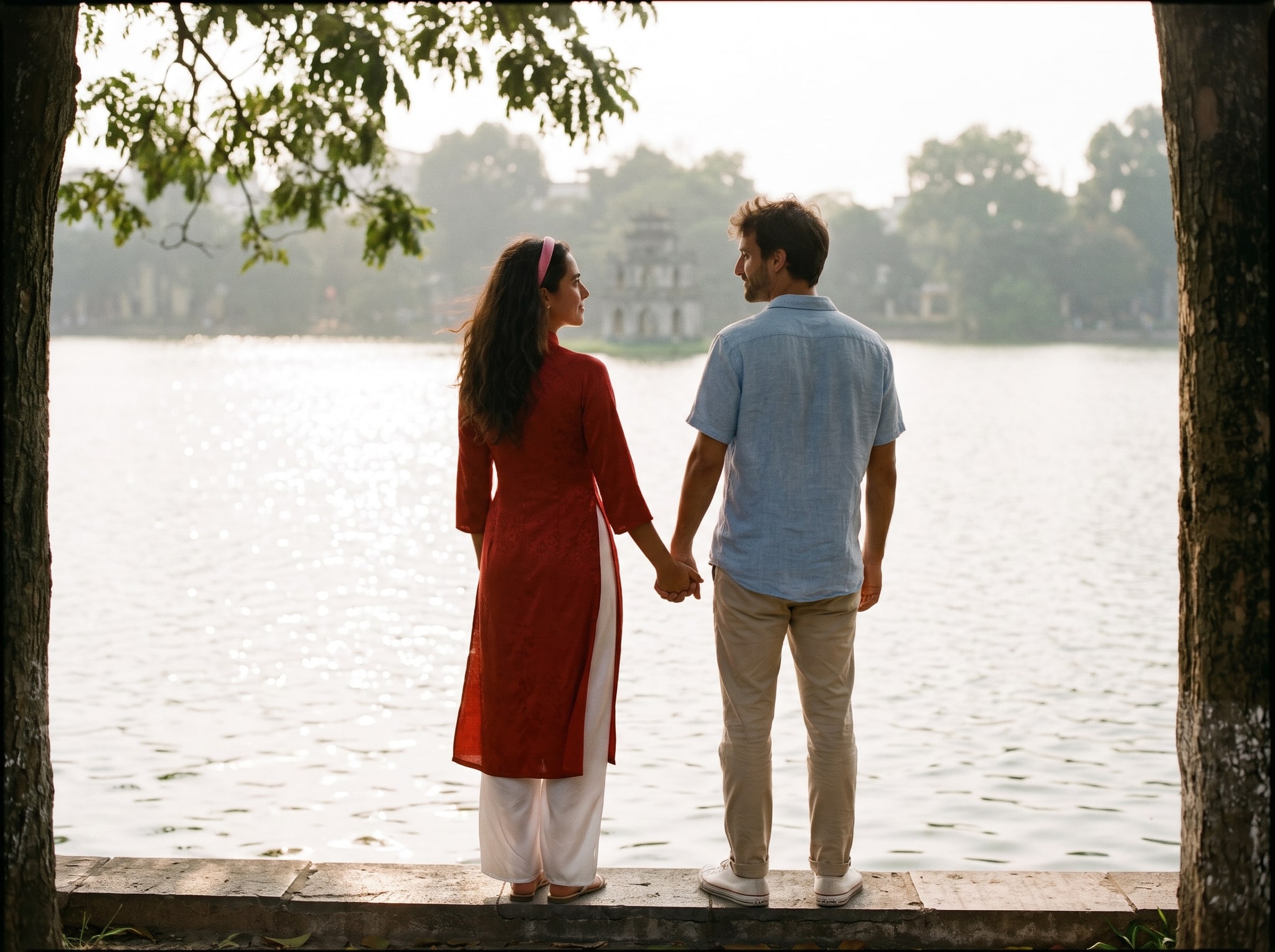
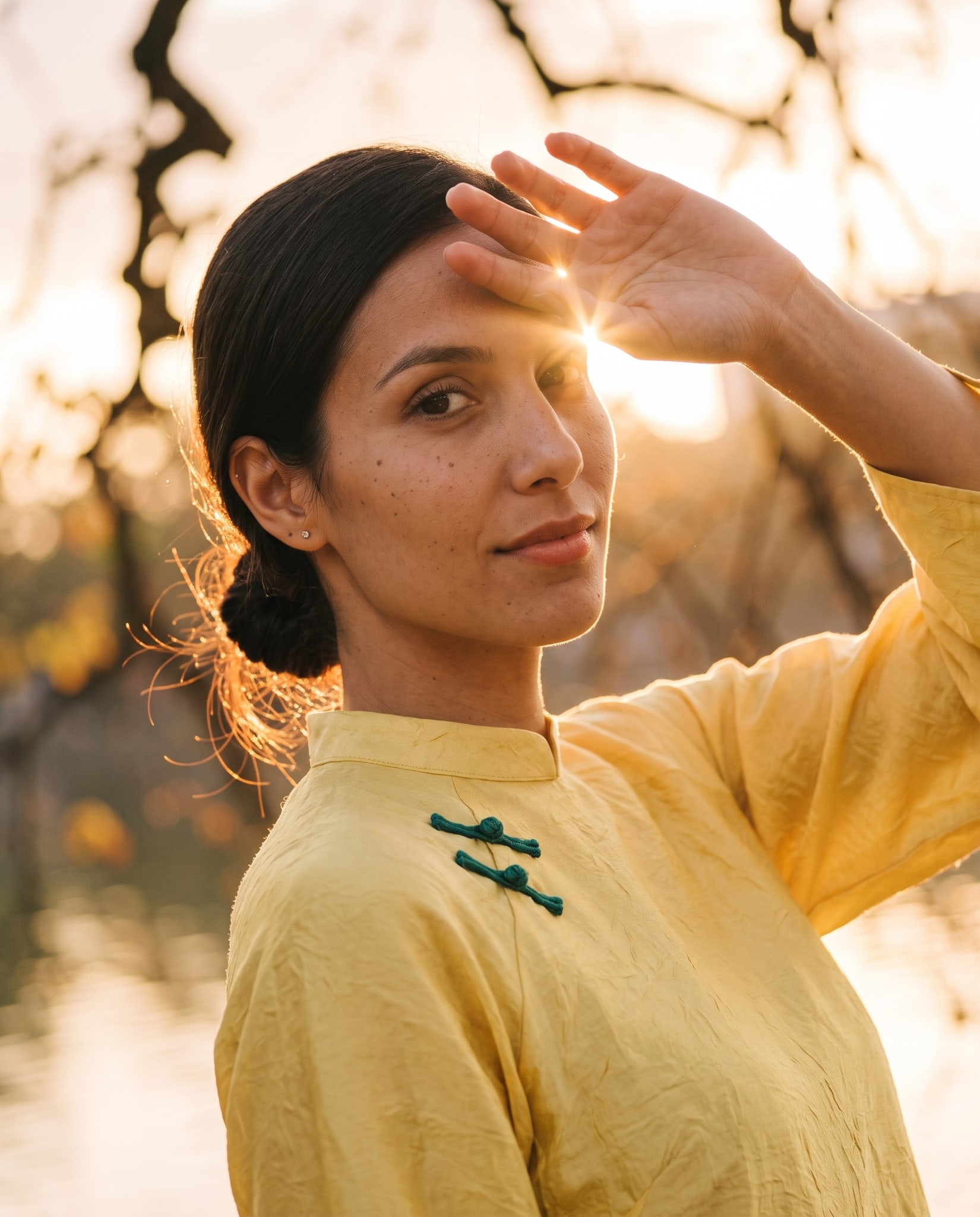
6–8 AM yields soft, diffused light and near-empty streets—tour groups arrive 9 AM onwards. 5–7 PM brings golden sideways light on colonial facades; fewer crowds than midday, but still busy. Avoid noon–3 PM: harsh shadows, peak humidity, maximum tourists, closed shop fronts. November–February (dry season) is clearest; June–August is hazy but has longer evenings and fewer visitors after 7 PM. If you're doing an ao dai photoshoot in Hanoi, early morning light reflects beautifully off pale fabrics and stone. Rainy days (September–October) clear the streets within 30 minutes but leave puddles ideal for reflection shots; bring a compact umbrella and waterproof phones. We always scout the night before to confirm light angles, street-stall positions and any roadwork that might block sightlines.
How do you pose naturally on narrow, busy streets?
Posing on cobblestones requires stillness, hand placement and awareness of background motion. Never stand dead-centre—step left or right to create asymmetry and let motorbikes pass safely behind. Hands: keep one in a jacket pocket or on a gate rail, not dangling. Eyes: look at the camera, not over your shoulder at traffic (it reads as nervous). Walk slowly toward the camera rather than standing—motion hides awkwardness and feels authentic. If a motorbike or delivery cart approaches, step into a doorway and pause; we keep shooting from behind. Avoid clusters of tour groups by positioning yourself at street corners (light hits edges well) or under awnings (natural framing). For couple photoshoot or family photoshoot sessions, we use quiet side streets off the main tourist loop—these have the same colonial charm but are navigable without stop-start interruptions. Wearing neutral colors (cream, navy, grey) reads better against weathered stone; bright colors compete with background clutter.
What should you wear to photograph in the French Quarter?
Dress code balances respect, light-reflectivity and season. Wear long trousers, skirts or dresses below the knee (required for temple entry; also looks timeless in photos). Closed shoes with grip (cobblestones are slippery when wet). Layers: morning cool (15–18°C November–February) becomes warm by noon. Avoid pure white (reflects harshly in midday sun); cream, soft pastels and muted earth tones photograph best. Long sleeves optional but protect skin from sun and reflect a conservative presence in shrine areas. If you're booking a pre-wedding photoshoot or proposal photographer session, we advise ao dai or tailored Vietnamese dress for one segment—it respects the setting and photographs beautifully against colonial gates. Avoid logos, slogans or busy patterns; simplicity reads as elegance. Bring a lightweight scarf or pashmina (doubles as shoulder cover for temples and softens direct light on face). We provide makeup and styling advice and can arrange ao dai rental if you'd like authentic dress for part of the shoot.
What are the unwritten rules locals expect from photographers?
Street courtesy is non-negotiable in Hanoi's tight quarters. Never block shop fronts, motorbike paths or doorways—if you're framing a shot, scout it first and ask shopkeepers permission (they almost always agree; a small thank-you gesture is kind). Avoid photographing street vendors or residents without consent—if you want their face in a shot, show them the back of your camera afterward. Move quickly; long setup times annoy residents. Don't touch decorations, plants or shop displays to adjust framing. Never sit on steps or gates (these are locals' property and rest spots). Motorbikes have right of way—step aside immediately, don't look surprised. Photography is free in public; no vendor will demand a fee, but cultural sensitivity (hat off at shrines, no loud voices) prevents friction. Tipping photographers (if hired) is appreciated but not expected; many international clients offer a drink or snack, which feels genuine. We emphasize these norms to every client—Hanoi photoshoots succeed because we're guests, not tourists. This builds trust with locals and often results in spontaneous, authentic moments.
| Scenario | Best time | Light quality | Crowd level | Outfit choice | Photo feel |
|---|---|---|---|---|---|
| Solo reflection shot | 6–7 AM | Soft, diffused | Empty | Neutral layers | Contemplative |
| Couple romantic walk | 5–6 PM | Golden, warm | Moderate | Neutral tones, long pants | Timeless romance |
| Family multi-generation | 6:30–8 AM | Clear, shadow-free | Very quiet | Coordinated pastels | Joyful, relaxed |
| Graduation or solo portrait | 7–8:30 AM | Bright, even | Light traffic | Dark dress, long sleeves | Professional, sharp |
| Ao dai detail shoot | 6–7 AM | Low angle, texture | Nearly deserted | Full ao dai rental | Ethereal, cultural |
What can go wrong and how do we prevent it?
Rain: We check forecasts at 6 AM and reschedule or pivot indoors (colonial building lobbies, temple courtyards under eaves) if heavy. Motorbike collisions: We position you off the main street axis, never centred on traffic lanes. Tourists in background: We shoot during off-peak hours or use narrow alleys we've pre-scouted. Temple closure: We call ahead to confirm hours; some close for private ceremonies. Harsh shadows: We avoid midday entirely or use shade (awnings, trees) for fill light. Jet lag or nerves: We offer a 15-minute warm-up walk (no shooting), chat over coffee-substitute and start with easier poses. We also scout every location 24 hours before your session—if anything has changed (construction, festival setup, shop closure), we adjust the plan immediately. For international clients booking solo travel portraits or Instagram photoshoot sessions, we build in 30-minute buffer time so you're never rushed.
Can you photograph on French Quarter rooftops and terraces?
Most roof-top cafés and colonial hotels allow photography if you're a paying guest or book a private experience. Ask staff directly—never photograph private roofs without permission. Terraces of old villas are private; respect closed doors. Public viewpoint near Hang Tien Street (north side of Hoan Kiem) offers 360° city views but gets crowded 5–6 PM. Light here is best 6–7 AM (soft, cool) before haze builds. We occasionally shoot maternity photoshoot or graduation photoshoot sessions on pre-arranged terraces (we handle negotiation with venue staff). Sunset rooftop shots are Instagram-popular but mean working with 50+ other photographers—not ideal for intimate sessions. We prefer street-level and courtyard framing, which feels more authentic and gives you exclusive space. Bring a small umbrella for sudden shade if rooftop light turns harsh.
How does French Quarter etiquette differ from other Hanoi spots?
French Quarter is Hanoi's most touristy colonial zone; locals here are used to cameras but still expect respect. By contrast, Hanoi's Old Quarter is working residential—fewer rules but more intrusive if you're disruptive. Hoan Kiem Lake is public leisure space (casual, open, fewer shrine rules). Train Street has strict no-photography-on-tracks rules enforced by police. French Quarter's etiquette is a middle ground: tourist-aware but culturally protective, especially at temples. The vibe is "explore mindfully, not recklessly." We tailor our approach per location—French Quarter sessions emphasize colonial architectural framing and early-morning silence, while Old Quarter sessions embrace street chaos and spontaneous interaction. First-time Hanoi visitors often book French Quarter as a confidence-builder; repeat clients venture further for solo portrait or Instagram photoshoot variety.
What's the best way to approach a monk or shrine keeper for permission?
Smile, remove hat, bow slightly, and say "Xin phép chụp ảnh" (Can I take photos?). Most say yes immediately. If they say "không" (no), respect it and move on—no negotiation. If photographing inside, ask "Tôi có thể chụp bên trong không?" (May I photograph inside?). Many shrines have a small donation box near the entrance; a small contribution (we carry small bills) is courteous. Never ask directly for favours; locals respond better to genuine respect than requests. If a keeper seems hesitant, photograph only exteriors and courtyards. We've built relationships with key temples over repeat sessions; regulars know us and sometimes offer access during quiet hours. We never coach clients to be pushy—authenticity and patience unlock doors far better. For proposal photographer sessions, we arrange temple or shrine access in advance so there's no friction during your ceremony or portrait.
Before your French Quarter session: quick checklist
- Confirm time slot (we suggest 6–8 AM or 5–6 PM).
- Check weather; bring umbrella and waterproof phone case.
- Wear long trousers or skirt, closed shoes, shoulder coverage.
- Bring water (it's warm, even in winter).
- Leave valuables at your accommodation (narrow streets = pickpocket risk).
- Charge camera/phone fully (no charging points available on-site).
- Inform us of any mobility issues (cobblestones can be uneven).
- Plan a 10-minute buffer for settling nerves before we start shooting.
FAQ
Can I wear shorts or sleeveless tops in the French Quarter?
No. Temples require long trousers/skirts and shoulder coverage (rule enforced by monks). Sleeveless tops read as disrespectful in shrine areas. We'll ask you to cover up at entry, which breaks the flow. Wear layers from the start.
What if I disrupt traffic or a local shopkeeper complains?
Step aside immediately, apologize quietly and thank them. Most Hanoi locals are patient with tourists. We move sessions to less-busy streets if disruption persists; we never insist on a shot that frustrates residents.
Do I need a permit to photograph in the French Quarter?
No. Public streets and temples welcome photography for personal use. Commercial film crews need permits (we don't coordinate those). Your personal or social-media session is free and unregulated.
Is it safe to walk the French Quarter early morning alone?
Yes. 6–8 AM is very safe; many locals exercise, shops open, police presence is routine. We meet you at a central café or your hotel. Never walk isolated alleyways alone at night.
Can I reschedule if the weather is bad?
Yes. We monitor forecasts 6 AM the day of your session. If heavy rain or fog makes light unusable, we offer a free reschedule within 14 days. We don't shoot in rain unless you want that aesthetic.
Are there photo-free zones in the French Quarter I should know?
Yes. Active prayer rooms in temples (ask monks first). Private courtyard gates (knock and ask). Military or government buildings (avoid entirely—guards will stop you). Stick to public streets, temples courtyards and open facades.
What if I'm nervous about posing in public with tourists watching?
Totally normal. We scout quiet side streets, position you away from crowd lines, and work fast (3–5 minute poses, then we move). Offering a genuine smile feels more natural than a stiff expression—keep breathing.
Do you offer package deals for French Quarter sessions?
Ask us for a quote on WhatsApp. Session rates vary by duration, group size and styling (ao dai rental, makeup/hair). We can combine French Quarter with Hoan Kiem Lake or Old Quarter for longer bookings.
What if I want an ao dai shoot specifically in the French Quarter?
Perfect fit. Colonial gates and alleyways frame ao dai beautifully. We offer ao dai photoshoot in Hanoi and makeup and styling as a package. Book early morning (6–7 AM) for empty streets and soft light on the fabric.
Can I bring family or a friend to watch the shoot?
Yes, but they can't stand in frame or distract you. One friend is fine; groups of 4+ draw unwanted attention and slow pace. We brief them on rules beforehand; most sit nearby with coffee and enjoy the morning.
Check dates
Send your dates, how many people and the style you like. We reply on WhatsApp in English with spots, timing and a quote.
FAQ
Can I wear shorts or sleeveless tops in the French Quarter?
No. Temples require long trousers/skirts and shoulder coverage (rule enforced by monks). Sleeveless tops read as disrespectful in shrine areas. We'll ask you to cover up at entry, which breaks the flow. Wear layers from the start.
What if I disrupt traffic or a local shopkeeper complains?
Step aside immediately, apologize quietly and thank them. Most Hanoi locals are patient with tourists. We move sessions to less-busy streets if disruption persists; we never insist on a shot that frustrates residents.
Do I need a permit to photograph in the French Quarter?
No. Public streets and temples welcome photography for personal use. Commercial film crews need permits (we don't coordinate those). Your personal or social-media session is free and unregulated.
Is it safe to walk the French Quarter early morning alone?
Yes. 6–8 AM is very safe; many locals exercise, shops open, police presence is routine. We meet you at a central café or your hotel. Never walk isolated alleyways alone at night.
Can I reschedule if the weather is bad?
Yes. We monitor forecasts 6 AM the day of your session. If heavy rain or fog makes light unusable, we offer a free reschedule within 14 days. We don't shoot in rain unless you want that aesthetic.
Are there photo-free zones in the French Quarter I should know?
Yes. Active prayer rooms in temples (ask monks first). Private courtyard gates (knock and ask). Military or government buildings (avoid entirely—guards will stop you). Stick to public streets, temples courtyards and open facades.
What if I'm nervous about posing in public with tourists watching?
Totally normal. We scout quiet side streets, position you away from crowd lines, and work fast (3–5 minute poses, then we move). Offering a genuine smile feels more natural than a stiff expression—keep breathing.
Do you offer package deals for French Quarter sessions?
Ask us for a quote on WhatsApp. Session rates vary by duration, group size and styling (ao dai rental, makeup/hair). We can combine French Quarter with [Hoan Kiem Lake](/spots/hoan-kiem-lake) or [Old Quarter](/spots/hanoi-old-quarter) for longer bookings.
What if I want an ao dai shoot specifically in the French Quarter?
Perfect fit. Colonial gates and alleyways frame ao dai beautifully. We offer [ao dai photoshoot in Hanoi](/ao-dai-photoshoot) and [makeup and styling](/makeup-and-styling) as a package. Book early morning (6–7 AM) for empty streets and soft light on the fabric.
Can I bring family or a friend to watch the shoot?
Yes, but they can't stand in frame or distract you. One friend is fine; groups of 4+ draw unwanted attention and slow pace. We brief them on rules beforehand; most sit nearby with coffee and enjoy the morning.
More like this
Hanoi photo spots
Hanoi Book Street Family Photos: Best Times, Rules & Posing Tips
Hanoi Book Street (Phố Sách) offers tree-lined, traffic-light backdrops perfect for family photos. We guide you through light timing, local rules, and kid-friendly posing to avoid crowds and capture genuine moments.
Hanoi photo spots
Duong Lam Ancient Village Photo Spots: Best Times & Light Guide
Duong Lam Ancient Village, 45 km southwest of Hanoi, holds Vietnam's oldest intact rural architecture—tile-roofed houses, brick kilns and narrow lanes where morning mist holds light for 90 minutes. We photograph here year-round for solo travelers, families and couples seeking authentic, off-beat Han
Hanoi photo spots
Duong Lam Ancient Village: Crowd-Free Times & Photo Spots
Duong Lam Ancient Village, 45 km southwest of Hanoi, draws tourists year-round—but early mornings and weekdays offer near-empty temple courtyards and village lanes. We share exact timing, seasonal light, and how to pair a visit with professional portraits.