
Home › Blog › Hanoi photo spots
Duong Lam Ancient Village Photo Rules & Etiquette
By the Hanoi Photoshoot team · 2026-11-06
Duong Lam Ancient Village (Duong Lam commune, Ha Tay province) forbids commercial photography without written permission from the local tourism office—required 2–3 days ahead; temple interiors are off-limits to tourists during rituals; communal houses demand removal of shoes and headwear before entry; phone calls and loud voices damage the spiritual atmosphere. Cáo Studio's Hanoi Photoshoot team secures permits beforehand and coaches you on appropriate dress (long pants/skirts, covered shoulders at shrines) and posing to honor the heritage. Crowds peak 9–11 a.m. and 2–4 p.m.; best light falls 6–7:30 a.m. (soft gold) and 4:30–5:45 p.m. (amber). Budget 4–5 hours for the full day trip from central Hanoi. Photography sessions suit couples, families, solo travelers, and ao dai photoshoot bookings. We handle all permissions; you focus on the moment. --- Check dates on WhatsApp
Do you need a photography permit at Duong Lam?
Yes, absolutely. Commercial or semi-professional photography at temples, communal houses, and pagodas requires written permission from Duong Lam's tourism office or village administration. Self-guided tourists often take snapshots freely, but structured portrait sessions—where a photographer poses subjects, uses tripods, or returns multiple times—are flagged by locals and can result in fines or session termination. We submit permit applications 2–3 days before your shoot date, listing your shoot type (couple, family, ao dai) and access hours. Processing is free but non-negotiable; skipping it puts both you and us at legal risk. Always carry your permit printout and show it if asked by village guardians.
What are the dress code rules for temple visits?
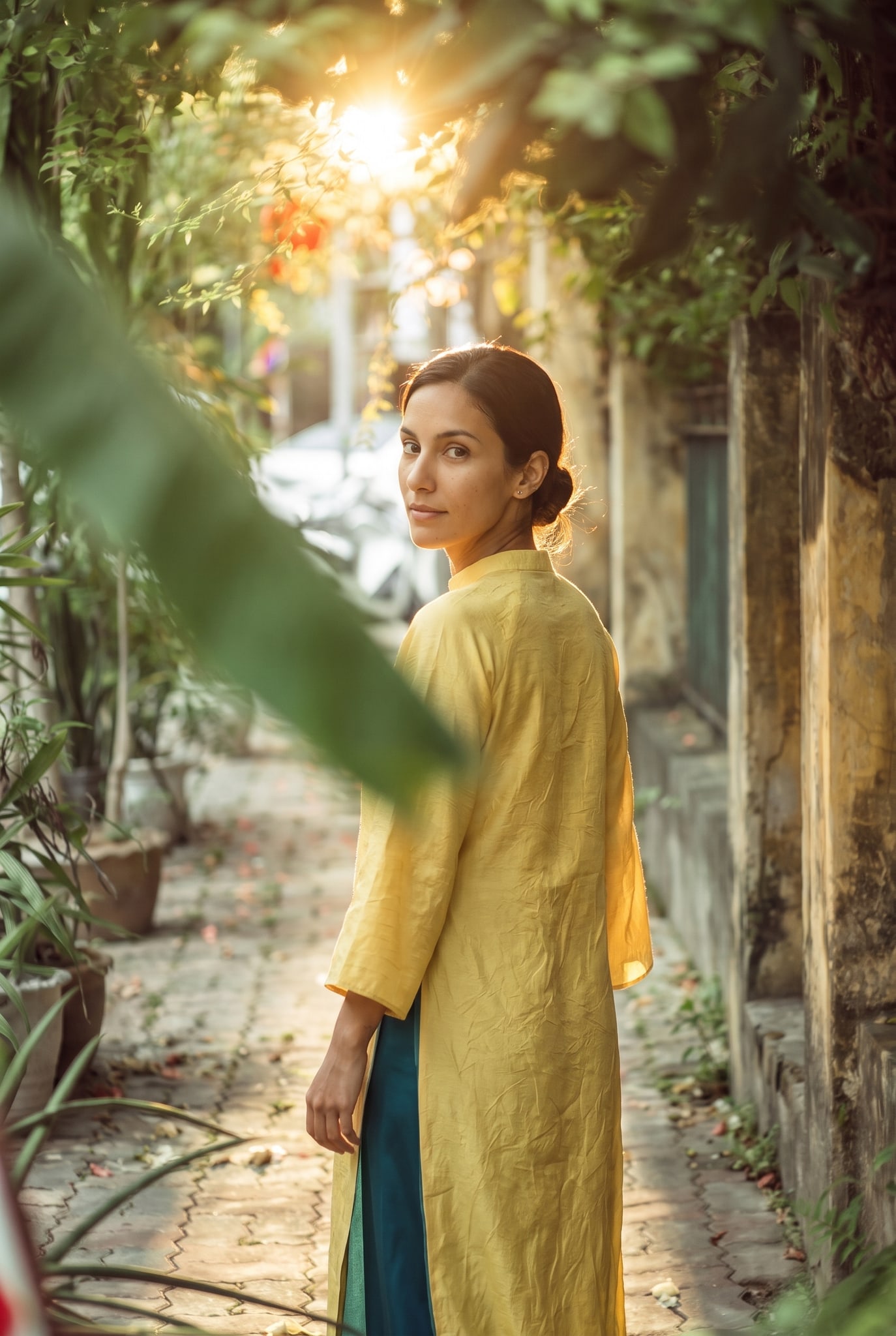
Temple and communal house etiquette at Duong Lam mirrors all Vietnamese sacred sites: remove shoes before stepping onto the altar platform, cover shoulders and knees, avoid red clothing (associated with funerals at some shrines), and never touch incense, statues, or offerings without permission. During your ao dai photoshoot in Duong Lam, we ensure your ao dai—traditionally respectful—is clean and unwrinkled; however, if you're wearing casual clothes before changing into ao dai, wear a cardigan or light jacket over sleeveless tops. Women should tie hair back or use a simple clip; men should remove hats. If a ceremony is underway (incense-heavy, chanting, or formal prayers), we postpone interior shots and shoot courtyards, exteriors, or gardens instead. This respect keeps the village welcoming to future photographers.
What time of day has the best light and fewest crowds?
Early morning (6–7:30 a.m.) delivers soft golden light ideal for portraits and landscape photography, with fewer tourists clogging the lanes. Crowds swell 9–11 a.m. as tour groups arrive; midday (11:30 a.m.–2:30 p.m.) brings harsh shadows and peak foot traffic. Late afternoon (4:30–5:45 p.m.) offers amber directional light and quieter streets—perfect for couple and family photoshoot sessions. We typically schedule 5–6 hour sessions starting at 6 a.m. or 3 p.m. to maximize light quality and solitude. Rainy season (May–September) adds unpredictability; overcast mornings are actually excellent for soft, even portraits. Dry season (October–April) guarantees clear skies but brings cooler temperatures that allow longer sessions without heat exhaustion. Always start at the outer pagodas and work inward; by late morning, exterior lanes are less congested.
Can you photograph inside temples and communal houses?
Interior photography is conditional. Active temples with daily worship permit exterior and courtyard shots only; interiors are off-limits unless a monk or custodian grants explicit permission—and even then, never during rituals, prayers, or food offerings. Duong Lam's 500-year-old communal houses (Nha Tho in the village center) allow entry if you remove shoes and behave silently; handheld photography is okay, but flash and tripods are forbidden to prevent damage and disturbance. We work with natural window light for solo travel portraits and couple shots inside these heritage spaces, positioning you near doorways or arched windows where amber light spills across wooden beams and altars. Photographing people praying or performing rituals is never acceptable; we move on if a ceremony begins. Always ask the caretaker; a small donation (tip, not a fee) is often appreciated and opens doors.
How should you pose respectfully in a sacred village?
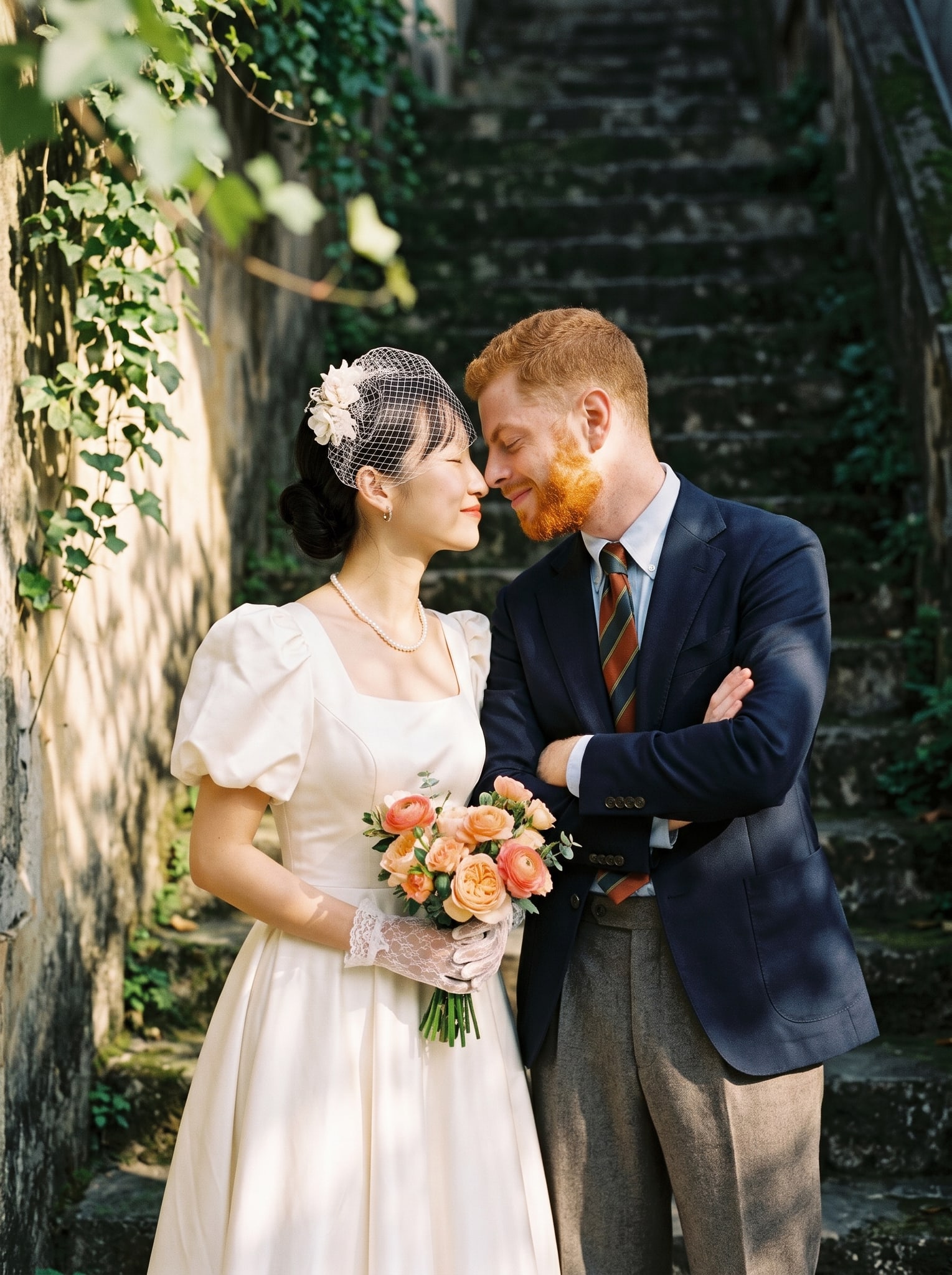
Posing at Duong Lam requires balancing aesthetics with reverence. Avoid sitting on altars, stepping over incense sticks, or lounging against sacred pillars; instead, stand with straight posture, face the camera directly or in profile near natural light sources, and position yourself off-center to frame temples or stone gates behind you. For couple photoshoot sessions, gentle hand-holding, foreheads touching, or shoulder-to-shoulder stances convey intimacy without appearing casual or disrespectful. Never point at deities or touch religious objects. Smile warmly but not mockingly; photos here should feel contemplative, not staged. We coach you on subtle movements—a few steps left, head tilt, glancing toward architecture—to vary shots without repeating the same rigid pose. Avoid "jumping" or theatrical leaps that disrupt the village's calm. Our makeup and styling team ensures your appearance—clean, neat, culturally appropriate—reflects the solemnity of the location. This restraint often produces more striking portraits because the background's power isn't competing with forced expressions.
| Session Type | Best Time | Permit Class | Dress Code | Interior Access |
|---|---|---|---|---|
| Ao dai solo or couple | 6–7:30 a.m. or 4:30–5:45 p.m. | Commercial (2–3 days) | Ao dai + cardigan over casual | Exterior + courtyards only |
| Family group | 9 a.m. or 3 p.m. (before/after peak) | Commercial (2–3 days) | Long pants/skirts, covered shoulders | Exterior + select courtyards with permission |
| Pre-wedding | Early morning (6–8 a.m.) | Commercial + location list | Ao dai or formal Western wear | Exterior + back alleys for framing |
| Solo travel portrait | 6–7 a.m. or late afternoon | Tourist (informal) | Casual but covered knees/shoulders | Courtyard + window light only |
What rules apply to Train Street and the Old Quarter if you visit nearby?
Duong Lam sits an hour from Hanoi Train Street and the Old Quarter. If you're combining Duong Lam with these urban stops, be aware: Train Street photography is legal but crowded; stand away from tracks and obey locals' signals. Old Quarter lanes have no specific photo permits but do expect pickpockets and motorbike chaos; never photograph people's faces without asking. Duong Lam's quiet, structured rules make it a calming counterpoint to urban chaos. Many Instagram photoshoot clients book Duong Lam specifically for that contrast—heritage serenity versus neon energy.
What to check before you book your Duong Lam session
- Permit readiness. Confirm with us that your permit application is filed ≥2 days before your shoot date. No permit = no session. Cáo Studio assumes all permit liability; you just show up with the printout.
- Village calendar. Check if festivals, Tet celebrations, or major lunar holidays coincide with your date; Duong Lam hosts Tet markets and temple fairs that block access or draw massive crowds.
- Footwear and mobility. Lanes are cobblestone and uneven; wear comfortable walking shoes. Temple floors are often cold stone; socks are acceptable even when entering barefoot.
- Weather windows. Dry season (October–March) is safer; rainy season requires a rain plan. We advise checking the forecast 3 days out and adjusting timing.
- Local donation. Bring small cash (Vietnamese dong) for voluntary temple donations—a gesture that reinforces respect and may grant you extra interior access.
- Timing buffer. Plan 1.5 hours each way from central Hanoi; add 30 minutes for traffic. An early start (5:30 a.m. pickup) is non-negotiable for golden-hour light.
Why book with Cáo Studio for Duong Lam shoots?
We hold relationships with the Duong Lam village tourism office and have shot pre-wedding and family photoshoot sessions here for three years—our permit applications are expedited, and we know exactly which communal houses allow photography, which times avoid ceremonies, and which lanes offer the best framing. Our in-house makeup and styling team prepares you culturally and aesthetically; we brief you on etiquette so you feel confident, not anxious. We coordinate entirely in English via WhatsApp, provide a shot list in advance, and never rush you—your comfort and respect are the foundation of the shoot. Whether you're a solo traveler, couple, or maternity session, Duong Lam's ancient heart becomes your backdrop, not your obstacle.
For more guidance on Hanoi's photogenic spots, explore our spots guide and full blog.
FAQ
Do I need a written permit if I'm just a tourist taking casual photos for my family album?
No—casual handheld snapshots are permitted. Permits are required only for structured commercial/semi-professional sessions where a photographer positions subjects, uses equipment, or books time. If you're simply walking and taking pictures, you're fine.
Can we photograph a wedding or proposal ceremony at a Duong Lam temple?
Proposal and proposal photographer bookings are possible, but ceremonies require additional permission from the shrine custodian and may conflict with the site's ritual calendar. We coordinate this separately; the standard permit covers setup access, not ceremony rights. Contact us early to confirm feasibility.
What happens if we accidentally break a rule or offend someone during the shoot?
If a local or caretaker objects, we stop immediately, apologize, and relocate. Duong Lam villagers are generally forgiving of cultural misunderstandings by respectful foreigners. We debrief you beforehand so conflicts are rare. If a fine is issued (extremely unlikely), Cáo Studio covers it.
Can we hire a local guide or "fixer" to bypass permit rules?
No. The permit system exists to protect the village; bypassing it risks your session being interrupted and our relationship with the tourism office damaged. We file permits properly, always.
How early do we need to arrive, and is transportation included?
We recommend a 5:30 a.m. pickup from your Hanoi hotel or a central meeting point to capture 6–7 a.m. light. Transportation is coordinated separately; ask us for options on WhatsApp. Early starts yield the best photos and the quietest experience.
Check dates
Send your dates, how many people and the style you like. We reply on WhatsApp in English with spots, timing and a quote.
FAQ
Do I need a written permit if I'm just a tourist taking casual photos for my family album?
No—casual handheld snapshots are permitted. Permits are required only for structured commercial/semi-professional sessions where a photographer positions subjects, uses equipment, or books time. If you're simply walking and taking pictures, you're fine.
Can we photograph a wedding or proposal ceremony at a Duong Lam temple?
Proposal and [proposal photographer](https://hanoiphotoshoot.com/proposal-photographer) bookings are possible, but ceremonies require additional permission from the shrine custodian and may conflict with the site's ritual calendar. We coordinate this separately; the standard permit covers setup access, not ceremony rights. Contact us early to confirm feasibility.
What happens if we accidentally break a rule or offend someone during the shoot?
If a local or caretaker objects, we stop immediately, apologize, and relocate. Duong Lam villagers are generally forgiving of cultural misunderstandings by respectful foreigners. We debrief you beforehand so conflicts are rare. If a fine is issued (extremely unlikely), Cáo Studio covers it.
Can we hire a local guide or "fixer" to bypass permit rules?
No. The permit system exists to protect the village; bypassing it risks your session being interrupted and our relationship with the tourism office damaged. We file permits properly, always.
How early do we need to arrive, and is transportation included?
We recommend a 5:30 a.m. pickup from your Hanoi hotel or a central meeting point to capture 6–7 a.m. light. Transportation is coordinated separately; ask us for options on WhatsApp. Early starts yield the best photos and the quietest experience.
More like this
Hanoi photo spots
Hanoi Book Street Family Photos: Best Times, Rules & Posing Tips
Hanoi Book Street (Phố Sách) offers tree-lined, traffic-light backdrops perfect for family photos. We guide you through light timing, local rules, and kid-friendly posing to avoid crowds and capture genuine moments.
Hanoi photo spots
Duong Lam Ancient Village Photo Spots: Best Times & Light Guide
Duong Lam Ancient Village, 45 km southwest of Hanoi, holds Vietnam's oldest intact rural architecture—tile-roofed houses, brick kilns and narrow lanes where morning mist holds light for 90 minutes. We photograph here year-round for solo travelers, families and couples seeking authentic, off-beat Han
Hanoi photo spots
Duong Lam Ancient Village: Crowd-Free Times & Photo Spots
Duong Lam Ancient Village, 45 km southwest of Hanoi, draws tourists year-round—but early mornings and weekdays offer near-empty temple courtyards and village lanes. We share exact timing, seasonal light, and how to pair a visit with professional portraits.