
Home › Blog › Makeup, hair and ao dai rental
Ao Dai Rental Hanoi Tran Quoc Pagoda: Light, Crowds & Posing Tips
By the Hanoi Photoshoot team · 2026-11-06
Tran Quoc Pagoda sits on a peninsula in Hoan Kiem Lake's northwest, accessible year-round but best shot in morning light (06:00–08:30) or late afternoon (16:30–18:00) to avoid harsh midday shadows and peak tourist crowds. Rent an ao dai in Hanoi 1–2 days before your shoot; our in-house team fits you during a pre-shoot consultation, factoring in temple movement (stairs, narrow corridors). Expect 60–90 minutes on-site, including 20 minutes for monks' chanting periods (11:00–12:00, 16:00–17:00) when photography is restricted. Pagoda rules: shoes off indoors, no tripods without permit, hats and sunglasses off at the altar. Non-models need posing cues: hand placement feels unnatural until you see the frame—we guide you through each shot. Hanoi Photoshoot by Cáo Studio handles rental, styling, hair, and makeup in-house, so you arrive ready. Ask us for a quote on WhatsApp; factor in an extra session fee if you want both ao dai and casual-wear shots. Check dates on WhatsApp
What are the best light times at Tran Quoc in each season?
Tran Quoc's brick pagoda glows warm during early morning and golden hour, but season shifts these windows significantly. From September to November (cool season), sunrise at 06:30 delivers soft, directional light on the west-facing tower; by 07:30, backlight edges the lake. December to February brings haze and lower sun angle—shoot 06:00–07:00 before mist lifts. March to May (hot pre-monsoon) has harsh light by 08:00; start at 05:30 or wait until 17:00. June to August (monsoon) skies gray until 10:00; afternoon light after 17:30 cuts through cloud. We've shot here across all seasons; golden hour consistency peaks October–November when the sky stays clear and the pagoda's shadow depth is dramatic. Choose your season for light quality, not just weather.
How do crowds affect your shoot time and ao dai movement?
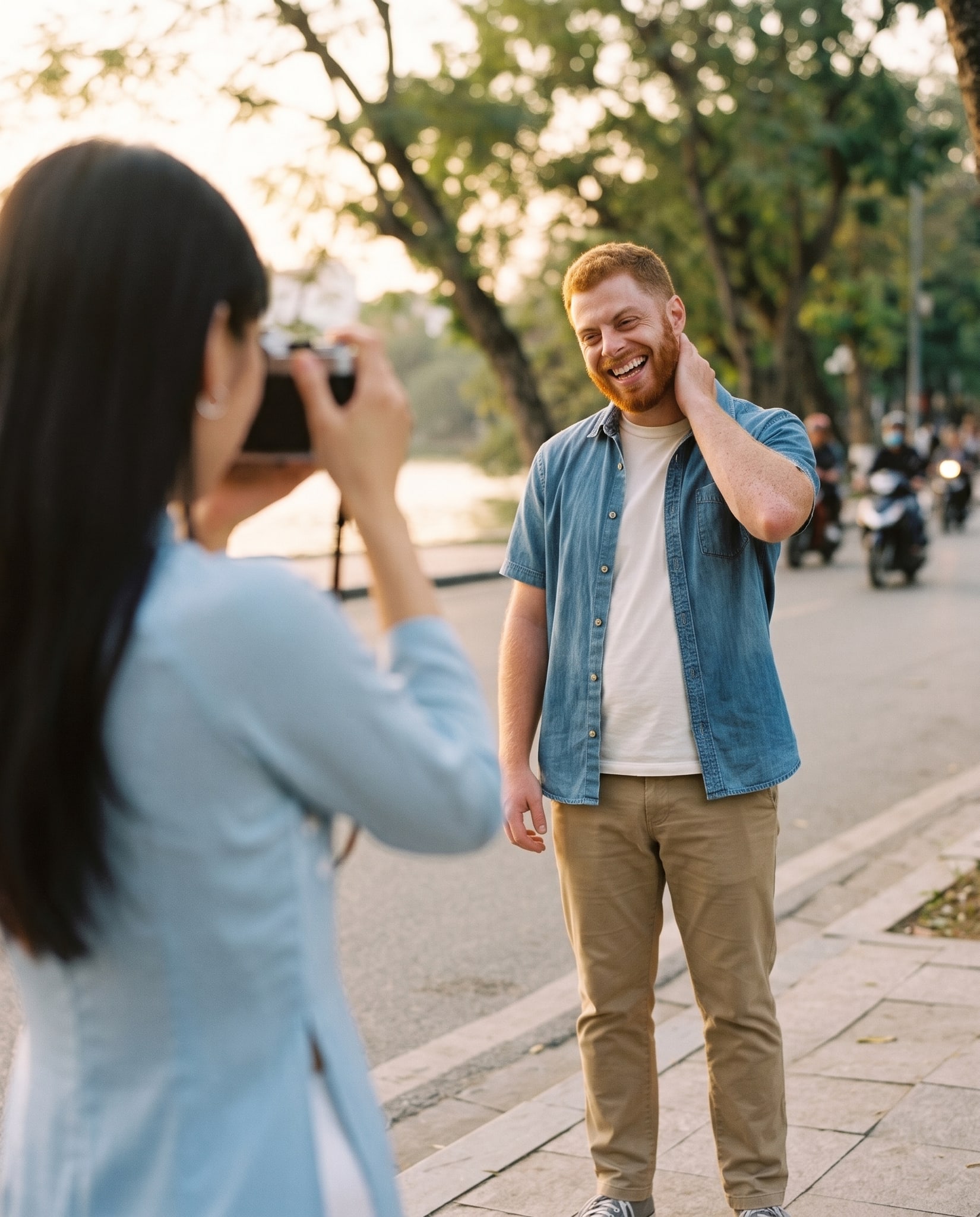
Peak crowds hit 09:00–11:00 and 13:00–15:30 when tour buses arrive; you'll share frames with 30–50 tourists. Early morning (before 07:00) clears the grounds; late afternoon (after 17:00) thins out but loses warm light. Ao dai length (typically 1.5–1.8m tunic with 0.8m-wide front panel) catches on wet stone stairs in monsoon months; we size and fit the hem 2–3cm above ankle to prevent tripping during the 25-step climb to the upper terrace. Narrow interior corridors (1.2m wide) require posing sideways or angled—your ao dai silhouette reads better in profile than front-on in tight spaces. Posing in the pagoda's alcoves (east-facing dawn, west-facing dusk) takes 15 minutes per setup because movement is slow and deliberate. If you're not a model, crowds actually help: blend in, hold still poses 8–10 seconds, and let natural crowd-flow create candid background depth. Avoid Tet holidays (late January–February) when pilgrim numbers triple and shoe storage becomes chaotic.
What ao dai style suits Tran Quoc's architecture best?
Tran Quoc's rust-red brick and pale stone call for solid-color ao dai (cream, sage, dusty rose, navy) or fine geometric patterns—busy florals compete with texture. Our ao dai rental collection spans classic silk, cotton-blend, and contemporary cuts; solid silks photograph sharply against architectural detail. High necklines and long sleeves suit the pagoda's formal aesthetic and temple etiquette (arms covered past elbow). Contrast color between tunic and matching pants (e.g., cream tunic, white pants) reads crisp in morning diffuse light; monochrome blends into shadows. Embroidered shoulder or chest panels catch directional light beautifully on the upper terrace. Avoid metallics and sequins—they flare in direct sun and distract from the pagoda's geometry. We include styling consultation with rental: bring 2–3 reference images or describe your vibe, and we'll suggest a fit, color, and undergarment that moves comfortably on stairs.
How should non-models pose naturally in a temple setting?
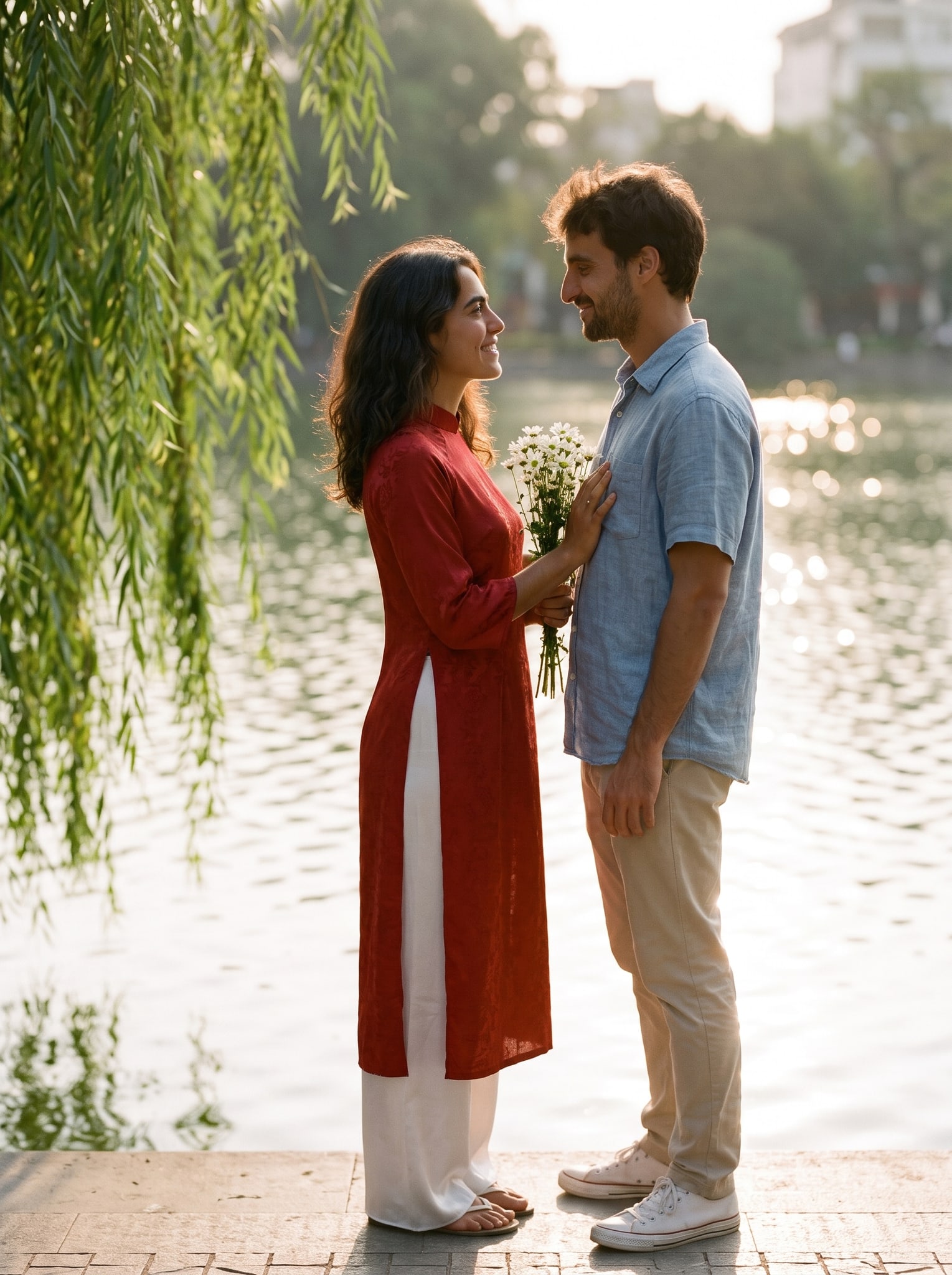
Temples feel formal, so stiff posture is your biggest challenge. Start with "anchor hand"—place one hand on a balcony rail, doorframe, or your own thigh; it grounds your frame and gives your shoulders permission to relax. Look toward the pagoda, not the camera, for 3 seconds before we shoot; this creates genuine contemplation. For seated shots on terraces, cross your legs at the ankle (not knees), lengthen your spine, and tilt your chin down 10 degrees—we call this the "prayer" angle. Walking shots feel awkward because you're conscious of stride; we stage 3–4 natural walks, and the best candid emerges frame 2 or 3. Hands in pockets look casual but narrow your ao dai silhouette; instead, let one hand hang, the other rest on your ao dai's side seam. If you're not comfortable with eye contact to camera, ask us to shoot you gazing at the lake, the tower, or your ao dai's embroidery. We cue you: "breathe out," "soften your shoulders," "blink on three"—small cues unlock realness faster than "smile naturally."
What rules and restrictions apply to photography at Tran Quoc?
Tran Quoc is an active Buddhist temple; photography is permitted in public areas but forbidden during prayers (11:00–12:00 and 16:00–17:00). Shoes must be removed indoors; we advise flat, slip-on footwear for quick changes. Tripods require verbal permission from monks on-site; we hand-hold and use natural light bouncing off pale stone rather than reflectors (which draw attention). Drones are banned. No flash inside the main hall. Hats, sunglasses, and sunscreen visors off at the altar; bring a hair clip to secure any loose strands. Modest dress is assumed (your ao dai covers this fully), but remove any visible religious iconography from other faiths. Chanting sessions last 30–45 minutes; if you're inside during prayer, move to the courtyard quietly. Photography fees are donations (voluntary, no set amount). We brief you on these 24 hours before your shoot; if you're anxious about etiquette, we arrive 20 minutes early and walk you through the temple's layout and monk routines. Most monks appreciate respectful photography and may approach to ask where you're from—treat it as a conversation, not an intrusion.
Comparison: Tran Quoc vs. Other Hanoi Temple Shoots
| Temple | Light window | Crowd peak | Ao dai color wins | Posing ease | Best for |
|---|---|---|---|---|---|
| Tran Quoc Pagoda | 06:00–08:00, 17:00–18:30 | 09:00–15:30 | Cream, navy, sage | Moderate (stairs narrow) | Symbolism + architecture |
| Thay Pagoda (Thach That, day trip) | 07:30–09:30 | 10:00–14:00 | Earth tones, gold | High (open terraces) | Spiritual depth + landscape |
| Tran Phu Pagoda (Ba Dinh) | 08:00–10:00 | 07:00–17:00 | Jewel tones, red | Moderate (crowded) | Quick urban shoot |
| Quan Su Pagoda (Hoan Kiem edge) | 07:00–08:30 | 08:00–16:00 | Jewel tones | High (central courtyard) | Beginner confidence |
Tran Quoc wins for symbolic backdrop and golden-hour drama; shoot here if you want temple gravitas and lake reflection. Choose Thay for day-trip tranquility; choose Quan Su for ease and quick turnaround.
What to check before you book your Tran Quoc ao dai shoot
- Exact date: Confirm no major religious holidays, Tet, or festivals (we check lunar calendar).
- Light preference: Early (soft, cool) or late (warm, backlit)? We schedule accordingly.
- Ao dai fit: Bring your shoe size and tell us your height; we pre-fit to avoid last-minute hemming.
- Non-model prep: If you're anxious about posing, book a 15-minute pre-shoot coaching call with us (included in our makeup and styling package).
- Backup location: If crowds spike on your day, we pivot to Hoan Kiem Lake's quieter eastern shore or Quan Su (both 10 minutes away).
- Monsoon months: June–August clouds can dim light dramatically; confirm timing 48 hours before.
- After-shoot: Plan a casual-wear change if you want both ao dai and street-style frames (ask us for bundle options on WhatsApp).
Real limits and what we see go wrong
Clients underestimate stair climbing in ao dai; the tunic panels catch if your hem drags. We fit a 2–3cm clearance and practice one ascent during your pre-shoot walk. Rain in monsoon season turns stone steps slick and dangerous; we reschedule if forecast is >60% rain. Sunrise miscalculation is common—you book 07:00, but sunrise is 06:15, so peak light fades by 07:45. We calculate exact sunrise/sunset for your date and recommend a 20-minute buffer. Shoe storage: you remove shoes indoors, and if your feet are cold, you'll stand tense in photos. We advise wool socks in winter and remind you where the shoe shelf is. Temple access closures happen without warning (rare, but we call ahead week-of to confirm). Finally, non-models often "freeze" when monks are present; we normalize this and shoot candid moments while you're thinking, not performing.
How our ao dai photoshoot service works across Hanoi temples
We don't shoot ao dai exclusively at Tran Quoc; your session can span multiple temples or include solo travel portraits in the Old Quarter on the same morning. Light windows at Tran Quoc (06:00–08:00 or 17:00–18:30) fit into a two-location shoot—we might begin at Tran Quoc, then pivot to Hoan Kiem Lake for lake-reflection frames with the same ao dai. Makeup and hair are applied at our Hanoi studio before you arrive on-site, so you're camera-ready and don't delay during prime light. If you're traveling solo or with a partner, couple photoshoots here include romantic stair poses and mirrored reflections in the lake. Rental includes the ao dai, undergarments, and styling; ask us for a quote on WhatsApp—packages vary by season, session length, and outfit changes.
FAQ
Can I rent an ao dai and shoot solo without a photographer's guidance?
Tran Quoc allows self-photography, but temple etiquette and non-model posing are learned skills. We recommend a guided shoot first; then you'll know framing angles and temple zones. Renting without our styling and makeup service is possible but risks poor color matching to light and awkward proportions if fit is off.
What's the best month to shoot ao dai at Tran Quoc?
October–November (cool season) offers consistent soft morning light, low humidity, and fewer monsoon closures. December–February brings haze; March–May is too bright. Avoid Tet (late January–February) for crowds. September and June are still good but have higher rain risk.
Do I need a permit to shoot ao dai at Tran Quoc?
Personal, non-commercial photography is free (voluntary donation). Commercial shoots (modeling, fashion, publication) require advance permission from the pagoda administration; we handle this coordination if your shoot is editorial or commercial.
How long do I wear the ao dai on-site?
Typically 60–90 minutes: 15 minutes for arrival, temple walk, and etiquette briefing; 45–60 minutes for posing across 2–4 locations; 15 minutes for shoe and change time. You can wear it longer, but standing in formal silk in warm weather gets uncomfortable after 90 minutes.
What happens if it rains on my shoot day?
We reschedule if forecast is >50% rain—wet stone is slippery, and ao dai silk stains and drags. If drizzle starts mid-shoot, we pause, let you dry, and continue candid shots. Heavy rain (>3mm/hour) halts the session; we rebook at no extra cost within 30 days.
Can I bring my own ao dai, or must I rent from you?
You can bring your own, but our rental ensures proper fit, hem, and undergarment coordination with professional styling and hair. If you bring your own, we offer styling-only (hair, makeup, posing coaching) at a reduced rate—ask us on WhatsApp.
Check dates
Send your dates, how many people and the style you like. We reply on WhatsApp in English with spots, timing and a quote.
FAQ
Can I rent an ao dai and shoot solo without a photographer's guidance?
Tran Quoc allows self-photography, but temple etiquette and non-model posing are learned skills. We recommend a guided shoot first; then you'll know framing angles and temple zones. Renting without our styling and makeup service is possible but risks poor color matching to light and awkward proportions if fit is off.
What's the best month to shoot ao dai at Tran Quoc?
October–November (cool season) offers consistent soft morning light, low humidity, and fewer monsoon closures. December–February brings haze; March–May is too bright. Avoid Tet (late January–February) for crowds. September and June are still good but have higher rain risk.
Do I need a permit to shoot ao dai at Tran Quoc?
Personal, non-commercial photography is free (voluntary donation). Commercial shoots (modeling, fashion, publication) require advance permission from the pagoda administration; we handle this coordination if your shoot is editorial or commercial.
How long do I wear the ao dai on-site?
Typically 60–90 minutes: 15 minutes for arrival, temple walk, and etiquette briefing; 45–60 minutes for posing across 2–4 locations; 15 minutes for shoe and change time. You can wear it longer, but standing in formal silk in warm weather gets uncomfortable after 90 minutes.
What happens if it rains on my shoot day?
We reschedule if forecast is >50% rain—wet stone is slippery, and ao dai silk stains and drags. If drizzle starts mid-shoot, we pause, let you dry, and continue candid shots. Heavy rain (>3mm/hour) halts the session; we rebook at no extra cost within 30 days.
Can I bring my own ao dai, or must I rent from you?
You can bring your own, but our rental ensures proper fit, hem, and undergarment coordination with professional styling and hair. If you bring your own, we offer styling-only (hair, makeup, posing coaching) at a reduced rate—ask us on WhatsApp.
More like this
Makeup, hair and ao dai rental
Photoshoot with Makeup Hanoi: Poses & Professional Styling
We combine professional makeup, hair and styling with guided posing for every Hanoi photoshoot session—so you look natural, not stiff.
Makeup, hair and ao dai rental
Photoshoot with Makeup Hanoi English Speaking | Cáo Studio
Cáo Studio's Hanoi team combines professional photography with in-house makeup, hair and ao dai rental, all coordinated in English for international travelers. We handle styling before every shoot type—from solo travel portraits to pre-wedding sessions—so you step in front of the camera camera-ready
Makeup, hair and ao dai rental
Ao Dai Rental Tay Ho Tips: Peak Light, Crowds & Styling
Tay Ho offers West Lake's golden-hour reflections and temple backdrops, but timing and outfit choice make or break your ao dai session. We share exact light windows, seasonal crowds, and how to style borrowed áo dài so it photographs sharply.