
Home › Blog › Makeup, hair and ao dai rental
Ao Dai Rental Tay Ho Tips: Peak Light, Crowds & Styling
By the Hanoi Photoshoot team · 2026-11-06
Ao dai rentals in Tay Ho work best when you book 7–10 days ahead, arrive 90 minutes before your target light, and know the monsoon season affects water reflections and temple access. Tay Ho district—home to West Lake and Tran Quoc Pagoda—draws both tourists and monsoon crowds; July–August sees peak humidity and haze that flatten colors, while October–April offers crisp, clear skies ideal for fabric detail and skin tone. When you rent from us, we fit your áo dài in-house to ensure it moves naturally in wind and photographs without bunching; most visitors underestimate how fabric shifts when posing, leading to wrinkles visible in close shots. Hanoi Photoshoot by Cáo Studio includes in-house makeup, hair, and áo dài rental styled to your skin tone and body frame—avoid renting from generic shops that don't adjust fit or color to your complexion. Budget 1–2 hours for a full session; factor in 15–20 minutes for outfit changes and 10 minutes to scout light as it moves across water or temple stone. Check dates on WhatsApp
Why does Tay Ho timing matter so much for ao dai photos?
West Lake reflects light until 30 minutes after sunset; midday sun (11:00–14:00) bounces harshly off water and stone, creating unflattering shadows under eyes and cheekbones. Dawn (06:00–07:30) and late afternoon (16:30–18:00) wrap soft, diffused light across fabric folds—silk and cotton shine without overexposure. Tran Quoc Pagoda's east-facing walls catch first light at 06:15 in winter, 05:45 in summer; by 08:30, tourists crowd the courtyard. If you're visiting October–February, plan your session 15:30–17:15 to catch low-angle sun that sculpts cheekbones and makes water shimmer. The monsoon belt (July–September) brings haze by noon; book early morning or wait until dusk when humidity settles and air clears slightly. Tay Ho's narrow lanes between temples trap heat; schedule hydration breaks every 20 minutes or fatigue will flatten your expressions.
Timing your shot to Hanoi's light cycle separates sharp, magazine-ready frames from blown-out or muddy ones.
What outfit colors work best with West Lake and temple stone?
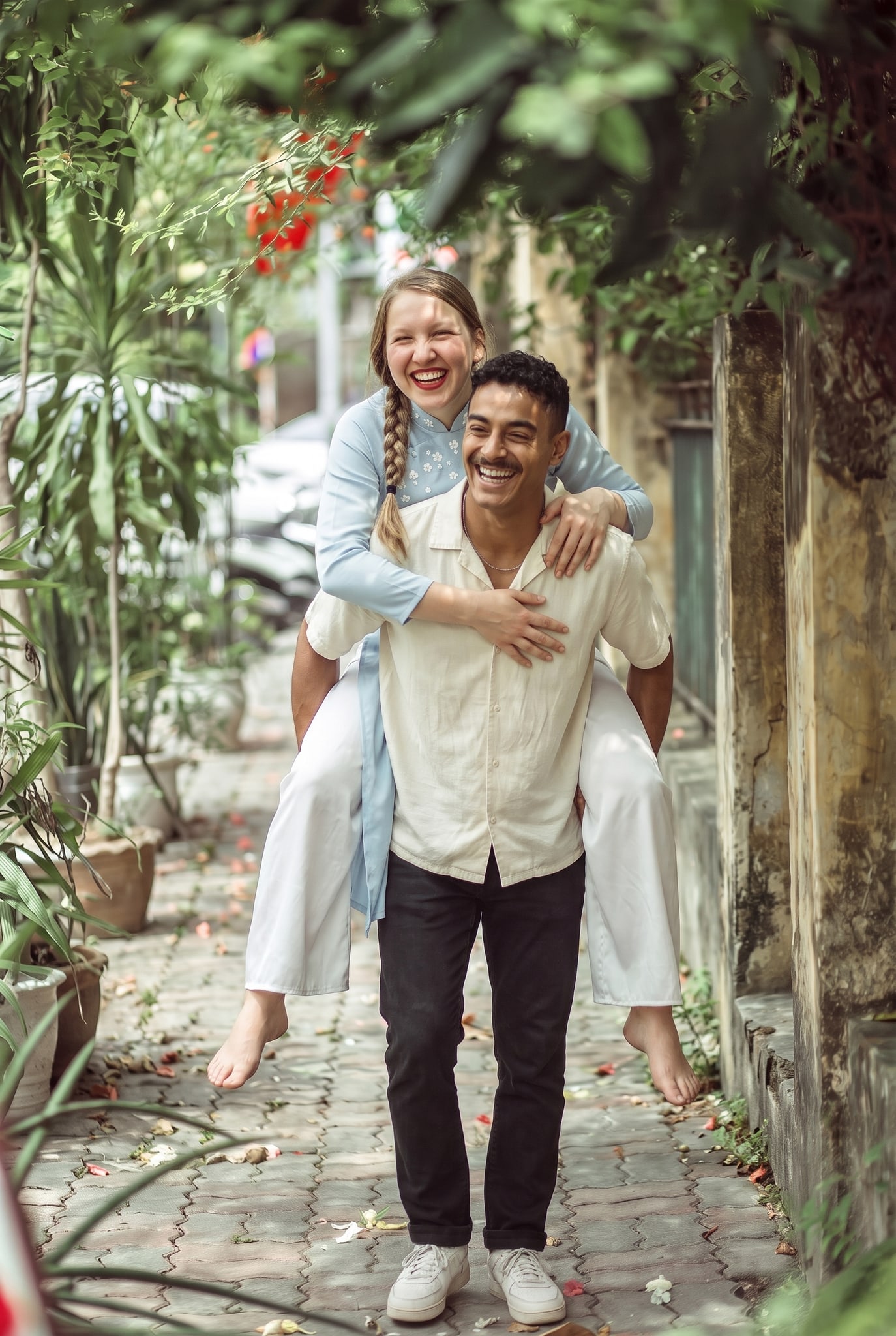
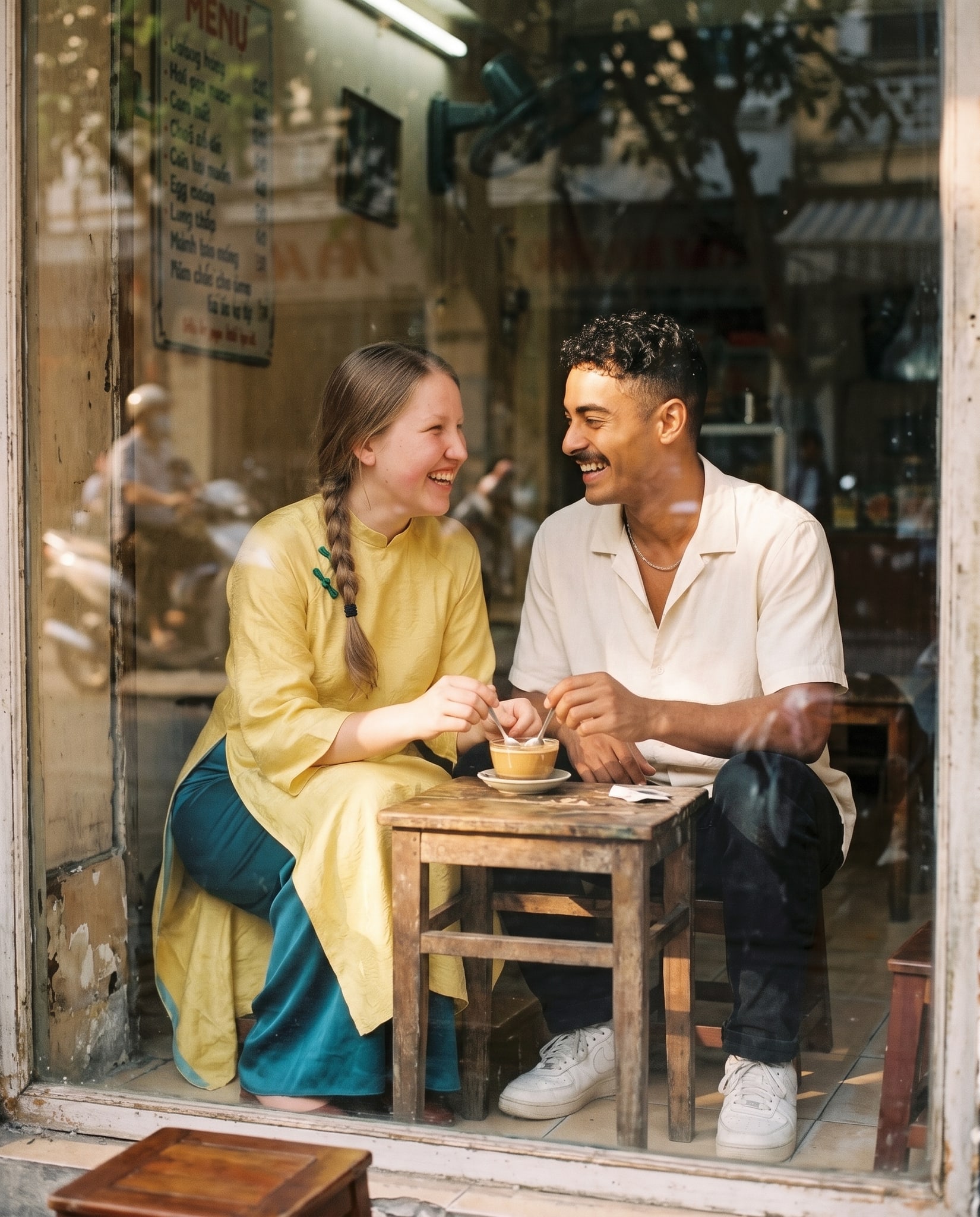
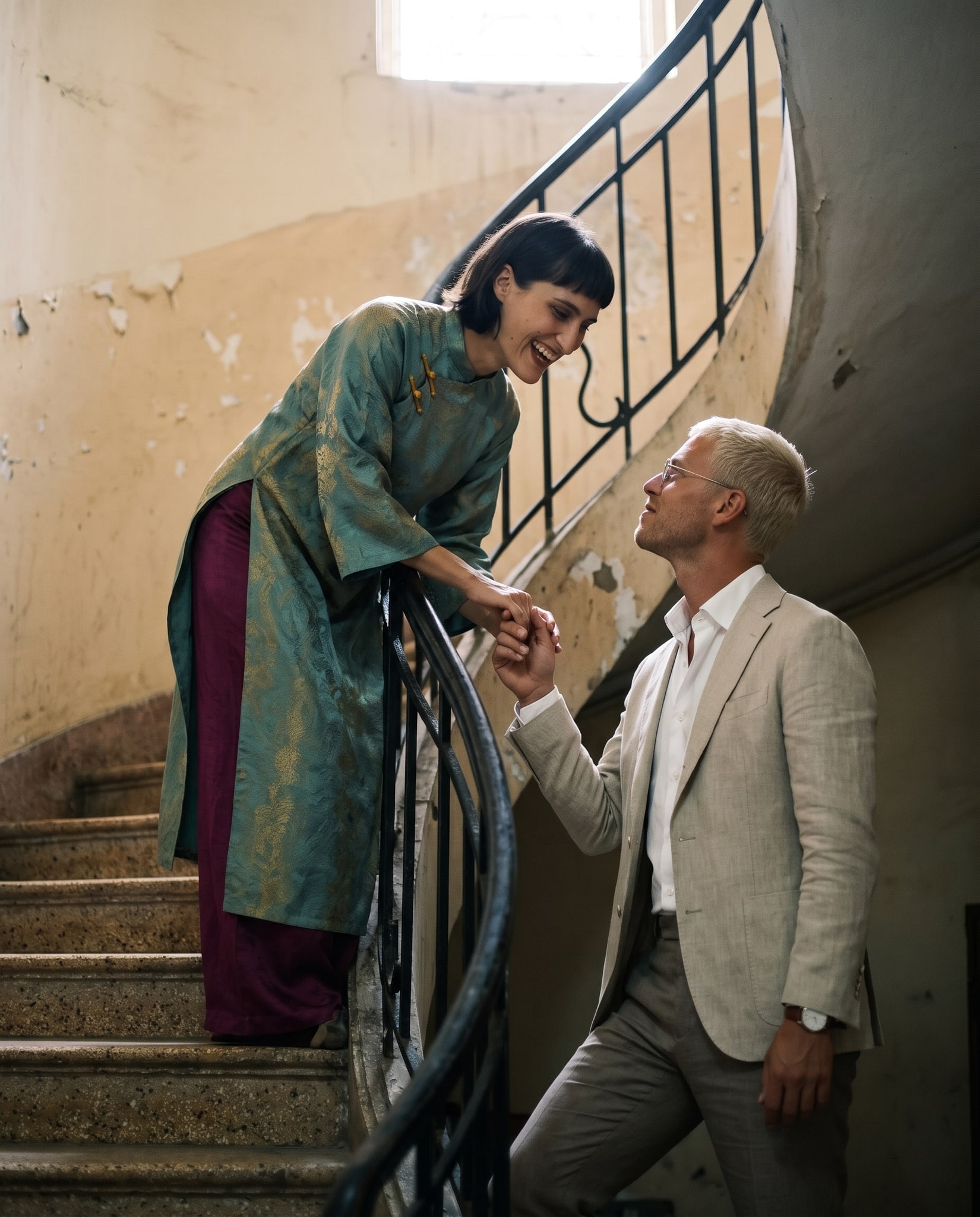
Deep jewel tones—sapphire, emerald, burgundy—pop against gray temple walls and blue water; pastels (cream, blush, pale yellow) create dreamy, soft contrasts but fade in harsh afternoon sun. Avoid neon or pure white in July–August; high humidity and haze make white look dingy, and bright neons desaturate under flat monsoon light. If you're renting an áo dài in red or hot pink, book a morning or sunset session; these colors need directional light to look vibrant rather than muddy. Earth tones—rust, terracotta, olive—suit temple courtyards and tree-lined paths along the water; they photograph warmly and don't compete with Tay Ho's natural palette. Silk áo dài catches light differently than cotton; silk shimmers and shows fabric detail in strong light, while cotton absorbs light and suits softer, dawn shoots. When you book with us, our in-house stylists preview your rental áo dài against West Lake's water color and Tran Quoc's stonework via phone; we've matched over 200 visitors to colors that photograph three shades richer than they appear in daylight. Avoid busy prints or metallic trim in crowded afternoon slots—they distract from your face and merge with temple decoration.
Choose color depth and fabric type based on your session time; our team pre-pairs rentals to Tay Ho's light and architecture.
How do crowds and tourist flow affect your shoot window?
Tran Quoc Pagoda sees 40–60 visitors between 08:00–11:00 and 13:00–17:00; early morning (06:00–07:15) and dusk (17:30–18:30) are nearly empty. West Lake's walking path fills after 09:00; locals and tourists cluster near photography hotspots (the curved bridge north of the pagoda, the water's edge near Yen Phu Street). Sunday mornings (08:00–10:00) double foot traffic. If you're booking in November–January (cool-season peak for travelers), factor in 30–40% longer waits for clear-background shots. The pagoda's interior courtyard allows photography, but the inner altar is off-limits; staff will stop you if you cross the rope barrier. Plan a 90-minute session if you want both pagoda courtyard shots and waterside poses; anything shorter risks losing light while you wait for crowds to clear. Late-afternoon wind (15:00–17:30) creates ripple patterns on water that photograph beautifully but can dishevel áo dài; bring hair clips and ask our stylists for wind-resistant braids.
Book before 07:00 or after 17:00 to avoid crowds; factor in temple rules and wind when planning your timeline.
What rental fit issues sink ao dai photos, and how do we prevent them?
Ill-fitting áo dài wrinkles at the armpits, gaps between panels at the side seam, and pulls at the shoulder when you lift your arms or turn—all visible in close-ups. Off-the-rack rentals sized to average Vietnamese proportions often bunch at the waist or chest for Western and Southeast Asian body frames; the front panel sags, creating horizontal creases that flatten your silhouette. Trouser legs that drag or bunch at the ankle hide your footwear and legs, ruining proportion in full-length shots. When we rent in-house, we hand-stitch adjustments to your shoulders, waist, and hem; you try the full outfit sitting, standing, and posing so we catch fit issues before the shoot. Most clients don't realize that breathing deeply and moving naturally require 1–2 cm of give at the chest and waist—cheap rentals are cut tight, forcing stiff, unnatural poses. Our fitted áo dài allows you to bend, sit, and turn without seams pulling or panels separating. If you're renting elsewhere, insist on a 20-minute fitting session and move through a full range of poses before you pay; ask for in-person alterations, not "one size fits all." Silk áo dài requires a fitted undergarment (camisole or thin bra) to prevent shoulder seams from slipping; we provide this and brief you on it.
| Issue | Budget Rental Risk | Cáo Studio Solution | Photo Impact |
|---|---|---|---|
| Armpit bunching | Common; not caught until shoot | Hand-fitted; test-worn on-site | Unflattering silhouette, visible pulling |
| Waist gapping | Loose cut; shifts when you move | Custom waist darts; stays in place | Creases in close-ups, loss of shape |
| Trouser drag or bunch | Generic hem length | Individually hemmed to your height | Legs disappear, proportion thrown off |
| Shoulder seam slip (silk only) | No undergarment guidance | Fitted camisole provided & styled | Drooping neckline, exposed underarm |
| Color-to-skin mismatch | Generic tone offered | Pre-matched to complexion, venue light | Washed-out face, weak contrast |
In-house fitting prevents wrinkles, gaps, and silhouette flattening that ruin close-up detail and full-length proportion.
How do seasonal light and weather patterns reshape Tay Ho ao dai shoots?
October–April (cool, dry season): Clear skies, low humidity, and crisp air create saturated colors and sharp skin texture. West Lake water reflects golden light with zero haze; Tran Quoc Pagoda's stone glows warm in afternoon sun. Sunrise arrives late (06:30–07:00) and sunset early (17:00–17:30), compressing your golden-hour window. Temperatures drop to 15–22°C; bring a light shawl for breaks, but áo dài fabric drapes better in cool air.
May–September (hot, monsoon season): Humidity averages 75–85%; skin looks shiny, colors desaturate, and water loses reflective detail by midday. July–August bring haze; sunrise obscured until 06:45, sunset dims by 17:15 due to cloud cover. Afternoon storms (14:00–16:00) clear crowds but halt shoots; check weather forecasts 48 hours prior. Early morning (05:30–07:00) or post-storm dusk (17:30–18:30) offer clearer light, though humidity persists. Wind increases in June and September; áo dài fabric whips, requiring extra styling pins.
We track seasonal light patterns and recommend shoot times; for monsoon-season visitors, we prioritize early morning slots and have backup indoor pagoda spaces if storms threaten. Your áo dài color choice should shift with season—jewel tones pop in cool-season clarity; pastels or whites work better in monsoon haze to avoid muddy tones.
Seasonal light shifts alter color saturation, skin texture clarity, and safe shooting windows; book strategically to maximize natural light.
How do you pose naturally in ao dai when you're not a model?
Stiff poses kill áo dài photos; the fabric drapes gracefully only when your body has tension—not rigidity. Key posing checklist:
- Shoulders: Roll them back and down (not up). Let them sit naturally; tensed shoulders create neck shortening and unflattering trapezius bulge.
- Arms: Never let them hang flat against your body; create 2–3 cm gap by bending elbows slightly or resting one hand on your thigh. Fabric flows better with arm separation.
- Hands: Tuck thumbs into trouser pockets (one or both), hold hands gently at waist, or rest fingertips on fabric folds—never clench fists or let palms flatten against legs.
- Torso: Subtle torso rotation (5–10° turn) shapes your waist; straight-on shots flatten silhouette. Lean slightly forward if sitting to avoid slouching; back should be straight but not rigid.
- Smile and eyes: Genuine smiles crease eyes naturally; fake smiles flatten cheekbones. Look slightly above the camera lens (not directly into it) to open your eyes. Blink just before the shot; this prevents wide-eyed startled look.
- Walk and movement: Move slowly. Wind creates fabric motion that photographs far better than static poses. Walk toward or away from camera 3–4 times; camera captures mid-stride grace.
- Water and temple settings: Sit on pagoda steps with one leg extended; lean against pillars asymmetrically; walk along the lake's edge with fabric trailing. Asymmetry and movement beat stiff center-frame posing.
We guide poses live during your session; most visitors find that 3–4 direction shifts unlock natural, unforced looks they can't achieve alone. Bring water and ask for a 5-minute hydration break every 20 minutes; fatigue flattens expressions.
Natural poses require subtle tension, hand placement, and movement; we coach you through every frame so you're never frozen or guessing.
Pages from our team you may need
FAQ
How far in advance should I book an ao dai rental and shoot?
Book 7–10 days prior if you want color choice and fit adjustments. Last-minute bookings (48 hours) may limit áo dài style and sizing. We confirm dates on WhatsApp and fit you in-house 2–3 days before your session.
Can I rent an ao dai and shoot solo, or do I need a partner?
Solo áo dài shoots are our specialty; we also handle couple photoshoots and family sessions. Tay Ho works beautifully for solo portraits—lakes and temples frame individual poses.
What's the best day of the week to avoid crowds at Tran Quoc Pagoda?
Weekday mornings (Tuesday–Thursday, 06:00–08:00) are quietest. Weekends and Mondays see 2–3× more foot traffic. National holidays triple crowds; avoid lunar New Year and October 1st National Day.
Do I need to remove my ao dai if I cross into the pagoda's altar area?
No, áo dài is worn inside temples. Avoid the inner altar room itself (roped off); you can photograph in the courtyard and outer halls. Remove shoes if instructed by staff; some areas require it.
What if rain or storms hit during my Tay Ho shoot?
Monsoon storms (July–August) often pass within 30 minutes. We monitor weather and reschedule or move to covered temple areas. Early bookings reduce storm risk; afternoon slots in summer carry 40% weather uncertainty.
Can I bring my own ao dai, or must I rent?
You can bring your own; we style it with matching hair and makeup. Renting ensures professional fit, seasonal color-matching, and backup options if fabric tears or stains occur during the shoot.
How much does West Lake water reflectivity change between seasons?
October–April: mirror-like reflections with zero haze. May–September: water reflects haze and loses definition by 10:00 AM; early morning and dusk retain clarity. Spring rain (April) temporarily improves clarity. ===WHAT TO CHECK BEFORE YOU BOOK=== - Light window: Confirm your preferred time (dawn, midday, sunset) and book 7–10 days ahead for optimal light windows. - Crowd forecast: Check local festivals or holidays; Tay Ho temples see 3–5× normal crowds during lunar celebrations. - Fit fitting: Schedule in-person fitting 2–3 days before the shoot; insist on movement testing (sitting, arm-raising, turning). - Color & season match: Brief our stylists on your vision; we pre-match áo dài color to Tay Ho's seasonal light and your skin tone. - Weather backup: For monsoon-season bookings (May–September), confirm our plan B (covered temple areas or rescheduling). - Temple etiquette: Review rules with us; no photos of monks, no touching statuary, no crossing roped areas. - Wind & hydration: Book late morning or dusk if wind concerns you; carry water and plan 5-minute breaks every 20 minutes. Ready to capture your Tay Ho moment? Check our ao dai photoshoot guide for full session details, or explore our makeup and styling options to lock in your look.
Check dates
Send your dates, how many people and the style you like. We reply on WhatsApp in English with spots, timing and a quote.
FAQ
How far in advance should I book an ao dai rental and shoot?
Book 7–10 days prior if you want color choice and fit adjustments. Last-minute bookings (48 hours) may limit áo dài style and sizing. We confirm dates on WhatsApp and fit you in-house 2–3 days before your session.
Can I rent an ao dai and shoot solo, or do I need a partner?
Solo áo dài shoots are our specialty; we also handle [couple photoshoots](/couple-photoshoot) and [family sessions](/family-photoshoot). Tay Ho works beautifully for solo portraits—lakes and temples frame individual poses.
What's the best day of the week to avoid crowds at Tran Quoc Pagoda?
Weekday mornings (Tuesday–Thursday, 06:00–08:00) are quietest. Weekends and Mondays see 2–3× more foot traffic. National holidays triple crowds; avoid lunar New Year and October 1st National Day.
Do I need to remove my ao dai if I cross into the pagoda's altar area?
No, áo dài is worn inside temples. Avoid the inner altar room itself (roped off); you can photograph in the courtyard and outer halls. Remove shoes if instructed by staff; some areas require it.
What if rain or storms hit during my Tay Ho shoot?
Monsoon storms (July–August) often pass within 30 minutes. We monitor weather and reschedule or move to covered temple areas. Early bookings reduce storm risk; afternoon slots in summer carry 40% weather uncertainty.
Can I bring my own ao dai, or must I rent?
You can bring your own; we style it with matching hair and makeup. Renting ensures professional fit, seasonal color-matching, and backup options if fabric tears or stains occur during the shoot.
How much does West Lake water reflectivity change between seasons?
October–April: mirror-like reflections with zero haze. May–September: water reflects haze and loses definition by 10:00 AM; early morning and dusk retain clarity. Spring rain (April) temporarily improves clarity. ===WHAT TO CHECK BEFORE YOU BOOK=== - Light window: Confirm your preferred time (dawn, midday, sunset) and book 7–10 days ahead for optimal light windows. - Crowd forecast: Check local festivals or holidays; Tay Ho temples see 3–5× normal crowds during lunar celebrations. - Fit fitting: Schedule in-person fitting 2–3 days before the shoot; insist on movement testing (sitting, arm-raising, turning). - Color & season match: Brief our stylists on your vision; we pre-match áo dài color to Tay Ho's seasonal light and your skin tone. - Weather backup: For monsoon-season bookings (May–September), confirm our plan B (covered temple areas or rescheduling). - Temple etiquette: Review rules with us; no photos of monks, no touching statuary, no crossing roped areas. - Wind & hydration: Book late morning or dusk if wind concerns you; carry water and plan 5-minute breaks every 20 minutes. Ready to capture your Tay Ho moment? [Check our ao dai photoshoot guide](/ao-dai-photoshoot) for full session details, or [explore our makeup and styling options](/makeup-and-styling) to lock in your look.
More like this
Makeup, hair and ao dai rental
Ao Dai Rental Hanoi: Sunrise at Thang Long Imperial Citadel
Renting an ao dai for a Thang Long Imperial Citadel sunrise shoot combines Vietnam's most iconic costume with one of Hanoi's oldest monument zones. We handle rental, styling and timing—here's how. #
Makeup, hair and ao dai rental
Ao Dai Rental Hanoi: St Joseph's Cathedral Tips & Styling
St Joseph's Cathedral is Hanoi's most iconic French-colonial backdrop for ao dai photography, but light angles, tourist crowds and temple dress codes require specific planning. We share exact timing, rental coordination and posing tips.
Makeup, hair and ao dai rental
Ao Dai Rental Hanoi Rooftop: Best Time & Setup Guide
Rooftop ao dai shoots in Hanoi demand precise timing, weather strategy and proper styling to avoid heat damage and fading light. We guide you through season, hour and rental logistics.