
Home › Blog › Ao dai photoshoot in Hanoi
Train Street Ao Dai Photoshoot Hanoi: Light, Crowds & Outfit Guide
By the Hanoi Photoshoot team · 2026-11-06
Train Street ao dai shoots work best in the 8–11am window during October–November or March–April, when warm light rakes the east-facing brick without harsh shadows. We at Hanoi Photoshoot by Cáo Studio recommend arriving 30 minutes before the 10:30am train to secure positioning in the less-crowded southern stretch; the afternoon service (around 3pm) draws 3–5× more tourists. Wear lightweight, deep-hued ao dai (crimson, emerald, navy) to pop against the weathered facade; avoid trailing sleeves or long tassels. Expect 1–2 hours on-site for outfit changes and posing. Train Street itself is free and unrestricted, but you cannot block the tracks, and locals' shop doorways require brief courteous acknowledgment. The narrow 2-meter-wide alley fills unpredictably—plan for 20–80 bystanders. Cost basis: this is a public location; styling and photography fees apply separately.
Why Does Train Street Suit Ao Dai Photography?
The alley's weathered brick, corrugated metal, and industrial geometry create contrast that makes traditional silks luminous. The 2-meter width compresses depth, framing the ao dai's flowing layers against claustrophobic texture. Natural light bounces off brick at low angles, softening skin without needing reflectors. Most competitors shoot here in midday chaos; we schedule around the 10:30am southbound train when foot traffic dips by half. The street's authenticity—vendors, scooter sounds, patina—reads differently in stills than generic backdrops, yet requires strict timing to avoid looking like a selfie snapshot.
What Time of Year Gives Best Light on Train Street?
Shoot October–November or March–April when the sun angle around 9–10am hits the east-facing brick at 35–45°, creating directional side-light without blown highlights. December–February brings flat overcast (humid, diffused light—safe but dull) or rare hard shadows. May–September combines tropical glare with tourist saturation; the 10:30am train becomes a photo-crowd scrum. Rainy season (September–October transition) clears crowds but adds slippery brick and unpredictable drizzle. Based on Hanoi's latitude and seasonal sun path, the 8–11am window in spring and autumn delivers the strongest directional light while sun stays below the overhead alley mouth. We avoid midday entirely—the tight alley stays shaded, flattening the ao dai's texture and color saturation.
How Do You Navigate Crowds and Train Timing?
The southbound 10:30am train attracts 5–15 photographers; the afternoon return (≈3–3:30pm, timing variable) draws 30–60 due to tour groups. Arrive 30 minutes early to scout positions and let vendors know you're shooting—locals are generally welcoming if you're respectful. The train idles for 5–15 minutes, giving a small window to capture motion or stasis; if it's delayed, crowds grow restless and mobile phones proliferate. We book a crew member to hold a tight position near the track's widest point (southern stretch, around the central vendor stall) while you change outfits. Avoid the northern dead-end; it fills first and offers fewer angles. Foot traffic ebbs between 10:45–11:15am, ideal for costume and makeup refreshes. Never stand on the tracks themselves—locals and railway staff will ask you to move, and a delayed train creates liability. The alley's 2-meter width means only 2–3 photographers can pose simultaneously without collision; communicate your shot list before arrival.
What Outfit Choices Work on Train Street?
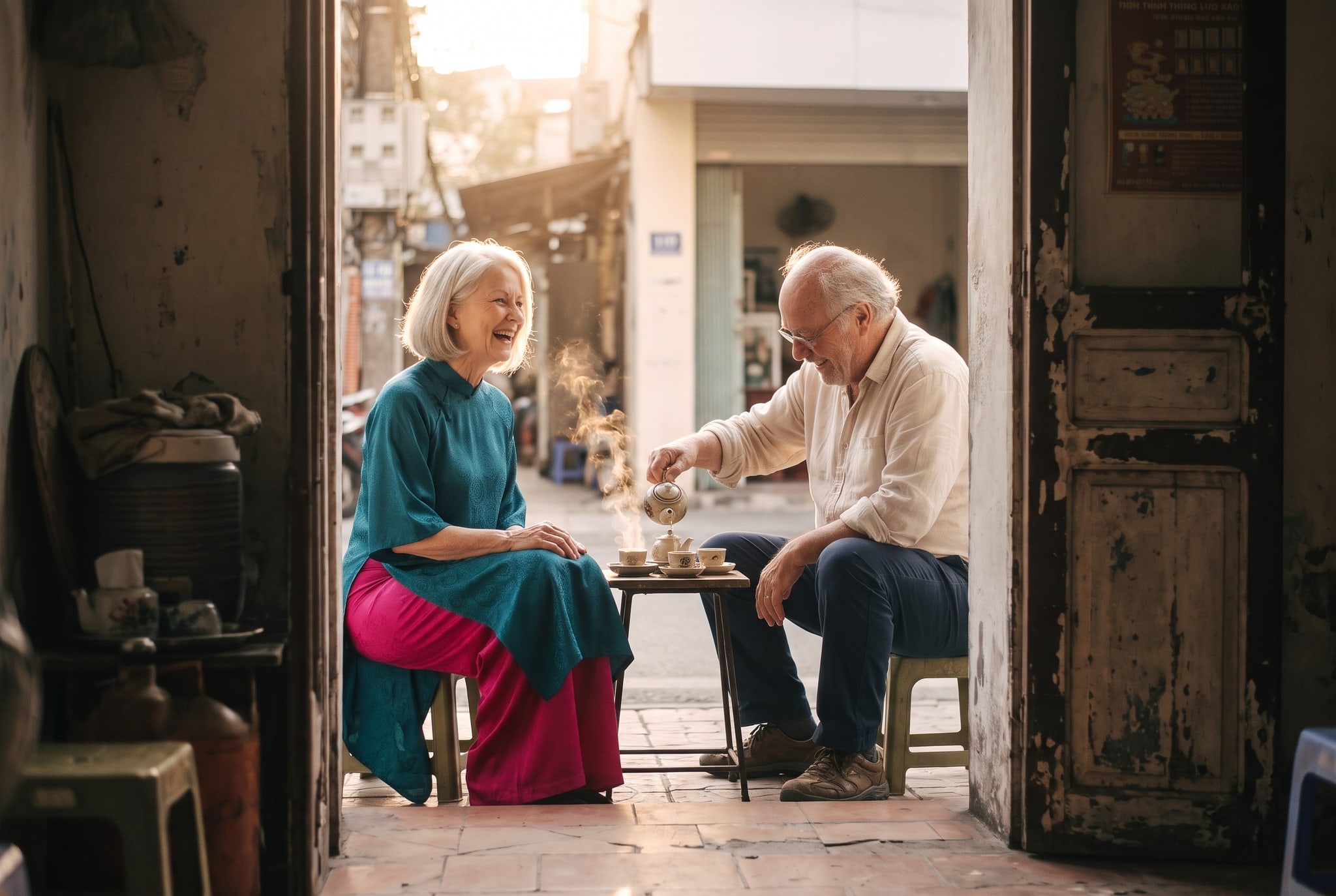
Solid deep jewel tones (crimson, navy, emerald, plum) read best against aged brick; pastels wash out and pale silks create glare. Heavyweight silk brocades hold their structure during close movement; lightweight voile catches wind and requires constant adjustment. Avoid overly long trailing sleeves—they snag on brick corners and gutters, creating tears. The ao dai's front panels should sit clean (no excessive folds or bunching) for the tight framing. Pair with simple flat sandals or ballet flats; heels slip on brick, and laces catch on uneven surface. Hair should be pinned or braided to stay out of light and wind; loose hair photographs well but traps dust and requires continuous restyling between shots. Our makeup and styling team preps skin for brick-dust and humidity—matte finishes photograph better than dewy in this hard side-light. Skip excessive jewelry; it creates shadow noise in close-ups. Lean toward singular statement pieces—dangling earrings or cuffs distract in the narrow frame.
What Rules and Risks Should You Know?
Train Street is public and permit-free, but three constraints apply: (1) never block the tracks or obstruct the train's passage—locals rely on this route for commerce; (2) respect shop owners' doorways; a polite greeting or small purchase builds goodwill; (3) do not trespass onto adjacent private property (the upper floors and recessed alcoves belong to residents). The brick is aged and uneven; wear closed-toe shoes to avoid cuts. Humidity runs 70–90%, especially in summer; ao dai fabric can wilt visibly within 30 minutes of exertion. Insects congregate near the gutters at dawn; insect repellent prevents mid-shoot discomfort. The trains are working freight vehicles with occasional delays; never assume punctuality for tight multi-location itineraries. We've seen shoots derailed by unannounced route changes (very rare) or vendor conflicts over positioning. Always confirm logistics with your photographer 24 hours prior. The alley can feel claustrophobic for clients with anxiety; a site visit or video walkthrough beforehand helps manage expectations.
Outfit & Timing Comparison: Train Street vs. Other Hanoi Ao Dai Spots
| Aspect | Train Street | Hoan Kiem Lake | Old Quarter Gateway |
|---|---|---|---|
| Best light window | 8–11am (autumn/spring) | 6:30–8am or 4–5:30pm | 9–11am year-round |
| Peak crowd density | 5–15 (morning); 30+ (afternoon) | 20–50 (all day) | 10–30 (variable) |
| Ao dai color match | Deep jewel tones | Pastels, golds | Any color |
| Outfit weight | Heavyweight silk preferred | Lightweight silk | Any weight |
| Prep time on-site | 45–60 min | 30–45 min | 60–90 min |
| Accessibility for non-models | Narrow alley, tight framing (challenging) | Open lakeside (easy) | Varied pathways (moderate) |
| Train Street suits best: Couples, solo portraits, detail focus | Hoan Kiem suits: Flowing movement, group family shots | Old Quarter suits: Candid narrative, longer sessions |
What to Check Before You Shoot
- Confirm train schedule with your photographer 48 hours prior; routes occasionally shift without public notice.
- Test your ao dai fit in the alley's tight corners; tight sleeves snag brick; oversized hems collect dust.
- Arrive hydrated and fed; the alley has no facilities, and shoots can run 90+ minutes in heat.
- Bring a small bag for belongings; you'll need hands free for posing and garment adjustment.
- Inform locals if you're a brand shoot or high-profile session; they may offer better access and photo credits.
- Check weather 12 hours before; unexpected rain turns brick treacherously slick.
For couple photoshoots or family sessions that incorporate Train Street as one stop in a broader itinerary, we pair it with Hoan Kiem Lake's softer morning light or Old Quarter's textured gateways to avoid visual monotony. Our ao dai rental options include styles specifically tested on Train Street—fabrics that move well in tight spaces and colors that photograph true under harsh brick-side lighting.
FAQ
Can I shoot Train Street without a photography booking?
Yes—Train Street is public. You can visit and self-photograph at any hour. However, timing, posing, lighting prep, and outfit coordination are where most self-shooters fail. We handle all three to ensure the ao dai and location work together visually.
What happens if the train is late?
Crowds grow restless, mobile phones proliferate, and the light angle shifts. We build a 15-minute buffer into all Train Street bookings and have secondary backup shots queued. Rare delays beyond 30 minutes prompt us to pivot to nearby Old Quarter angles without losing production value.
Can I wear a modern dress instead of ao dai on Train Street?
Yes, but Train Street's industrial aesthetic reads most powerfully with traditional silks. Modern dresses blend into tourist-snapshot territory. For solo travel portraits, we'd recommend Hoan Kiem Lake or family-friendly Old Quarter sites instead.
Will my ao dai get dirty or torn on the brick?
Abrasion risk is real. Heavyweight silk with tight seams resists snagging; lightweight voile tears easily on rough corners. We conduct a brief brick-contact safety walk-through before shooting and keep first-aid and fabric tape on hand.
How many outfit changes fit in one Train Street session?
1–2 comfortably. The tight space and heat mean restyling takes 15–20 minutes per change. Multiple clients or group family photoshoots typically manage one shared look plus one individual ao dai for variety, not three separate sets.
What's the best season to book Train Street?
October–November and March–April offer ideal light, temperature, and lower tourist density. December–February is gray but less crowded. May–September is hot, humid, and packed; we rarely schedule Train Street-only sessions then.
Check dates
Send your dates, how many people and the style you like. We reply on WhatsApp in English with spots, timing and a quote.
FAQ
Can I shoot Train Street without a photography booking?
Yes—Train Street is public. You can visit and self-photograph at any hour. However, timing, posing, lighting prep, and outfit coordination are where most self-shooters fail. We handle all three to ensure the ao dai and location work together visually.
What happens if the train is late?
Crowds grow restless, mobile phones proliferate, and the light angle shifts. We build a 15-minute buffer into all Train Street bookings and have secondary backup shots queued. Rare delays beyond 30 minutes prompt us to pivot to nearby Old Quarter angles without losing production value.
Can I wear a modern dress instead of ao dai on Train Street?
Yes, but Train Street's industrial aesthetic reads most powerfully with traditional silks. Modern dresses blend into tourist-snapshot territory. For [solo travel portraits](/solo-portrait), we'd recommend Hoan Kiem Lake or family-friendly [Old Quarter](/spots/hanoi-old-quarter) sites instead.
Will my ao dai get dirty or torn on the brick?
Abrasion risk is real. Heavyweight silk with tight seams resists snagging; lightweight voile tears easily on rough corners. We conduct a brief brick-contact safety walk-through before shooting and keep first-aid and fabric tape on hand.
How many outfit changes fit in one Train Street session?
1–2 comfortably. The tight space and heat mean restyling takes 15–20 minutes per change. Multiple clients or group [family photoshoots](/family-photoshoot) typically manage one shared look plus one individual ao dai for variety, not three separate sets.
What's the best season to book Train Street?
October–November and March–April offer ideal light, temperature, and lower tourist density. December–February is gray but less crowded. May–September is hot, humid, and packed; we rarely schedule Train Street-only sessions then.
More like this
Ao dai photoshoot in Hanoi
Ao Dai Photoshoot at Ho Chi Minh Mausoleum: Best Time & Tips
Ho Chi Minh Mausoleum area offers dramatic colonial architecture and red flags perfect for ao dai portraits, but timing and permit rules are critical.
Ao dai photoshoot in Hanoi
Ao Dai Photoshoot at Lotus Pond Sunrise in Hanoi
Lotus ponds offer Hanoi's most serene ao dai backdrop at dawn, but timing and location scouting are critical for empty frames and soft light. We share exact hours, seasonal water levels and how to avoid tourist crowds.
Ao dai photoshoot in Hanoi
Ao Dai Photoshoot Duong Lam Ancient Village: Best Time & Hanoi Guide
Duong Lam Ancient Village—45 minutes northwest of central Hanoi—offers weathered brick lanes, lotus ponds and colonial-era storefronts perfect for ao dai portraits. Best light and crowd conditions occur October–November and February–March mornings.