
Home › Blog › Ao dai photoshoot in Hanoi
Traditional Dress Photoshoot at Long Bien Bridge, Hanoi
By the Hanoi Photoshoot team · 2026-11-06
Long Bien Bridge—the 1902 French steel truss spanning the Red River—is Hanoi's premier ao dai backdrop because of its industrial geometry, weathered rust patina, and symbolic weight. Shoots here work best from 06:00–07:30 (soft golden light, minimal foot traffic) or 16:30–17:45 (amber glow, fewer tourists). A typical ao dai photoshoot session runs 2–3 hours, includes hair and makeup from our in-house team, and incorporates 150–250 final edited images. We rent traditional or modern ao dai designs on-site or you bring your own; the bridge's wooden deck is uneven (wear flat shoes during setup), pedestrian access is free but crowded mid-morning, and Vietnamese military police occasionally ask for ID. Best for solo travelers, couples, and families seeking an authentic Hanoi landmark. Ask us for a quote on WhatsApp—pricing depends on session length, group size, and styling complexity. Check dates on WhatsApp
Why shoot ao dai at Long Bien Bridge specifically?
Long Bien Bridge offers three elements rare in one Hanoi location: authentic industrial-colonial aesthetics, symbolic historical resonance that elevates the photo narrative, and 1.6 km of varied composition angles—from the bridge's apex (wide river vistas) to the underside (dramatic shadows and geometry). No other Hanoi landmark combines structural drama with cultural meaning for traditional dress. The bridge's exposed iron beams and concrete piers create depth layers impossible at temples or modern venues. First-time visitors assume Old Quarter streets or Hoan Kiem Lake are better; they're not for ao dai, because they lack the visual weight and story that a 124-year-old international bridge carries. Our team knows exactly which sections allow photography (the eastern pedestrian walkway), when military presence is lightest, and how to pose you so the bridge frames—not crowds—your garment.
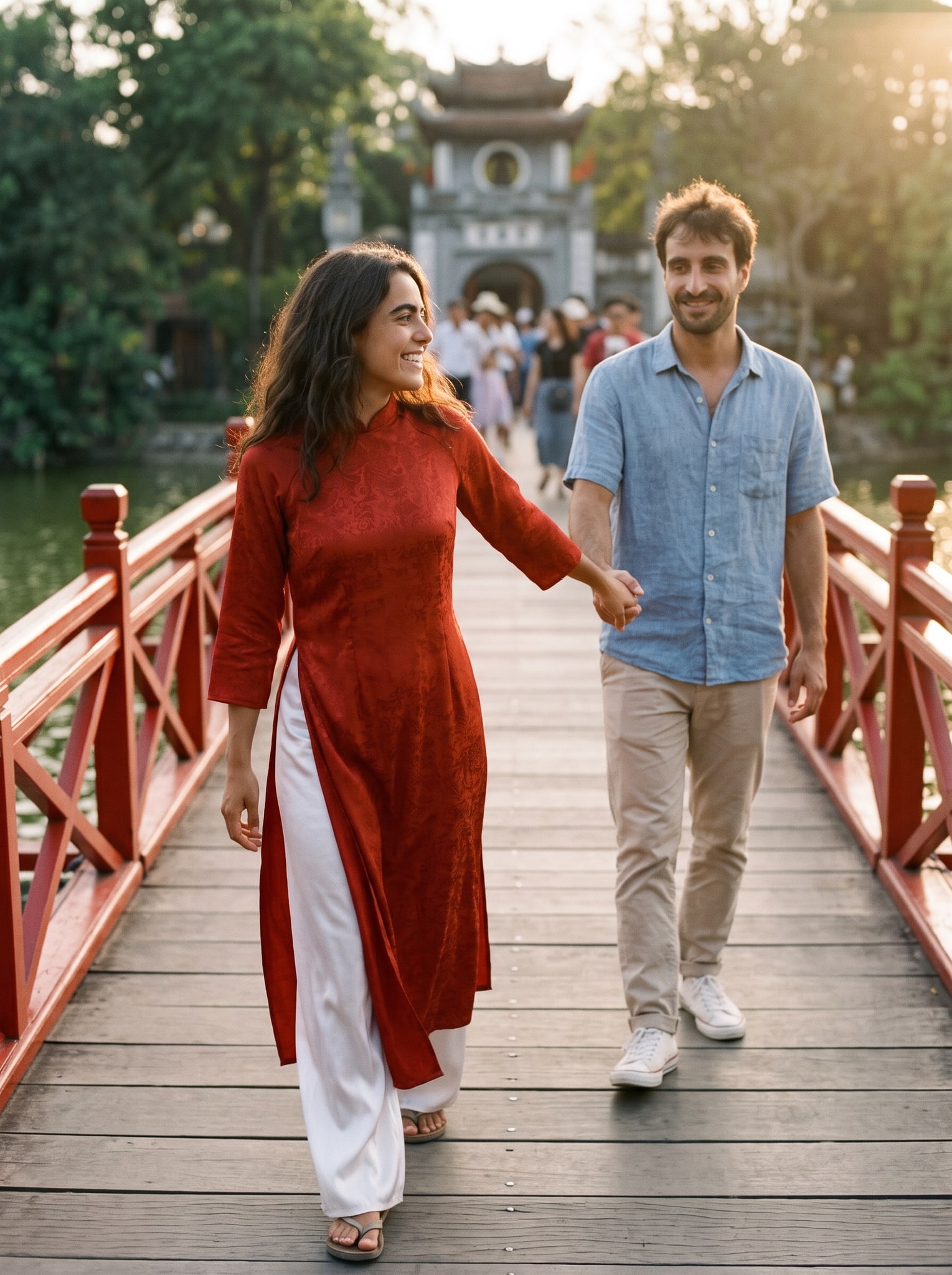
What time of day gives the best light for ao dai portraits?
Sunrise (06:00–07:30) delivers cool, diffused golden light that flatters ao dai fabric without harsh shadows; the bridge is nearly empty, and mist off the Red River adds atmospheric depth—ideal for romantic or meditative solo travel portraits. Sunset (16:30–17:45) produces warmer amber tones and longer shadows, perfect for couple or family energy; foot traffic peaks, but we manage positioning to avoid strangers in frame. Midday (11:00–14:00) is unusable—direct overhead sun creates dark eye sockets and harsh fabric texture. Overcast mornings (any season, 07:00–10:00) give even, shadowless light but flatten color saturation; we add reflectors to compensate. Cloud cover adds drama; rain usually clears by 07:00 in cooler months (October–November). Winter (December–February) produces the clearest air and longest golden hour. Choose sunrise if you value solitude and mystique; sunset if you want energy and warmth. Both sessions require 2.5–3 hours to account for travel to the bridge, positioning, outfit changes, and touch-ups.
How do crowds and military rules affect your shoot here?
Long Bien Bridge is Hanoi's second-most visited foreign landmark (after Hoan Kiem Lake), drawing tour buses from 08:00–11:00 and 14:00–16:00; shooting during these windows means photobombers in almost every frame unless we reserve the eastern walkway corner (possible with advance notice and nominal local cooperation fees—ask us). Vietnamese military police patrol the bridge; they occasionally request ID from foreign nationals, especially near the center span, but do not restrict photography on the public pedestrian path. Bicycle and motorbike traffic is constant and unpredictable. We scout the location 48 hours prior to your shoot, confirm any ongoing maintenance (rare but possible), and identify the quietest walkway section. If you're uncomfortable with police presence or crowds, Train Street photo guide or Old Quarter offer lower-enforcement alternatives with comparable visual interest for ao dai.
Do you rent ao dai or should we bring our own?
We offer in-house makeup, hair & ao dai rental: classic silk designs (fitted bodice, flowing skirt, traditional color palette—white, pastel, deep jewel tones), modern interpretations (asymmetric cuts, metallic or ombre dyes), and luxury silk versions with hand-embroidered details. Rental pricing is included in session quotes; your choice depends on fit confidence, cultural authenticity preference, and whether you want a keepsake. Bring your own if you own a family heirloom, prefer a specific artisan's work, or want a bespoke custom fit—we'll style your hair and makeup to complement it. Rental ao dai are cleaned and fitted on-site; expect 20–30 minutes for alterations. Our team has sized clients from XS (petite adults) to XXL (broad-shouldered or taller frames)—we carry 40+ styles across sizes. Most international clients choose rental because shipping traditional dress internationally adds cost and complexity; locals sometimes bring ancestral pieces for emotional value. Whatever you choose, shoes are critical: wear comfortable flat sandals or slip-ons for setup, as Long Bien's wooden deck is uneven and splinter-prone.
What posing techniques work best for non-models on the bridge?
Non-models often feel awkward in front of the camera; we use a sequence that builds confidence without directing you to look "stiff." First, we walk you slowly across the bridge's center, asking you to focus on the river view—we shoot candidly while you're relaxed. Second, we position you at compositional key points (the bridge's apex, the shadow zones between beams, the riverside railing) and give movement prompts: "Step forward as if you're walking into the story you want to tell." This removes the pressure to "smile on command." Third, we use the ao dai's fabric as a prop—we ask you to adjust your skirt, check the drape, or move your arm across it; these natural gestures generate authentic photos without stiffness. For couples, we ask partners to walk together silently, then laugh at something personal—the 2–3 second vulnerability window yields the best frames. For families, we create a "lineup walking toward the river" rather than a static group pose, then call out names to generate genuine attention. We shoot 200+ frames per hour so you're never "on camera" for more than 5–10 seconds per sequence. The bridge's industrial backdrop does the emotional work; your job is to inhabit the space, not perform it.
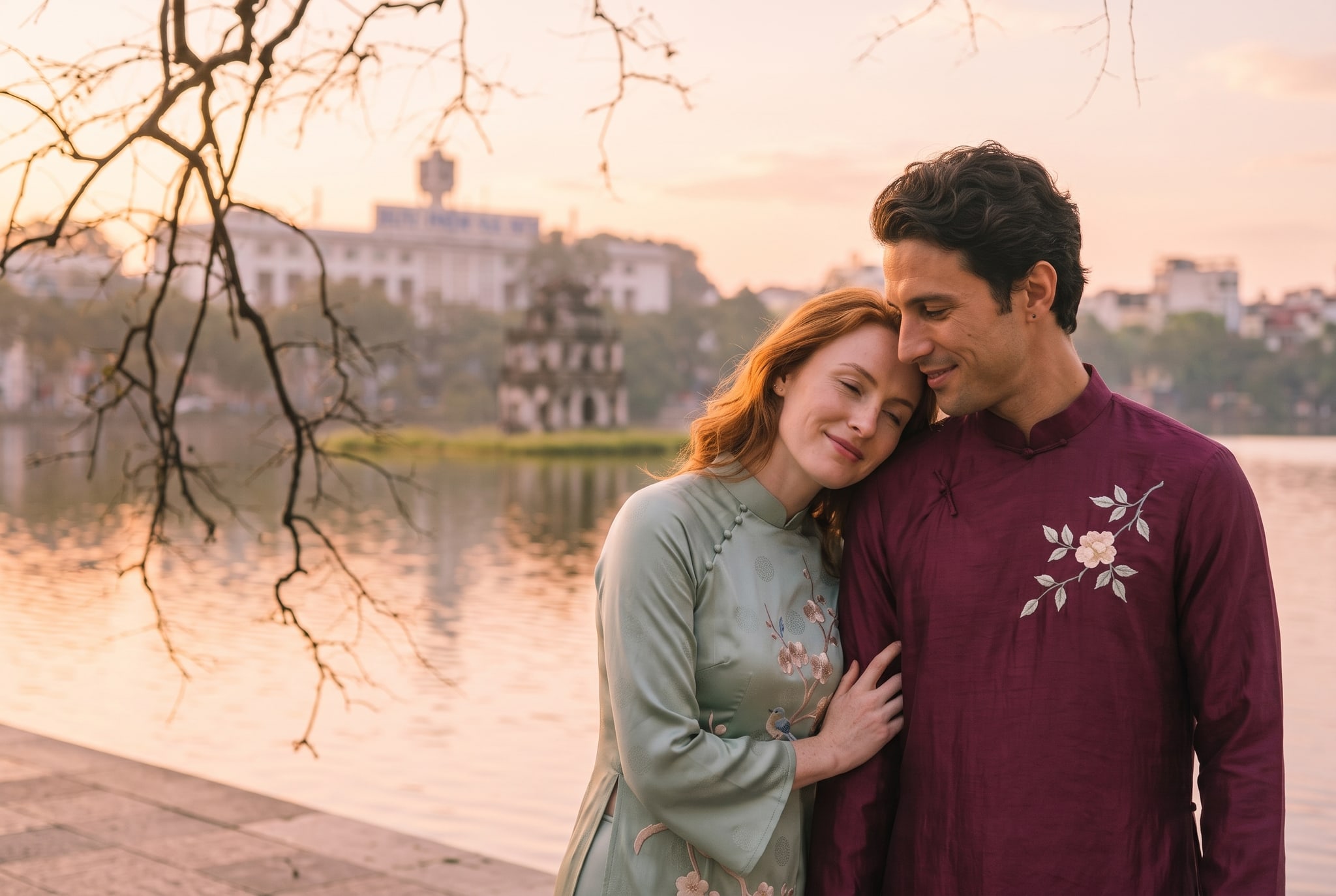
Comparison: Long Bien Bridge vs. other Hanoi ao dai venues
| Venue | Light Quality | Crowd Level | Cultural Depth | Wear & Tear on Ao Dai | Best For |
|---|---|---|---|---|---|
| Long Bien Bridge | Golden hour only; harsh midday | Moderate–high (08:00–16:00) | Highest (symbol of nation) | Moderate (iron dust, uneven deck) | Couples, solo travel, symbolic shoots |
| Hoan Kiem Lake | All day; softer midday | Very high (constant) | Medium (spiritual, less historical) | Low (manicured paths) | Families, casual portraiture |
| Old Town Streets | Dappled morning light | High (vendor traffic) | High (narrow lanes, vernacular) | High (street dust, motorbike exhaust) | Solo travelers, editorial aesthetics |
| Temple grounds | Soft filtered light | Low–moderate; time-dependent | High (sacred) | Low (maintained grounds) | Spiritual intent, maternity, graduates |
| Studio backdrop | Controlled; any hour | None | Lowest (neutral) | None (clean environment) | Headshots, backup if weather fails |
Long Bien Bridge wins if you prioritize historical weight and iconic Hanoi identity at the cost of strategic timing. Hoan Kiem Lake suits families and those who value ease over symbolism. Choose based on your story, not convenience.
What to check before you book a Long Bien Bridge ao dai shoot
Timing confirmation: Ask us which date and sunrise or sunset slot has the lowest tour-bus density. Provide your session preference 72 hours ahead so we can confirm with local liaison.
Ao dai fit and style: If renting, share your height, weight, and style preference (classic, modern, luxury, specific color). If bringing your own, send photos so our makeup artist matches your styling.
Weather backup: Hanoi's monsoon (May–September) brings sudden showers; we'll suggest an alternate indoor or covered-venue option 24 hours before if rain is forecast.
Footwear and comfort: Wear supportive shoes during travel; the bridge deck is rough. Bring a small towel and sunscreen for touch-ups between sequences.
ID documentation: Visitors report occasional police checks; have your passport or copy on you. This is not a barrier—just standard practice.
Post-processing style: Discuss retouching preferences upfront (natural, enhanced skin, color grading direction). We deliver 150–250 edited finals within 10–14 days.
Accessibility: Long Bien is not wheelchair-friendly; ramps and lifts are absent. If mobility is a concern, let us know and we'll suggest accessible alternatives.
Season and weather: when to shoot ao dai at Long Bien
October–November (cool, clear): Ideal. Temperatures 18–25°C, no rain, air clarity allows distant river detail. Book early—this is peak season.
December–February (cool, occasional rain): Morning mist adds romance; rain clears quickly. Risk of cancellation 15–20% of days, so build flexibility into your schedule.
March–April (warming, humid): Haze increases; early morning still viable. Ao dai fabric wilts in heat and humidity—expect more frequent styling touch-ups.
May–September (hot, monsoon): Afternoon thunderstorms frequent; shoot before 10:00 or after 17:30. Heat challenges both photographer and subject; hydration critical.
Worst month: June (90%+ humidity, frequent downpours). Best month: November (cool, clear, moderate crowds). We'll help you pick the optimal week once you confirm your Hanoi travel dates.
Related shoots and how they differ from Long Bien bridge
A couple photoshoot at Long Bien focuses on connection and movement across the bridge; intimacy fills the industrial frame. A family photoshoot here works best with groups of 2–4 and younger children (older teens feel self-conscious on such an iconic stage). Solo travelers seeking solo travel portraits love Long Bien because the bridge tells the story—you don't need others in frame to create meaning. For clients not wearing ao dai, we recommend Instagram photoshoot sessions at Old Quarter or Hoan Kiem instead; Long Bien's strength is its symbolic pairing with traditional dress. Pre-wedding couples often book a separate Long Bien session (2 hours, ao dai or modern dress) in addition to a full day at multiple venues—the bridge adds cultural depth to their album.
Plan your Hanoi shoot
FAQ
Can we shoot on the actual train tracks under Long Bien Bridge?
No. The railway is active; trespassing risks fines and deportation. We shoot only on the pedestrian walkway above. For railway imagery, Train Street photo guide is the legal alternative, though tracks there are also restricted at certain hours.
How much does renting an ao dai cost for this shoot?
Ask us for a quote on WhatsApp—pricing depends on design complexity, fabric grade (silk vs. cotton blend), and rush fees. Rental includes styling, alterations, and cleaning; it's bundled into the session quote, not itemized separately.
Will the bridge's rust stain or damage white or light-colored ao dai?
Minimal risk if we position you away from direct rail contact. Our team applies a protective barrier spray beforehand and inspects fabric after shooting. Light colors show dust more visibly in post-processing; we retouch. Darker or jewel-tone fabrics hide wear better.
What if military police stop us during the shoot?
Stay calm and show ID. Photography on the pedestrian path is legal; we've never had a shoot cancelled for this reason. If an officer asks us to move, we relocate to another section—your session continues without interruption.
How long does the full shoot experience take, start to finish?
Plan 3–3.5 hours: 30 min travel from central Hanoi, 20 min hair/makeup and ao dai fitting, 90 min shooting at the bridge (including 2–3 outfit or pose changes), 10 min breakdown. Delivery of 150–250 edited images: 10–14 days after the session.
Can we do a sunrise and sunset session on the same day?
Yes, but it's demanding. Sunrise shoot (06:00–07:30), rest/meal break, sunset shoot (16:30–17:45) = 11+ hours total, fatigue affects poses in the second session. We recommend spacing sessions 48 hours apart for freshness. Ask us for multi-day package pricing on WhatsApp.
Check dates
Send your dates, how many people and the style you like. We reply on WhatsApp in English with spots, timing and a quote.
FAQ
Can we shoot on the actual train tracks under Long Bien Bridge?
No. The railway is active; trespassing risks fines and deportation. We shoot only on the pedestrian walkway above. For railway imagery, [Train Street photo guide](/spots/hanoi-train-street) is the legal alternative, though tracks there are also restricted at certain hours.
How much does renting an ao dai cost for this shoot?
Ask us for a quote on WhatsApp—pricing depends on design complexity, fabric grade (silk vs. cotton blend), and rush fees. Rental includes styling, alterations, and cleaning; it's bundled into the session quote, not itemized separately.
Will the bridge's rust stain or damage white or light-colored ao dai?
Minimal risk if we position you away from direct rail contact. Our team applies a protective barrier spray beforehand and inspects fabric after shooting. Light colors show dust more visibly in post-processing; we retouch. Darker or jewel-tone fabrics hide wear better.
What if military police stop us during the shoot?
Stay calm and show ID. Photography on the pedestrian path is legal; we've never had a shoot cancelled for this reason. If an officer asks us to move, we relocate to another section—your session continues without interruption.
How long does the full shoot experience take, start to finish?
Plan 3–3.5 hours: 30 min travel from central Hanoi, 20 min hair/makeup and ao dai fitting, 90 min shooting at the bridge (including 2–3 outfit or pose changes), 10 min breakdown. Delivery of 150–250 edited images: 10–14 days after the session.
Can we do a sunrise and sunset session on the same day?
Yes, but it's demanding. Sunrise shoot (06:00–07:30), rest/meal break, sunset shoot (16:30–17:45) = 11+ hours total, fatigue affects poses in the second session. We recommend spacing sessions 48 hours apart for freshness. Ask us for multi-day package pricing on WhatsApp.
More like this
Ao dai photoshoot in Hanoi
Ao Dai Photoshoot at Ho Chi Minh Mausoleum: Best Time & Tips
Ho Chi Minh Mausoleum area offers dramatic colonial architecture and red flags perfect for ao dai portraits, but timing and permit rules are critical.
Ao dai photoshoot in Hanoi
Ao Dai Photoshoot at Lotus Pond Sunrise in Hanoi
Lotus ponds offer Hanoi's most serene ao dai backdrop at dawn, but timing and location scouting are critical for empty frames and soft light. We share exact hours, seasonal water levels and how to avoid tourist crowds.
Ao dai photoshoot in Hanoi
Ao Dai Photoshoot Duong Lam Ancient Village: Best Time & Hanoi Guide
Duong Lam Ancient Village—45 minutes northwest of central Hanoi—offers weathered brick lanes, lotus ponds and colonial-era storefronts perfect for ao dai portraits. Best light and crowd conditions occur October–November and February–March mornings.