
Home › Blog › Hanoi photo spots
Tay Ho Photoshoot Guide: Best Spots, Light & Logistics
By the Hanoi Photoshoot team · 2026-11-06
Tay Ho photoshoots work best at dawn (5:30–7 a.m.) or late afternoon (4–6 p.m.) when temple grounds are quiet and golden light flatters skin tone. The district wraps Hanoi's largest freshwater lake with pagodas, gardens and quiet villages accessible by motorbike or car in 15–25 minutes from the Old Quarter. Sessions run 2–4 hours; Hanoi Photoshoot by Cáo Studio coordinates outfits (ao dai rental, styling), makeup and hair on-site, with English WhatsApp booking. Tay Ho suits couples, families, solo travelers and graduation shoots. Avoid midday (11 a.m.–3 p.m.) glare; temples require respectful dress and no tripods without asking monks. Peak crowds occur weekends and Tet (January–February). Ask us for a quote on WhatsApp to lock dates. Check dates on WhatsApp
Which Tay Ho temples allow photography without permits?
Tran Quoc Pagoda (oldest temple on the lake) permits casual portrait photography in courtyards before 8 a.m. and after 5 p.m., when tour groups thin out. Monks appreciate modest dress (covered shoulders, knees); no tripods unless you ask ahead. The ancient banyan tree near the entrance and lakeside stone steps offer natural framing. Yen Phu Temple, on the northwest shore, has fewer visitors and allows solo or couple portraits near its garden pavilions. Both sites are free; neither requires booking, but light quality drops sharply after 7 a.m. in winter and 7:30 a.m. in summer due to tree canopy.
What's the light schedule by season in Tay Ho?
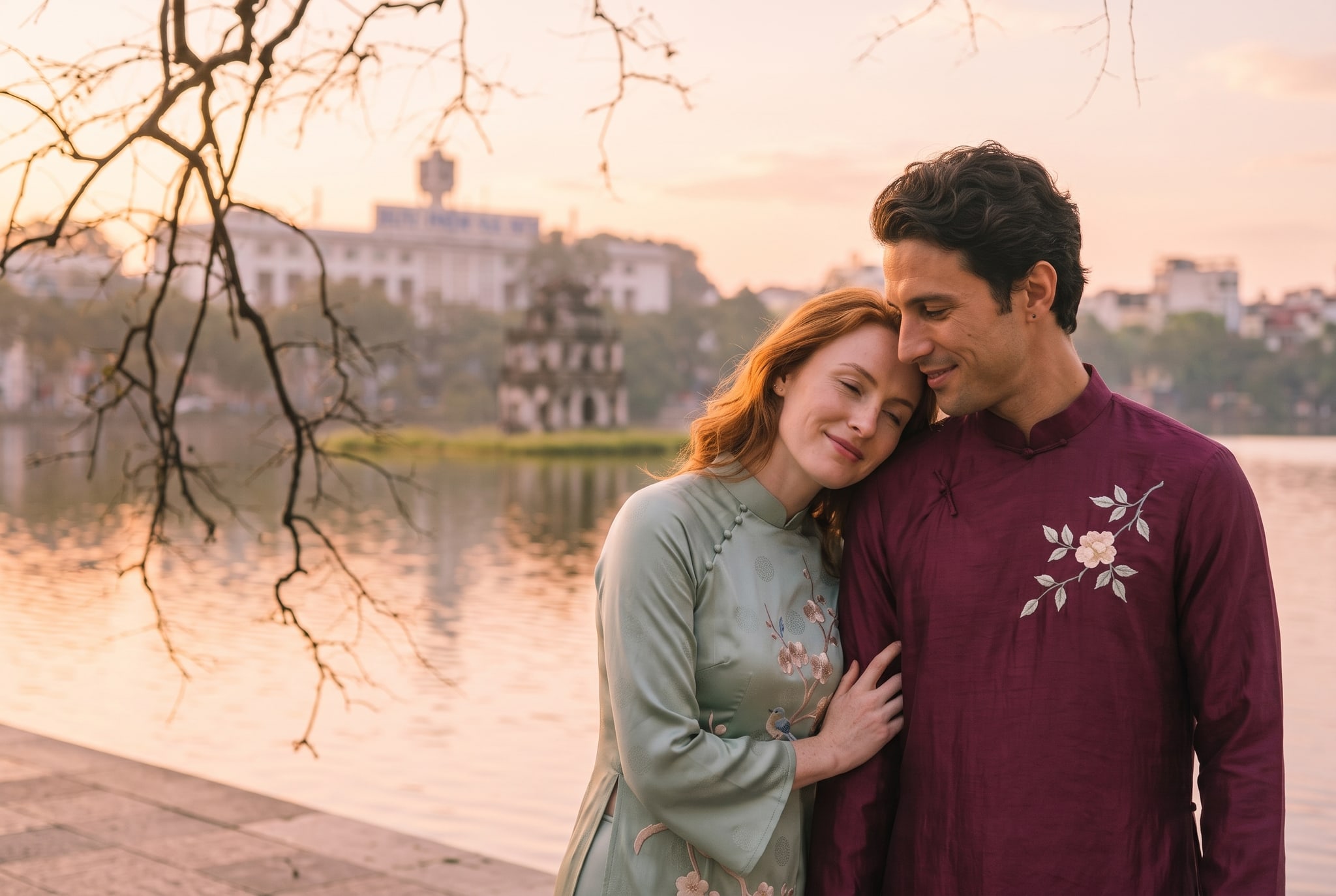
Winter (December–February): sunrise at 6:30 a.m., best light 7–8:30 a.m. (cool, low-angle gold); afternoon peak at 4:30–5:30 p.m. Harsh shadows rare. Summer (June–August): sunrise at 5 a.m., best light 5:30–6:30 a.m. only; afternoon light returns 5–6:30 p.m. Midday heat and humidity peak; skin appears washed out. Spring (March–May) and autumn (September–November): balanced 7–8 a.m. and 4:30–6 p.m. windows; skin tone warmth and detail sharpness are optimal. Cloud cover on any day softens light but cuts golden hour by 15–20 minutes. Overcast mornings suit pastels and soft ao dai colors; clear afternoons favor jewel tones. Plan sessions around this window—moving to a second location after peak light fades wastes travel time in traffic.
How do crowds and weather affect booking times?
Weekday mornings (Monday–Thursday, before 8 a.m.) see near-zero foot traffic; weekend mornings fill with local joggers and elderly tai chi groups by 6:30 a.m., and tour buses arrive 8–9 a.m. Saturday–Sunday afternoons (4–6 p.m.) are busier. Rain is frequent June–September; light drizzle actually softens skin and eliminates harsh shadows, but heavy downpours close temple gates and make stone slippery. We reschedule or offer covered pavilion shoots (less scenic but safe). Tet holiday (late January–early February) brings large family groups; book 4–6 weeks ahead. Monsoon season (July–August) has lowest tourist count but highest rain risk. If you're flexible on dates, choose Tuesday–Thursday mornings for speed and solitude.
What outfits work best in Tay Ho's lakeside setting?
Ao dai (traditional Vietnamese tunic) is iconic at temples; light colors (white, cream, pale pink) photograph warmly against stone and water in morning light. Dark jewel tones (navy, burgundy, emerald) pop in afternoon gold but risk underexposure if you're standing in temple shadows. We rent and style ao dai on-site; no need to source yourself. Casual couples: soft neutrals (beige, dove gray) for daytime; jewel tones for sunset. Families: coordinate color families (all earth tones or all pastels) rather than matching exactly—natural variation reads better on camera. Bring a lightweight layer; lakeside wind picks up late afternoon and mornings can be cool even in spring. Avoid busy patterns and logos; Tay Ho's simple backgrounds (water, stone, trees) favor clean silhouettes.
Why is timing the photo order by location inside Tay Ho?
Tran Quoc Pagoda's best light hits the banyan tree (northeast side) first around 6:45 a.m.; the courtyard opens up 15 minutes later. Moving south along the lake to Yen Phu Temple takes 10–15 minutes by car and catches fresh morning gold there by 7:30–8 a.m. If you reverse the order, Yen Phu's side-lit light fades while you're still shooting, and you arrive at Tran Quoc during harsh overhead conditions. We map this sequence during your pre-shoot consultation on WhatsApp. Include travel time and setup (makeup, ao dai changes) in your session length so you're not rushing between temples during peak light.
How do you prepare for a successful Tay Ho family shoot?
Confirm headcount and ages before booking; toddlers (under 4) tire faster, so we shoot their best moments in the first 45 minutes. Brief kids beforehand: temples are quiet; running isn't expected. Bring a small toy or snack (not sticky) for energy resets. Choose 2–3 outfit changes per person maximum; more than three increases setup time and bores children mid-shoot. Morning sessions suit young families (energy peaks 6–8 a.m.); older kids handle afternoon light better. Parents should wear layers; you'll be kneeling, bending and standing repeatedly. Arrive 10–15 minutes early at the meeting point so we're ready when light peaks. Leave phones in bags; eye contact and genuine interaction between family members are what translate to photos that feel lived-in, not posed.
What risks should you know before booking Tay Ho?
Traffic delays from central Hanoi during 7–9 a.m. peak can cost 20 minutes if you're trying to hit exact dawn light—we build 30 minutes buffer into morning bookings. Temples occasionally close for private events or monk ceremonies; we confirm access two days prior. Motorbike theft is rare but possible if you park unattended; park near temple guardians if renting bikes. Temple authorities sometimes ask foreign groups to pay a small "donation" (not mandatory, but respectful to offer). Stone steps around water are slippery year-round; wear non-slip shoes. Humidity causes lens fogging during sudden temperature drops; we bring microfiber cloths. If rain floods temple courtyards, we pivot to covered pavilion zones (less romantic but usable) or reschedule to the next available clear morning.
| Scenario | Best Time | Light Quality | Crowd Level | Best For |
|---|---|---|---|---|
| Ao dai solo portrait | 6:45–7:30 a.m. | Golden, side-lit | Minimal | Instagram, graduation |
| Couple intimate shots | 5:30–6:15 a.m. (winter); 5–5:45 a.m. (summer) | Soft, cool-toned | Near-empty | Pre-wedding, anniversary |
| Family group (4+) | 7–8 a.m. any season | Even, warm light | Light joggers | Multi-generational memories |
| Late-afternoon escape | 4:30–6 p.m. | Orange-gold, backlit water | Moderate (locals) | Travel portraits, couples |
| Backup indoor option | Any time | Flat, temple ambiance | Stable | Rain days, midday pivots |
What to check before you book
Date flexibility: Can you shift your session 2–3 days if rain forecasts for your chosen date? Morning sessions depend on sunrise timing, which varies 20–30 minutes across seasons.
Location access: Confirm you're comfortable at temples (respectful dress, quiet behavior). Some visitors find early morning crowds (even light ones) unsettling; we can suggest quieter pavilion-only shoots.
Outfit sourcing: If renting ao dai, book styling 1 week ahead. If bringing your own clothes, share reference photos on WhatsApp so we can preview and suggest adjustments.
Travel logistics: Will you arrange your own transport to Tay Ho, or do you need our recommended driver contact? Journey time adds 30–45 minutes to your total session window from central Hanoi.
Post-shoot turnaround: Ask how many edited images you receive and the delivery timeline (typically 1–2 weeks after shoot).
Why choose Cáo Studio for Tay Ho shoots?
We've coordinated hundreds of Tay Ho sessions for international travelers, expats and Vietnamese families. Our in-house makeup, hair and ao dai rental streamline logistics; you arrive, we style you, then light guides the rest. We know which temples permit tripods, which gates close during ceremonies, and where motorbike parking is safest. Our WhatsApp coordination is in English, with real-time light forecasts and traffic updates the morning of your shoot. Unlike generic tour guides, we're photographers first—every suggestion (timing, outfit, pose) is rooted in how it frames on camera, not comfort or speed alone.
Ready to explore other Hanoi photoshoot locations? See our Hoan Kiem Lake photo guide or Old Quarter photo guide. For specialized sessions, we offer ao dai photoshoot, couple photoshoot, family photoshoot, solo travel portraits, pre-wedding photoshoot, graduation photoshoot and makeup and styling services—all bookable through the same WhatsApp line.
Plan your Hanoi shoot
FAQ
Do I need a permit to photograph in Tay Ho temples?
No. Casual portrait photography in courtyards and gardens doesn't require permits. Tripods sometimes need monk approval (ask on arrival). Large commercial shoots or drones do need advance coordination with temple authorities; we handle this if you're booking a professional session.
What's the best month to shoot in Tay Ho if I care most about clear light?
March–May (spring) and September–November (autumn) offer the most consistent clear mornings and predictable golden afternoons. December–February can be overcast but light is soft and flattering. July–August has lowest crowds but highest rain risk; plan a backup indoor location.
Can I do a Tay Ho shoot if I don't speak Vietnamese?
Yes. We coordinate everything in English on WhatsApp, including temple etiquette, outfit choices and posing tips. We brief you on respectful behavior; monks appreciate basic politeness and are used to international visitors.
How long does a typical Tay Ho session take, including travel?
2–4 hours total: 30–45 minutes travel from central Hanoi, 15–20 minutes setup (makeup, ao dai, hair), 60–120 minutes shooting across 1–2 temple locations, 10 minutes wind-down and outfit changes. We build buffer time for slow traffic or light delays.
What if it rains on my Tay Ho shoot day?
We reschedule to the next clear morning (usually 24–48 hours) or pivot to covered temple pavilions (less scenic but usable). Heavy rain closes temple gates; light drizzle actually softens skin and is often more flattering than clear glare. ===
Check dates
Send your dates, how many people and the style you like. We reply on WhatsApp in English with spots, timing and a quote.
FAQ
Do I need a permit to photograph in Tay Ho temples?
No. Casual portrait photography in courtyards and gardens doesn't require permits. Tripods sometimes need monk approval (ask on arrival). Large commercial shoots or drones do need advance coordination with temple authorities; we handle this if you're booking a professional session.
What's the best month to shoot in Tay Ho if I care most about clear light?
March–May (spring) and September–November (autumn) offer the most consistent clear mornings and predictable golden afternoons. December–February can be overcast but light is soft and flattering. July–August has lowest crowds but highest rain risk; plan a backup indoor location.
Can I do a Tay Ho shoot if I don't speak Vietnamese?
Yes. We coordinate everything in English on WhatsApp, including temple etiquette, outfit choices and posing tips. We brief you on respectful behavior; monks appreciate basic politeness and are used to international visitors.
How long does a typical Tay Ho session take, including travel?
2–4 hours total: 30–45 minutes travel from central Hanoi, 15–20 minutes setup (makeup, ao dai, hair), 60–120 minutes shooting across 1–2 temple locations, 10 minutes wind-down and outfit changes. We build buffer time for slow traffic or light delays.
What if it rains on my Tay Ho shoot day?
We reschedule to the next clear morning (usually 24–48 hours) or pivot to covered temple pavilions (less scenic but usable). Heavy rain closes temple gates; light drizzle actually softens skin and is often more flattering than clear glare. ===
More like this
Hanoi photo spots
Thang Long Imperial Citadel Family Photos: Light, Rules & Outfit Tips
Thang Long Imperial Citadel (Hanoi Citadel) is a UNESCO World Heritage site in central Hanoi with dramatic stone gates, courtyards and moats ideal for family portraits. We share exact timing, light patterns, clothing advice and what often goes wrong—so your session yields authentic, well-lit images.
Hanoi photo spots
Tay Ho: How to get there for a photoshoot
Tay Ho district sits 8–12 km northwest of Hanoi's Old Quarter, accessible by taxi, motorbike or rideshare in 20–40 minutes depending on traffic. We'll walk you through entry rules, best light, crowds and how to book a seamless shoot there.
Hanoi photo spots
Phung Hung Mural Street Couple Photos: Light, Crowds & Posing
Phung Hung Street in Hanoi's Old Quarter is a working neighborhood turned street-art hotspot—perfect for couples who want colorful, lived-in authenticity without the Hoan Kiem Lake crowds.