
Home › Blog › Solo travel portraits
Solo Travel Photoshoot Hanoi at Trấn Quốc Pagoda: Light, Rules & Timing
By the Hanoi Photoshoot team · 2026-11-06
Trấn Quốc Pagoda, perched on Thanh Tàm islet near Long Biên Bridge, is Hanoi's oldest temple (11th century) and a prime solo portrait location because sunrise bathes the red-tile roof and river in warm, directional light between 5:30–6:30 a.m., when fewer than five visitors arrive. Sessions typically run 60–90 minutes and include our in-house makeup, hair, and ao dai rental if you want spiritual authenticity. You'll need modest dress (shoulders covered, knees down), comfortable walking shoes for uneven stone paths, and a Buddhist-respectful demeanor—no loud posing, no climbing on sacred structures. We handle gate protocols in Vietnamese; entry is free but donations support temple upkeep. Hanoi Photoshoot by Cáo Studio books you in advance, scouts the exact angle that avoids midday glare, and poses you to look natural rather than stiff—critical because the temple's narrow courtyards and low stone walls demand careful framing. Budget-wise, ask us for a quote on WhatsApp; most solo sessions start modestly and scale with styling or wardrobe changes. Check dates on WhatsApp
Why is Trấn Quốc Pagoda ideal for solo travel portraits?
The pagoda's isolation on its own islet eliminates the background chatter and selfie-stick crowds you encounter at Hoan Kiem or the Old Quarter. Its red-brick architecture, yellow glazed-tile roof, and direct river view create strong compositional geometry—the frame works even if you're nervous about posing. Morning light hits the façade horizontally, sculpting your face and shoulders without harsh shadows. Unlike Train Street's scheduled chaos or Hanoi's temple-hopping tourist circuits, this spot feels meditative; most solo travelers report feeling less self-conscious here, which reads as authenticity in photos. The pagoda's spiritual role also resonates with solo journeys—many travelers mark this shoot as a personal milestone rather than a checkbox.
What time of year and day gives the best light?
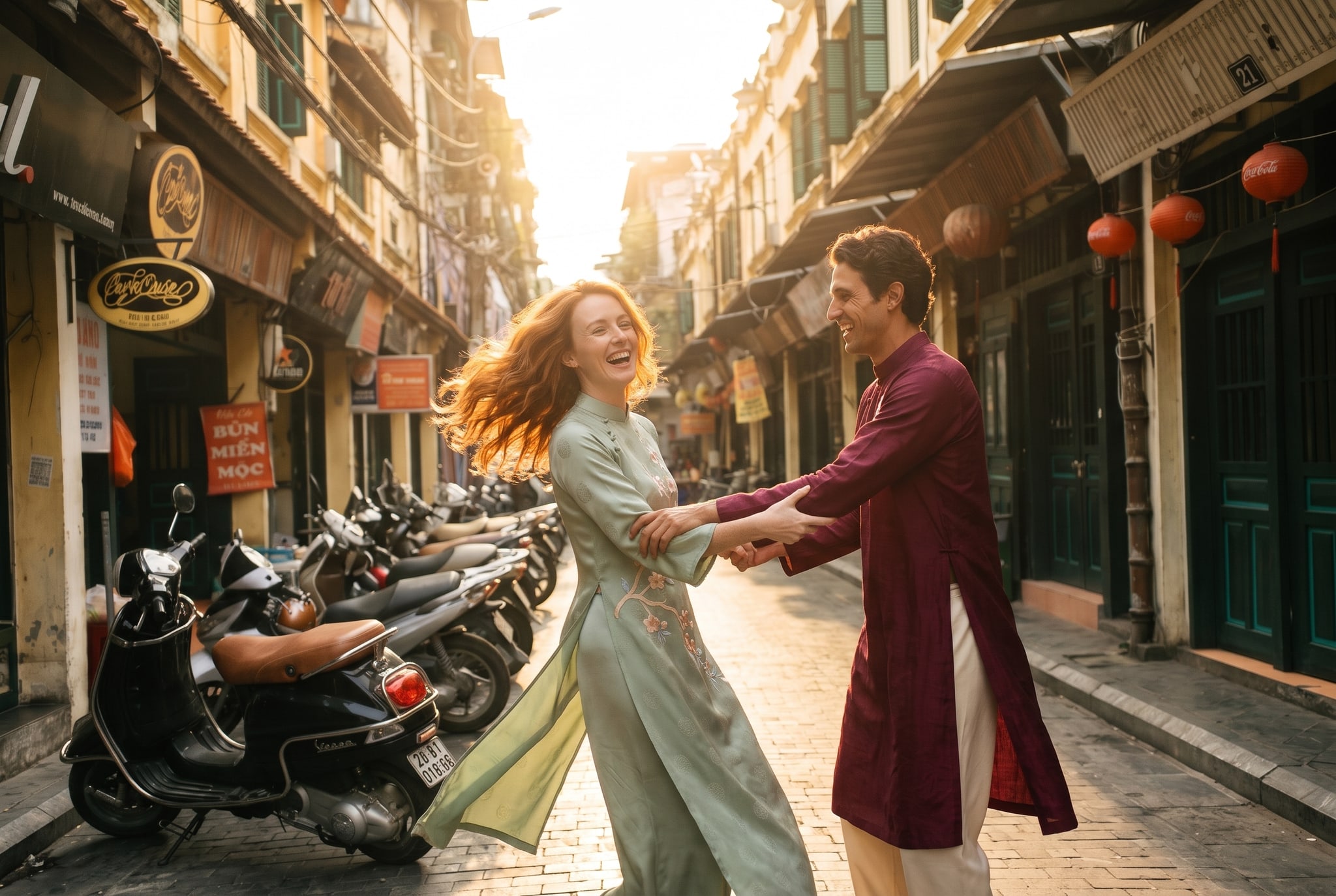
October–March (cool, dry season) offers consistent dawn clarity and minimal haze; April–September brings humidity and earlier cloud cover that dulls pre-7 a.m. light. We shoot between 5:30–7:00 a.m. year-round to catch the sun's angle before it climbs behind the pagoda's spires. Winter (December–January) yields crisp air and rich reds in the roof tiles; spring (March–April) adds fresh green from the temple's courtyards. Midday and afternoon sessions are possible but require reflectors and careful angle selection because direct sun washes out skin tones and creates unflattering eye shadows. We've found that 6:15 a.m. on a clear November morning outperforms 4 p.m. any season.
How do you pose a non-model solo traveler naturally?
Most solo travelers have never been photographed professionally and worry they'll look stiff or fake. We use a four-step approach: (1) walk you through the pagoda for 5 minutes to acclimate and identify two or three compositionally strong spots; (2) show you how to angle your shoulders (typically 45° to camera, one foot forward) without overthinking it; (3) ask you about your reason for the shoot—a milestone, a break from work, a spiritual moment—and photograph you in mid-conversation or mid-thought rather than posed; (4) repeat 8–12 variations (hand placement, gaze direction, standing vs. seated on temple steps) so you forget the camera exists by frame five. The pagoda's quiet morning means we can talk freely without shouting over tourist noise. Your best portraits often come when you're gazing at the river or laughing at a memory, not when you're "smiling for the camera."
What are the rules and access logistics?
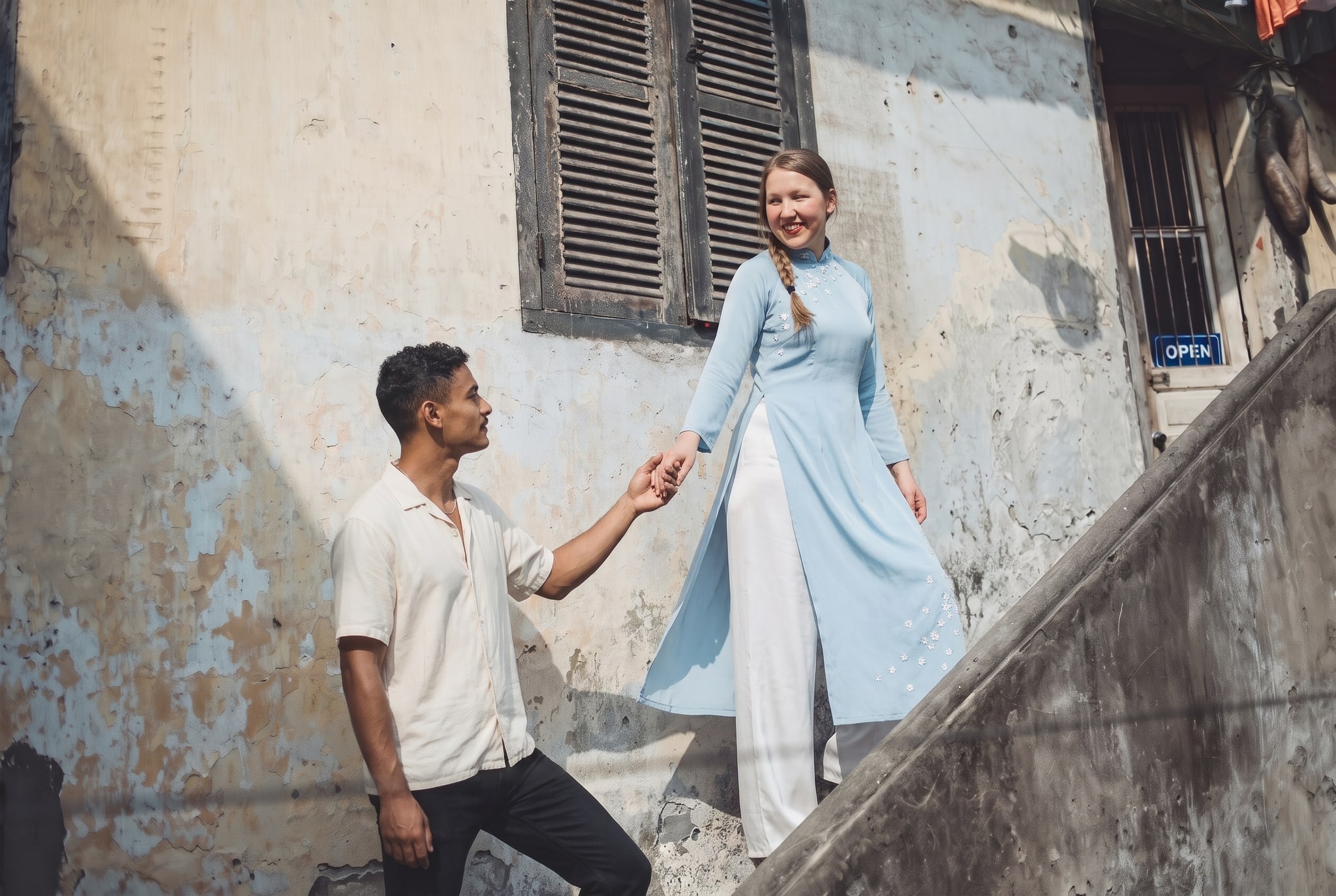
Entry to Trấn Quốc Pagoda is free, but a few rules matter: (1) dress modestly—shoulders covered, knees to ankles; we rent ao dai in soft pastels or earth tones that honor the setting while photographing beautifully; (2) no loud music, running, or irreverent behavior; (3) small shoes-off areas exist inside shrines, but the courtyard and exterior are shoe-on; (4) the stone paths are uneven and can be slippery after rain, so wear stable footwear; (5) early morning (before 7 a.m.) requires advance coordination with the temple's caretakers—we handle this in Vietnamese and typically offer a modest donation. The caretakers are accustomed to photographers and generally welcoming if you're respectful and quiet. Avoid national holidays (Tết, full-moon celebrations) when the temple fills with devotees. If you arrive as a walk-in without booking, you may encounter minor friction; we pre-register to smooth the process.
How does this compare to other Hanoi solo portrait spots?
| Spot | Light quality | Crowds at dawn | Dress code | Posing difficulty | Best for |
|---|---|---|---|---|---|
| Trấn Quốc Pagoda | Warm, directional, 5:30–7 a.m. | <5 people | Modest (shoulders, knees) | Intermediate—uneven paths, spiritual framing | Reflective, spiritual milestones |
| Hoan Kiem Lake | Soft, diffuse, 6–8 a.m. | 30–50 joggers, students | Casual | Easy—flat paths, simple backdrops | Active lifestyle, casual energy |
| Old Quarter | Dappled, variable by street | 100+ early vendors | Casual | Hard—narrow alleys, chaotic framing | Gritty, urban, documentary feel |
| Train Street | Golden, brief (6:30–7:15 a.m.) | 50–100 photographers | Casual | Hard—crowded, fast-moving trains | Iconic risk-taker aesthetic |
Trấn Quốc Pagoda suits solo travelers seeking solitude and spiritual resonance; it demands more patience for framing but rewards with intimacy and authenticity that busier spots cannot match.
Should you pair this with another session or a styling package?
A single 60-minute pagoda session works for travelers on tight schedules, but two locations (pagoda + a solo portrait or Instagram photoshoot at a secondary spot like a riverside café or narrow Old Quarter alley) give you editorial range and increase keepsake value. Many solo travelers pair the pagoda's spiritual tone with a second session that's playful or candid—a 90-minute pagoda shoot plus a 45-minute urban walk-and-shoot offers balance. Styling (makeup, hair, ao dai rental) typically adds 30 minutes and transforms a documentary feel into a polished narrative. Ask us for a quote on WhatsApp for multi-session or full-day rates; bundling generally costs less per hour than booking sessions separately. First-time travelers often underestimate how much they enjoy the process and wish they'd booked longer—consider a longer session or add-on when you inquire.
What to check before you book
- Fitness level: The pagoda sits on an islet accessed by a short footbridge; uneven courtyards and 15–20 stone steps require comfortable walking shoes and moderate mobility. If stairs are difficult, we can frame shots from the lower courtyard, but photographic variety decreases.
- Weather: Check Hanoi forecasts 3–5 days before. Dawn rain doesn't cancel the shoot (soft light remains excellent), but heavy downpour or fog reduces visibility. We reschedule if conditions are genuinely unsafe; ask about our flexibility policy.
- Timing: Confirm your exact arrival date and timezone with us via WhatsApp at least one week ahead. We work backward from your session time to arrange transport, makeup, and temple access. Last-minute bookings (24–48 hours) may conflict with our Hanoi team's other commitments.
- Wardrobe: Bring 2–3 comfortable outfit options (casual travel wear, or rent our ao dai). Avoid logos, neon, or distracting patterns; solid, muted, or traditional colors photograph best against the pagoda's reds and golds.
- Posing experience: If you're genuinely camera-shy, let us know during booking. We can spend extra time on posing coaching and deliver a higher count of "safe" shots where you're not quite smiling—these often feel most authentic later.
- Output timeline: Ask us for a quote on WhatsApp on the turnaround time for edited digital files and any print or album options.
What to expect the day of your shoot
We'll meet you at a nearby café or hotel lobby 15 minutes before your session to finalize hair and makeup, confirm you've eaten lightly, and brief you on the day's light and framing plan. Transport to the pagoda takes 10–15 minutes by taxi or app-ride; we'll give you the exact address in Vietnamese and English. Sunrise sessions start early—your alarm should be set for 5:00 a.m. if you're a light sleeper. The shoot itself feels unhurried despite the short window; we move you through 3–5 compositional "stations" (the main courtyard, the river-facing side, the stone bridge, interior shrine framing) and pause between setups so you're not frantically posing. Expect 80–120 final edited photos from a 60-minute session. We'll email a preview gallery within 3–5 working days and your full-resolution files within 7 working days. Most travelers book solo sessions, receive their photos, and share them on Instagram or family channels—we don't post without explicit permission.
FAQ
Do I need to be fit or athletic for a Trấn Quốc Pagoda shoot?
No. The pagoda is compact, and most sessions involve standing or sitting on low temple walls rather than hiking. Uneven stone paths and 15–20 steps exist, but we work within your comfort—frame shots from lower areas if needed.
What's the actual entry cost at the pagoda?
Free, though a small donation (equivalent toa quoted price) to temple upkeep is customary and appreciated. We handle this for you or advise where to leave it.
Can I book a solo shoot on the same day I arrive in Hanoi?
Rarely. We need 1–2 weeks' notice to confirm your date, scout light conditions, and arrange makeup and styling. Emergencies can sometimes be accommodated—ask via WhatsApp, and we'll see if the Hanoi team has availability.
What happens if it rains the morning of my shoot?
Light rain often improves the shoot (soft, diffused light, wet pavement reflections, moody mood). We reschedule only if heavy downpour or fog makes photography genuinely unsafe. Ask about our rescheduling policy when you book.
How many photos will I receive, and when?
From a 60-minute solo session, expect 80–120 edited photographs. Digital files arrive within 7 working days; a preview gallery typically ships within 3–5 days to manage expectations.
Should I wear traditional ao dai, or can I wear travel clothes?
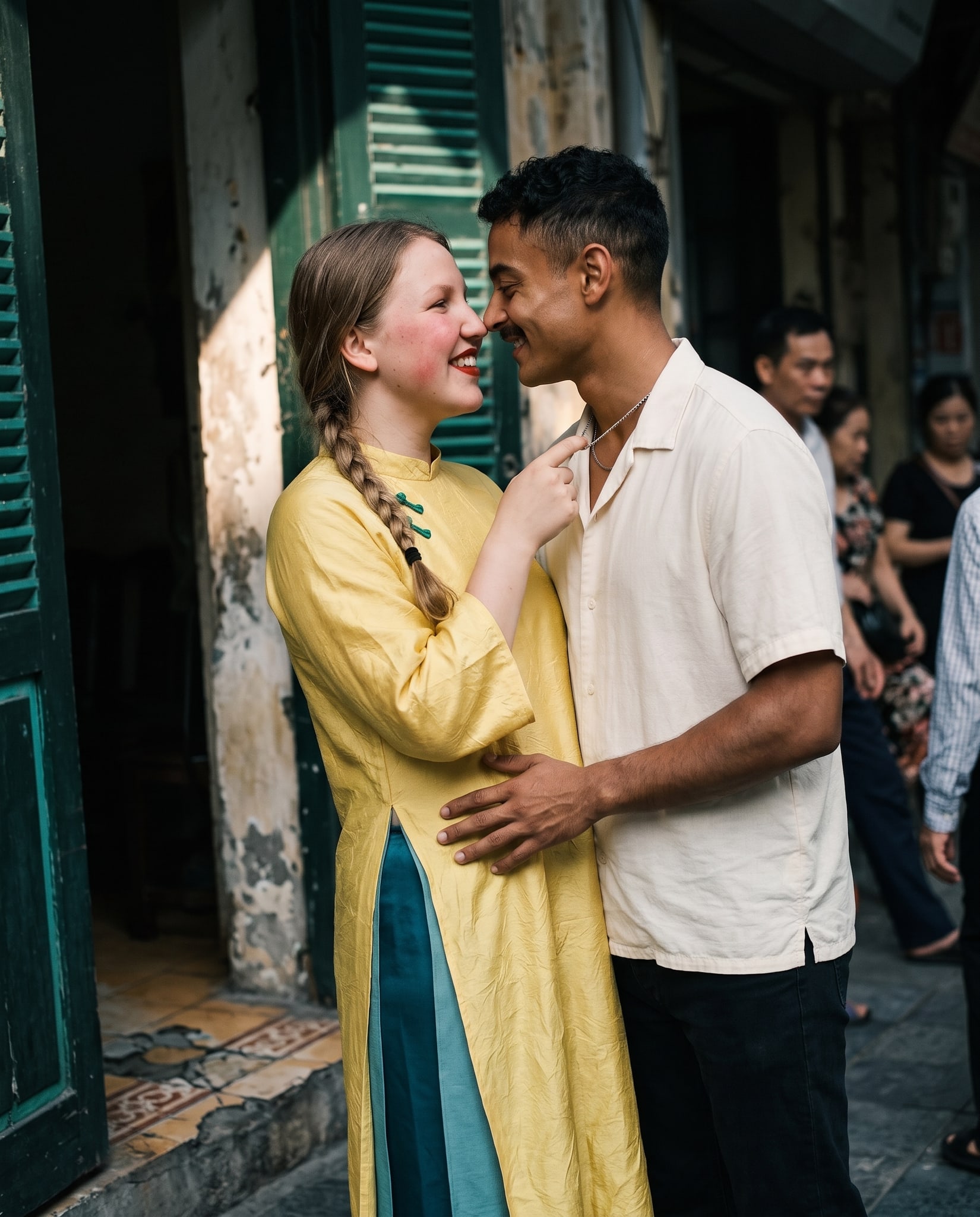
Either. Ao dai rental at the pagoda feels spiritually authentic and photographs beautifully in morning light. Travel wear (jeans, linen shirt, light layers) works equally well and feels more candid. Ask us for styling guidance based on your travel aesthetic.
Check dates
Send your dates, how many people and the style you like. We reply on WhatsApp in English with spots, timing and a quote.
FAQ
Do I need to be fit or athletic for a Trấn Quốc Pagoda shoot?
No. The pagoda is compact, and most sessions involve standing or sitting on low temple walls rather than hiking. Uneven stone paths and 15–20 steps exist, but we work within your comfort—frame shots from lower areas if needed.
What's the actual entry cost at the pagoda?
Free, though a small donation (equivalent to $1–2 USD) to temple upkeep is customary and appreciated. We handle this for you or advise where to leave it.
Can I book a solo shoot on the same day I arrive in Hanoi?
Rarely. We need 1–2 weeks' notice to confirm your date, scout light conditions, and arrange makeup and styling. Emergencies can sometimes be accommodated—ask via WhatsApp, and we'll see if the Hanoi team has availability.
What happens if it rains the morning of my shoot?
Light rain often improves the shoot (soft, diffused light, wet pavement reflections, moody mood). We reschedule only if heavy downpour or fog makes photography genuinely unsafe. Ask about our rescheduling policy when you book.
How many photos will I receive, and when?
From a 60-minute solo session, expect 80–120 edited photographs. Digital files arrive within 7 working days; a preview gallery typically ships within 3–5 days to manage expectations.
Should I wear traditional ao dai, or can I wear travel clothes?
Either. [Ao dai rental](/makeup-and-styling) at the pagoda feels spiritually authentic and photographs beautifully in morning light. Travel wear (jeans, linen shirt, light layers) works equally well and feels more candid. Ask us for styling guidance based on your travel aesthetic.
More like this
Solo travel portraits
Vacation Photographer Hanoi in the Rain: Season Guide
Rain in Hanoi transforms outdoor shoots into moody, intimate scenes—but only if you prepare. We break down monsoon seasons, light quality, locations that work wet, and why indoor studio pivots save your session.
Solo travel portraits
Vacation photographer Hanoi during Tet: lunar new year guide
Tet transforms Hanoi's streets into a photographer's paradise—but timing, temple rules and crowd logistics make the difference between stunning portraits and a chaotic shoot. We walk you through every decision.
Solo travel portraits
Solo Travel Photoshoot Hanoi: 1 Hour vs 2 Hours—What's Right for You?
Solo travelers often wonder whether to book a short Hanoi photoshoot or invest in a longer session. We compare both formats—what you'll actually get, where to shoot, timing and light challenges—so you choose without guesswork.