
Home › Blog › Proposal photographer
Proposal Photographer Hanoi Poses: Real Poses for Non-Models
By the Hanoi Photoshoot team · 2026-11-06
Proposal poses in Hanoi work best when they feel unscripted yet intentional—think hands near the face, bodies angled slightly away from the camera, and natural laughter rather than stiff smiles. At Cáo Studio's Hanoi team (hanoiphotoshoot.com), we position couples during the golden hour near Hoan Kiem Lake, Train Street, or the Old Quarter, accounting for crowds and light direction by season. Sessions run 1–2 hours and include in-house makeup, hair, and ao dai rental if you choose. Poses that fail are those that mirror stiff wedding-album clichés—over-tilted heads, locked shoulders, or excessive hand-holding in the frame. We avoid proposing during midday (harsh shadows at 11 a.m.–3 p.m., peak tourist crowds) and coach you before the camera starts rolling. Ask us for a quote on WhatsApp; sessions suit couples who want authentic, non-cheesy documentation of the moment and its aftermath.
What makes a proposal pose feel natural in Hanoi's light?
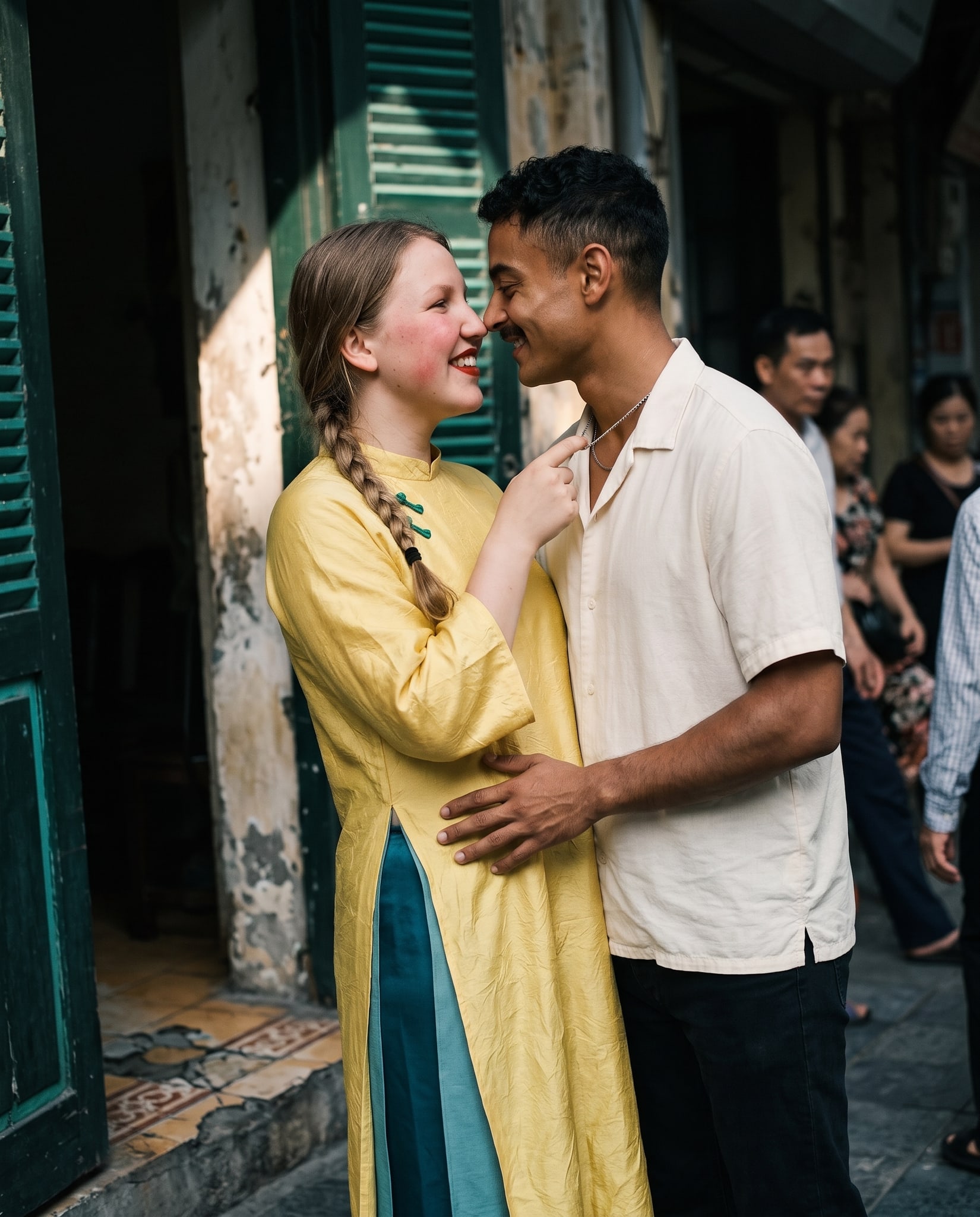
Natural proposal poses work because they don't announce themselves. We position you so one partner's body shields the other slightly from the camera, or both face the same direction—a temple gate, the Red River—so the frame includes joy and place. In Hanoi's winter (October–March), soft morning light around Hoan Kiem Lake at 7–8 a.m. flatters skin and adds depth without harsh shadows. Summer (May–September) requires early shoots (6–7 a.m.) to avoid 35°C heat and noon glare bouncing off water and stone. The pose itself: feet hip-width apart, one person's arm around the other's waist (not a full bear hug), heads tilted together but not pressed, both looking at the lake or camera depending on the shot sequence. This works because it's how you'd actually stand, not how you'd perform. Most couples default to facing the camera head-on—a mistake that flattens depth and makes the background (the real story of Hanoi) disappear.
How do I pose if I'm not a model?
Non-models often worry about looking stiff or fake. We start every proposal photographer session with a 10-minute walk-through: we show you three anchor positions—forward lean (more intimate, foreground focus), side-by-side (balanced, shows the landmark equally), and back-to-camera (you both look at the view, we see your expressions). You then choose which feels least awkward. Hands are the real challenge: locked hands look staged, swinging arms look chaotic, pockets look distant. We say: rest one hand on your partner's shoulder or lower back, let the other hang naturally or rest on your own leg. Avoid crossing arms (closes off the frame) or touching your own face (reads as nervousness). We shoot 40–60 frames per pose so you forget the camera by frame 20; most naturals come from frames 15–45, after the first three "camera checks" wear off. The final trick: we ask you to recall the proposal moment—where you stood, what you felt—and re-enact a private version. Those shots never look performed.
Which Hanoi spots suit proposal poses by season?
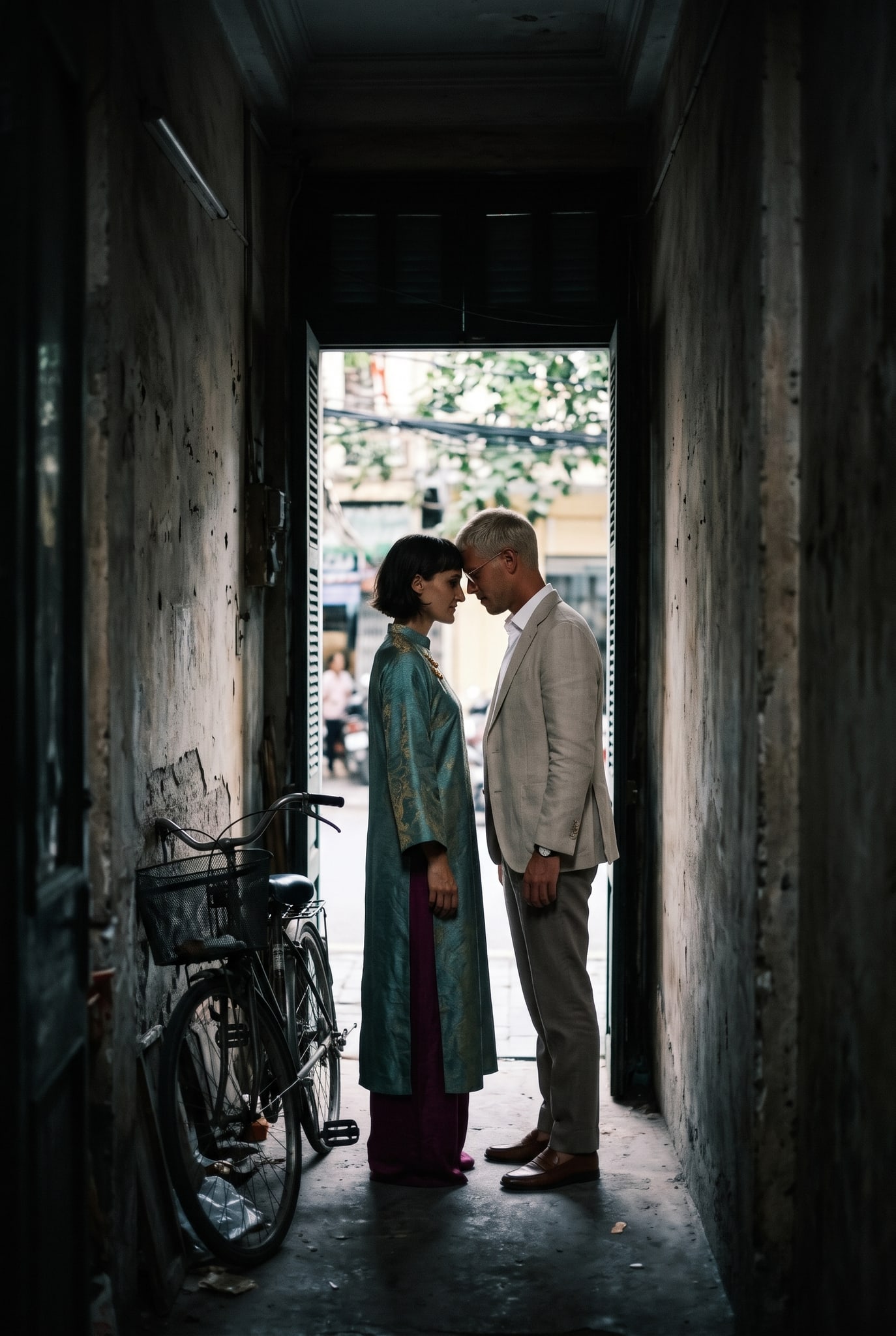
Hoan Kiem Lake dominates October–February (cool, crisp, low humidity, soft light); crowds thin by 8 a.m. Train Street works November–January only—monsoon rain (May–September) makes tracks slippery, and summer heat draws pickpockets. The Old Quarter suits year-round if you shoot early (6–7 a.m. in summer, 7–8 a.m. in winter) to avoid foot traffic. Each spot has pose limits: Hoan Kiem's narrow lakeside paths mean side-by-side or angled poses, not full-frame distance shots. Train Street's track is only 2 meters wide, so you're always close to the camera, making intimate poses (forehead-to-forehead, held hands) the only option. The Old Quarter's lantern-lit streets suit backlit silhouettes in winter mornings (low sun angle behind you) but require fill flash in summer (overhead light). We scout each spot 48 hours before your shoot to confirm light angle, crowds, and ground stability. Choose Hoan Kiem Lake for classic calm; Train Street for urgency and rawness; Old Quarter for layered, textured backgrounds.
What outfit and styling choices affect how poses read?
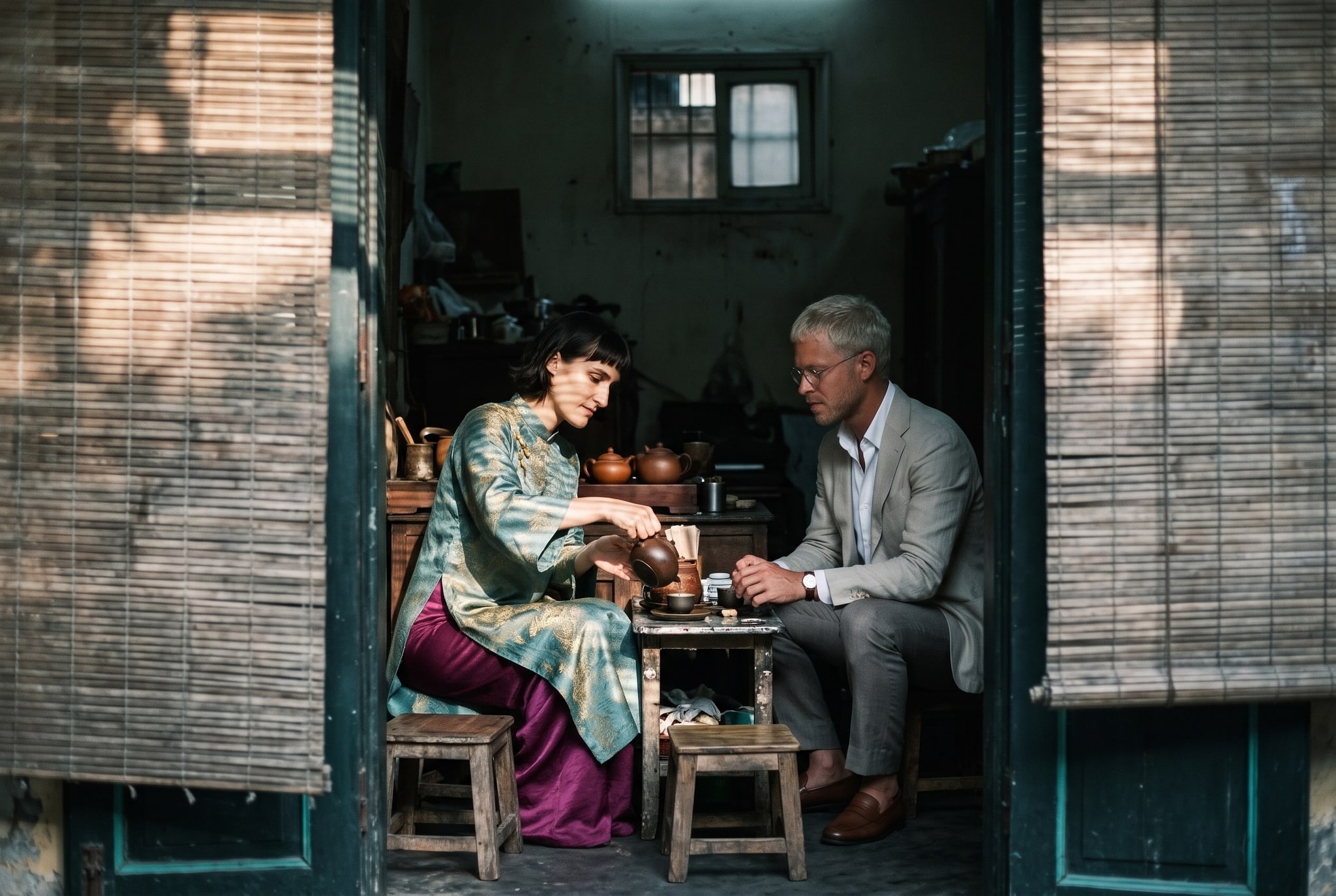
Your outfit directly shapes which poses work. Flowing áo dài (our in-house makeup, hair & ao dai rental includes styles that photograph clean and move beautifully) suit motion poses—walking toward camera, hands gesturing mid-conversation, fabric trailing. Tight Western dresses need stillness; they read awkward if you're mid-stride. Coordinated colors matter: matching tones (both navy, both cream) unify the frame; clashing prints scatter focus. For proposal shoots, we advise one partner in a neutral tone (cream, soft gray, white) and the other in a richer accent (navy, dusty rose)—this hierarchy guides the viewer's eye and prevents visual noise. Jewelry: one delicate necklace per person reads elegant; stacked rings catch light and distract. Shoes affect posture: heels tilt the pelvis forward (creates tension in the shoulders), flats keep alignment neutral. Hair up or down? Down reads softer in still poses; up reads sharper in motion (walking, turning). We style you on-site, so you arrive with clarity on which poses will flatter your actual outfit choice. Most couples regret heavy makeup (sweat in Hanoi's humidity, thick foundation catches harsh light)—we recommend dewy, lightweight base instead.
How do I transition between posed shots without awkward resetting?
Awkward resetting kills the vibe and wastes frames. We use the "momentum method": instead of breaking and repositioning, you stay in character and move organically. Example sequence: start with you both looking at the lake (classic calm), then one of you turns to the other mid-gaze (captures a moment), then you both laugh and look at the camera together (closing beat). Between each, you're not "resetting"—you're continuing a conversation. We give minimal instructions ("now look at each other," "now turn to the view") and let motion happen. Music helps: we often play a single song on a portable speaker, and you dance or sway gently; the camera rolls the whole time, and at least 20 frames will have genuine in-between moments. Avoid the "pose, hold, smile, done" style—each position lasts only 10–15 seconds before we move to the next prompt. This keeps energy alive and generates candid gold that staged shooting misses. We also shoot in a couple photoshoot format, which means we're capturing both of you as protagonists, not one-and-their-plus-one, so transitions feel like a shared story.
Comparison: Proposal Pose Strategy by Your Comfort Level
| Your comfort | Best pose setup | Light timing | Why it works | Common mistake |
|---|---|---|---|---|
| High (acted before, comfortable on camera) | Cinematic: far from camera, strong silhouette, narrative framing | Golden hour (7–8 a.m. or 4–5 p.m.) | Depth and scale make Hanoi the co-star | Overshooting; best frame often #8–12, not top |
| Medium (fine in photos, not a performer) | Intimate: close framing, soft focus background, hands visible | Soft overcast or early morning | Removes pressure to "perform" for a huge view; focus is you two | Overthinking hand placement |
| Low (nervous, rarely photograph) | Candid-led: we chat, you ignore camera, we capture reactions | Diffuse light (cloudy day or deep shade) | No "smile for the camera" moment; you're never "on" | Staring at camera, stiff spine |
Real things that go wrong—and how we avoid them
Heat and sweat (May–September, 6 a.m. shoot still 28°C): We shoot on overcast mornings, avoid dark fabrics, and use oil-blotting paper between poses. Dewy skin reads better than wet, anyway.
Crowds (weekend mornings, 9 a.m.–noon): We scout early-access spots or book weekday shoots. Hoan Kiem Lake at 7 a.m. on a Tuesday is yours alone; same spot at 10 a.m. on Saturday has 200 tourists.
Unflattering backlighting (Old Quarter's narrow streets in summer): We use a reflector (silver or white) to fill shadows on your face, or position you in open-air courtyards where light diffuses.
Stiff, over-coached feeling (too many instructions): We demonstrate each pose by positioning ourselves first, so you see the shape before mirroring it. Fewer words, fewer errors.
Foot pain mid-shoot (wearing new shoes or heels on uneven cobblestones): We wear flats during prep and bring slip-on shoes. Train Street's track is notably rocky; we advise closed-toe shoes with grip.
Mismatched energy (one partner playful, one serious): We do a 15-minute chemistry chat before shooting—you talk about the proposal, we listen and gauge tone. Then we frame poses that honor both your natural modes (not force alignment).
What to check before you book
- Light forecast: Hanoi's weather in 2026 still follows the monsoon calendar. November–February = cool, crisp, predictable light. May–September = unpredictable rain, early shoots mandatory.
- Venue access: Train Street requires special timing (trains run 6–7 a.m. and 4–5 p.m.). Temple shoots need quiet morning slots (before 9 a.m.) and modest dress codes. Confirm with us 48 hours prior.
- Your ao dài size and color: If renting from our makeup, hair & ao dai rental service, book 2 weeks ahead; peak seasons (Lunar New Year, October–November) sell out fast.
- Mobility and stamina: Hanoi shoots involve 0.5–2 km walking on uneven surfaces. Wear broken-in shoes and bring water.
- Cultural sensitivity: Temples require quiet, respectful posing—no loud laughter or suggestive poses. We coach this upfront.
Why proposal poses differ from ao dài and couple shoots
Pre-wedding photoshoot sessions often span multiple locations and outfits over a full day. Ao dài photoshoot in Hanoi emphasizes the garment's tailoring and cultural detail, so poses are often stationary and formal. A couple photoshoot is broader—it can be anniversary, dating, or casual. Proposal poses, by contrast, are about this specific moment's emotional weight. You're not modeling the ao dài; you're wearing it as armor for vulnerability. You're not posing as a couple; you're capturing the shock, the joy, the "this is real" feeling. This means our pose direction is gentler and less technical—we're not chasing perfect symmetry or symmetry at all. We're chasing the second after you exhaled, the frame where your shoulders dropped, the moment you forgot we were there. This is why proposal shoots often feel more intimate than our other offerings, even though the technical setup is identical.
FAQ
Should I tell my partner where the photoshoot happens, or keep it a surprise?
Surprise = raw reaction. If your partner knows, they'll dress better and prime their face, but the spontaneity evaporates. We recommend: tell them you're doing a couple's photoshoot that day, keep the proposal timing secret. This way they dress nicely but stay genuine in the moment.
Can we do a proposal shoot on Train Street even if it's not our actual proposal location?
Yes. Train Street is dramatic and rare—many couples stage a photographic "re-proposal" there after the real moment happens elsewhere. We coordinate with train timings and police presence. Book at least 2 weeks ahead; confirm the morning of via WhatsApp.
How many usable photos do we get from a 2-hour session?
Typically 80–120 edited photos per 2-hour shoot, based on our standard frame rate and culling process. That means 15–25 images are "keepers" (perfectly lit, genuine expressions, sharp focus). We deliver all edited frames, so you choose your favorites.
What's the best time of year for proposal shoots in Hanoi?
October–February. Cool weather (18–25°C), low humidity, and soft golden-hour light. Monsoon rain ends by September; summer (May–September) requires 6 a.m. starts and carries heat-stroke risk. Lunar New Year (late January/early February) books up fast; book 4 weeks ahead.
Can we wear Western wedding clothes instead of áo dài?
Absolutely. Western formal wear (suit, white dress, tailored separates) reads crisp and modern. Áo dài adds cultural texture and flows beautifully on camera. Mix both if you like—change mid-shoot, or one partner in each. Our makeup, hair & ao dai rental covers both styling paths.
Do you shoot video, or just stills?
Stills only. If you want video, our sister site vietnamphotoshoot.com may have partner studios in Hanoi—ask us on WhatsApp. --- Plan your Hanoi shoot
Check dates
Send your dates, how many people and the style you like. We reply on WhatsApp in English with spots, timing and a quote.
FAQ
Should I tell my partner where the photoshoot happens, or keep it a surprise?
Surprise = raw reaction. If your partner knows, they'll dress better and prime their face, but the spontaneity evaporates. We recommend: tell them you're doing a couple's photoshoot that day, keep the proposal timing secret. This way they dress nicely but stay genuine in the moment.
Can we do a proposal shoot on Train Street even if it's not our actual proposal location?
Yes. Train Street is dramatic and rare—many couples stage a photographic "re-proposal" there after the real moment happens elsewhere. We coordinate with train timings and police presence. Book at least 2 weeks ahead; confirm the morning of via WhatsApp.
How many usable photos do we get from a 2-hour session?
Typically 80–120 edited photos per 2-hour shoot, based on our standard frame rate and culling process. That means 15–25 images are "keepers" (perfectly lit, genuine expressions, sharp focus). We deliver all edited frames, so you choose your favorites.
What's the best time of year for proposal shoots in Hanoi?
October–February. Cool weather (18–25°C), low humidity, and soft golden-hour light. Monsoon rain ends by September; summer (May–September) requires 6 a.m. starts and carries heat-stroke risk. Lunar New Year (late January/early February) books up fast; book 4 weeks ahead.
Can we wear Western wedding clothes instead of áo dài?
Absolutely. Western formal wear (suit, white dress, tailored separates) reads crisp and modern. Áo dài adds cultural texture and flows beautifully on camera. Mix both if you like—change mid-shoot, or one partner in each. Our [makeup, hair & ao dai rental](/makeup-and-styling) covers both styling paths.
Do you shoot video, or just stills?
Stills only. If you want video, our sister site vietnamphotoshoot.com may have partner studios in Hanoi—ask us on WhatsApp. --- [✨ Plan your Hanoi shoot](/contact)
More like this
Proposal photographer
Proposal Photographer Hanoi Train Street: Best Time & Light
Train Street offers dramatic narrow-lane backdrops for proposal photography, but timing—light, crowds, and train schedules—determines whether your shots sing or disappoint. We share exactly when to shoot there and how to plan safely.
Proposal photographer
Proposal Photographer at Hanoi Lotus Pond: Booking & Timing
A proposal shoot at Hanoi Lotus Pond requires dawn or late-afternoon light, advance permit booking, and a stylist familiar with Hanoi's temple rules. We handle timing, outfits and posing so you focus on the moment.
Proposal photographer
Hidden Proposal Photographer Hanoi at Night | Cáo Studio
A hidden proposal photographer in Hanoi captures your moment after dark—when streets quiet, lights soften, and intimacy peaks. We specialize in discreet night shoots at temples, riverside walks, and lantern-lit alleyways, with full styling and same-day edits.