
Home › Blog › Pre-wedding photoshoot
Pre-Wedding Photoshoot Hanoi Old Quarter: Tips & Timing
By the Hanoi Photoshoot team · 2026-11-06
The Hanoi Old Quarter delivers stunning pre-wedding images: centuries-old shophouses, lanterns, and narrow lanes dense with character. You'll shoot between 07:00–09:00 for soft golden light and fewer crowds, or 16:30–18:00 in golden hour. Hanoi Photoshoot by Cáo Studio handles permits, coordinates with local guides, and avoids peak tourist hours (10:00–15:00). A typical pre-wedding photoshoot in the Old Quarter runs 2–3 hours, includes in-house hair and makeup, and works with your outfit or our ao dai rental. Avoid weekends unless you want extended crowds; weekday mornings yield the cleanest backgrounds. Cost varies by package—ask us for a quote on WhatsApp. Major risks: pickpocketing in dense streets, slippery stone floors after rain, and temple entry rules (no shorts, respect prayer times). Check dates on WhatsApp
What light times work best in the Old Quarter?
Early morning (07:00–09:00) delivers warm, diffused light across the narrow lanes—shophouse facades glow amber, shadows soften, and foot traffic is lightest. Golden hour (16:30–18:00) adds warmth but brings tourists and local commuters. Midday (11:00–14:00) creates harsh shadows between buildings and draws peak crowds. Winter (November–January) offers cooler light and drier streets; monsoon season (May–September) adds humidity and afternoon showers that make stone slippery. We time your session to season and light angle, positioning you where the sun rakes facades without blowing out your face.
Conclusion: Book early morning in dry season for the cleanest, most flattering light.
How do crowds affect your Old Quarter photos?
Weekday mornings see 20–40 tourists per block; weekends swell to 100+. Motorbikes and delivery carts move constantly. Peak hours (10:00–15:00) require frequent re-shoots due to background clutter. We scout 2–3 backup alleyways off main streets to find quieter frames. Timing a shot between waves of tourists takes 10–15 minutes per pose; weekday early sessions cut that to 2–3 minutes. Street vendors and construction crews are predictable—we work around them. Your patience and flexibility matter: if a scene fills unexpectedly, we pivot to a pre-scouted backup.
Conclusion: Weekday early morning gives you 70% fewer interruptions than weekend afternoon.
Which rules and permits do you need to know?
The Old Quarter is public space—no shoot permit required for couples or small groups. Temples (Ngoc Son, Quan Thanh) require respectful dress: no shorts, no tank tops. Prayer hours (early morning, late afternoon) mean limited access; we coordinate timing. Some shopkeepers may ask a small courtesy fee if we frame their storefront repeatedly. Motorbike parking is mandatory—we arrange this ahead. Photography drones are prohibited citywide. Train Street (nearby, a popular backup) bans tourists during active train times (06:00–08:00, 15:00–17:00); we only shoot between those windows.
Conclusion: No formal permit needed, but respect temple dress codes and train safety rules.
What poses and outfits work in tight alleys?
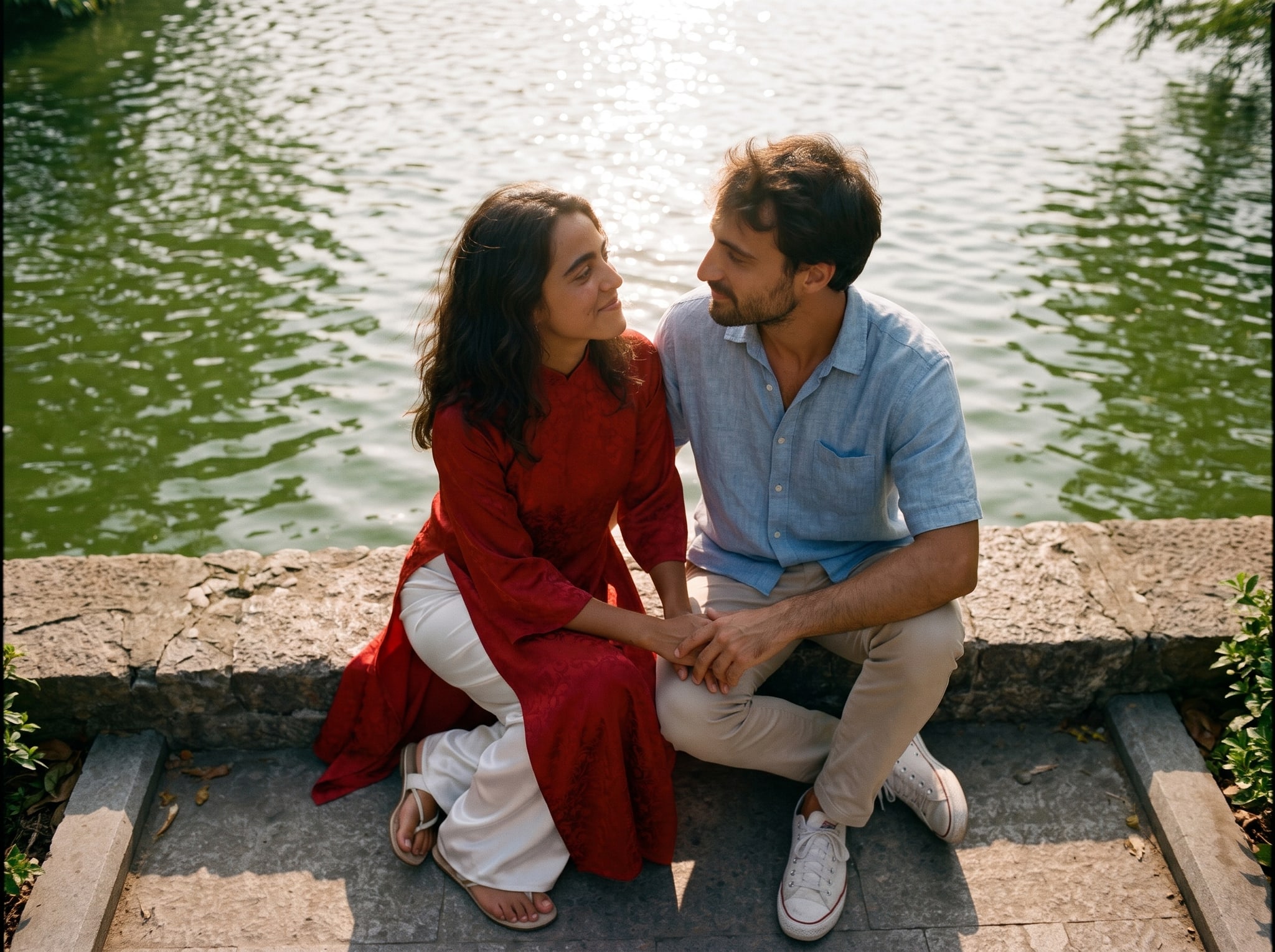
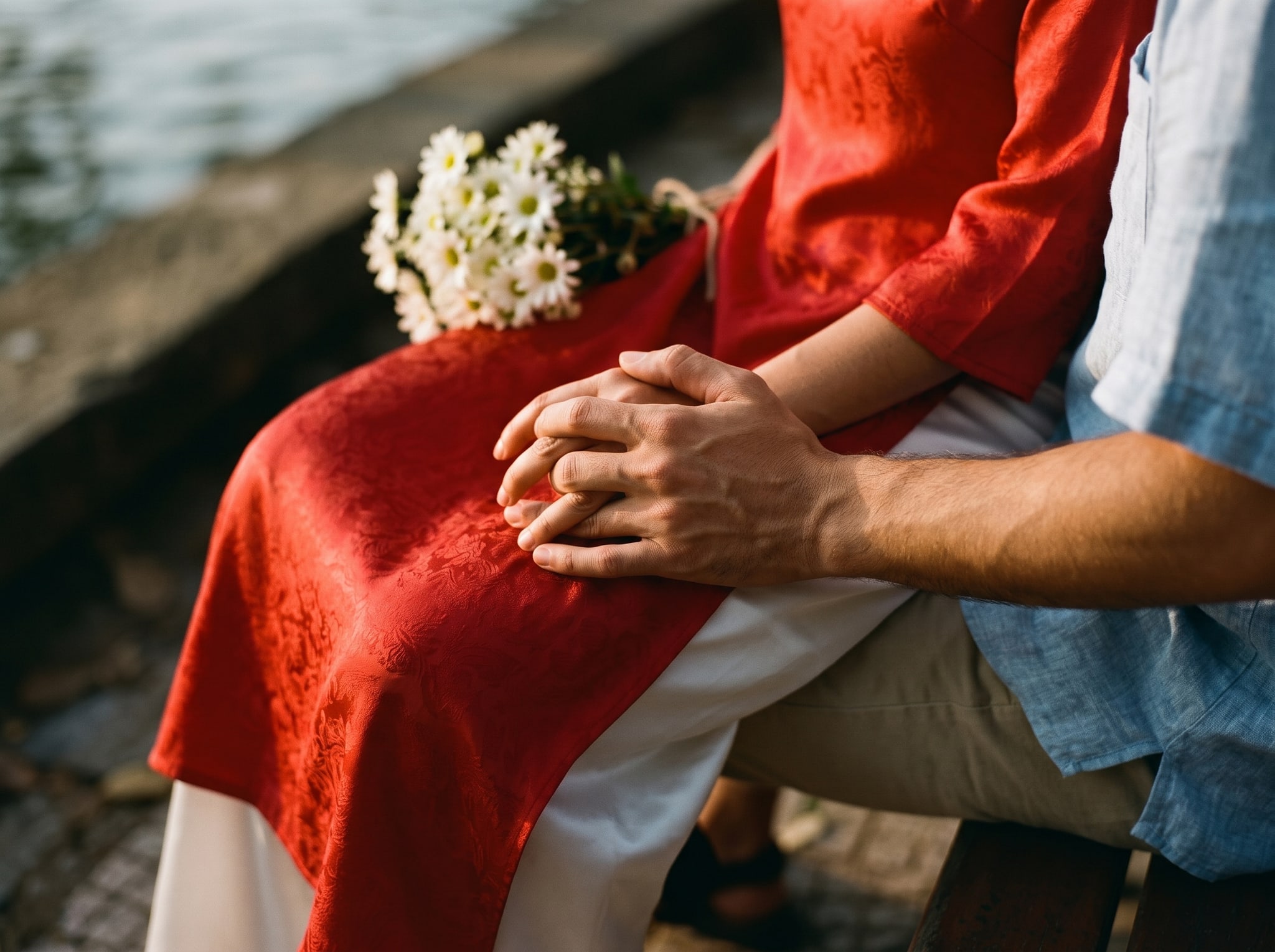
Narrow streets (2–3 meters wide) suit close-frame couple poses: forehead-to-forehead, hand-holding, back-facing the alley. Avoid full-body standing shots—buildings eat the frame. Long ao dai or Western wedding dresses work if hemmed or held; heavy fabrics catch moisture. Rickshaw rides add drama but require 07:00–08:00 booking (after rush, before tourists). We pose you walking naturally, then pause for framed shots—motion beats stiffness in tight spaces. Leaning on storefronts, sitting on stools, or framing yourselves in doorways feel authentic. Avoid bright white; jewel tones and pastels pop against yellow and rust shophouses.
Conclusion: Embrace movement and close framing; ao dai and jewel tones photograph better than white dresses in narrow lanes.
How do you avoid pickpockets, slips and other risks?
Leave valuables in your hotel. Wear slip-resistant shoes—cobblestones and worn stone are slick, especially after rain. Stay hydrated; the Old Quarter has no shade. We carry a small umbrella for light drizzle and know tap-water and café locations. Pickpockets target crowds in main alleys (Ta Hien Street, peak hours); we shoot quieter side lanes. Motorbikes give no warning—we watch for them and pause during heavy traffic. If someone objects to photos, we move. Temple etiquette: remove shoes, silence phones, never pose in prayer rooms.
Conclusion: Practical footwear, hydration, side-alley routing and awareness prevent 95% of Old Quarter mishaps.
Hanoi Old Quarter Pre-Wedding: Decision Framework
| Scenario | Best Light Window | Outfit Type | Crowd Level | Why It Works |
|---|---|---|---|---|
| Romantic morning walk | 07:30–08:30 | Ao dai or vintage dress | Very low | Soft gold light, shophouses glow, few tourists |
| Golden hour drama | 17:00–18:00 | Jewel-tone ao dai | Medium-high | Warm backlighting, but expect 30–50 tourists per block |
| Rainy-day moody shots | 14:00–16:00 post-rain | Dark formal wear | Low | Reflections on wet stone, dramatic clouds, minimal crowds |
| Weekend cultural immersion | 08:00–10:00 | Traditional ao dai | Low-medium | Shops opening, local life visible, not yet tourist rush |
| Rickshaw + backdrop combo | 07:00–08:00 | Long dress or ao dai | Very low | Rickshaw driver available, light perfect, no congestion |
What should you check before booking?
Season: Hanoi's cooler, drier November–January is ideal. Avoid May–September for heat and humidity. Weekday vs. weekend: Weekday mornings (Mon–Fri 07:00–09:00) offer the cleanest backdrops. Outfit and shoes: Confirm fit, test slip resistance on stone, avoid dragging hems. Backup date: Rain or unexpected crowds may need a pivot—we have 2–3 backup alleyways scouted. Your energy: 2–3 hours on foot in a historic district is physical; wear comfortable underclothes and eat beforehand. Expectations: Old Quarter is colorful and character-rich, not a pristine resort backdrop; embrace authenticity.
Why combine Old Quarter with nearby options?
The Old Quarter sits within walking distance of Hoan Kiem Lake, a serene backup for posed, formal shots. Train Street adds industrial romance if booked early morning. A couple photoshoot spanning both the Old Quarter and one lakeside spot gives you variety in one session. We also offer makeup and styling in-house, so your look stays fresh across location changes. Many couples use the Old Quarter's spontaneity for candid frames, then shift to Hoan Kiem for slow, contemplative poses.
Conclusion: Pairing Old Quarter with one formal backdrop maximizes diversity without multiple sessions.
How does this fit your broader pre-wedding plan?
Pre-wedding photoshoots in Hanoi often span engagement portraits, engagement outfit previews, and the final wedding-day look test. The Old Quarter is ideal for playful, character-forward couple energy. If you're planning a broader Hanoi photoshoot that includes ao dai rental and styling, we weave Old Quarter location shoots into that arc. For destination couples, one Old Quarter session captures "we explored Hanoi together" authenticity—complementing any formal pre-wedding album back home.
FAQ
Can we shoot in the Old Quarter on a rainy day?
Yes. Rain creates moody reflections on stone, adds texture to shophouses, and clears crowds. Wear slip-resistant shoes and bring an umbrella. We pause during heavy downpours but resume after light rain.
Do we need a permit to photograph in the Old Quarter?
No formal permit is required for couples or small groups in public streets. Temples require respectful dress (no shorts) and awareness of prayer times. We coordinate timing and etiquette.
What time should we arrive for the earliest light?
Arrive by 06:45 to position for 07:00–07:30 first light. Streets are quietest then. We'll have scouted 3–4 key spots and know exactly where the sun hits.
How many outfit changes can we fit into a 3-hour session?
Realistically, 2–3 changes if each is quick (5–10 minutes). We build in buffer time for crowd surges and motorbike traffic. Prioritize your top 2 looks.
What's the best backup if the Old Quarter is too crowded?
Hoan Kiem Lake offers calmer, more formal framing 10 minutes north. For industrial romance, Train Street works if booked between train windows (08:00–15:00 or 17:00–next dawn).
Can we book a rickshaw ride for photos?
Yes, with advance notice. Rickshaws operate best 07:00–09:00 before tourist rush. Arrange this during your WhatsApp briefing so we secure a driver and plan framing angles.
How much should we budget for the Old Quarter photoshoot itself?
Ask us for a quote on WhatsApp—packages vary by duration, styling, ao dai rental and team size. We're transparent about what's included.
Is the Old Quarter safe for tourists carrying cameras and phones?
Broadly yes, but stay alert in peak-tourist alleys (Ta Hien, Hang Bac) between 11:00–15:00. We shoot quieter side streets and you carry minimal valuables. Leave passports in your hotel.
Check dates
Send your dates, how many people and the style you like. We reply on WhatsApp in English with spots, timing and a quote.
FAQ
Can we shoot in the Old Quarter on a rainy day?
Yes. Rain creates moody reflections on stone, adds texture to shophouses, and clears crowds. Wear slip-resistant shoes and bring an umbrella. We pause during heavy downpours but resume after light rain.
Do we need a permit to photograph in the Old Quarter?
No formal permit is required for couples or small groups in public streets. Temples require respectful dress (no shorts) and awareness of prayer times. We coordinate timing and etiquette.
What time should we arrive for the earliest light?
Arrive by 06:45 to position for 07:00–07:30 first light. Streets are quietest then. We'll have scouted 3–4 key spots and know exactly where the sun hits.
How many outfit changes can we fit into a 3-hour session?
Realistically, 2–3 changes if each is quick (5–10 minutes). We build in buffer time for crowd surges and motorbike traffic. Prioritize your top 2 looks.
What's the best backup if the Old Quarter is too crowded?
Hoan Kiem Lake offers calmer, more formal framing 10 minutes north. For industrial romance, Train Street works if booked between train windows (08:00–15:00 or 17:00–next dawn).
Can we book a rickshaw ride for photos?
Yes, with advance notice. Rickshaws operate best 07:00–09:00 before tourist rush. Arrange this during your WhatsApp briefing so we secure a driver and plan framing angles.
How much should we budget for the Old Quarter photoshoot itself?
Ask us for a quote on WhatsApp—packages vary by duration, styling, ao dai rental and team size. We're transparent about what's included.
Is the Old Quarter safe for tourists carrying cameras and phones?
Broadly yes, but stay alert in peak-tourist alleys (Ta Hien, Hang Bac) between 11:00–15:00. We shoot quieter side streets and you carry minimal valuables. Leave passports in your hotel.
More like this
Pre-wedding photoshoot
Pre-wedding photographer Hanoi: how long does it take?
A typical pre-wedding photoshoot in Hanoi runs 3–8 hours across 1–3 locations, with outfit changes, hair and makeup included. Timing varies by season, crowd density at temples and your comfort level posing for the camera.
Pre-wedding photoshoot
Pre-wedding photographer Hanoi at Temple of Literature
The Temple of Literature is Hanoi's most iconic pre-wedding backdrop: UNESCO-listed courtyards, red silk traditions, minimal crowds before 07:00, and strict photography rules that matter. We shoot ao dai, couple sessions, and proposal moments there—coordinated in English, with in-house styling and t
Pre-wedding photoshoot
Pre-wedding photographer at Hanoi Train Street: shoot, safety & light
Train Street in Hanoi's Old Quarter offers dramatic, intimate backdrops for pre-wedding photos, but timing, crowd management and local rules require expert coordination. Hanoi Photoshoot by Cáo Studio secures permits, positions you safely, and captures the best light without risking fines or injury.