
Home › Blog › Pre-wedding photoshoot
Pre-wedding photoshoot Hanoi lotus pond tips
By the Hanoi Photoshoot team · 2026-11-06
Lotus ponds near Hanoi shoot best May through September when blooms peak; dawn and late afternoon offer softest light on water and petals. Plan 2–3 hours for hair, makeup, outfit changes and 150–200 photos across two outfits (typically ao dai and Western dress). Lotus ponds sit 20–40 minutes outside central Hanoi—crowds thin on weekdays. Avoid midday harsh shadows and rain-heavy monsoon weeks (late August). We at Cáo Studio coordinate transport, in-house styling and timing by bloom calendar; budget depends on outfit count and retouching scope—ask us for a quote on WhatsApp. Lotus stem picking is illegal; stay on safe paths and don't wade. Check dates on WhatsApp
Why are May to September the only lotus season in Hanoi?
Lotus ponds near Hanoi cycle with water temperature and rainfall. Blooms emerge in May as water warms, peak in July and August, and fade by October as temperatures drop. June and September offer dense flowers; July hits peak crowds on weekends. Plant lifecycle timing is fixed—book May or September for fewer tourists and softer light without midseason humidity haze. Early morning (5–6:30 a.m.) before commuters arrive yields empty banks and mist on water.
What time of day shoots best at lotus ponds?
Dawn light (5–7 a.m.) casts gold on petals and creates rim lighting on your couple's silhouettes against water. Late afternoon (4–6 p.m.) gives warm diffused glow as sun lowers but avoid direct overhead shadows after 2 p.m. Midday (10 a.m.–3 p.m.) produces harsh shadows across faces and flattens skin tone—shoot only if you book a pond shaded by trees (rare). Overcast mornings work well but tend to arrive around 8 a.m., so plan early. Best results land between dawn and 7:30 a.m. or after 4 p.m.; most couples choose early morning to finish before heat and crowds peak.
How should couples pose in shallow lotus water?
Stay in water ankle-to-shin deep (12–18 inches); ponds slope unevenly, so test footing before styling begins. Groom stands slightly behind and to one side; bride faces camera with shoulders relaxed, chin forward 1 inch. Hold hands below water surface or at waist to avoid stiff arms. Walk slowly toward or parallel to camera for motion shots—lotus stems tangle easily, so shuffle feet rather than stride. Avoid sitting or kneeling; mud and silt ruin ao dai hems and Western dress. Gaze toward each other (not camera) at water for intimate shots; gaze at camera every third shot for variety. Wet fabric clings; have a robe or cover handy between outfit changes. Posing feels awkward in water—we coach couples through every angle on-site, no experience needed.
Which outfits work best at lotus ponds?
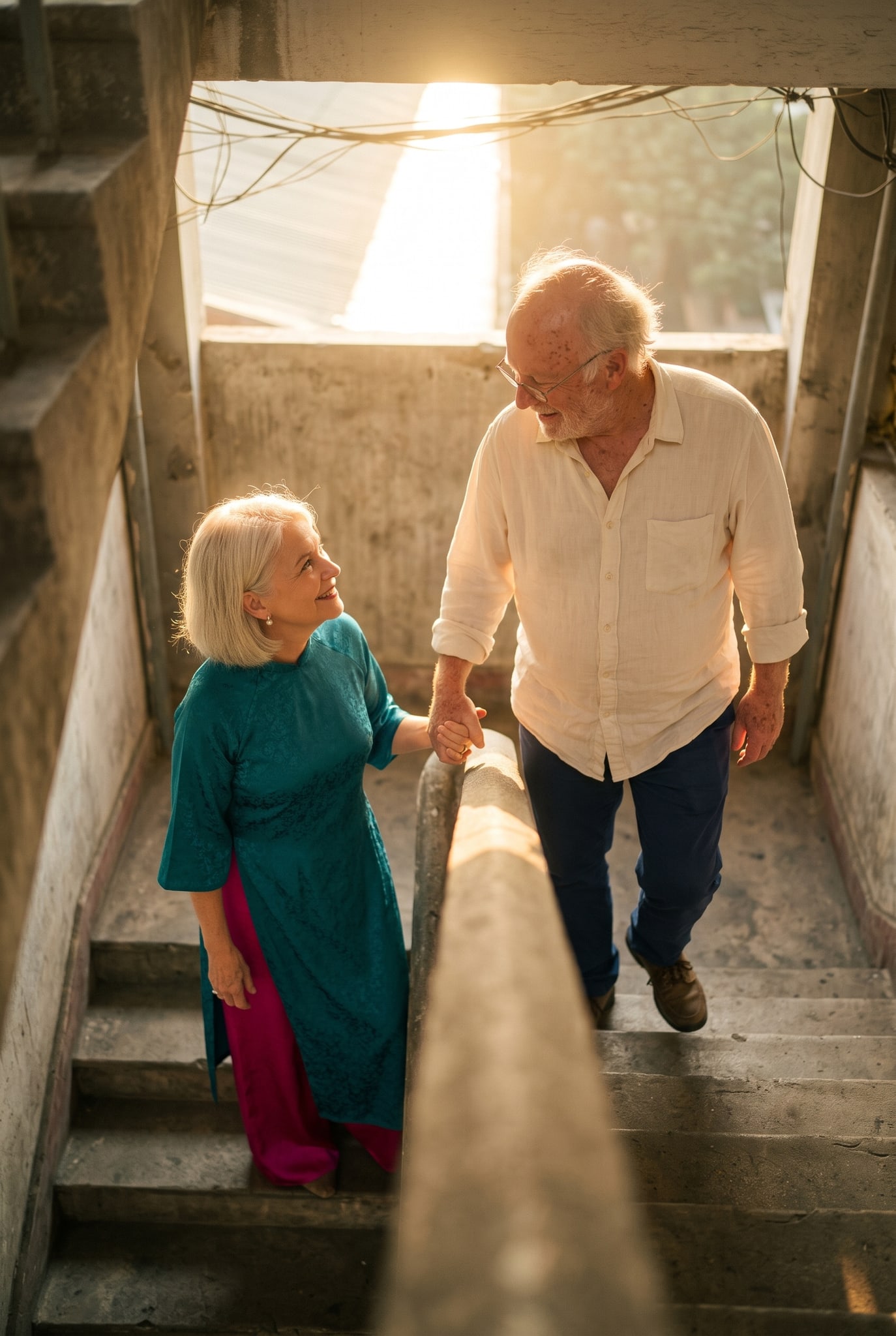
Traditional ao dai in jewel tones (deep red, emerald, navy) photograph best against green lotus leaves—pastels wash out on water. Brides often wear scarlet or burgundy; grooms wear matching or neutral ao dai. Bring a second outfit: Western formal wear (white lace dress, tailored suit) for variety and non-water shots on pond banks. Avoid heavy fabrics that absorb water and take hours to dry; silk ao dai are standard for us—check our makeup and styling options for rental and fitting. Wear water shoes or slip-ons (removed for in-water shots); save heels for bank poses only. Wet hair looks romantic for one or two shots but matts and tangles—bring dry shampoo and a light scarf for touch-ups. Loose layers and flowing skirts move beautifully in water; tight leggings or pencil cuts restrict motion and photograph stiffly.
What crowding and safety rules apply at Hanoi lotus ponds?
Weekdays (Mon–Wed) see 3–5 other couples; weekends (Sat–Sun) attract 15–30 tourists and local families. Popular ponds (e.g., in suburban districts like Tây Hồ) have seasonal permits and close during heavy rain. Paths are muddy and unmarked; wear shoes with grip. Lotus picking is illegal and results in fines; frame shots by posing couples near blooms, not pulling stems. Some ponds require verbal permission from landowners (locals who farm water lilies for market sale); we handle permissions and routing. Mosquitoes are heavy May–September; bring repellent and apply at 6 a.m. before light changes. Water is not potable; bring bottled water and snacks. No lifeguard presence—couples and crew must stay alert to pond depth and slippery banks. Timing around flood risk is essential; we track monsoon forecasts and reschedule if rain exceeds safe thresholds.
| Timing | Light | Crowds | Mosquitoes | Condition |
|---|---|---|---|---|
| 5–7 a.m. | Gold, mist | Very low | Peak | Cool, misty, best for silhouette |
| 7–10 a.m. | Bright, warm | Low–medium | Drop | Clear, safe footing visible |
| 10 a.m.–3 p.m. | Harsh, flat | High | Low | Hot, shadows, avoid |
| 4–6 p.m. | Warm, soft | Medium | Medium | Glowing, wind picks up |
| 6+ p.m. | Orange, fade | Drop | Drop | Dim, colors mute, light ends fast |
How do you avoid wasting time and reshoots?
Scout the pond 1–2 days ahead in your head by reviewing drone footage or asking locals which blooms are fullest this week. Confirm water level, path safety and ownership permission before shoot day. Arrive 30 minutes early to place gear, test camera angles and walk couples through water entry. Have a clear 90-minute timeline: 20 min ao dai in water, 10 min transition and dress change, 20 min Western outfit, 20 min portrait pairs on bank, 20 min contingency or sunset bonus shots. Brief your couple once: what to do if they slip (stay relaxed, you're in 18 inches of water), where to step (follow crew member's hand signals), how to fix tangled lotus stems (don't pull—shuffle sideways). Skip perfectionism on outfit changes; wet clothes are uncomfortable—grab a robe and move fast. Most couples reshoot because light fades or mosquitoes force early exit, not posing mistakes; we use our pre-wedding photoshoot experience to schedule every shot in the best hour, not scramble at the end.
What should couples check before booking a lotus pond session?
Verify bloom status that week with pond managers or our crew—booking "lotus pond" in late September might yield 40% blooms, not full carpet. Ask if your chosen pond allows couples photography (some are private farms). Confirm travel time from your hotel or Old Quarter base; 40 minutes each way eats 80 minutes, reducing shoot time to 1.5 hours. Check weather forecast for 3 days prior; June and September monsoons can close ponds suddenly. Discuss whether you prefer full immersion in water (romantic, challenging posture) or shallow edge shots (safer, less dramatic bloom interaction). Have a backup pond name in mind if your first choice is unsafe or overgrown. Ask your photographer to show previous lotus work in similar conditions—generic couple photos don't prove water competence. Ensure your ao dai rental is water-safe (sealed hems prevent waterlogging) and dry-cleanable post-shoot. We advise a test walk through the water at outfit-fitting stage, not on shoot day.
Pages from our team you may need

FAQ
Can we shoot lotus ponds in October or April?
No. Lotus blooms May–September in Hanoi; April ponds are bare mud, October sees last fading flowers. Early May and late September have 20–50% bloom density—still beautiful but expect gaps. Book mid-June through August for peak floral carpet.
Do we need a permit to photograph at lotus ponds?
Hanoi lotus ponds are mostly on private farmland or local cooperatives. We handle permissions; you don't approach landowners directly. Formal model releases aren't required for couples' personal shoots, but we confirm usage rights before your shoot date.
What if it rains the morning of our shoot?
Light drizzle is romantic and manageable; heavy rain or thunderstorms close ponds for safety. We monitor forecasts and offer a full reschedule or alternate indoor spot (e.g., ao dai studio session) at no extra cost if unsafe conditions emerge on shoot day.
How wet will our ao dai and Western dress really get?
Ankles to shin (ankle-deep poses) = wet hems and lower sleeves only. Full standing in water to waist = wet from waist down on dress, full ao dai soaked to hip. Bring a towel and change into dry clothes post-shoot. Dry cleaning is standard after any water shoot; we recommend a pressing before your wedding.
Can we bring family or friends to watch?
Yes, but keep the group small (1–2 people max). Large groups distract couples, create shadows and slow posing flow. Observers stay behind the shoot zone and don't wade. For family photoshoots or group sessions, we offer dedicated multi-person rates.
What's the best season for lotus and other Hanoi wedding spots combined?
May and early September balance lotus bloom, mild temperature and light rain. Late May has longer daylight (shoots end at 6:30 p.m. with usable light); September has fewer tourists. We can layer a lotus morning with afternoon couple photoshoot at Hoàn Kiếm Lake or Old Quarter in a single day—contact us for a combined itinerary.
Check dates
Send your dates, how many people and the style you like. We reply on WhatsApp in English with spots, timing and a quote.
FAQ
Can we shoot lotus ponds in October or April?
No. Lotus blooms May–September in Hanoi; April ponds are bare mud, October sees last fading flowers. Early May and late September have 20–50% bloom density—still beautiful but expect gaps. Book mid-June through August for peak floral carpet.
Do we need a permit to photograph at lotus ponds?
Hanoi lotus ponds are mostly on private farmland or local cooperatives. We handle permissions; you don't approach landowners directly. Formal model releases aren't required for couples' personal shoots, but we confirm usage rights before your shoot date.
What if it rains the morning of our shoot?
Light drizzle is romantic and manageable; heavy rain or thunderstorms close ponds for safety. We monitor forecasts and offer a full reschedule or alternate indoor spot (e.g., ao dai studio session) at no extra cost if unsafe conditions emerge on shoot day.
How wet will our ao dai and Western dress really get?
Ankles to shin (ankle-deep poses) = wet hems and lower sleeves only. Full standing in water to waist = wet from waist down on dress, full ao dai soaked to hip. Bring a towel and change into dry clothes post-shoot. Dry cleaning is standard after any water shoot; we recommend a pressing before your wedding.
Can we bring family or friends to watch?
Yes, but keep the group small (1–2 people max). Large groups distract couples, create shadows and slow posing flow. Observers stay behind the shoot zone and don't wade. For [family photoshoots](/family-photoshoot) or group sessions, we offer dedicated multi-person rates.
What's the best season for lotus and other Hanoi wedding spots combined?
May and early September balance lotus bloom, mild temperature and light rain. Late May has longer daylight (shoots end at 6:30 p.m. with usable light); September has fewer tourists. We can layer a lotus morning with afternoon [couple photoshoot](/couple-photoshoot) at Hoàn Kiếm Lake or Old Quarter in a single day—[contact us for a combined itinerary](/contact).
More like this
Pre-wedding photoshoot
Pre-Wedding Photographer Hoan Kiem Lake: Tips for Perfect Hanoi Shots
Hoan Kiem Lake is Hanoi's most iconic pre-wedding backdrop, but timing, crowds, and permit rules make the difference between stunning portraits and wasted hours. We share exact timing, outfits, and posing strategies that actually work.
Pre-wedding photoshoot
Pre-Wedding Edited Photos: How Many Should You Expect?
Pre-wedding edited photo counts vary by session length and package design. We explain what Hanoi Photoshoot by Cáo Studio delivers, how long editing takes, and how to choose the right volume for your needs.
Pre-wedding photoshoot
Pre-wedding photographer at Hanoi Lotus Pond: shoot guide & booking
Hanoi Lotus Pond offers dreamlike golden-hour light and blooming flowers for pre-wedding shoots, but success depends on season, time of day and precise spot selection. We share exactly what to expect and how to book.