
Home › Blog › Pre-wedding photoshoot
Pre-Wedding Photographer Hanoi Train Street: Best Time & Light Guide
By the Hanoi Photoshoot team · 2026-11-06
Train Street delivers a cinematic industrial-romantic aesthetic for pre-wedding couples in Hanoi, but success hinges on three factors: shoot between 17:00–18:30 (golden hour) when sun rakes the rails at low angle; visit October–November or February–March when humidity and haze clear; arrive 30 minutes early to secure uncluttered framing before evening crowds peak. Trains run roughly hourly; while active tracks add dramatic urgency, they also create safety and timing unpredictability. We recommend a 2–3 hour session (60–90 minutes on-location, rest for styling and movement) with a guide familiar with Train Street's changing pedestrian flow and the informal rules tourists often miss. Cost basis varies by package; ask us for a quote on WhatsApp. Avoid midday (harsh overhead shadows, extreme heat) and the rainy season (May–September), when skies grey out and reflections muddy color. Check dates on WhatsApp
What makes Train Street so visually striking for couples?
Train Street's narrow alley—barely 3 meters wide—frames the railway tracks with cramped French-colonial shopfronts, weathered ochre walls and decades of texture. The close quarters force perspective compression: your couple appears intimate and framed, not dwarfed by landscape. Overhead wires and hanging laundry add documentary authenticity that polished studio backdrops cannot. The tracks themselves—rust, ballast, geometric lines—read as powerful graphical elements in close-up framing. This raw, lived-in aesthetic suits couples seeking an edgy departure from Hanoi's temple-lake-silk-road clichés. The site's 70-year-old colonial DNA appeals to creative, adventurous personalities; it signals "we chose somewhere real, not a postcard." For pre-wedding photoshoot clients seeking narrative, not just beauty, Train Street is Hanoi's strongest emotional anchor.
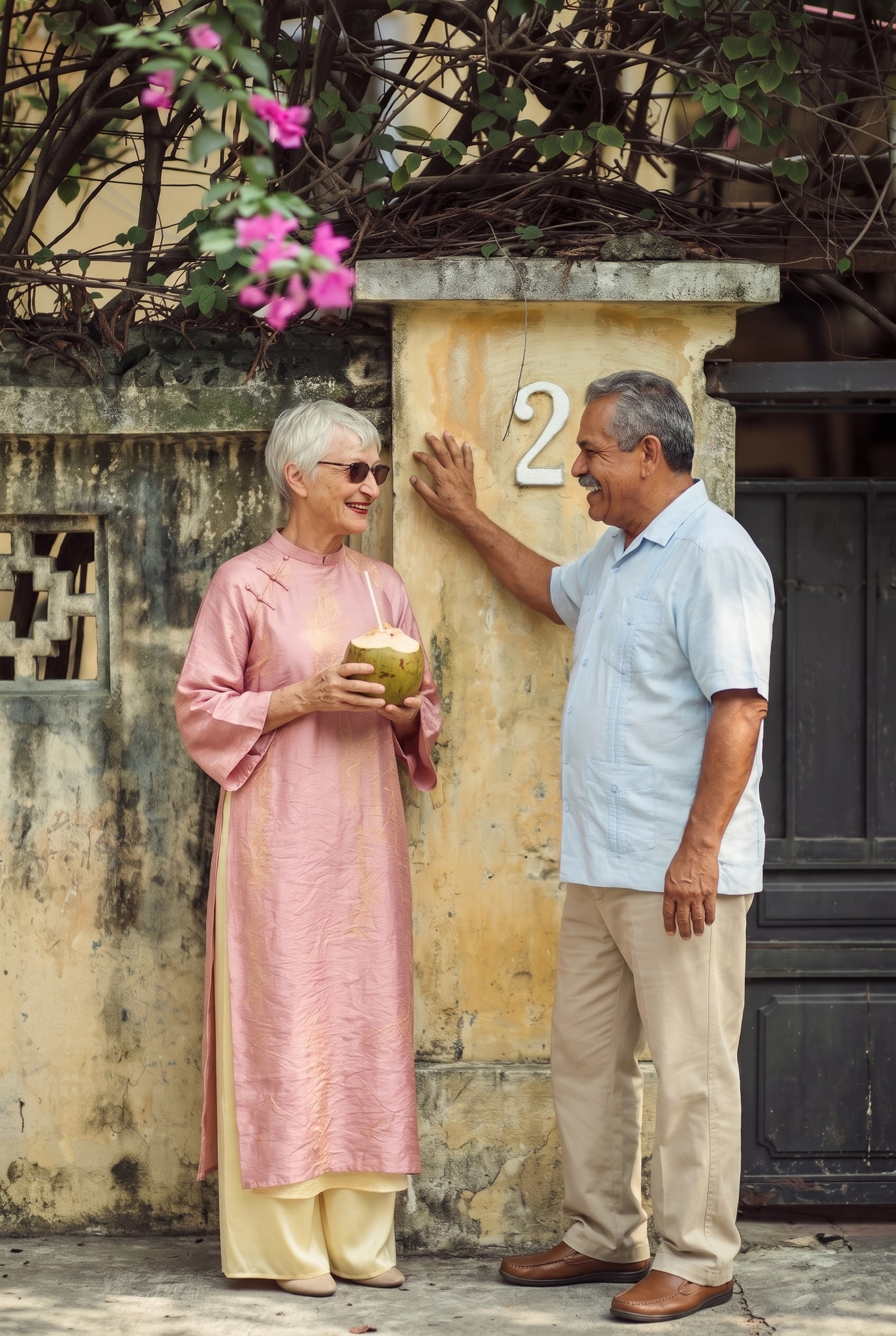
When does golden hour hit Train Street best?
Golden hour—the 60–90 minutes before sunset—floods the east-west railway corridor with warm, directional light. In Hanoi, sunset ranges from 16:45 (winter, December) to 18:45 (summer, June). Train Street runs north-south, so ideal sidelight occurs when the sun is 15–30° above the western horizon, typically 17:00–18:30 year-round. At this angle, warm light rakes the couple's faces without harsh shadows under eyes; it also ignites the ochre walls and oxidized rail surfaces. Before 16:45 in winter, or after 18:45 in summer, the light flattens or blues. Earlier afternoon (15:00–16:30) produces flat, overhead illumination—poor for skin tone and unflattering for the couple's figure. Dawn (06:30–07:30) offers similar sidelight but lower foot traffic, making framing cleaner; however, fewer couples choose early starts due to styling and commute time. Golden hour timing is non-negotiable; shooting outside this window, even by 30 minutes, visibly degrades the aesthetic. Book your session around this window, not against it.
How do Train Street crowds shift hour by hour?
Train Street fills in waves tied to commute patterns and tourism flow:
| Time | Crowd Level | Photo Viability | Light Quality |
|---|---|---|---|
| 06:30–08:00 | 2–3 locals, cyclo riders | Excellent (uncluttered) | Cool, low sidelight |
| 09:00–15:00 | Tourists, shoppers (peaks 11:00–13:00) | Moderate (easy to clear frame) | Flat, overhead, harsh |
| 15:30–16:45 | Tourist waves, selfie groups | Moderate (patient framing works) | Improving, oblique |
| 17:00–18:30 | Peak tourist surge + sunset seekers | Challenging (constant background churn) | Best (golden) |
| 18:45–19:30 | Thinning, local shoppers close | Good (manageable) | Fading, blue-cast |
Golden hour coincides with peak tourism—the trade-off is unavoidable. We manage this by (1) scouting train timing 10 minutes before to position the couple between foot traffic flows, (2) using longer focal lengths (70–100mm) to compress foreground clutter, (3) booking a guide who holds space and signals approaching groups. Avoid midday (09:00–15:00) unless you specifically want bright, shadowless, "editorial" tones; that requires skill to avoid looking washed-out. Early morning (06:30–08:00) offers the best crowd-to-light ratio but demands logistical flexibility from the couple.
Which seasons deliver the clearest Train Street light?
Hanoi's humidity and seasonal haze dramatically impact image clarity:
October–November (autumn): Clear skies, 20–28°C, lowest humidity post-monsoon. Golden hour yields saturated color, sharp detail, and minimal lens flare. Rain is rare. This is peak season for a reason; expect maximum crowds and booked time slots.
December–January (early winter): Cool (15–20°C), very clear. Golden hour is earlier (16:45 sunset) but equally crisp. Fewer tourists than October. Low humidity means strong color contrast on the ochre walls.
February–March (late winter): Warm (18–25°C), still dry. Late-March approaches the hot season; haze begins building. Golden hour light remains sharp through late March, then Hanoi enters the pre-monsoon phase of atmospheric moisture.
April–May: Haze from regional agricultural burning and humidity surge. Golden hour dims through moisture; colors mute; flare increases. Not recommended unless the couple accepts a softer, more diffused aesthetic.
June–September (monsoon): Frequent cloud cover, heavy humidity, grey skies. Golden hour is dimmer; colors flatten. Occasional dramatic storm light can work, but it's inconsistent and risky. Avoid unless shooting for moody black-and-white.
Book your session October–March for guaranteed clarity. If summer is unavoidable, shoot on the clearest forecast day and budget for post-production color correction. We can advise based on the 7-day forecast once you confirm your date.
What are Train Street's unwritten safety and access rules?
Train Street is an active railway corridor—trains run roughly hourly but irregularly. Rules are enforced loosely but matter:
Access: The alley is open to pedestrians during daylight. No formal permit is required for photography, but commercial film crews or drones need approval (usually denied for tourists). A solo couple with a camera is never stopped; a professional crew with multiple bodies and reflectors sometimes attracts local officials, who may ask for paperwork. We carry documentation as a precaution.
Train timing: When a train approaches (you'll hear it 60–90 seconds ahead), pedestrians must press against shopfronts. Do not attempt dramatic "train-crossing" shots; it's genuinely dangerous and disrespectful to residents. When a train passes, step into a doorway or off the track entirely. Wait 5–10 minutes after it clears before repositioning. Trains do not run on a published schedule; we check the day-of via local contacts.
Shop respect: The storefronts are active residences and businesses. Do not enter doorways, photograph inside windows, or block shop entrances for extended takes. Residents are used to tourists but fatigue quickly. A 2–hour presence is acceptable; all-day shoots are frowned upon.
Local guide: Many visitors hire a local guide (our current quote–300,000 per hour, approximately) to manage timing and relations. We often coordinate with trusted local fixers who know the current mood and any temporary closures. This is included in our package; ask us for a quote on WhatsApp.
Photography ethics: Avoid shooting people in their homes or intimate moments without clear consent. Lean toward couple portraiture and landscape/detail framing rather than candid street documentary.
How does Train Street compare to other Hanoi pre-wedding backdrops?
| Location | Vibe | Best Light Window | Crowd Level | Physical Demand |
|---|---|---|---|---|
| Train Street | Industrial, edgy, intimate | 17:00–18:30 (golden) | Peak tourists | Moderate (narrow walk) |
| Hoan Kiem Lake | Romantic, classic, expansive | 17:30–19:00 | Variable (parks busy) | Low (flat, open) |
| Old Quarter | Textured, chaotic, authentic | 16:00–18:00 | High (continuous foot traffic) | Moderate (uneven, crowded) |
| French Quarter (tree-lined streets) | Elegant, manicured, dreamy | 17:00–18:30 | Moderate (locals, cars) | Low (wide pavements) |
| Countryside day-trip (rice paddies, villages) | Pastoral, serene, expansive | 16:00–17:30 | None (rural) | High (walking, exposure) |
Train Street wins for couples seeking emotional intensity and unique framing. Hoan Kiem Lake suits tradition-leaning couples; the Old Quarter offers narrative chaos; French Quarter is safer for formal wear. Multi-location pre-wedding photoshoot sessions (4–6 hours) often combine Train Street (1 hour, golden hour) with a second location (lake or quarter) for variety. We design packages around the couple's aesthetic and endurance.
What to check before you book:
- Forecast: Confirm weather 3 days prior. If rain is forecast, we reschedule or pivot to a covered location (Old Quarter arcades, French Quarter covered arcades).
- Train timing: We confirm the rough schedule 2 days before; trains occasionally shift due to maintenance.
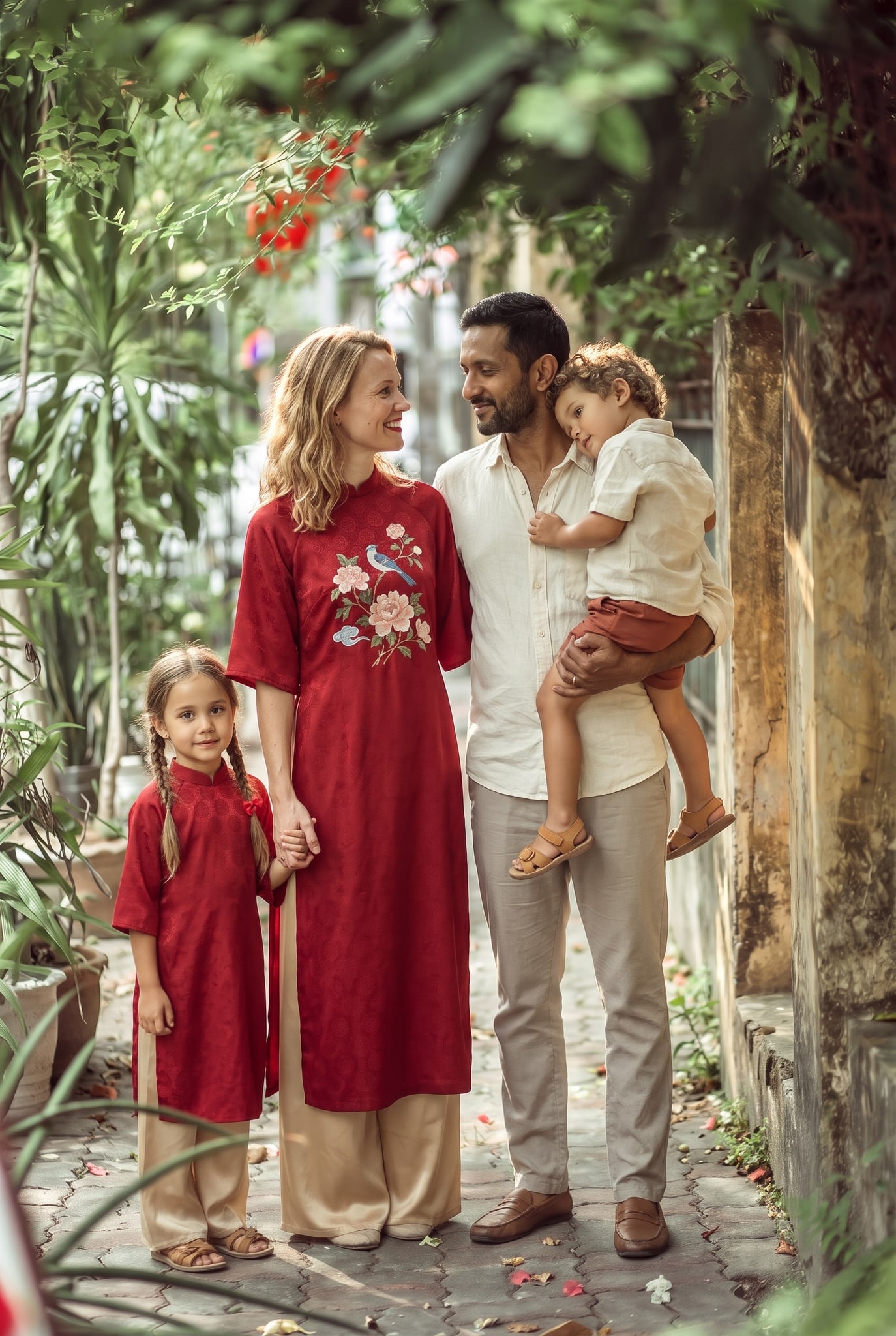
- Outfit durability: Train Street's ground is uneven, sometimes wet. Ao dai (if rented from us via makeup, hair & ao dai rental) is protected by sturdy footwear and careful stepping. Western wedding dresses may require a hem guard or backup shoes.
- Physical comfort: The alley offers no shade between shots. Bring water; we carry a small cooler.
- Couple energy: A full 2–3 hour Train Street session is mentally and physically demanding. We recommend a shorter engagement session (45–60 minutes on-site) for couples first-timing it; reserve Train Street for the pre-wedding photoshoot proper.
Plan your Hanoi shoot
Ready to shoot Train Street?
We specialize in pre-wedding photoshoot sessions at Train Street with synchronized golden hour timing, in-house styling via makeup, hair & ao dai rental, and safety-first logistics. If Train Street feels too intense, we also offer couple photoshoot packages at Hoan Kiem Lake, the Old Quarter, or a hybrid multi-location day. Every session includes posing guidance for non-models, outfit changes, and digital delivery within 10 days.
Ask us for a quote on WhatsApp—mention your preferred date, outfit style (western dress, ao dai, or both), and whether Train Street is your only location or part of a day-long shoot. We'll confirm light timing, crowd strategy, and all logistics before you commit.
Plan your Hanoi shoot
FAQ
Can we shoot Train Street if a train is passing?
No. Trains are genuinely dangerous; do not attempt photos during passage. When you hear a train (60–90 seconds before arrival), move off the tracks into a doorway or side alley. Wait 10 minutes after it clears before resuming. We manage train timing by coordinating with local guides and avoiding peak train hours when possible.
Is a local guide mandatory for Train Street shoots?
Not legally mandatory, but strongly recommended. A guide manages train timing alerts, holds space in crowds, and navigates informal access etiquette that varies month-to-month. We include a guide or local fixer in our standard package; the cost is bundled into the session fee. Ask us for a quote on WhatsApp for package details.
What if the forecast shows rain on our booked date?
We monitor the forecast 3 days before. If heavy rain is predicted, we offer three options: (1) reschedule to the next clear day within your availability window (free reschedule), (2) pivot to a covered backup location (Old Quarter arcades, French Quarter arcades) with modified aesthetics, or (3) proceed if you accept softer, moodier light (some couples love rain-on-stone atmosphere). We confirm your preference in advance.
Do we need a permit to shoot at Train Street?
Solo couples with a camera do not need a permit and are never turned away. Professional crews (multiple cameras, reflectors, equipment, or commercial clients) sometimes attract polite inquiries from local officials. We carry documentation and manage these interactions; it's rarely a blocker, just a courtesy check. Ask us for a quote on WhatsApp if you're unsure about your setup.
What should we wear to Train Street—western dress, ao dai, or both?
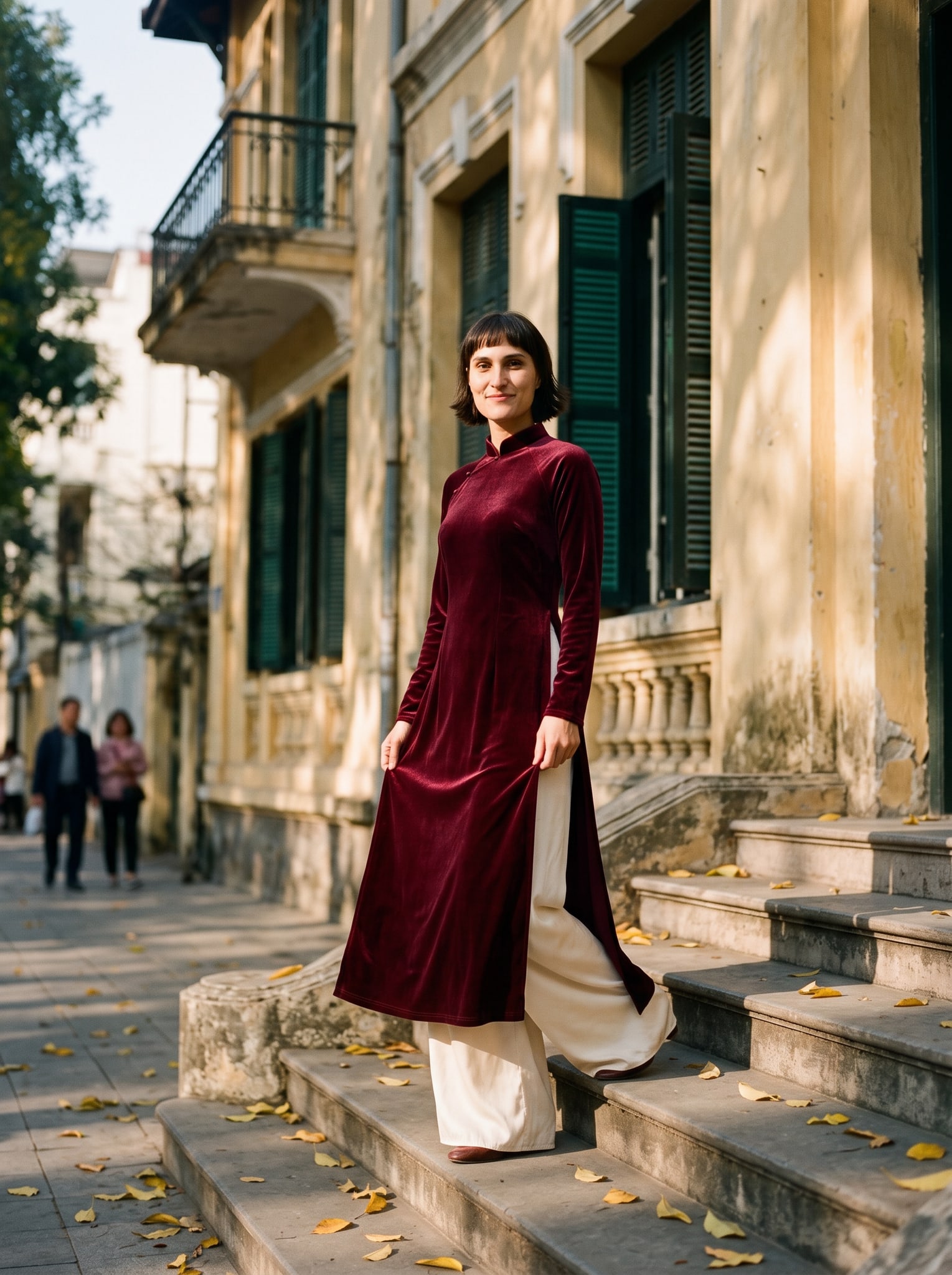
Both work. Ao dai (rented from us via makeup, hair & ao dai rental) complements Train Street's colonial texture beautifully; a western dress or suit offers a bold contemporary contrast. Many couples do a 60-minute ao dai block (60–90 minutes total) and a 30-minute western dress quick-change. Train Street's ground is uneven and sometimes wet; wear sturdy, slip-resistant shoes or bring a second pair. We advise on outfit transitions during our pre-shoot consultation.
How long should we budget for a Train Street session?
Budget 2–3 hours total: 30 minutes for arrival and initial framing, 60–90 minutes on-location (accounting for train waits, crowd gaps, and outfit changes), 30 minutes for travel and buffer. Golden hour is 45–90 minutes; we maximize it by scouting positioning 10 minutes ahead. For a multi-location day combining Train Street + Hoan Kiem Lake or the Old Quarter, add 1–2 hours for travel and the second shoot. We design the timeline around your energy and the light forecast.
Check dates
Send your dates, how many people and the style you like. We reply on WhatsApp in English with spots, timing and a quote.
FAQ
Can we shoot Train Street if a train is passing?
No. Trains are genuinely dangerous; do not attempt photos during passage. When you hear a train (60–90 seconds before arrival), move off the tracks into a doorway or side alley. Wait 10 minutes after it clears before resuming. We manage train timing by coordinating with local guides and avoiding peak train hours when possible.
Is a local guide mandatory for Train Street shoots?
Not legally mandatory, but strongly recommended. A guide manages train timing alerts, holds space in crowds, and navigates informal access etiquette that varies month-to-month. We include a guide or local fixer in our standard package; the cost is bundled into the session fee. Ask us for a quote on WhatsApp for package details.
What if the forecast shows rain on our booked date?
We monitor the forecast 3 days before. If heavy rain is predicted, we offer three options: (1) reschedule to the next clear day within your availability window (free reschedule), (2) pivot to a covered backup location (Old Quarter arcades, French Quarter arcades) with modified aesthetics, or (3) proceed if you accept softer, moodier light (some couples love rain-on-stone atmosphere). We confirm your preference in advance.
Do we need a permit to shoot at Train Street?
Solo couples with a camera do not need a permit and are never turned away. Professional crews (multiple cameras, reflectors, equipment, or commercial clients) sometimes attract polite inquiries from local officials. We carry documentation and manage these interactions; it's rarely a blocker, just a courtesy check. Ask us for a quote on WhatsApp if you're unsure about your setup.
What should we wear to Train Street—western dress, ao dai, or both?
Both work. Ao dai (rented from us via [makeup, hair & ao dai rental](/makeup-and-styling)) complements Train Street's colonial texture beautifully; a western dress or suit offers a bold contemporary contrast. Many couples do a 60-minute ao dai block (60–90 minutes total) and a 30-minute western dress quick-change. Train Street's ground is uneven and sometimes wet; wear sturdy, slip-resistant shoes or bring a second pair. We advise on outfit transitions during our pre-shoot consultation.
How long should we budget for a Train Street session?
Budget 2–3 hours total: 30 minutes for arrival and initial framing, 60–90 minutes on-location (accounting for train waits, crowd gaps, and outfit changes), 30 minutes for travel and buffer. Golden hour is 45–90 minutes; we maximize it by scouting positioning 10 minutes ahead. For a multi-location day combining Train Street + [Hoan Kiem Lake](/spots/hoan-kiem-lake) or the [Old Quarter](/spots/hanoi-old-quarter), add 1–2 hours for travel and the second shoot. We design the timeline around your energy and the light forecast.
More like this
Pre-wedding photoshoot
Pre-Wedding Photographer Hoan Kiem Lake: Tips for Perfect Hanoi Shots
Hoan Kiem Lake is Hanoi's most iconic pre-wedding backdrop, but timing, crowds, and permit rules make the difference between stunning portraits and wasted hours. We share exact timing, outfits, and posing strategies that actually work.
Pre-wedding photoshoot
Pre-Wedding Edited Photos: How Many Should You Expect?
Pre-wedding edited photo counts vary by session length and package design. We explain what Hanoi Photoshoot by Cáo Studio delivers, how long editing takes, and how to choose the right volume for your needs.
Pre-wedding photoshoot
Pre-wedding photographer at Hanoi Lotus Pond: shoot guide & booking
Hanoi Lotus Pond offers dreamlike golden-hour light and blooming flowers for pre-wedding shoots, but success depends on season, time of day and precise spot selection. We share exactly what to expect and how to book.