
Home › Blog › Pre-wedding photoshoot
Pre-Wedding Photographer Hanoi Poses: Real Couples' Guide
By the Hanoi Photoshoot team · 2026-11-06
Pre-wedding poses in Hanoi work best when they match the light, location, and your comfort—not when they copy Instagram. We recommend starting with grounded poses (feet planted, shoulders dropped) near soft light at golden hour (6–7am or 5–6pm), moving into movement poses (walking towards or away from camera) once you settle, and finishing with intimate close-ups in shade. Avoid stiff arm placements; instead, rest hands on your partner's back, tuck thumbs into pockets, or let arms hang naturally. Hanoi's humid air and crowds (Old Quarter, Train Street) mean posing takes 2–3 hours to build confidence—budget extra time. Our team at Cáo Studio's Hanoi office directs non-models through every frame: we show you how to stand, breathe, and shift weight so photos look effortless, not forced. Cost depends on location count and duration; plan your shoot on WhatsApp.
What light and time of day suit which poses?
Golden hour—6–7am or 5–6pm year-round—flatters all pose types because warm, low-angle light sculpts faces and minimizes shadows under eyes and chin. Morning light is strongest November–February; afternoon light is softest May–August. Backlighting (sun behind you) works best for walking poses and silhouettes; side light suits intimate close-ups. Midday (10am–4pm) harsh light flattens faces and casts hard shadows—avoid or pose entirely in shade. We time shoots to match pose mood: energetic, playful walking poses fit dawn; romantic, still poses fit dusk. Test your comfort early: if you're stiff at 6am, you'll be stiff at 6pm, so book consecutive hours to warm up.
Conclusion: Morning light suits movement; evening light suits stillness.
How do you pose hands without looking awkward?
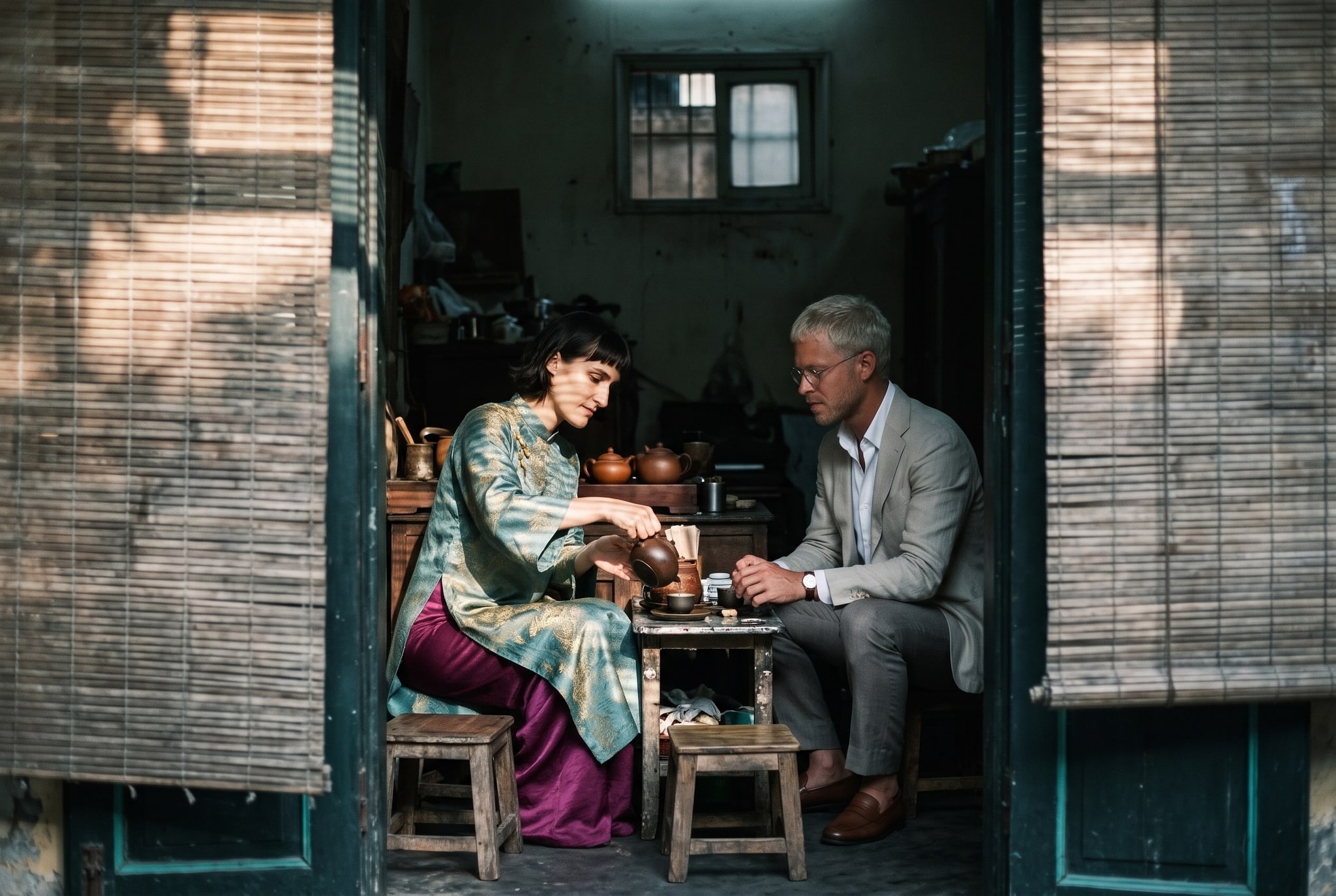
Hands are the hardest part for non-models. Never let them hang dead at your sides or rest flat on thighs—instead, curve them slightly and place them on your partner's back, shoulder, or waist; tuck one thumb into a pocket while the other rests on a leg; or hold hands with fingers interlaced loosely (not white-knuckle tight). For solo shots during couple sessions, rest hands in hair, across your own shoulder, or in a jacket pocket. Keep wrists soft and slightly bent—straight wrists look stiff. If you're holding flowers (common in ao dai sessions or formal pre-wedding), grip stems low and let blooms fall naturally past your hip. We direct hand placement in real time on set; if it looks tense in the frame, we pivot immediately. Hands should move with your breath—tense shoulders make tense hands.
Conclusion: Curved, purposeful hands beat dangling arms every time.
Which poses work best at Hanoi's most popular locations?
Different spots demand different poses because of light, crowds, and background clutter. At Hoan Kiem Lake, morning poses suit the quiet eastern shore (fewer tourists, golden light): stand side-by-side gazing at water, or walk hand-in-hand toward the Turtle Tower. Afternoon crowds mean you're squeezed for space—use tighter framing and close-ups. On Train Street, narrow alleys force you into linear poses: walk toward camera down the center, or stand back-to-back with the weathered shopfronts as your frame. Avoid sprawled poses here—no room. In the Old Quarter, chaotic backgrounds (hanging laundry, power lines, tourists) work better with posed stillness, not movement: stand close to your partner, frame tightly on faces, and use doorways as anchors. Pre-wedding shoots at temples (Tran Quoc, One Pillar) require respectful stances—no lying down, no casual lounging—so upright, composed poses suit the reverent mood. We scout each spot before your session and show you exactly where to stand for clean backgrounds and best light.
| Location | Best pose type | Light window | Crowd risk | How we help |
|---|---|---|---|---|
| Hoan Kiem Lake | Walking, gazing | 6–7am or 5–6pm | High after 10am | Shore scouting, timing |
| Train Street | Linear, back-to-back | Any, hard shadows | Low weekdays | Narrow-space framing |
| Old Quarter | Still, intimate | 7–8am or 4–5pm | Very high | Doorway anchors, tight crops |
| Temple grounds | Upright, reverent | 8–9am or 3–4pm | Moderate | Respectful poses, shade routing |
| Lake parks (Tay Ho) | Movement, playful | Golden hour | Low | Space for walking patterns |
Conclusion: Location dictates pose energy and timing.
How do you move during a pose sequence for natural-looking shots?
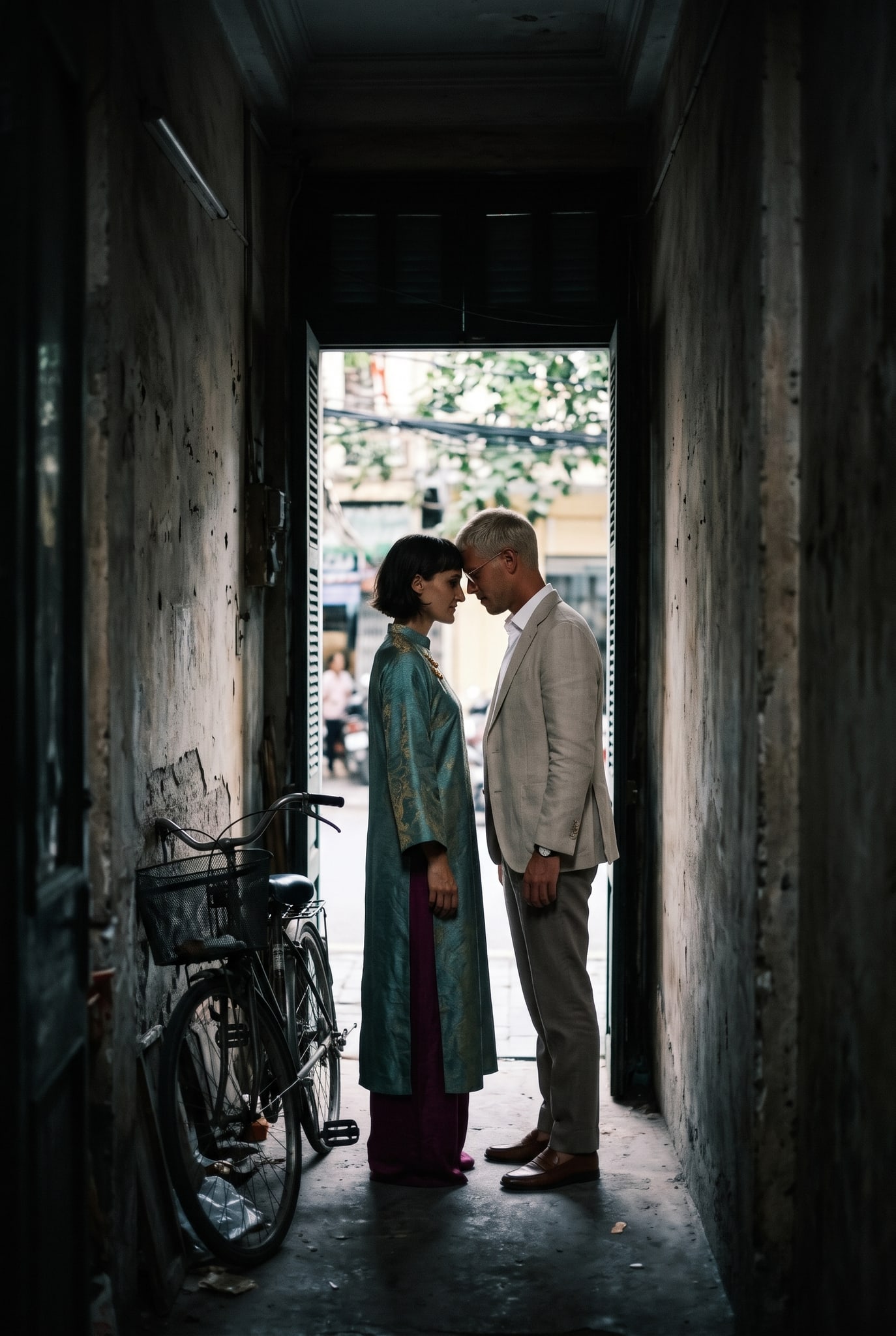
Movement poses—walking, turning, laughing—look more authentic than frozen smiles because they give your face and body micro-expressions. Start a sequence by walking toward camera slowly while holding hands; halfway through, glance at each other; complete it by walking past camera. Then repeat walking away. Between takes, we cue you to breathe deeply, shake out shoulders, and reset—tension telegraphs in photos. For turning poses, step together, pivot on one foot, and look back at the camera with a natural head tilt (not stiff). If you're nervous about smiling on command, we ask you to talk to each other instead—genuine laughter photographs infinitely better than a posed grin. Slow everything down; rushed movement reads as stiff. Hanoi's humidity and heat mean you'll fatigue after 90 minutes of posing, so we front-load energy poses early and save quiet, seated poses for the final stretch. This builds natural progression in your edit.
Conclusion: Real movement beats frozen poses; breath and rhythm matter more than expressions.
What outfit and styling choices make poses easier?
Outfit fit affects how comfortable you feel posing, which affects how natural you look. Fitted clothes (not tight) photograph better than loose because they show your actual body line and don't hide your hands or create unflattering bunching. Avoid busy patterns, large logos, and clashing colors—they distract from your faces and muddy group composition. For pre-wedding, we often recommend one partner in ao dai (classic, flatters poses, tells a story) and one in tailored modern dress or suit; this contrast reads well in frames and gives you pose variety—ao dai poses tend toward stillness and grace, while Western formal wear suits walking and playful movement. Jewelry should be minimal and secure; large dangling pieces catch light poorly and move awkwardly. Shoes matter: wear ones you've walked in before—new shoes make you tense. We offer makeup, hair and ao dai rental in-house, so styling is coordinated with your poses beforehand; our team knows which hairstyles and makeup looks survive humidity and stay camera-ready for 2–3 hours. If you choose your own clothes, send photos beforehand so we can advise on color, fit, and pose compatibility.
Conclusion: Fitted, minimal clothes and practiced shoes free you to pose naturally.
What to check before you book
- Have you shot pre-wedding before? Yes—we specialize in pre-wedding photoshoots for international couples and expats. Ask to see a full session gallery to gauge pose variety and lighting quality.
- How many locations can we visit? Most couples fit 2–3 spots into one 3-hour session. More locations = less posing time per spot and more rushed feeling. Prioritize depth over breadth.
- Will you direct me through every pose, or freestyle? We direct every frame for non-models. If you want editorial control, discuss posing style in your WhatsApp consultation beforehand.
- What if I'm very stiff or camera-shy? Common. We allocate 30 minutes for warm-up poses (usually walking, casual talk). By 45 minutes in, most couples relax. Book longer sessions if anxiety is high.
- Does humidity or rain ruin poses? Humidity makes hair frizz and skin shiny—we adjust lighting and include touch-ups. Light rain softens shadows and looks romantic; heavy rain forces indoor pivots. Discuss contingency locations.
- Can we try ao dai, couple, and family poses in one session? Ao dai, couple, and family are different sessions because outfit changes and group dynamics shift energy. One theme per booking works best.
Many couples assume poses are about perfection. They're not. Poses are about trust—trusting your photographer's eye, trusting your partner's touch, trusting that stillness and movement together create rhythm in the final images. The best pre-wedding photographs we've shot in Hanoi come from couples who stopped thinking about their faces and started thinking about how they move together. Humidity, crowds, and unfamiliar camera angles will feel strange; that's normal and lasts about 45 minutes. After that, muscle memory kicks in, breathing steadies, and your actual relationship shows through. We've directed thousands of poses across Hoan Kiem Lake, Train Street, the Old Quarter, and quieter parks—every single one of those couples looked best when they forgot they were being photographed.
If you're pairing pre-wedding poses with other session types—perhaps a couple photoshoot for candids, or maternity photoshoot if you're expecting—tell us early so we coordinate styling and timing. We also cover proposal photographer shoots (which demand reaction poses, not static ones) and graduation photoshoot for celebratory energy. Each session type has its own pose grammar; mixing them well requires planning. Our Hanoi team works entirely in English on WhatsApp; send your vision, preferred light, and any pose insecurities, and we'll build a shot list tailored to your comfort and location light windows.
FAQ
Should we practice poses before the shoot?
No—overpractice makes you stiff and self-conscious. Watching one or two real pre-wedding galleries (not Instagram staged shots) helps you see what resonates; that's enough. We'll teach you the rest on set with real-time feedback.
What if one of us photographs worse from one side?
Everyone has a favored side (jaw angle, shoulder line, eye shape). Tell us in your WhatsApp brief, and we'll prioritize that angle in close-ups and romantic shots. Wider poses will mix angles naturally.
Can we bring props (flowers, signage, benches)?
Hanoi's public spaces (lakes, old streets, temples) don't permit props without permission. We work with natural elements—light, architecture, water, trees. Flowers we incorporate if you're renting ao dai. Discuss any must-haves beforehand.
How many outfit changes can we do in one session?
One outfit change adds 15–20 minutes (styling, touch-ups, light reset). Most 3-hour sessions fit one outfit shift comfortably. Two changes compress posing time and tire you. Longer sessions allow more flexibility.
What if we're not a couple—can we do pre-wedding poses as friends or family?
Pre-wedding sessions are designed for romantic couples because pose language (proximity, eye contact, hand placement) emphasizes intimacy. For friends or family groups, book family photoshoot or couple photoshoot instead—different energy, better suited to group dynamics.
Do you edit/retouch hands and posture in photos?
We do light retouching (skin smoothing, color grading, minor posture straightening in 2–3 frames if posture slipped). We don't reshape bodies or drastically alter pose lines—that breaks authenticity. See our edited samples before booking.
Check dates
Send your dates, how many people and the style you like. We reply on WhatsApp in English with spots, timing and a quote.
FAQ
Should we practice poses before the shoot?
No—overpractice makes you stiff and self-conscious. Watching one or two real pre-wedding galleries (not Instagram staged shots) helps you see what resonates; that's enough. We'll teach you the rest on set with real-time feedback.
What if one of us photographs worse from one side?
Everyone has a favored side (jaw angle, shoulder line, eye shape). Tell us in your WhatsApp brief, and we'll prioritize that angle in close-ups and romantic shots. Wider poses will mix angles naturally.
Can we bring props (flowers, signage, benches)?
Hanoi's public spaces (lakes, old streets, temples) don't permit props without permission. We work with natural elements—light, architecture, water, trees. Flowers we incorporate if you're renting ao dai. Discuss any must-haves beforehand.
How many outfit changes can we do in one session?
One outfit change adds 15–20 minutes (styling, touch-ups, light reset). Most 3-hour sessions fit one outfit shift comfortably. Two changes compress posing time and tire you. Longer sessions allow more flexibility.
What if we're not a couple—can we do pre-wedding poses as friends or family?
[Pre-wedding](/pre-wedding) sessions are designed for romantic couples because pose language (proximity, eye contact, hand placement) emphasizes intimacy. For friends or family groups, book [family photoshoot](/family-photoshoot) or [couple photoshoot](/couple-photoshoot) instead—different energy, better suited to group dynamics.
Do you edit/retouch hands and posture in photos?
We do light retouching (skin smoothing, color grading, minor posture straightening in 2–3 frames if posture slipped). We don't reshape bodies or drastically alter pose lines—that breaks authenticity. See our edited samples before booking.
More like this
Pre-wedding photoshoot
Pre-wedding photographer Hanoi: how long does it take?
A typical pre-wedding photoshoot in Hanoi runs 3–8 hours across 1–3 locations, with outfit changes, hair and makeup included. Timing varies by season, crowd density at temples and your comfort level posing for the camera.
Pre-wedding photoshoot
Pre-wedding photographer Hanoi at Temple of Literature
The Temple of Literature is Hanoi's most iconic pre-wedding backdrop: UNESCO-listed courtyards, red silk traditions, minimal crowds before 07:00, and strict photography rules that matter. We shoot ao dai, couple sessions, and proposal moments there—coordinated in English, with in-house styling and t
Pre-wedding photoshoot
Pre-wedding photographer at Hanoi Train Street: shoot, safety & light
Train Street in Hanoi's Old Quarter offers dramatic, intimate backdrops for pre-wedding photos, but timing, crowd management and local rules require expert coordination. Hanoi Photoshoot by Cáo Studio secures permits, positions you safely, and captures the best light without risking fines or injury.