
Home › Blog › Makeup, hair and ao dai rental
Photoshoot with makeup Hanoi Train Street: timing, light & styling tips
By the Hanoi Photoshoot team · 2026-11-06
Train Street photoshoots work best 6:30–7:30 a.m. or 4:30–5:30 p.m., when light rakes the cobblestones and crowds haven't arrived. We book makeup and hair in-house, apply weather-resistant formulas to handle humidity and sweat, and rent ao dai or coordinate casual outfits that read sharp in narrow frames. Avoid 9 a.m.–3 p.m. heat and tour-bus floods. Allow 90 minutes on-site: 20 for crowd-sensing, 50 for poses, 20 for touch-ups and train alerts. Train Street's informal rules let locals live and work; we keep shoots under 2 hours, respect residents and never block doorways. Hanoi Photoshoot by Cáo Studio handles permits, makeup resets and safety briefing. Cost basis: ask us for a quote on WhatsApp. Risks: trains arrive without warning, makeup runs in 85% humidity, cobblestones trip first-time walkers. Check dates on WhatsApp
Why does makeup fail on Train Street—and how do we prevent it?
Train Street sits 3 metres below street level in a narrow ravine. Stone walls radiate heat; humidity hovers at 75–95% year-round. Standard makeup—foundation, blush, mascara—separates and runs within 45 minutes, especially during April–September. We apply long-wear primers (silicone-based, sweat-resistant), set each layer with translucent powder, and use waterproof mascara and brows. We do a full reapplication between outfit changes. Lipstick shifts in the tropical air; we use crayon sticks (easier to reapply) instead of liquids. In practice: a 90-minute shoot includes two makeup resets. Our in-house team carries backstage-grade blotting papers, setting spray and touch-up kits. Conclusion: Train Street makeup demands sweat-proof formulas and scheduled resets, not one-and-done application.
Check our makeup, hair & ao dai rental services
What light conditions work best—and when should you shoot?
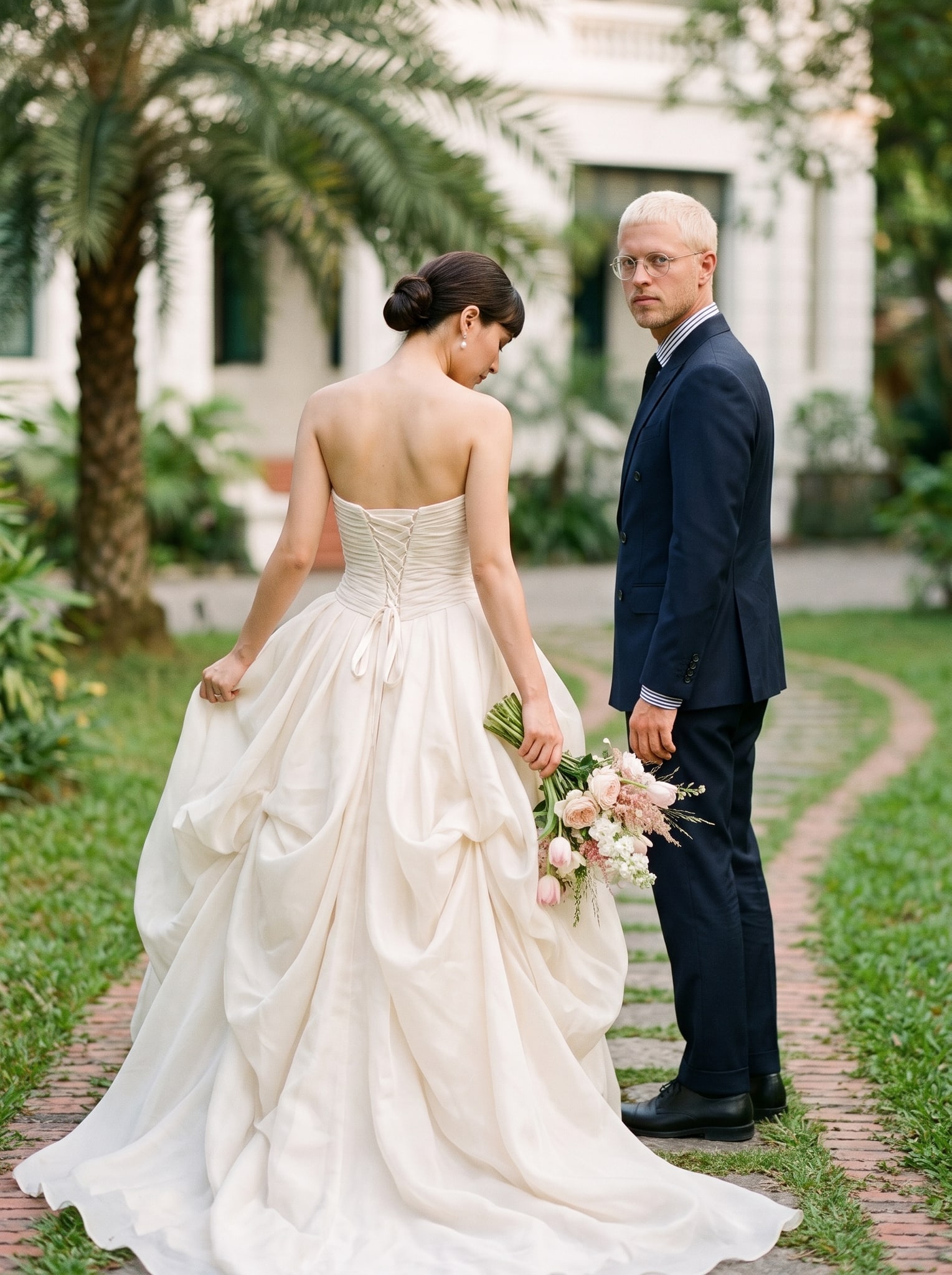
Train Street's light changes dramatically by hour and season. Early morning (6:30–7:30 a.m.) casts golden, raking light across cobblestones and colonial brickwork—ideal for backlit ao dai and silhouettes. Midday (10 a.m.–2 p.m.) produces harsh shadows in the ravine, blowing out faces and flattening textures. Late afternoon (4:30–5:30 p.m.) mirrors morning but with softer, more diffuse beams as the sun lowers. November–January (cool, dry season) offers consistent light with less atmospheric haze. April–September (monsoon season) introduces cloud-scattered light, which is forgiving but unpredictable—clouds clear in minutes or persist for hours. We scout Train Street weekly and adjust booking windows by season. Winter shoots rarely need reflectors; summer shoots benefit from an assistant holding a silver or gold bounce. Plan for 5–10 lost minutes per session to train alerts. Conclusion: book early morning (June–September) or late afternoon (November–March) for reliable, flattering light.
How do crowds and trains affect your poses and safety?
Train Street averages 150–300 visitors per hour (9 a.m.–5 p.m.); before 7 a.m. and after 5:30 p.m., it drops to 10–40. Tourist groups block doorways and frame backgrounds; residents' doors open without warning. Trains pass every 2–4 hours, announced only by a faint horn 30–40 seconds beforehand. We never pose directly on rails; we use edges and archways 1.5 metres away. Our team watches the rail sensors and listens for horns—we halt all shooting when a train approaches and resume once it passes. Makeup resets happen between train windows. We brief all clients on cobblestone footing (ankle-turning risk for heels; we recommend flat shoes or sandals with grip). Ao dai hems catch on rough stones; we teach clients to lift slightly while walking. For ao dai photoshoots, we prioritize lightweight, moisture-friendly fabrics and have backup clips to pin hems safely. Conclusion: early and late slots avoid crowds; train awareness and flat shoes keep shoots safe and flowing.
What outfits and styling work in a narrow, brick-and-stone setting?
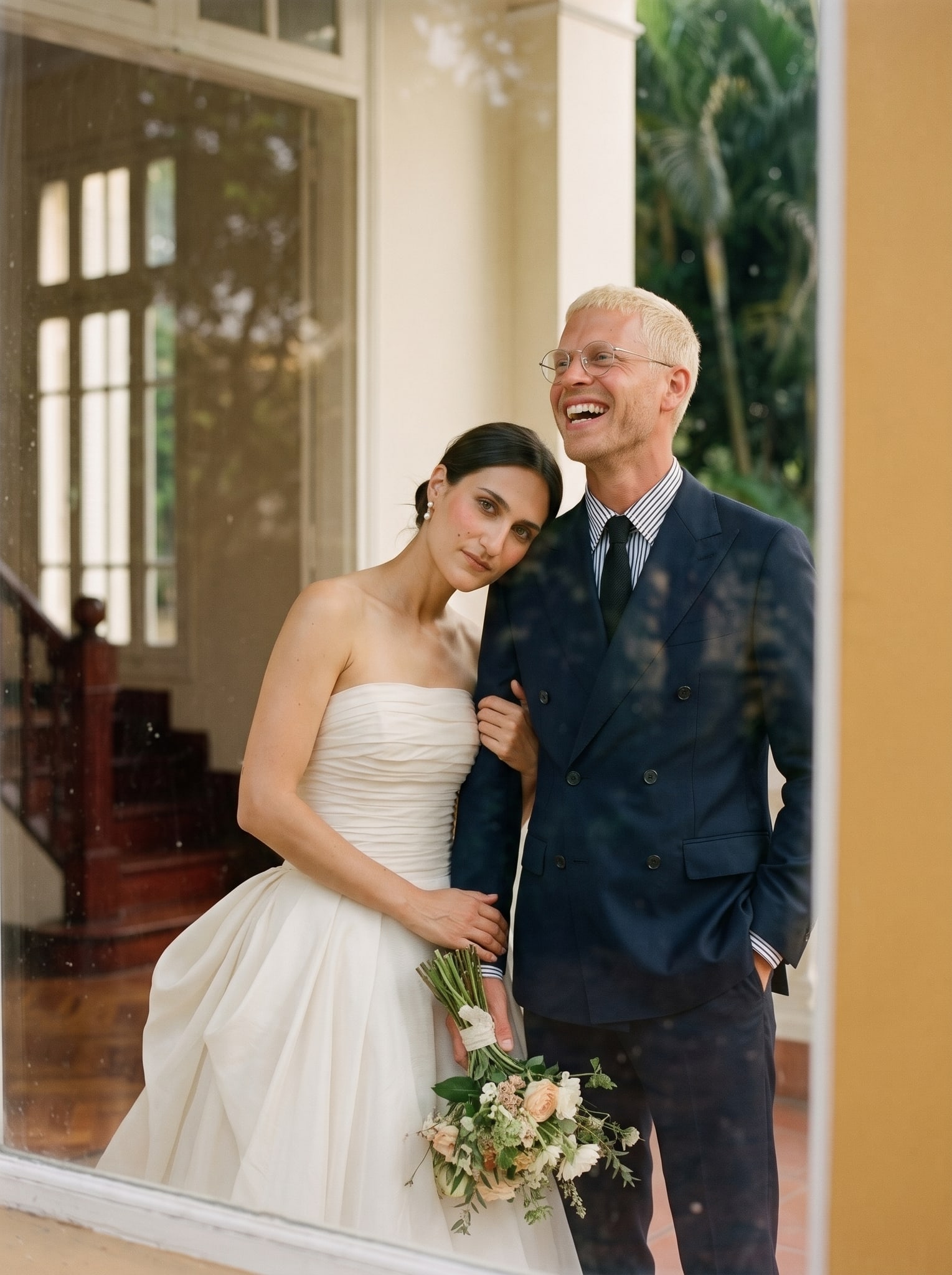
Train Street's industrial palette—weathered brick, grey cobblestones, wrought iron—suits jewel tones, earth tones and neutrals. Ao dai in emerald, sapphire, rust or gold contrast beautifully; pale pastels wash out. White ao dai shows dust and stains within 10 minutes; we counsel clients toward ivory or cream instead. Casual outfits work well: linen shirts, vintage denim, leather jackets, scarves and hats. Bold patterns—geometric prints, stripes, polka dots—read sharper than florals against busy stonework. Accessories (vintage watches, statement earrings, small bags) add scale without clutter. Avoid neon, oversized logos and reflective fabrics (they blow out in bounce light and look cheap in post). Hair: buns and braids stay neat and photograph well from above; loose hair tangles and blows in ravine gusts. We brief clients one week before, share mood boards and loan ao dai if needed. Conclusion: jewel tones, minimal patterns and secure hairstyles maximize Train Street's moody, intimate backdrop.
What's the step-by-step workflow for a smooth Train Street session?
| Step | Time | Owner | Outcome |
|---|---|---|---|
| Makeup & hair setup (at studio or on-site) | 30 min | Our artist | Ready face, secure pins, primer set |
| Walk to location, safety briefing | 10 min | Our team lead | Clients know rail rules, footwear fits |
| Scout light & crowds, choose 3 poses | 10 min | Photographer | Backup shots if crowds surge |
| Outfit 1: pose, reset makeup, 8–12 keepers | 25 min | Full team | 30–40 usable frames |
| Train alert / rest break | 5 min | Photographer | Reset and safety check |
| Outfit 2: repeat | 25 min | Full team | 30–40 usable frames |
| Walk back, final touch-ups | 10 min | Makeup artist | Clients presentable for travel |
| Total | 90 min | — | 60–80 final images |
This schedule leaves buffer for slow crowds, train delays and extra touch-ups. We never rush; a second session or location extension costs less than reshoots. Conclusion: a timed, staffed workflow prevents chaos and delivers consistent, polished results.
What should you check before booking a Train Street shoot?
- Season: Confirm dry weather (Nov–Mar preferred; June–Sept workable but hotter and more humid).
- Light window: Early morning or late afternoon only; midday is off-limits for quality.
- Outfit count: Two outfits fit in 90 minutes; three require 2+ hours and risk train delays.
- Makeup wear time: Our formulas hold 90 minutes; beyond that, quality drops.
- Footwear: Flat, closed-toe shoes with grip prevent cobblestone slips.
- Ao dai condition: Check rental for loose seams or faded dye before leaving studio.
- Train schedule: We verify the day-of timetable; one train delay may shift your poses 15 minutes.
- Backup location: If crowds exceed 200 people, we move to a nearby Old Quarter archway (10 min walk). Confirm this in advance.
How does Train Street shooting fit with other Hanoi sessions?
Train Street works best as a standalone 90-minute session or paired with a second nearby location (Old Quarter archway, colonial villa, lake edge—all within 500 metres). We do not recommend combining it with a full-day shoot because the early-morning light window is tight and crowds peak mid-morning. For couple shoots, Train Street is intimate and moody—ideal for poses that emphasize proximity and urban romance. For solo travel portraits, it delivers editorial-grade backdrops with minimal distractions. Ao dai photoshoots benefit from Train Street's historic vibe, especially if your ao dai is vintage-inspired or a classic silk blend. If you're booking a pre-wedding session, Train Street works as an alternative to Hoan Kiem Lake for couples wanting edge and intimacy over grandeur. We discuss location strategy during your WhatsApp consultation and adjust based on your style and energy. Conclusion: Train Street's 90-minute, early-light window suits focused, aesthetic-driven sessions; longer or multi-location shoots may sacrifice quality.
Plan your Hanoi shoot
FAQ
Do I need to hire a makeup artist, or can I do my own?
You can do your own, but Train Street's humidity and long light window make sweat-proof formulas and mid-shoot touch-ups essential. Our in-house makeup artist applies layer-locking primers and carries backup powders and setting spray—standard makeup rarely survives 90 minutes without intervention. Ask us for a quote on WhatsApp if you'd like professional makeup; many clients find it less stress than managing reapplication alone.
What time of year has the best light on Train Street?
November–March offers cool, dry weather and consistent morning/afternoon light with minimal haze. June–September is hotter and more humid, but overcast skies can diffuse harsh shadows—expect unpredictable cloud cover. April–May and October bring intermittent rain; always confirm weather 48 hours before. We adjust session timing by season and monitor forecasts daily.
Can trains actually hit me, or is the risk overblown?
Trains move at 15–25 km/h and pass every 2–4 hours, announced by horn 30–40 seconds beforehand. We position all clients 1.5+ metres from rails and pause shooting during passes. No client has ever been struck on our shoots in Hanoi. Risk is minimal if you follow our safety briefing and listen for horns.
What if I wear an ao dai—will the hem get dirty?
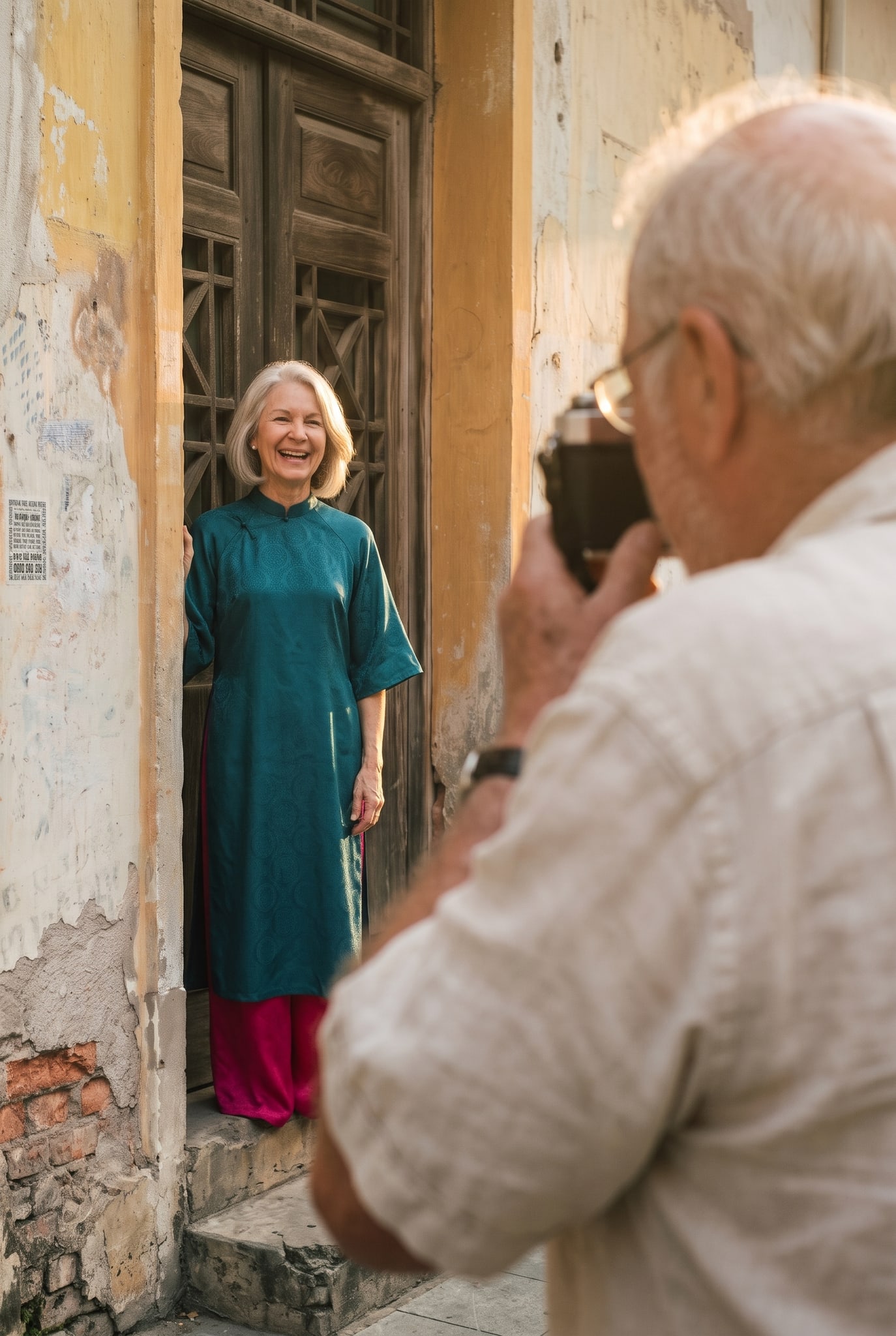
Ao dai hems invariably pick up dust and stone residue on Train Street. Lightweight, moisture-wicking fabrics (silk blends, linen) are easier to clean than heavy cotton. We clip hems slightly during poses to minimize drag. Expect light surface dust; we retouch in post-processing if needed. Choose an ao dai you don't mind getting slightly worn—Train Street is not precious.
How many usable photos do I get from a 90-minute Train Street shoot?
We deliver 60–80 final, edited images per 90-minute session (two outfits, 30–40 keepers per outfit). Exact count depends on crowd surges and pose variety. All images are retouched for skin tone, light and sharpness; we do not sell contact sheets or unedited RAW files. Ask us for a quote on WhatsApp to confirm deliverables.
Should I book Train Street as a standalone or pair it with another location?
Train Street's best light window is 90 minutes (early morning or late afternoon). A standalone session maximizes focus and pacing. Pairing it with a nearby Old Quarter location (10-minute walk) works if you book 2+ hours and adjust makeup resets. We do not recommend three-location Hanoi days if Train Street is one of them—light windows don't align, and you risk rushed, inconsistent results.
Check dates
Send your dates, how many people and the style you like. We reply on WhatsApp in English with spots, timing and a quote.
FAQ
Do I need to hire a makeup artist, or can I do my own?
You can do your own, but Train Street's humidity and long light window make sweat-proof formulas and mid-shoot touch-ups essential. Our in-house makeup artist applies layer-locking primers and carries backup powders and setting spray—standard makeup rarely survives 90 minutes without intervention. Ask us for a quote on WhatsApp if you'd like professional makeup; many clients find it less stress than managing reapplication alone.
What time of year has the best light on Train Street?
November–March offers cool, dry weather and consistent morning/afternoon light with minimal haze. June–September is hotter and more humid, but overcast skies can diffuse harsh shadows—expect unpredictable cloud cover. April–May and October bring intermittent rain; always confirm weather 48 hours before. We adjust session timing by season and monitor forecasts daily.
Can trains actually hit me, or is the risk overblown?
Trains move at 15–25 km/h and pass every 2–4 hours, announced by horn 30–40 seconds beforehand. We position all clients 1.5+ metres from rails and pause shooting during passes. No client has ever been struck on our shoots in Hanoi. Risk is minimal if you follow our safety briefing and listen for horns.
What if I wear an ao dai—will the hem get dirty?
Ao dai hems invariably pick up dust and stone residue on Train Street. Lightweight, moisture-wicking fabrics (silk blends, linen) are easier to clean than heavy cotton. We clip hems slightly during poses to minimize drag. Expect light surface dust; we retouch in post-processing if needed. Choose an ao dai you don't mind getting slightly worn—Train Street is not precious.
How many usable photos do I get from a 90-minute Train Street shoot?
We deliver 60–80 final, edited images per 90-minute session (two outfits, 30–40 keepers per outfit). Exact count depends on crowd surges and pose variety. All images are retouched for skin tone, light and sharpness; we do not sell contact sheets or unedited RAW files. Ask us for a quote on WhatsApp to confirm deliverables.
Should I book Train Street as a standalone or pair it with another location?
Train Street's best light window is 90 minutes (early morning or late afternoon). A standalone session maximizes focus and pacing. Pairing it with a nearby Old Quarter location (10-minute walk) works if you book 2+ hours and adjust makeup resets. We do not recommend three-location Hanoi days if Train Street is one of them—light windows don't align, and you risk rushed, inconsistent results.
More like this
Makeup, hair and ao dai rental
Ao Dai Rental Hanoi: Sunrise at Thang Long Imperial Citadel
Renting an ao dai for a Thang Long Imperial Citadel sunrise shoot combines Vietnam's most iconic costume with one of Hanoi's oldest monument zones. We handle rental, styling and timing—here's how. #
Makeup, hair and ao dai rental
Ao Dai Rental Hanoi: St Joseph's Cathedral Tips & Styling
St Joseph's Cathedral is Hanoi's most iconic French-colonial backdrop for ao dai photography, but light angles, tourist crowds and temple dress codes require specific planning. We share exact timing, rental coordination and posing tips.
Makeup, hair and ao dai rental
Ao Dai Rental Hanoi Rooftop: Best Time & Setup Guide
Rooftop ao dai shoots in Hanoi demand precise timing, weather strategy and proper styling to avoid heat damage and fading light. We guide you through season, hour and rental logistics.