
Home › Blog › Couple photoshoot
Honeymoon Photoshoot Hanoi Poses: Romantic Framing for Couples
By the Hanoi Photoshoot team · 2026-11-06
Honeymoon poses in Hanoi succeed when anchored to light, location, and genuine emotion rather than rigid hand placement. The best sequences—walking hand-in-hand down Train Street, sitting on temple steps at golden hour, laughing in Old Quarter alleyways—work because they blend the couple's natural movement with Hanoi's layered backdrop. Plan 2–4 hours for a shoot; include one ao dai outfit (we rent in-house) alongside casual wear for variety. Avoid midday sun (11 a.m.–2 p.m.) and high crowds (weekends, Tet, national holidays). Our Hanoi Photoshoot by Cáo Studio team scouts light by season and hour, poses non-models with clear, step-by-step guidance, and delivers edited files within two weeks. Ask us for a quote on WhatsApp—pricing depends on location count, session length, and outfit changes. Check dates on WhatsApp
What makes a honeymoon pose feel authentic, not staged?
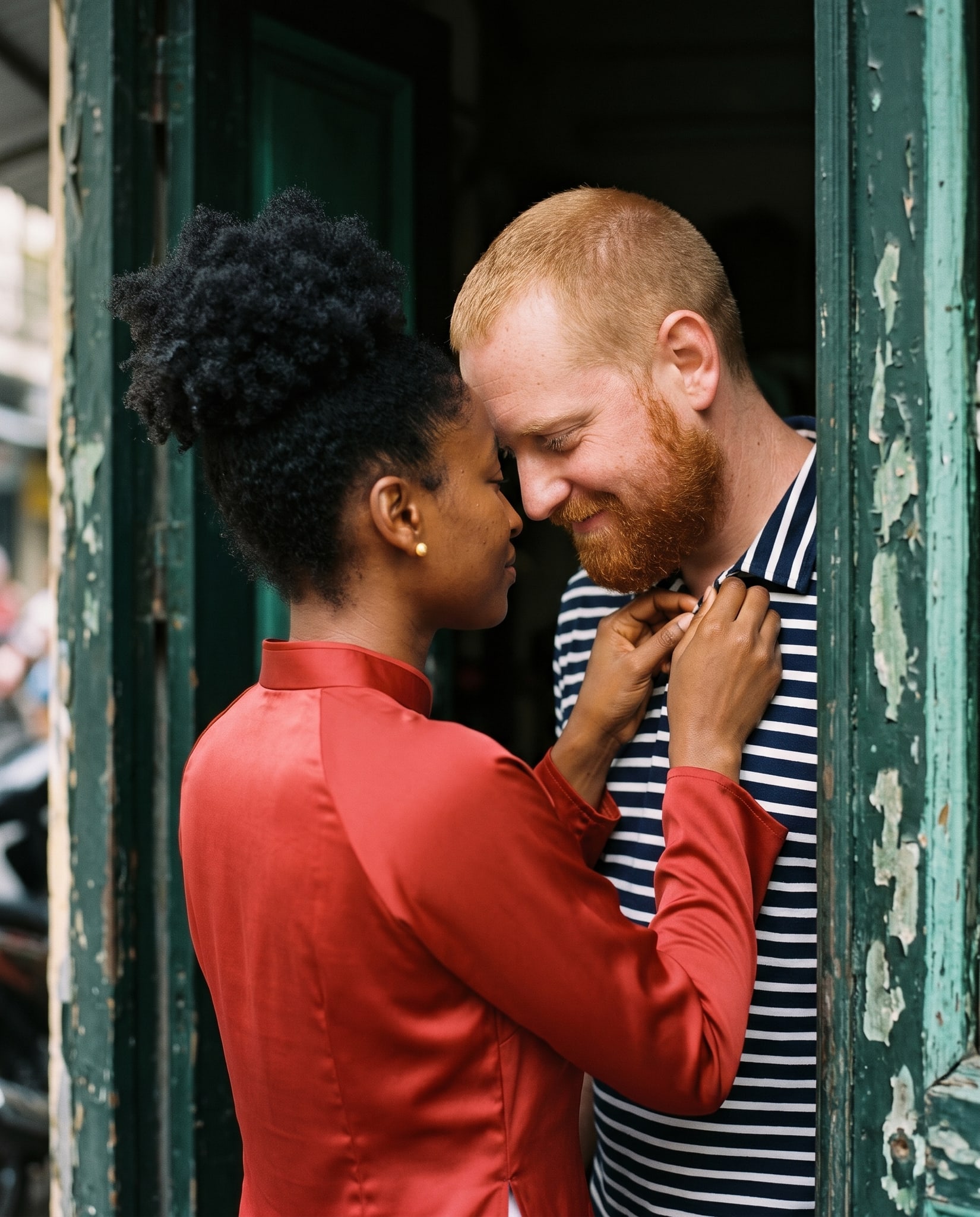
Authentic honeymoon poses emerge when you move toward each other rather than holding static frames. Sit together on a bench, then gently turn to kiss—the motion itself becomes the pose. Walk slowly, look at each other mid-stride, let his hand naturally settle on her waist. These sequences feel alive because the camera catches the transition, not the freeze. The couple's body language tells the story: closeness, laughter, stolen glances. We guide each micro-movement—"walk three steps, then stop and look at her face"—so you're never stranded wondering what your hands should do. Authentic poses also honor the location: at a temple, reverence; at Train Street, playfulness; by the lake, stillness. Couples who trust the process and ignore the lens produce their best frames.
How does Hanoi's seasonal light change pose timing?
Light quality and position vary dramatically across Hanoi's four seasons, shifting the best shooting hours and pose arrangements. Winter (November–February) offers soft, even light all day; golden hour runs 4:30–5:30 p.m., ideal for lakeside couple frames without harsh shadows. Spring (March–May) brings haze and humidity; shoot early (7–8 a.m.) or rely on overcast mornings to avoid blown highlights; poses in shade—temple courtyards, Old Quarter archways—work better than open sun. Summer (June–August) is wet and hot; light is diffuse but flat; we position couples against textured backdrops (old walls, railings) to add depth; late afternoon (5–6 p.m.) gives directional warmth. Autumn (September–October) is our sweet spot: clear skies, strong but warm light, golden hour 5–6 p.m., minimal haze. Each season reshapes pose selection—backlighting works in winter, sidelighting in autumn—so timing your session by month matters as much as the hour.
Which Hanoi spots demand different posing strategies?
Each landmark requires posing tuned to its geometry, lighting, and foot traffic.
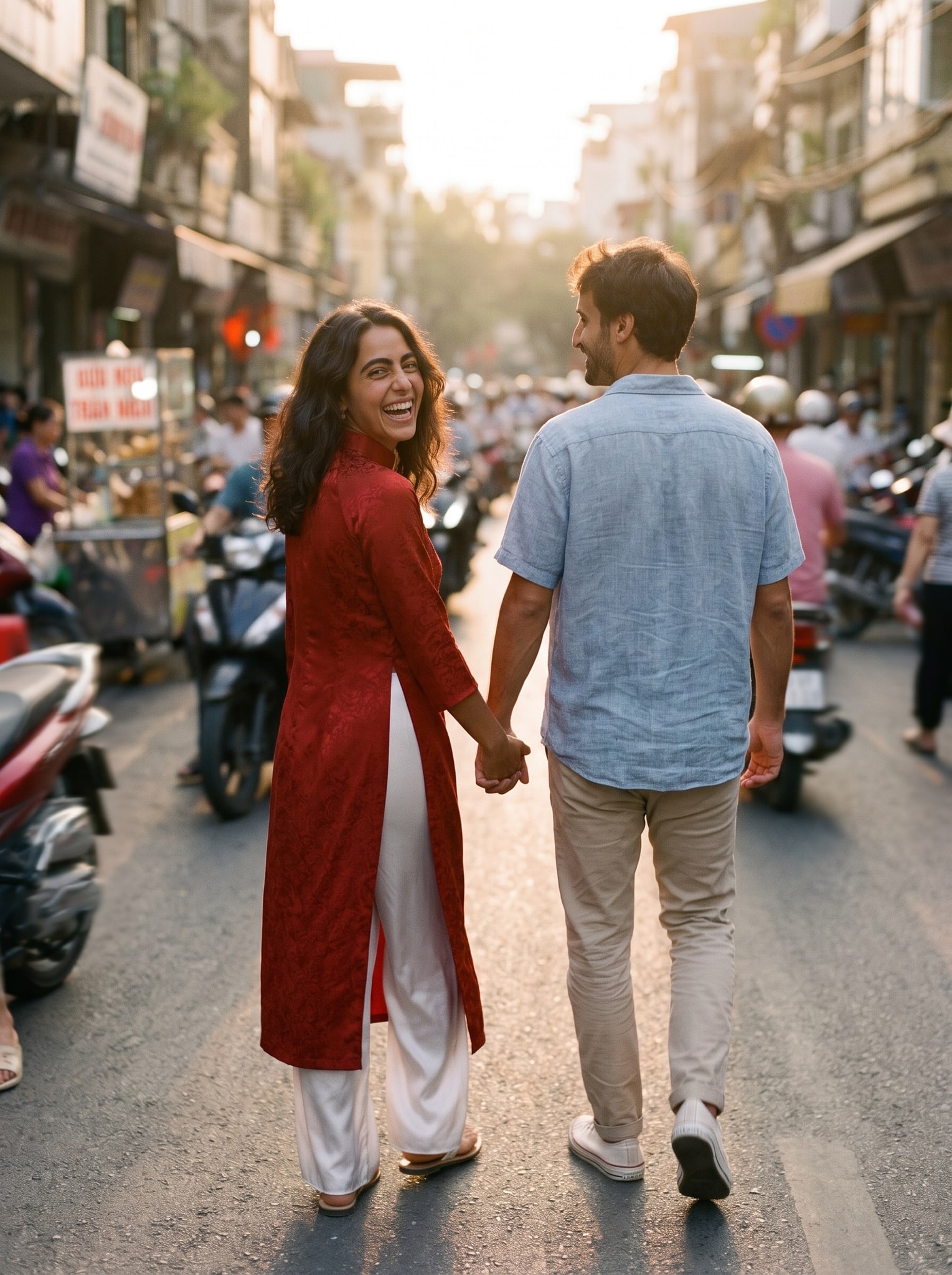
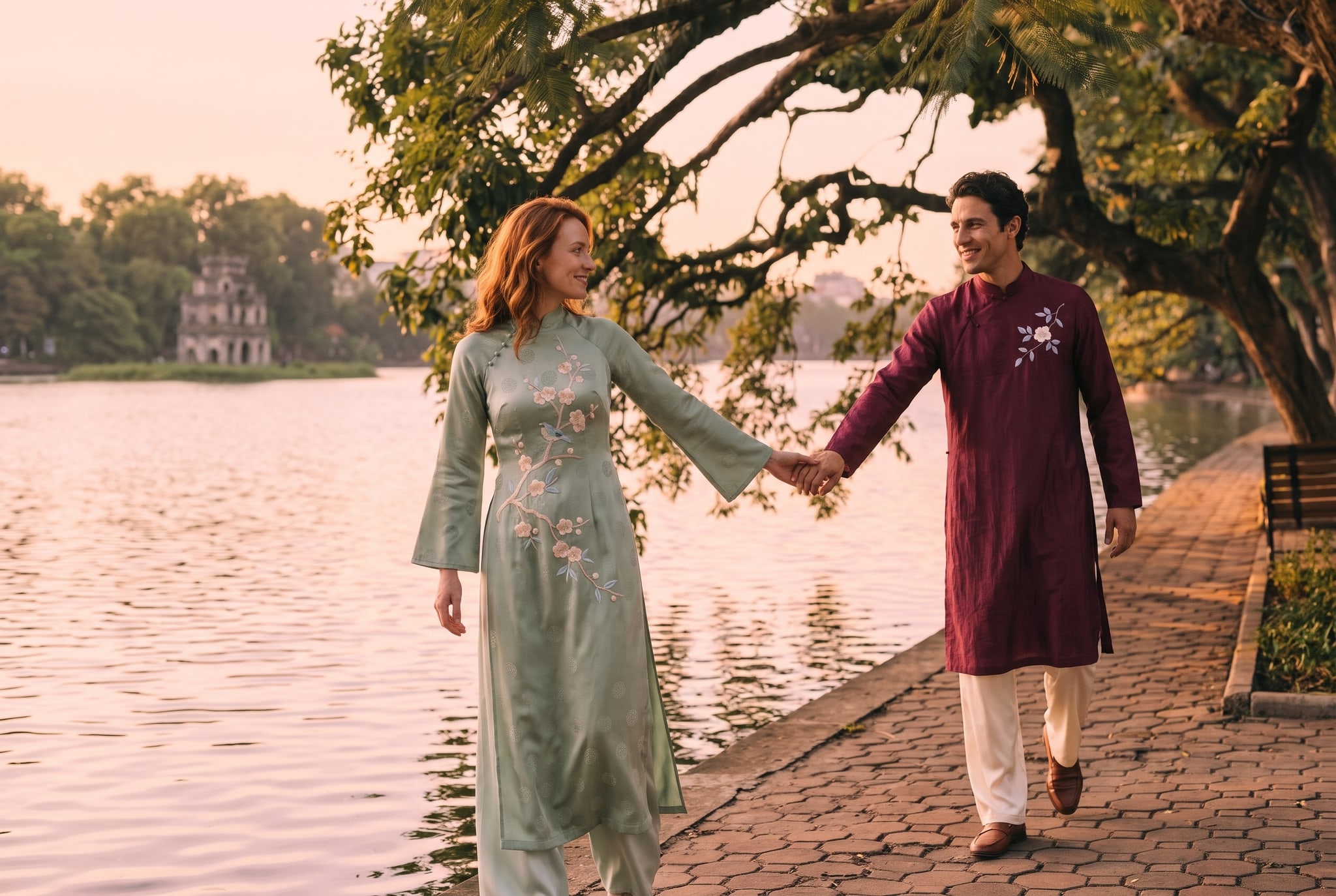
At Hoan Kiem Lake photo guide, water reflects light upward, softening shadows on faces; we pose couples on the eastern shore (morning light, fewer crowds pre-8 a.m.) with the water and skyline behind them, or walking the lakeside path hand-in-hand. The Tortoise Tower works as a framing element—sit on nearby benches, let it sit in the background. Crowds peak 9 a.m.–4 p.m., so early or late sessions yield cleaner frames. Train Street photo guide narrows options: the tracks run east–west, so we position couples on the rails or beside old track-side buildings, always watching for trains (check schedules with us). Poses here are playful—walking toward the camera, turning mid-stride, leaning against weathered walls—because the industrial backdrop demands energy. Foot traffic is heaviest 10 a.m.–noon and 3–5 p.m.; we book early morning (6:30–8 a.m.) for near-empty frames. The Old Quarter photo guide offers narrow streets, French colonial balconies, and yellow-washed walls; poses here work best in motion—walking, laughing, navigating tight alleyways—because static frames look cramped. Light pools in street-level shadows; we angle couples so window light grazes their faces or position them in doorways. Each location shapes your pose language: respect its character.
Should honeymoon poses change if one partner is camera-shy?
Yes—camera-shy partners need confidence-building poses that hide awareness of the lens and build momentum. Start with movement: walk toward the camera, look at each other mid-stride, step into a natural embrace. Motion disguises self-consciousness because the body is doing something, not being photographed. Next, shift to togetherness: positions where the shy partner focuses on their spouse, not the camera—sitting cheek-to-cheek, whispering in their ear, adjusting their collar. We call these "partner-focused" poses; the shy person's gaze lands naturally on their beloved, sidestepping camera anxiety. Use props—hold hands, share a scarf, sit on temple steps—to give restless hands a purpose. By frame 10–15, most camera-shy partners forget we're shooting and settle into genuine expressions. We also shoot in bursts: five frames of the same pose catch the unguarded split-second between self-aware looks. Hanoi's layered backdrops help; an ornate temple or textured wall draws attention away from faces. If your partner struggles with stillness, book a longer session (3–4 hours) so we can pace poses and break tension with conversation and movement.
What outfit choices work best for honeymoon shoots across multiple locations?
Outfit variety matters—two or three changes across a 3-hour session let you own different moods and backdrops without monotony.
| Outfit type | Hanoi backdrop | Why it works | Pose feel |
|---|---|---|---|
| Casual (jeans, light blouse) | Old Quarter, street cafés | Blends into local life; unforced | Walking, laughing, intimate |
| Áo dài couple set (ours to rent) | Temple, lake, formal gardens | Timeless, cultural, formal light | Stillness, reverence, framing |
| Dressy smart-casual (blazer, midi) | Hoan Kiem Lake, colonial villas | Polished without fussiness | Sitting, gazing, hand-holding |
| Matching sneakers + coordinated layers | Train Street, alley exploration | Youthful, adventurous, movement-friendly | Walking, playful, candid |
We rent ao dai in-house in multiple fabrics and colors; choose jewel tones (emerald, burgundy) or pastels (blush, sage) to complement Hanoi's muted urban palette and print boldly against temple reds or lake blues. Avoid pure white (overexposes and clashes with temple stone) and busy patterns (compete with urban textures). Change outfits between locations so the mood shifts visually—temple in áo dài, street in casual, lakeside in dressy. Bring a spare blouse or jacket for mid-shoot changes; we'll brief you before the session on what works where. Coordinating without matching (his shirt echoes her color, same tone family) feels modern and intentional.
How do we pace a honeymoon shoot so poses feel natural, not rushed?
Pacing separates rushed, stiff sessions from ones where couples settle into genuine presence. We structure a 3-hour honeymoon shoot as: location one (45 min, one outfit), break (10 min), location two (45 min, one outfit), break (10 min), location three (45 min, second outfit or new location). Within each segment, we shoot 60–80 frames, moving through five pose sequences (walking, sitting, close-up framing, playful moment, quiet connection). The first 10 frames of each sequence catch awkwardness; frames 11–20 show settling; frames 21+ yield gold. We narrate constantly—"turn slightly left, now look at each other"—so there's no dead air or wondering. Breaks matter: walk, chat, drink water, reset energy. Couples who feel rushed produce tense frames and dissatisfaction; those who trust the rhythm relax mid-session and deliver authentic joy. We also shoot in bursts (5–8 frames per setup) so motion and micro-expressions get captured; you're never frozen in a single, unforgiving frame. Honeymoon shoots feel best when they're conversational, not transactional.
What to check before you book
- Confirm season and light windows: Ask us which month and hours suit your pose style (dramatic backlighting or soft diffuse light?).
- Disclose any camera shyness or mobility limits: We'll tailor sequences and pacing so you feel safe and capable.
- Agree on outfit count and changes: Three outfits = three moods; confirm which you're bringing vs. which we rent.
- Clarify location preference: Romantic lake, cultural temple, edgy street—each needs different posing language; pick two or three spots.
- Ask about weather contingencies: Hanoi rain halts Train Street shoots and dims light everywhere; we reschedule or pivot to covered temples.
- Verify post-production timeline: We deliver edited files within two weeks; ask when you'll see proofs and the final gallery.
Ready to frame your honeymoon story in Hanoi?
A couple photoshoot in Hanoi captures not just your love, but the city itself—its light, textures, and intimate corners. Whether you're planning a pre-wedding photoshoot before the ceremony or a post-wedding honeymoon session, poses rooted in real movement and seasonal light will feel timeless. We handle makeup, hair, and ao dai rental so you arrive ready. Every pose sequence we guide you through builds naturally on the last, so by your final frame, you've forgotten the camera exists—and that's when the magic happens. Reach out on WhatsApp or contact us to check dates and get a quote tailored to your Hanoi itinerary.
Plan your Hanoi shoot
FAQ
Do we need experience posing for honeymoon poses to look good?
No. We guide every micro-movement step-by-step—walk three paces, turn toward her, rest your hand here—so non-models feel capable. Motion disguises self-consciousness; authentic joy emerges naturally by frame 15–20.
What's the best time of year for honeymoon shoots in Hanoi?
Autumn (September–October) offers clear skies, warm golden light, and minimal haze—our ideal season. Winter (Nov–Feb) is soft and even. Summer heat and humidity flatten light; spring haze reduces contrast.
Can we change outfits mid-shoot, and what should we bring?
Yes; we recommend two outfit changes across 3 hours. Bring casual wear, dressy pieces, and comfortable shoes. We rent áo dài in-house; coordinate with us beforehand.
How long does a typical honeymoon photoshoot take?
We recommend 2.5–4 hours for two or three locations. Shorter sessions (1–1.5 hours) work for one spot only; longer shoots pace better and yield deeper emotional range.
What if one of us is camera-shy?
Partner-focused poses (looking at each other, not the camera) ease anxiety. Start with movement, build momentum, and by frame 10, most shy partners forget we're shooting. Longer sessions help.
Do honeymoon poses look different from a regular couple shoot?
Yes. Honeymoon poses emphasize intimacy, playfulness, and ease—less formality, more stolen glances and natural touching. We lean into joy and togetherness rather than dramatic framing.
Check dates
Send your dates, how many people and the style you like. We reply on WhatsApp in English with spots, timing and a quote.
FAQ
Do we need experience posing for honeymoon poses to look good?
No. We guide every micro-movement step-by-step—walk three paces, turn toward her, rest your hand here—so non-models feel capable. Motion disguises self-consciousness; authentic joy emerges naturally by frame 15–20.
What's the best time of year for honeymoon shoots in Hanoi?
Autumn (September–October) offers clear skies, warm golden light, and minimal haze—our ideal season. Winter (Nov–Feb) is soft and even. Summer heat and humidity flatten light; spring haze reduces contrast.
Can we change outfits mid-shoot, and what should we bring?
Yes; we recommend two outfit changes across 3 hours. Bring casual wear, dressy pieces, and comfortable shoes. We rent áo dài in-house; coordinate with us beforehand.
How long does a typical honeymoon photoshoot take?
We recommend 2.5–4 hours for two or three locations. Shorter sessions (1–1.5 hours) work for one spot only; longer shoots pace better and yield deeper emotional range.
What if one of us is camera-shy?
Partner-focused poses (looking at each other, not the camera) ease anxiety. Start with movement, build momentum, and by frame 10, most shy partners forget we're shooting. Longer sessions help.
Do honeymoon poses look different from a regular couple shoot?
Yes. Honeymoon poses emphasize intimacy, playfulness, and ease—less formality, more stolen glances and natural touching. We lean into joy and togetherness rather than dramatic framing.
More like this
Couple photoshoot
Couple Photoshoot Phung Hung Mural Street Sunrise Hanoi
Phung Hung Street's pastel murals are prime for couple shoots at dawn, but light, crowds and mural colors shift by season. We guide you through the best hour, what to wear, and how to avoid blurry or washed-out frames.
Couple photoshoot
Couple Photographer at Thang Long Imperial Citadel Sunrise in Hanoi
Capturing couples at Thang Long Imperial Citadel at sunrise delivers dramatic golden light, UNESCO heritage framing, and near-empty grounds—but requires 4 a.m. arrival, permit coordination, and seasonal weather timing to succeed.
Couple photoshoot
Couple Photographer Hanoi Duong Lam: Best Time to Shoot
Duong Lam Ancient Village, 45 km west of central Hanoi, offers stone-walled lanes, tiled roofs and rice terraces perfect for couple shoots. The best time is October to November (dry, soft light) or early morning May–August before heat peaks.