
Home › Blog › Couple photoshoot
Honeymoon Photoshoot Hanoi Old Quarter: Timing, Light & Crowds
By the Hanoi Photoshoot team · 2026-11-06
A honeymoon photoshoot in Hanoi's Old Quarter works best in early morning (6–7 a.m.) or late afternoon (4–5 p.m.) when golden light hits colonial facades and crowds thin. The district spans roughly 1 km², with Tea House Street, Silver Street and around Hoan Kiem Lake as key backdrops. Sessions run 2–3 hours; include outfit changes, hair and makeup touch-ups, and scouting quiet alleys. Hanoi Photoshoot by Cáo Studio handles permits for temple shots, provides ao dai rentals if you want cultural contrast, and coaches non-models on posing so your gestures feel natural, not stiff. Expect uneven cobblestones, limited privacy on main streets, and motorcycle traffic until 9 a.m. Ask us for a quote on WhatsApp—the session fee includes on-location direction and a curated gallery within two weeks. Check dates on WhatsApp
When should we shoot: season and time of day?
October–November and February–March offer dry skies, warm light and fewer tourists clogging alleys. Monsoon seasons (May–September, December–January) bring humidity haze and afternoon downpours. Sunrise (6–6:30 a.m.) gives soft, directional light and near-empty streets; by 8 a.m., delivery trucks, scooters and vendors fill Hang Buac and Hang Ngang. Late afternoon (4–5 p.m.) recaptures gold but loses it fast by 5:30 p.m., especially in winter. Midday (11 a.m.–3 p.m.) creates harsh shadows on narrow streets and attracts peak tourist crowds. For a honeymoon shoot, early morning or late afternoon—never midday—preserves both light quality and the intimate feel you want.
How do outfit choices and ao dai rentals affect the shot?
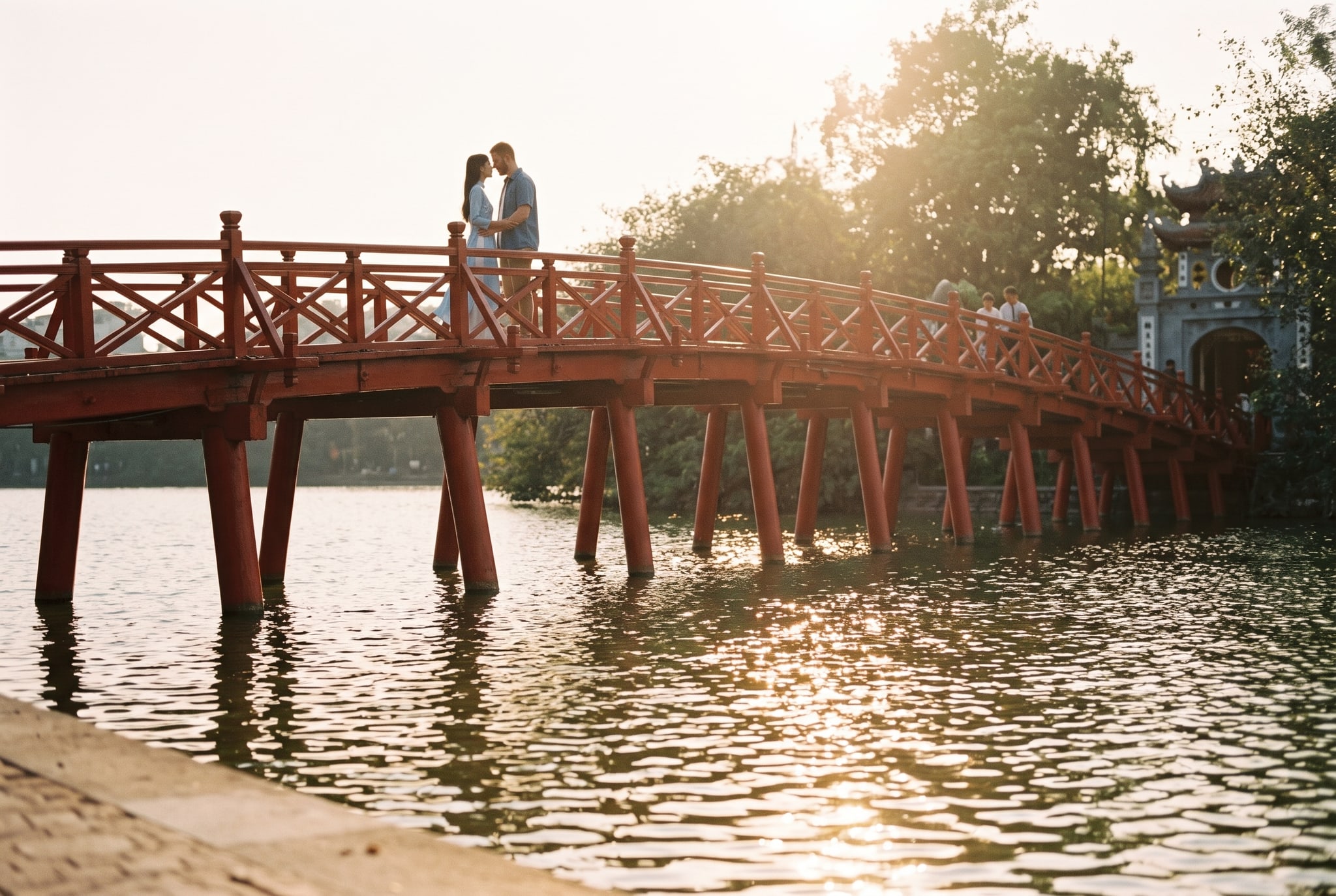
Light linen or cotton outfits photograph well in morning gold; dark colors absorb heat and flatten in backlit alleys. For contrast, many couples wear an ao dai photoshoot ensemble for 20–30 minutes of a 2-hour session—red or cream silk glows in evening light against weathered brick. White jeans, pastel dresses and vintage leather jackets suit the colonial geometry of these streets. Avoid busy patterns, neon or large logos; they distract from your faces and the setting. Our makeup and styling team brings ao dai rental, matching scarves and jewelry on-site, so you can switch without traveling. Bring a comfortable walking shoe (you'll change for photos on steps or bridges) and a light wrap in case of cool morning air.
Which Old Quarter streets and temples allow photography?
Hang Buac (Tea House Street), Hang Ngang, Hang Dao and the narrow alleys west of Hoan Kiem Lake offer the most atmospheric backdrops and the fewest tourist restrictions. Jade Island Temple (on Hoan Kiem's shore) permits photography outside; internal shrine shots need explicit permission—we coordinate this before arrival. The Hoan Kiem Lake photo guide details light angles and crowd timing around the temple and shoreline. Many small, private temples in deep alleys do not welcome outsiders; we scout and confirm access during pre-shoot calls. Street vendors sometimes object to being in background frames, so we position you to avoid this. Stone Bridge near Ngoc Son Temple (7 a.m.–8 a.m.) is nearly vacant and frames perfectly against the lake; by 9 a.m., it's packed with tour groups.
How do we pose if we've never modeled before?
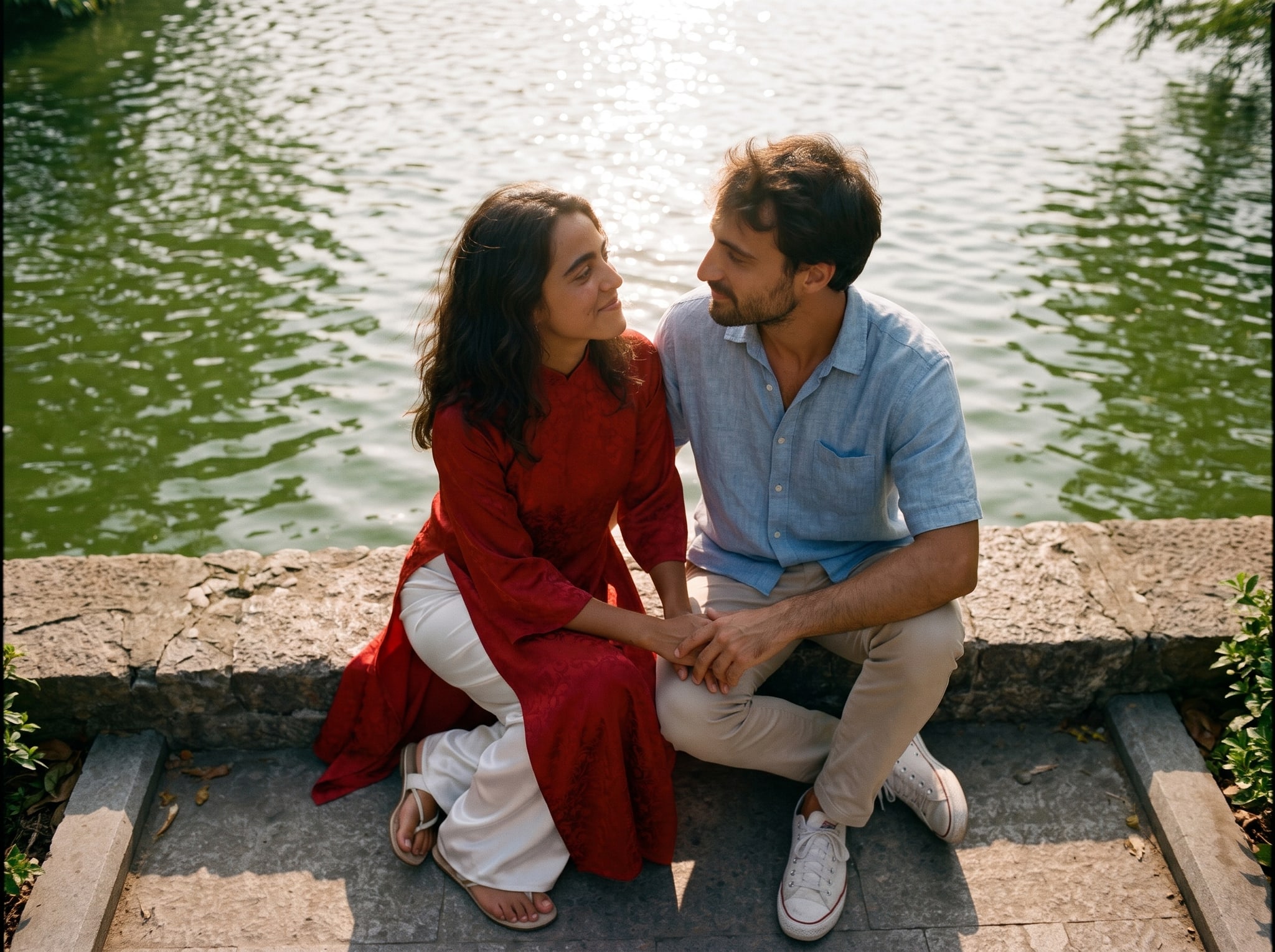
Non-models often feel stiff because they're holding a "pose" rather than inhabiting a moment. We start with movement: walk toward the camera on a quiet alley, let your partner hold your hand, then stop and turn to each other—the frame feels candid and your shoulders relax. For seated shots on temple steps, avoid flat-on angles; angle your body 45° away from the camera, then turn your head back toward it. This creates depth and elongates the neck. Hold each other's hand lower, at hip level, rather than visibly locked—it reads as intimate without looking performative. We coach breathing: three deep breaths before a static shot helps shoulders drop and smiles feel genuine. A 2–3 hour session includes 15–20 posed frames and 30–40 candid moments; most honeymoon couples prefer candid because nobody's thinking about their chin.
| Pose Type | Setting | Energy Level | Time to Feel Natural |
|---|---|---|---|
| Walking toward camera | Alley or bridge | High | 2–3 frames |
| Sitting close, faces near | Temple steps | Calm | 4–5 frames |
| Him walking behind her, hand on her back | Jade Bridge boardwalk | Medium | 3–4 frames |
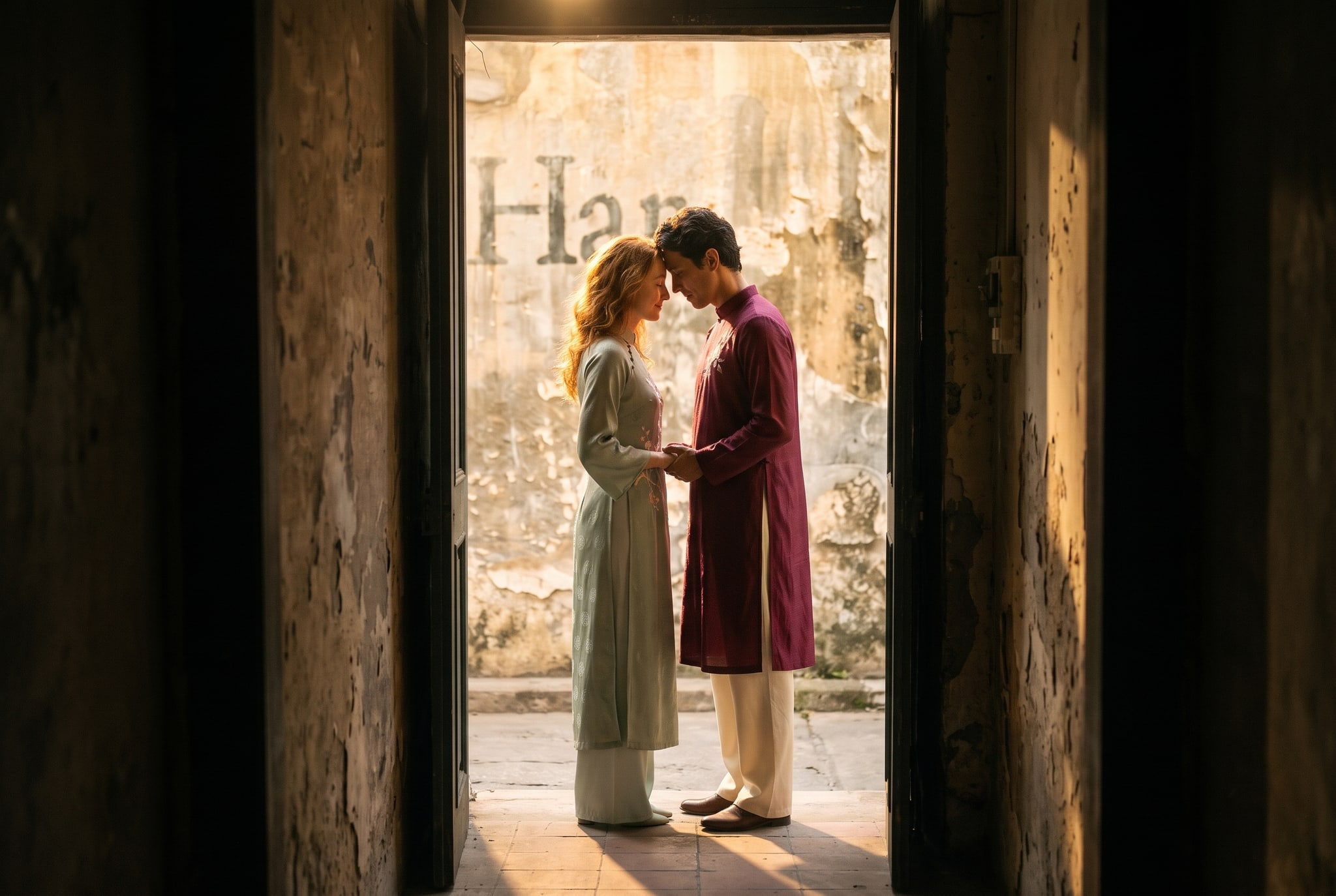
| Standing forehead-to-forehead, eyes shut | Quiet nook near Hang Ngang | Intimate | 2–3 frames |
| Laughing during a whispered joke | Any street | Genuine | 1–2 spontaneous frames |
What logistical issues happen and how do we avoid them?
Cobblestones crack heels and twist ankles; wear flat shoes for walking and bring photography-friendly sandals or flats to change into for shots. The Old Quarter has no official parking for our team, so we arrive on foot or motorbike and meet you at a specific landmark (we confirm this via WhatsApp the evening before). Alleys are narrow—if a motorbike approaches, we pause shooting; this adds 10–15 minutes to typical 2-hour sessions, so we build buffer time. Temple hours end at 5 p.m.; late-afternoon sessions must start by 4 p.m. to allow 30–40 minutes inside. Rain in May–September is common; we reschedule for free or move the shoot to covered bridges and interior courtyards. Morning sessions require you to arrive by 5:45 a.m.; we meet at your hotel or a central landmark and walk to the Old Quarter. Check our couple photoshoot page for standard session lengths and what's included in your booking.
How do we choose between a honeymoon and pre-wedding shoot?
A pre-wedding photoshoot typically happens weeks before the ceremony, involves formal wardrobes, multiple locations and 3–5 hours on a single day—think Hoan Kiem, Old Quarter and a scenic day-trip site in one arc. A honeymoon shoot is shorter (2–3 hours), casual (linens, ao dai, sundresses, no tuxedos), and focuses on romantic intimacy rather than bridal presentation. If you're already married, you're after authentic moments and cultural immersion; a couple photoshoot in the Old Quarter is ideal. If you're engaged and shooting before the wedding ceremony, a pre-wedding session lets you do a full wardrobe reveal and multi-location narrative. Both benefit from early morning timing and our coaching on posing. Ask us for a quote on WhatsApp to compare package options and available dates.
What to Check Before You Book
- Light forecast: Ask us to confirm sunrise/sunset times for your dates (they shift 20 minutes month to month).
- Alley access: We'll confirm temple permissions and any nearby street events that might affect quiet alley access.
- Your comfort level: Have we discussed whether you want 80% candid or 50/50 posed and candid?
- Outfit plan: Do you want ao dai rental, or are you bringing your own clothes? Hair and makeup timing?
- Weather backup: If rain is forecast, do you want to reschedule or move indoors? We need this confirmed 24 hours before.
- Gallery timeline: We deliver edited photos within two weeks; confirm if you need a specific deadline for wedding or social media use.
FAQ
Can we shoot inside temples or only outside?
Exterior shots of Jade Island Temple and Ngoc Son Temple are always permitted. Internal shrine photography requires advance permission we coordinate with temple staff. Respectful dress (covered shoulders and knees) is required; we'll advise on outfits that work for both comfort and temple etiquette.
What if it rains the morning of our 6 a.m. shoot?
Light rain rarely cancels a session; Old Quarter alleys have awnings and we adjust framing. Heavy rain (>10 mm forecast) we reschedule for free to the same week or refund your deposit. Confirm your weather-reschedule preference when you book.
How many outfit changes can we do in 2 hours?
Typically 2–3 changes (western clothes, ao dai, or casual to dressier). Each change takes 10–15 minutes with hair and makeup touch-up. We map locations so you're not rushing between distant spots; this keeps the mood relaxed and frames authentic.
Will tourists photobomb our shots on busy streets?
Early morning (before 7 a.m.) has almost no tourists; by 8:30 a.m., groups fill main streets. We scout alleys and quieter corners of Tea House Street where photobombing is rare. If a group walks into a frame, we wait 30 seconds and reshoot; this is normal and included in session time.
Do we need to bring our own makeup and hair styling?
No. Our makeup and styling team arrives with you or meets on-site; bring any specific products you're allergic to, and we'll have alternatives. We also offer ao dai rental in multiple sizes and colors, so you're not carrying luggage.
How far in advance should we book?
October–November and February–March book 4–6 weeks ahead due to pleasant weather and limited slots. Summer and monsoon seasons have more availability. Contact us via WhatsApp as soon as you know your dates; we'll confirm availability and send a pre-shoot call link to nail down timing and outfit plans.
Check dates
Send your dates, how many people and the style you like. We reply on WhatsApp in English with spots, timing and a quote.
FAQ
Can we shoot inside temples or only outside?
Exterior shots of Jade Island Temple and Ngoc Son Temple are always permitted. Internal shrine photography requires advance permission we coordinate with temple staff. Respectful dress (covered shoulders and knees) is required; we'll advise on outfits that work for both comfort and temple etiquette.
What if it rains the morning of our 6 a.m. shoot?
Light rain rarely cancels a session; Old Quarter alleys have awnings and we adjust framing. Heavy rain (>10 mm forecast) we reschedule for free to the same week or refund your deposit. Confirm your weather-reschedule preference when you book.
How many outfit changes can we do in 2 hours?
Typically 2–3 changes (western clothes, ao dai, or casual to dressier). Each change takes 10–15 minutes with hair and makeup touch-up. We map locations so you're not rushing between distant spots; this keeps the mood relaxed and frames authentic.
Will tourists photobomb our shots on busy streets?
Early morning (before 7 a.m.) has almost no tourists; by 8:30 a.m., groups fill main streets. We scout alleys and quieter corners of Tea House Street where photobombing is rare. If a group walks into a frame, we wait 30 seconds and reshoot; this is normal and included in session time.
Do we need to bring our own makeup and hair styling?
No. Our [makeup and styling](/makeup-and-styling) team arrives with you or meets on-site; bring any specific products you're allergic to, and we'll have alternatives. We also offer ao dai rental in multiple sizes and colors, so you're not carrying luggage.
How far in advance should we book?
October–November and February–March book 4–6 weeks ahead due to pleasant weather and limited slots. Summer and monsoon seasons have more availability. Contact us via WhatsApp as soon as you know your dates; we'll confirm availability and send a pre-shoot call link to nail down timing and outfit plans.
More like this
Couple photoshoot
Honeymoon Photoshoot Hanoi: What Reviews Show About Studio Quality
Reviews of Hanoi honeymoon shoots reveal couples care most about authentic posing, seasonal light and rental fit. We break down what separates strong studios from weak ones.
Couple photoshoot
Honeymoon Photoshoot Hanoi in the Rain: Light, Poses & Timing
Rain in Hanoi transforms street scenes into moody, romantic backdrops for honeymoon couples—but only if you plan the light, timing, and outfit swap in advance. We walk you through the real logistics of shooting in wet season.
Couple photoshoot
Honeymoon Photoshoot Hanoi at Sunrise: Golden Hour Spots
A honeymoon sunrise shoot in Hanoi means catching Hoan Kiem Lake or the Old Quarter before crowds arrive, with natural light that flatters every couple. We coordinate the full day—timing, outfit changes, makeup—so you focus on connection.