
Home › Blog › Hanoi photo spots
French Quarter Hanoi Photo Spots: Best Light & Crowds by Hour
By the Hanoi Photoshoot team · 2026-11-06
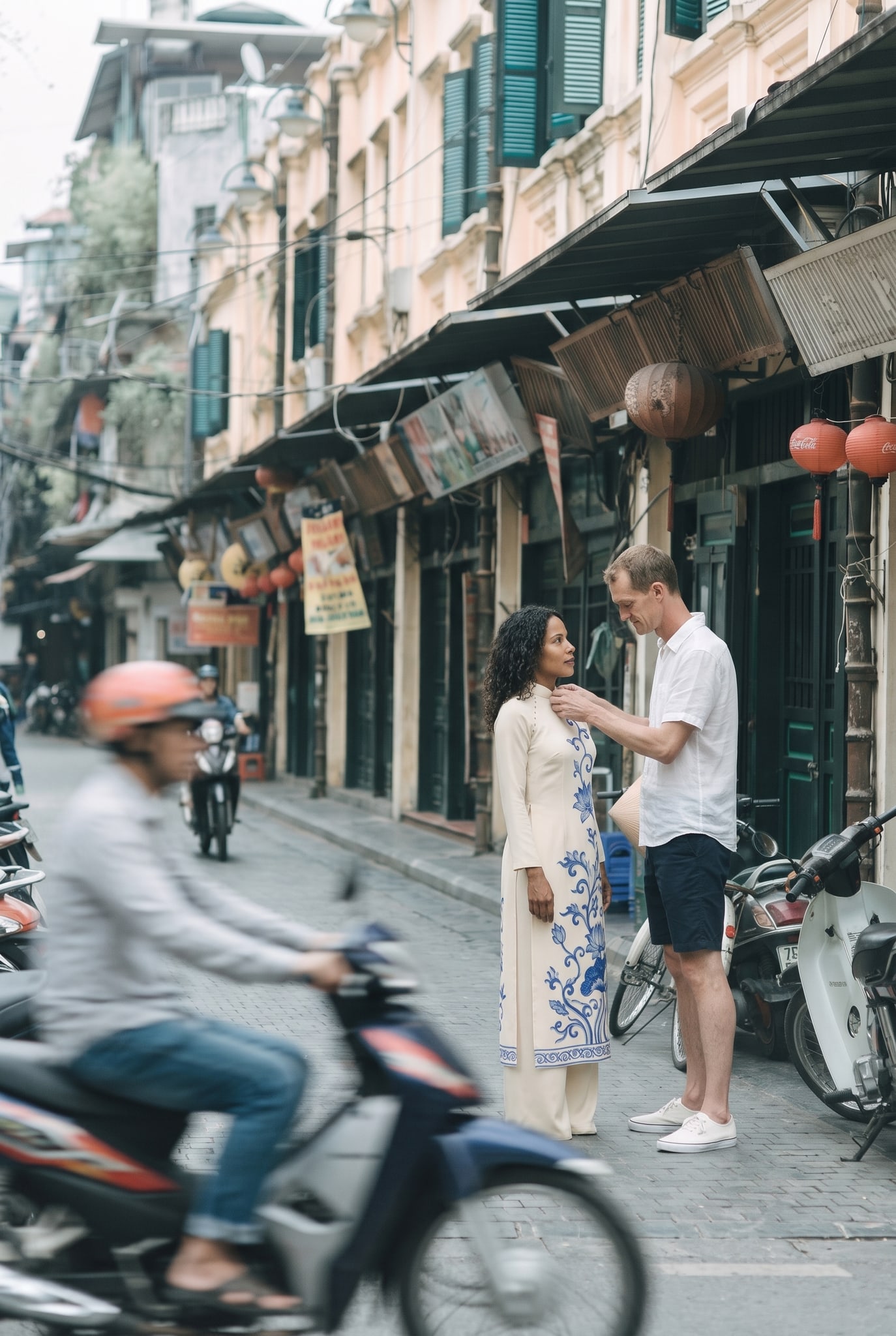
The French Quarter (Khu Pố Pháp) spreads across central Hanoi with 100+ years of colonial architecture, quiet side streets, and consistent flat light beneath leafy canopies. Best shooting windows: 06:00–09:00 (soft north-facing light on ochre walls), or 16:00–17:30 (golden hour on east-west streets). Peak crowds: 11:00–15:00 on weekends. No special permits required for photography, but street vendors and residents expect polite deference. A typical session runs 2–3 hours covering 4–6 locations within walking distance. Hanoi Photoshoot by Cáo Studio includes in-house hair, makeup, and ao dai rental, coordinated via WhatsApp; we handle light forecasting and route timing based on your session type (couple, solo, family, or pre-wedding). Avoid midday harsh shadows on narrow streets; plan around temple visiting hours (early morning or late afternoon quieter).
Why Does Morning Light Work Best on French Quarter Streets?
Morning sun between 06:00–09:00 hits ochre villa facades at a shallow angle, accentuating texture without blown highlights. North-south streets (Rue Tôn Thất Tuyết, Rue Paul Bert) receive diffused light filtering through dense plane trees, softening skin tones naturally. By 10:30, direct overhead rays flatten colours and create harsh shadows under doorways—difficult for non-models to pose comfortably. Late afternoon (16:00–17:30) reverses the geometry: east-facing walls warm to peach, ideal for backlit silhouettes and rim-lit hair on west-running lanes. Winter (November–February) extends golden hour by 45 minutes and lowers sun angle year-round, making 08:00–09:30 and 17:00–18:00 peak windows. This timing consistency lets us pre-scout and guarantees repeatable results across couple photoshoot or ao dai photoshoot in Hanoi bookings.
Which Streets Avoid Crowds While Keeping Iconic Backdrops?
Rue Tôn Thất Tuyết and Rue Paul Bert draw Instagram traffic 10:00–16:00 on weekends; shift to Rue Hàng Bài (quieter, similar ochre villas) or residential lanes east of Rue Tonkin for solitude. Rue Bạch Đằng (near the lake) hosts fewer tourists before 08:00; post-4pm, cyclo tours thin and soft light reclaims the street. For family photoshoot sessions with younger children, booking Tuesday–Thursday guarantees 70% fewer street vendors and selfie crowds. Weekday mornings yield uncluttered frames; weekends require starting before 07:00 or accepting 3–5 minute waits at prime doorway spots. A comparison: main rue locations (Rue Tôn Thất Tuyết) fill by 11:00; side lanes (Rue Hàng Dầu area) stay open until 14:00. We monitor real-time foot traffic and adjust routes mid-session if needed, ensuring your solo portrait or pre-wedding frames stay clear and composed.
How Does Seasonal Weather Change Your Shoot Schedule?
Season Comparison: Light & Logistics
| Season | Light Quality | Crowd Pattern | Outfit Fit | Moisture | Best Hours |
|---|---|---|---|---|---|
| Nov–Feb | Golden, long shadows | Weekdays quiet; weekends busy 10–14 | Layers work; ao dai stays crisp | 50–60% humidity | 07:00–09:00, 16:30–18:00 |
| Mar–May | Hazy, humid softness | Consistent crowds; heat slows tours | Light fabrics only; wrinkled ao dai risk | 70–80% humidity | 06:00–08:00, 17:00–18:30 |
| Jun–Sep | Diffused by rain risk | Fewer tourists; sudden showers | Waterproof backup essential | 80–90% humidity | 06:00–07:30, 17:30–18:00 |
| Oct | Clearest skies | Moderate crowds | Optimal comfort; ao dai pristine | 60–70% humidity | 07:00–09:00, 16:00–17:30 |
Monsoon season (May–September) brings scattered clouds that soften harsh light—ideal for headshots or close-ups—but forces 30-minute buffers for brief downpours. Winter offers crisp, predictable light but draws peak international crowds. We advise booking October or November for the clearest skies and calmest streets. Humidity above 80% risks ao dai fabric creasing within 2 hours; our team includes backup iron and humidity-control measures for summer sessions.
What Outfit Rules and Posing Tips Apply on These Colonial Streets?
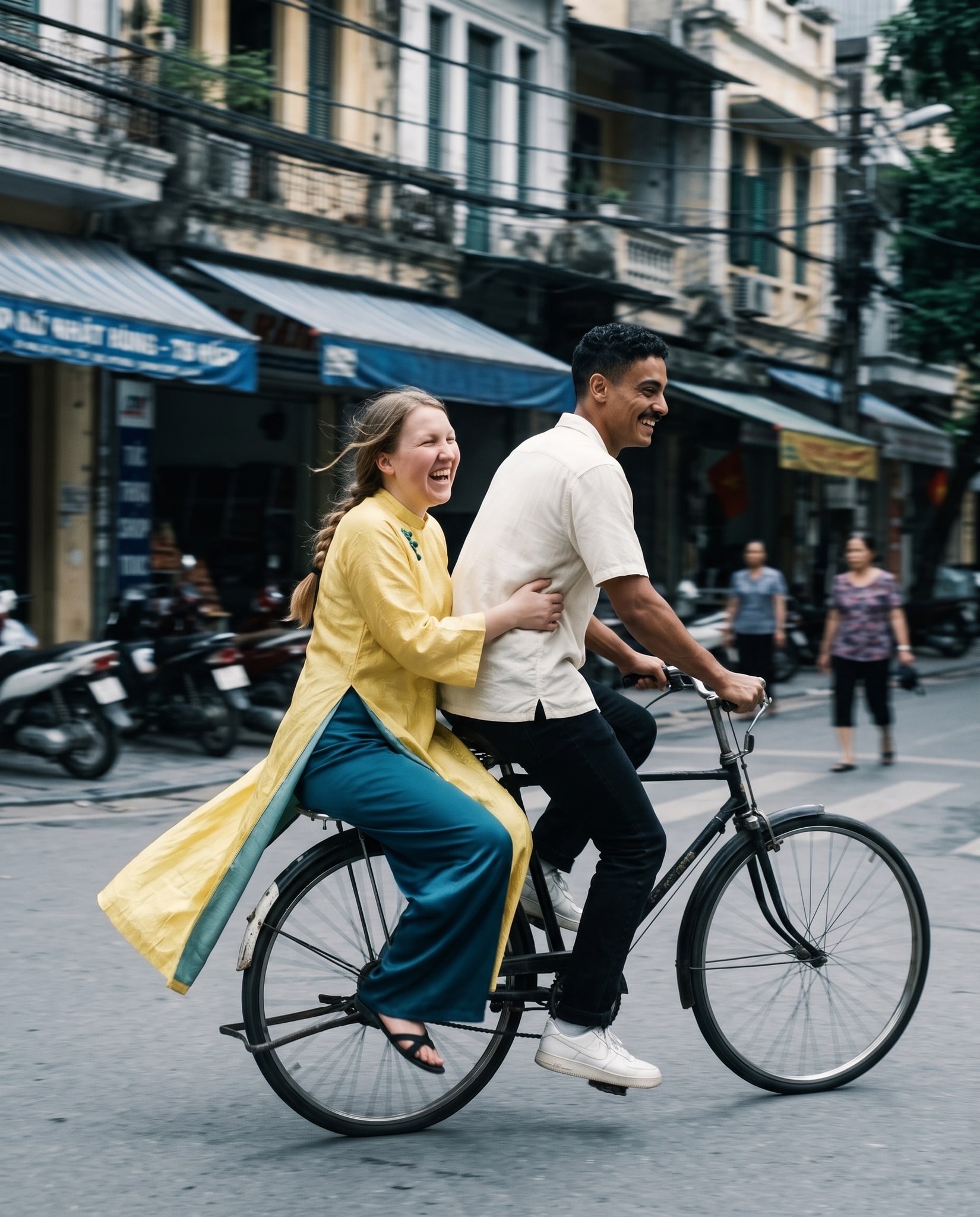
Ao dai suits the vertical proportions of villa facades and colonial doorways; deep jewel tones (navy, burgundy, emerald) pop against ochre without overexposure, while pastels blend softly in diffused morning light. Avoid loud patterns that strobe on video or distract from architectural lines. For couple photoshoot sessions, complementary colour pairs (one jewel, one neutral) balance frames and show intimacy. Western casual (linen shirt, khaki trousers) reads authentic for heritage streets without appearing touristic. Posing tips: lean slightly into the building, one foot forward, to create depth and flattering leg lines on narrow lanes. Non-models often stand rigid; we guide relaxed hand placement (pockets, hair tuck) and eye direction toward texture rather than camera. Walking shots (slow stroll, hand-holding) disguise uncertainty and showcase the street's rhythm. Avoid standing dead-centre in doorways—step slightly off-axis to frame the architecture behind you. Our makeup team applies matte finishes to combat 16:00–17:00 humidity peaks; lipstick touch-ups happen between locations. See our makeup and styling guide for seasonal fabric and skin prep.
Are Temples, Cafés, and Architectural Details Off-Limits for Photography?
Cathedral on Rue Nhà Chung welcomes exterior photography; interior shooting requires respect for worshippers—avoid during Mass (typically 06:30, 17:00 weekdays; 07:00, 09:00, 17:00 weekends). No permit needed for outside-the-gate shots. Residential buildings: always ask permission before using private doorways or courtyards; most locals say yes with a polite greeting. Street vendors accept brief framing if you purchase a coffee; this gesture unlocks casual ambient shots. Cafés (traditional style, shaded interiors) offer soft window light for maternity photoshoot or intimate couple portraits; owners typically allow 1–2 hours for a drink and modest booking. Avoid photographing people's homes or families without clear consent. Architectural details (peeling paint, wrought iron, shutters) are fair game and often steal the show—focus on textures rather than faces when uncertain. We navigate these boundaries proactively: our WhatsApp brief includes a "street etiquette" primer, and we carry printed business cards to offer homeowners. This approach has prevented conflicts and built goodwill across repeat proposal photographer and celebration bookings.
How Do You Coordinate a Multi-Location French Quarter Shoot?
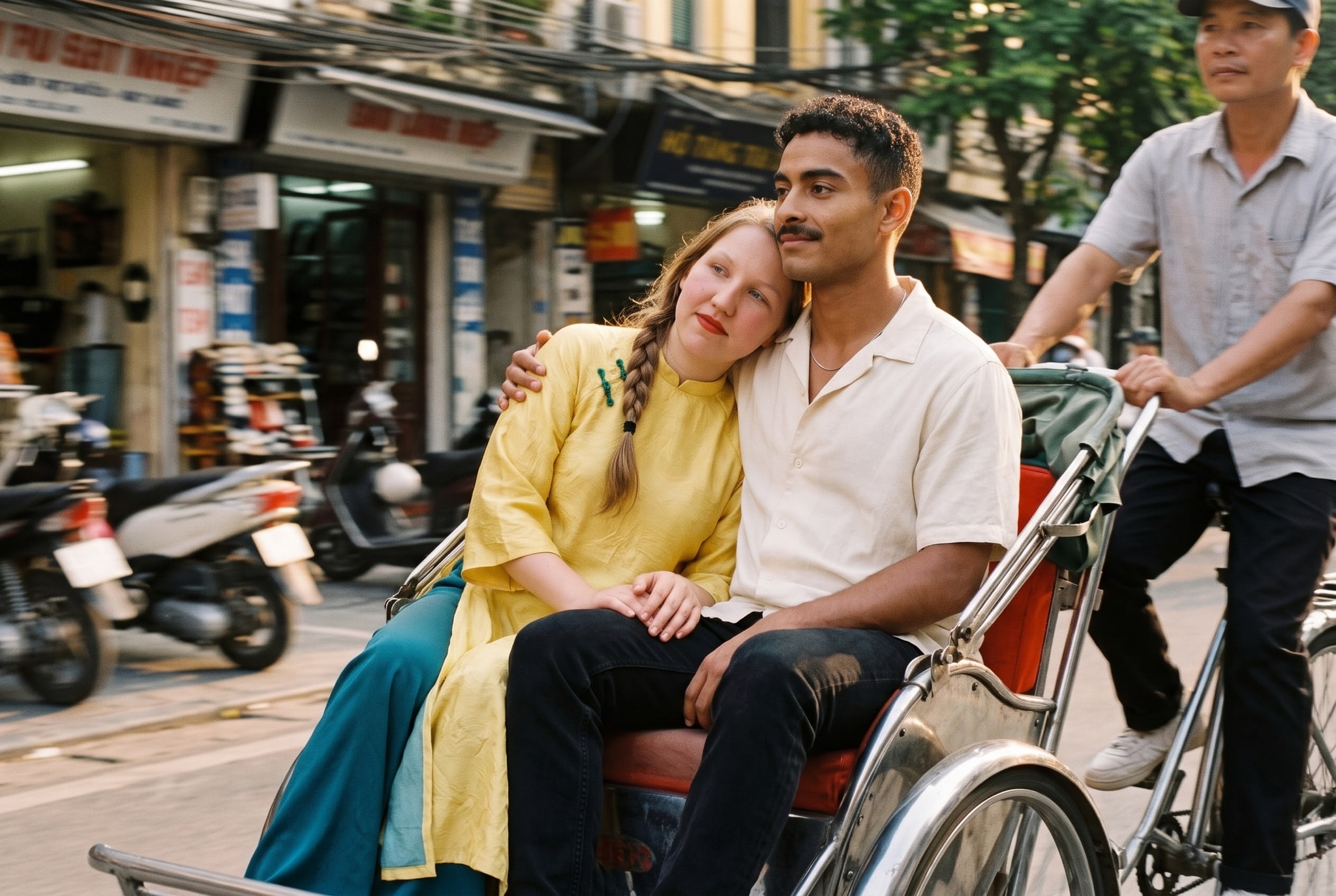
A typical 2.5-hour session covers 4–6 spots within a 800-metre radius, minimizing walking time and maximizing light windows. We pre-route based on time-of-day sun angles: morning starts at Rue Bạch Đằng (east-facing light), shifts to shaded Rue Tôn Thất Tuyết by 09:00, then relocates to Rue Paul Bert (west exposure) for late morning. Midday break (optional coffee, makeup touch-up) coincides with your lunch or humidity peak. Afternoon sessions reverse: Rue Hàng Bài catches golden hour first, then moves sun-facing walls by 17:00. Transportation: we walk all routes on foot; cyclos add charm for 2–3 hero shots but slow scene changes. For pre-wedding shoots spanning 4 hours, we bookend with two distinct light phases (dawn and dusk), taking a quiet café break mid-session. Route changes happen live based on unexpected crowds or weather; our team communicates via radio and adapts without derailing the schedule. Check our full Hanoi spots guide for French Quarter routes mapped to couple, solo, and family session types.
What to Check Before You Book a French Quarter Session
- Light Forecast: Confirm sunrise/sunset times for your session date (we provide this on WhatsApp).
- Humidity & Ao Dai: For summer bookings (May–Sep), confirm ao dai fabric is cotton-blend to resist creasing.
- Crowd Expectations: Weekday morning guarantees solitude; weekend afternoons mean 5–10-minute waits at hero spots.
- Mobility: French Quarter involves 2–4 km walking on uneven colonial-era pavements; wear comfortable shoes.
- Rain Buffer: June–September bookings include 30-minute contingency for brief showers; we have covered backup spots.
- Permissions: Ask us if you plan to use interior café or courtyard space; we confirm access beforehand.
- Post-Session Edits: Confirm turnaround time (typically 5–7 days for 200–300 edited frames) before booking.
FAQ
Can we shoot inside cathedral or temples in the French Quarter?
Exterior photography is always welcome and beautiful. Interior shooting is permitted if worship is not in progress; we confirm Mass times beforehand and schedule accordingly. Respectful distances and modest dress apply inside.
What's the quietest time to shoot in French Quarter without crowds?
Tuesday–Thursday, 06:00–08:30 or 17:00–18:00. Weekends before 07:00 also work. Midday (11:00–15:00) on any weekday is moderately crowded but manageable with patience.
Do we need a permit for photography in French Quarter streets?
No special permit is required for street photography on public lanes. Private properties and some commercial interiors may request permission, which we handle in advance.
Can we include a cyclo ride in our shoot, and will it affect timing?
Yes—a 2–3 ride adds 20 minutes to your session and creates beautiful candid shots. We coordinate with cyclo drivers on safety and positioning; costs vary and are quoted separately.
How does humidity affect ao dai fabric and makeup during a summer session?
Humidity above 80% (May–Sep) causes ao dai silk to wrinkle and makeup to fade. Our team applies humidity-resistant primer, matte finishes, and carries backup iron and fan. We schedule frequent shade breaks.
What's the best season to shoot French Quarter for clear skies and manageable crowds?
October–November offers the clearest light, lowest humidity, and balanced weekday/weekend crowds. Booking on a Tuesday–Thursday in this window guarantees optimal conditions.
Can we do a proposal or celebration session in the French Quarter, and are there viewpoint spots?
Absolutely. Rue Bạch Đằng near the lake offers romantic arched backdrops. We customize routes for proposal photographer moments and scout private doorway spots for intimate framing beforehand.
How many outfit changes fit into a 2.5-hour French Quarter session?
Typically 2–3 changes (ao dai, casual, formal or swimwear). Each change takes 8–10 minutes in a quiet café or hotel washroom. Longer sessions (4+ hours) accommodate 4–5 looks comfortably.
Check dates
Send your dates, how many people and the style you like. We reply on WhatsApp in English with spots, timing and a quote.
FAQ
Can we shoot inside cathedral or temples in the French Quarter?
Exterior photography is always welcome and beautiful. Interior shooting is permitted if worship is not in progress; we confirm Mass times beforehand and schedule accordingly. Respectful distances and modest dress apply inside.
What's the quietest time to shoot in French Quarter without crowds?
Tuesday–Thursday, 06:00–08:30 or 17:00–18:00. Weekends before 07:00 also work. Midday (11:00–15:00) on any weekday is moderately crowded but manageable with patience.
Do we need a permit for photography in French Quarter streets?
No special permit is required for street photography on public lanes. Private properties and some commercial interiors may request permission, which we handle in advance.
Can we include a cyclo ride in our shoot, and will it affect timing?
Yes—a 2–3 ride adds 20 minutes to your session and creates beautiful candid shots. We coordinate with cyclo drivers on safety and positioning; costs vary and are quoted separately.
How does humidity affect ao dai fabric and makeup during a summer session?
Humidity above 80% (May–Sep) causes ao dai silk to wrinkle and makeup to fade. Our team applies humidity-resistant primer, matte finishes, and carries backup iron and fan. We schedule frequent shade breaks.
What's the best season to shoot French Quarter for clear skies and manageable crowds?
October–November offers the clearest light, lowest humidity, and balanced weekday/weekend crowds. Booking on a Tuesday–Thursday in this window guarantees optimal conditions.
Can we do a proposal or celebration session in the French Quarter, and are there viewpoint spots?
Absolutely. Rue Bạch Đằng near the lake offers romantic arched backdrops. We customize routes for [proposal photographer](/proposal-photographer) moments and scout private doorway spots for intimate framing beforehand.
How many outfit changes fit into a 2.5-hour French Quarter session?
Typically 2–3 changes (ao dai, casual, formal or swimwear). Each change takes 8–10 minutes in a quiet café or hotel washroom. Longer sessions (4+ hours) accommodate 4–5 looks comfortably.
More like this
Hanoi photo spots
Thang Long Imperial Citadel Family Photos: Light, Rules & Outfit Tips
Thang Long Imperial Citadel (Hanoi Citadel) is a UNESCO World Heritage site in central Hanoi with dramatic stone gates, courtyards and moats ideal for family portraits. We share exact timing, light patterns, clothing advice and what often goes wrong—so your session yields authentic, well-lit images.
Hanoi photo spots
Tay Ho: How to get there for a photoshoot
Tay Ho district sits 8–12 km northwest of Hanoi's Old Quarter, accessible by taxi, motorbike or rideshare in 20–40 minutes depending on traffic. We'll walk you through entry rules, best light, crowds and how to book a seamless shoot there.
Hanoi photo spots
Phung Hung Mural Street Couple Photos: Light, Crowds & Posing
Phung Hung Street in Hanoi's Old Quarter is a working neighborhood turned street-art hotspot—perfect for couples who want colorful, lived-in authenticity without the Hoan Kiem Lake crowds.