
Home › Blog › Pre-wedding photoshoot
Engagement Photoshoot Hanoi Ideas: Spots, Timing & Outfit Tips
By the Hanoi Photoshoot team · 2026-11-06
An engagement photoshoot in Hanoi pairs romantic backdrops—Hoan Kiem Lake, the Old Quarter, temple courtyards—with strategic timing to catch soft light and avoid tourist surges. Most couples book 2–4 hours covering 2–3 locations, choosing between ao dai, Western formalwear or casual outfits depending on venue rules and personal style. Hanoi Photoshoot by Cáo Studio includes in-house makeup, hair and ao dai rental, so you coordinate one WhatsApp thread with your photographer, stylist and outfit in one place. Golden-hour shooting (6–7 a.m. or 4–5 p.m. depending on season) works best; Train Street and temple courtyards have strict rules and crowd windows you must respect. Costs and package details vary—ask us for a quote on WhatsApp—but the real hidden cost is poor timing: a 10 a.m. shoot at Hoan Kiem in peak season means harsh shadows, congestion and forgetful poses. Couples new to posing often feel stiff; we coach you through natural walking shots, hand placement and eye direction so you look engaged, not "stand here and smile." Check dates on WhatsApp
Why Hanoi's Light Window Matters More Than You Think
Hanoi's equatorial-ish latitude means sunrise (5:45 a.m. in winter, 5:15 a.m. in summer) and sunset (5:15 p.m. in winter, 6:45 p.m. in summer) shift by over an hour year-round. Golden hour—the 40 minutes after sunrise or before sunset when light is warm, diffuse and flattering—is narrow and nonnegotiable for engagement shots. Shooting at 10 a.m. in February delivers hard shadows under eyes and unforgiving contrast; same time in June, the sun is higher, shadows softer, but humidity is brutal and crowds at famous spots peak by 9:30 a.m. We scout each location by season and note exactly when harsh light hits each wall, bridge and temple entrance based on compass direction and nearby buildings. For example, the eastern side of Hoan Kiem Lake catches golden light at 6:10 a.m. in March but 5:50 a.m. in September because the sun's angle changes. Couples who ignore this end up with squinting eyes, washed-out colors or crowds so thick you can't get a clean frame. Plan your shoot time first, then pick locations that align with that light—not the reverse.
Which Hanoi Spots Actually Work for Engagement Pairs?
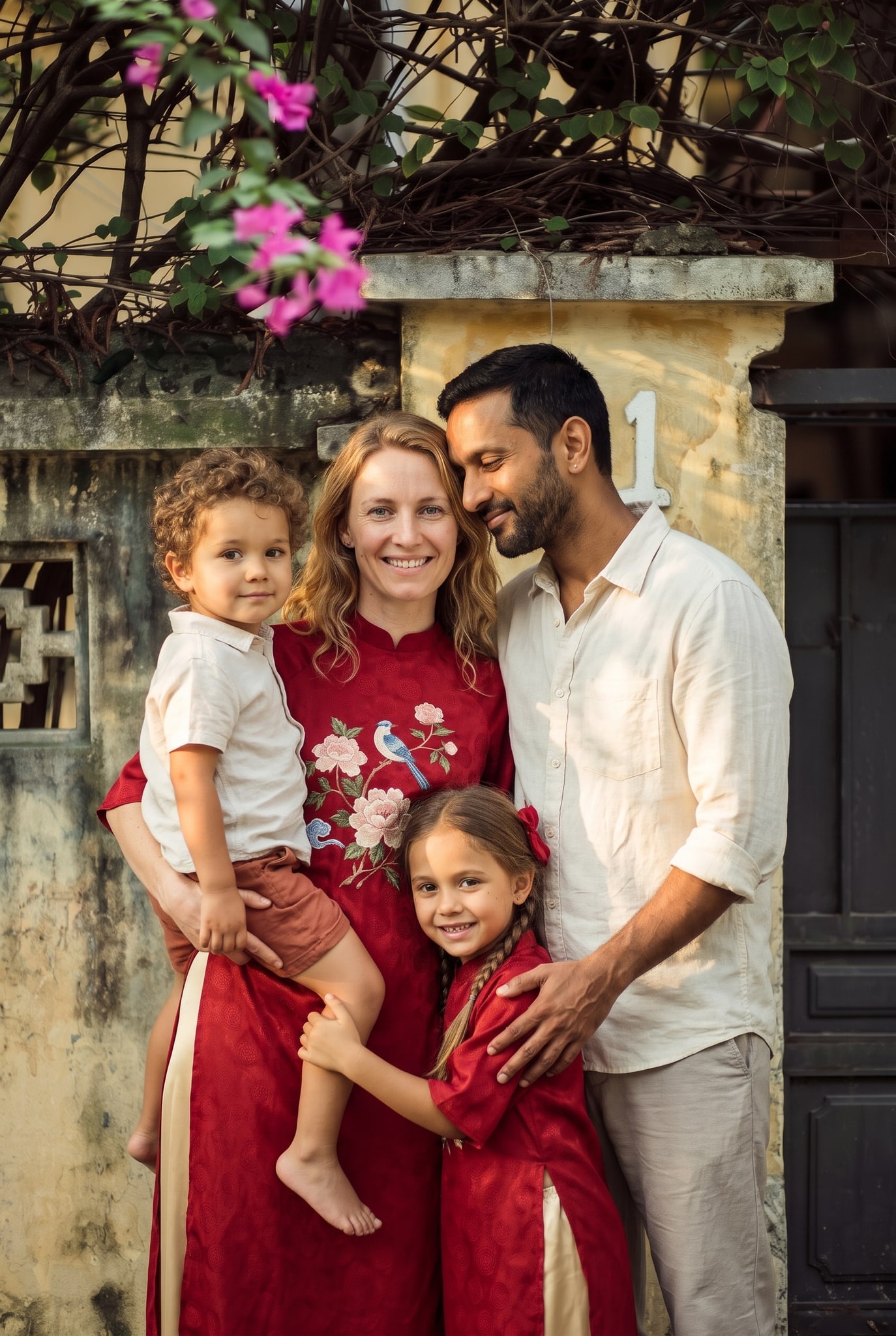
Iconic backdrops cluster in three zones: Hoan Kiem Lake (sunrise or evening, less crowded before 7 a.m. or after 5 p.m.), the Old Quarter's narrow alleys and colonial storefronts (narrow, dramatic light between buildings, crowded mid-morning), and temple courtyards like Quan Su or the Confucian Temple (morning light best, strict rules about posing and respectful dress). Train Street—the narrow rail corridor with cafés on either side—allows photography but only in off-peak hours (before 6 a.m., after 7 p.m.) and you must clear 30 seconds before trains pass every 10–20 minutes; it's thrilling but risky if your photographer or you are slow to react. Each spot has a crowd peak: Hoan Kiem 8–11 a.m. and 4–6 p.m. (peak), lakes and parks less crowded before dawn; Old Quarter steady throughout but worst 10 a.m.–2 p.m.; temples quiet before 7 a.m., then tour groups arrive. We verify temple rules when we book—some require you to remove shoes indoors, prohibit bare shoulders or limit pose angles near altars. Hanoi's monsoon seasons (May–September heavy rain, November–March cooler, October–November clearest skies) also shift which outdoor spots work: rainy-season shoots need covered areas or fast-light windows; dry-season shoots can extend sunset another 30 minutes because of clearer air. A couple photoshoot in Hanoi means choosing one primary zone (usually one of these three) and a backup indoor spot in case weather shifts.
Ao Dai vs. Western Wear: How to Decide by Location
Your outfit choice dictates where you can shoot and how long you can stay comfortable. Ao dai—the traditional silk tunic and trousers—commands respect at temples, photographs richly (the fabric catches light beautifully in golden hour), but limits mobility: you can't sit casually, climb stairs easily or walk through muddy alleys without snagging the hem or train. A Western suit or casual dress lets you move freely, sit on steps, lean against walls, and navigate crowded narrow streets without worry, but looks less distinctive in iconic temple or lake backdrops because the background competes for attention. Couples often choose ao dai for temple or lake sunrise shots (30–45 minutes, high-impact), then change into Western wear or casual clothes for Old Quarter alleys (60–90 minutes of varied posing). This requires a private changing space: we arrange dressing in a nearby café or rented room, adding 15 minutes to your session. If you're unsure, we store ao dai on-site and can send you styling mood boards via WhatsApp before the shoot so you visualize the final look. Avoid sleeveless or low-cut Western wear at temples; many require shoulders covered and no bare midriff, or the monk overseeing the grounds may ask you to stop. Check rules the morning of your shoot because they shift by season and staffing.
| Outfit Type | Best Spot | Light Window | Mobility | Comfort in Heat | Impact |
|---|---|---|---|---|---|
| Ao dai (silk, rented) | Temple courtyard, lake sunrise | 5:45–6:30 a.m. | Low (no climbing/sitting) | High (breathable) | Very high (traditional elegance) |
| Western suit | Old Quarter alleys, streets | 4–5 p.m. | High (full movement) | Low (heat retention) | Moderate (architectural blend) |
| Casual (jeans, linen shirt) | Park, café, street stalls | 6–7 a.m. or 5–6 p.m. | High | High | Moderate (intimate, relaxed) |
| Mix (ao dai top, jeans) | Mixed venues | 6–7 a.m. | Medium | High | High (hybrid elegance) |
Our makeup and styling service includes ao dai rental, hair and makeup at full price; you pick the outfit style on WhatsApp, and we deliver fitted samples 2 days before your shoot so alterations are fast.
How Non-Models Actually Pose: Real Coaching Techniques
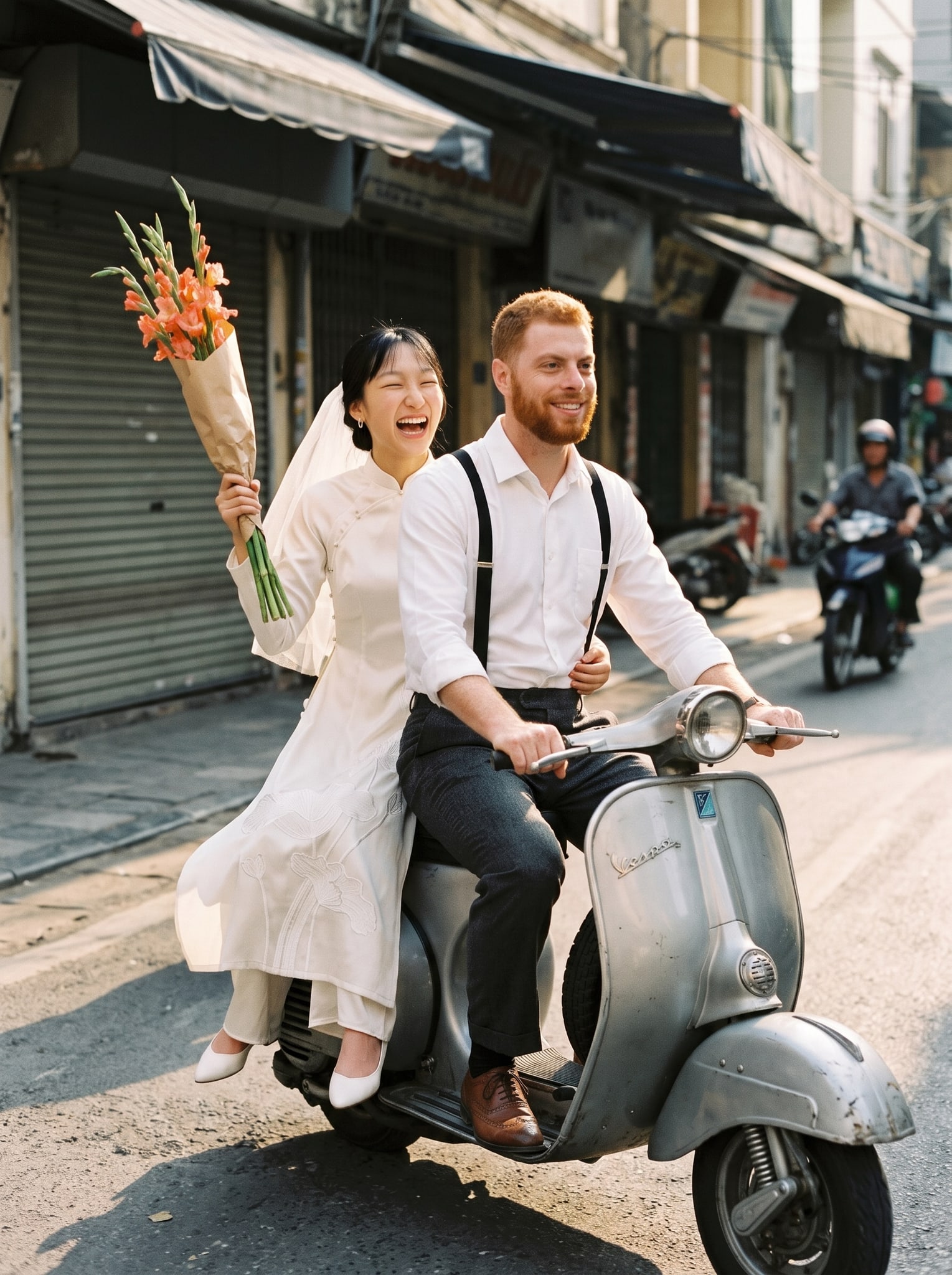
Non-models freeze on camera because they overthink hand placement, eye direction and whether they look "weird." The secret is movement, not stillness: we shoot couples walking toward or away from the camera, laughing mid-sentence, adjusting each other's outfit, or gazing at a landmark rather than the lens. Walking shots diffuse awkwardness because your body is engaged in an action, not waiting to be photographed. We cue you: "Walk toward me, hold hands loose, don't look down—look where you're going." Mid-laugh photos (we tell a joke or ask a funny question just before the shutter) look genuine because your face is mid-expression, not posed. Hand placement on your partner's shoulder, waist or arm feels natural if you're not stiff; we coach you to shift weight, relax shoulders and breathe. Eye direction is critical: looking at each other for 3 seconds before we shoot often produces the most connected images. Looking away (at the temple, the lake, a flower) also works and feels less "staring." Avoid standing parallel to each other directly facing the camera—it looks formal and stiff. Instead, angle toward each other slightly, one partner slightly behind the other, or one sitting and one standing. We take 80–120 frames per location to give you range; 20–40 of those are usually keepers because some frames capture the exact moment your expression or posture lands naturally. Engagement shots fail when couples stay still, force smiles or stare too hard at the lens; movement and authenticity beat perfection every time.
Season & Crowd Timing: Month-by-Month Strategy
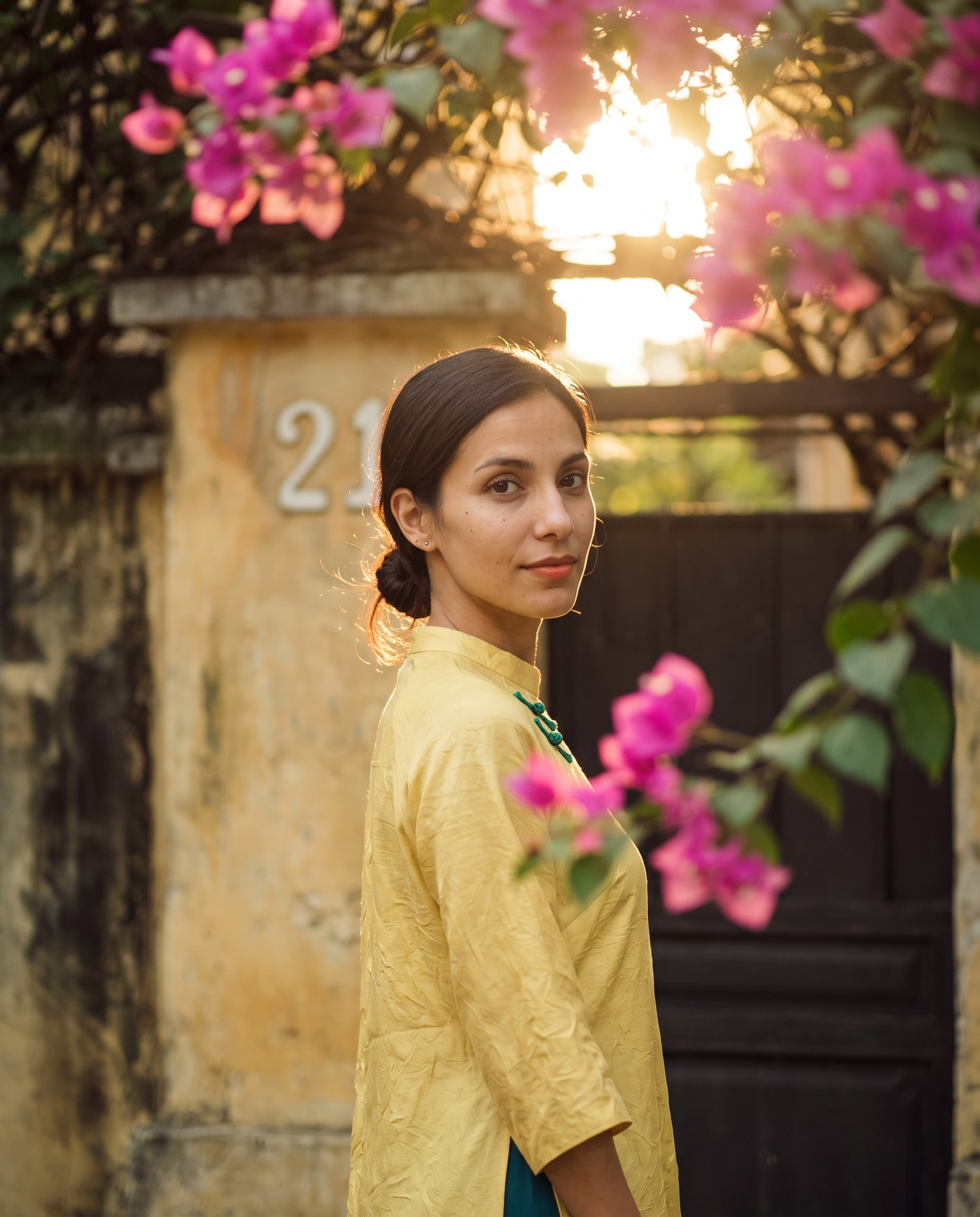
October–November: cooler air (20–25°C), lowest humidity, clearest skies for sharp images, fewest tourists relative to December. Sunset light lasts until 5:45 p.m., golden hour stretches 20–30 minutes longer than summer. Temples are quieter before 8 a.m.; book early to avoid 9 a.m. tour groups. This is peak season for engagement shoots in Hanoi because light and comfort align. December–January: cool (15–18°C), still clear, but tourists increase sharply around year-end holidays and Tet (Lunar New Year, late January/early February). Temple courtyards fill by 9 a.m.; book before 7 a.m. shoots. February–April: warming (18–28°C), occasional drizzle, humidity climbing. March has pollen haze that softens light; some couples like this "dreamy" quality, others find it washed-out. May–September: hot (28–35°C), monsoon rain June–September (afternoon deluges common), crowds drop because tourists avoid heat and rain, but golden hour light is more diffuse (less dramatic shadows). Sunrise shoots are easier because 6 a.m. is cooler; evening shoots are brutal without air-con nearby. Our Instagram photoshoot guide covers best-lighting months by landmark; we track real-time weather and reschedule if heavy rain is forecast 48 hours before your session. Booking 4–6 weeks ahead lets us secure temple slots and coordinate styling. Last-minute bookings (under 1 week) may conflict with permit windows at Train Street or temple access hours.
Train Street & Sacred Spaces: Rules You Cannot Break
Train Street (Phố Đường Tàu, Old Quarter) is a working rail corridor; trains pass every 10–20 minutes on an unpredictable schedule. Photography is permitted but you have 30 seconds to clear the tracks once a train is visible. We scout the approach corridor, identify the best angles and fastest exit, and brief you on the train-spotting sound before we shoot. Couples often panic or move slowly, losing the shot or getting too close to a passing train. Wearing heels or ao dai makes exiting slower; plan for 2–3 minutes of setup, 20–30 frames in 2 minutes, then clear. No special permit is required, but you cannot stage elaborate setups, block traffic or pose on active tracks. Late evening (after 8 p.m.) is safest because train frequency drops, but light quality plummets without streetlamps or moon. Early morning (5:30–6:30 a.m.) is ideal: trains are sparse, light is golden, fewer tourists and café staff are just opening, creating authentic atmosphere. Hanoi temples require respectful dress: no bare shoulders, no shorts above the knee, no low-cut tops, no hats indoors. Some temples prohibit photography in certain interior rooms; we confirm rules the morning of your shoot and brief you on approach angles. Posing in front of altars is disrespectful; we shoot you in courtyards, doorways or landscaped areas instead. Quan Su and the Confucian Temple permit engagement couples but ask you to finish by 11 a.m. (before midday services or afternoon tour crowds). Breaking these rules results in staff asking you to leave immediately, wasting your session time and money.
What to Check Before You Book Your Shoot
- Confirm light timing by exact date and location. Ask us for sunrise/sunset times for your chosen shoot date; we verify which spots catch golden light at your preferred time. Light shifts 4 minutes per day, so a 6 a.m. shoot in early October differs from late October.
- Check temple access 48 hours before. Temples sometimes close for festivals, ceremonies or staff events. We call ahead, but you confirm with us via WhatsApp 2 days prior.
- Verify outfit fit and styling mood.Send us a mood board or Pinterest link of engagement couple photos you love. We match ao dai style, hair direction and makeup tone to your taste and ensure rentals arrive 2 days early for any urgent adjustments.
- Plan a backup indoor location in case weather shifts. Hanoi's monsoon season brings fast afternoon rain. We identify a café, colonial building lobby or covered market area near your primary outdoor spot so we can pivot if storms arrive.
- Book a quiet, private space for outfit changes. If you're switching from ao dai to casual wear (or vice versa), we arrange a nearby dressing room (usually a café owner's back room or rented studio space). Confirm this 1 week ahead so we lock in the space.
- Check your mobility and posing comfort in your chosen outfit at home. Ao dai requires practice walking, sitting and climbing without tripping. Try on your rental and movement in your home beforehand so you're confident on shoot day.
- Bring water, phone chargers and blotting paper. Hanoi's humidity is real, especially April–September. Blotting paper keeps makeup fresh between location changes; water keeps you hydrated during 2–4 hours of movement and posing. We carry extras, but you'll feel better prepared.
For a deeper dive into couple dynamics and venue rules across Hanoi, explore our couple photoshoot overview or visit the pre-wedding pillar guide for full session planning.
FAQ
Can we do an engagement shoot in the rain, or should we always reschedule?
Light drizzle (0.5–2 mm per hour) in October–March can look moody and romantic; we shoot with faster lenses to keep frames sharp. Heavy rain (over 5 mm/hour) washes out colors and forces us indoors. We monitor forecasts 48 hours ahead and offer free rescheduling if rain is predicted; if surprise light drizzle occurs, we adapt by shifting to covered courtyards or underpass backdrops. Ask us via WhatsApp for your specific date's forecast outlook.
How many outfit changes can we fit into one 3-hour session?
One full change (ao dai to Western wear, or vice versa) takes 15–20 minutes including hair touch-up and makeup refresh. A 3-hour session usually covers 1 change and 2–3 locations. More than 1 change eats into posing and travel time, so we recommend picking one outfit for 2 hours, then changing for the final 1 hour if you want variety. Coordinate with us via WhatsApp to lock in timing.
Do we need a permit to shoot at Hoan Kiem Lake or the Old Quarter?
No formal permit is required for personal engagement couple shoots at public landmarks like Hoan Kiem Lake, the Old Quarter or open courtyards. Commercial shoots (for brands, resale images) require permits; if you're shooting for a wedding business or reselling images, ask us to arrange permits 2 weeks ahead. Personal engagement shots are unrestricted in public spaces.
What if we don't fit the "model" mold—we're shy or have mobility issues?
Non-models and shy couples are our specialty. We coach through movement (walking, adjusting clothing) rather than static poses, use voice cues and jokes to relax facial expressions, and adapt all posing to your mobility. Mobility concerns (limited standing, joint pain, wheelchair use) inform location scouting; we pick spots with flat access, nearby seating and short walks between frames. Communicate any physical needs on WhatsApp when you book so we design a bespoke session.
Can we book a sunrise shoot year-round, or are some months too dark?
Sunrise shoots work year-round in Hanoi. October–March sunrise is 5:45–6:15 a.m., golden light lasts until 6:45–7:15 a.m. April–September sunrise is 5:15–5:45 a.m., golden light extends to 6:15–6:45 a.m. All months offer a 40–50 minute golden-hour window, but you must arrive 15–20 minutes early to position and let your eyes adjust. Winter sunrise is later and feels less rushed; summer sunrise requires an earlier alarm but fewer tourists.
How much do you charge, and does it include the ao dai rental and styling?
Pricing varies by session length (2–4 hours), number of locations, ao dai rental tier and styling services. Ask us for a detailed quote on WhatsApp—we customize packages based on your preferences, location and outfit choices. All quotes include in-house makeup, hair and ao dai rental unless you bring your own outfit.
Check dates
Send your dates, how many people and the style you like. We reply on WhatsApp in English with spots, timing and a quote.
FAQ
Can we do an engagement shoot in the rain, or should we always reschedule?
Light drizzle (0.5–2 mm per hour) in October–March can look moody and romantic; we shoot with faster lenses to keep frames sharp. Heavy rain (over 5 mm/hour) washes out colors and forces us indoors. We monitor forecasts 48 hours ahead and offer free rescheduling if rain is predicted; if surprise light drizzle occurs, we adapt by shifting to covered courtyards or underpass backdrops. Ask us via WhatsApp for your specific date's forecast outlook.
How many outfit changes can we fit into one 3-hour session?
One full change (ao dai to Western wear, or vice versa) takes 15–20 minutes including hair touch-up and makeup refresh. A 3-hour session usually covers 1 change and 2–3 locations. More than 1 change eats into posing and travel time, so we recommend picking one outfit for 2 hours, then changing for the final 1 hour if you want variety. Coordinate with us via WhatsApp to lock in timing.
Do we need a permit to shoot at Hoan Kiem Lake or the Old Quarter?
No formal permit is required for personal engagement couple shoots at public landmarks like Hoan Kiem Lake, the Old Quarter or open courtyards. Commercial shoots (for brands, resale images) require permits; if you're shooting for a wedding business or reselling images, ask us to arrange permits 2 weeks ahead. Personal engagement shots are unrestricted in public spaces.
What if we don't fit the "model" mold—we're shy or have mobility issues?
Non-models and shy couples are our specialty. We coach through movement (walking, adjusting clothing) rather than static poses, use voice cues and jokes to relax facial expressions, and adapt all posing to your mobility. Mobility concerns (limited standing, joint pain, wheelchair use) inform location scouting; we pick spots with flat access, nearby seating and short walks between frames. Communicate any physical needs on WhatsApp when you book so we design a bespoke session.
Can we book a sunrise shoot year-round, or are some months too dark?
Sunrise shoots work year-round in Hanoi. October–March sunrise is 5:45–6:15 a.m., golden light lasts until 6:45–7:15 a.m. April–September sunrise is 5:15–5:45 a.m., golden light extends to 6:15–6:45 a.m. All months offer a 40–50 minute golden-hour window, but you must arrive 15–20 minutes early to position and let your eyes adjust. Winter sunrise is later and feels less rushed; summer sunrise requires an earlier alarm but fewer tourists.
How much do you charge, and does it include the ao dai rental and styling?
Pricing varies by session length (2–4 hours), number of locations, ao dai rental tier and styling services. Ask us for a detailed quote on WhatsApp—we customize packages based on your preferences, location and outfit choices. All quotes include in-house makeup, hair and ao dai rental unless you bring your own outfit.
More like this
Pre-wedding photoshoot
Pre-Wedding Photographer Hoan Kiem Lake: Tips for Perfect Hanoi Shots
Hoan Kiem Lake is Hanoi's most iconic pre-wedding backdrop, but timing, crowds, and permit rules make the difference between stunning portraits and wasted hours. We share exact timing, outfits, and posing strategies that actually work.
Pre-wedding photoshoot
Pre-Wedding Edited Photos: How Many Should You Expect?
Pre-wedding edited photo counts vary by session length and package design. We explain what Hanoi Photoshoot by Cáo Studio delivers, how long editing takes, and how to choose the right volume for your needs.
Pre-wedding photoshoot
Pre-wedding photographer at Hanoi Lotus Pond: shoot guide & booking
Hanoi Lotus Pond offers dreamlike golden-hour light and blooming flowers for pre-wedding shoots, but success depends on season, time of day and precise spot selection. We share exactly what to expect and how to book.