
Home › Blog › Hanoi photo spots
Duong Lam Ancient Village Photoshoot Guide: Light, Crowds & Posing
By the Hanoi Photoshoot team · 2026-11-06
Duong Lam Ancient Village is a 500-year-old settlement 45 km from Hanoi, best shot September–November and February–April when humidity drops and light stays golden until 17:00. Plan 3–4 hours on-site; we coordinate transport, ao dai rental and in-house makeup at our Hanoi studio before pickup. Key spots include the communal house (ticket required, early morning avoids crowds), brick-paved alleyways and fruit orchards where backlighting transforms simple poses into editorial frames. Crowds peak 09:00–12:00 and 13:30–16:00; arrive by 07:30 or after 16:30 for solo or couple work. Respect temple photography rules: no shoes inside, no posed selfies at altars, ask locals before shooting portraits of residents. Hanoi Photoshoot by Cáo Studio handles permits, timing and non-model posing so you look natural, not stiff.
Duong Lam Ancient Village sits 45 km southwest of Hanoi's center, accessible by car in 50–70 minutes depending on traffic. We book transport as part of your session, arriving before 08:00 to shoot the best light and fewest crowds. The village spans ~2 km of walkable lanes; budget 3–4 hours total including outfit changes and positioning breaks.
Which season and month gives the clearest light?
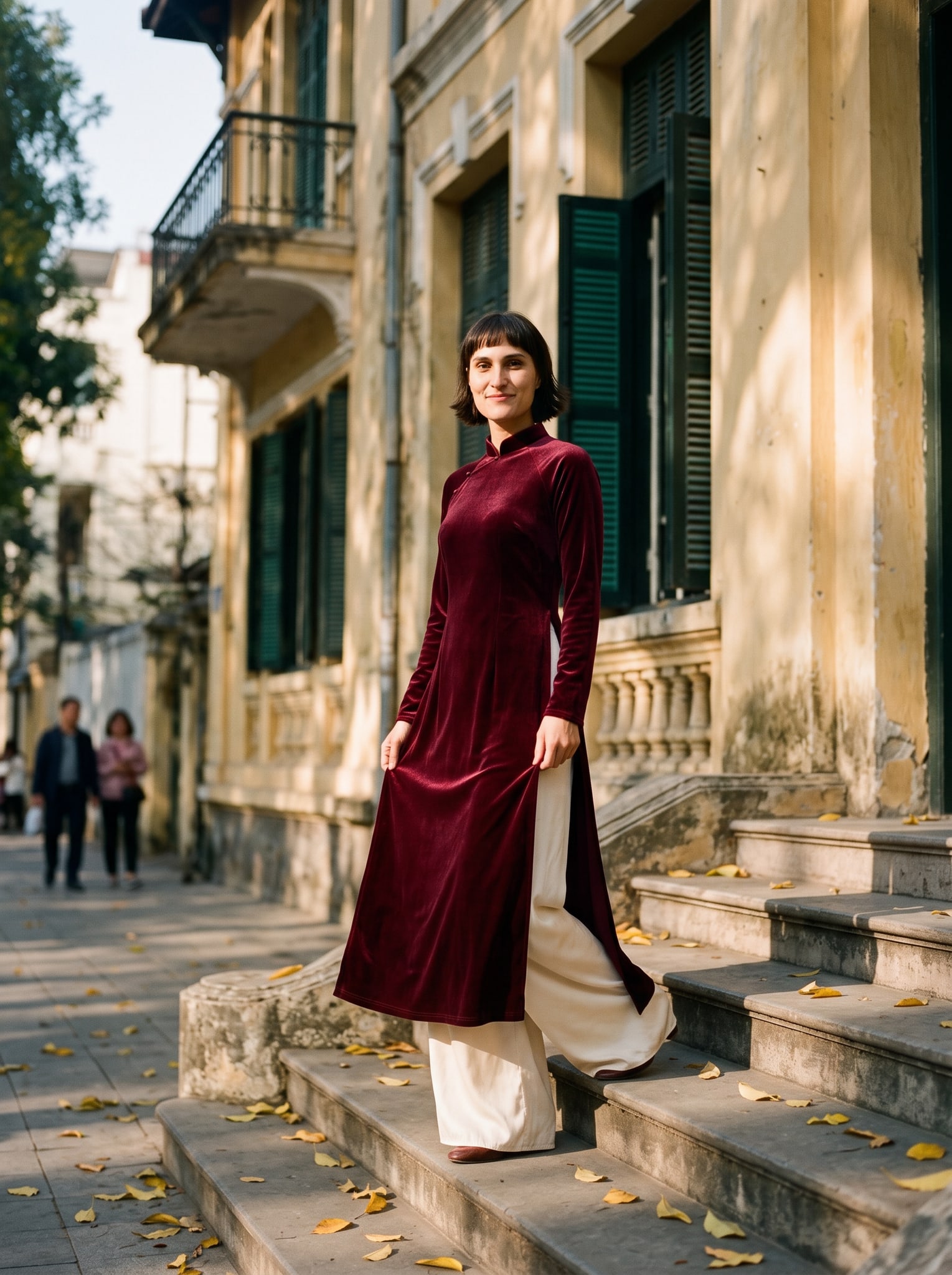
September to November and February to April deliver the strongest, most flattering light. Humidity drops below 70%, skies stay mostly clear, and golden hour (06:00–07:00 arrival, 16:30–17:30 departure) lasts longest. December–January can be hazy; May–August bring monsoon haze and midday heat above 35°C, making long posing uncomfortable. Late autumn mornings (September–October) have the crispest, most saturated backlit frames for ao dai photoshoot work—fabric detail and embroidery photograph truest then.
What time of day stops the crowds?
Peak foot traffic runs 09:00–12:00 (tour groups) and 13:30–16:30 (domestic visitors). Arrive by 07:30 for near-empty communal house and alleyways; locals are just opening shops and sweeping courtyards, offering unposed background storytelling. After 17:00 light softens but crowds thin further; useful for couple photoshoot sessions when you want quiet, intimate framing without strangers in background. Early arrival also lets us scout exact positions and adjust for cloud drift—critical in a 2 km space where sun angles shift 30 degrees across three hours.
Which temple and courtyard spots require permits or pose restrictions?
The main communal house (Đình Đám) sits at the village center; entry is ticketed (~our current quote per person, paid on-site). No shoes past the threshold, no posed selfies or group photos at the central altar—locals and caretakers enforce this. We scout permitted side courtyards and exterior red-brick walls instead, shooting through doorways and windows to imply sacred space without violating protocols. The pagoda (Chùa Mía) allows photography outside and in side shrines only; ask the monk on duty before approaching—they usually welcome respectful portraiture. Avoid shooting directly into altars or monks during prayer. This knowledge prevents delays and keeps your session respectful, crucial for family photoshoot bookings with elderly relatives unfamiliar with Western photo norms.
How do non-models pose naturally among old buildings?
Most first-time visitors stiffen near heritage landmarks, unsure whether to smile, where to stand or what to do with hands. We use three tactics: walk-and-talk (you stroll a lane while we shoot, narrating a memory or asking questions—motion breaks self-consciousness), leaning frames (hip against brick, hand resting on a gate, chin angled 15° left—feels purposeful, not posed), and task posing (pretend to knock on a door, inspect fruit in an orchard, run fingertips along weathered wood—eyes and body focus outward, not at camera). For solo travel portraits, we frame you within the landscape—standing in doorway shadow, sitting on a low wall with the village disappearing behind you—rather than facing the lens. This approach suits non-models and builds confidence for second or third shots.
What outfit colors and fabrics work best here?
Ao dai in jewel tones (emerald, sapphire, burgundy) photograph richest against red brick and moss-green shutters; pastels fade into dusty courtyards. Silk and cotton blends hold their shape during 3–4 hours of wear; polyester ao dai cling in humidity. We rent ao dai and provide styling at our studio—no guesswork. For Western dress, solid tones (cream, rust, charcoal, navy) outlast patterns; avoid busy prints that compete with architecture. Fabrics should drape (linen, cotton, silk) rather than cling; loose sleeves photograph wider and softer than fitted cuts. Jewelry should be minimal—statement pieces catch harsh midday light and distract from your face. Closed shoes with soft soles let you walk barefoot through temple zones without switching mid-session.
How does the light change across the village's 2 km width?
Eastern lanes (toward the road) receive direct east-facing light 06:30–09:30, ideal for backlit silhouettes and rim-lit hair. Central courtyards get diffused overhead light 09:30–15:00, flattest but safest for group family photoshoot work where no one is left in shadow. Western orchards and brick walls catch warm, low side-light 15:00–17:30—best for couple close-ups and individual portraits where one side of your face glows and the other falls into shadow, adding dimension. We navigate this by shooting on-site 3–4 hours, repositioning every 45 minutes to chase the light rather than fighting it. Cloud cover, though less common in good seasons, cuts contrast by 40–50% but softens shadows—workable if you're uncomfortable with stark silhouettes.
What do we need to carry and what can go wrong?
Bring water (dehydration sets in by hour two in warm months), sunscreen, a light scarf for sun or temple protocol, and phone fully charged for WhatsApp updates. Avoid: walking backward through narrow lanes (trip hazard on uneven brick), wearing heels (unstable and loud on stone), and taking posed photos of residents without asking—tensions arise fast. We manage logistics and safety; your role is to trust the timing and enjoy the environment. Common mistakes include overshooting in the first hour (you tire by hour three), changing outfits in cramped spaces (ask for privacy beforehand), and skipping breakfast (energy crashes mid-session). We brief you on all of this before pickup.
| Shoot Type | Best Season | Ideal Arrival | Est. Crowd Level | Why It Works |
|---|---|---|---|---|
| Ao dai solo | Sept–Oct | 07:00 | Very low | Golden backlight, no tour groups |
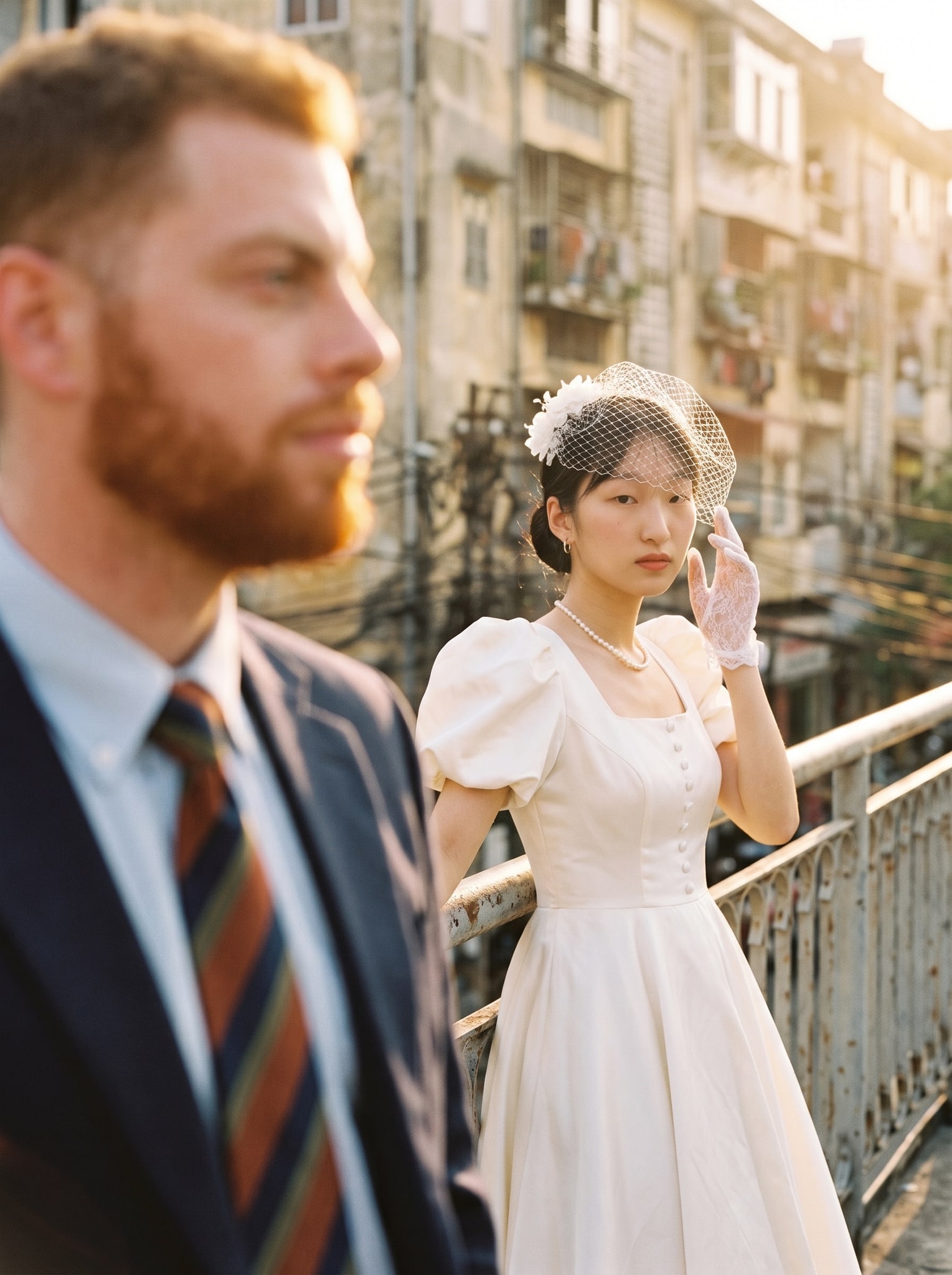
| Couple portrait | Feb–Apr | 06:30 | Low | Clear skies, soft light by 08:00 |
| Family group (4+) | Oct–Nov | 08:30 | Moderate | Daylight spreads wide, communal house open |
| Proposal setup | Jan–Feb | 16:30 | Very low | Soft warm light, village nearly empty |
| Pre-wedding day shoot | Sept–Oct | 07:00 | Very low | Golden hour, minimal tourists, fresh energy |
What to check before you book
Confirm your preferred date opens early with us via WhatsApp—some Mondays the village is closed for maintenance. Verify your ao dai sizing 2 weeks ahead so we don't need rush alterations; ill-fitting garments photograph loose and read as careless. Check the weather forecast 3 days prior; if heavy rain is forecast, we reschedule (puddles kill clean footwork in alleys, and humidity spikes to unbearable levels). Confirm transport pickup time and location with your hotel or accommodation—we don't name specific hotels, but we'll collect you from any centrally-located one within 3 km of Hoan Kiem Lake. Finally, bring a list of 3–5 specific spots in the village you've seen online and want to include; this saves us 20 minutes of scouting and tightens your final gallery.
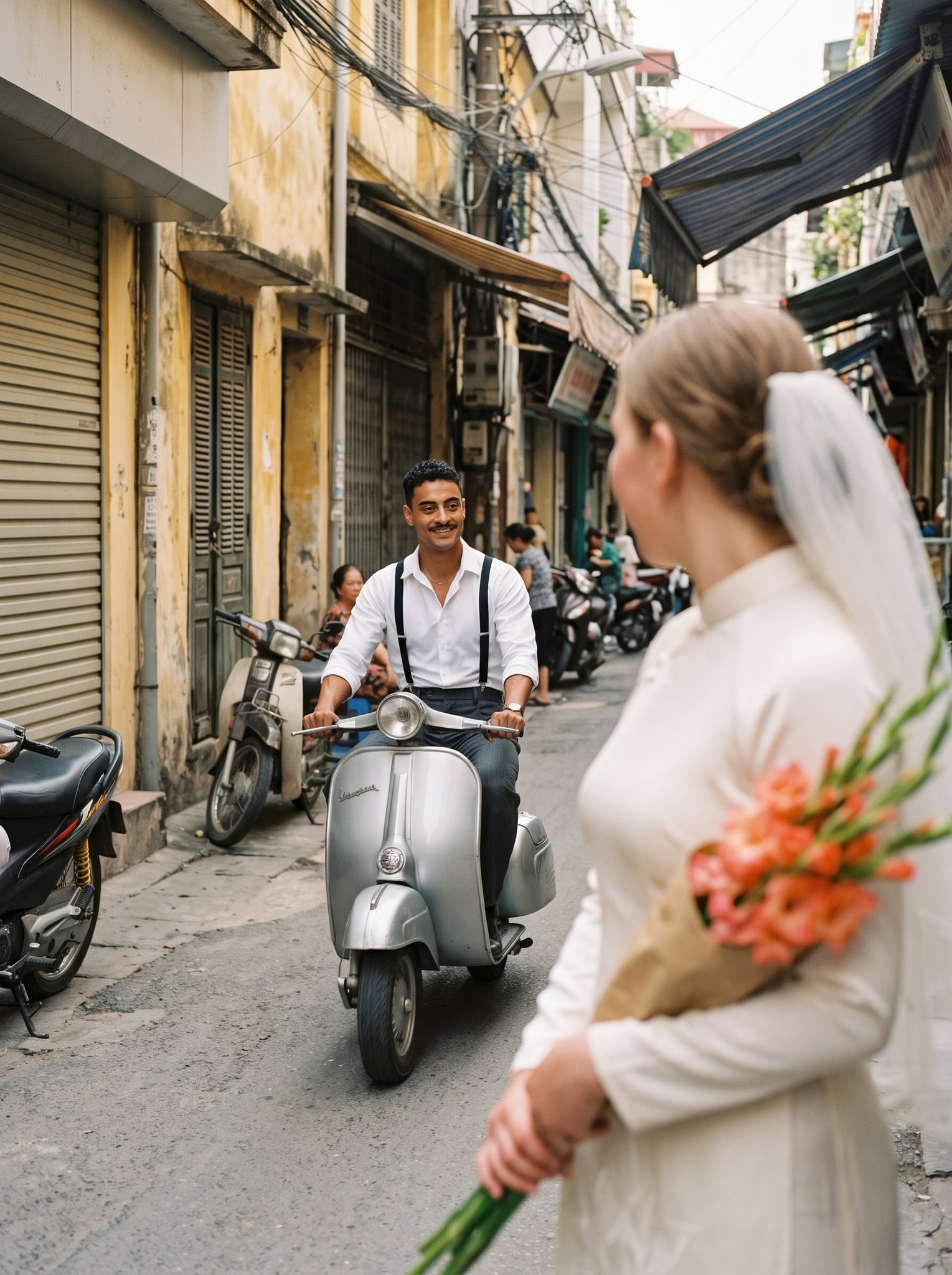
Duong Lam pairs beautifully with other Hanoi heritage sessions. If you're combining styles, couple photoshoot bookings in the village often extend to a second location—the Old Quarter photo guide is 40 minutes north and offers narrower lanes and night markets. Pre-wedding photoshoot clients often use the village as their main heritage anchor and add a modern urban frame elsewhere. We also coordinate solo travel portraits and graduation photoshoot sessions here year-round.
FAQ
Do we need a guide inside the village, or can we walk freely?
You walk freely; we navigate as your photographer. Locals are accustomed to visitors. A guide is unnecessary unless you want historical narrative—we focus on light and posing. Some paths are unmarked, so we scout first.
Can we bring young children or babies?
Yes. Family photoshoot with kids works best before 09:00 when it's cooler and children have energy. Bring water and snacks. Uneven brick paths challenge toddlers; pace is slower. We adjust timing and framing for all ages.
How much is the ticket to the communal house?
Approximately a quoted price per person, paid on-site at entry. We include this in your planning; it's not part of our photography fee. Ask us for a quote on WhatsApp for total session cost.
What if the light is cloudy or hazy?
Haze and cloud reduce contrast but soften shadows—workable, though less dramatic. We adjust poses to rely less on backlighting and more on facial expression and framing. Rescheduling is optional; discuss options with us before arrival.
Is the village accessible by motorbike or bicycle from Hanoi?
Yes, but we drive you to reduce fatigue before a 3–4 hour shoot. Motorbike takes 60–90 minutes; cycles take 3+ hours over hilly terrain. Driving lets you arrive fresh and hydrated. Ask us for a quote on WhatsApp including transport.
Check dates
Send your dates, how many people and the style you like. We reply on WhatsApp in English with spots, timing and a quote.
FAQ
Do we need a guide inside the village, or can we walk freely?
You walk freely; we navigate as your photographer. Locals are accustomed to visitors. A guide is unnecessary unless you want historical narrative—we focus on light and posing. Some paths are unmarked, so we scout first.
Can we bring young children or babies?
Yes. [Family photoshoot](/family-photoshoot) with kids works best before 09:00 when it's cooler and children have energy. Bring water and snacks. Uneven brick paths challenge toddlers; pace is slower. We adjust timing and framing for all ages.
How much is the ticket to the communal house?
Approximately 15,000 VND per person, paid on-site at entry. We include this in your planning; it's not part of our photography fee. Ask us for a quote on WhatsApp for total session cost.
What if the light is cloudy or hazy?
Haze and cloud reduce contrast but soften shadows—workable, though less dramatic. We adjust poses to rely less on backlighting and more on facial expression and framing. Rescheduling is optional; discuss options with us before arrival.
Is the village accessible by motorbike or bicycle from Hanoi?
Yes, but we drive you to reduce fatigue before a 3–4 hour shoot. Motorbike takes 60–90 minutes; cycles take 3+ hours over hilly terrain. Driving lets you arrive fresh and hydrated. Ask us for a quote on WhatsApp including transport.
More like this
Hanoi photo spots
Hanoi Old Quarter Photoshoot Guide: Best Light, Streets & Rules
The Old Quarter's 36 guild streets offer layered architecture, lantern-lit alleyways and constant foot traffic—ideal for portraits if you time light and navigate crowd patterns correctly.
Hanoi photo spots
Temple of Literature Family Photos: Light, Crowds & Posing Tips
The Temple of Literature is Hanoi's most iconic family backdrop: 900 years of architecture, gardens and courtyards that photograph beautifully across all seasons. We guide you through light windows, crowd patterns and how to pose together without looking stiff.
Hanoi photo spots
Temple of Literature Couple Photos: Light, Crowds & Timing
The Temple of Literature offers soft morning light, minimal crowds before 8 am, and permission for couple sessions if you coordinate with us in advance. We handle makeup, ao dai rental and posing direction for non-models at this UNESCO-recognized spot.