
Home › Blog › Couple photoshoot
Couple Photoshoot Hanoi: What to Wear for Stunning Photos
By the Hanoi Photoshoot team · 2026-11-06
For a couple photoshoot in Hanoi, wear complementary colors (not matching), breathable fabrics, and layers for light control—solid tones and soft neutrals outperform bold prints in diffused golden light. Avoid oversized silhouettes, logos, and heavily wrinkled fabrics; iron before you arrive. In winter (November–February), light jackets and long sleeves work; summer (May–September) demands moisture-wicking cotton or linen to survive 85–95°F heat and humidity. A couple photoshoot with Hanoi Photoshoot by Cáo Studio runs 2–4 hours; bring a second outfit for variety, and plan shoots around 6–7 AM or 5–6 PM to catch soft, flattering light. Avoid tourist-trap all-white or all-denim couples' uniforms—they photograph flat and date quickly. Check dates on WhatsApp
What colors and tones actually work in Hanoi's light?
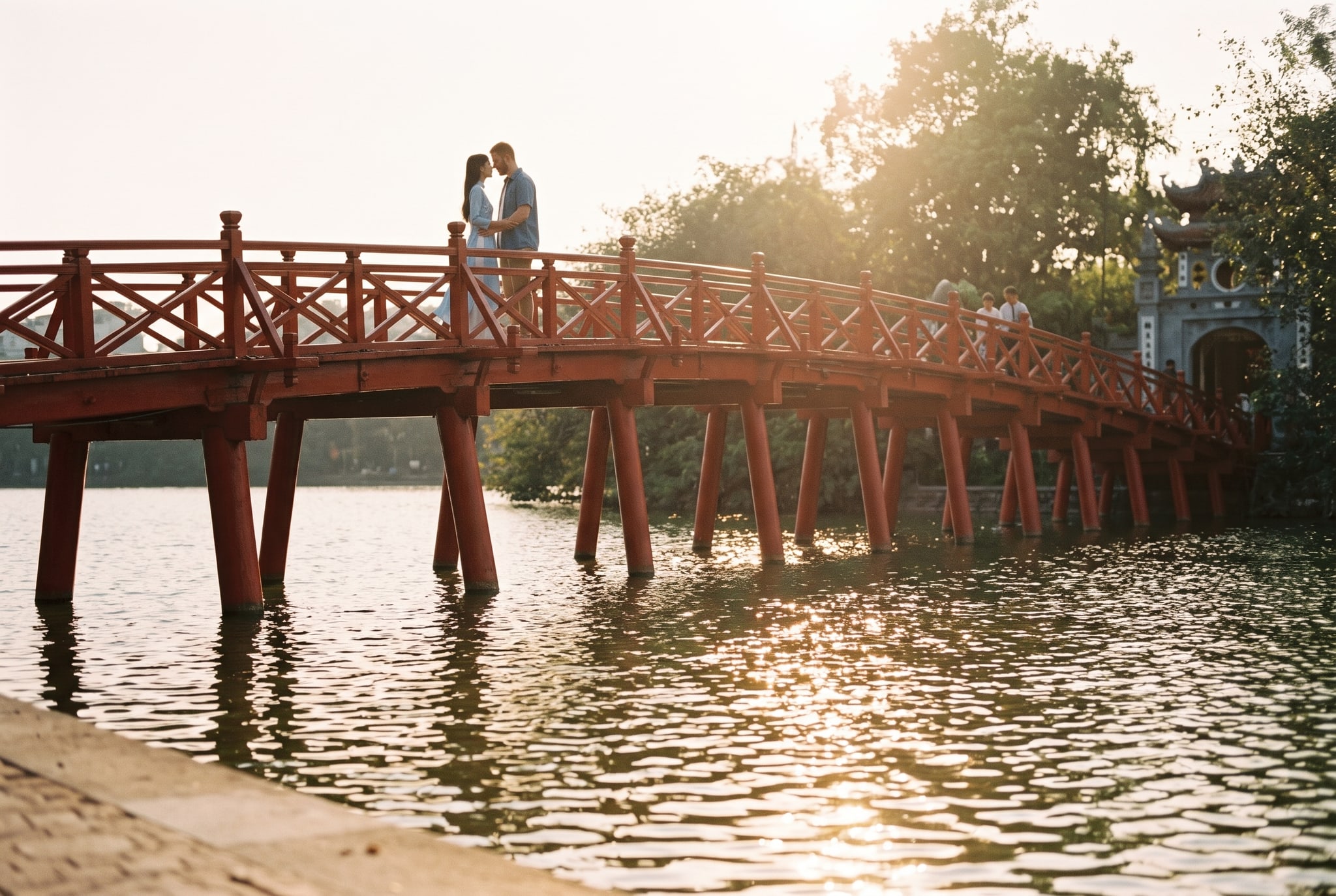
Hanoi's tropical humidity and reflected heat from limestone create a pale, low-contrast midday environment. Solid jewel tones (emerald, sapphire, burgundy), dusty pastels, and warm earth tones (terracotta, olive, warm gray) hold depth in this flat light; prints and busy patterns dissolve into visual noise. One partner in a warm neutral, the other in a cool tone, creates natural hierarchy without looking coordinated. We avoid suggesting white-on-white or black-on-black couples—they photograph blown-out or merged depending on exposure. Test your proposed outfit in midday window light at your hotel; if colors look flat or washed, they'll struggle at Hoan Kiem Lake or the Old Quarter too.
How do layers and fabric choice affect the final image?
Structured, breathable fabrics (linen, cotton blends, silk-cotton) hold their shape and catch light cleanly; loose, limp fabrics pool and wrinkle visibly by frame 50. Layers let you adapt: a linen shirt over a fitted tee, or a lightweight cardigan, work across morning and evening sessions without overheating. Avoid polyester and cheap synthetics—they pill, stick to skin, and look plasticky in close-up frames. Denim works best in darker washes (navy, indigo, black) and structured fits; ripped or frayed details read as sloppy, not casual. Cotton-linen blends stay crisp for 3–4 hours in 90°F heat, while pure cotton wrinkles faster but breathes better. Bring the outfit in a garment bag and dress on-site to preserve crispness.
Which season shapes outfit choices most?
| Season | Temps | Outfit Strategy | Light Quality | Avoid |
|---|---|---|---|---|
| Nov–Feb (cool) | 50–70°F | Layers, long sleeves, light jackets | Harsh, low-angled gold | Bare legs, sleeveless |
| Mar–Apr (warm–hot) | 75–85°F | Breathable solids, shorts OK, minimal layers | Strong mid-morning shadows | Tight synthetics, long sleeves |
| May–Sep (hot–humid) | 85–95°F, 80%+ humidity | Moisture-wicking cotton, linen, minimal coverage, light colors | Diffused, pale, flat | Dark heavy fabrics, long sleeves, tight fits |
| Oct (transition) | 70–80°F | Single layer, versatile neutrals | Balanced, warm | Heavy jackets |
Plan shoots in cool or transition months if your partner sweats visibly or wrinkles easily. Summer shoots work best before 7 AM or after 5 PM to avoid peak heat and moisture-soaked-fabric look.
How does your location (Old Quarter, Train Street, lake) change outfit logic?
Hoan Kiem Lake and the French Quarter demand more polished, structured outfits—think fitted shirts, tailored trousers, or dresses with defined silhouettes. The water reflects light upward, brightening faces but also revealing fabric pilling and loose threads. Train Street is narrow, dusty, and atmospheric; darker, moodier tones (charcoal, navy, burgundy) read better against weathered brick and track. The Old Quarter's dense architecture creates shadow patches; solid colors navigate these better than prints, which fragment in dappled light. Street texture also matters: avoid delicate fabrics that snag on rusty surfaces or catch on vendor carts. Wear closed-toe shoes with grip for uneven cobblestones; we've seen couples slip on smooth soles in morning dew or after rain.
What outfit mistakes do couples repeat—and how do we prevent them?
Matching outfits (identical colors, logos, "his and hers" t-shirts) feel forced and age poorly in 5 years. Overly trendy or costume-like clothing (neon, novelty prints, heavy makeup-matching aesthetics) dates instantly. Wrinkled, stained, or poorly fitted garments undermine the whole shoot—press everything the night before and pack lint rollers. Overly casual (pajama-fit, visible sweat stains, unwashed hair) signals you didn't invest in the moment; couple shoots deserve intention. Logos and text break the frame's visual flow; remove lanyards, visible name tags, and branded caps. Clashing proportions (one oversized, one tight) disrupt balance—both partners should wear flattering fits in their own size. We recommend trying your outfit on together 48 hours before; if you feel awkward, the camera sees it. Swap or reshoot the concept, then redress.
Should we rent ao dais, or bring our own outfits?
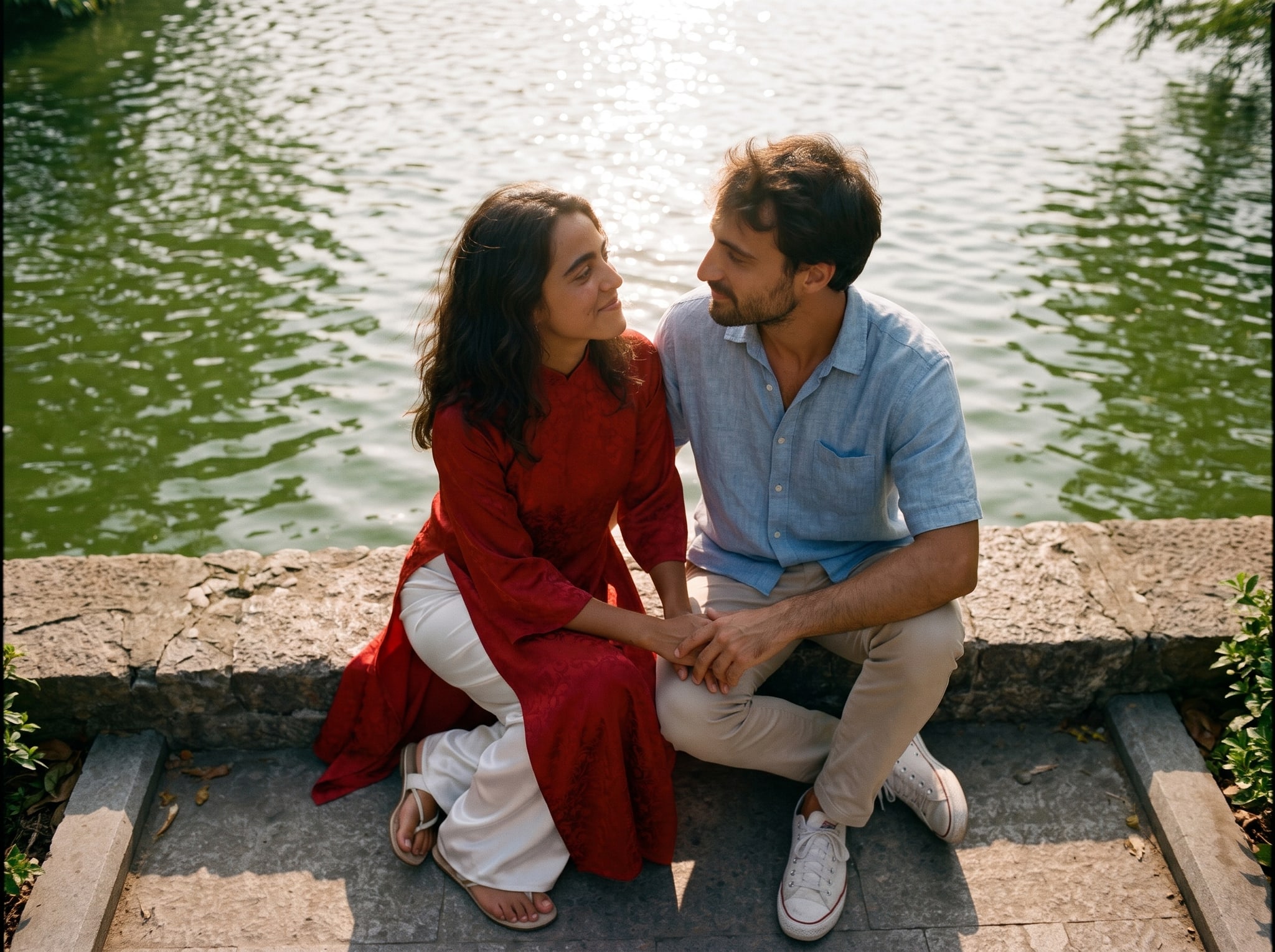
Renting an ao dai with makeup and styling solves fabric, fit, and care instantly—no travel wrinkles, no laundry risk, and professional tailoring ensures camera-ready drape. Many couples shoot one outfit in personal clothes (casual, authentic) and a second in ao dai (formal, timeless). If you bring your own ao dai, pack it flat in a garment bag and have a tailor in Hanoi (we can recommend types of tailors if you ask on WhatsApp) steam it on arrival; synthetic fabrics wrinkle irreversibly. Rented ao dai comes steamed and fitted; we handle makeup and hair coordination to match the silhouette. For pre-wedding shoots, ao dai + formal Western wear (suit, tailored dress) gives photographers two distinct moods in one session. Ask us for a quote on WhatsApp if you're weighing rental vs. bringing your own.
What about footwear, accessories, and final details?
Shoes matter more than couples expect: dressy leather, clean canvas, or metallic flats work; scuffed sneakers, visible socks, or flip-flops degrade the frame. Walk in your chosen shoes before the shoot; blisters show in posture and facial tension. Minimal jewelry (delicate chains, small studs, simple rings) photographs crisper than chunky statements; avoid jingling bracelets and dangling earrings that distract. Bags should be small and coordinated with your outfit; large backpacks or worn crossbodies clutter the composition. Hair: plan for wind and humidity—a half-up style or loose waves read better than blown-out curls in 90°F moisture. If you're unsure, our makeup and styling team can advise on trial runs. Sunglasses are fine for some frames but muffle your faces; we usually reserve them for architectural or motion shots, not intimate couple moments.
What to check before you book
- Outfit try-on: Wear your chosen outfit for 2 hours in midday light at home. Does the fit still feel good? Do colors hold visual interest?
- Fabric care: Iron everything the night before and pack a lint roller. Bring safety pins to secure loose hems or gaps mid-shoot.
- Season realism: Check Hanoi's weather forecast the week of your shoot. Adjust layers or reschedule if flooding or extreme heat is predicted.
- Comfort test: If you've never worn your outfit before, wear it for a full day first. Discomfort reads as stiffness in photos.
- Color harmony: Ask your partner to try your proposed outfit with theirs in front of a mirror. Trust your gut—if it feels off, change one piece.
- Location scouting: If you're choosing your own spot, ask us to suggest outfits that match that venue's light and texture.
FAQ
Can we wear jeans to a couple photoshoot in Hanoi?
Yes—dark, structured denim (navy, indigo, black) works well, especially in cool months. Avoid rips, frays, or oversized fits; they read sloppy in close frames. Pair with a fitted, contrasting top so the overall silhouette reads balanced.
What if we sweat a lot in Hanoi's heat?
Wear moisture-wicking cotton or linen in light, breathable colors. Shoot early morning (6–7 AM) or late evening (5–6 PM) to avoid peak heat. Bring blotting papers and a small fan; we can pause between outfit changes to cool down.
Should we match our outfits or coordinate?
Coordinate, don't match. One partner in warm tones, the other in cool; similar formality levels (both casual or both polished) but different colors. Matching uniforms feel staged and date quickly.
How many outfits should we bring?
Two is ideal: casual (personal style) and formal (ao dai or dressy wear). If you're shooting 2–3 hours, one outfit change keeps the gallery fresh without rushing. More than three changes exhausts energy and dilutes the story.
What do you recommend if we're unsure about colors?
Text photos of your proposed outfit on WhatsApp, and we'll advise based on your shoot location and season. Our makeup and styling team can also suggest coordinated options if you'd like a trial before the session.
Does wrinkled or rumpled clothing hurt the photos?
Yes. Wrinkles and stains distract, especially in close-up frames and on video content. Iron everything the night before and dress on-site to preserve crispness. Bring a travel steamer or garment care spray if you're staying in a hotel without iron access.
Can we wear hats, scarves, or statement jewelry?
Hats work in motion or architectural shots but often shadow your faces in intimate couple frames. Scarves add texture if they're coordinated; avoid loud, oversized pieces. Keep jewelry minimal and non-jingling—statement pieces can overwhelm the frame.
Check dates
Send your dates, how many people and the style you like. We reply on WhatsApp in English with spots, timing and a quote.
FAQ
Can we wear jeans to a couple photoshoot in Hanoi?
Yes—dark, structured denim (navy, indigo, black) works well, especially in cool months. Avoid rips, frays, or oversized fits; they read sloppy in close frames. Pair with a fitted, contrasting top so the overall silhouette reads balanced.
What if we sweat a lot in Hanoi's heat?
Wear moisture-wicking cotton or linen in light, breathable colors. Shoot early morning (6–7 AM) or late evening (5–6 PM) to avoid peak heat. Bring blotting papers and a small fan; we can pause between outfit changes to cool down.
Should we match our outfits or coordinate?
Coordinate, don't match. One partner in warm tones, the other in cool; similar formality levels (both casual or both polished) but different colors. Matching uniforms feel staged and date quickly.
How many outfits should we bring?
Two is ideal: casual (personal style) and formal (ao dai or dressy wear). If you're shooting 2–3 hours, one outfit change keeps the gallery fresh without rushing. More than three changes exhausts energy and dilutes the story.
What do you recommend if we're unsure about colors?
Text photos of your proposed outfit on WhatsApp, and we'll advise based on your shoot location and season. Our [makeup and styling team](/makeup-and-styling) can also suggest coordinated options if you'd like a trial before the session.
Does wrinkled or rumpled clothing hurt the photos?
Yes. Wrinkles and stains distract, especially in close-up frames and on video content. Iron everything the night before and dress on-site to preserve crispness. Bring a travel steamer or garment care spray if you're staying in a hotel without iron access.
Can we wear hats, scarves, or statement jewelry?
Hats work in motion or architectural shots but often shadow your faces in intimate couple frames. Scarves add texture if they're coordinated; avoid loud, oversized pieces. Keep jewelry minimal and non-jingling—statement pieces can overwhelm the frame.
More like this
Couple photoshoot
Honeymoon Photoshoot Hanoi: What Reviews Show About Studio Quality
Reviews of Hanoi honeymoon shoots reveal couples care most about authentic posing, seasonal light and rental fit. We break down what separates strong studios from weak ones.
Couple photoshoot
Honeymoon Photoshoot Hanoi in the Rain: Light, Poses & Timing
Rain in Hanoi transforms street scenes into moody, romantic backdrops for honeymoon couples—but only if you plan the light, timing, and outfit swap in advance. We walk you through the real logistics of shooting in wet season.
Couple photoshoot
Honeymoon Photoshoot Hanoi at Sunrise: Golden Hour Spots
A honeymoon sunrise shoot in Hanoi means catching Hoan Kiem Lake or the Old Quarter before crowds arrive, with natural light that flatters every couple. We coordinate the full day—timing, outfit changes, makeup—so you focus on connection.