
Home › Blog › Ao dai photoshoot in Hanoi
Ao Dai vs Hanbok Photoshoot: Which Fits Your Hanoi Session?
By the Hanoi Photoshoot team · 2026-11-06
Both ao dai (Vietnamese tunic and pants) and hanbok (Korean jeogori jacket and chima skirt) photograph beautifully in Hanoi, but they're built for different bodies and storytelling. Ao dai flows vertically, suits all body shapes, moves gracefully in motion, and sits naturally in Hanoi's temples and lakeside settings because it's native heritage. Hanbok emphasizes the waistline, photographs best as a statement piece or cultural celebration, and can feel formal or costume-like if worn outside authentic context. Hanoi Photoshoot by Cáo Studio rents both, but most travelers choose ao dai because it's embedded in the city's visual identity—temples, train tracks, cyclo rides all feel native to the garment. A session with either costs the same; the choice depends on whether you're documenting personal heritage, seeking maximum comfort, or making a deliberate cultural statement. Winter (November–February) suits hanbok's structured layers; summer (May–September) favors ao dai's breathable silk. Check dates on WhatsApp
Which Garment Reads Better on Camera in Hanoi's Light?
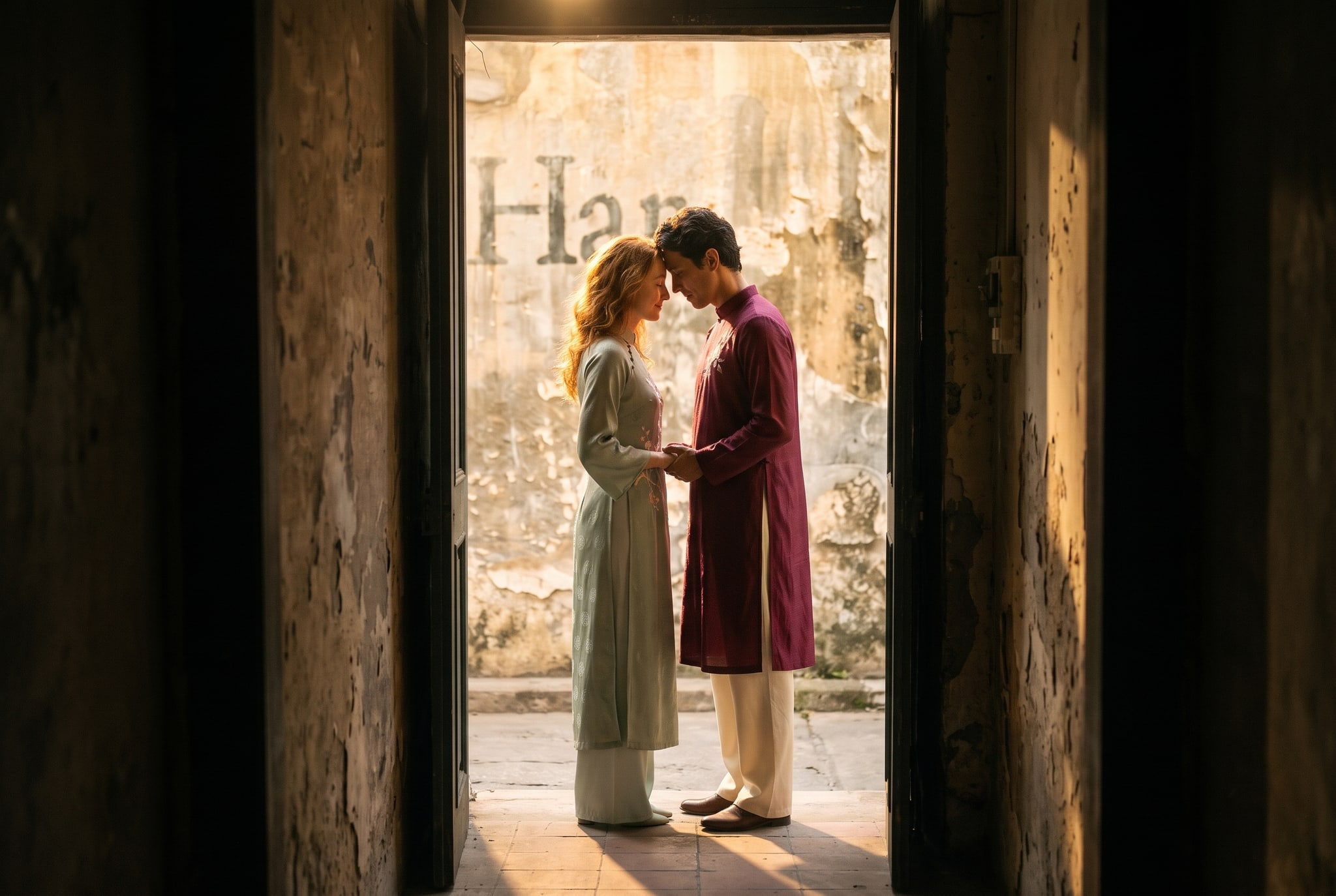
Ao dai's vertical seams catch golden hour light in clean lines—the fabric drapes away from the body, creating depth that flatters on camera. Hanbok's horizontal structure (high waistline, layered skirts) photographs as a bold shape; it dominates frames and works best in bright noon light or studio setups. In Hanoi's Old Quarter, ao dai blends into narrow colonial doorways and lantern-lit alleys; hanbok stands out, which suits editorial shoots but can overshadow intimate couple or family moments. At Hoan Kiem Lake, ao dai's flowing trousers move with cyclo rides and lakeside breezes—hanbok's rigid skirt reads as static unless you're posing at rest. For motion-heavy storytelling (walking, spinning, dancing), ao dai wins; for stillness and formal portraits, both work equally well.
Hanbok photographs as a statement; ao dai photographs as a story.
How Does Body Type and Comfort Change Your Choice?
Ao dai accommodates all body types equally because it drapes loosely over the torso and hips—no cinching, no internal structure beyond the garment's own weight. Hanbok's high waistline and tight jeogori (jacket) are designed for a defined waist; if you're petite, pregnant, or prefer loose-fitting clothing, hanbok may feel restrictive after 2–3 hours. Our maternity photoshoot clients always choose ao dai because it accommodates a full belly without tailoring. Summer heat in Hanoi (35°C+, April–September) makes hanbok's layered construction uncomfortable; ao dai's single layer of breathable silk is standard. We've had clients swap to ao dai mid-session when hanbok became too warm—a regrettable expense. For comfort-first sessions lasting 4+ hours, ao dai is the default; hanbok shines in 1–2 hour formal shoots during cool months.
Comfort directly affects how relaxed you'll look in the final images.
Seasonal and Location Timing: When Each Garment Shines
| Season | Hanoi Conditions | Ao Dai Advantage | Hanbok Advantage | Best For |
|---|---|---|---|---|
| Nov–Feb (13–22°C) | Dry, cool, morning mist | Light fabrics risk looking thin | Structured layers photograph rich | Winter couple shoots |
| Mar–Apr (20–28°C) | Humid, pre-monsoon | Perfect—breathable, flowing | Layers feel heavy indoors | Spring family sessions |
| May–Sep (28–35°C) | Hot, monsoon, sun intense | Lightweight silk essential | Uncomfortable; colors fade in heat | Early-morning train street shoots |
| Oct (22–28°C) | Transition, clear light | Golden hour ideal | Good; not too warm | Pre-wedding all-day shoots |
In rain (May–Sep), ao dai's fabric dries faster than hanbok's embroidered layers, which absorb moisture and can stain. At Train Street (tracks narrow, crowds sudden), ao dai's loose trousers prevent tripping; hanbok's structured skirt can catch on rails if you're not used to moving in it. For heritage-focused ao dai photoshoots, seasonal color choice matters—pastels suit spring; jewel tones suit cool months; white works year-round but shows sweat and dust fastest.
Choose by season first, then by the story you want to tell.
Cultural Authenticity: Context Matters More Than You Think
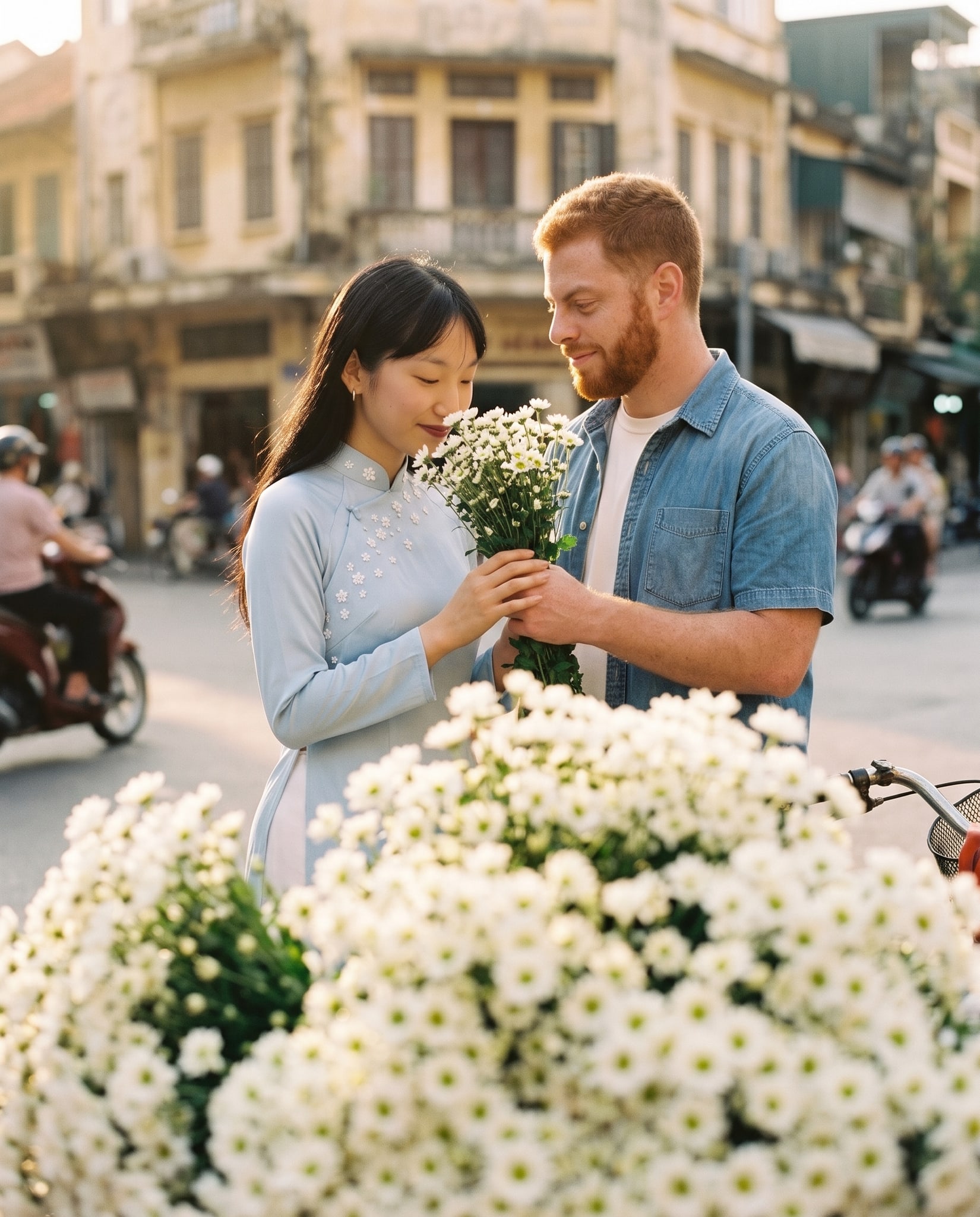
Wearing ao dai in Hanoi reads as personal or ancestral heritage because Vietnamese people wear it daily at Tet, weddings, and formal events. Wearing hanbok in Hanoi—if you're not Korean—reads as borrowed aesthetics, which works for editorial or K-pop fan shoots but can feel costume-like if not framed intentionally. We don't discourage hanbok; we're honest: if your story is "I'm exploring Korean culture," own it and lean into it—do a styled Instagram photoshoot with hanbok as the main character. If your story is "I'm Vietnamese reconnecting with heritage" or "I'm a traveler documenting Hanoi authentically," ao dai integrates seamlessly because the city itself is its backdrop—no explanation needed. For couple photoshoots, mixed heritage is common: one partner in ao dai, one in hanbok reads as celebration, not confusion—we see this often and it works beautifully when the intent is clear to both of you beforehand.
Authenticity isn't about gatekeeping—it's about intention and how you frame it in captions.
Rental, Fit and Hidden Costs: What to Check Before Booking
We rent both garments in-house; ao dai comes in 6 common sizes with easy adjustments via internal strings, while hanbok comes in standardized chest and waist measurements with limited flexibility on the day. Ao dai rental includes wrap, undershirt, and belt; hanbok includes jeogori, chima, and otgoreum (tie). Neither rental includes shoes—you'll need flat sandals or traditional silk slip-ons for both (hanbok's jeogori can be slippery inside modern shoes). Alterations take 30 minutes if you're an unusual size; we charge for rush tailoring if you book within 48 hours. Ao dai photos last 4–6 hours comfortably; hanbok sessions are safer at 2–3 hours, especially in heat. Our makeup and styling service includes hair wrapping for ao dai (traditional bun) and hanbok (low chignon); both work equally well. Cleaning and return is included in the rental; stains or tears incur a separate damage fee (ask us for specifics on WhatsApp—costs vary by fabric and garment).
Plan your Hanoi shoot
Practical Decision Framework: Your Checklist
Before you book, answer these questions:
- Heritage connection? If yes (Vietnamese, Korean, mixed), that garment tells a truer story. If no, choose ao dai—it's Hanoi's visual language.
- How long is your session? 1–2 hours: either works. 3+ hours: choose ao dai.
- When are you visiting? May–Sep: ao dai only (comfort). Nov–Feb: either (hanbok's layers shine). Mar–Apr, Oct: both equally strong.
- Will you move or pose still? Moving (walking, spinning, cycling): ao dai. Posing (portraiture, seated): both work.
- Is this a solo, couple, or family shoot? Family: ao dai (all ages fit easily). Couple: mixed garments work if intentional. Solo: either, based on your story.
- Indoor (studio) or outdoor (streets, temples, lake)? Indoor: hanbok's structure photographs sharper. Outdoor: ao dai integrates better into Hanoi's landscape.
Once you've answered these, you'll know which fits your session. If you're still unsure, WhatsApp us with these details and we'll recommend based on your exact scenario, light conditions, and timeline.
What to Check Before You Book
- Confirm your garment choice 7 days before—last-minute swaps delay alterations.
- Bring fitted reference photos of how the garment should sit (we'll match or adjust).
- Eat breakfast before fittings—tight waistbands feel different on an empty stomach; hanbok's jeogori especially.
- Test walking and sitting in your rental during the fitting—20 minutes on day-of is too late.
- Ask about color options when booking—ao dai comes in 8–12 dyes; hanbok in 3–5 standard combos.
- Clarify photo count and retouching included—our couple and pre-wedding packages differ from solo travel portraits.
- Request a humidity/heat briefing if booking May–Sep—we'll tell you exactly how long hanbok is safe.
Pages from our team you may need
- ao dai photoshoot in Hanoi
- couple photoshoot
- family photoshoot
- solo travel portraits
FAQ
Can I wear hanbok to a Buddhist temple in Hanoi if I'm not Korean?
Yes, respectfully. Temples allow any clean, covered garment. Hanbok's modesty (covered shoulders, knees) meets temple rules. But staff may ask what you're celebrating—be ready to explain. Ao dai reads as local respectful wear; hanbok reads as cultural borrowing, which is fine if you're genuine about it.
Do you rent hanbok with historical authenticity or modern-style versions?
Modern-style hanbok (structured, bright colors, easier to move in). Historical versions require specialist rentals elsewhere. Our focus is wearable comfort for photo sessions, not museum recreations.
How much hotter does hanbok feel than ao dai in Hanoi's summer?
Hanbok's layers trap heat; expect 3–5°C warmer sensation internally, faster fatigue after 2 hours in 30°C+ conditions. Ao dai's single layer breathes continuously. Not scientific measurement—based on client feedback season after season.
Can I do a half-day wearing both ao dai and hanbok in one session?
Yes. Plan 2–3 hours per garment (includes fitting, styling, location changes). Full-day shoots work; expect fatigue and reduced creative energy in the second half. Budget accordingly when asking for a quote.
Which garment photographs better for Instagram Reels or TikTok motion content?
Ao dai. Its movement is hypnotic—the flowing trousers and tunic capture frame-by-frame beauty. Hanbok's stiffness photographs as posed, not flowing, so it suits stills and fashion-editorial cuts, not scrolling video trends.
If I'm half-Vietnamese, half-Korean, which should I wear?
Wear both if session length allows—that's your authentic story. Or pick the one tied to your upbringing. There's no wrong answer; intent matters more than percentage.
Check dates
Send your dates, how many people and the style you like. We reply on WhatsApp in English with spots, timing and a quote.
FAQ
Can I wear hanbok to a Buddhist temple in Hanoi if I'm not Korean?
Yes, respectfully. Temples allow any clean, covered garment. Hanbok's modesty (covered shoulders, knees) meets temple rules. But staff may ask what you're celebrating—be ready to explain. Ao dai reads as local respectful wear; hanbok reads as cultural borrowing, which is fine if you're genuine about it.
Do you rent hanbok with historical authenticity or modern-style versions?
Modern-style hanbok (structured, bright colors, easier to move in). Historical versions require specialist rentals elsewhere. Our focus is wearable comfort for photo sessions, not museum recreations.
How much hotter does hanbok feel than ao dai in Hanoi's summer?
Hanbok's layers trap heat; expect 3–5°C warmer sensation internally, faster fatigue after 2 hours in 30°C+ conditions. Ao dai's single layer breathes continuously. Not scientific measurement—based on client feedback season after season.
Can I do a half-day wearing both ao dai and hanbok in one session?
Yes. Plan 2–3 hours per garment (includes fitting, styling, location changes). Full-day shoots work; expect fatigue and reduced creative energy in the second half. Budget accordingly when asking for a quote.
Which garment photographs better for Instagram Reels or TikTok motion content?
Ao dai. Its movement is hypnotic—the flowing trousers and tunic capture frame-by-frame beauty. Hanbok's stiffness photographs as posed, not flowing, so it suits stills and fashion-editorial cuts, not scrolling video trends.
If I'm half-Vietnamese, half-Korean, which should I wear?
Wear both if session length allows—that's your authentic story. Or pick the one tied to your upbringing. There's no wrong answer; intent matters more than percentage.
More like this
Ao dai photoshoot in Hanoi
Traditional Dress Photoshoot at Hanoi Old Quarter
A traditional dress photoshoot in Hanoi's Old Quarter captures you in an áo dài against narrow streets, shuttered storefronts and century-old lantern light. Cáo Studio handles styling, hair, makeup and rental in-house—no hidden bookings needed.
Ao dai photoshoot in Hanoi
Ao Dai Photo Shoot Hanoi in the Rain: Light, Spots & Timing
Rain transforms Hanoi's ao dai shoots: deeper jewel tones pop, reflections double your frame, and crowds thin at temples. We time shoots between downpours and use covered colonnades and indoor studios as fallback spots.
Ao dai photoshoot in Hanoi
Ao Dai Photoshoot West Lake Hanoi: Light, Crowds & Posing Tips
West Lake draws ao dai photographers for its reflective water and tree-lined paths, but timing, crowds and light direction make or break the session. We show you exactly how to work the location in 2026.