
Home › Blog › Makeup, hair and ao dai rental
Ao dai rental Hanoi Opera House: best time & season guide
By the Hanoi Photoshoot team · 2026-11-06
The Hanoi Opera House welcomes ao dai sessions year-round, but October–November (autumn) and February–March (early spring) offer the coolest temps (18–24°C), softest golden light between 7–9 a.m. and 4–6 p.m., and fewest tourists. December–January risks haze; April–September brings heat (28–35°C), harsh midday glare, and heavy crowds by 10 a.m. Plan 2–3 hours on-site: 30 min. makeup/hair, 45 min. posing, 45 min. travel buffer. Cáo Studio's ao dai photoshoot includes in-house rental, styling, and location scouting; we coordinate all timing and permit guidance on WhatsApp. Avoid weekends and holidays (crowds spike 50%+); book 1–2 weeks ahead for best ao dai selection. Check dates on WhatsApp
Why autumn and early spring beat other seasons?
October–November and February–March deliver consistent 18–24°C weather—cool enough for comfort during 2–3 hour sessions without sweat marks on silk. Light is soft and directional: morning sun rakes the Opera House's Romanesque facade at a 45° angle, sculpting the architecture without blown highlights. Evening light (4–6 p.m.) turns the building amber-gold, perfect for ao dai's jewel tones. December–January brings winter haze from northern air masses, diffusing light into a flat, gray wash that flattens color and texture. Humidity in these peak seasons hovers at 60–70%, manageable for ao dai fabric. Conclusion: autumn and early spring eliminate the three worst variables—extreme heat, harsh shadows, and murky atmosphere—that plague summer and winter shoots.
What time of day should you arrive at the Opera House?
Arrive 7–9 a.m. for the gentlest light and near-empty plaza. The sun clears the surrounding buildings by 7:30 a.m., hitting the facade's west-facing steps and colonnade at a flattering angle. Foot traffic is minimal; locals pass on commutes by 8:30 a.m., leaving the tourist crowds still at hotels. If you prefer golden evening light, plan 4–6 p.m., but crowds swell from 5 p.m. onward as tour buses depart nearby hotels. Midday (10 a.m.–3 p.m.) creates hard shadows on the classical portico and draws peak crowds—avoid entirely unless you accept heavy reflector work and constant background management. Conclusion: early morning (7–9 a.m.) is your best bet; evening works if you arrive by 4 p.m. and finish by 5:45 p.m.
How do crowds and permits affect booking?
The Opera House plaza is public, but commercial photography (including paid sessions) requires advance notification to Hanoi's tourism authority and sometimes a small coordination fee handled by local guides. Foot traffic: weekday mornings draw 10–20 passersby per hour; weekends and holidays jump to 80–150 per hour, requiring constant repositioning or wider shots. Permit: we include liaison work in our ao dai photoshoot package—we contact the authority 3–5 days ahead, confirm timing, and keep a copy on-site. You'll see uniformed staff checking large camera setups; this is routine. School groups (9–11 a.m., weekdays) can block sightlines for 5–10 minutes. Conclusion: book early mornings on weekdays, and let us handle the administrative layer so you focus on posing.
Which ao dai styles and colors photograph best at the Opera House?
The Opera House's cream, gray and burnt-orange stonework demands ao dai that contrasts or complements, not blends. Rich jewel tones—emerald, sapphire, burgundy, plum—pop against the neutral facade and photograph with warm skin tone offset. White or ivory ao dai reads clean and timeless; pastels (peach, sage, pale pink) can wash out in soft morning light unless paired with bold accessories. Avoid neon or hot pink; they oversaturate in golden hour and clash with heritage architecture. Layered ao dai with silk or brocade textures catch light beautifully; simple cotton versions flatten. Our makeup and styling team sources traditional woven and embroidered pieces from local artisans; we'll advise color based on your skin tone and the season's light quality during WhatsApp planning. Conclusion: jewel tones and textured silks reign; pastels and plain fabrics underdeliver.
Season comparison: which month delivers the best all-around shoot?
| Season | Temp range | Light quality | Humidity | Crowds | Ao dai comfort | Best for |
|---|---|---|---|---|---|---|
| Oct–Nov (Autumn) | 18–24°C | Soft, angled, golden | 60–70% | Light–moderate | Excellent: no sweat | Texture & color pop |
| Feb–Mar (Spring) | 16–22°C | Crisp, directional | 55–65% | Light–moderate | Excellent: dry | Detail & sharpness |
| Dec–Jan (Winter) | 12–18°C | Hazy, flat, cool | 70–80% | Moderate–heavy | Good: fabric drapes | Moody tones only |
| Apr–May (Early summer) | 25–32°C | Harsh, high UV | 75–85% | Heavy–peak | Poor: visible sweat | Avoid entirely |
| June–Sept (Summer) | 28–35°C | Blown-out, glaring | 80–90%+ | Peak tourist season | Poor: wilting | Avoid entirely |
Verdict: October and March are statistically the strongest; November and February follow closely. December–January requires extra reflector work and color grading.
What should you wear under or with your ao dai?
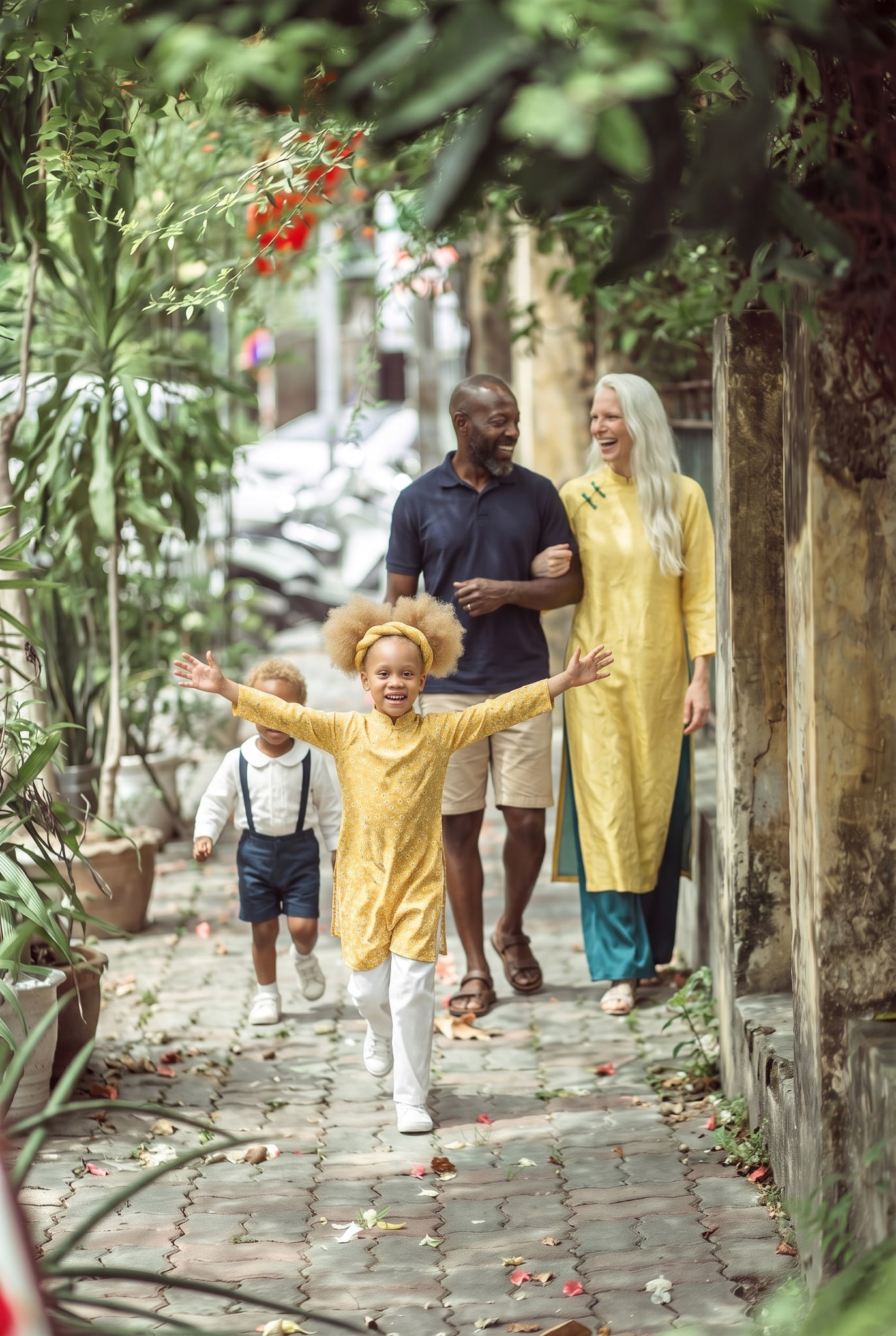
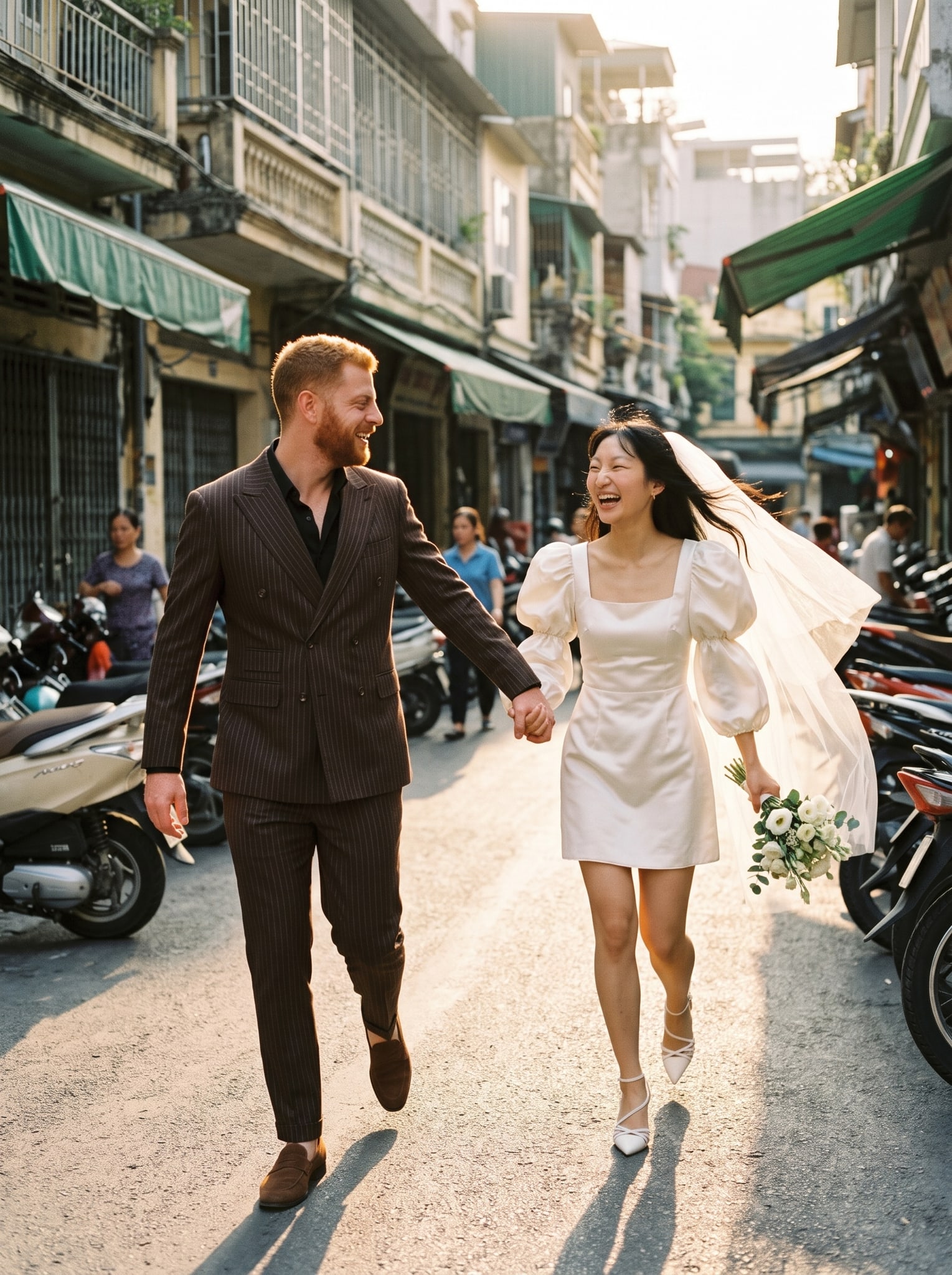
Ao dai worn over white or cream pants (the traditional silhouette) is a safe baseline; light neutral colors underneath won't distract or create visual bulk. High-waisted white trousers (classic, tapered) elongate the leg and frame the ao dai's slit beautifully. Avoid dark or patterned pants; they fragment the composition and read as two separate garments. For styled sessions, coordinate a simple sash, belt, or shoulder drape in complementary silk—our makeup and styling team can suggest traditional accessories that match your ao dai tone. Flat or low-heeled sandals work best; high heels risk tripping on the Opera House's marble steps and date the final image. Jewelry should be minimal (one necklace or earrings, not both) so ao dai's embroidery stays the focal point. Conclusion: let the ao dai breathe; undergarments and accessories should recede, not compete.
How does weather variation impact styling and prep?
Cool, dry autumn and spring mean light layers are optional; ao dai stands alone without a cardigan bulking the silhouette. Your makeup and hair will stay set for 2–3 hours without touch-ups; sweat won't blur eyeliner or flatten waves. Humid winter (Dec–Jan) requires mist spray and powder for touch-ups every 45 minutes; hair will frizz slightly, so choose sleek buns or braids over loose waves. Summer heat (28–35°C) causes visible perspiration on silk, makeup breakdown within 1 hour, and hair wilting—these require frequent breaks and resets, eating into your 2–3 hour window. Our team brings portable fans, hydration stations, and waterproof makeup primers to mitigate; plan an extra 30 min. buffer if you insist on summer shoots. Conclusion: autumn and spring eliminate prep stress; summer and humid winter demand extra logistics.
What to check before you book your Opera House session
- Confirm season & light timing with us first. Message WhatsApp with your preferred month and time; we'll verify light angle, crowd density, and weather likelihood for that exact date.
- Clarify ao dai rental needs. Do you own an ao dai, or will you rent? Our collection includes traditional hand-woven, embroidered, and contemporary styles; confirm which suits your vision and skin tone.
- Disclose any mobility or comfort limits. The Opera House plaza has marble steps and uneven patches. Heels risk slipping; let us know if you need flat-sole options or modified posing.
- Ask about backup venues. If weather turns (sudden rain Dec–Jan, haze Jan–Feb), we have contingency spots 5 min. away—the nearby Hoan Kiem Lake shoreline, for instance. Confirm our pivot plan.
- Verify editing turnaround. Ask how many final images you'll receive and when, so you can plan prints or social sharing.
- Double-check permit status. We handle this, but confirm in writing that we've submitted notification. Some dates require extra lead time.
Pages from our team you may need
- ao dai photoshoot in Hanoi
- couple photoshoot
- family photoshoot
- solo travel portraits
FAQ
Can we shoot at the Opera House in January?
Yes, but expect haze, flat light, and winter humidity (70–80%). Winter typically brings air pollution from northern sources; morning light stays diffuse until 9:30 a.m., then hardens by noon. You'll need reflectors and higher ISO to compensate. Book early morning (7–8 a.m.) and plan color grading for muted tones. Ask us for backup indoor venues if haze is severe that week.
Is the Opera House free to use for photoshoots?
The plaza is public, so casual snapshots are free. Commercial or extended sessions require advance notification to Hanoi's tourism office; we handle this coordination and any modest local fees as part of our ao dai photoshoot package. No separate charge to you; ask us for the full breakdown on WhatsApp.
How many outfit changes can we fit in a 2-hour Opera House session?
One outfit comfortably; two if you're highly organized and we prep the second ao dai in the 20-min. travel buffer. Changing on-site costs 15–20 min. due to restroom access, undergarment swaps, and hair resets. Plan 45 min. per outfit for posing; add 30 min. for travel and setup. Most clients choose one high-impact ao dai and invest the session time in varied angles and poses.
Will my ao dai rental fit if I book last-minute?
Our in-house rental inventory covers XS–XXL and custom adjustments; we hold key sizes for 1–2 week bookings. Last-minute (3–5 days) risks your exact size being reserved. Email WhatsApp ASAP with your measurements (bust, waist, height) so we can confirm stock and flag any tailoring needs. Longer lead (2 weeks) guarantees best selection and zero stress.
What's the best season if I'm traveling to Hanoi only once?
October or March are your safest bets—weather is cool and predictable, light is textbook-quality, crowds are manageable, and ao dai fabrics look their absolute best. If you're locked into another month, February works almost as well. December–January and April–September require extra logistics or compromise on light/comfort. Book 2–3 weeks ahead for your preferred season so we can secure dates and matching ao dai.
Do we need a permit to shoot solo or couple portraits, or just ao dai?
Permits apply to all commercial sessions. Our couple photoshoot and solo portrait packages include the same notification process—no extra cost to you. Casual, unpaid personal snapshots are exempt, but if you're booking a photographer, we register with authorities as a formality.
Check dates
Send your dates, how many people and the style you like. We reply on WhatsApp in English with spots, timing and a quote.
FAQ
Can we shoot at the Opera House in January?
Yes, but expect haze, flat light, and winter humidity (70–80%). Winter typically brings air pollution from northern sources; morning light stays diffuse until 9:30 a.m., then hardens by noon. You'll need reflectors and higher ISO to compensate. Book early morning (7–8 a.m.) and plan color grading for muted tones. Ask us for backup indoor venues if haze is severe that week.
Is the Opera House free to use for photoshoots?
The plaza is public, so casual snapshots are free. Commercial or extended sessions require advance notification to Hanoi's tourism office; we handle this coordination and any modest local fees as part of our [ao dai photoshoot](https://hanoiphotoshoot.com/ao-dai-photoshoot) package. No separate charge to you; ask us for the full breakdown on WhatsApp.
How many outfit changes can we fit in a 2-hour Opera House session?
One outfit comfortably; two if you're highly organized and we prep the second ao dai in the 20-min. travel buffer. Changing on-site costs 15–20 min. due to restroom access, undergarment swaps, and hair resets. Plan 45 min. per outfit for posing; add 30 min. for travel and setup. Most clients choose one high-impact ao dai and invest the session time in varied angles and poses.
Will my ao dai rental fit if I book last-minute?
Our in-house rental inventory covers XS–XXL and custom adjustments; we hold key sizes for 1–2 week bookings. Last-minute (3–5 days) risks your exact size being reserved. Email WhatsApp ASAP with your measurements (bust, waist, height) so we can confirm stock and flag any tailoring needs. Longer lead (2 weeks) guarantees best selection and zero stress.
What's the best season if I'm traveling to Hanoi only once?
October or March are your safest bets—weather is cool and predictable, light is textbook-quality, crowds are manageable, and ao dai fabrics look their absolute best. If you're locked into another month, February works almost as well. December–January and April–September require extra logistics or compromise on light/comfort. Book 2–3 weeks ahead for your preferred season so we can secure dates and matching ao dai.
Do we need a permit to shoot solo or couple portraits, or just ao dai?
Permits apply to all commercial sessions. Our [couple photoshoot](https://hanoiphotoshoot.com/couple-photoshoot) and [solo portrait](https://hanoiphotoshoot.com/solo-portrait) packages include the same notification process—no extra cost to you. Casual, unpaid personal snapshots are exempt, but if you're booking a photographer, we register with authorities as a formality.
More like this
Makeup, hair and ao dai rental
Ao Dai Rental Hanoi: Sunrise at Thang Long Imperial Citadel
Renting an ao dai for a Thang Long Imperial Citadel sunrise shoot combines Vietnam's most iconic costume with one of Hanoi's oldest monument zones. We handle rental, styling and timing—here's how. #
Makeup, hair and ao dai rental
Ao Dai Rental Hanoi: St Joseph's Cathedral Tips & Styling
St Joseph's Cathedral is Hanoi's most iconic French-colonial backdrop for ao dai photography, but light angles, tourist crowds and temple dress codes require specific planning. We share exact timing, rental coordination and posing tips.
Makeup, hair and ao dai rental
Ao Dai Rental Hanoi Rooftop: Best Time & Setup Guide
Rooftop ao dai shoots in Hanoi demand precise timing, weather strategy and proper styling to avoid heat damage and fading light. We guide you through season, hour and rental logistics.