
Home › Blog › Ao dai photoshoot in Hanoi
Ao Dai Photoshoot Tay Ho: Light, Spots & Posing Tips
By the Hanoi Photoshoot team · 2026-11-06
Tay Ho ao dai shoots thrive on the district's lakeside geometry and lower tourist density than central Hanoi. October–November and February–March give clean light: morning 6–8am catches soft directional rays on water; late afternoon 4–5pm lifts backlighting. In summer, heat and haze limit the window to dawn or dusk. Tay Ho's main lake shore near the western embankment sees fewer crowds than Hoan Kiem, but temples require respectful dress (sleeves, knees covered outside the shoot). Budget 2–3 hours: 30min travel from central Hanoi, 1–1.5hr shooting, buffer for temple access and outfit changes. Hanoi Photoshoot by Cáo Studio includes in-house ao dai rental, makeup and hair, and coordinates temple etiquette on WhatsApp—ask us for a quote on WhatsApp. Check dates on WhatsApp
Why does Tay Ho beat the Old Quarter for ao dai?
Tay Ho's quieter lakeside strips and temple backdrops offer breathing room and water reflections that the crowded Old Quarter photo guide cannot match. Foot traffic here is 40–60% lighter than Hoan Kiem or Train Street, so you retain framing control and won't fight selfie-stick crowds for a clean shot. The trade-off: you're 30–40min from the city center, so transport planning matters. If you want heritage and chaos energy, Old Quarter delivers; if you want serenity and reflective water, Tay Ho wins. Choose Tay Ho when calm, intimate ao dai feels more authentic to your story.
What's the light schedule by season in Tay Ho?
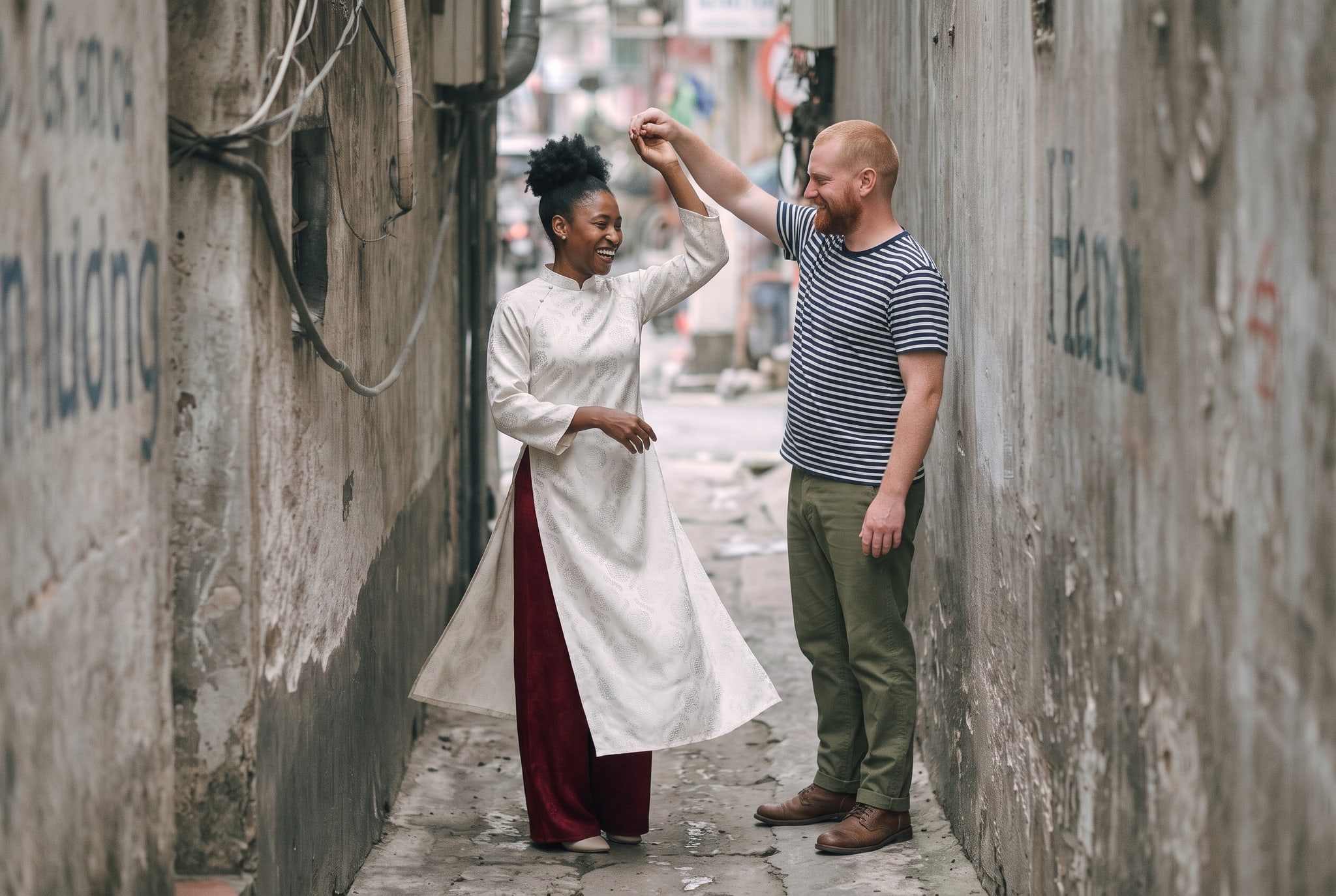
October–November (dry, cool): Golden hour stretches 6–7:30am and 4:30–5:45pm—ideal for side-lit ao dai silk. Humidity is lowest; colors pop. No rain risk on most days.
December–January (cool, occasional drizzle): Same light windows, but cloud cover is more frequent. Plan a backup indoor spot (we can suggest temple interiors with permission). Crowds thin further.
February–March (warming, clear): Light becomes harsher by 10am; stick to 6–8am or 4–6pm. Tet holidays (late Jan–early Feb) mean temple crowds spike for 2–3 weeks—avoid these dates if you want solitude.
April–September (hot, humid): Direct sun burns out skin tone and ao dai detail by 9am. Shoot only 5:30–7:30am or 5–6:30pm. Afternoon heat triggers sweat stains on silk. Afternoon thunderstorms (May–Aug) end shoots abruptly; always have an exit plan.
Tay Ho's lake creates a small breeze that cools you during standing poses—a practical edge over inland temple courtyards. Based on our shoot logs, light predictability is highest Oct–Mar; choose these windows if you're risk-averse.
How do you pose in ao dai without looking stiff?
Non-models often over-correct: they stiffen the shoulders or lock the knees, reading "formal" as frozen. Ao dai's vertical grace depends on soft, relaxed lines.
Feet: Place one foot slightly forward (a half-step), weight on the back leg. This tilts the hip and breaks flatness. Never square the hips to the camera unless the shot demands symmetry (e.g., ceremonial couple poses for pre-wedding photoshoot).
Hands: Let them fall naturally at your sides, or rest one on the fabric's front seam—a gesture that anchors the hand and draws the eye downward along the ao dai's line. Avoid clenching; open palms feel more authentic than closed fists.
Chin and gaze: Tilt the chin very slightly forward (not down; this creates a double-chin illusion). Look at the camera, then—halfway through the shot—shift focus to something just beyond the lens. This micro-moment catches a softer, less-posed expression.
Water poses: Sitting on steps near the lake shore? One knee bent, one extended, torso twisted toward the light. This position opens the ao dai's front panel and lets water reflections play across the fabric. Standing in shallow water (if weather permits) exaggerates the ao dai's flow—walk slowly through the frame rather than holding still.
Posing guidance is included in our ao dai photoshoot sessions; we show you frames on-set so you feel the difference immediately.
What outfit choices work best in Tay Ho?
Ao dai color and fabric choice interact with Tay Ho's environment. Here's a decision matrix:
| Ao Dai Type | Best Season | Tay Ho Match | Why It Works |
|---|---|---|---|
| Silk, jewel tones (deep red, sapphire, emerald) | Oct–Mar | Lake water + cool light | Fabric catches directional light; colors read true. |
| Cotton or linen blend, pastels (ivory, blush, pale yellow) | Apr–Jun morning only | Temple interiors, side-lit | Breathes in heat; pastels don't overwhelm calm light. |
| White or cream silk | Feb–Mar, Oct–Nov | Water reflections, temples | Purest light interaction; reflects water onto face (natural fill). |
| Printed ao dai (floral, geometric) | Oct–Nov only | Dappled temple shade | Pattern reads clearer in diffused light; avoids high-contrast glare. |
| Heavy brocade (special occasion) | Dec–Jan | Formal lakeside shots | Weight and texture shine in cool, soft light. Uncomfortable in heat. |
We rent ao dai in all these types and can suggest the right pick based on your shoot date, venue and lighting window. Check our makeup and styling page for fit, fabric care and what we include in rental.
Avoid white in summer (overexposes in harsh sun and shows sweat stains). Avoid printed fabrics in harsh backlighting (patterns become muddy, illegible). If you own your ao dai, bring it; if renting, decide 1–2 weeks ahead so we confirm stock.
What are the temple and rule boundaries in Tay Ho?
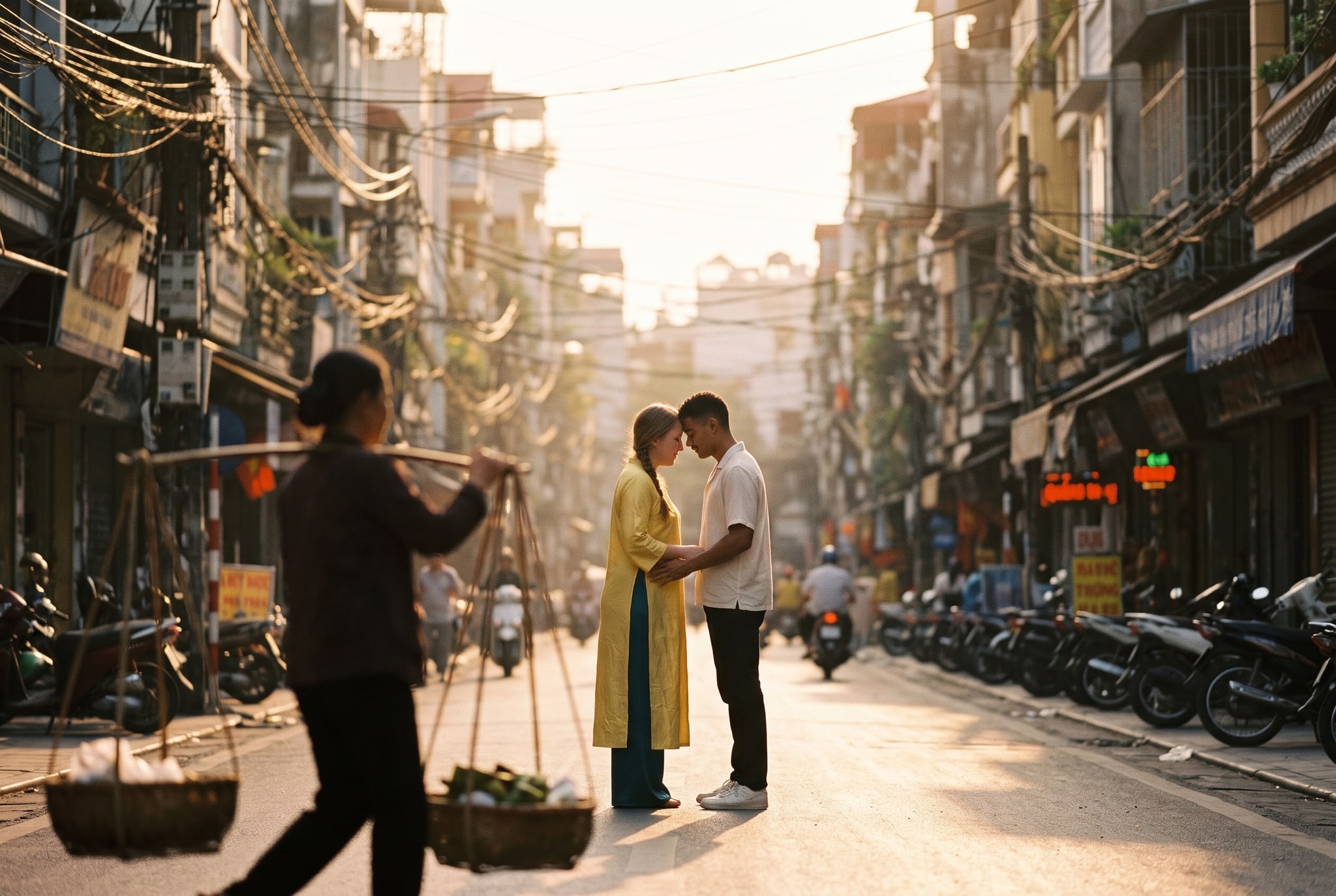
Tay Ho's quieter temple zones require respect but offer stunning backdrops. The main temple near the western shore permits photography outside the inner sanctum during daylight hours (typically 6am–5pm). Dress code: sleeves to elbows, knees covered—ao dai meets this by default, but layering (a thin shawl or jacket over bare shoulders) is safer for entry.
Some temple keeper or caretaker will approach. Smile, nod, and show that you're shooting an ao dai heritage portrait—not a casual selfie tour. Offering a small token (fruit, incense stick, or a donation) smooths access. Never shoot inside the altar room without explicit permission; frame exterior shots instead.
Train Street and the Old Quarter have different rules: Train Street (a residential railway corridor) is technically off-limits for commercial photography, but solo tourists and small groups (≤4 people) are tolerated during off-peak hours (6–8am, after 5pm). We do NOT shoot Train Street for ao dai because foot and rail traffic risks are high and permission is ambiguous—Hoan Kiem Lake photo guide and Tay Ho temples are safer, more reliable backdrops.
Tay Ho's lake embankment is public but enforced by district rangers during weekend afternoons (Sat–Sun 11am–4pm). Avoid these windows if you're using a tripod or hiring a model—it reads as commercial. Early morning or weekday shoots face no friction. We coordinate all permissions and timing on WhatsApp; you won't hit surprises on arrival.
How do you prep for transport and timing on shoot day?
Tay Ho's distance from Hanoi's center means logistics eat 1 hour of your 2–3 hour window. Plan backwards:
- Arrival time: If you want 6am light, aim to be at the lake by 5:50am. This means leaving your hotel by 5:15am (allowing 30–35min for traffic, which is lightest before 6am). Grab a ride via a ride-share app—taxis are less predictable at dawn.
- Makeup and hair: If you're wearing makeup and styling (not a DIY look), we come to your location 45min before the first shot, or you travel to our studio in the city center first. Check this timing with us on WhatsApp 2 days before the shoot.
- Ao dai dress time: Budget 10–15min to slip into the ao dai and adjust the fit (we provide undergarments and adjustments if renting from us). Don't dawdle; cool golden light is brief.
- Backup slot: Book a 30min buffer slot for a secondary location (a nearby temple courtyard or a quieter embankment stretch) in case the primary lake shore is unexpectedly crowded or weather shifts.
- Post-shoot: After 1.5hr of shooting, you'll have walked 3–5km and maybe stood in soft sun or dappled shade. Bring water and a towel. We can suggest nearby cafés (casual local spots, not tourist chains) where you can rest before heading back.
Winter and spring (Dec–Mar) are forgiving; summer (May–Aug) demands an early start and an exit plan if heat spikes. We track Hanoi's weather and suggest reschedules if storms approach.
What to check before you book
- Confirm your shoot date 10–14 days ahead. Ao dai availability, makeup artist scheduling and temple access can't be held longer. We'll ask for your preferred light window (early morning, late afternoon) and lock it in.
- Share your ao dai style preference or bring reference photos. Color, neckline, sleeve length and fabric type shape the mood. We rent stock in classic and contemporary cuts; if you want a bespoke look, plan 2–3 weeks ahead for custom tailoring.
- Disclose any mobility or comfort limits. Tay Ho's terrain is uneven (temple steps, cobblestones, grassy areas). If you have joint issues or are pregnant, we modify poses and angles—mention it when you inquire.
- Check the weather forecast 3 days before. Monsoon risk peaks May–Aug. We'll suggest rescheduling if thunderstorms are forecast; reshoot dates are built into our coordination.
- Bring or rent footwear that works with ao dai. Flat shoes, sandals or traditional slippers suit the vibe; hiking boots or chunky trainers kill the aesthetic. We can suggest vendors near our studio if you need to source footwear.
FAQ
Can we shoot ao dai at other Hanoi spots if we book a Tay Ho session?
Yes—we can combine Tay Ho with a second location (Hoan Kiem, Old Quarter, or a temple elsewhere) in one 4–5 hour session. This costs more; ask us for a quote on WhatsApp. Tay Ho is best for calm, reflective frames; Old Quarter for energy.
Do we need a permit to shoot ao dai in Tay Ho?
No permit is needed for personal portraits. If you hire crew (assistant, reflector operator) or a second photographer, the district may ask questions—we handle coordination and keep shoots solo or pairs to avoid friction. Commercial shoots with models and lighting rigs do need permission; we advise on this before booking.
What happens if weather cancels our shoot?
We reschedule to the next available slot within 30 days, free of charge. If you need a date outside that window, we quote a re-session fee. Travel and cancellation insurance is your responsibility; we offer flexibility, not refunds.
Can children or partners join the ao dai shoot?
Yes. If you're shooting solo ao dai and want your partner or child in a few frames, tell us—we'll budget the time. If your partner also wants an ao dai session, book a couple photoshoot instead; pricing and timing differ.
How long does ao dai rental and styling take on the day?
Rental fitting: 10–15min. Makeup and hair (if booked): 30–45min. We arrive 45min early to handle this. If you self-style, arrive 20min early so we can check the ao dai fit and light-test.
Is Tay Ho safe to walk around at dawn or dusk for a photoshoot?
Yes—dawn (5:30–7:30am) is safest and quietest. Dusk is busy with joggers and evening walkers, so light quality declines earlier. Stick to main embankment paths; avoid isolated temple side-routes alone. We always stay with you and know the safe zones.
Check dates
Send your dates, how many people and the style you like. We reply on WhatsApp in English with spots, timing and a quote.
FAQ
Can we shoot ao dai at other Hanoi spots if we book a Tay Ho session?
Yes—we can combine Tay Ho with a second location (Hoan Kiem, Old Quarter, or a temple elsewhere) in one 4–5 hour session. This costs more; ask us for a quote on WhatsApp. Tay Ho is best for calm, reflective frames; Old Quarter for energy.
Do we need a permit to shoot ao dai in Tay Ho?
No permit is needed for personal portraits. If you hire crew (assistant, reflector operator) or a second photographer, the district may ask questions—we handle coordination and keep shoots solo or pairs to avoid friction. Commercial shoots with models and lighting rigs do need permission; we advise on this before booking.
What happens if weather cancels our shoot?
We reschedule to the next available slot within 30 days, free of charge. If you need a date outside that window, we quote a re-session fee. Travel and cancellation insurance is your responsibility; we offer flexibility, not refunds.
Can children or partners join the ao dai shoot?
Yes. If you're shooting solo ao dai and want your partner or child in a few frames, tell us—we'll budget the time. If your partner also wants an ao dai session, book a [couple photoshoot](/couple-photoshoot) instead; pricing and timing differ.
How long does ao dai rental and styling take on the day?
Rental fitting: 10–15min. Makeup and hair (if booked): 30–45min. We arrive 45min early to handle this. If you self-style, arrive 20min early so we can check the ao dai fit and light-test.
Is Tay Ho safe to walk around at dawn or dusk for a photoshoot?
Yes—dawn (5:30–7:30am) is safest and quietest. Dusk is busy with joggers and evening walkers, so light quality declines earlier. Stick to main embankment paths; avoid isolated temple side-routes alone. We always stay with you and know the safe zones.
More like this
Ao dai photoshoot in Hanoi
Traditional Dress Photoshoot at Hanoi Old Quarter
A traditional dress photoshoot in Hanoi's Old Quarter captures you in an áo dài against narrow streets, shuttered storefronts and century-old lantern light. Cáo Studio handles styling, hair, makeup and rental in-house—no hidden bookings needed.
Ao dai photoshoot in Hanoi
Ao Dai Photo Shoot Hanoi in the Rain: Light, Spots & Timing
Rain transforms Hanoi's ao dai shoots: deeper jewel tones pop, reflections double your frame, and crowds thin at temples. We time shoots between downpours and use covered colonnades and indoor studios as fallback spots.
Ao dai photoshoot in Hanoi
Ao Dai Photoshoot West Lake Hanoi: Light, Crowds & Posing Tips
West Lake draws ao dai photographers for its reflective water and tree-lined paths, but timing, crowds and light direction make or break the session. We show you exactly how to work the location in 2026.