
Home › Blog › Ao dai photoshoot in Hanoi
Ao Dai Photoshoot Tay Ho: Best Time to Shoot & Light
By the Hanoi Photoshoot team · 2026-11-06
The best light for ao dai in Tay Ho falls between 06:00–07:30 (morning golden hour) or 16:30–17:45 (evening), October–November and February–March when skies are clear and humidity low. Tay Ho's mix of Taoist temples, lakeside paths and French-colonial architecture suits ao dai well, but temple photography requires prior permission from monks, and tourist crowds peak 10:00–16:00 daily. A full session with us at Hanoi Photoshoot by Cáo Studio includes ao dai rental, makeup and hair in-house, so no outfit stress—just arrive, and we handle styling to match the season and location light. Plan 2–3 hours; autumn and early spring are ideal because harsh midday sun and monsoon rain (May–September) both ruin the drape and colours of silk. Check dates on WhatsApp
Why does season matter so much for ao dai in Tay Ho?
Ao dai silk catches light in ways cotton cannot—damp air (May–September) dulls the sheen; harsh noon sun (April) washes out jewel tones. October–November and February–March offer soft, directional light for 4–5 hours a day. Winter (December–January) is dry but fog rolls over the Red River by 07:00, blocking light until 09:00. Summer rains don't just create puddles; they flatten the ao dai's fold and stain pale silks. We shoot around these constraints by timing morning sessions before heat builds, or evening before monsoon typically breaks around 18:00. Choose your month based on the ao dai colour you want to highlight: pastels sing in spring mist, deep reds and blacks hold drama in autumn sun.
Which Tay Ho temples allow photography and what are the rules?
Three major temples welcome photographers with prior coordination: Quan Thanh (lakeside, dedicated to Tran Hung Dao), Tran Quoc (oldest pagoda, island access), and Thay pagoda (day trip, 45 km south but worth it for ao dai). Each requires you to ask the attending monk at entry; they rarely refuse, but donations of 50k–our current quote are customary. No high heels on wooden floors, no posing on altars, no loud music during prayer hours (typically 05:00–07:00, 17:00–18:30). Tran Quoc's narrow stone bridge and water backdrop suit romantic couple photoshoots, while Quan Thanh's courtyard works for solo travel portraits and detail shots. We coordinate permission beforehand, so you walk in ready to shoot—no waiting or negotiation on the day.
What's the light schedule hour by hour in Tay Ho?
| Time | Season | Quality | Best for | Notes |
|---|---|---|---|---|
| 05:30–07:00 | Oct–Nov, Feb–Mar | Soft gold, low | Temples, lakeside | Monks pray; arrive 06:45 |
| 07:00–10:00 | Oct–Nov, Feb–Mar | Direct, warming | Paths, streets, water | Tourist crowds light |
| 10:00–15:00 | All | Harsh, flat | Not ideal | Midday heat; avoid |
| 15:00–16:30 | Oct–Nov, Feb–Mar | Transitional | Setup, outfit changes | Prepare for evening |
| 16:30–17:45 | Oct–Nov, Feb–Mar | Deep gold, long shadow | Lakeside, backlit | Best for drama; 30 min notice before 18:00 rain |
| 17:45–18:30 | Oct–Nov, Feb–Mar | Orange fade, fades to dusk | Silhouette | Monsoon (May–Sep) breaks here |
Book a morning slot (06:30–09:00) to catch gold light before crowds; an evening slot (16:00–18:00) if you want longer, more dramatic shadows. We'll adjust ao dai drape and makeup intensity to match: dewy, minimal makeup for soft morning light; bolder liner and bronze for evening backlit shots.
How do crowds affect your ao dai shoot in Tay Ho?
Tourist and local jogger peaks occur 10:00–16:00, especially weekends when families visit Taoist temples. Morning (before 07:30) is empty; you'll often have temple grounds alone. Weekday evenings (16:30–18:00) are quieter than weekends. We position you between crowd flows—on side paths, behind columns, or at Tran Quoc's island (fewer visitors). If you're set on shooting a busy time (e.g., a Saturday afternoon for your schedule), we use wide angles to place you in context, or we scout a secondary temple courtyard for a quieter backup shot. Humidity and heat stay manageable in October–March; avoid May–September crowds + weather combo entirely if possible.
What ao dai styles work best in each Tay Ho setting?
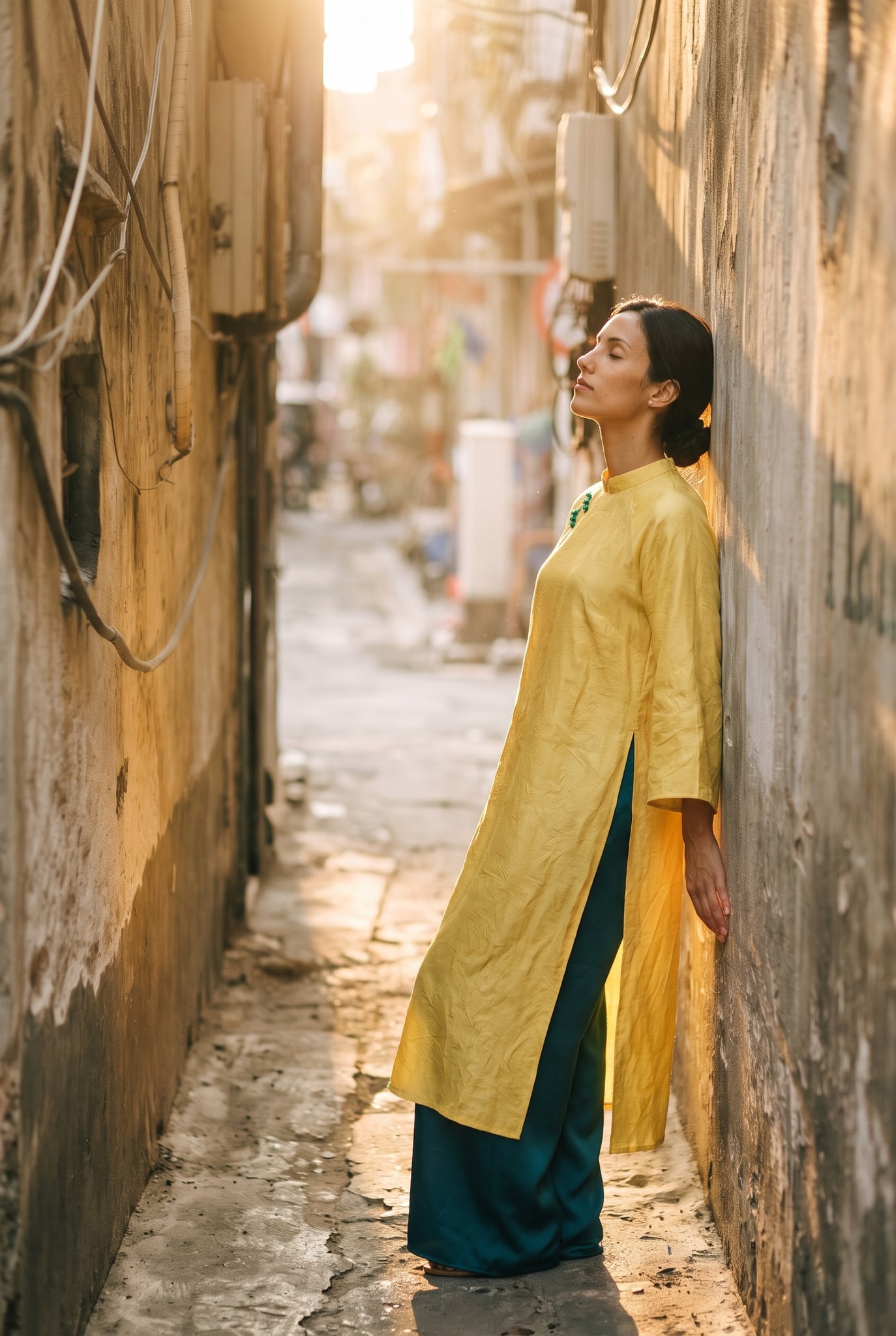
Classic fitted áo dài (traditional long-sleeved, floor-length) photographs best at temples—the formal silhouette matches the sacred space and photographs true under soft temple light. Modern, loose cuts with wide legs work for lakeside evening shots where backlit silk creates rim light drama. Pale blues, soft pinks, and whites suit morning mist and reflect gold hour beautifully; jewel tones (emerald, ruby, navy) hold shadow detail in evening and create contrast against aged temple walls. We keep makeup and styling coordinated: minimal blush and neutral lip for delicate morning pastels; defined brows and warm bronze for warm-toned evening silks. Bring 2–3 áo dài if possible (we have rental in-house), or we'll suggest which single piece photographs best given your chosen month and light window.
What to check before you book an ao dai session in Tay Ho
- Season: October–November or February–March ideal; May–September = rain, humidity, faded colours.
- Time window: 06:30–07:30 (morning) or 16:30–17:45 (evening); avoid 10:00–15:00 entirely.
- Temple permission: We confirm in advance; no photo guarantees if a monk denies on the day (rare, but possible during special prayer).
- Outfit: 1–2 ao dài included in our rental service; pale silks risk stains on unpaved temple paths (we guide placement).
- Backup location: If monsoon rain hits evening slots, we shift to lakeside covered walkway or reschedule same week.
- Commute: Tay Ho is 20–30 minutes by taxi from central Hanoi; we meet you at the temple or arrange transport coordination.
Could a family or couple session work in Tay Ho?
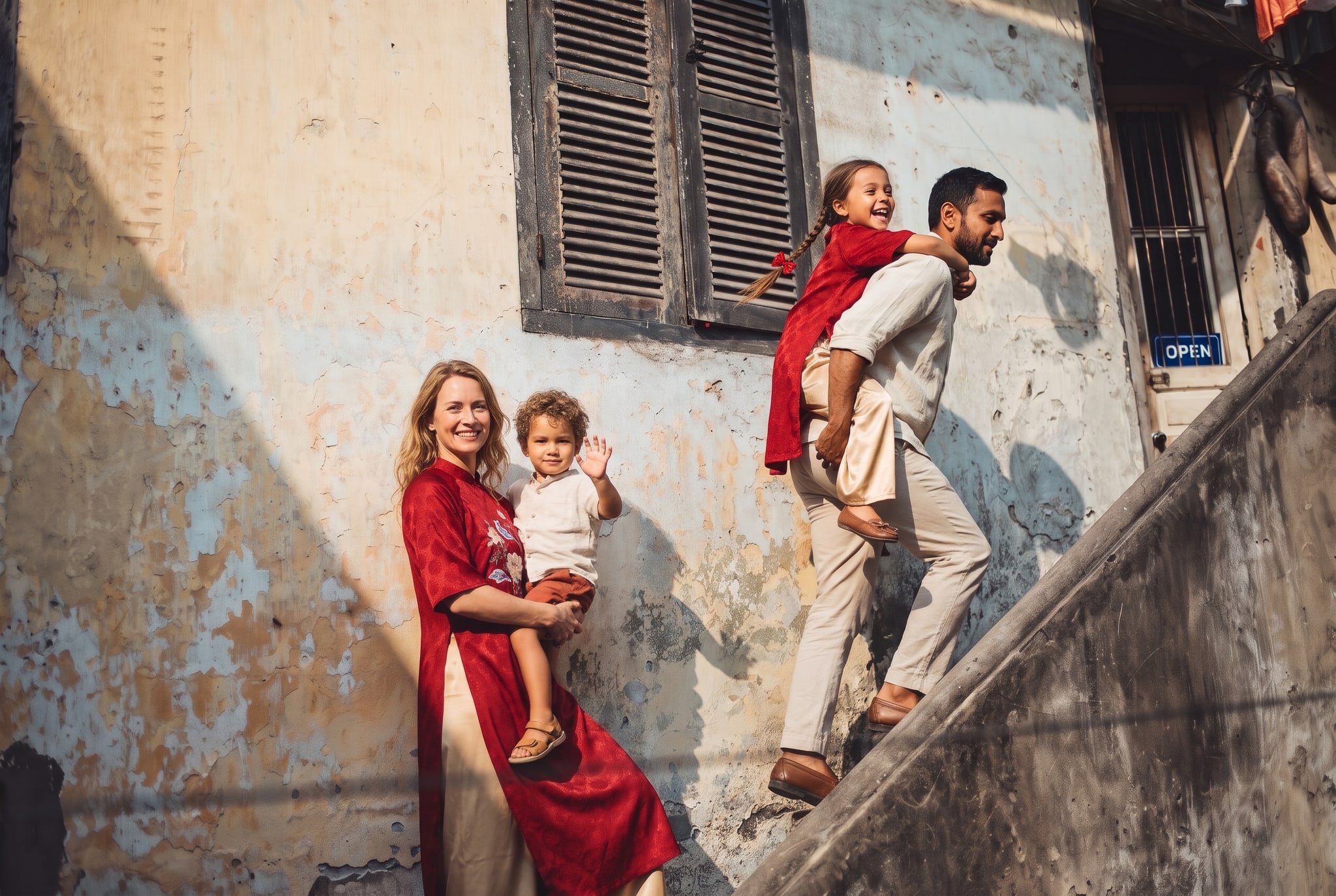
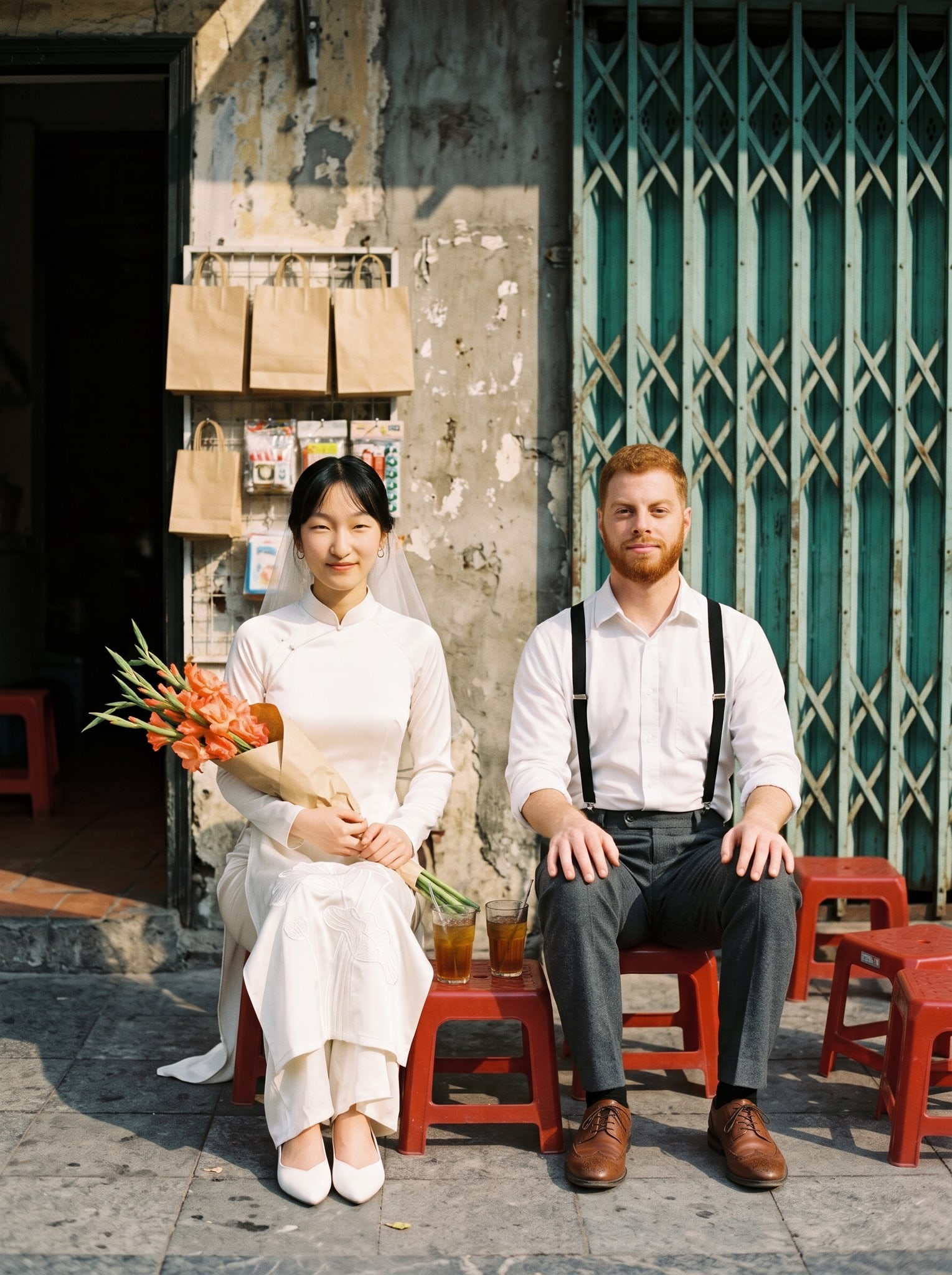
Absolutely—temple courtyards and lakeside paths suit family photoshoots (children in áo dài or formal wear) and couple photoshoots equally. Couple shoots often opt for matching silk tones or one person in áo dài and partner in formal shirt for contrast. Families often do one family ao dài shot, then outfit changes for casual shots on the lakeside. Morning light is gentler on children's skin; evening backlit shots work for parents' portraits. Book 3–4 hours for family ao dài + casual mix; contact us to discuss composition and group size—we tailor timing and temple location to your family age range and comfort with crowds.
Does weather really derail your shoot?
Yes. Monsoon rain (May–September) floods temple paths and stains ao dài within 15 minutes. Light rain in other seasons is manageable (we shoot under temple eaves or trees). Fog (December–January mornings) clears by 09:00 but delays optimal light 2–3 hours. We monitor forecasts and reschedule if rain is certain; we don't shoot through downpour. If you're traveling from overseas with fixed dates, choose October–November or February–March; these months have <5% chance of rain during morning and evening slots. Humidity year-round means ao dài silk can stick to skin in heat—we manage this with quick outfit touch-ups and positioning that creates air flow.
FAQ
Can we shoot ao dai at Tay Ho if we're not staying in the district?
Yes. We meet you at the temple or lakeside location. Tay Ho is 20–30 minutes by taxi from Hoan Kiem Lake or the Old Quarter. We can coordinate transport advice, but you arrange travel. If timing is tight, book a morning slot (easier access, less tourist traffic) and meet us directly.
Is ao dai photoshoot more expensive in Tay Ho than other Hanoi areas?
Pricing is consistent across all Hanoi locations we serve. We charge the same rate whether you shoot at Tay Ho temples, the Old Quarter, or Hoan Kiem Lake. Ask us for a quote on WhatsApp—no location surcharge.
What if the monk says no photography on the day we arrive?
Rare, but it happens during special prayer rituals (lunar festivals, monthly ceremonies). We scout a backup temple—Quan Thanh or an outdoor lakeside pavilion—and shift the session within 1–2 hours. You won't lose the session; we find an equally beautiful alternative in the same district.
Should we hire a separate makeup artist, or does your rental include styling?
Makeup and hair are in-house with our ao dai rental. No separate artist needed. We time styling to match your chosen light hour and ao dai colour. If you arrive with your own makeup, we can refresh it before key shots.
Can we do a proposal photoshoot disguised as an ao dai shoot, or does it need a different session?
A proposal photographer session is separate—it involves surprise coordination, a hidden second photographer, and emotional moment capture. Ao dai shoots are posed. If you're planning a proposal in Tay Ho temples, book a proposal session instead; it gives you the planning support and candid moment capture that an ao dai pose-focused shoot doesn't cover.
Will our pale-coloured ao dai get dirty on unpaved temple paths?
Pale silks do stain easily on dusty or wet stone. We guide your positioning to stone or paved areas only, or suggest darker tones for this location. Temple grounds are mostly swept, but worn paths and water reflections happen. Bring a second ao dai, or we rent a backup colour in-house to ensure options.
Check dates
Send your dates, how many people and the style you like. We reply on WhatsApp in English with spots, timing and a quote.
FAQ
Can we shoot ao dai at Tay Ho if we're not staying in the district?
Yes. We meet you at the temple or lakeside location. Tay Ho is 20–30 minutes by taxi from Hoan Kiem Lake or the Old Quarter. We can coordinate transport advice, but you arrange travel. If timing is tight, book a morning slot (easier access, less tourist traffic) and meet us directly.
Is ao dai photoshoot more expensive in Tay Ho than other Hanoi areas?
Pricing is consistent across all Hanoi locations we serve. We charge the same rate whether you shoot at Tay Ho temples, the [Old Quarter](/spots/hanoi-old-quarter), or [Hoan Kiem Lake](/spots/hoan-kiem-lake). Ask us for a quote on WhatsApp—no location surcharge.
What if the monk says no photography on the day we arrive?
Rare, but it happens during special prayer rituals (lunar festivals, monthly ceremonies). We scout a backup temple—Quan Thanh or an outdoor lakeside pavilion—and shift the session within 1–2 hours. You won't lose the session; we find an equally beautiful alternative in the same district.
Should we hire a separate makeup artist, or does your rental include styling?
[Makeup and hair are in-house](/makeup-and-styling) with our ao dai rental. No separate artist needed. We time styling to match your chosen light hour and ao dai colour. If you arrive with your own makeup, we can refresh it before key shots.
Can we do a proposal photoshoot disguised as an ao dai shoot, or does it need a different session?
A [proposal photographer](/proposal-photographer) session is separate—it involves surprise coordination, a hidden second photographer, and emotional moment capture. Ao dai shoots are posed. If you're planning a proposal in Tay Ho temples, book a proposal session instead; it gives you the planning support and candid moment capture that an ao dai pose-focused shoot doesn't cover.
Will our pale-coloured ao dai get dirty on unpaved temple paths?
Pale silks do stain easily on dusty or wet stone. We guide your positioning to stone or paved areas only, or suggest darker tones for this location. Temple grounds are mostly swept, but worn paths and water reflections happen. Bring a second ao dai, or we rent a backup colour in-house to ensure options.
More like this
Ao dai photoshoot in Hanoi
Ao Dai Photoshoot at Ho Chi Minh Mausoleum: Best Time & Tips
Ho Chi Minh Mausoleum area offers dramatic colonial architecture and red flags perfect for ao dai portraits, but timing and permit rules are critical.
Ao dai photoshoot in Hanoi
Ao Dai Photoshoot at Lotus Pond Sunrise in Hanoi
Lotus ponds offer Hanoi's most serene ao dai backdrop at dawn, but timing and location scouting are critical for empty frames and soft light. We share exact hours, seasonal water levels and how to avoid tourist crowds.
Ao dai photoshoot in Hanoi
Ao Dai Photoshoot Duong Lam Ancient Village: Best Time & Hanoi Guide
Duong Lam Ancient Village—45 minutes northwest of central Hanoi—offers weathered brick lanes, lotus ponds and colonial-era storefronts perfect for ao dai portraits. Best light and crowd conditions occur October–November and February–March mornings.