
Home › Blog › Ao dai photoshoot in Hanoi
Ao Dai Photoshoot in Bat Trang Pottery Village: Best Time & Guide
By the Hanoi Photoshoot team · 2026-11-06
Bat Trang pottery village combines handmade ceramic backdrops with golden-hour light ideal for ao dai. The village sits 25km south of Hanoi; shoots run 3–4 hours including travel, outfit changes, and hair/makeup touch-ups. We recommend October–November or March–April for cool mornings (6–8 a.m. light) and minimal rain. Crowds peak Friday–Sunday afternoons; arrive by 7 a.m. on weekdays for empty kiln yards. We handle ao dai rental, in-house styling, and coordination on WhatsApp—ask us for a quote. Avoid midday (11 a.m.–2 p.m.) harsh shadows and summer humidity; permit rules apply to commercial shoots, so we manage local contacts beforehand. Check dates on WhatsApp
Why Bat Trang works better than city spots for ao dai
Bat Trang's raw clay architecture—stacked pottery wheels, kiln entrances, and weathered brick—contrasts soft ao dai silk without competing color. Central Hanoi's painted temples and crowded streets pull focus. Here, the foreground stays neutral. Weekday mornings (Tuesday–Thursday, 6–8 a.m.) give you solo shots with zero foot traffic; by 9 a.m., local workers and tour groups arrive. The village's 800m main street has 20+ active kilns; we know which ones allow entry and which require a small courtesy fee for artisans. Bat Trang suits solo travelers, couples, and pre-wedding shoots equally—the clay palette flatters every ao dai color. Late afternoon (4–6 p.m.) works in winter only; summer heat lingers until 7 p.m., draining energy and wilting makeup.
What light does Bat Trang give hour by hour?
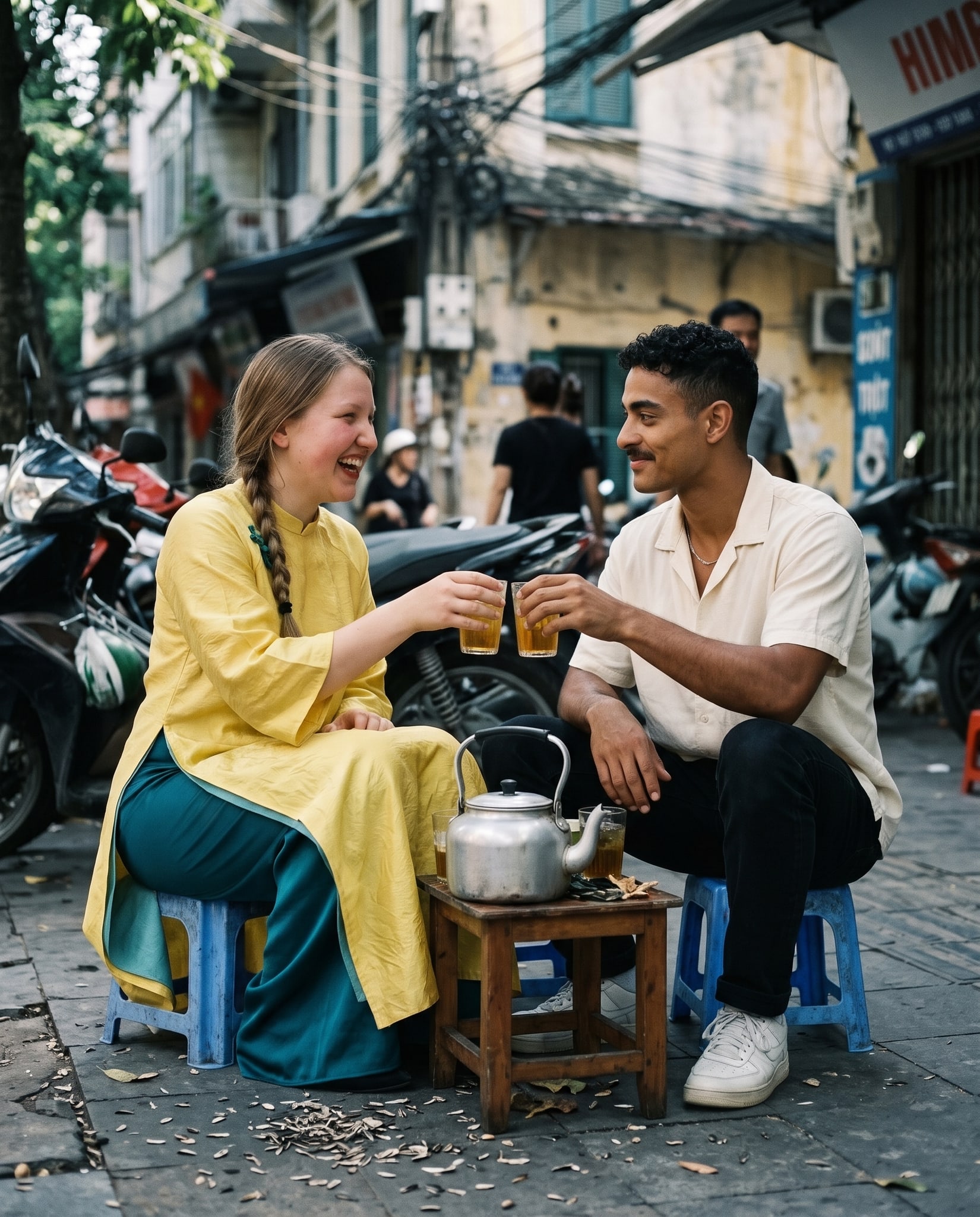
6–7 a.m.: soft, diffused, slightly cool-toned (winter feels blue; summer feels neutral). 7–9 a.m.: warm orange light, low angle, 20–30° shadows—ideal for silhouettes and rim-lit ao dai edges. 9 a.m.–12 p.m.: light hardens; shadows sharpen and darken faces unless you use reflectors. 12–2 p.m.: direct overhead sun, harsh, unsuitable for outdoor ao dai without shade setup. 2–4 p.m.: light angles side-on; shadows still deep; humidity peaks (April–August). 4–6 p.m.: low angle again, warm but dimmer; requires higher ISO or faster shutter (wind risk on ao dai fabric).
October–February sun rises at 6:30–7 a.m.; March–May sunrise is 5:30–6 a.m. We schedule shoots 30 minutes post-sunrise for warm, even light and minimal crowd overlap. Overcast days (common June–August) flatten color but ease makeup; we add fill flash to keep ao dai detail sharp. Rainy season (May–September) shoots require waterproof cover for camera gear and quick-dry ao dai variants—ask us if weather is a concern.
Crowds, permits, and rules: what actually happens on the ground
Bat Trang is a working village, not a museum. Kilns operate 6 a.m.–5 p.m. daily; artisans expect quiet respect during early shifts. Commercial photography (single photographer + client) is tolerated; organized groups (8+ people, vans, drones) draw attention from local authorities and may be asked to leave or pay a local coordination fee. We operate solo or pairs to blend in. Weekday mornings (Tuesday–Thursday, 6:30–9 a.m.) are safest and quietest. Weekends triple foot traffic; Instagram-famous kiln interiors have queues by 9 a.m. Drones are prohibited without prior municipal permit—we don't use them here. Tripods are fine as long as you don't block foot traffic or touch active kilns. Respectful interaction with potters (a smile, a thank-you, no sudden close-ups of faces without asking) keeps relationships smooth across repeat shoots.
Ao dai fit, color, and fabric for pottery backdrops
Bat Trang's palette is dust-gray, terracotta, and rust—warm neutrals. Jewel-toned ao dai (emerald, sapphire, burgundy) pop cleanly; pastels (blush, cream, pale yellow) risk washing out. Silk or silk-blend fabric photographs better than polyester under flat morning light; polyester reads flat and plasticky. Fitted ao dai (classic A-line or modern fitted cut) moves better in wind and photographs sharper than loose-drape styles. Avoid heavy embroidery that catches light unevenly—simple brocade or solid color is stronger here. Pair ao dai with loose, long silk scarves for movement; the fabric catches light frame-by-frame during video or movement shoots. Our in-house makeup and styling team ensures your ao dai choice complements skin tone and the clay environment—we offer makeup, hair & ao dai rental as part of package coordination.
Practical checklist: before, during, and after your Bat Trang shoot
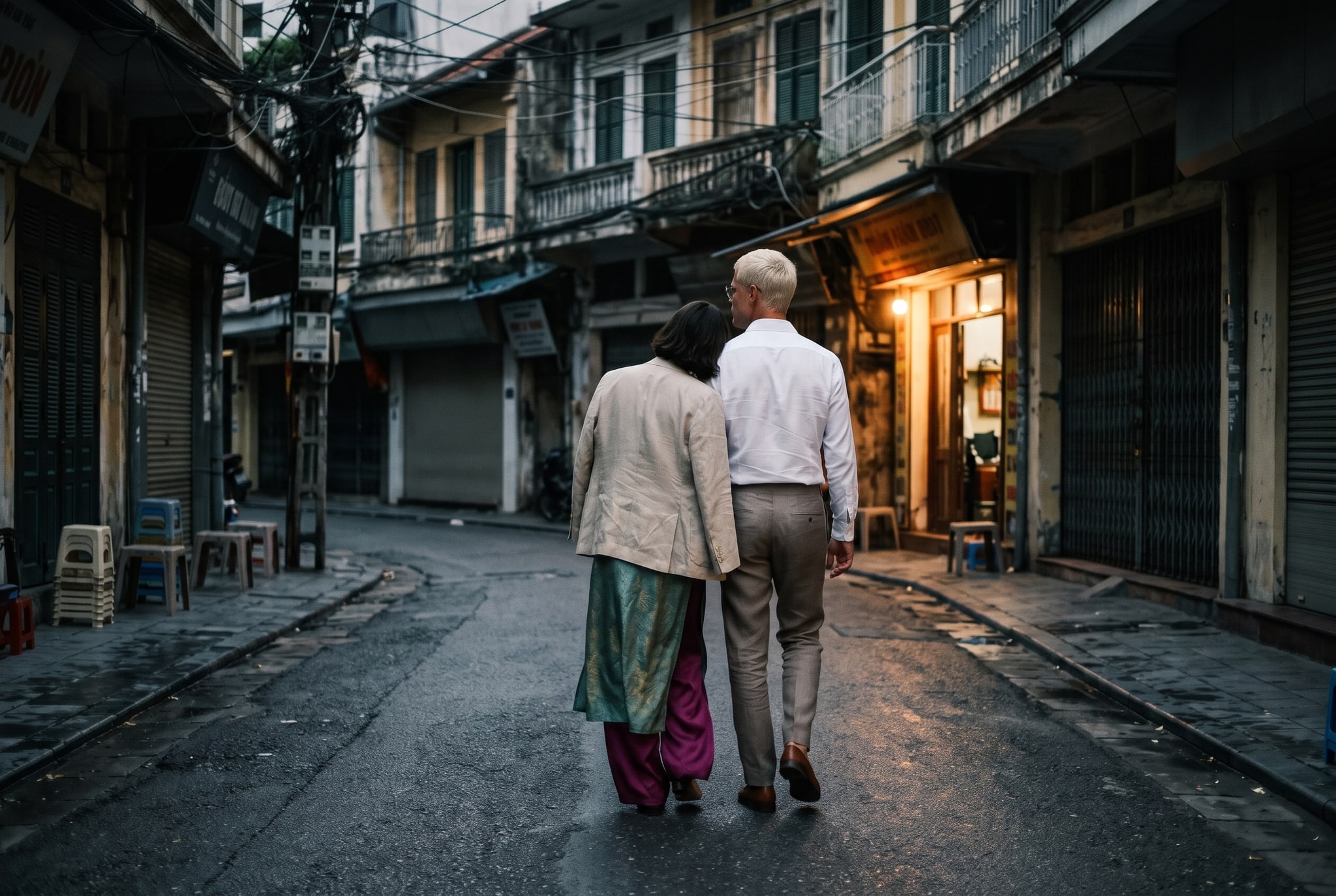
| Phase | Task | Why It Matters |
|---|---|---|
| Before | Confirm exact pickup time (we travel together to Bat Trang) | 25km travel = 45 min from central Hanoi; early start avoids traffic |
| Before | Choose ao dai color 3 days prior (we advise on terracotta contrast) | Custom rentals take time; day-of swaps waste light windows |
| Before | Check weather forecast (rain, humidity, wind) | Humidity above 85% ruins makeup; rain means rescheduling or speed-run |
| During | Arrive 30 min early for hair, makeup, ao dai fit | No time for redos once light peaks at 7:30 a.m. |
| During | Hydrate constantly; humidity + exertion drains energy fast | Dehydrated clients show gray skin and tired eyes in photos |
| During | Walk the village perimeter first; scout kiln interiors before poses | Best light angles shift with kiln openings; know your backdrops |
| After | Share final gallery in 7 days (we edit in Hanoi studio) | Edits preserve clay texture; oversaturation flattens the palette |
Beyond this location, we also offer pre-wedding photoshoot sessions at multiple Hanoi spots if you want variety across two or three shoots.
How Bat Trang compares to other Hanoi ao dai shoots
| Location | Light Quality | Crowd Risk | Travel Time | Ao Dai Backdrop Contrast | Best For |
|---|---|---|---|---|---|
| Bat Trang | Warm, low-angle morning (6–9 a.m.) | Low on weekdays | 45 min each way | Neutral clay (jewel tones pop) | Solo, couples, pre-wedding |
| Hoan Kiem Lake | Variable (reflections help) | Very high (peak 8–10 a.m.) | 10 min | Green water (pastels clash) | Solo travelers in a rush |
| Old Quarter temples | Dappled, uneven shadow | Extreme on weekends | Local | Red/gold architecture (busy) | Group dynamics, traditional feel |
| Train Street | Dramatic side-light | High; police enforcement | 15 min | Industrial (pastels wash out) | Couples seeking drama, not solo |
Bat Trang wins for calm, neutral backdrop and authentic Hanoi craft. Choose Hoan Kiem if you want iconic water reflections; Old Quarter for temple symbolism; Train Street for couple energy and grit. We customize each location to your brief—contact us to discuss trade-offs.
What to check before you book
- Travel readiness: Can you walk 2–3 km on uneven pottery-yard paths? Bat Trang involves cracked earth, kiln steps, and narrow lanes. Comfortable, flat footwear is essential (we suggest changing shoes post-shoot).
- Ao dai fit: Does your rental size allow comfortable movement? We fit you in advance, but last-minute swaps waste time. Confirm 3 days prior.
- Weather backup: June–September shoots risk rain or 90%+ humidity. We offer rescheduling without penalty—ask us about monsoon-season policies.
- Light window: Are you flexible on 6–9 a.m. timing? We cannot replicate morning light later; afternoon shoots require lower ISOs and may feel dull.
- Cultural respect: Agree to keep voices low, ask before photographing potters, and follow our lead on kiln access. Disrespect can end shoots early.
For couple and family shoots, see our dedicated couple photoshoot and family photoshoot guides—both offer Bat Trang as an option.
Gallery and next steps
Our Hanoi team has shot ao dai across central city temples, Hoan Kiem, and Bat Trang since we launched—every shoot is coordinated on WhatsApp in English with real-time timing and styling advice. We include hair, makeup, and ao dai rental (no hidden fees; ask us for a quote). We also offer specialized solo travel portraits if you're visiting alone and want authentic Hanoi moments.
Plan your Hanoi shoot or message us on WhatsApp with your dates, ao dai color preference, and whether you'd like Bat Trang morning or a backup city spot. We'll confirm availability, light forecast, and a timeline within 24 hours.
FAQ
Is Bat Trang suitable for maternity ao dai shoots?
Yes, if you're in second or early third trimester and comfortable walking 2 km. We style loose-drape ao dai, avoid kiln steps, and schedule extra breaks. See our maternity photoshoot page for trimester-specific guidance and stamina management.
Can we shoot Bat Trang on a rainy day?
Partially. Light becomes flat and diffuse (no golden hour); puddles reflect sky and hide ground hazards. We reschedule unless you prefer moody, desaturated tones and accept lower energy. Rain gear (clear umbrellas, waterproof wraps) protects ao dai but limits movement—not ideal for dynamic poses.
How many outfit changes fit into a Bat Trang morning shoot?
Two ao dai comfortably (6–9 a.m. window). Hair/makeup touch-up between changes takes 10–15 minutes; changing inside a kiln or covered shelter adds logistics. Three changes risks missing peak light. If you want multiple looks, we can suggest a second afternoon city shoot instead.
Do we need a permit to photograph commercially in Bat Trang?
Not for solo client + photographer on a weekday. Organized groups, drones, or weekend large gatherings may need local coordination. We manage relationships and know which kilns are camera-friendly—no surprise fees if you book through us.
Can non-models look relaxed and natural in Bat Trang photos?
Absolutely. The neutral backdrop and morning calm reduce self-consciousness. We use movement prompts (walk toward light, adjust ao dai fabric, look at potters at work) instead of stiff poses. First-time clients often relax faster here than in crowded temples because the environment feels real and unhurried.
What's the best season for Bat Trang ao dai shoots: summer or winter?
October–November and March–April. Winter (December–February) brings cool mornings and low humidity—ideal. Summer (May–September) suffers 85–90% humidity, mosquitoes, and heat haze; makeup wilts by 7:30 a.m. Spring (March–April) is transitional but workable. Monsoon season (June–August) risks daily afternoon rain; we prioritize early 6–8 a.m. shoots to beat storms.
Check dates
Send your dates, how many people and the style you like. We reply on WhatsApp in English with spots, timing and a quote.
FAQ
Is Bat Trang suitable for maternity ao dai shoots?
Yes, if you're in second or early third trimester and comfortable walking 2 km. We style loose-drape ao dai, avoid kiln steps, and schedule extra breaks. See our [maternity photoshoot](/maternity-photoshoot) page for trimester-specific guidance and stamina management.
Can we shoot Bat Trang on a rainy day?
Partially. Light becomes flat and diffuse (no golden hour); puddles reflect sky and hide ground hazards. We reschedule unless you prefer moody, desaturated tones and accept lower energy. Rain gear (clear umbrellas, waterproof wraps) protects ao dai but limits movement—not ideal for dynamic poses.
How many outfit changes fit into a Bat Trang morning shoot?
Two ao dai comfortably (6–9 a.m. window). Hair/makeup touch-up between changes takes 10–15 minutes; changing inside a kiln or covered shelter adds logistics. Three changes risks missing peak light. If you want multiple looks, we can suggest a second afternoon city shoot instead.
Do we need a permit to photograph commercially in Bat Trang?
Not for solo client + photographer on a weekday. Organized groups, drones, or weekend large gatherings may need local coordination. We manage relationships and know which kilns are camera-friendly—no surprise fees if you book through us.
Can non-models look relaxed and natural in Bat Trang photos?
Absolutely. The neutral backdrop and morning calm reduce self-consciousness. We use movement prompts (walk toward light, adjust ao dai fabric, look at potters at work) instead of stiff poses. First-time clients often relax faster here than in crowded temples because the environment feels real and unhurried.
What's the best season for Bat Trang ao dai shoots: summer or winter?
October–November and March–April. Winter (December–February) brings cool mornings and low humidity—ideal. Summer (May–September) suffers 85–90% humidity, mosquitoes, and heat haze; makeup wilts by 7:30 a.m. Spring (March–April) is transitional but workable. Monsoon season (June–August) risks daily afternoon rain; we prioritize early 6–8 a.m. shoots to beat storms.
More like this
Ao dai photoshoot in Hanoi
Ao Dai Photoshoot at Ho Chi Minh Mausoleum: Best Time & Tips
Ho Chi Minh Mausoleum area offers dramatic colonial architecture and red flags perfect for ao dai portraits, but timing and permit rules are critical.
Ao dai photoshoot in Hanoi
Ao Dai Photoshoot at Lotus Pond Sunrise in Hanoi
Lotus ponds offer Hanoi's most serene ao dai backdrop at dawn, but timing and location scouting are critical for empty frames and soft light. We share exact hours, seasonal water levels and how to avoid tourist crowds.
Ao dai photoshoot in Hanoi
Ao Dai Photoshoot Duong Lam Ancient Village: Best Time & Hanoi Guide
Duong Lam Ancient Village—45 minutes northwest of central Hanoi—offers weathered brick lanes, lotus ponds and colonial-era storefronts perfect for ao dai portraits. Best light and crowd conditions occur October–November and February–March mornings.