
Home › Blog › Ao dai photoshoot in Hanoi
Ao Dai Photoshoot Hanoi Poses: Non-Model Moves for Real Impact
By the Hanoi Photoshoot team · 2026-11-06
Ao dai photoshoots in Hanoi succeed when you nail posture (shoulders back, chin parallel to ground), hand placement (on hip, clutching fabric, or resting on rails) and angle-to-light alignment. Most effective poses sit between 30–45 degrees to the camera, with the sun 2–4 hours after sunrise or before sunset; avoid midday flare on silk. Hanoi Photoshoot by Cáo Studio shoots in Old Quarter, Hoan Kiem Lake, Train Street and temple grounds—each demands different stances: seated on benches favors crossed legs; standing near gates requires depth-of-field framing; walking shots need momentum, not stillness. Non-models often tense their jaws and freeze limbs—the fix is three deep breaths, then small micro-adjustments (half-step left, tilt head 5 degrees) rather than full repositions. Sessions typically run 60–90 minutes, include makeup and styling, and yield 60–120 edited shots; ask us for a quote on WhatsApp. Check dates on WhatsApp
Why posture beats technical camera tricks?
Good posture alone broadcasts confidence and flatters the fabric drape—no filters needed. Slouching makes even a our current quote ao dai look like a bathrobe; shoulders pinned back and spine lengthened adds 10 pounds of visual presence. The rule: imagine a string pulling the crown of your head upward. Elbows stay soft (never locked), and your weight sits on the back half of your feet so you don't pitch forward. This stance works across all Hanoi locations—temple courtyards, lakeside benches, street corners—because it's not trend-dependent. Train Street shots specifically demand this stability: uneven cobbles will betray slack posture, but planted feet and a lifted sternum stay grounded even in tight frames.
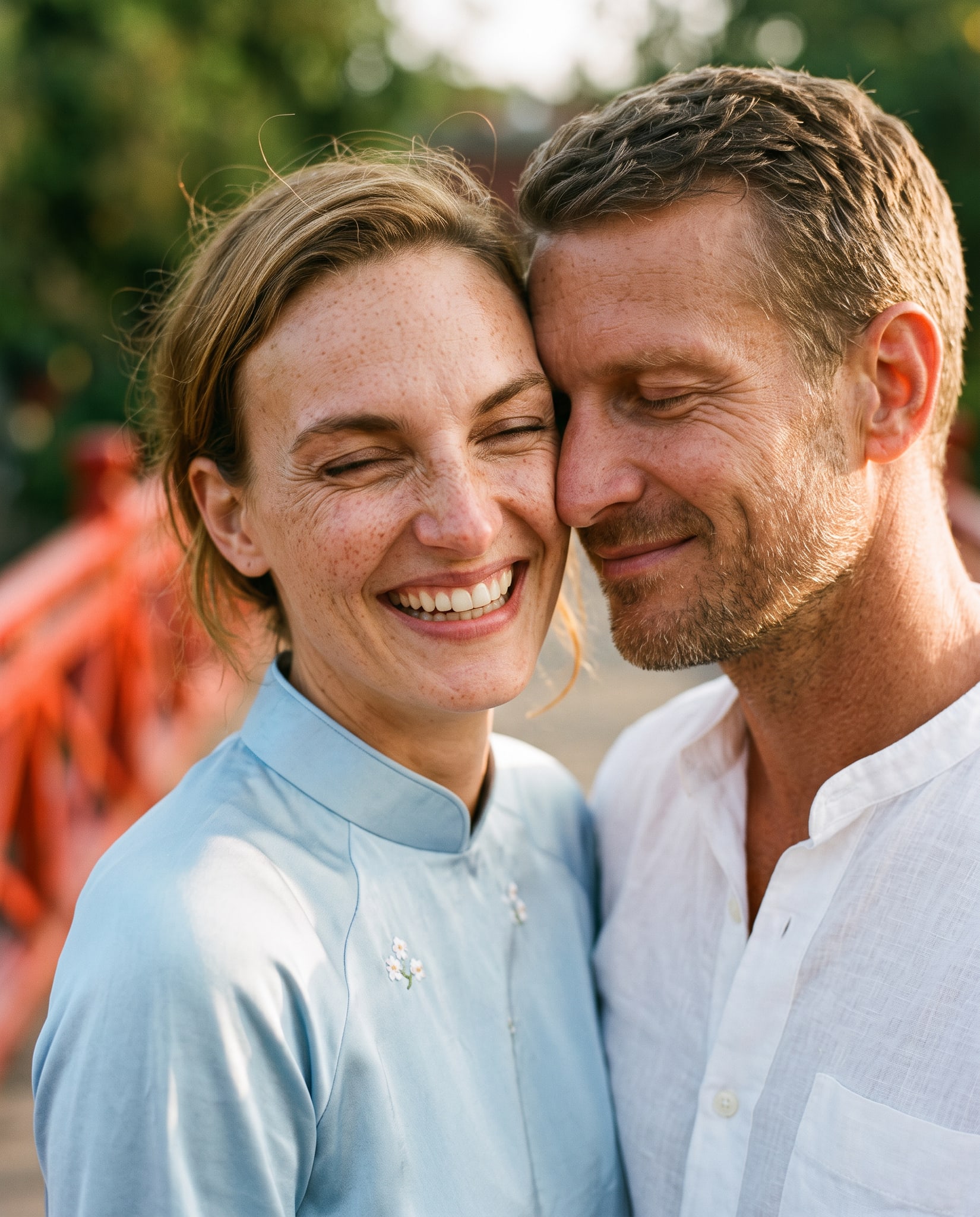
Where do hands go in an ao dai pose?
Hands are the hardest to choreograph—they must feel natural, not posed. Three anchor moves work: (1) one hand on the hip, thumb forward, fingers relaxed on the ao dai's side seam; (2) both hands gently holding the front panel or sleeves (formal, ceremonial); (3) hands at rest, one slightly higher than the other, loosely clasped low. Avoid stiff arms, clenched fists or hands buried in pockets. At Hoan Kiem Lake photo guide, lakeside benches allow arm draping over the backrest—this elongates the silhouette. Train Street's narrow passages mean hands either frame your face or rest on textile; raised elbows angle the fabric and create negative space. Walking shots require one hand on the fabric's hem or front, moving with your stride—it signals confidence and breaks symmetry.
How does light timing change your pose options?
Golden hour (first 90 minutes after sunrise, last 90 before sunset) is the only window where Hanoi's ao dai photography looks professional. Early morning light (6:00–7:30 AM) on Hanoi Old Quarter photo guide casts soft shadows and avoids crowds; you can hold still-life poses longer. Late afternoon (4:30–6:00 PM) adds drama and warmth, but crowds peak—you'll need quicker transitions between frames. Midday (11:00 AM–3:00 PM) is off-limits: harsh overhead sun creates unflattering shadows under eyes and cheekbones, and the silk glare washes colors. Season matters: dry season (October–April) offers stable light; monsoon (May–September) adds cloud diffusion but unpredictable rain. If you're shooting at a temple, arrive 45 minutes before your booked time to scout: light quality shifts 15 degrees every half-hour, so a pose perfect at 7:00 AM may need a 10-degree pivot by 7:45 AM.
Which Hanoi locations demand different pose mechanics?
Each landmark rewards specific stances. At Train Street photo guide, the narrow tracks and surrounding architecture create vertical constraints—you must sit cross-legged or stand with torso tilted away from the buildings to avoid silhouette crush. Hoan Kiem Lake's open shoreline allows dynamic walking and seated shots; the water's reflection doubles your frame, so bent-knee poses look stronger than stiff standing. Temple grounds (Tran Quoc, But Thap) require reverent posture—upright, composed, hands visible—and motion is minimal out of respect; we coordinate with monks on permitted zones. The Old Quarter's narrow streets and shop fronts work best with you turned sideways into doorways or leaning against weathered walls; this depth-of-field framing hides crowds. Street-level versus elevated vantage flips pose logic: standing on a street corner from ground level elongates your legs, but sitting on a step shot from above flatters facial angles and fabric folds.
What are the most common pose mistakes we see?
Non-models typically commit three errors: (1) looking directly at the camera with a strained expression (fix: close eyes for 2 seconds, then open softly before the frame); (2) holding a single pose for 8+ frames (fix: a new micro-movement—shift weight, tilt chin, adjust hand—every 3 shots); (3) wearing oversized gestures that read false in stills (fix: scale everything down by 30%; a nod becomes a gentle tilt). Jaw tension is nearly universal; we cue "let your tongue rest on your lower teeth" to soften the mouth. Feet are second hardest—locked ankles signal fear, so we ask you to imagine walking very slowly, so one foot is always slightly forward. At crowded spots like the Old Quarter, people also rush poses out of self-consciousness; we build in 15-minute buffer time so you're never racing the light or the crowd. A final sneaky error: forgetting to breathe during a "hold" pose; you'll see your shoulders rise and back tense in the shot.
| Pose Type | Best Light Window | Top 2 Hanoi Spots | Duration per Setup | Common Mistake |
|---|---|---|---|---|
| Standing, frontal | Early golden hour (6:30–7:30 AM) | Old Quarter, Hoan Kiem Lake | 5–8 frames | Tense jaw, locked knees |
| Seated, crossed legs | Late golden hour (5:00–6:00 PM) | Train Street, temple steps | 4–6 frames | Slouching, dead eyes |
| Walking/motion | Mid-golden hour (7:00–7:45 AM OR 4:45–5:30 PM) | Lakeside paths, Old Quarter alleys | 12–16 frames | Overstrained smile, stiff gait |
| Leaning/intimate | Golden hour or cloudy afternoon | Doorways, architectural frames | 3–5 frames | Forced hand placement, arched back |
What should you wear under and around the ao dai?
Your styling choices affect how poses read. Most clients book our makeup, hair & ao dai rental service because fit is everything—a borrowed ao dai that's 1 inch too wide in the shoulders will sag, no matter how good your posture. Underneath, wear a slip or fitted white or nude undergarment (the fabric is often sheer); visible panty lines kill frames, and a poor slip shifts and bunches. Jewelry: small, delicate pieces only—large earrings draw the eye away from facial expression, and chunky bracelets clash with the fabric's drape. Hair ties should match your hair color. Shoes matter: flat sandals or traditional indoor slippers for temple shoots; clean sneakers for street mobility (we'll shoot from angles that hide feet if needed); never heels on Train Street's uneven surface. If you're part of a couple photoshoot, coordinate ao dai colors with your partner's outfit (not identical—complementary). For family photoshoot sessions, all members should wear similarly formal attire or matching color palettes so the frame feels intentional.
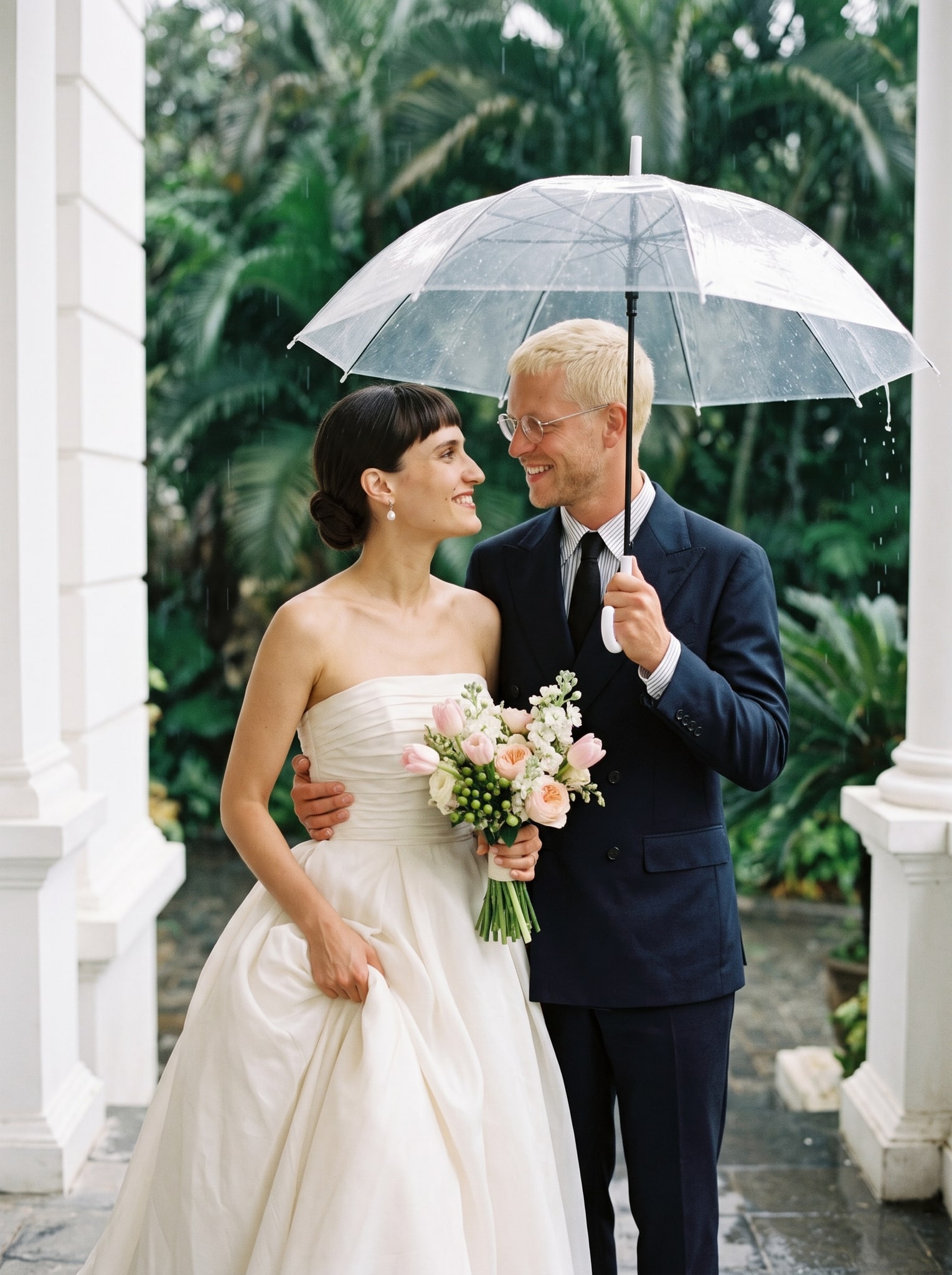
How do we manage crowds and season timing?
Hanoi's tourist season (October–March) means early morning slots (6:30–8:00 AM) are mandatory if you want fewer people. Late afternoon is riskier: Old Quarter foot traffic peaks 5:00–7:00 PM, and you'll need 4–5 takes per pose to find a frame without a stranger's backpack. Train Street is strictly off-limits during train passages (check a local railway schedule; trains run ~7:00–8:00 AM, 3:00–4:00 PM, and 5:00–6:00 PM); we always verify before your session. Monsoon season (May–September) is slower but humidity wrinkles ao dai and frizzes hair; we use a portable steamer and touchup powder. If it rains 30 minutes before your shoot, we reschedule—wet ao dai sticks to your body and loses its structured shape. Temple access rules: most temples are open 8:00 AM–5:00 PM but close during ceremonies (usually midday). We always call ahead and brief you on photo zones and respectful behavior—no posing on altars, keep shoes off sacred steps, and no loud directions.
What to check before you book an ao dai pose session
- Light forecast: Check sunrise/sunset times (they shift 10–15 minutes month-to-month); confirm your booked time falls within golden hour.
- Ao dai fit: If renting, arrive 15 minutes early so we can steam and adjust the fit—loose fabric will betray bad posture.
- Venue access: Ask us to confirm temple hours, Train Street train schedules, and Old Quarter street closures on your date.
- Footwear test: Wear whatever shoes you'll pose in during a pre-shoot walk (30 seconds on uneven ground shows you if ankles will stay stable).
- Hair & makeup durability: If you're in humidity (May–September), request waterproof makeup and hair product; we'll apply extras.
- Pose reference: Bring 2–3 Pinterest images of ao dai poses you like—not to copy, but so we understand your vibe and can build variations.
- Editing scope: Ask us upfront if edits include outfit retouching, skin smoothing, or color grading—it affects turnaround and final feel.
Should you hire a guide or book direct with us?
We are the in-house photography team, makeup artist and stylist combined—no middleman, no translation lag. We book directly on WhatsApp in English, confirm location logistics 48 hours before, and show you sample shots the same day. Pre-wedding photoshoot clients and proposal photographer clients especially benefit because we scout exact spots and light patterns weeks in advance. Generic tour guides often don't understand photo timing or pose mechanics; they'll rush you through a crowded temple in 20 minutes and call it done. Solo travelers doing a solo travel portraits session with us get a fully styled ao dai shoot with no stress—we handle the fabric, the light angles, and the crowd navigation.
Why does Hanoi's architecture amplify good posture?
Hanoi's colonial buildings, temple courtyards and water reflections are natural leading lines—but only if you stand centered and aligned. A slouched frame against a symmetrical French-colonial facade looks careless; the same frame with lifted shoulders and parallel-to-camera torso commands the composition. Train Street's narrow geometry forces you upright; if you slouch, the buildings crowd your silhouette. Hoan Kiem Lake's water acts as a mirror—a hunched posture looks doubly weary. Temples' grand gates create a visual cage: poor posture shrinks you inside it, but an intentional stance fills the frame. This is why we rarely need to ask you to "smile bigger" or "relax more"—if your shoulders are placed and your spine is long, the frame breathes and reads naturally. We spend the first 5 minutes of every session just walking and breathing, not shooting, so your body settles into authentic confidence.
How do maternity and graduation clients adapt these poses?
Maternity photoshoot clients modify standing poses by shifting weight to one leg (reduces lower-back strain) and cradling or touching the belly (adds emotional depth and avoids stiffness). Seated poses dominate because they're comfortable and read intimate. Graduation photoshoot clients in ao dai add movement poses (walking, gentle turning) to signal transition and energy; we pair these with still portraits so the final album tells a narrative arc. Both groups benefit from longer sessions (120 minutes instead of 60) so we can capture multiple outfit changes or energy shifts.
FAQ
Can I pose in an ao dai if I've never modeled before?
Yes—most of our clients are first-timers. We spend 10–15 minutes on posture cues and light angles before any shooting. Your job is breathing, not performing; good posture and soft eyes do 90% of the work.
What's the best time of day to shoot an ao dai in Hanoi?
First 90 minutes after sunrise (6:30–8:00 AM) or last 90 minutes before sunset (4:30–6:00 PM) work best. Midday is off-limits—harsh light and glare ruin both the fabric and facial angles.
Do I need to bring my own ao dai, or can you provide one?
We offer rental as part of our makeup, hair & ao dai rental service. Renting means perfect fit and a professional garment; if you own one, bring it 24 hours early so we can steam and adjust.
How many usable shots do I get from a one-hour ao dai session?
Typically 60–120 edited shots, depending on how many outfit changes or locations you cover. We deliver 60–70 final retouched images within 7 days.
Can I do a couple or family ao dai shoot, or is it solo only?
We run couple, family and group ao dai sessions. Couple shoots are popular for proposals and anniversaries; family shoots pair kids in traditional wear with adults in ao dai.
What happens if it rains during my booked session?
We reschedule if heavy rain is forecast or occurring 30 minutes before start time. Wet ao dai loses its structure and clings awkwardly—not worth shooting. We'll find a new date with better light.
Are there any rules or restrictions I need to know about shooting at temples or Train Street?
Yes. Temples require shoes off in sacred areas, respectful posture and no posing on altars. Train Street has train schedules (we verify before your session) and narrow space, so poses are tight and deliberate. We brief you fully before arrival.
Should I practice poses at home before my Hanoi shoot?
No—over-rehearsed poses look stiff on camera. Bring reference images you like, then let us coach you on-site based on light and your body's natural range of motion. ===
Check dates
Send your dates, how many people and the style you like. We reply on WhatsApp in English with spots, timing and a quote.
FAQ
Can I pose in an ao dai if I've never modeled before?
Yes—most of our clients are first-timers. We spend 10–15 minutes on posture cues and light angles before any shooting. Your job is breathing, not performing; good posture and soft eyes do 90% of the work.
What's the best time of day to shoot an ao dai in Hanoi?
First 90 minutes after sunrise (6:30–8:00 AM) or last 90 minutes before sunset (4:30–6:00 PM) work best. Midday is off-limits—harsh light and glare ruin both the fabric and facial angles.
Do I need to bring my own ao dai, or can you provide one?
We offer rental as part of our makeup, hair & ao dai rental service. Renting means perfect fit and a professional garment; if you own one, bring it 24 hours early so we can steam and adjust.
How many usable shots do I get from a one-hour ao dai session?
Typically 60–120 edited shots, depending on how many outfit changes or locations you cover. We deliver 60–70 final retouched images within 7 days.
Can I do a couple or family ao dai shoot, or is it solo only?
We run couple, family and group ao dai sessions. Couple shoots are popular for proposals and anniversaries; family shoots pair kids in traditional wear with adults in ao dai.
What happens if it rains during my booked session?
We reschedule if heavy rain is forecast or occurring 30 minutes before start time. Wet ao dai loses its structure and clings awkwardly—not worth shooting. We'll find a new date with better light.
Are there any rules or restrictions I need to know about shooting at temples or Train Street?
Yes. Temples require shoes off in sacred areas, respectful posture and no posing on altars. Train Street has train schedules (we verify before your session) and narrow space, so poses are tight and deliberate. We brief you fully before arrival.
Should I practice poses at home before my Hanoi shoot?
No—over-rehearsed poses look stiff on camera. Bring reference images you like, then let us coach you on-site based on light and your body's natural range of motion. ===
More like this
Ao dai photoshoot in Hanoi
Traditional Dress Photoshoot at Hanoi Old Quarter
A traditional dress photoshoot in Hanoi's Old Quarter captures you in an áo dài against narrow streets, shuttered storefronts and century-old lantern light. Cáo Studio handles styling, hair, makeup and rental in-house—no hidden bookings needed.
Ao dai photoshoot in Hanoi
Ao Dai Photo Shoot Hanoi in the Rain: Light, Spots & Timing
Rain transforms Hanoi's ao dai shoots: deeper jewel tones pop, reflections double your frame, and crowds thin at temples. We time shoots between downpours and use covered colonnades and indoor studios as fallback spots.
Ao dai photoshoot in Hanoi
Ao Dai Photoshoot West Lake Hanoi: Light, Crowds & Posing Tips
West Lake draws ao dai photographers for its reflective water and tree-lined paths, but timing, crowds and light direction make or break the session. We show you exactly how to work the location in 2026.