
Home › Blog › Ao dai photoshoot in Hanoi
Ao Dai Photoshoot Hanoi Opera House: Light, Crowds & Outfit Tips
By the Hanoi Photoshoot team · 2026-11-06
The Hanoi Opera House offers dramatic neoclassical architecture and symmetrical facades ideal for ao dai photography, but success requires shooting during golden hour (roughly 06:00–07:30 AM or 16:30–18:00 PM), booking a session with Hanoi Photoshoot by Cáo Studio to coordinate timing and manage crowds. The plaza floods with tour groups midday and peaks between 10:00–14:00, making dawn or late afternoon essential. Ao dai in jewel tones and pastels photograph best against the pale stone; white and cream risk blown highlights. Expect 90–120 minutes for a full session including hair, makeup and outfit changes. No special permits required for the public plaza, but internal courtyard access is restricted. Avoid midday harsh shadows, peak tourist hours, and synthetic fabrics that crease or reflect unpredictably in sunlight. Check dates on WhatsApp
Why shoot ao dai at the Opera House, not elsewhere?
The Opera House stands as Hanoi's most iconic French colonial structure, with pale yellow neoclassical facades, symmetrical staircases, and a semi-circular plaza that frames ao dai silhouettes in ways flat or cramped Old Quarter streets cannot match. The horizontal geometry lets photographers shoot wide-angle without distortion. Unlike temples (which restrict poses and dress codes) or lakes (which attract floating vendors and swimmers), the plaza offers unobstructed sight lines and consistent architectural context. The building's west-facing front means predictable afternoon light. Its scale suits both solo portraits and group sessions without overcrowding the frame.
When should you arrive to beat crowds and harsh light?
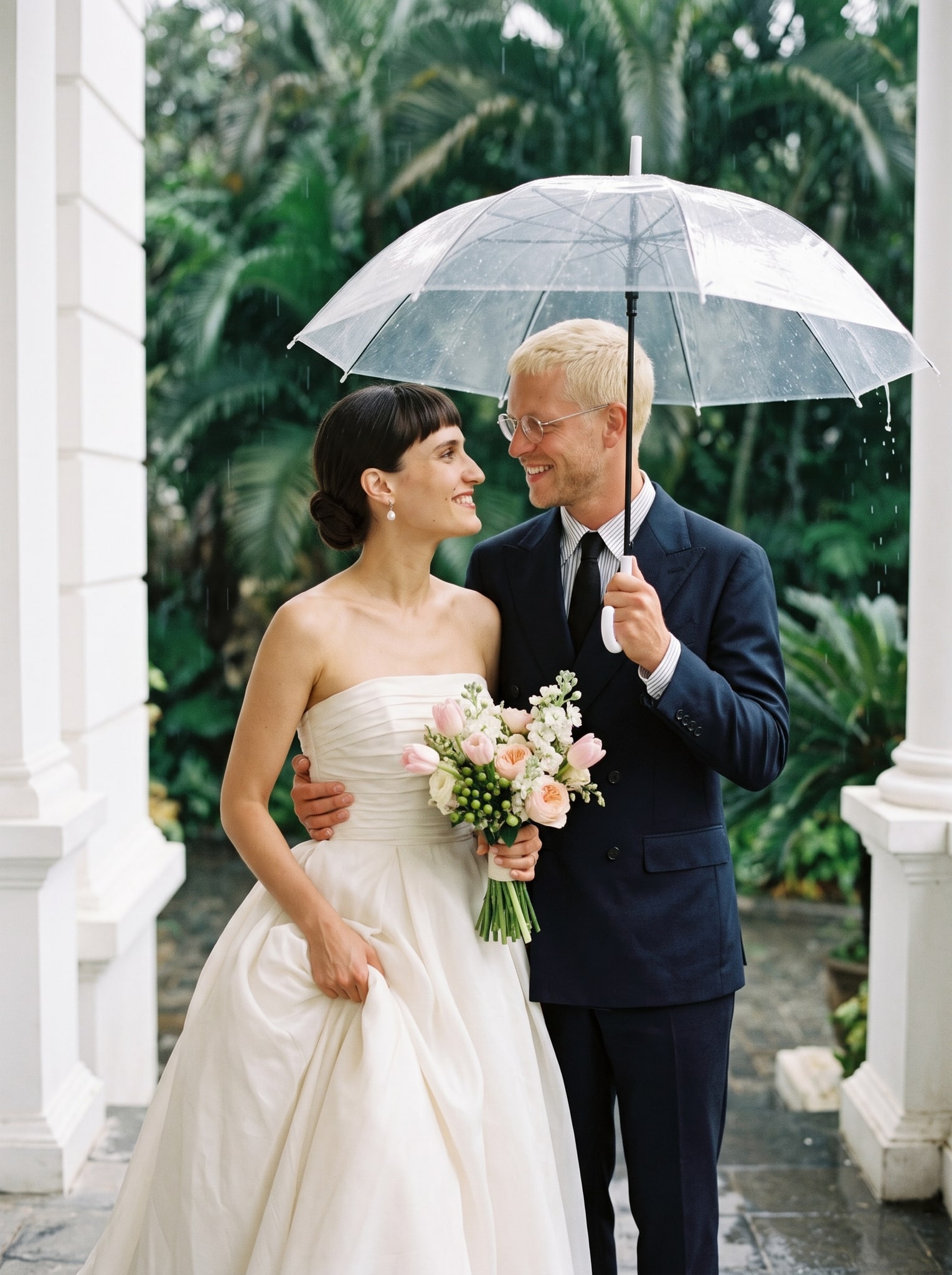
Arrive 06:00–06:45 AM for the pre-dawn and early golden hour window: the sun is low, soft, and warm; the plaza is nearly empty except for tai chi practitioners; and ao dai colors bloom without overexposure. Alternatively, book 16:30–17:45 PM for the evening session when afternoon tours disperse and the sun dips below the roofline, creating diffused, flattering side-light. Midday (10:00–14:00) produces flattening overhead sun and hard shadows under cheekbones and ao dai folds—avoid entirely. Crowds spike 11:00–13:00 as group tours peak. Rainy season (May–September) offers diffused cloud cover if you're flexible; dry season (November–March) guarantees clear skies but cooler early-morning air may require a thin wrap.
How do you keep ao dai pristine and photograph-ready on location?
Bring a garment steamer or hand-held fabric refresher; humidity in Hanoi softens creases but synthetic ao dai can hold sweat marks. Store the ao dai in a breathable carry bag, not compressed plastic. On-site, keep the garment on a padded hanger between outfit changes—never leave it draped on steps or chairs where dust settles. Hang the ao dai facing away from direct sun before shooting to avoid color fading during the session. If you're renting from our makeup and styling service, we deliver steamed, pressed garments 30 minutes before your shoot start and manage touch-ups on-site. Wear a silk slip under the ao dai to reduce sweat transfer and static. After sunset, humidity rises; plan outfit swaps before 17:45 to avoid fabric clinging or color-shifting in the fading light.
What poses and angles work best for ao dai at the Opera House?
Symmetry demands off-center positioning: stand on the left third of the plaza facing the central staircase, allowing the building's right wing to balance your frame. Walk toward the camera on the main steps (ao dai flowing with momentum) rather than static standing—motion reads more naturally in print. Use the side colonnade for profile shots where light rakes across the front of the ao dai, revealing fabric texture. Sit on the lower steps with feet angled, one leg extended—this prevents the ao dai from bunching and keeps the neckline and upper torso visible. Avoid looking directly at the camera; glance down at the ao dai or toward the building detail, then turn into the camera—this captures a more candid, editorial quality. Photographer should shoot from slightly below eye level to elongate your silhouette against the sky. Group shots (couples, families) work best on the central steps with the building as background rather than in the open plaza where you appear miniature.
| Pose Type | Best Time of Day | Light Quality | Why It Works | Camera Position |
|---|---|---|---|---|
| Walking toward camera | 17:00–17:45 PM | Raking side-light | Motion softens stiffness; fabric flows | Below eye level, 5m away |
| Sitting on steps | 06:30–07:30 AM | Low angled gold | Prevents bunching; shows silhouette | Level with hips or slightly above |
| Profile facing building | 16:45–17:15 PM | Front-raking light | Reveals ao dai texture; elongates neck | 90° perpendicular to subject |
| Standing on plaza center | Avoid midday | Diffused cloud (if present) | Symmetry with architecture | Upper steps looking down |
| Couple on lower steps | 17:30–18:00 PM | Soft backlit amber | Romantic; ao dai glows; shadows recede | 2–3m away, below step height |
What clothing and accessory rules apply at the Opera House?
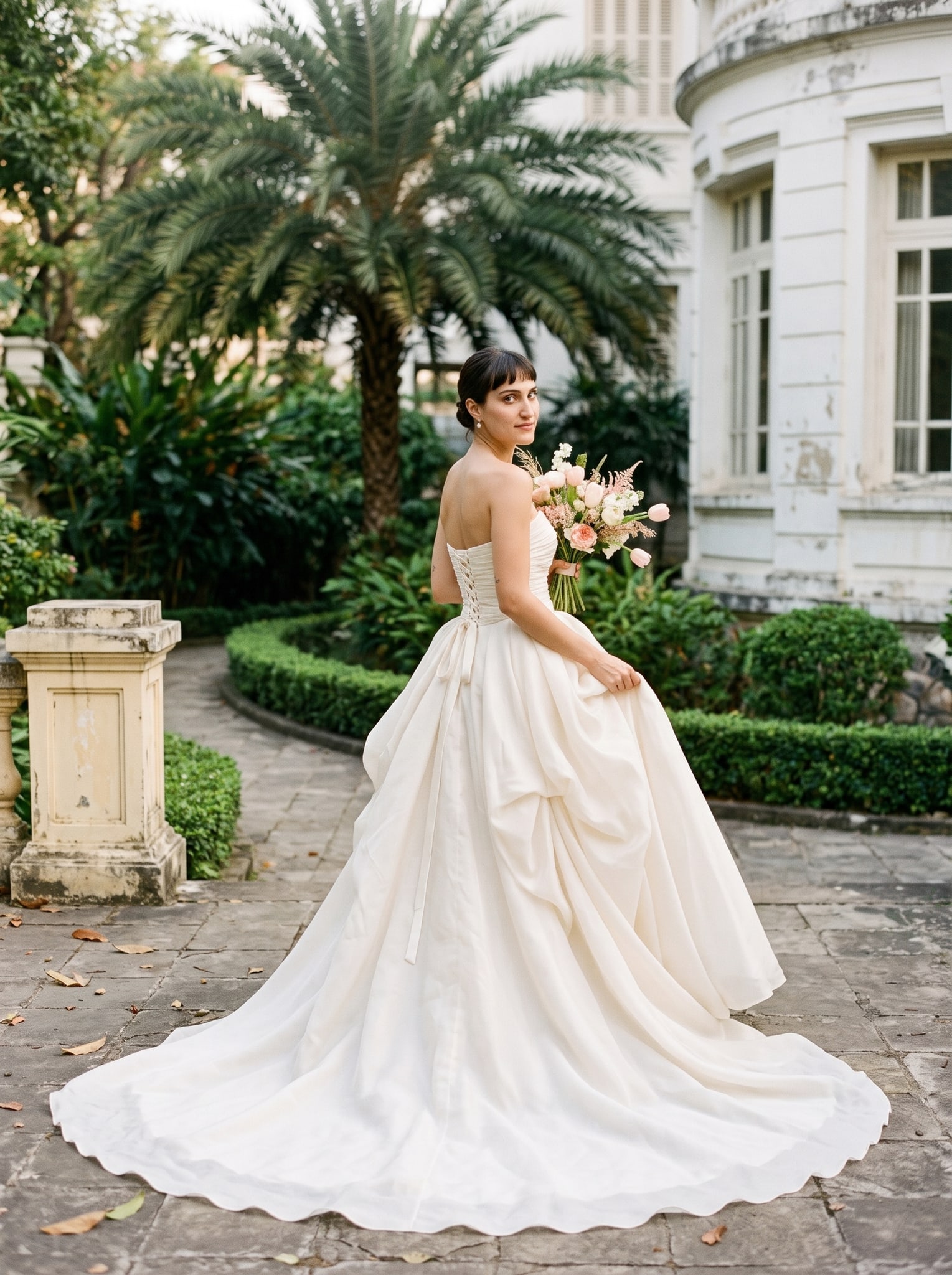
No dress code is enforced on the public plaza, unlike temples where shoulders must be covered and knees hidden. Bare shoulders in ao dai are fine and photograph beautifully. However, avoid wearing Western casual dress (t-shirts, shorts, sneakers) in the frame—they cheapen the aesthetic. Stick to traditional accessories: silk scarves, beaded or embroidered bags, minimal gold jewelry. Remove sunglasses before the camera; they create glare and hide your eyes. Wear comfortable flat or low-heeled shoes (sandals acceptable) if you plan to walk the steps; heels can slip on wet stone and restrict natural movement. Our makeup and styling team coordinates accessories during the booking process, so nothing clashes.
What seasonal changes affect Opera House ao dai shoots?
Dry season (November–February): Clear skies, cool mornings (12–15°C at 06:00 AM), longer golden hour (07:00–07:45 AM and 17:00–18:15 PM). Ao dai in heavier silk or blended fabrics drape elegantly without wilting. Sunrise is higher; position yourself on the west steps to catch low angled light. Bring a light cardigan for early morning comfort.
Hot season (March–April): Intense midday sun reaches dangerous heat by 09:00 AM. Shift all shoots to 06:00–07:00 AM or 18:00–19:00 PM (sunset later than February). Ao dai in lightweight linen or cotton blend suit the climate; synthetic fabrics trap heat and wrinkle rapidly. Humidity is 60–70%, causing makeup to fade—book touch-ups at the 60-minute mark.
Rainy season (May–September): Cloud cover is common; this eliminates harsh shadows but reduces color pop. Shoot mid-morning (09:00–10:00 AM) when diffusion is even. Bring an umbrella to shield the ao dai from light rain and dust. Ao dai colors (reds, blues) appear richer under gray skies. Humidity peaks; plan outfit changes indoors (a nearby café with a private corner, arranged in advance).
Transition months (October, late-September): Variable weather; unpredictable wind. Confirm forecast 2 days before. Early morning shoots offer the most stable conditions.
How to avoid common mistakes: a pre-shoot checklist.
- Confirm your shoot time 48 hours in advance; Opera House access is free but foot traffic varies by day and event.
- Scout the exact staircase and plaza corners you want; take reference photos 2–3 days prior if you've never visited.
- Check the weather forecast at 24-hour and 12-hour marks; reschedule if rain is >40% probability or strong winds forecast.
- Wear the ao dai at home for at least 2 hours before the shoot to identify any seams that pinch or straps that slip.
- Eat a light breakfast 90 minutes before; an empty stomach causes dizziness during early-morning shoots. Avoid caffeine jitters.
- Bring a phone charger or power bank; the plaza has no seating and no shade—you cannot rest between outfit changes comfortably.
- Confirm your photographer knows the exact staircase number (the Opera House has three distinct staircases; precision prevents miscommunication on-site).
- If you're doing a couple photoshoot or family photoshoot, book group rates in advance.
- Request a PDF or printed shot list the day before; this clarifies pose expectations and prevents back-and-forth delays on location.
- Do NOT wear heavy foundation; it cakes in humidity. Bring blotting papers and compact powder for touch-ups.
What packages and services does Hanoi Photoshoot by Cáo Studio offer for Opera House sessions?
Our ao dai photoshoot package includes hair, makeup, and ao dai rental (multiple styles and sizes on request), in-house fitting 48 hours before the shoot, and a professional guide to timing and poses at the Opera House. Photographers are native English speakers familiar with the exact light and crowd patterns. Sessions run 90–120 minutes and include outfit changes and location scouting if needed. We do not offer generic templates; every session is customized by season, your preferred ao dai color and style, and the time of day that suits your travel schedule. Add-ons include additional outfit rentals, extended sessions beyond 120 minutes, and printed or digital contact sheets within 7 days.
For a pre-wedding photoshoot or proposal photographer session incorporating the Opera House, we coordinate surprise logistics, second photographer coverage, and romantic light timing. For first-time Hanoi visitors, we often combine the Opera House with a solo portrait session at one of our other signature Hanoi spots—Hoan Kiem Lake or the Old Quarter—in the same day.
Ask us for a quote on WhatsApp; pricing depends on session length, outfit rentals, and add-ons.
What to check before you book your shoot.
- Does the date conflict with a major Hanoi festival or holiday? (Tet, National Day events may increase crowds.)
- Is your ao dai the correct size? (Request a fitting appointment; last-minute resizing is costly and stressful.)
- Do you have a clear travel schedule? (Early-morning shoots require a flexible hotel checkout arrangement.)
- Are you physically comfortable walking 30–40 minutes in ao dai on stone steps? (This is normal; wear supportive undergarments.)
- Have you reviewed reference images on our Instagram or previous client galleries? (This sets realistic expectations for your final photos.)
FAQ
Can we shoot inside the Opera House building, or only on the plaza?
The interior courtyard and performance halls are off-limits to photographers unless you book a private tour (rare, expensive, and requires official permission). We stick to the public plaza and the exterior staircases, which offer stunning architecture and light without bureaucratic delays.
What if it rains on the day of our shoot?
Light drizzle is manageable—we have umbrellas and can adjust the session to covered colonnade areas. Heavy rain (>5mm forecast) means we reschedule. Our cancellation policy is: reschedule free up to 48 hours before; within 24 hours, a rescheduling fee applies. Check with us on WhatsApp for terms.
How many outfit changes can we fit into one session?
2–3 full outfit changes in a 120-minute session, including hair and makeup touch-ups. Each change takes 12–18 minutes. If you want 4+ outfits, book a 150-minute extended session or split into two half-day sessions at different times of day.
Do we need a permit or permission to shoot ao dai at the Opera House?
No. The plaza is public; photography is free. Professional-looking shoots (tripods, reflectors, crew) sometimes attract security curiosity, but they do not stop you. We keep our gear minimal and discreet.
What do we do with heavy bags or coats during the shoot?
Bring as little as possible. A small crossbody bag or backpack is fine. We arrange a secure spot with our team to store outerwear. Do NOT leave valuables unattended on the steps.
Can we combine the Opera House with other Hanoi landmarks in one day?
Yes. A common route: Opera House at dawn (06:30–07:45 AM), breakfast break, then Hoan Kiem Lake or Old Quarter for midday or afternoon portraits. This maximizes light variation and gives you diverse backdrops on the same ao dai and makeup. Ask us for a full-day itinerary when you inquire.
What if we're not confident about posing?
We coach non-models through every pose, showing examples and adjusting on the fly. The photographer directs; you follow cues. Most clients report feeling relaxed by the third outfit change. Bring water, wear comfortable undergarments, and trust the process.
Check dates
Send your dates, how many people and the style you like. We reply on WhatsApp in English with spots, timing and a quote.
FAQ
Can we shoot inside the Opera House building, or only on the plaza?
The interior courtyard and performance halls are off-limits to photographers unless you book a private tour (rare, expensive, and requires official permission). We stick to the public plaza and the exterior staircases, which offer stunning architecture and light without bureaucratic delays.
What if it rains on the day of our shoot?
Light drizzle is manageable—we have umbrellas and can adjust the session to covered colonnade areas. Heavy rain (>5mm forecast) means we reschedule. Our cancellation policy is: reschedule free up to 48 hours before; within 24 hours, a rescheduling fee applies. Check with us on WhatsApp for terms.
How many outfit changes can we fit into one session?
2–3 full outfit changes in a 120-minute session, including hair and makeup touch-ups. Each change takes 12–18 minutes. If you want 4+ outfits, book a 150-minute extended session or split into two half-day sessions at different times of day.
Do we need a permit or permission to shoot ao dai at the Opera House?
No. The plaza is public; photography is free. Professional-looking shoots (tripods, reflectors, crew) sometimes attract security curiosity, but they do not stop you. We keep our gear minimal and discreet.
What do we do with heavy bags or coats during the shoot?
Bring as little as possible. A small crossbody bag or backpack is fine. We arrange a secure spot with our team to store outerwear. Do NOT leave valuables unattended on the steps.
Can we combine the Opera House with other Hanoi landmarks in one day?
Yes. A common route: Opera House at dawn (06:30–07:45 AM), breakfast break, then [Hoan Kiem Lake](/spots/hoan-kiem-lake) or [Old Quarter](/spots/hanoi-old-quarter) for midday or afternoon portraits. This maximizes light variation and gives you diverse backdrops on the same ao dai and makeup. Ask us for a full-day itinerary when you inquire.
What if we're not confident about posing?
We coach non-models through every pose, showing examples and adjusting on the fly. The photographer directs; you follow cues. Most clients report feeling relaxed by the third outfit change. Bring water, wear comfortable undergarments, and trust the process.
More like this
Ao dai photoshoot in Hanoi
Ao Dai Photoshoot at Ho Chi Minh Mausoleum: Best Time & Tips
Ho Chi Minh Mausoleum area offers dramatic colonial architecture and red flags perfect for ao dai portraits, but timing and permit rules are critical.
Ao dai photoshoot in Hanoi
Ao Dai Photoshoot at Lotus Pond Sunrise in Hanoi
Lotus ponds offer Hanoi's most serene ao dai backdrop at dawn, but timing and location scouting are critical for empty frames and soft light. We share exact hours, seasonal water levels and how to avoid tourist crowds.
Ao dai photoshoot in Hanoi
Ao Dai Photoshoot Duong Lam Ancient Village: Best Time & Hanoi Guide
Duong Lam Ancient Village—45 minutes northwest of central Hanoi—offers weathered brick lanes, lotus ponds and colonial-era storefronts perfect for ao dai portraits. Best light and crowd conditions occur October–November and February–March mornings.