
Home › Blog › Ao dai photoshoot in Hanoi
Ao Dai Photoshoot Hanoi Old Quarter: Light, Crowds & Timing
By the Hanoi Photoshoot team · 2026-11-06
The Old Quarter is Hanoi's most photogenic district for ao dai: tight lanes frame your áo dài, yellow walls glow in morning or late-afternoon light, and water-reflection streets after rain add drama. Shoot between 06:00–08:00 or 16:30–18:30 to avoid tour groups and hard midday shadows. Crowds thin on weekday mornings; weekends are heaviest 09:00–11:00. Wear comfortable walking shoes—cobbles are uneven—and bring a light shawl or jacket; mornings are cool. At temples within the Quarter (Ngôc Sơn access from here is limited; Phúc Tạn Temple allows photos outside only, no flash inside), dress respectfully: shoulders and knees covered under your áo dài. Rain is common September–November; puddles are your friend for reflections but make slippery footing dangerous. Hanoi Photoshoot by Cáo Studio includes in-house áo dài rental, hair and makeup, and location scouting—we handle logistics while you focus on posing naturally. Check dates on WhatsApp
What light makes the Old Quarter glow for ao dai?
Golden hour—the first hour after sunrise or the last 90 minutes before sunset—turns the Quarter's weathered yellow and terracotta buildings into a warm backdrop that flatters áo dài fabric and skin tone alike. Morning light (06:30–08:00) is softer, less contrasty, and you'll avoid both heat and shadows across your face. Late afternoon (16:30–18:00) is richer but shorter; clouds can kill it in minutes. Midday (11:00–15:00) creates harsh shadows under eyes and strong highlights on wet stone—avoid entirely for portraits. Overcast days are actually ideal: clouds diffuse light evenly, reduce glare on silk, and create moody reflections in puddles. The Quarter's narrow alleys block direct sun, creating pockets of even, flattering shade. Morning is cooler—you won't sweat into your makeup—and foot traffic is lighter, so framing tight shots is easier. Light quality depends on season: October–November and February–March are clearest; June–August is humid and hazy. Plan your shot time around this light window, not convenience.
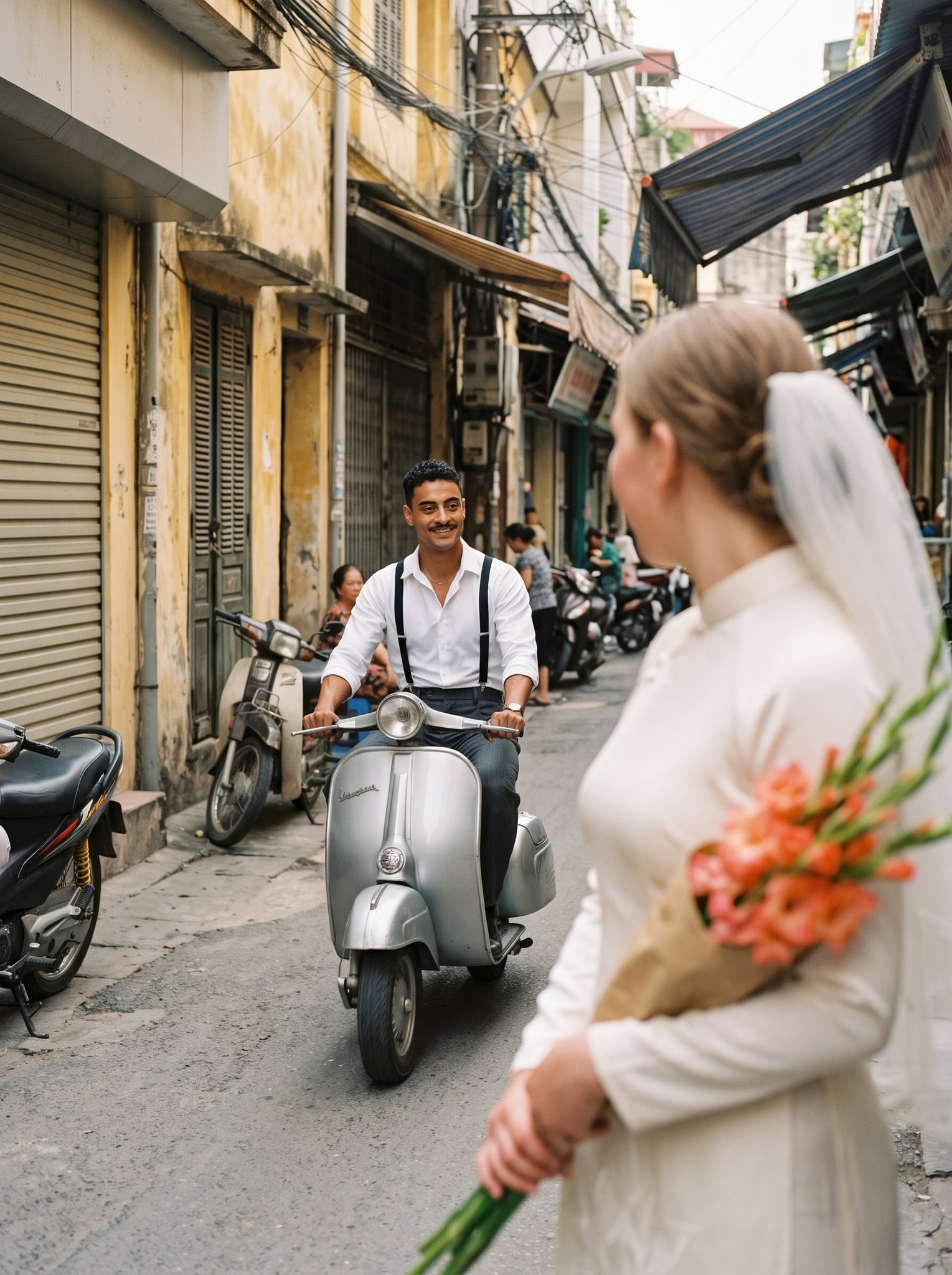
Where exactly do non-models pose without looking stiff?
Forget "turn to camera and smile." Instead, give yourself a task: walk slowly toward the camera or photographer, looking at the architecture around you, not the lens. Lean against a doorframe and adjust your áo dài collar or hem—that micro-action looks intentional, not posed. Sit on a low step, cross your legs, and gaze sideways at street life. Point to a detail (a shutter, a lantern) and ask your photographer, "How does this look?" That genuine moment beats a forced smile. Hold your áo dài drape naturally—let it fold in your hands as though you're about to step, not frozen mid-gesture. Walk through a narrow lane with the light behind you; silhouettes of the dress shape are powerful. Pause at a street corner as if you're deciding which way to turn. If standing still, put your weight on one leg, let the other relax, tilt your shoulders slightly—asymmetry reads natural. Practice these moves before the shoot so your mind is free during it. Most of what feels "posed" in your head looks genuine on camera.
How do crowds and rules affect your shoot timeline?
The Old Quarter is always busy, but intensity swings wildly. Weekday mornings (Monday–Friday, 07:00–09:00) are quietest: locals heading to work, few tourists. Weekends and holidays swell 09:00–12:00 with tour groups, street vendors, and school kids; late afternoon (17:00–19:00) brings evening shoppers. Rain clears crowds instantly but makes footing treacherous and creates puddles—ideal for reflections, risky for twisting an ankle in heels. At Phúc Tạn Temple and other active shrines, ask permission before shooting; no flash, no posed photos inside prayer halls. Streets near the central market hum with vendors—fast-moving but chaotic; side alleys near Hoan Kiem Lake's north edge are calmer. Plan your session for a weekday early morning if you want solitude; accept crowds as texture if you're shooting weekend. Timing a 90-minute session around light and crowds means starting at 07:00 (quiet, cool, soft light) or 17:00 (warm, fewer tour buses, manageable foot traffic). Our Old Quarter photo guide maps quieter pockets and peak hours in detail.
What outfit, footwear, and weather checks matter most?
Your áo dài is the hero; we provide rental, so wear it loosely and trust the fabric to move. Underneath, wear comfortable, breathable slip shorts or pants (the áo dài sits modestly over them). Shoes: skip heels on cobblestone—they sink, wobble, and exhaust your feet. Soft leather flats, embroidered slip-ons, or ballet-style shoes grip better and let you walk naturally. Bring a crossbody bag (small, neutral color) if you need ID and phone; bulky bags break the frame. Check the 7-day forecast the week before; if rain is 80%+, reschedule or embrace puddles. Humidity September–November peaks 70–90%—your makeup will set faster in cool morning air. Wear sunscreen before makeup (we apply SPF primer too). If shooting maternity or with a partner, coordinate outfits: pastels and neutrals timeless, clashing prints distract. Bring a light scarf or shawl; early mornings are 18–22°C, and shade in alleys is cooler. A water bottle (1L minimum) keeps you hydrated between frames. Real talk: blisters, sweat stains, and tangled fabric happen—we have touch-up supplies, but prevention beats fixes on shoot day.
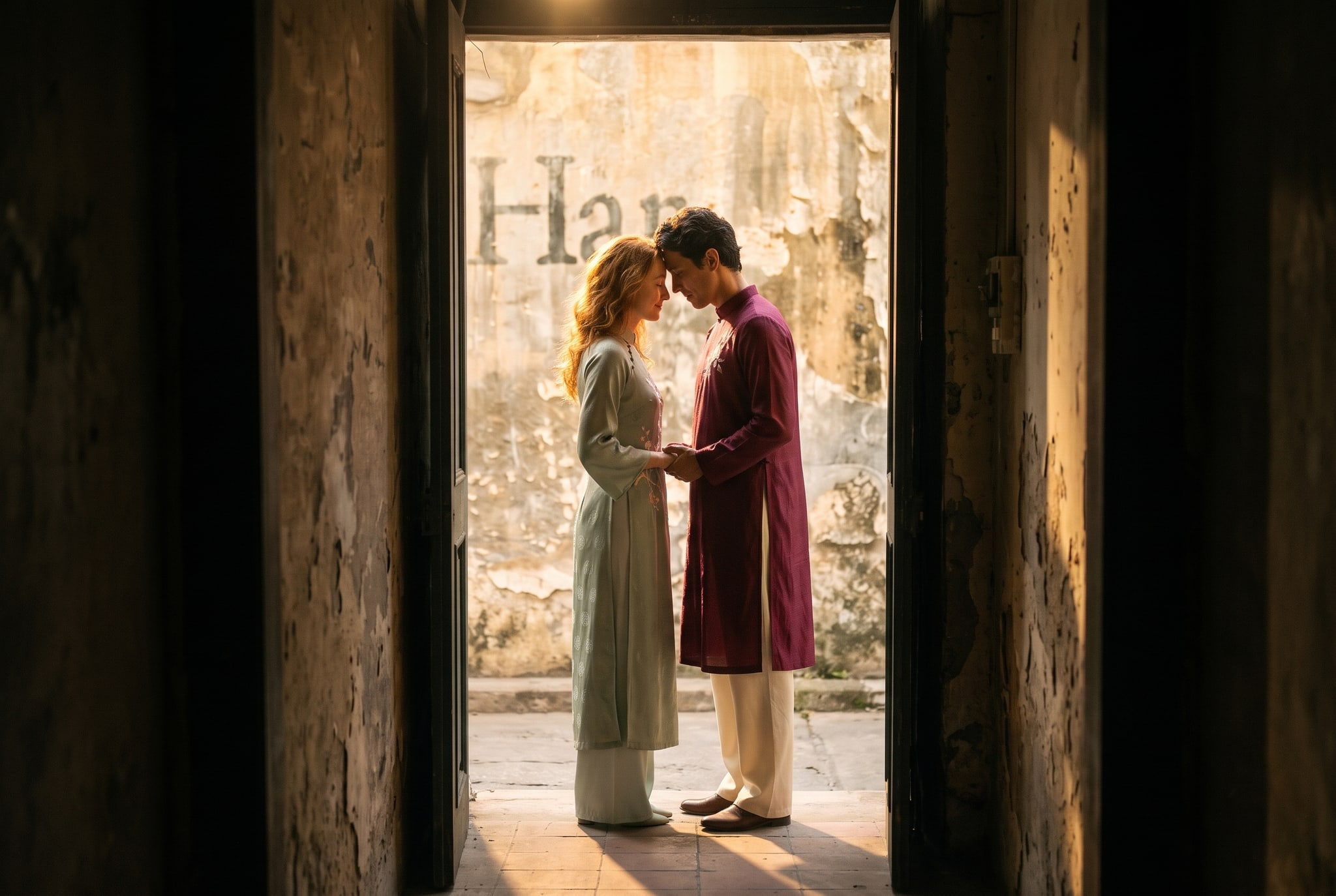
What's the honest before-you-book checklist?
Booking & Timing
- Confirm shoot date at least 10 days ahead (áo dài rental and makeup require lead time).
- Choose a 2-hour morning or 90-minute late-afternoon slot; longer shoots in midday heat exhaust everyone.
- Specify your age, height, and preferred áo dài style (color, embroidery); we fit rentals on arrival.
Weather & Plan B
- Check Hanoi's forecast 3 days before; rain is normal, not cancellation.
- If rain is heavy, we pivot to covered lanes, doorways, and reflections; light drizzle is photographically stunning.
- Reschedule only if typhoon warnings or visibility <50 meters.
Physical Readiness
- Cobblestones are uneven; wear tested, broken-in flats. Arrive hydrated and fed.
- Tell us if you have joint issues, pregnancy, or fatigue; we adjust walk routes and rest spots.
Logistics
- Meet at a central Old Quarter landmark (we coordinate on WhatsApp). Bring ID for temple visits.
- Shoot duration includes walking, framing, and 3–5 outfit changes; plan 2.5–3 hours total.
Realism
- Weather, crowds, and light are beyond control; we work with them, not against them.
- Non-models often feel awkward in the first 20 minutes—that nerves fade as you move and stop thinking about the camera.
- "Instagram-perfect" shots take 5–8 frames per pose; we deliver 50–80 edited images, not every frame.
How does an Old Quarter session fit into a broader Hanoi photoshoot?
Many visitors combine the Old Quarter with Hoan Kiem Lake or Train Street in a full day. The Old Quarter is best for intimate, textured frames; Hoan Kiem Lake adds open water and temples; Train Street is dramatic but short (30–45 minutes). Back-to-back shoots in one day require 3+ hours and careful timing—morning Old Quarter (07:00–09:00), late lunch, Train Street (14:00–15:00), Hoan Kiem at sunset (17:00–18:00). Exhaustion and makeup fade are real drawbacks; we recommend splitting into two days or choosing one focus area. Couple photoshoots, pre-wedding, and maternity sessions often start in the Old Quarter and expand outward. For a tighter, one-area approach, 2 hours in the Old Quarter yields 50–80 gallery images—plenty for albums and Instagram. Link the Old Quarter with makeup and styling (booked in-house the morning of) to reduce stress. Know your pace: if you're an introvert or tire quickly, the Old Quarter's foot traffic is worth it for solitude morning hours; if you love energy, weekend afternoons are alive.
| Timing | Light Quality | Crowds | Best For | Challenge |
|---|---|---|---|---|
| 06:30–08:30 (Weekday morning) | Soft, warm, low angle | Minimal; locals only | Portraits, intimate frames | Cool temp; need hot coffee first |
| 09:00–11:00 (Morning, any day) | Bright, even, high angle | Moderate tour groups | Dynamic movement, architecture | Shadows under eyes if squinting |
| 11:00–15:00 (Midday) | Hard, high, contrasty | Peak tourists + heat | Avoid entirely | Unforgiving shadows, sweat, glare |
| 16:30–18:00 (Late afternoon) | Golden, warm, low angle | Moderate; shoppers, school kids | Glow on skin, rich tones | Short window; cloud kill-shot risk |
| 18:00–19:00 (Early evening) | Fading; street lights on | High; commuters, diners | Moody, lantern-lit vibes | Dim for hand-hold; need tripod or ISO push |
Why does seasonal timing shift light and comfort?
Dry Season (October–March) October–November: coolest (18–25°C), clearest skies, golden light lasts longer. Best choice. December–January: coldest, lowest humidity, morning fog adds mystery. February–March: warming, still clear, occasional drizzle.
Hot & Humid (April–September) April–May: hottest, rising humidity; makeup melts, sweat visible. June–August: peak monsoon; frequent rain, hazy light, high risk of puddles and slippery stone. September: transition month; cool mornings, afternoon storms. Late afternoon shoots stretch to 19:00 because sun sets later.
Decision: Book October–November or February–March if scheduling flexibility exists. Early mornings (06:30–08:00) are physically easier in hot months. Late afternoon is tolerable April–May but brutal June–August.
Do you offer group ao dai shoots in the Old Quarter?
Yes. Family photoshoots and small groups (up to 5 people) work in the Old Quarter—wider lanes accommodate more bodies, and family dynamics add storytelling depth. Children need shorter sessions (60–90 minutes); they tire fast and crowds overwhelm them. Coordination is trickier: everyone's makeup, outfit fit, and energy must sync. We schedule family shoots early morning (before crowds) or late afternoon (soft light, fewer kids on streets). Large groups (8+) compete for frame space and exhaust the crew—we recommend splitting or choosing a wider venue like Hoan Kiem Lake instead. Áo dài rental expands to family sizes, so book early. For multi-generational shoots (grandparents + parents + children), we brief on pacing and rest stops because climbing Old Quarter steps in traditional dress is genuinely tiring. A family session runs 2–2.5 hours and yields 60–100 images.
FAQ
What should I wear under my áo dài during an Old Quarter shoot?
Wear breathable slip shorts or thin pants (thigh-length) in a neutral color—black, white, or beige. Avoid thick layers; the áo dài drapes over them and sits modestly. We rent fitted áo dài, so undergarments stay hidden but must be comfortable for walking and sitting.
Can I wear heels in the Old Quarter?
We strongly advise against heels. Cobblestone is uneven, slippery when wet, and heels sink between gaps. Soft leather flats, embroidered slip-ons, or ballet shoes grip better and let you walk naturally for 2+ hours without blisters or foot pain.
Is it safe to shoot during rain?
Yes. Light rain creates beautiful reflections and clears crowds. Heavy downpours (visibility <50 meters or thunder) are unsafe—we reschedule. Wear water-resistant makeup; we apply SPF primer and setting spray. Bring a small towel for dampness.
Do I need permission to photograph in temples within the Old Quarter?
Some temples allow exterior photos freely; active prayer halls restrict flash and posed shots. Phúc Tạn Temple permits photos outside only. Always ask locals or our crew before framing a temple facade. Dress respectfully: shoulders and knees covered (your áo dài already does this).
How many outfit changes happen in a typical Old Quarter session?
Most shoots include 2–3 áo dài rentals (e.g., red, blue, pastel). Each change takes 10–15 minutes and resets makeup. A 2-hour shoot accommodates 2 changes comfortably; 90 minutes fits 1 change plus bonus neutral-backdrop shots. Plan for natural pauses to hydrate and cool down.
What's the difference between an Old Quarter session and a Train Street or Hoan Kiem Lake shoot?
The Old Quarter excels at texture, narrow frames, and intimate storytelling (doorways, lanterns, reflections). Train Street is high-drama but brief (30–45 minutes). Hoan Kiem Lake offers open, serene backdrops and temples. Combine them in one day for variety or focus on one area for depth.
Can I book a custom itinerary combining the Old Quarter with other Hanoi spots?
Absolutely. We design multi-location shoots based on light timing and your energy level. Common pairings: Old Quarter morning + Hoan Kiem Lake sunset, or Train Street midday + Old Quarter late afternoon. Expect 3–4 hours total and 80–120 final images. --- Plan your Hanoi shoot
Check dates
Send your dates, how many people and the style you like. We reply on WhatsApp in English with spots, timing and a quote.
FAQ
What should I wear under my áo dài during an Old Quarter shoot?
Wear breathable slip shorts or thin pants (thigh-length) in a neutral color—black, white, or beige. Avoid thick layers; the áo dài drapes over them and sits modestly. We rent fitted áo dài, so undergarments stay hidden but must be comfortable for walking and sitting.
Can I wear heels in the Old Quarter?
We strongly advise against heels. Cobblestone is uneven, slippery when wet, and heels sink between gaps. Soft leather flats, embroidered slip-ons, or ballet shoes grip better and let you walk naturally for 2+ hours without blisters or foot pain.
Is it safe to shoot during rain?
Yes. Light rain creates beautiful reflections and clears crowds. Heavy downpours (visibility <50 meters or thunder) are unsafe—we reschedule. Wear water-resistant makeup; we apply SPF primer and setting spray. Bring a small towel for dampness.
Do I need permission to photograph in temples within the Old Quarter?
Some temples allow exterior photos freely; active prayer halls restrict flash and posed shots. Phúc Tạn Temple permits photos outside only. Always ask locals or our crew before framing a temple facade. Dress respectfully: shoulders and knees covered (your áo dài already does this).
How many outfit changes happen in a typical Old Quarter session?
Most shoots include 2–3 áo dài rentals (e.g., red, blue, pastel). Each change takes 10–15 minutes and resets makeup. A 2-hour shoot accommodates 2 changes comfortably; 90 minutes fits 1 change plus bonus neutral-backdrop shots. Plan for natural pauses to hydrate and cool down.
What's the difference between an Old Quarter session and a Train Street or Hoan Kiem Lake shoot?
The Old Quarter excels at texture, narrow frames, and intimate storytelling (doorways, lanterns, reflections). Train Street is high-drama but brief (30–45 minutes). Hoan Kiem Lake offers open, serene backdrops and temples. Combine them in one day for variety or focus on one area for depth.
Can I book a custom itinerary combining the Old Quarter with other Hanoi spots?
Absolutely. We design multi-location shoots based on light timing and your energy level. Common pairings: Old Quarter morning + Hoan Kiem Lake sunset, or Train Street midday + Old Quarter late afternoon. Expect 3–4 hours total and 80–120 final images. --- [✨ Plan your Hanoi shoot](/contact)
More like this
Ao dai photoshoot in Hanoi
Traditional Dress Photoshoot at Hanoi Old Quarter
A traditional dress photoshoot in Hanoi's Old Quarter captures you in an áo dài against narrow streets, shuttered storefronts and century-old lantern light. Cáo Studio handles styling, hair, makeup and rental in-house—no hidden bookings needed.
Ao dai photoshoot in Hanoi
Ao Dai Photo Shoot Hanoi in the Rain: Light, Spots & Timing
Rain transforms Hanoi's ao dai shoots: deeper jewel tones pop, reflections double your frame, and crowds thin at temples. We time shoots between downpours and use covered colonnades and indoor studios as fallback spots.
Ao dai photoshoot in Hanoi
Ao Dai Photoshoot West Lake Hanoi: Light, Crowds & Posing Tips
West Lake draws ao dai photographers for its reflective water and tree-lined paths, but timing, crowds and light direction make or break the session. We show you exactly how to work the location in 2026.