
Home › Blog › Ao dai photoshoot in Hanoi
Ao Dai Photoshoot Hanoi in Winter: Light, Crowds & Timing Guide
By the Hanoi Photoshoot team · 2026-11-06
Winter ao dai shoots in Hanoi thrive because cool air keeps you comfortable in heavy silk, north-facing temples and lakes get soft, diffused light from 7–9 a.m. and 4–5:30 p.m., and weekday visits mean fewer tourists blocking frames. We book 2–3 hour sessions on weekdays for Hoan Kiem Lake, Old Quarter and temple courtyards; you'll wear your chosen ao dai (rented through us with in-house styling) plus optional undershirt for warmth. Expect 150–250 edited digital files. Winter light peaks December–January; late November and early February are shoulder season with occasional rain. Book 3–4 weeks ahead to secure preferred dates and makeup/hair slots. Avoid midday (11 a.m.–2 p.m.) when harsh shadows flatten texture and reds lose saturation. Hanoi Photoshoot by Cáo Studio coordinates everything in English on WhatsApp—weather backup plans included. Check dates on WhatsApp
Why does winter light work best for ao dai in Hanoi?
Winter sun in Hanoi (November–February) sits lower on the horizon, scattering through moisture and urban haze into soft, even illumination that renders the deep jewel tones of ao dai—crimsons, teals, emeralds—without blown-out highlights or crushing shadows. The cool, dry air adds clarity without the summer haze that dulls color. North-facing temples and lake edges catch reflected light that flatters skin and highlights embroidery detail. Midday brightness during winter (11 a.m.–2 p.m.) remains gentler than summer's overhead glare, but still creates unflattering shadows under eyes and cheekbones; early morning (7–9 a.m.) and late afternoon (4–5:30 p.m.) remain the safest windows. Overcast mornings are your secret: diffusion without loss of color depth, ideal for close-ups of ao dai patterns and face. Winter light is non-negotiable for showcasing the garment's craftsmanship.
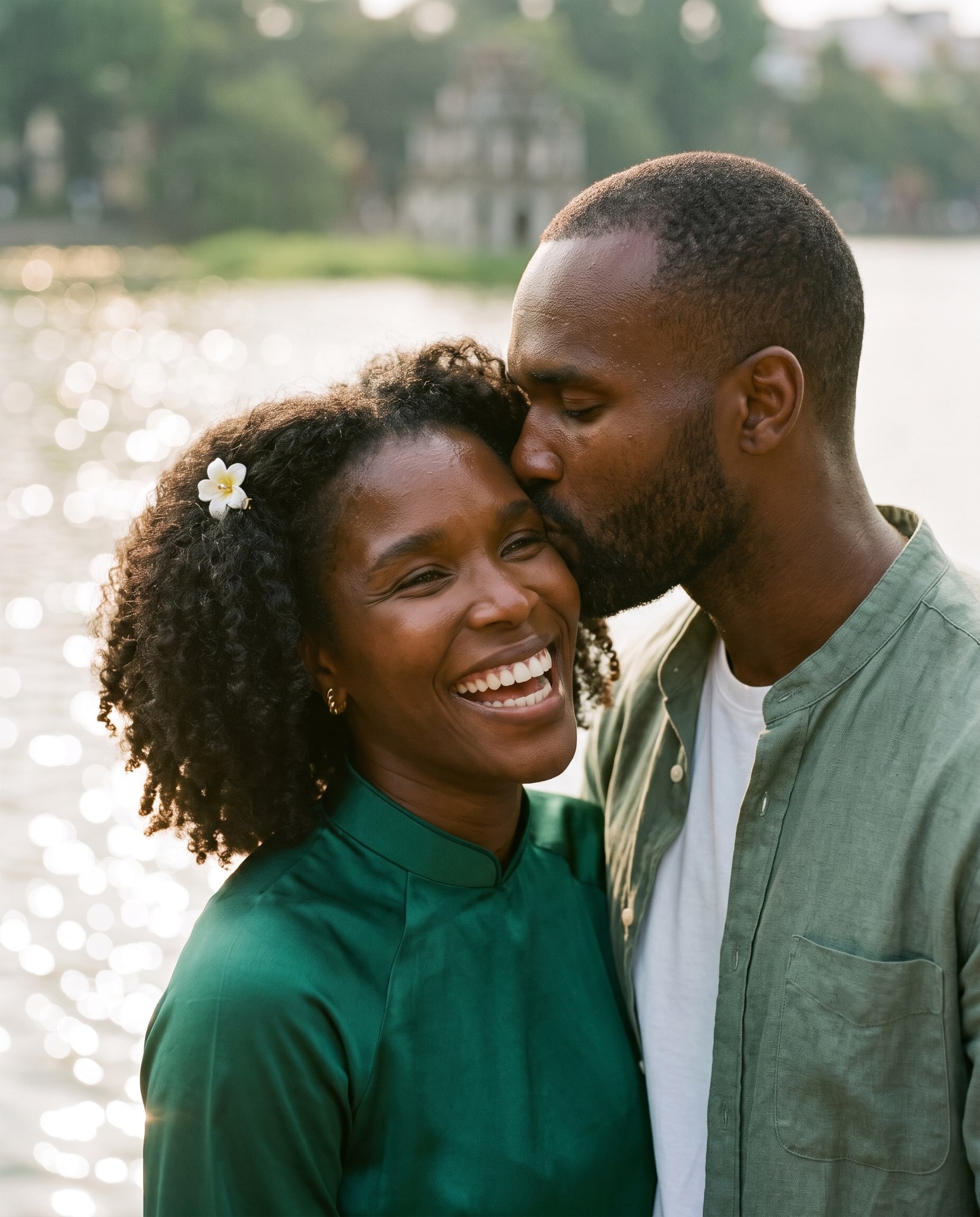
What crowds and rules should you expect at winter temples and Lake Hoan Kiem?
Winter weekday mornings at Hoan Kiem Lake and central temples (Tran Quoc, Ngoc Son) see foot traffic spike 9 a.m.–noon and 3–5 p.m., but Monday–Thursday before 9 a.m. usually keeps you under five other visitors per spot. Hoan Kiem Lake photo guide covers exact entry points and security protocols; temple visits require shoes off (we advise slip-ons), silent prayer areas are off-limits to photography, and many temples request modest dress—ao dai itself is respectful and appropriate. Weekends pack 50–100+ people even in winter; avoid. Train Street and Old Quarter alleys remain quieter weekdays, though we always shoot early to catch arriving traders and soft light before foot traffic peaks. Winter holidays (late December–early January) mean expat visitors crowd "Instagram-famous" spots; book November or late January for fewer delays and cleaner backgrounds. We time sessions around local temple schedules to avoid prayer ceremonies.
How do you stay comfortable in ao dai during cool winter weather?
Ao dai worn alone in 10–15°C (50–59°F) morning air feels exposed; we advise a lightweight long-sleeve undershirt (white or matching the ao dai color) beneath the tunic—it's invisible in photos but prevents shivering that blurs motion and tenses your face. Wear thin thermal leggings under the silk trousers; winter mornings in Old Quarter alleys and by the lake dip below 12°C and wind off the Red River bites. A shawl (provided by us or brought by you) drapes artfully over one shoulder for 10–15 minutes of posing, then removes cleanly for full-body shots. Hair and makeup must be long-wearing: we apply extra setting powder and waterproof products because humidity near water and morning mist still lingers. Avoid heavy coats that hide the ao dai silhouette; if you need outerwear between setups, a tailored blazer photographs better than a puffer jacket. Comfort = relaxed posing, better expressions—non-negotiable for timeless images.
Which Hanoi winter spots give you the most ao dai-flattering light and backgrounds?
Spot Comparison for Winter Ao Dai Sessions
| Spot | Light quality (winter) | Crowds (weekday 8 a.m.) | Best for | Challenges |
|---|---|---|---|---|
| Hoan Kiem Lake eastern shore | Soft gold (7–9 a.m.); reflective water | <10 people | Full-body silhouettes, water reflections | Wind off lake, reflection glare if sun breaks cloud |
| Tran Quoc Temple courtyard | Dappled, even | 2–5 worshippers | Detail shots of embroidery, cultural framing | No entry before 8 a.m., shoes off, prayer silence |
| Old Quarter Hang Buom alley | Directional north light, narrow walls | 5–15 early traders | Movement, fabric flow, street narrative | Tight framing, limited backing-away distance |
| Ngoc Son Temple island | Soft reflection from water, enclosed | <5 visitors early | Intimate portraits, architectural frames | Narrow stone bridge, uneven ground |
| Red River dike path (near Long Bien) | Golden side light (dawn), open sky | <20 people | Flowing fabric, silhouettes, landscape scale | Long travel time (30 min), no shelter if rain |
Old Quarter photo guide details alley permissions and best entry points. Winter's low sun angle means temples' eastern courtyards glow 7:30–8:30 a.m., then backlight shifts by 9:30 a.m.; timing within 30 minutes changes everything. Lake reflections work only in calm, windless dawn conditions; windy winter mornings flatten water and lose the mirror effect. We scout every location 3 days before your shoot to confirm light angle, crowds and any ongoing temple events that block access.
What should you wear and style for an unforgettable winter ao dai session?
Your ao dai is the centerpiece, so styling amplifies, not competes. In-house makeup and hair (included in our makeup, hair & ao dai rental service) use a winter-adapted approach: foundation emphasizes cheekbones and brows (winter's soft light flattens features slightly), warm-toned blush mimics the glow of exertion on cold mornings, and lips in deep wine or coral contrast winter's muted sky. Hair off the shoulders lets the ao dai neckline and embroidery breathe; buns with soft wisps or half-up styles photo well in wind and don't obscure the tunic's cut. Avoid heavy jewelry—thin gold earrings and no necklace let fabric patterns dominate. If you bring a partner (for couple photoshoot framing), they wear a tailored ao dai or áo gile (vest) in complementary tone—reds pair with navy, greens with cream. Shoes: indoor temple sessions require socks; lakeside shots favor flat leather sandals or embroidered slippers that slip off for barefoot silhouettes. Bring a change of undershirt so sweat or splash doesn't show; we carry backup styling supplies. Winter's cool air means no makeup melting by hour two, a real advantage over summer sessions.
How do you avoid common winter ao dai shoot mistakes?
Mistake 1: booking midday "for bright light." Winter noon light still creates upward shadows and desaturates reds; you lose the richness you came for. Stick to 7–9 a.m. or 4–5:30 p.m. windows. Mistake 2: wearing only the ao dai. Shivering tenses your jaw, raises shoulders and makes you hunch; invisible thermal layers under prevent this entirely. Mistake 3: choosing busy weekend dates. Sunday lakeside crowds peak 9–11 a.m.; a Monday morning shoot at the same spot is 80% emptier. Mistake 4: not confirming temple access the morning-of. Some temples close for private ceremonies; we confirm 24 hours prior and have backup spot lists. Mistake 5: ignoring wind direction. North winter winds (December–January) come off mountains and can invert your ao dai or whip hair; we time shots in sheltered alcoves or position you to angle fabric artfully into wind. Mistake 6: overpacking outfits. Three ao dai changes is the realistic max in a 2-hour session with setup, posing and travel; more means rushed transitions and lower final image count. Plan solo portrait or family photoshoot sessions to expand coverage time if you need multiple designs.
What to Check Before You Book a Winter Ao Dai Session
- Weather backup plan: We reschedule free if December–February rain persists 24 hours before; confirm our full policy on WhatsApp.
- Ao dai fit: If renting from us, arrive 30 minutes early for alteration checks; borrow samples online first if buying elsewhere.
- Temple schedule: Confirm your target temple's opening hours and prayer times; we verify 3 days ahead.
- Commute time: Old Quarter and lake shoots require 20–30 minutes from central Hanoi hotels; book early morning to avoid traffic.
- Language: We coordinate entirely in English on WhatsApp; no translator needed.
- File delivery: Expect 150–250 edited JPEGs and RAW backups within 7 days; ask about album printing options.
FAQ
Is winter really the best season for ao dai photography in Hanoi?
Winter (November–February) combines flattering soft light, comfortable temperatures in silk, and thinner crowds. Late November and early February risk occasional rain; December–January offer near-ideal conditions. Summer's heat and haze wash out colors; winter renders the ao dai's full richness. Ask us for winter availability on WhatsApp.
What time of day delivers the best light for ao dai detail and color?
7–9 a.m. and 4–5:30 p.m. both work. Morning gives cooler tone (flatters peachy/pink ao dai); late afternoon warms reds and golds. Overcast mornings at any hour provide even, shadow-free light for embroidery close-ups. Midday (11 a.m.–2 p.m.) is our last choice, even in winter.
Do I need to wear thermal layers under the ao dai?
Yes, if air temperature is below 14°C (57°F). A lightweight long-sleeve undershirt prevents shivering, tension and tense facial expressions in photos. We advise matching white or color-coordinated thin thermals under all winter ao dai shoots. Shawls cover the layers between setups and remove for final shots.
Can we shoot at temples on weekdays without huge crowds?
Absolutely. Weekday mornings before 9 a.m. at temples like Tran Quoc and Ngoc Son typically see fewer than five visitors. We confirm access 24 hours prior, brief you on prayer area boundaries and shoe protocols, and time sessions around ceremonies. Temple fees apply; ask us for current amounts.
How many ao dai designs can we fit into one winter session?
Three outfit changes are realistic in a 2-hour slot with setup, posing, travel and makeup touch-ups. More designs mean rushed transitions and fewer shots per outfit. Book multiple couple photoshoot or family photoshoot hours if you need five or more designs, or split into separate sessions weeks apart.
What happens if weather cancels our winter shoot date?
We reschedule free within the same season if rain or fog persists 24 hours before your session. Ask us on WhatsApp for the full weather backup policy—it covers safety, image quality, and rescheduling flexibility without penalties.
Check dates
Send your dates, how many people and the style you like. We reply on WhatsApp in English with spots, timing and a quote.
FAQ
Is winter really the best season for ao dai photography in Hanoi?
Winter (November–February) combines flattering soft light, comfortable temperatures in silk, and thinner crowds. Late November and early February risk occasional rain; December–January offer near-ideal conditions. Summer's heat and haze wash out colors; winter renders the ao dai's full richness. Ask us for winter availability on WhatsApp.
What time of day delivers the best light for ao dai detail and color?
7–9 a.m. and 4–5:30 p.m. both work. Morning gives cooler tone (flatters peachy/pink ao dai); late afternoon warms reds and golds. Overcast mornings at any hour provide even, shadow-free light for embroidery close-ups. Midday (11 a.m.–2 p.m.) is our last choice, even in winter.
Do I need to wear thermal layers under the ao dai?
Yes, if air temperature is below 14°C (57°F). A lightweight long-sleeve undershirt prevents shivering, tension and tense facial expressions in photos. We advise matching white or color-coordinated thin thermals under all winter ao dai shoots. Shawls cover the layers between setups and remove for final shots.
Can we shoot at temples on weekdays without huge crowds?
Absolutely. Weekday mornings before 9 a.m. at temples like Tran Quoc and Ngoc Son typically see fewer than five visitors. We confirm access 24 hours prior, brief you on prayer area boundaries and shoe protocols, and time sessions around ceremonies. Temple fees apply; ask us for current amounts.
How many ao dai designs can we fit into one winter session?
Three outfit changes are realistic in a 2-hour slot with setup, posing, travel and makeup touch-ups. More designs mean rushed transitions and fewer shots per outfit. Book multiple [couple photoshoot](/couple-photoshoot) or [family photoshoot](/family-photoshoot) hours if you need five or more designs, or split into separate sessions weeks apart.
What happens if weather cancels our winter shoot date?
We reschedule free within the same season if rain or fog persists 24 hours before your session. Ask us on WhatsApp for the full weather backup policy—it covers safety, image quality, and rescheduling flexibility without penalties.
More like this
Ao dai photoshoot in Hanoi
Ao Dai Photoshoot at Ho Chi Minh Mausoleum: Best Time & Tips
Ho Chi Minh Mausoleum area offers dramatic colonial architecture and red flags perfect for ao dai portraits, but timing and permit rules are critical.
Ao dai photoshoot in Hanoi
Ao Dai Photoshoot at Lotus Pond Sunrise in Hanoi
Lotus ponds offer Hanoi's most serene ao dai backdrop at dawn, but timing and location scouting are critical for empty frames and soft light. We share exact hours, seasonal water levels and how to avoid tourist crowds.
Ao dai photoshoot in Hanoi
Ao Dai Photoshoot Duong Lam Ancient Village: Best Time & Hanoi Guide
Duong Lam Ancient Village—45 minutes northwest of central Hanoi—offers weathered brick lanes, lotus ponds and colonial-era storefronts perfect for ao dai portraits. Best light and crowd conditions occur October–November and February–March mornings.