
Home › Blog › Ao dai photoshoot in Hanoi
Ao Dai Photoshoot at Long Biên Bridge: Light, Crowds & Pose Tips
By the Hanoi Photoshoot team · 2026-11-06
Long Biên Bridge works best for ao dai shoots during early morning (6–7 a.m.) or late afternoon (4–5 p.m.) when soft light rakes the metal trusses and minimizes harsh shadows on fabric and face. The bridge is public; no permit required, but foot traffic peaks 7–9 a.m. and 4–7 p.m., and traffic police occasionally ask photographers to move if they obstruct walkways. We recommend calm weekday mornings in October–November or March–April when humidity is low and the river reflects cleanly. A single outfit change takes 45 minutes; plan 2–3 hours on-site. Bring a lightweight sarong or shawl to drape over shoulders during traffic lulls. Hanoi Photoshoot by Cáo Studio arranges hair, makeup and ao dai rental on-site, so you arrive camera-ready and worry-free about outfit transitions between takes. Check dates on WhatsApp
Why does Long Biên Bridge demand different timing than temple shoots?
Temples close at noon and require head scarves and shoulder coverage; Long Biên is an open bridge with no dress code, but heavy vehicle and foot traffic create safety and composition challenges noon–4 p.m. The bridge is a major commuter route for motorbikes, buses and cycles, so morning and evening windows offer calmer backdrops and clearer sightlines. The iron structure itself doesn't age or change, so your choice of light—not season-specific ceremonies—determines image quality. In 2026, increasing tourist foot traffic mid-morning means fewer clear foreground shots unless you shoot very early or accept passersby as part of the frame. We find 6–7 a.m. delivers the quietest bridge and the most flattering golden-hour warmth on ao dai fabric.
What poses work for non-models on the bridge's metal walkway?
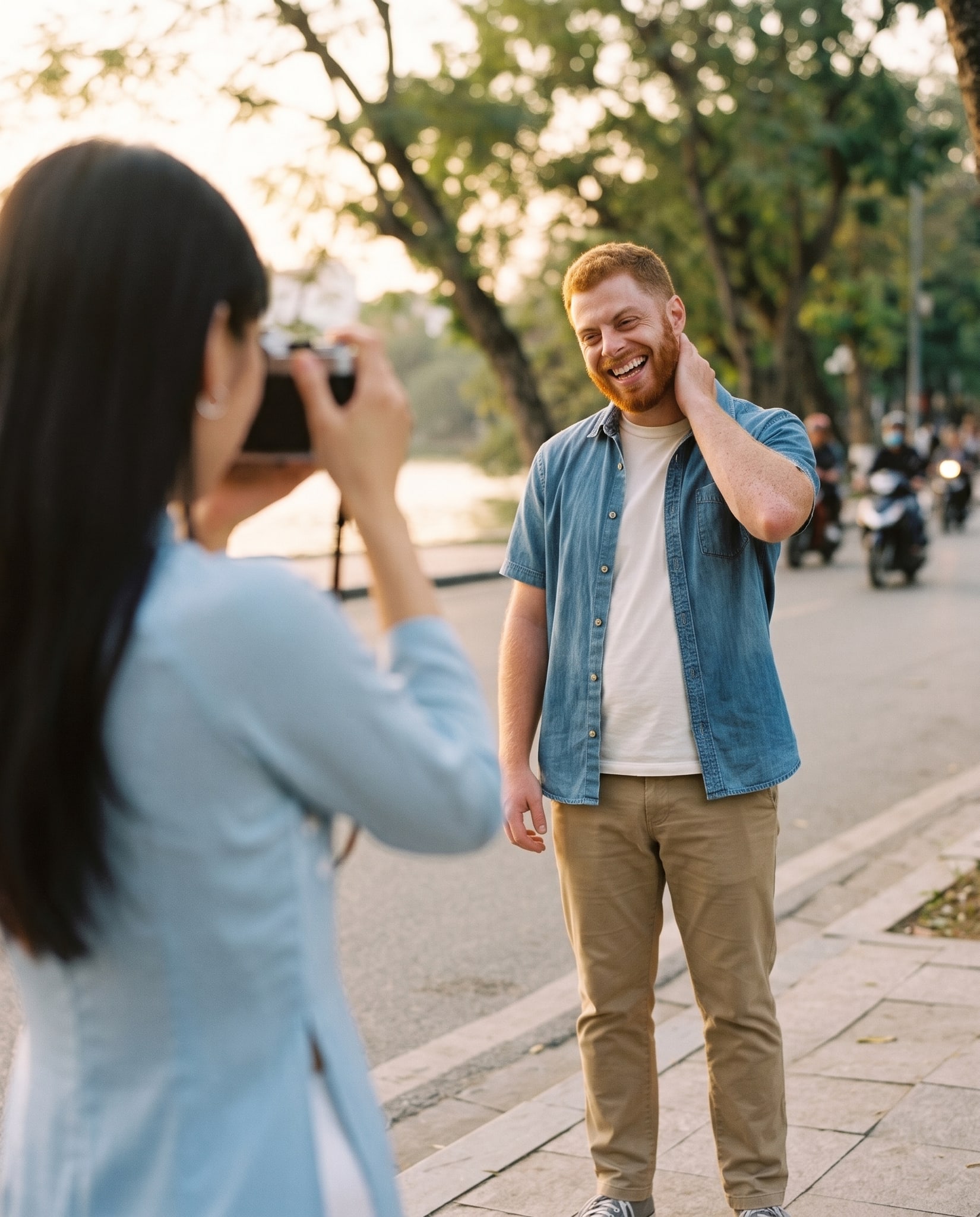
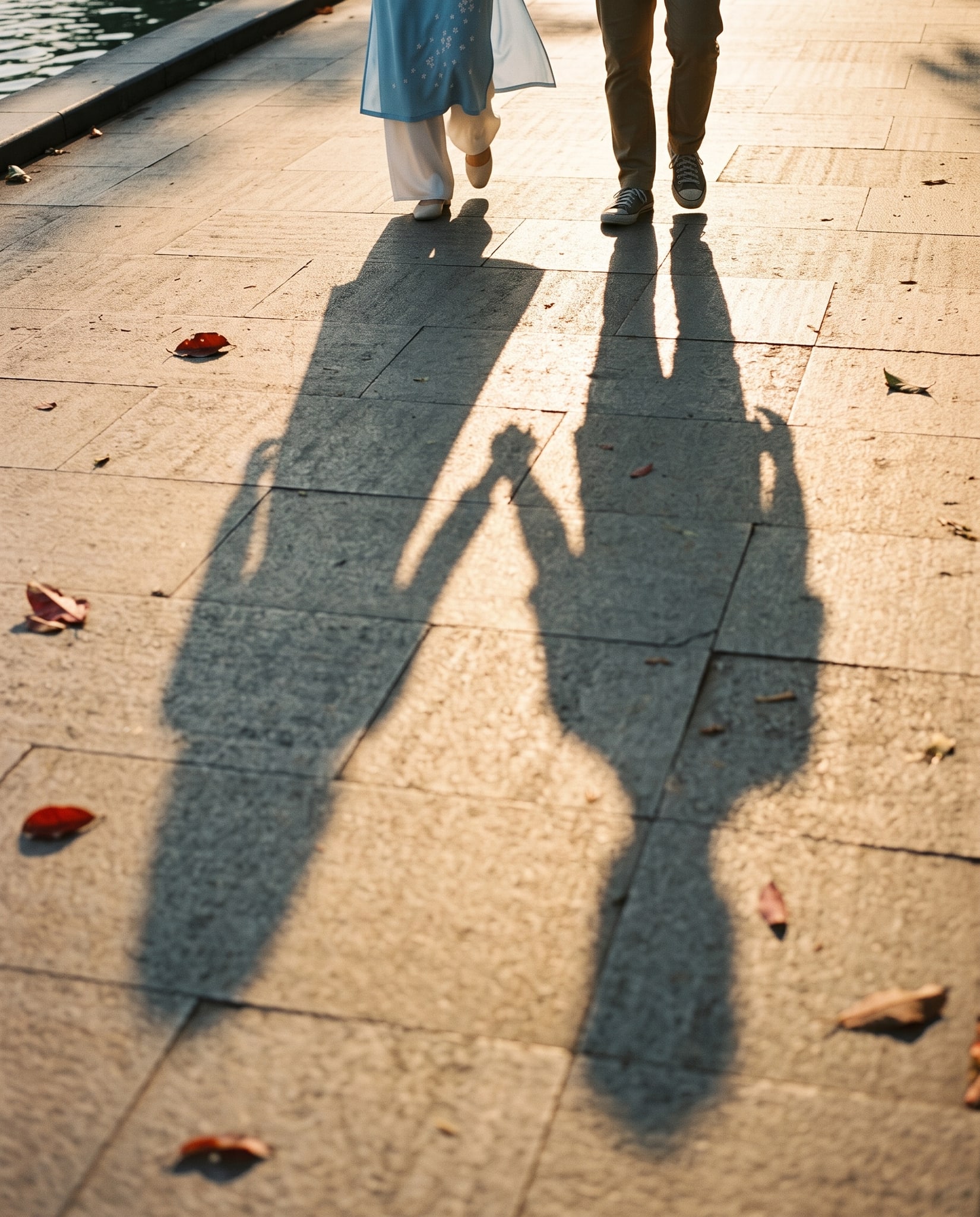
Non-models often feel awkward on exposed grid walkways where the river shows 40–50 metres below; anchor poses around the bridge's vertical and diagonal lines rather than standing in open space. Walk slowly along the walkway, holding the railing with one hand and letting the ao dai trail; pause at truss intersections where geometry frames you naturally. Turn sideways to the camera, look toward the river, and let light catch your profile and the fabric's pleats. Sit on the kerb (wear undergarments; the concrete is rough), arrange the skirt to pool, and gaze downriver. For couples, walk hand-in-hand through the metal lattice—the shadows create a moire pattern on your clothes that photographs as romantic texture. Avoid stiff, straight-on poses; the bridge's industrial geometry reads better when your body echoes its diagonals. Visit our couple photoshoot guide for choreography-specific tips.
How do seasons and humidity affect ao dai fabric on the bridge?
Dry-season air (October–February) keeps ao dai crisp; the fabric hangs true and wind creates dynamic movement without clinging. Rainy season (May–September) introduces 85–90% humidity; silk and cotton ao dai absorb moisture, sag slightly, and wrinkle faster between shots. Bridge wind—stronger over the water—can flatten fabric against your body in hot weather, erasing the silhouette that makes ao dai distinctive. We recommend dry season shoots whenever possible. If you must shoot June–August, plan for outfit changes every 45 minutes and bring a steamer or iron. March–April offers the sweet spot: humidity 60–70%, warm light, and consistent wind that lifts fabric without battering it. November–December is coldest (15–18°C at dawn); layers under the ao dai prevent shivering, which ruins posture and sharpness. Our ao dai rental includes seasonal-fit advice to match your shoot date.
What rules do traffic police enforce, and how do you avoid stoppages?
Traffic police patrol the bridge to clear obstacles during rush hours and prevent pedestrians from blocking lanes. If your photographer uses a tripod or you stand in the traffic lane for more than 2–3 minutes, police may ask you to move. We never set up on the roadway itself; we shoot from the pedestrian walkway on the eastern side, which is legally open to foot traffic and photography. If asked to relocate, we move immediately—it's not a legal grey zone, just a matter of staying aware. Weekday 6–7 a.m. sees almost no police presence; Friday–Sunday mornings attract more enforcement because tourists peak. Avoid 7–9 a.m. on weekdays (school and office commute) and 5–7 p.m. (return traffic); these windows draw both heavy foot traffic and police attention. Bring ID and stay calm; a polite explanation—"photoshoot, moving soon"—resolves most encounters in seconds.
How does ao dai fabric choice change composition under bridge shadows?
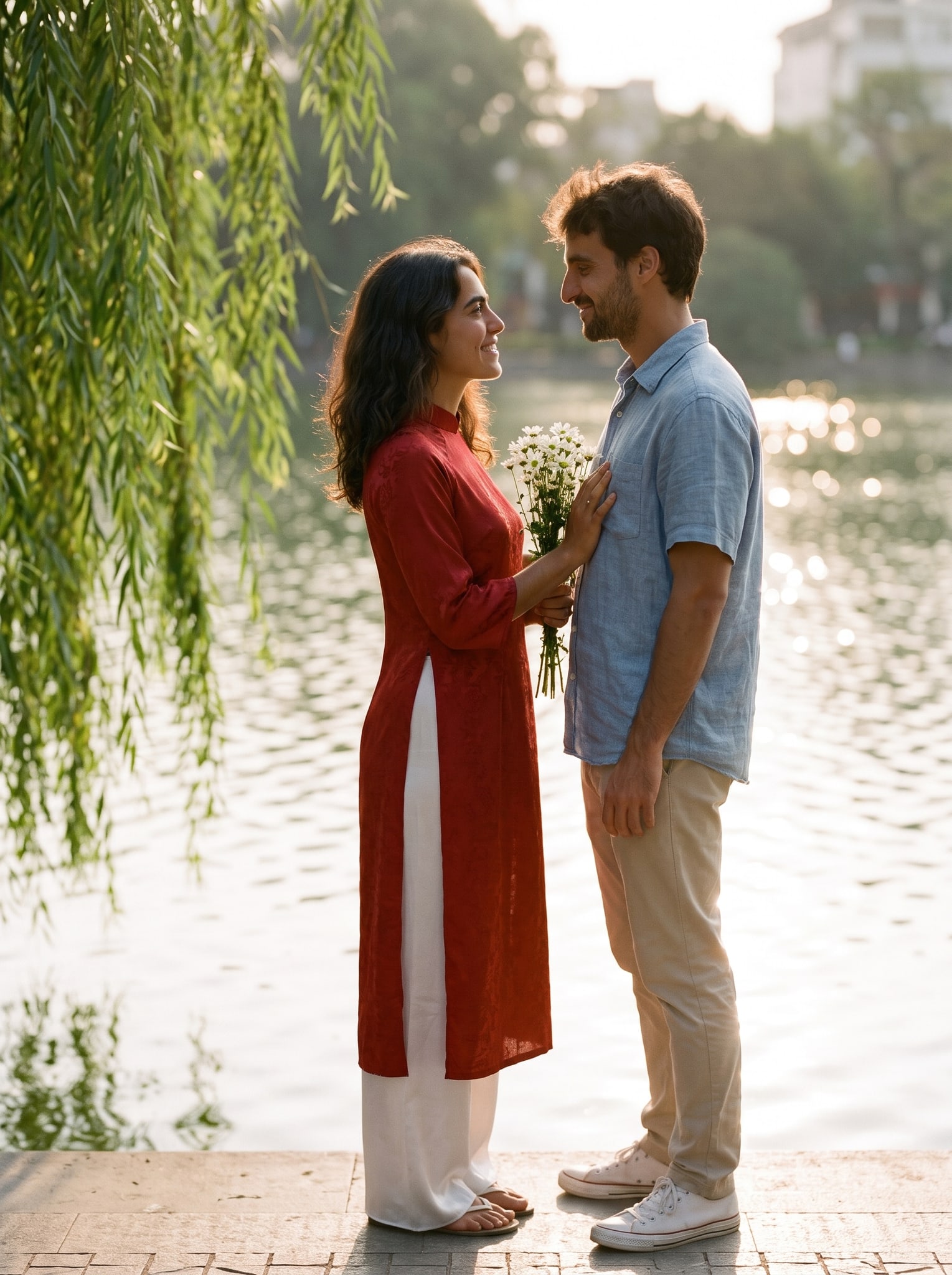
White and cream ao dai pick up the warmth of dawn light and reflect it onto your face, brightening shadows under the eyes and chin; jewel tones (navy, burgundy, emerald) absorb light and appear richer in overcast conditions or under bridge shadow. The bridge's steel lattice creates a constantly shifting shadow grid across your body; light fabrics show the pattern as flattering texture, while dark fabrics risk merging with shadow and losing depth. If you shoot mid-morning (not ideal, but sometimes necessary), choose a lighter ao dai to cut through the harsh overhead light. For sunset shoots (4–5 p.m., less common but possible), a jewel tone reads more romantic as warm light backlights the fabric edges. Our styling consultation covers ao dai color and fabric selection for your exact shoot date and time. We hold stock in lightweight silk and cotton blends that move naturally in bridge wind and photograph cleanly in soft or dappled light.
What should you bring, and what goes wrong most often?
Bring:
- Comfortable flat shoes (bridge surface is grated steel; heels catch and slip)
- A light pashmina or shawl (wind gusts can lift ao dai unexpectedly; a wrap adds warmth and drape options)
- A phone power bank (early shoots drain batteries; bring 20,000 mAh minimum)
- Water bottle and glucose tablets (6 a.m. shoots on empty stomach cause dizziness mid-frame)
- Touchup makeup and a small mirror
What goes wrong:
- Heels catching the steel grate and twisting ankles (2–3 incidents per 100 shooters)
- Wind tangling ao dai around legs during walking shots (managed by letting skirt flow loose, not pinching it)
- Harsh 9–11 a.m. sunlight washing out pale skin tones and ao dai highlights (solved by shooting before 8 a.m. or after 4 p.m.)
- Reflections from the river overwhelming the meter and underexposing faces (corrected by spot metering on skin or using fill flash)
- Passersby photobombing; on weekdays after 7:30 a.m., expect joggers, delivery cyclists, and occasional tour groups
Our team arrives 30 minutes early to scout light, test angles, and brief you on the exact walkway zones with the clearest backdrop and safest footing.
| Shoot scenario | Best time | Light character | Ao dai colour | Crowd risk | Estimated length |
|---|---|---|---|---|---|
| Solo traveller, romantic gallery | 6–7 a.m., Oct–Nov | Golden, warm, low angle | White, cream, pale pink | Very low | 90 min |
| Couple, playful energy | 6–7 a.m., Mar–Apr | Golden, even, side-raking | Jewel tones (navy, burgundy) | Very low | 120 min |
| Family trio, formal ao dai | 5 p.m., Feb | Warm, backlit, soft | Mixed (white & jewel) | Low | 90 min |
| Pre-wedding, multiple outfit changes | 6–7 a.m., dry season | Golden, repeatable, flattering | Reds, golds, whites | Very low | 180 min |
| Instagram reels, dynamic movement | 6–7 a.m., dry season | Golden, wind-aided fabric flow | Reds, pinks, golds | Very low | 120 min |
Before you book, check these details with us:
- Your comfort on heights: The bridge is 40+ metres above water; if vertigo affects you, consider temple or Old Quarter shoots instead.
- Exact shoot date and weather forecast: Typhoons or heavy rain cancel; we reschedule within 7 days, no fee.
- Outfit count and transition time: Each ao dai change takes 30–40 minutes; communicate your wardrobe plan upfront so we budget hair and makeup accordingly.
- Your posing confidence: Non-models often improve dramatically with 2–3 guided rehearsals before we shoot; we always run through poses on flat ground first.
- Traffic police reality: It's not a permitted zone; we stay within walkway rules, but brief stoppages (1–2 minutes) are possible on busy days. You're not liable; we manage it.
For shoots combining Long Biên with other Hanoi landmarks, see our solo travel portraits guide or pre-wedding photoshoot options. If you prefer controlled, traffic-free environments, our Hoan Kiem Lake shoots offer equally stunning ao dai backdrops with zero vehicle risk.
Booking next steps:
- Message us on WhatsApp with your preferred date, number of outfits, and whether this is solo, couple, or family.
- We confirm light windows, weather likelihood, and your exact arrival time (typically 5:30 a.m. for 6 a.m. start).
- Hair, makeup, and ao dai are fitted at our Hanoi studio the day before or the morning of (depending on your preference).
- We provide a detailed shot list and pose ideas; no surprises on the day.
Plan your Hanoi shoot
FAQ
Can we shoot Long Biên Bridge after 8 a.m. without it looking washed out?
Possible, but not ideal. Light after 9 a.m. becomes harsh and overhead, flattening faces and ao dai texture. If a later time is unavoidable, we shoot on the bridge's shadier eastern side and use fill flash to balance exposure. Sunset (4–5 p.m.) is genuinely beautiful and under-booked; we recommend it as your second-choice window.
Do we need a permit or permission to photograph on Long Biên Bridge?
No permit is required for photography on the pedestrian walkway. The bridge is a public space. Traffic police may ask you to move if you obstruct lanes, but a brief, polite relocation is the only consequence. We always stay on the walkway and clear traffic zones immediately if asked.
What happens if it rains on the morning of our shoot?
Light rain rarely cancels; we shoot in drizzle, and wet metal creates moody reflections. Heavy rain (>5 mm/hour) or thunderstorm risk postpones; we reschedule within 7 days at no extra charge. Check the weather forecast 48 hours before; we'll advise if conditions are marginal.
How many outfit changes can we do in one session?
Two ao dai changes fit comfortably in 2–3 hours (one per 90 min, including hair and makeup touch-ups). Three changes are possible if you arrive pre-made-up and outfit changes are simple (same shoes, minimal re-styling). Communicate your wardrobe plan when you book; we'll sequence shoots to minimize downtime.
Is Long Biên Bridge safe for non-swimmers or people uncomfortable with heights?
The walkway is solid, fenced, and safe; you won't fall. The rail is waist-height and sturdy. However, the 40+ metre drop below is visible through the grating. If heights cause severe anxiety, temple and riverside courtyard shoots offer equally romantic frames without the exposure. We're honest: if heights worry you, pick a different venue.
Can we bring a friend or family member to watch during the shoot?
Yes, one observer (non-photographer) is fine and costs nothing. More than one creates clutter and slows posing rhythm. Friends should stay behind the camera and not give unsolicited posing advice. If you'd like a second camera operator, let us know in advance; we coordinate angles to avoid duplicate coverage.
Check dates
Send your dates, how many people and the style you like. We reply on WhatsApp in English with spots, timing and a quote.
FAQ
Can we shoot Long Biên Bridge after 8 a.m. without it looking washed out?
Possible, but not ideal. Light after 9 a.m. becomes harsh and overhead, flattening faces and ao dai texture. If a later time is unavoidable, we shoot on the bridge's shadier eastern side and use fill flash to balance exposure. Sunset (4–5 p.m.) is genuinely beautiful and under-booked; we recommend it as your second-choice window.
Do we need a permit or permission to photograph on Long Biên Bridge?
No permit is required for photography on the pedestrian walkway. The bridge is a public space. Traffic police may ask you to move if you obstruct lanes, but a brief, polite relocation is the only consequence. We always stay on the walkway and clear traffic zones immediately if asked.
What happens if it rains on the morning of our shoot?
Light rain rarely cancels; we shoot in drizzle, and wet metal creates moody reflections. Heavy rain (>5 mm/hour) or thunderstorm risk postpones; we reschedule within 7 days at no extra charge. Check the weather forecast 48 hours before; we'll advise if conditions are marginal.
How many outfit changes can we do in one session?
Two ao dai changes fit comfortably in 2–3 hours (one per 90 min, including hair and makeup touch-ups). Three changes are possible if you arrive pre-made-up and outfit changes are simple (same shoes, minimal re-styling). Communicate your wardrobe plan when you book; we'll sequence shoots to minimize downtime.
Is Long Biên Bridge safe for non-swimmers or people uncomfortable with heights?
The walkway is solid, fenced, and safe; you won't fall. The rail is waist-height and sturdy. However, the 40+ metre drop below is visible through the grating. If heights cause severe anxiety, [temple and riverside courtyard shoots](/spots/hoan-kiem-lake) offer equally romantic frames without the exposure. We're honest: if heights worry you, pick a different venue.
Can we bring a friend or family member to watch during the shoot?
Yes, one observer (non-photographer) is fine and costs nothing. More than one creates clutter and slows posing rhythm. Friends should stay behind the camera and not give unsolicited posing advice. If you'd like a second camera operator, let us know in advance; we coordinate angles to avoid duplicate coverage.
More like this
Ao dai photoshoot in Hanoi
Ao Dai Photoshoot at Ho Chi Minh Mausoleum: Best Time & Tips
Ho Chi Minh Mausoleum area offers dramatic colonial architecture and red flags perfect for ao dai portraits, but timing and permit rules are critical.
Ao dai photoshoot in Hanoi
Ao Dai Photoshoot at Lotus Pond Sunrise in Hanoi
Lotus ponds offer Hanoi's most serene ao dai backdrop at dawn, but timing and location scouting are critical for empty frames and soft light. We share exact hours, seasonal water levels and how to avoid tourist crowds.
Ao dai photoshoot in Hanoi
Ao Dai Photoshoot Duong Lam Ancient Village: Best Time & Hanoi Guide
Duong Lam Ancient Village—45 minutes northwest of central Hanoi—offers weathered brick lanes, lotus ponds and colonial-era storefronts perfect for ao dai portraits. Best light and crowd conditions occur October–November and February–March mornings.