
Home › Blog › Ao dai photoshoot in Hanoi
Ao Dai Photo Shoot West Lake Hanoi: Light, Crowds & Timing
By the Hanoi Photoshoot team · 2026-11-06
West Lake (Hồ Tây) is Hanoi's largest freshwater lake with tree-lined walking paths, pagodas and waterside temples ideal for ao dai shoots. Best light is 5–6 PM in dry season (October–April); avoid weekends and midday glare. Sessions run 2–3 hours on foot with 3–5 outfit changes. We provide in-house ao dai rental, makeup and hair at our studio before arrival, then coordinate poses and angles specific to your body frame—you don't need modeling experience. Crowds peak 6–8 PM and Saturdays; book weekday mornings for fewer tourists. Temple access closes 5 PM; confirm with monks before shooting inside. Ask us for a quote on WhatsApp and bring flat shoes for wet temple floors. Check dates on WhatsApp
Why is golden hour at West Lake so different from Hoan Kiem Lake?
West Lake's shallow edges and tree density create softer, warmer reflected light than Hoan Kiem's open plaza. Golden hour (5–6 PM, October–April) bounces sunlight off water onto your face, eliminating harsh shadows on cheekbones. Hoan Kiem Lake photo guide works best at 4–5 PM because it's fully exposed; West Lake's canopy delays peak light by 30 minutes. Tree branches frame the ao dai's embroidery naturally—no need for forced poses. The trade-off: branches cast moving shadows every 2–3 minutes, so timing your walk matters more than staying still.
Conclusion: West Lake's soft, bounced light forgives uneven skin tone and suits first-time shoots better than Hoan Kiem's harsh midday reflections.
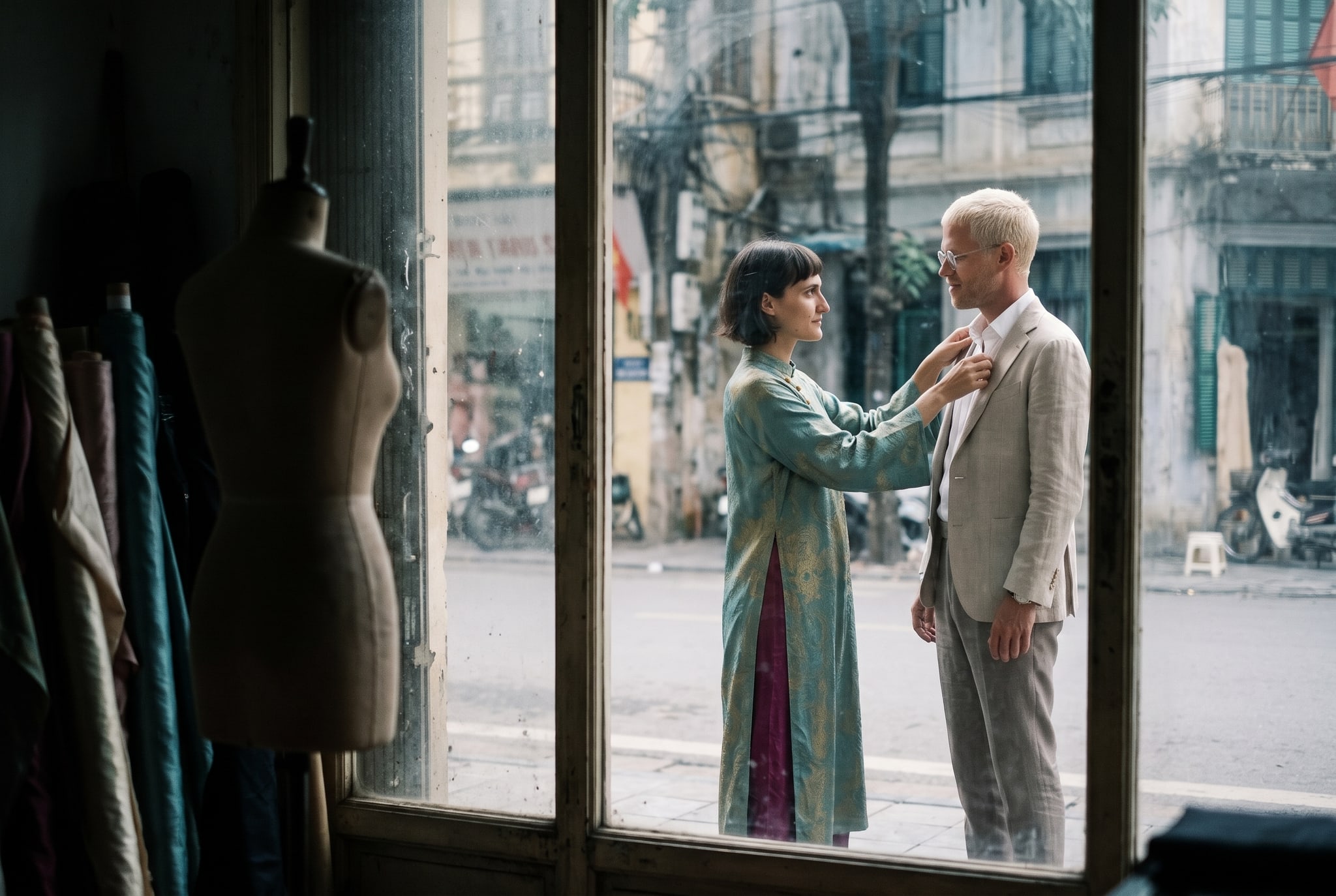
What times of year have the best ao dai colors against West Lake water?
Dry season (October–April) offers clear blue skies and calm water—the ao dai's vibrant reds, silks and embroidery pop without wind blur. November–December has the coolest light, no haze. January–March brings occasional haze but still good visibility from 4–6 PM. Wet season (May–September) means gray overcast and high humidity; colors look muted, makeup runs, and paths get slippery. Based on our weekly shoots, October has the highest keeper rate (photos where colors are rich and sharp). If you must shoot in wet season, aim for early morning (6–7 AM) before haze thickens. Rainy days work only if you're comfortable with wet fabric and closed-umbrella poses.
Conclusion: October–March is non-negotiable for color saturation; plan 2–3 months ahead for those dates.
How do you avoid crowds and still hit peak light?
Book a weekday morning shoot (Monday–Friday, 8–10 AM) to shoot the pagodas and entry paths alone, then return to open water at 4–5 PM when light softens but foot traffic hasn't peaked yet. Weekends bring 500+ tourists from 10 AM–7 PM; your ao dai will compete with selfie sticks. Early morning is quiet but light is flat and cool-toned (not ideal for embroidery detail). We recommend a split session: 45 min quiet temple path at 9 AM, walk, lunch break, then 90 min water-edge shots at 4:30–6 PM. This avoids the 6–8 PM school-group rush and still captures golden hour. Bring a portable styrofoam reflector (we can advise on rental) if shooting before 10 AM; it redirects early light onto your face. If you're flexible, Tuesday–Thursday afternoons are 70% quieter than weekends, based on our on-site logs.
Conclusion: Weekday 4:30–6 PM balances empty paths and warm light; avoid Sunday entirely.
What should your ao dai look like to suit West Lake's water and temples?
Solid jewel tones (deep red, emerald, navy, burgundy) photograph sharper against water than pastels or white. Gold or silver embroidery catches reflected light—check for thread quality in rental pieces (loose seams fail in humid breeze). Floor-length is mandatory; we don't rent cropped versions. Silk blends feel cooler on skin and move better in 2–3 PM breeze than 100% cotton. Contrasting undershirts (white or cream) frame your face and offset the ao dai's neckline. Avoid busy patterns that compete with temple architecture; stripes or florals work only if embroidery is minimal. We stock in-house ao dai rental with makeup and styling in 20+ colors and sizes (XS–XL); you pick the color 1–2 days before, and we confirm fit the morning of. Rental includes a backup undershirt and safety pins for windy days. Ask us for a quote on WhatsApp with your preferred color; we'll show you available pieces.
Conclusion: Deep, solid-colored silk ao dai with minimal pattern maximizes light bounce and suits West Lake's formal temple setting.
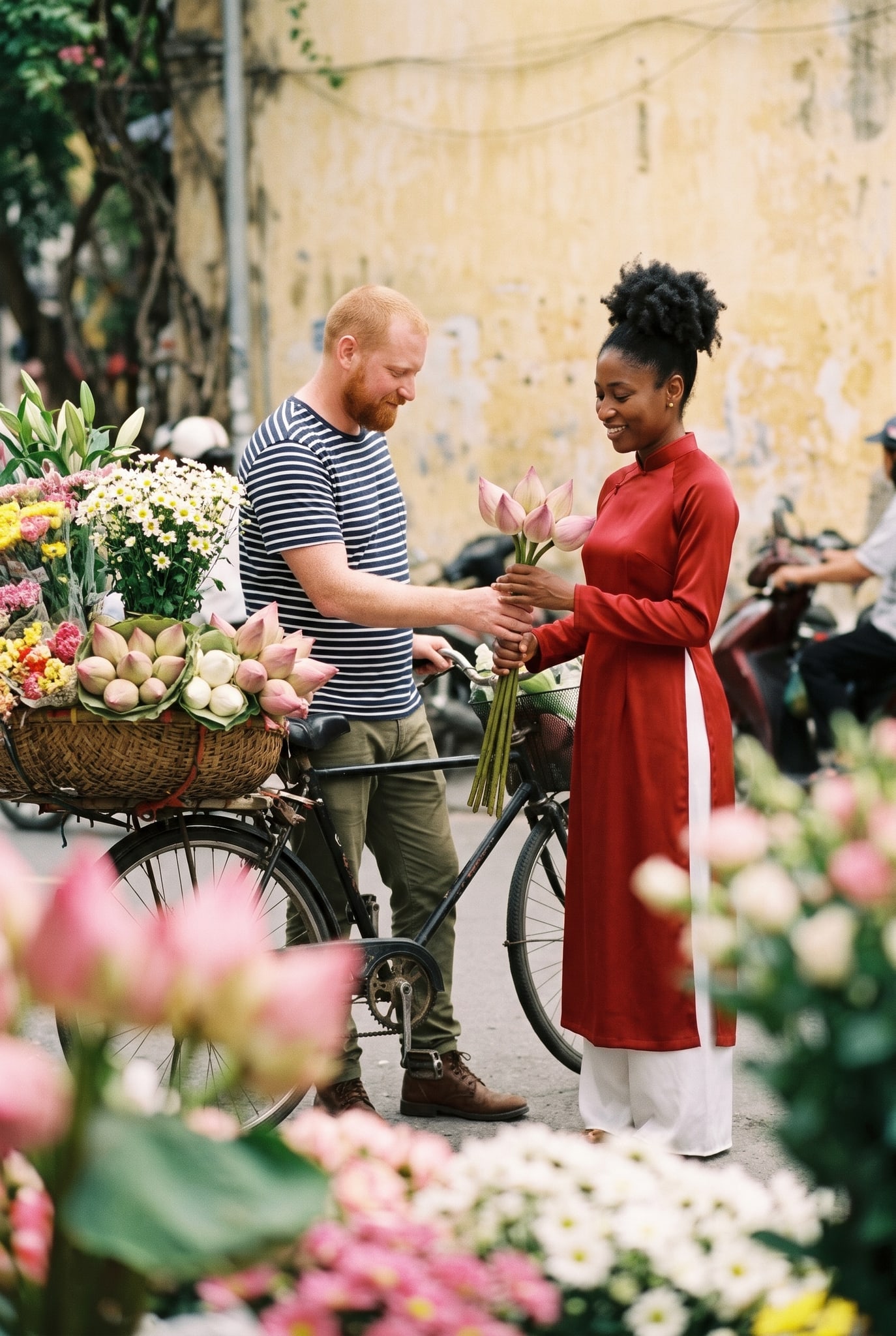
How should you pose on wet temple steps and narrow lakeside paths?
Non-models often stiffen on uneven ground; we use a three-step pose system: plant your feet 12 inches apart (not touching), shift weight to your back leg, then turn your shoulders 45° away from the camera. This stance is stable on wet stone and flatters your silhouette without looking forced. For profile shots, turn your body fully sideways, tilt your chin toward your shoulder, and look down slightly—the ao dai's profile is your asset, not your face. On narrow paths, stand at the water's edge (12 inches back from the drop) and use the lake as your backdrop; the reflector board behind you bounces light up and softens shadows. If paths are crowded, we pause and shoot tighter crops (shoulders up) to cut out tourists. Temple stairs are slippery in early morning and after rain—wear soft, flat shoes (no heels; we can advise on borrowing non-slip sandals). Never touch or sit on shrine furniture; monks will ask you to leave. Practice stepping backward slowly (camera walks backward, you forward) before the session; this move looks elegant and avoids stumbles.
Conclusion: Feet planted, shoulders angled, and 12 inches from water edges = stable, flattering poses on tricky terrain.
Posing & Light Comparison Table
| Scenario | Best Time | Crowd Level | Pose Type | Light Quality |
|---|---|---|---|---|
| Temple interior | 8–9 AM | Very low | Standing profile | Soft, diffused |
| Water's edge (open) | 5–6 PM | Moderate | Full-body, angled | Golden, bounced |
| Tree-shade path | 10 AM–2 PM | Low–moderate | Seated, arm-raised | Dappled, uneven |
| Pagoda entrance | 4 PM | Low | Facing camera, formal | Warm, direct |
| Crowded midday | 12–2 PM | High | Tight crops, detail | Harsh, contrasty |
Use this table to pick your time based on crowd tolerance and pose preference. If you want standing portraits with golden light, book 5–6 PM weekday. If you prefer moody temple shots without crowds, come 8–9 AM and expect cooler (more blue) tones.
What to Check Before You Shoot
- Ao dai fit: Try on 24 hours before; loose undershirts cause strap slip in movement.
- Temple hours: Call ahead; most close 5 PM or have specific photography zones. Confirm by WhatsApp.
- Weather: Rain the night before means wet paths through 10 AM; plan accordingly.
- Makeup longevity: Humidity peaks 2–4 PM; schedule touch-ups if shooting 4–6 PM. We bring blotting paper and powder.
- Shoe grip: Test your shoes on a wet step before the main shoot; wet stone is slippery.
- Booking conflicts: Popular weekday slots fill 2–3 weeks ahead; book early.
We also offer family photoshoots and couple photoshoots at West Lake if you're traveling with others. For broader guidance on ao dai photoshoots across Hanoi, see our full service menu. All bookings include a pre-shoot WhatsApp consultation to confirm outfit, timeline and any temple access rules specific to your chosen date.
What to Review Before You Book
- Session length: 2–3 hours on foot. Have you walked 2 hours in similar shoes?
- Outfit changes: 3–5 ao dai pieces included in rental. Do you want more (ask us for add-ons)?
- Group size: Shoots are individual or couple. Family sessions book separately (family photoshoot link).
- Backup date: If weather turns, we reschedule free within 7 days.
- Print or digital: Ask us what's included; digital files ship within 7 business days.
FAQ
Can we shoot inside temples, or only on the paths outside?
Interior temple shoots require monk approval, usually granted 8–9 AM. We ask permission on arrival and respect closed areas. Exterior pagoda grounds are always open during daylight. Never photograph monks without consent.
Will we look stiff if we've never modeled before?
Most of our clients are first-time shooters. We use the three-step pose (feet planted, shoulders angled, weight shifted) which feels natural and hides tension. Practice walking backward slowly the day before.
Is West Lake good for a solo or couple shoot?
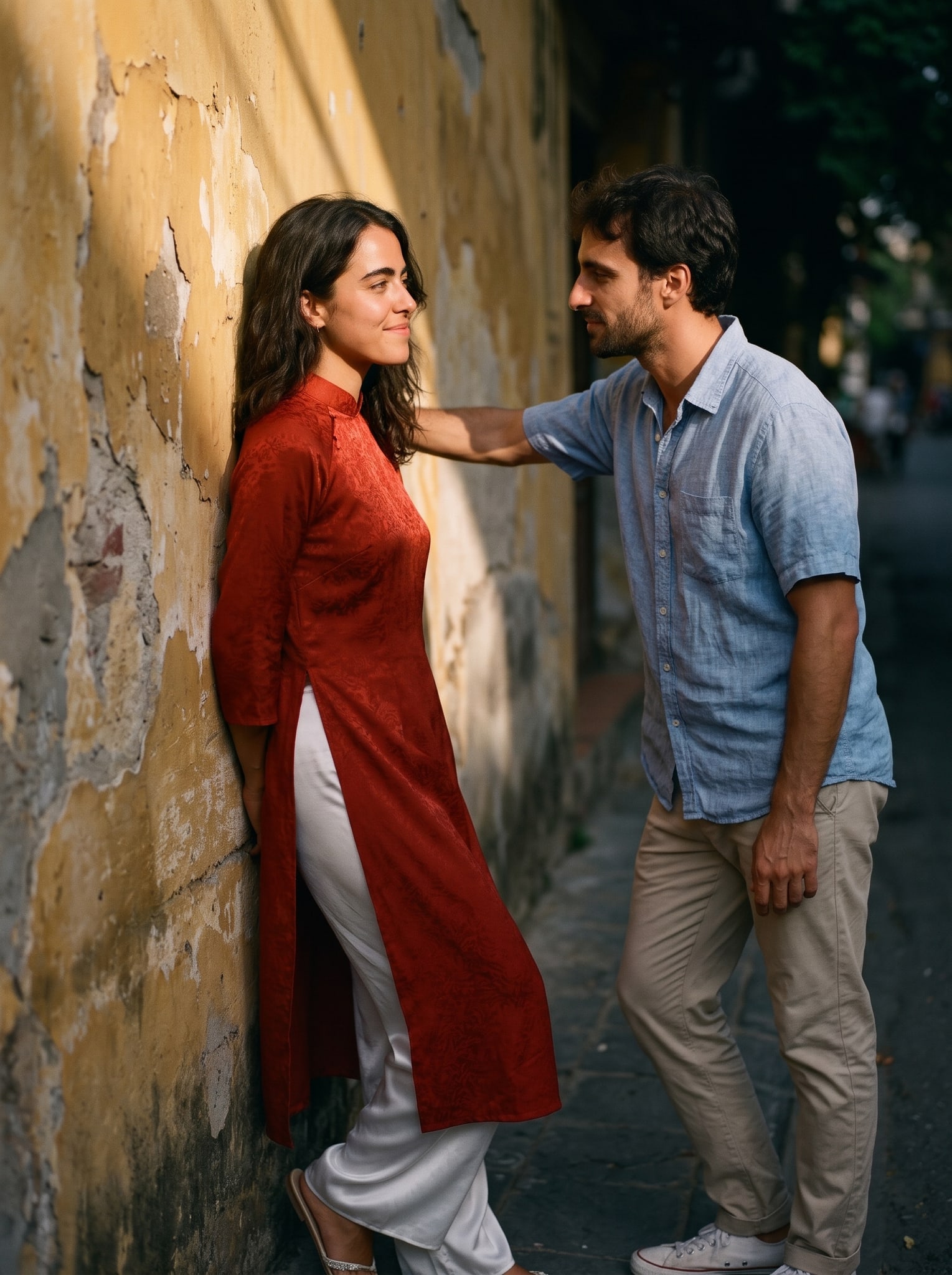
Both. Solo shoots highlight the ao dai and water reflection. For couples, we use water-edge poses where one person anchors the frame and the other gazes toward them—no cheesy back-hugging required. See couple photoshoot for couple-specific timing.
What happens if it rains the morning of our shoot?
Rain 24 hours before means wet paths through 10 AM; we'll suggest a 4 PM start instead. Rain during the shoot stops us immediately—we reschedule free within 7 days. Bring a compact umbrella just in case.
Do you provide makeup and hair, or do we hire our own?
We provide both in-house before you arrive at West Lake. Makeup is designed for outdoor light (not oversaturated) and includes touchup supplies. If you prefer your own artist, confirm 2 weeks ahead; there's no extra cost, but we can't guarantee temple access timing.
How much does it cost, and what's included?
Ask us for a quote on WhatsApp with your preferred date and outfit count. Quotes include session time, ao dai rental, makeup, hair, and digital files. Prints, albums and framing are separate—we'll show options after the shoot.
Check dates
Send your dates, how many people and the style you like. We reply on WhatsApp in English with spots, timing and a quote.
FAQ
Can we shoot inside temples, or only on the paths outside?
Interior temple shoots require monk approval, usually granted 8–9 AM. We ask permission on arrival and respect closed areas. Exterior pagoda grounds are always open during daylight. Never photograph monks without consent.
Will we look stiff if we've never modeled before?
Most of our clients are first-time shooters. We use the three-step pose (feet planted, shoulders angled, weight shifted) which feels natural and hides tension. Practice walking backward slowly the day before.
Is West Lake good for a solo or couple shoot?
Both. Solo shoots highlight the ao dai and water reflection. For couples, we use water-edge poses where one person anchors the frame and the other gazes toward them—no cheesy back-hugging required. See [couple photoshoot](/couple-photoshoot) for couple-specific timing.
What happens if it rains the morning of our shoot?
Rain 24 hours before means wet paths through 10 AM; we'll suggest a 4 PM start instead. Rain during the shoot stops us immediately—we reschedule free within 7 days. Bring a compact umbrella just in case.
Do you provide makeup and hair, or do we hire our own?
We provide both in-house before you arrive at West Lake. Makeup is designed for outdoor light (not oversaturated) and includes touchup supplies. If you prefer your own artist, confirm 2 weeks ahead; there's no extra cost, but we can't guarantee temple access timing.
How much does it cost, and what's included?
Ask us for a quote on WhatsApp with your preferred date and outfit count. Quotes include session time, ao dai rental, makeup, hair, and digital files. Prints, albums and framing are separate—we'll show options after the shoot.
More like this
Ao dai photoshoot in Hanoi
Ao Dai Photoshoot at Ho Chi Minh Mausoleum: Best Time & Tips
Ho Chi Minh Mausoleum area offers dramatic colonial architecture and red flags perfect for ao dai portraits, but timing and permit rules are critical.
Ao dai photoshoot in Hanoi
Ao Dai Photoshoot at Lotus Pond Sunrise in Hanoi
Lotus ponds offer Hanoi's most serene ao dai backdrop at dawn, but timing and location scouting are critical for empty frames and soft light. We share exact hours, seasonal water levels and how to avoid tourist crowds.
Ao dai photoshoot in Hanoi
Ao Dai Photoshoot Duong Lam Ancient Village: Best Time & Hanoi Guide
Duong Lam Ancient Village—45 minutes northwest of central Hanoi—offers weathered brick lanes, lotus ponds and colonial-era storefronts perfect for ao dai portraits. Best light and crowd conditions occur October–November and February–March mornings.