
Home › Blog › Ao dai photoshoot in Hanoi
Ao Dai Photo Shoot Hanoi Poses: Standing, Sitting & Motion Guide
By the Hanoi Photoshoot team · 2026-11-06
Ao dai poses fall into three core categories: standing (shoulders back, chin slightly down, fabric skimming the body), seated (legs angled, fabric pooled artfully), and walking (slow, deliberate steps to catch fabric flow). In Hanoi, we shoot around golden hour (6:00–7:30 AM or 4:30–6:00 PM depending on season) at Hoan Kiem Lake photo guide, the Old Quarter, or Train Street to maximize soft light and minimize crowds. A typical ao dai session runs 2–3 hours with Hanoi Photoshoot by Cáo Studio, including makeup, hair & ao dai rental and 40–60 final images. Most pose challenges stem from fabric bunching under arms or feet catching the hem—we show you how to grip, step, and breathe to avoid reshoots. This guide walks non-models through each stance, timing by light and season, and real-world fixes. Check dates on WhatsApp
Why does ao dai posing feel different from Western fashion?
Ao dai's silhouette—long, split skirt, fitted bodice—demands a slower, more deliberate frame. Western poses compress the fabric; ao dai poses float it. Your shoulders must sit back to let the bodice rest naturally; chest forward collapses the neckline. The split skirt wraps around your legs when you stand still, so movement—even micro-shifts—reveals layers and creates depth. We find poses that feel awkward in the mirror often photograph best because they stretch the fabric and open the body line. The key is trusting the garment instead of fighting it.
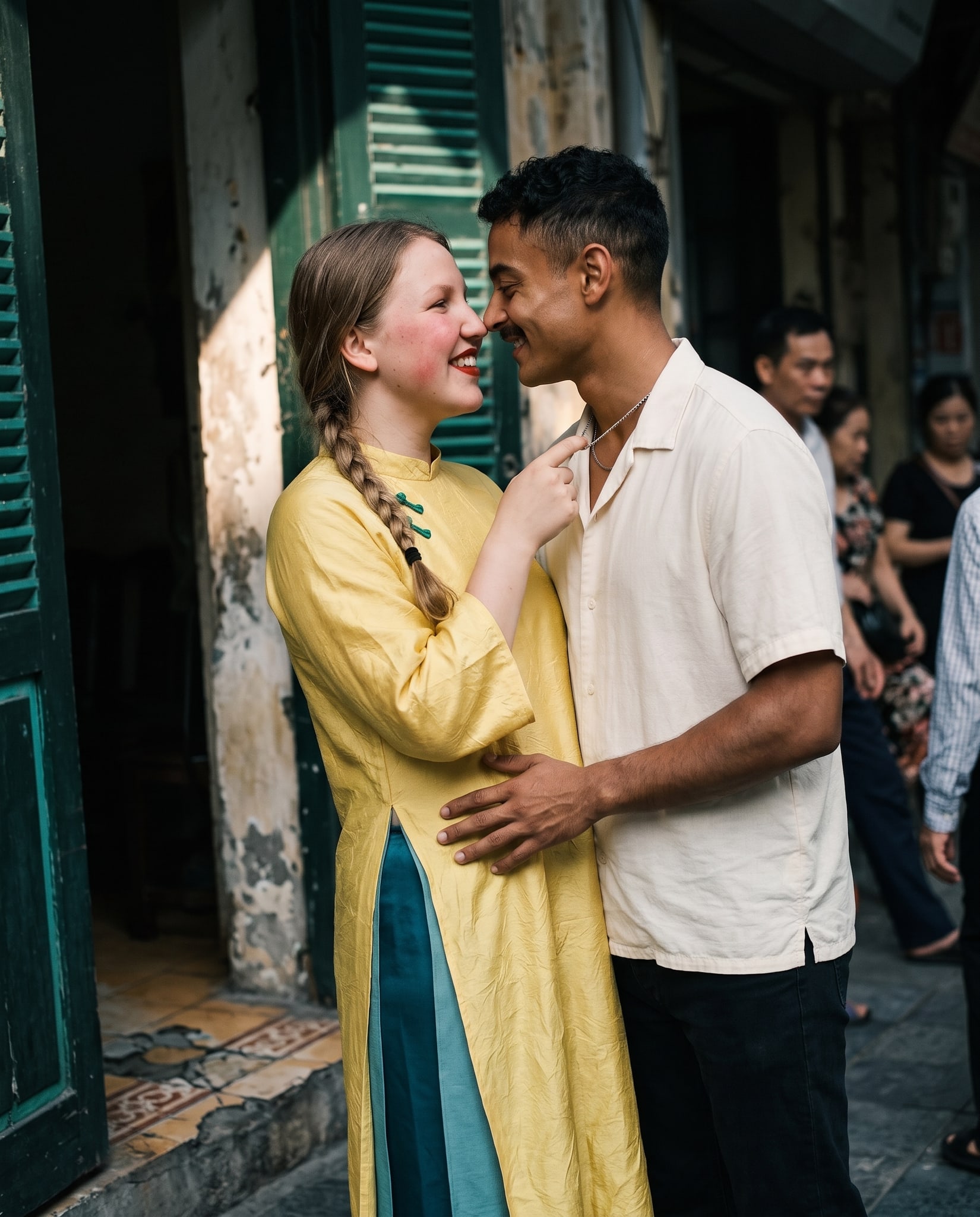
What are the five core standing poses for ao dai?
The Classic Shoulder-Back: Stand with feet hip-width apart, shoulders rolled back and down, chin parallel to the ground. Let your arms rest naturally at your sides or drape one hand on your thigh—the fabric will settle into vertical folds. This pose works in morning light (6:00–7:30 AM) at Hoan Kiem Lake photo guide when shadow depth suits fabric texture.
The Over-Shoulder Glance: Angle your body 45° away from the camera, then turn your head back toward the lens. This elongates your neck and creates diagonal lines through the fabric. Ideal during golden hour (4:30–6:00 PM in winter, 5:00–6:30 PM in summer) when side-light sculpts the ao dai's curves.
The Hand-in-Fabric Anchor: Hold the fabric's side panel or front panel loosely in one hand near your hip. This prevents wind-blown bunching and gives your hands purpose. Works best in the Old Quarter's narrow streets (10:00–11:00 AM) when light is still soft but not flat.
The Walking Stride: Take a slow, deliberate step forward—back foot still planted. The front split should open and show leg. Keep your torso upright; let your hips naturally swing. Train Street sessions (6:00–7:00 AM) capture this in warm, low-angle light.
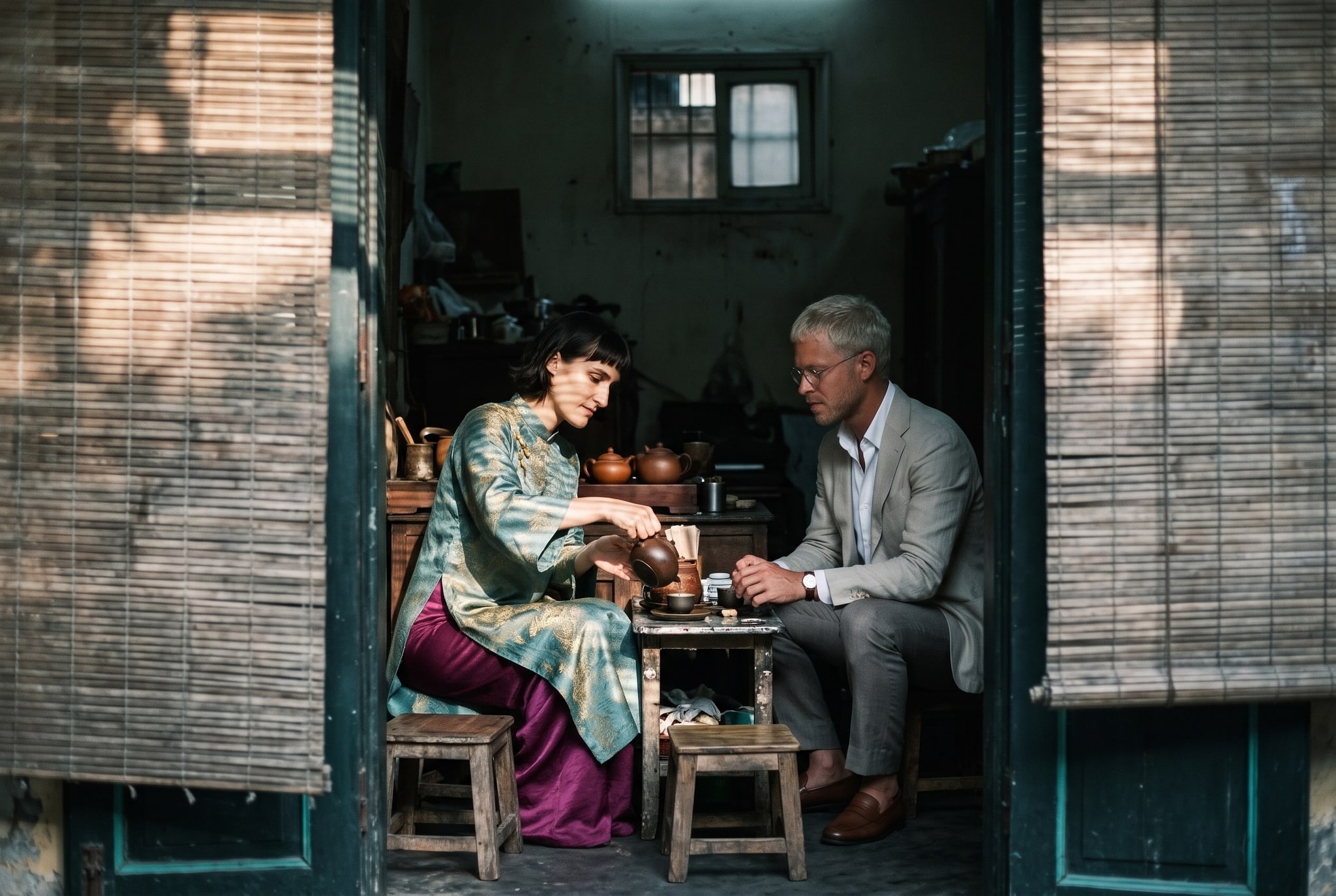
The Seated Spiral: Sit on a low bench or ground with knees angled left or right. Tuck the front panel of fabric across your lap, pooling excess around you. Lean slightly forward and glance down—this creates a three-quarter face and showcases fabric texture. Best mid-morning (9:00–11:00 AM) when overhead sun is softer.
How do hand placement and fabric control prevent awkward wrinkles?
Hands are the biggest wild card. Stuffing them in pockets or crossing arms traps fabric and creates bulges. Instead: grip the fabric's inside seam (where the split runs) just above your hip, holding it softly backward. This keeps the panel open and prevents wrapping around your legs. Fingers should be relaxed—tension reads in photos. If no hand pose suits the shot, let arms hang naturally with a slight bend at the elbows; this creates an open chest and allows the fabric to breathe. For seated poses, use both hands to arrange the skirt panels intentionally—cross one leg over the other and fold the top panel toward your body, then anchor it with one hand resting on your thigh. In Train Street photo guide, wind often pushes fabric unpredictably; we have you hold the back panel lightly to keep it from flying, which paradoxically looks more graceful than fighting it. The trick: plan your hands before the shutter clicks, so you're not adjusting mid-shot.
Which Hanoi spots and light times suit each pose type?
| Pose Type | Best Hanoi Spot | Optimal Light Time | Why It Works | Crowd Level |
|---|---|---|---|---|
| Classic Shoulder-Back | Hoan Kiem Lake north shore | 6:30–7:30 AM (winter), 6:30–7:45 AM (summer) | Soft backlit glow separates fabric from background | Low (before 8 AM) |
| Over-Shoulder Glance | Old Quarter narrow alleys | 10:00–11:00 AM | Dappled, directional light flatters cheekbones and fabric weave | Medium |
| Hand-in-Fabric Anchor | Old Quarter temple courtyards | 9:00–11:00 AM | Warm, even overhead light shows fabric color and hand gesture | Low–Medium |
| Walking Stride | Train Street (pedestrian section) | 6:00–7:00 AM | Low, warm angle captures fabric flow and leg silhouette | Very Low |
| Seated Spiral | Hoan Kiem Lake waterfront benches | 4:30–5:30 PM (winter), 5:00–6:00 PM (summer) | Golden-hour side light sculpts seated form and pooled fabric | Low–Medium |
Light timing shifts by season: in winter (Nov–Feb), golden hour compresses to 6:00–7:00 AM and 4:30–5:30 PM; in summer (May–Sept), it stretches to 5:45–7:00 AM and 5:00–6:30 PM. We adjust schedules to match seasonal sun angle and avoid harsh midday shadow under the chin. Old Quarter photo guide alleys offer shade even at 11:00 AM, which suits close-up hand and fabric detail. Train Street requires 6:00–7:00 AM booking because trains start at 7:30 AM and crowds swell after 7:15 AM.
What pose mistakes should non-models avoid in ao dai?
Chest collapsed forward: This crushes the bodice and creates unflattering bulge under the arms. Fix: shoulders back first, then chest open. Takes practice.
Feet too close together: This wraps the split skirt around your legs like a pencil. Fix: hip-width or wider stance, and shift weight onto one leg to angle the split.
Hands buried or clasped: Looks stiff and hides the garment's lines. Fix: let one hand rest on fabric, or tuck thumbs loosely into your front pockets.
Walking too fast: Fabric doesn't catch light or show movement intentionally. Fix: quarter-speed walk, and pause every 2–3 steps for a still shot.
Sitting with knees together and knees up: Creates an awkward tent of fabric and shortens your legs. Fix: angle knees left or right (45° off-center), let one leg extend slightly, and use hands to arrange panels deliberately.
Chin too far forward or tucked: Elongates the neck unnaturally or hides it. Fix: chin parallel to ground, and tilt head slightly away from camera to lengthen the neck line.
Ignoring wind: Fabric blows everywhere and you chase it. Fix: hold the back panel lightly if wind exceeds 10 km/h, and schedule early morning (less wind) or check the weather 3 days prior.
Our team spots these mid-shoot and adjusts your stance in real-time—it's why working with a photographer (not a mirror) matters. We guide hand placement, fabric flow, and weight distribution live.
How do ao dai rentals and styling affect pose options?
The ao dai's fit determines pose ease. A tight bodice restricts arm movement and breathing—avoid over-shoulder glances or walking strides. A relaxed bodice allows more dynamic posing. When you rent ao dai with makeup and hair, we fit you in-studio before the shoot; you tell us your comfort level and pose goals, and we select a silhouette that suits both. Petite frames work better with shorter, straighter silhouettes; taller frames handle heavily paneled or asymmetric designs that photograph dramatically. The fabric weight also shifts pose options: lightweight silk settles close to the body (better for seated, detailed poses), while heavier brocade holds sculptural folds even standing (better for dramatic, movement-based poses). Undergarment choice matters too—we provide slip shorts to prevent thigh show if you prefer modesty, which opens up walking and wide-stance poses. Hair and makeup tie into pose too: a high, swept bun elongates the neck for standing poses; loose waves soften seated angles. We coordinate all three—ao dai cut, undergarment choice, hair—so your poses feel natural, not forced.
What to check before you book your ao dai photo session:
- Light availability: Confirm seasonal sunrise/sunset times 3–5 days before (golden hour shifts monthly). Ask us to pick the best 2–3 hours for your session.
- Ao dai fit: Share your measurements and any fit sensitivities (tight chest, long legs) when you book. We'll reserve a silhouette that suits your frame and pose comfort.
- Location crowds: Confirm which spot (Hoan Kiem, Train Street, Old Quarter) has lowest crowds on your date. We monitor this weekly.
- Weather and wind: Check the forecast for rain and wind speed (>12 km/h complicates fabric control). If unsure, ask us to scout the morning of.
- Pose goals: Tell us if you prefer standing, seated, or walking—or all three. We'll customize the shoot structure.
- Final image count: Ask how many edited, high-res images you'll receive per hour booked.
What happens during a typical ao dai pose session?
We meet you at our studio or your hotel 30–45 min before sunrise/golden hour. You change into the rented ao dai; our makeup and hair team preps you (20–30 min). We then move to the chosen spot and shoot for 2–3 hours, directing your pose, hand placement, and fabric flow every 2–3 shots. You take breaks and hydrate—posing is physically demanding. We may reshoot a few poses if wind, passing crowds, or plane shadows interrupt. Back at the studio, we edit and deliver 40–60 final images within 7–10 days, raw and retouched. Revisions are included if you'd like pose emphasis or color adjustments.
Should I book an individual or group ao dai session?
Individual sessions (1 person, 2–3 hours) let us focus entirely on your pose coaching and fabric detail. Better for first-timers or those nervous about posing. You get 40–60 edited images focused on you.
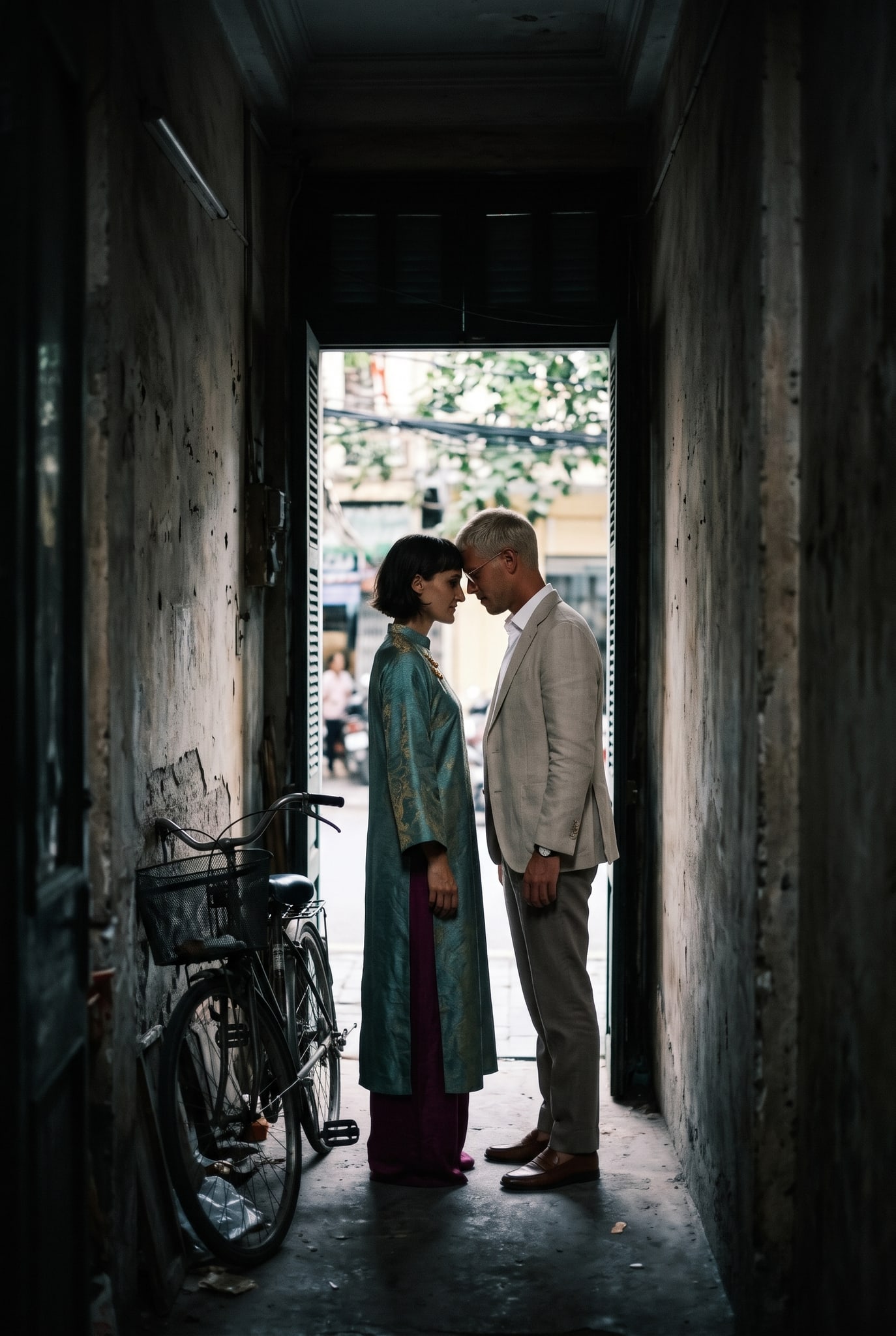
Couple photoshoot sessions work if both wear ao dai—we pose you in duets (mirrored stances, hand-holding, face-to-face) and single shots. Adds 30 min to shooting time.
Family photoshoot sessions let you, children, or extended family wear ao dai together—we mix group poses (all standing in a line with fabric fanned out) and individual detail shots. Booking a family group often costs less per person than booking individuals.
If you're unsure, start with an individual 2-hour session to build confidence in posing and ao dai comfort—you can always book again for group sessions later.
Ready to book your Hanoi ao dai photo session?
Ao dai posing combines stillness, fabric awareness, and trust in the garment. We've guided hundreds of non-models through these exact poses—awkwardness fades after the first 10 shots, and by hour two, movement becomes natural. Light timing and location choice matter as much as your pose itself. Let us handle the technical side (spot scouting, crowd timing, light angle) so you can focus on feeling beautiful in the garment. Contact us to check available dates and pick your preferred Hanoi spot.
Plan your Hanoi shoot
Or explore related session types:
- Solo travel portraits — extend your ao dai session with travel diary shots.
- Pre-wedding photoshoot — pair couple ao dai poses with Western wear at multiple Hanoi venues.
- Proposal photographer — create a surprise moment in ao dai with fabric and light as your backdrop.
FAQ
Can I wear my own ao dai, or should I rent?
You can wear your own if it's comfortable and fits well. We recommend rental if you're unsure about fit, fabric care, or weight—rentals are pre-fitted, and you avoid travel damage. Rental includes styling consultation to pick a silhouette suited to your pose goals.
How do I avoid the ao dai wrapping around my legs in photos?
Stand with feet hip-width or wider, and shift your weight onto one leg to angle the split panel open. If standing still, gently grip the inside seam of the split and hold it back. We guide this live during the shoot.
What's the best light time for ao dai in Hanoi?
Golden hour: 6:00–7:30 AM in winter, 5:45–7:00 AM in summer (sunrise side), or 4:30–6:00 PM in winter, 5:00–6:30 PM in summer (sunset side). These windows offer soft, warm light that flatters skin and fabric texture. Midday (11:00 AM–3:00 PM) is harsh unless you're shooting in Old Quarter alleyway shade.
How long does an ao dai pose session take?
Typically 2–3 hours total: 30 min studio (change, hair, makeup), 2–3 hours on-location shooting, plus 7–10 days for editing. You'll receive 40–60 final images per 2-hour location shoot.
Do I need posing experience to book an ao dai session?
No. We coach non-models through every pose and hand placement during the shoot. Awkwardness usually fades after 10–15 shots. Tell us your comfort level when booking, and we'll adjust pace and location accordingly.
Can I do an ao dai shoot if I'm pregnant or overweight?
Yes. Ao dai's flowing silhouette suits maternity photoshoot sessions beautifully—the fabric skims the body and creates elegant lines. We also tailor poses and fabric arrangement for all body types. Let us know when booking, and we'll select a silhouette and pose set that feels confident for you.
Check dates
Send your dates, how many people and the style you like. We reply on WhatsApp in English with spots, timing and a quote.
FAQ
Can I wear my own ao dai, or should I rent?
You can wear your own if it's comfortable and fits well. We recommend rental if you're unsure about fit, fabric care, or weight—rentals are pre-fitted, and you avoid travel damage. Rental includes styling consultation to pick a silhouette suited to your pose goals.
How do I avoid the ao dai wrapping around my legs in photos?
Stand with feet hip-width or wider, and shift your weight onto one leg to angle the split panel open. If standing still, gently grip the inside seam of the split and hold it back. We guide this live during the shoot.
What's the best light time for ao dai in Hanoi?
Golden hour: 6:00–7:30 AM in winter, 5:45–7:00 AM in summer (sunrise side), or 4:30–6:00 PM in winter, 5:00–6:30 PM in summer (sunset side). These windows offer soft, warm light that flatters skin and fabric texture. Midday (11:00 AM–3:00 PM) is harsh unless you're shooting in Old Quarter alleyway shade.
How long does an ao dai pose session take?
Typically 2–3 hours total: 30 min studio (change, hair, makeup), 2–3 hours on-location shooting, plus 7–10 days for editing. You'll receive 40–60 final images per 2-hour location shoot.
Do I need posing experience to book an ao dai session?
No. We coach non-models through every pose and hand placement during the shoot. Awkwardness usually fades after 10–15 shots. Tell us your comfort level when booking, and we'll adjust pace and location accordingly.
Can I do an ao dai shoot if I'm pregnant or overweight?
Yes. Ao dai's flowing silhouette suits [maternity photoshoot](/maternity-photoshoot) sessions beautifully—the fabric skims the body and creates elegant lines. We also tailor poses and fabric arrangement for all body types. Let us know when booking, and we'll select a silhouette and pose set that feels confident for you.
More like this
Ao dai photoshoot in Hanoi
Ao Dai Photoshoot at Ho Chi Minh Mausoleum: Best Time & Tips
Ho Chi Minh Mausoleum area offers dramatic colonial architecture and red flags perfect for ao dai portraits, but timing and permit rules are critical.
Ao dai photoshoot in Hanoi
Ao Dai Photoshoot at Lotus Pond Sunrise in Hanoi
Lotus ponds offer Hanoi's most serene ao dai backdrop at dawn, but timing and location scouting are critical for empty frames and soft light. We share exact hours, seasonal water levels and how to avoid tourist crowds.
Ao dai photoshoot in Hanoi
Ao Dai Photoshoot Duong Lam Ancient Village: Best Time & Hanoi Guide
Duong Lam Ancient Village—45 minutes northwest of central Hanoi—offers weathered brick lanes, lotus ponds and colonial-era storefronts perfect for ao dai portraits. Best light and crowd conditions occur October–November and February–March mornings.