
Home › Blog › Ao dai photoshoot in Hanoi
Ao Dai Photo Shoot Hanoi Opera House: Timing, Crowds & Posing Tips
By the Hanoi Photoshoot team · 2026-11-06
The Hanoi Opera House—a UNESCO-listed 1911 French-colonial theatre in the city centre—offers dramatic ao dai backdrops, but only in specific light windows and off-peak hours. Morning shots (06:00–08:00) yield soft, directional light; afternoon (16:00–18:00) brings warm side-glow; crowds peak 10:00–15:00. You cannot enter the building for portraits without a ticket (paid performance); exterior courtyard, steps and street-facing facades are public. Hanoi Photoshoot by Cáo Studio coordinates ao dai rental, makeup and hair in-house and books permits for extended positioning. Sessions run 60–90 minutes. Avoid tight aodai silhouettes; flowing, embroidered traditional cuts photograph best. Non-models benefit from guided posing at the base of the steps, on the curved forecourt, and framed in doorway arches. Check dates on WhatsApp
Why is morning light at Opera House so crucial for ao dai?
Dawn light arrives perpendicular to the east-facing façade, sculpting the building's ornate stonework and throwing shadows that frame your figure. Between 06:30–07:30, this angle flatters traditional ao dai draping without washout or harsh contrast. By 09:00, direct overhead sun flattens folds and embroidery detail. We position you on the lower steps to catch reflected light from the grey stone plaza, which fills in facial shadows without flash. Winter (November–February) extends this window by 30 minutes because the sun rises lower. Summer (May–August) compresses it; you must start by 06:15. Bring a robe or shawl if shooting in winter pre-dawn; temperature drops to 10–12°C.
Conclusion: Early morning is non-negotiable for dimension and colour saturation in ao dai textile.
What outfit mistakes ruin Opera House ao dai portraits?
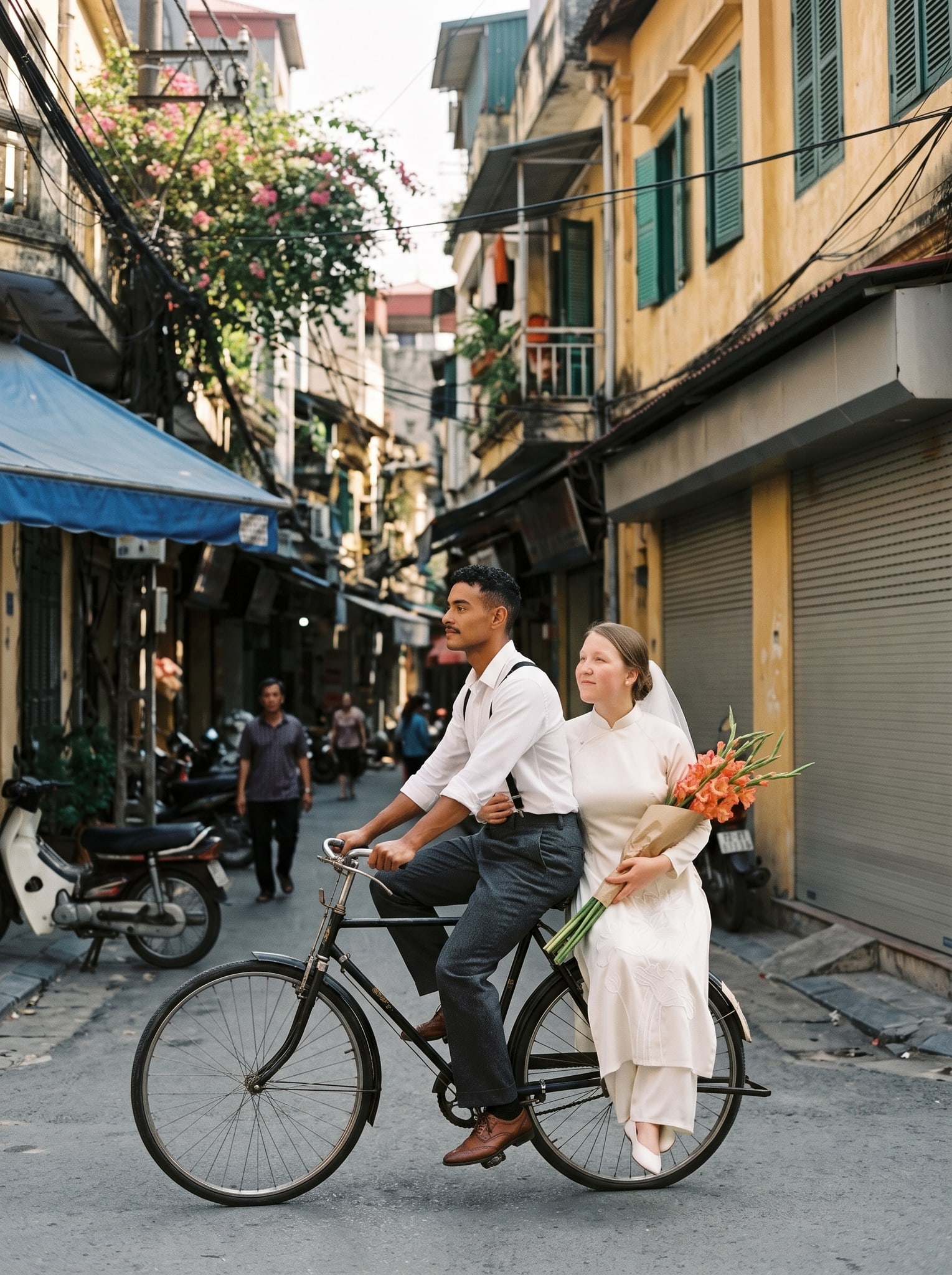
Too-tight bodices restrict natural arm positioning and compress the shoulder-line, flattening the frame on camera. Stiff synthetic fabrics (nylon ao dai, often cheaper rentals) photograph flat and lifeless; silk and silk-linen blends drape and move. Overly long hem lines (below the ankle) drag on the steps and trap feet in poses—we recommend hem just at the ankle for mobility. Busy, small-scale patterns compete with the building's intricate carved stone behind you; solid jewel tones, brocade or large floral motifs hold the frame. Mismatched trousers (wrong white or cream shade) create a line across your torso that reads as a break. Our makeup, hair & ao dai rental service ensures correct fit—shoulder seam sits flush, armholes don't pinch—and guides you toward cuts and colours that photograph. Avoid oversized jewellery; delicate pieces and hand positioning matter more than size.
Conclusion: Fit and fabric matter as much as colour; improper rental sizing kills posture and flow.
Which time slots avoid crowds at the Opera House steps?
| Time Slot | Crowd Level | Light Quality | Temperature | Best For |
|---|---|---|---|---|
| 06:00–07:00 | Empty | Soft, directional | 12–14°C (Nov–Feb) | All skin tones; embroidery detail |
| 07:00–08:30 | Few locals | Warm, low angle | 14–18°C (Nov–Feb) | Dynamic poses; shadow play |
| 08:30–10:00 | Rising | Flat, harsh | 18–22°C | Avoid this window |
| 10:00–16:00 | Peak (tour groups, selfie-takers) | Overhead glare | 25–35°C (May–Aug) | Do not shoot |
| 16:00–17:30 | Moderate | Golden, side-lit | 22–28°C (varies) | Raking light; silhouettes |
| 17:30–18:30 | Thinning | Warm, low | 18–24°C (Nov–Feb) | Glowing skin; strong shadows |
| After 18:30 | Empty | Dim/twilight | <15°C (Nov–Feb) | Tripod required; specialty only |
Hanoi's Hoan Kiem district (where Opera House sits) sees peak tourism between 11:00–14:00. Local school groups visit 09:00–12:00 on weekdays. Permit holders can book dedicated slots; we negotiate these in advance. Saturday and Sunday are busier at all times; Thursday–Friday mornings are quietest. During Tet (late January–early February), the entire district closes informally—best to avoid or plan a private, all-access early slot.
Conclusion: Book 06:00–08:00 for solitude, light and cool comfort; golden hour (16:00–17:30) is second best if morning is unavailable.
How do you pose non-models on the Opera House steps?
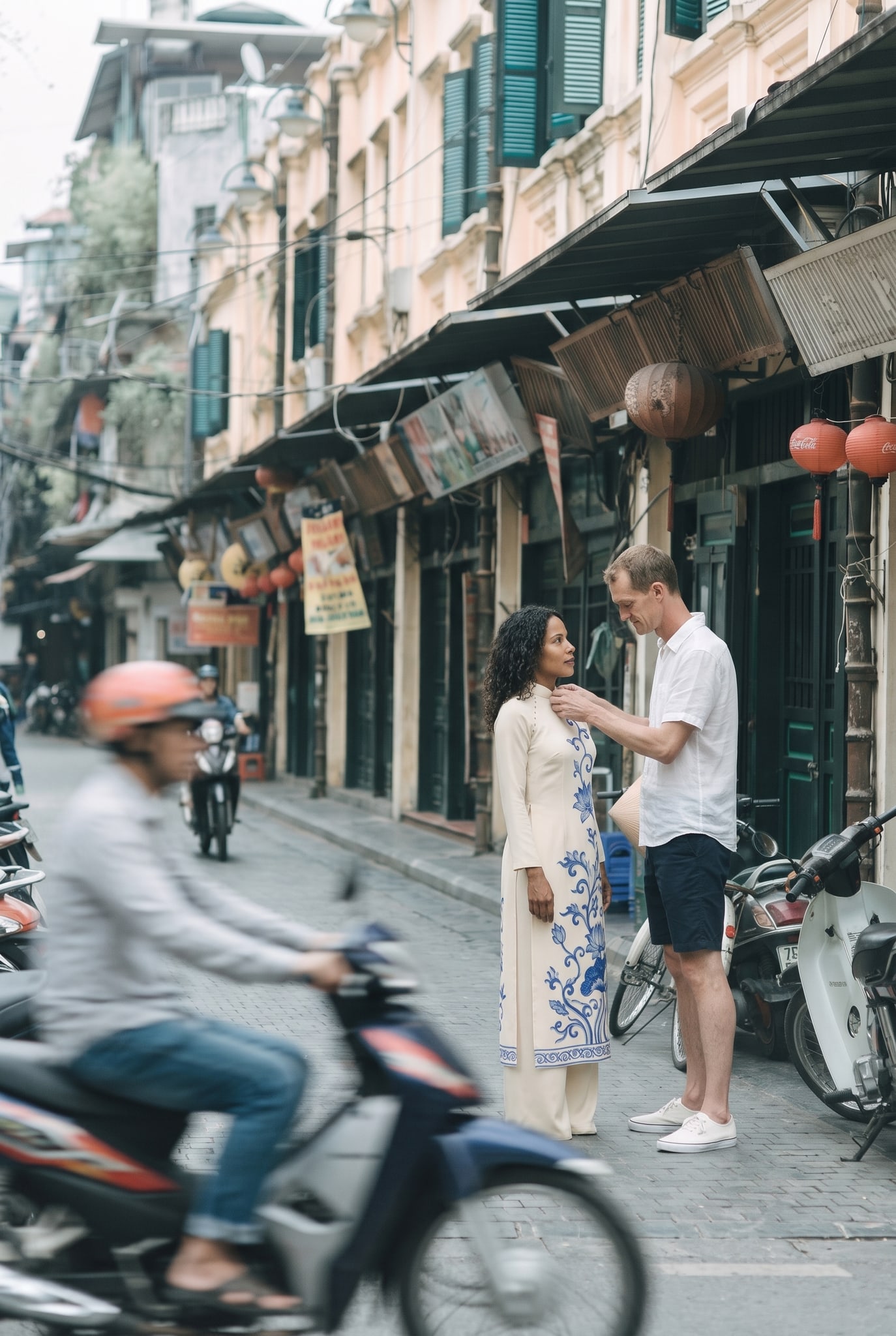
Non-models often stiffen on landmark steps; we guide them through three anchor positions. Position 1—The Ascent: Start one step above ground, weight on back foot, front foot on the lower step; rest one hand on the stone railing, shoulders back, and gaze slightly down-left. This breaks static posture and lets the ao dai skirt fall naturally. Position 2—The Frame: Stand in the central arch doorway recess; shoulders squared to camera, feet hip-width apart, one hand holding ao dai at the hip, the other resting on the stone pillar. The arch shadows your face (we add subtle reflector fill), and the vertical lines elongate your frame. Position 3—The Foreground: Sit on the lower courtyard edge (if permitted by venue), knees angled, ao dai draped across your lap, and turn your torso toward the building. This lowers the camera angle and frames the building's upper ornament behind you. Hand placement matters: thumbs hooked in trousers or hidden; fingers lightly splayed (not clenched). We demo each pose before shooting. Non-models benefit from 5–10 warm-up shots before the main take. Breathing and movement (small sways, weight shifts) animate the ao dai fabric—ask for "subtle motion" rather than "stay still."
Conclusion: Guided, repeated poses and fabric movement replace frozen self-consciousness.
What rules or restrictions apply to Opera House photography?
The venue itself is private property but public-facing; exterior photography is allowed without permit. However, large tripods, reflectors, or "professional setup" (defined loosely as more than one person and equipment) requires advance co-ordination with the venue's security team. We handle this; expect a verbal approval or a brief conversation with on-site staff. Flash photography is forbidden (bleaches stone and disturbs any performances inside). Drone shots and 360-degree video are prohibited. You cannot block foot traffic; we position shoots in the side courtyard or early morning when the plaza is clear. Religious ceremonies or state events occasionally restrict access; we check 48 hours before your session. The café and retail vendors on the Opera House grounds do not require separate model release, but their logos/faces should not dominate the frame—we frame tightly on you and the building. Paid performances sometimes close the exterior courtyard for 1–2 hours; we confirm dates and adjust timing. Filming for commercial use (ads, TikTok sponsorships, brand campaigns) requires a paid filming permit; editorial and personal use do not.
Conclusion: Exterior photography is free and open; advance co-ordination ensures no interruptions and compliance with venue protocols.
Seasonal shifts in Opera House ao dai shoots
Winter (November–February): Soft, extended morning light; temperatures 10–15°C favor heavier, embroidered aodai. Humidity is lowest; fabric holds shape and colour pops. Early sunrise (around 06:45) extends your golden-hour window. Bring a shawl or light jacket for comfort between takes. Fewer tourists on weekdays.
Spring (March–April): Unpredictable haze and occasional rain; mid-morning light (07:30–09:00) is often filtered and moody. Temperatures warm to 20–25°C. Light silk aodai work best; avoid heavy brocades. Shoot 06:30–08:00 before haze thickens, or wait for 17:00+ when air clears.
Summer (May–September): Heat and humidity are intense (30–35°C); sunrise is earliest (05:45). You have a 45-minute golden window before harsh overhead sun. Lighter fabrics (cotton-silk blend) breathe better. Frequent afternoon thunderstorms make afternoon slots risky. Schedule early and confirm 24 hours before. Our makeup, and hair & ao dai rental team applies long-wear makeup for sweat.
Autumn (October–November): Transition season; variable light and occasional rain. Early morning (06:30–07:45) is most reliable. Humidity drops mid-month. Warm jewel tones and earth-tone aodai photograph beautifully in this soft light.
Based on Hanoi's climate patterns and tourism flow, we recommend winter and early spring for first-time Opera House shoots; sunrise slots year-round maximize creative control.
What to check before you book
- Light window: Ask us which sunrise/sunset time is optimal for your session date.
- Outfit fit: Confirm your ao dai rental measurements 2 weeks in advance; we measure bust, waist, hip and height to ensure proper seating and movement.
- Weather forecast: Check 48 hours before; morning slots are less rain-prone, but summer requires backup indoor spots nearby.
- Permit status: We confirm with the venue whether your chosen time has any restrictions (events, maintenance, ceremony).
- Mobility: The steps and plaza have uneven stone; wear comfortable shoes for warmth-up and transit; we provide flat sandals for posing and will digitally remove them if needed.
- Backup location: If Opera House is unexpectedly closed, we pivot to the nearby Old Quarter or Hoan Kiem Lake within the same timeframe; discuss this before booking.
How ao dai photoshoots in Hanoi connect to couple and group sessions
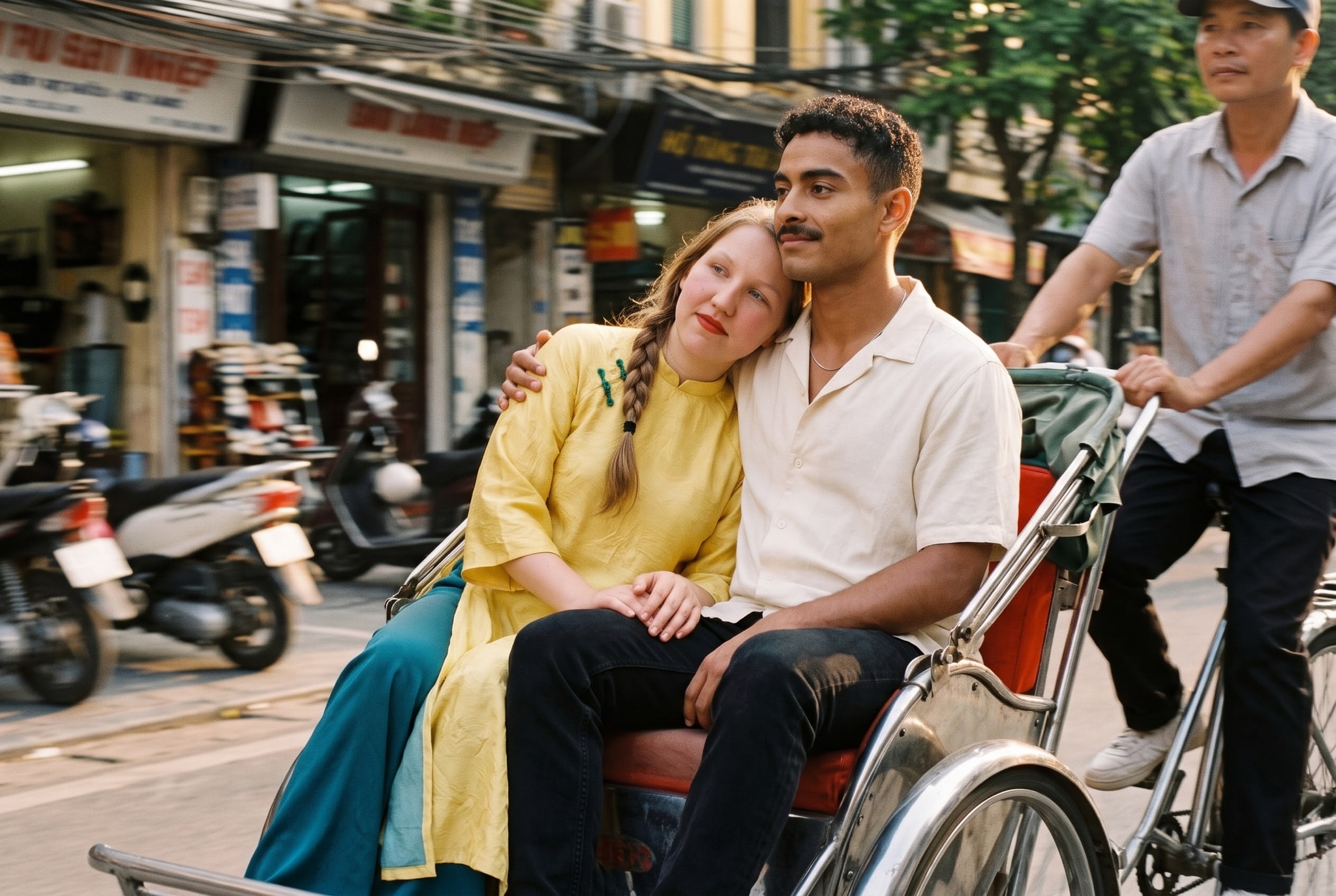
If you're a couple planning a couple photoshoot or a family group, Opera House works for both. Couples can use the "Frame" doorway pose (one person framed with the other's back to camera, or both in the arches) to create layered compositions. Family photoshoots on the steps are trickier—we need 90–120 minutes to position parents and children safely on uneven surfaces without blocking traffic. Pre-event couples and pre-wedding photoshoots often use Opera House as a "second location" after a quieter garden or lake-side session. The building photograph best with one or two figures; large groups dilute the architectural power. We integrate Opera House sessions into broader Hanoi travel itineraries for solo travelers seeking iconic portraits in cultural dress.
What happens on the day of your session
We meet you 30 minutes before sunrise (or your confirmed slot) at a nearby café; you'll have already changed into your ao dai and had hair and makeup applied by us (in-studio, 60 minutes prior). We conduct a 10-minute walk-through of poses on-site, then begin shooting as light arrives. We take 40–60 keepers during a 60-minute session (wider-shot, detail, movement, static). We pause between every 10–15 shots to check frame, reset posture, and adjust positioning. You stay in ao dai for the entire session—comfort and hydration matter; we bring water and a small shade setup if needed. The session wraps by 08:30–09:00 (morning) to avoid crowds. We transfer images within 7 days, unedited, and send a separate gallery of 8–12 edited selects (colour-graded to match skin tone and light) within 14 days. Plan your Hanoi shoot or reach out on WhatsApp for date availability and to confirm your vision.
FAQ
Can I wear a custom ao dai, or do I need to rent?
You're welcome to bring your own ao dai; we'll style it with hair and makeup. However, unfamiliar fit often causes posture issues. Our rental collection is tailored for photography (movement, drape, camera-ready construction). We recommend renting or bringing your ao dai a week early so we can inspect and test the fit during a styling consultation.
Is the Opera House really free to shoot?
Yes, exterior photography is free and requires no paid admission or permit for personal use. We co-ordinate with venue staff in advance to ensure smooth access. Commercial filming (brand campaigns, TikTok sponsorships) requires a separate paid permit; we include that cost if needed.
What if it rains on the morning of my session?
Morning mist and light rain are manageable; we've shot in both and the mood can be moody and beautiful. Heavy rain or thunderstorms force a reschedule or move to an indoor backup (nearby colonial-era interiors or covered arcades in the Old Quarter). We decide 2 hours before the session and offer a full reschedule at no charge.
How many edited photos will I receive?
A 60-minute Opera House session yields 8–12 colour-graded edits (skin tone, exposure, white balance, minor retouching). You'll also receive the full unedited gallery (40–60 RAW images) to download and do your own edits if desired. Ask us about print packages and album layouts on WhatsApp.
Can I do a couple or family shoot at Opera House, or is it better solo?
Opera House shines with one or two figures; the architecture is the co-star. Couples work beautifully with layered framing (one in the arch, one foreground, or side-by-side on steps). Families of 3+ are tight on the steps and block traffic. We typically recommend families use Hoan Kiem Lake or a garden for group poses and Opera House for solo portraits within the same session. Let's discuss your group size and vision on WhatsApp.
What's the best season to shoot at Opera House?
Winter (November–February) offers the softest light, lowest humidity, and fewest tourists. Spring (March–April) is rainy but moody. Summer requires pre-dawn starts (05:45) due to heat. Autumn (October–November) is a strong second choice after winter. Regardless of season, early morning (06:00–08:00) is always optimal.
Check dates
Send your dates, how many people and the style you like. We reply on WhatsApp in English with spots, timing and a quote.
FAQ
Can I wear a custom ao dai, or do I need to rent?
You're welcome to bring your own ao dai; we'll style it with hair and makeup. However, unfamiliar fit often causes posture issues. Our [rental collection](/makeup-and-styling) is tailored for photography (movement, drape, camera-ready construction). We recommend renting or bringing your ao dai a week early so we can inspect and test the fit during a styling consultation.
Is the Opera House really free to shoot?
Yes, exterior photography is free and requires no paid admission or permit for personal use. We co-ordinate with venue staff in advance to ensure smooth access. Commercial filming (brand campaigns, TikTok sponsorships) requires a separate paid permit; we include that cost if needed.
What if it rains on the morning of my session?
Morning mist and light rain are manageable; we've shot in both and the mood can be moody and beautiful. Heavy rain or thunderstorms force a reschedule or move to an indoor backup (nearby colonial-era interiors or covered arcades in the Old Quarter). We decide 2 hours before the session and offer a full reschedule at no charge.
How many edited photos will I receive?
A 60-minute Opera House session yields 8–12 colour-graded edits (skin tone, exposure, white balance, minor retouching). You'll also receive the full unedited gallery (40–60 RAW images) to download and do your own edits if desired. Ask us about print packages and album layouts on WhatsApp.
Can I do a couple or family shoot at Opera House, or is it better solo?
Opera House shines with one or two figures; the architecture is the co-star. Couples work beautifully with layered framing (one in the arch, one foreground, or side-by-side on steps). Families of 3+ are tight on the steps and block traffic. We typically recommend families use [Hoan Kiem Lake](/spots/hoan-kiem-lake) or a garden for group poses and Opera House for solo portraits within the same session. Let's discuss your group size and vision on WhatsApp.
What's the best season to shoot at Opera House?
Winter (November–February) offers the softest light, lowest humidity, and fewest tourists. Spring (March–April) is rainy but moody. Summer requires pre-dawn starts (05:45) due to heat. Autumn (October–November) is a strong second choice after winter. Regardless of season, early morning (06:00–08:00) is always optimal.
More like this
Ao dai photoshoot in Hanoi
Ao Dai Photoshoot at Ho Chi Minh Mausoleum: Best Time & Tips
Ho Chi Minh Mausoleum area offers dramatic colonial architecture and red flags perfect for ao dai portraits, but timing and permit rules are critical.
Ao dai photoshoot in Hanoi
Ao Dai Photoshoot at Lotus Pond Sunrise in Hanoi
Lotus ponds offer Hanoi's most serene ao dai backdrop at dawn, but timing and location scouting are critical for empty frames and soft light. We share exact hours, seasonal water levels and how to avoid tourist crowds.
Ao dai photoshoot in Hanoi
Ao Dai Photoshoot Duong Lam Ancient Village: Best Time & Hanoi Guide
Duong Lam Ancient Village—45 minutes northwest of central Hanoi—offers weathered brick lanes, lotus ponds and colonial-era storefronts perfect for ao dai portraits. Best light and crowd conditions occur October–November and February–March mornings.